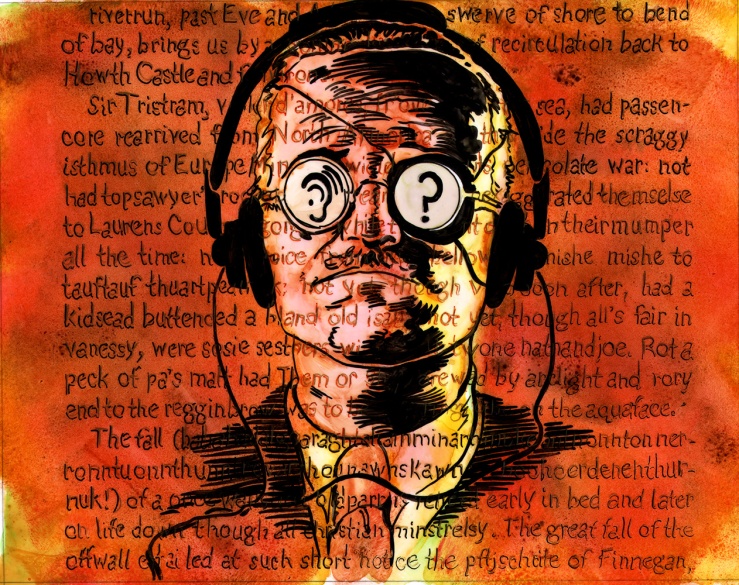
Biblioklept: What is Waywords and Meansigns?
Derek Pyle: Waywords and Meansigns is a collaborative music project recreating James Joyce’s Finnegans Wake. Seventeen different musicians from all around world have each taken a chapter of Finnegans Wake and set it to music, thereby creating an unabridged audio version of Finnegans Wake.
Finnegans Wake is an incredible book, but it’s notoriously difficult to read. One hope of the project is to create a version of the Wake that is accessible to newcomers — people can just listen to and enjoy the music. To maximize accessibility, we are distributing all the audio freely via our website. But the project does not only appeal to Wake newcomers — as we’ve seen so far, a lot of scholars and devoted readers are also finding Waywords and Meansigns an exciting way of interpreting and engaging with Joyce’s text.
Year: 2015
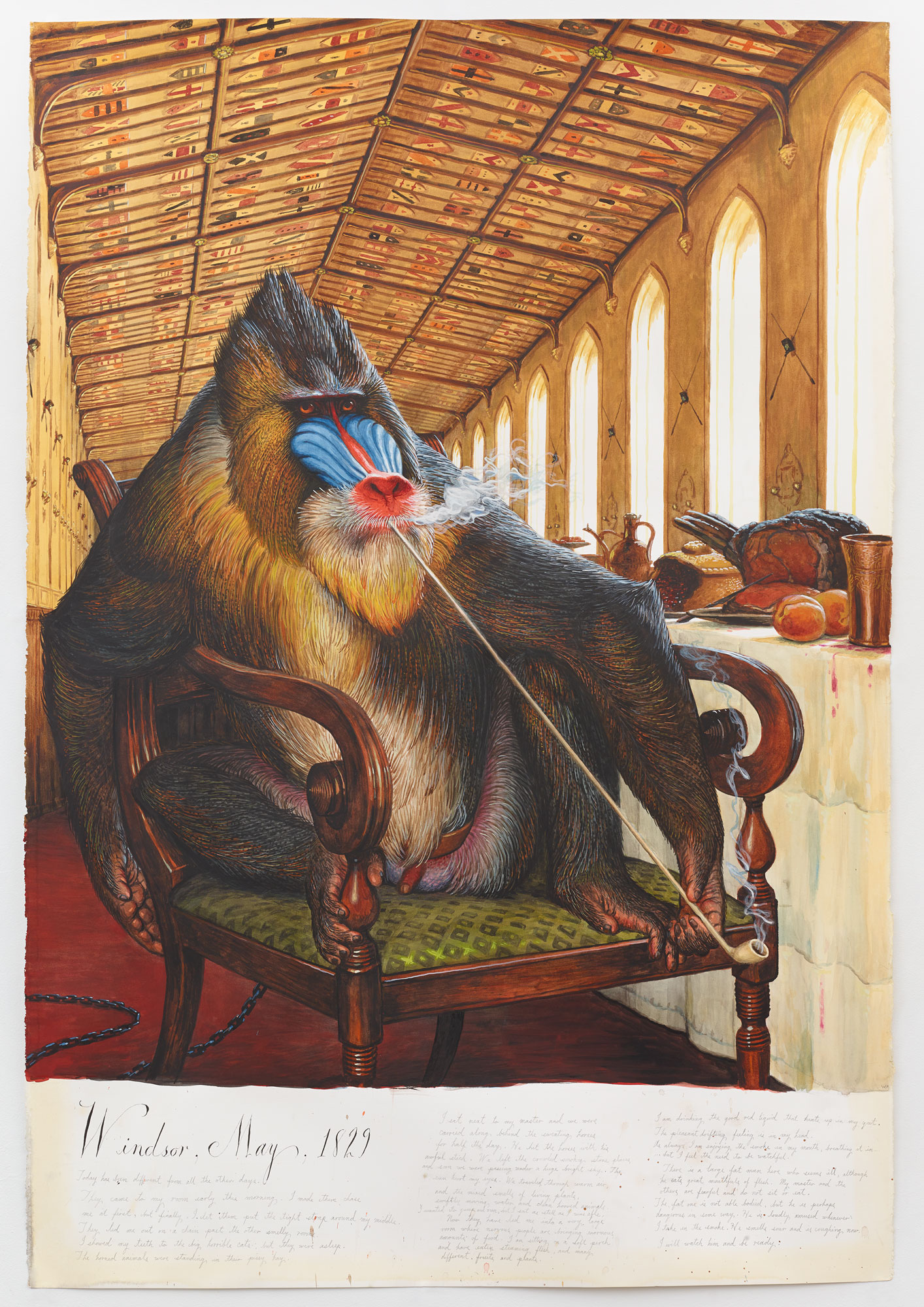
Windsor, May 1829 — Walton Ford
Grass Labyrinth, a short film by Shuji Terayama
“If I should learn, in some quite casual way” — Edna St. Vincent Millay

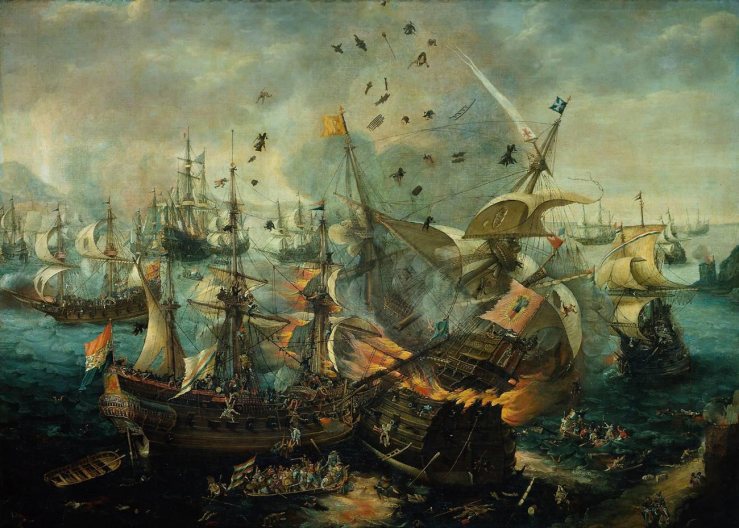
The Explosion of the Spanish Flagship During the Battle of Gibraltar — Cornelis Claesz van Wieringen
Moebius Star Wars Illustration

“Snips of the Tongue” — Harry Mathews
“Snips of the Tongue”
by
Harry Mathews
from Selected Declarations of Independence
Once burned, twice snide
+
Every drug has its day
+
The road to help is paved with good intentions
+
Never pull of tomorrow what you can do today
+
When in Rome, do as the Trojans do
+
Half a loan is better than no bread
+
Every crowd has a silver lining
+
One man’s meat is another man’s person
+
Look before you leave
+
A snitch in time saves nine
+
In the kingdom of the blind, the one-eyed man is kinky
+
Too many cooks spoil the dwarf
First Communion — Pablo Picasso

“Three Sundays in a Week” — Edgar Allan Poe
“Three Sundays in a Week”
by
Edgar Allan Poe
“YOU hard-headed, dunder-headed, obstinate, rusty, crusty, musty, fusty, old savage!” said I, in fancy, one afternoon, to my grand uncle Rumgudgeon—shaking my fist at him in imagination.
Only in imagination. The fact is, some trivial discrepancy did exist, just then, between what I said and what I had not the courage to say—between what I did and what I had half a mind to do.
The old porpoise, as I opened the drawing-room door, was sitting with his feet upon the mantel-piece, and a bumper of port in his paw, making strenuous efforts to accomplish the ditty.
Remplis ton verre vide!
Vide ton verre plein!
“My dear uncle,” said I, closing the door gently, and approaching him with the blandest of smiles, “you are always so very kind and considerate, and have evinced your benevolence in so many—so very many ways—that—that I feel I have only to suggest this little point to you once more to make sure of your full acquiescence.”
“Hem!” said he, “good boy! go on!” Continue reading ““Three Sundays in a Week” — Edgar Allan Poe”
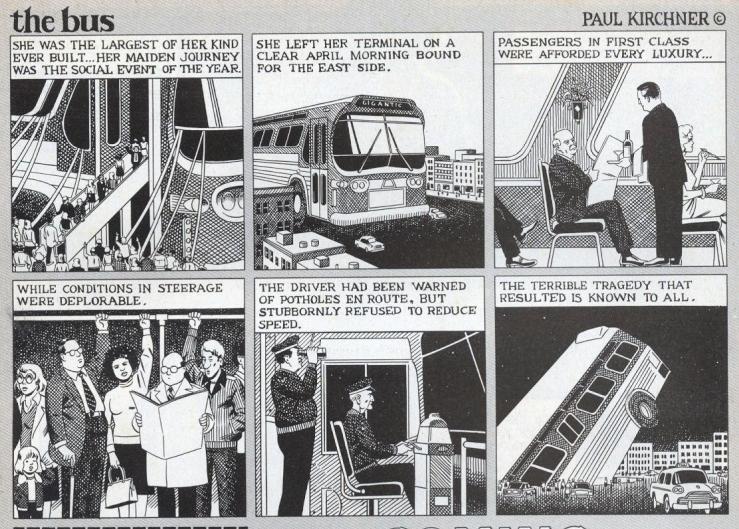
The Bus — Paul Kirchner
An Anniversary — Edwin Dickinson

Still Life with Peppers — Ralph Goings

The Great Serpent holding its own tail in its mouth (Gravity’s Rainbow)
Kekulé dreams the Great Serpent holding its own tail in its mouth, the dreaming Serpent which surrounds the World. But the meanness, the cynicism with which this dream is to be used. The Serpent that announces, “The World is a closed thing, cyclical, resonant, eternally-returning,” is to be delivered into a system whose only aim is to violate the Cycle. Taking and not giving back, demanding that “productivity” and “earnings” keep on increasing with time, the System removing from the rest of the World these vast quantities of energy to keep its own tiny desperate fraction showing a profit: and not only most of humanity—most of the World, animal, vegetable and mineral, is laid waste in the process. The System may or may not understand that it’s only buying time. And that time is an artificial resource to begin with, of no value to anyone or anything but the System, which sooner or later must crash to its death, when its addiction to energy has become more than the rest of the World can supply, dragging with it innocent souls all along the chain of life. Living inside the System is like riding across the country in a bus driven by a maniac bent on suicide… though he’s amiable enough, keeps cracking jokes back through the loudspeaker, “Good morning folks, this is Heidelberg here we’re coming into now, you know the old refrain, ‘I lost my heart in Heidelberg,’ well I have a friend who lost both his ears here! Don’t get me wrong, it’s really a nice town, the people are warm and wonderful—when they’re not dueling. Seriously though, they treat you just fine, they don’t just give you the key to the city, they give you the bung-starter!” u.s.w. On you roll, across a countryside whose light is forever changing—castles, heaps of rock, moons of different shapes and colors come and go. There are stops at odd hours of the mornings, for reasons that are not announced: you get out to stretch in lime-lit courtyards where the old men sit around the table under enormous eucalyptus trees you can smell in the night, shuffling the ancient decks oily and worn, throwing down swords and cups and trumps major in the tremor of light while behind them the bus is idling, waiting—passengers will now reclaim their seats and much as you’d like to stay, right here, learn the game, find your old age around this quiet table, it’s no use: he is waiting beside the door of the bus in his pressed uniform, Lord of the Night he is checking your tickets, your ID and travel papers, and it’s the wands of enterprise that dominate tonight… as he nods you by, you catch a glimpse of his face, his insane, committed eyes, and you remember then, for a terrible few heartbeats, that of course it will end for you all in blood, in shock, without dignity—but there is meanwhile this trip to be on… over your own seat, where there ought to be an advertising plaque, is instead a quote from Rilke: “Once, only once…” One of Their favorite slogans. No return, no salvation, no Cycle—that’s not what They, nor Their brilliant employee Kekulé, have taken the Serpent to mean. No: what the Serpent means is—how’s this—that the six carbon atoms of benzene are in fact curled around into a closed ring, just like that snake with its tail in its mouth, GET IT?
From pages 412-13 of Thomas Pynchon’s novel Gravity’s Rainbow.
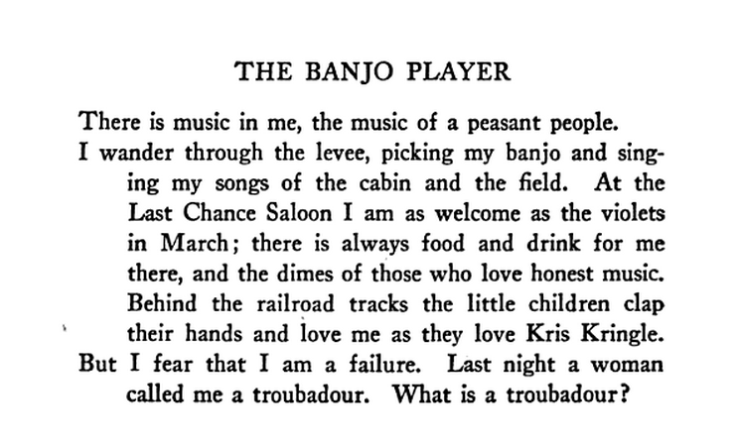
“The Banjo Player” — Fenton Johnson
The Second of May, 1808: The Charge of the Mamelukes — Francisco Goya

The Changeling — Henry Fuseli

 Biblioklept