Riff on recent reading

I can’t seem to muster language lately, to make the words do what I want them to do.

I’ve read a number of excellent (or really good) books in the past few months and haven’t been able to write more than the first few sentences of an ostensible “review” before giving up…mostly because those first few sentences usually resemble the kind of boring moaning dithering whining I’m doing now.

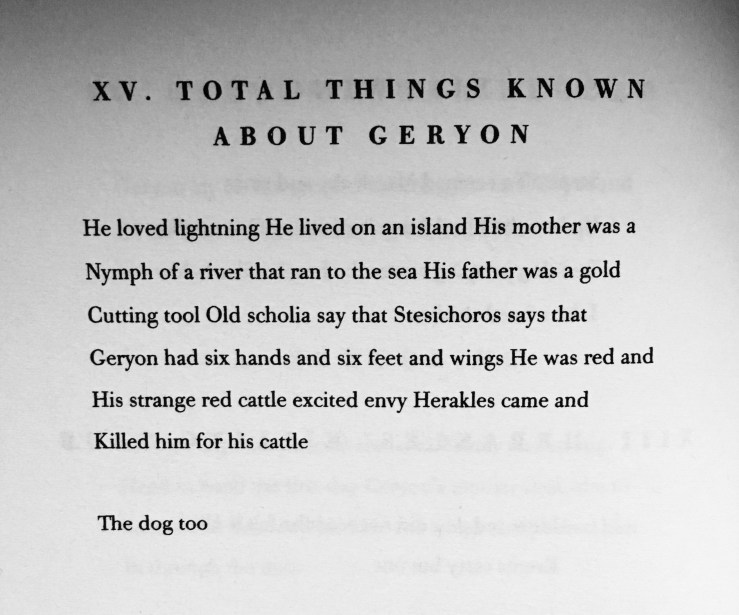
There were the two red books by Anne Carson: Autobiography of Red and Red Doc>.  BLCKDGRD sent them to me back in September and I wolfed them down. Autobiography is the superior volume (which is saying something because Red Doc> is grand stuff too). What is it? What is Autobiography of Red? A novel? A poem? A history? An essay? Shall I get bogged down in description? No? Instead, let me be clear:

What I want to think/feel when I read is, How is this possible? How is this allowed?

–which is what I thought/felt reading Autobiography of Red.

From Autobiography of Red:

What else, what else?

Okay, so after the Carson I did manage a review Kazuo Ishiguro’s fantasy novel The Buried Giant—why did a review come out so much easier than anything on Carson, or, say, The Free-Lance Pall Bearers by Ishmael Reed (which I read after the Ishiguro)? Ishiguro’s book was familiar territory, fairly easy to describe—the Carson novel-poems and Reed’s picaresque performance are wholly different animals than the conventional novel.

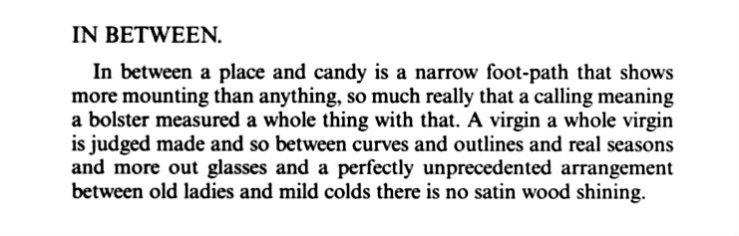
The Free-Lance Pall Bearers by Ishmael Reed is, I hate to say, dazzling. I know what a lazy term that is, but the novella is just that—it dazzles. It zips. It zings and zounds and skips and scatters, and just when you think you have a handle on its allegorical outlines, it sticks out its tongue and jeers at you. The Free-Lance Pall Bearers is a mirthful and merciless satire on the USA written in a howling vernacular and set in an outhouse. It’s abject, picaresque, volatile, hysterical (in several of the senses of that word). I will relieve myself from summarizing the plot and instead offer this image of its perfect epigraphs:


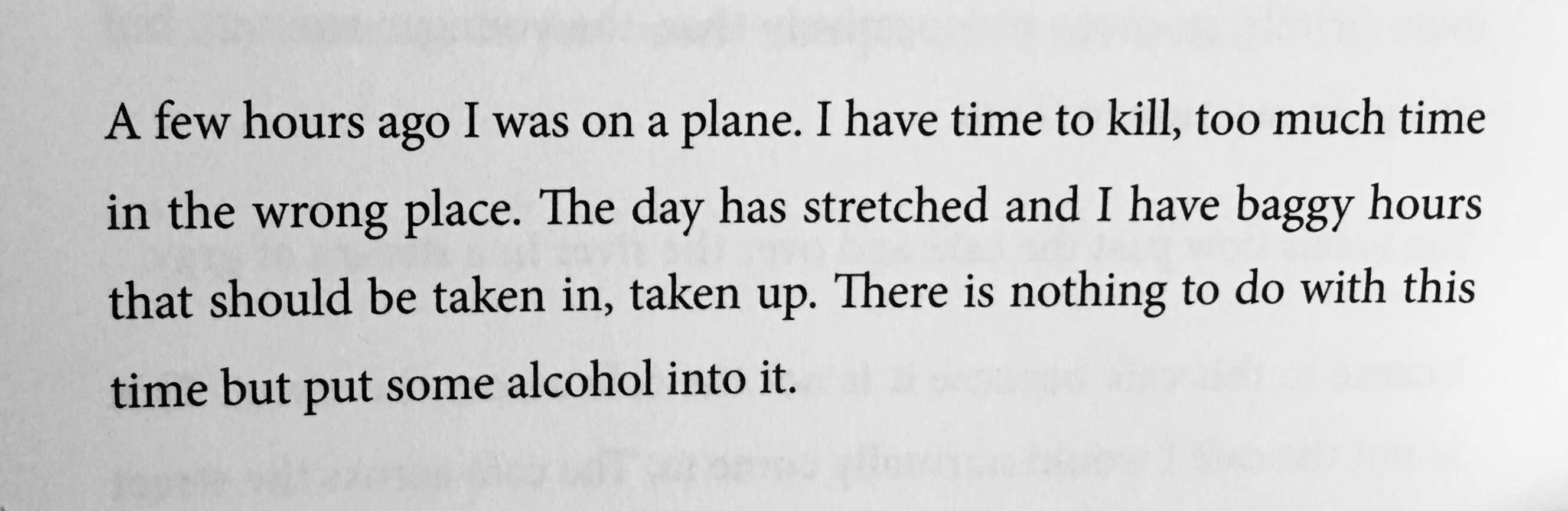
Okay and so then I read Joanna Walsh’s collection Vertigo. The stories here hum together, evoking consciousness—consciousness’s anxieties, desires, its imaginative consolations. It deserves a full proper review (or just take my word and buy it from The Dorothy Project), but in the meantime, a wonderful passage from “Half the World Over”:

I also read two more by Le Guin: Rocannon’s World (I hope to have an exchange on it with the novelist Adam Novy posted some time in the not-too-distant future), The Dispossessed, which I’ve read three times.

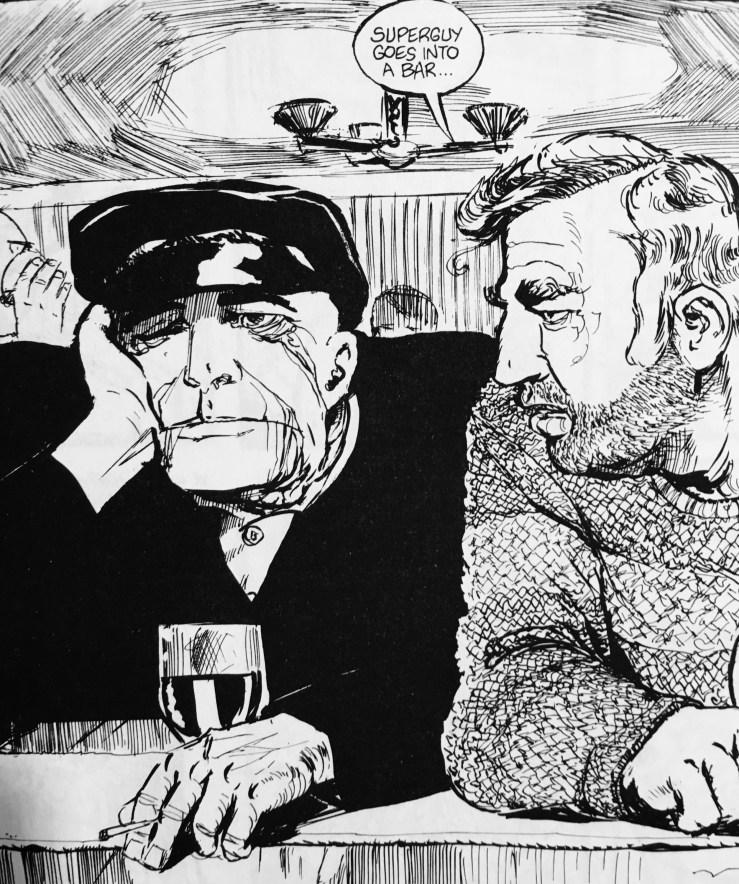
Also: Paul Kirchner’s The Bus 2, which, again, full review in the not-so-far-off-future. But until then, a sample:

04

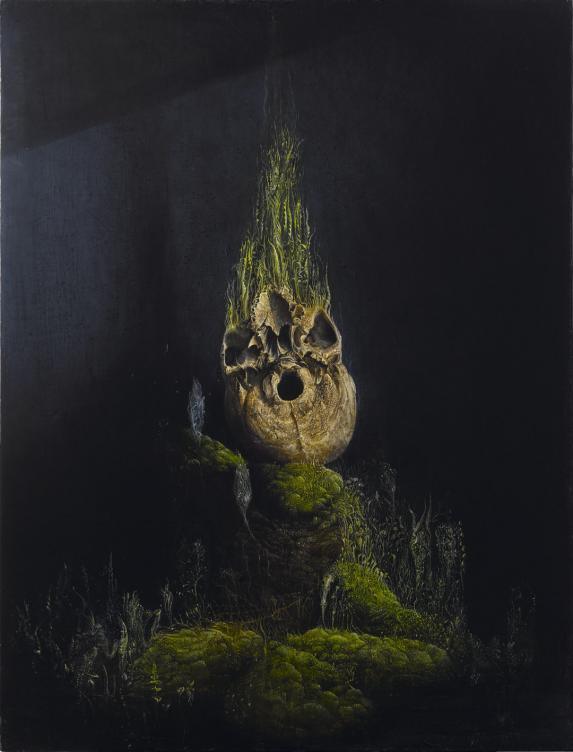
Vanitas Germinata — Agostino Arrivabene

resize.jpg

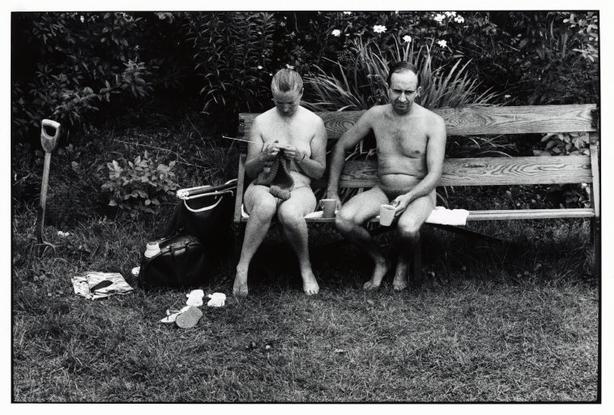
Kent, England, 1968 — Elliott Erwitt

kent-england-1968

Li Ang’s The Lost Garden (Book acquired, 11.20.2015)

IMG_0669

Li Ang’s novel The Lost Garden is new in English translation by Sylvia Li-chun Lin with Howard Goldblatt. Publisher Columbia University Press’s blurb:

In this eloquent and atmospheric novel, Li Ang further cements her reputation as one of our most sophisticated contemporary Chinese-language writers. The Lost Garden moves along two parallel lines. In one, we relive the family saga of Zhu Yinghong, whose father, Zhu Zuyan, was a gentry intellectual imprisoned for dissent in the early days of Chiang Kai-shek’s rule. After his release, Zhu Zuyan literally walled himself in his Lotus Garden, which he rebuilt according to his own desires.

Forever under suspicion, Zhu Zuyan indulged as much as he could in circumscribed pleasures, though they drained the family fortune. Eventually everything belonging to the household had to be sold, including the Lotus Garden. The second storyline picks up in modern-day Taipei as Zhu Yinghong meets Lin Xigeng, a real estate tycoon and playboy. Their cat-and-mouse courtship builds against the extravagant banquets and decadent entertainments of Taipei’s wealthy businessmen. Though the two ultimately marry, their high-styled romance dulls over time, forcing them on a quest to rediscover enchantment in the Lotus Garden. An expansive narrative rich with intimate detail, The Lost Garden is a moving portrait of the losses incurred as we struggle to hold on to our passions.

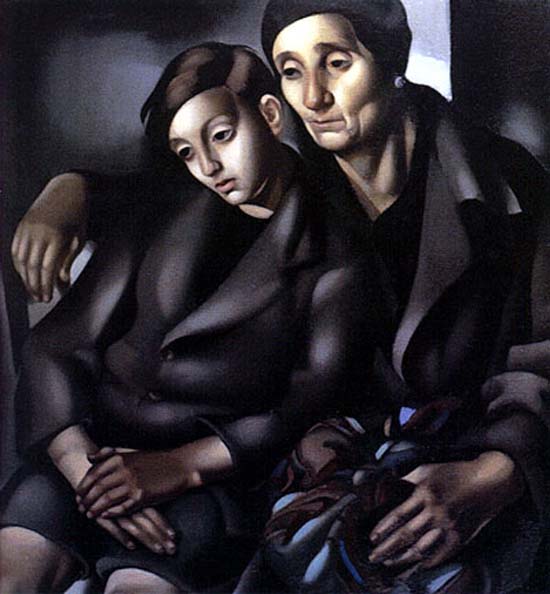
The Refugees — Tamara de Lempicka

the-refugees-1937

A planet spoiled by the human species (Ursula K. Le Guin)

My world, my Earth, is a ruin. A planet spoiled by the human species. We multiplied and gobbled and fought until there was nothing left, and then we died. We controlled neither appetite nor violence; we did not adapt. We destroyed ourselves. But we destroyed the world first. There are no forests left on my Earth. The air is grey, the sky is grey, it is always hot. It is habitable, it is still habitable, but not as this world is. This is a living world, a harmony. Mine is a discord. You Odonians chose a desert; we Terrans made a desert. . . . We survive there as you do. People are tough! There are nearly a half billion of us now. Once there were nine billion. You can see the old cities still everywhere. The bones and bricks go to dust, but the little pieces of plastic never do—they never adapt either. We failed as a species, as a social species. We are here now, dealing as equals with other human societies on other worlds, only because of the charity of the Hainish. They came; they brought us help. They built ships and gave them to us, so we could leave our ruined world. They treat us gently, charitably, as the strong man treats the sick one. They are a very strange people, the Hainish; older than any of us; infinitely generous. They are altruists. They are moved by a guilt we don’t even understand, despite all our crimes. They are moved in all they do, I think, by the past, their endless past. Well, we had saved what could be saved, and made a kind of life in the ruins, on Terra, in the only way it could be done: by total centralization. Total control over the use of every acre of land, every scrap of metal, every ounce of fuel. Total rationing, birth control, euthanasia, universal conscription into the labor force. The absolute regimentation of each life toward the goal of racial survival. We had achieved that much, when the Hainish came. They brought us . . . a little more hope. Not very much. We have outlived it. . . . We can only look at this splendid world, this vital society, this Urras, this Paradise, from the outside. We are capable only of admiring it, and maybe envying it a little. Not very much.

From Ursula K. Le Guin’s 1974 novel The Dispossessed.

A depiction of one of Frederik Ruysch’s displays

I-C-1-03.jpg

Separating Fighting Swans — Stanley Spencer

Even pain counts (Ursula K. Le Guin)

Fulfillment, Shevek thought, is a function of time. The search for pleasure is circular, repetitive, atemporal. The variety seeking of the spectator, the thrill hunter, the sexually promiscuous, always ends in the same place. It has an end. It comes to the end and has to start over. It is not a journey and return, but a closed cycle, a locked room, a cell.Outside the locked room is the landscape of time, in which the spirit may, with luck and courage, construct the fragile, makeshift, improbable roads and cities of fidelity: a landscape inhabitable by human beings.

It is not until an act occurs within the landscape of the past and the future that it is a human act. Loyalty, which asserts the continuity of past and future, binding time into a whole, is the root of human strength; there is no good to be done without it.

So, looking back on the last four years, Shevek saw them not as wasted, but as part of the edifice that he and Takver were building with their lives. The thing about working with time, instead of against it, he thought, is that it is not wasted. Even pain counts.

From Ursula K. Le Guin’s 1974 novel The Dispossessed.

Three Books

lotr1

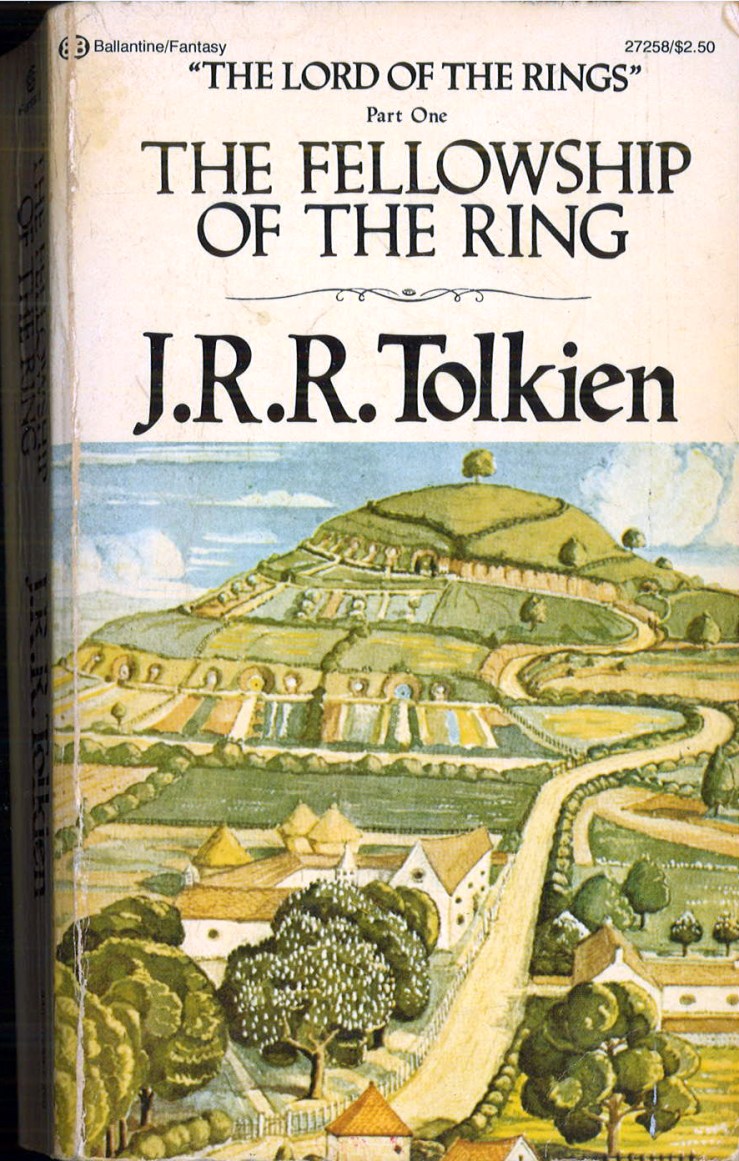
The Fellowship of the Ring by J.R.R. Tolkien.Sixty-second printing of a mass market paperback Ballantine Books edition (1977). No designer is credited, but the cover painting, titled, The Hills: Hobbiton-across-the-Water, is by Tolkien. All three books were a gift from my aunt.

lotr2

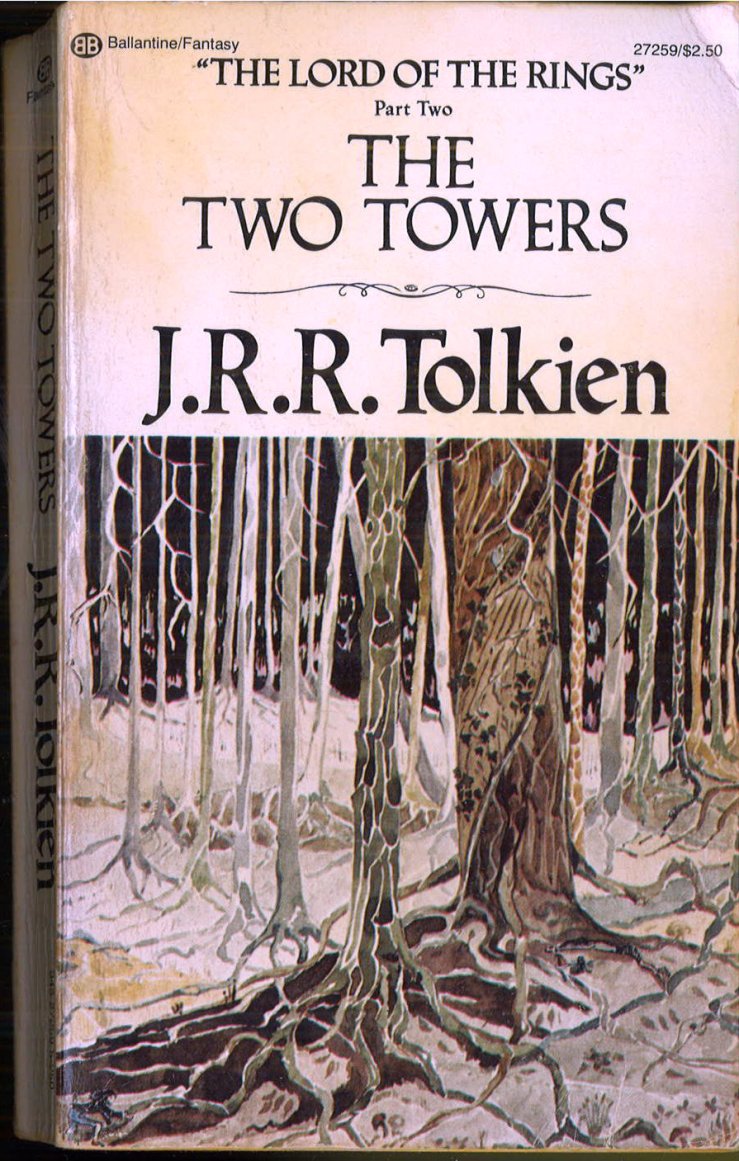
The Two Towers by J.R.R. Tolkien.Sixtieth printing of a mass market paperback Ballantine Books edition (1978). No designer is credited; cover painting by Tolkien.

lotr3

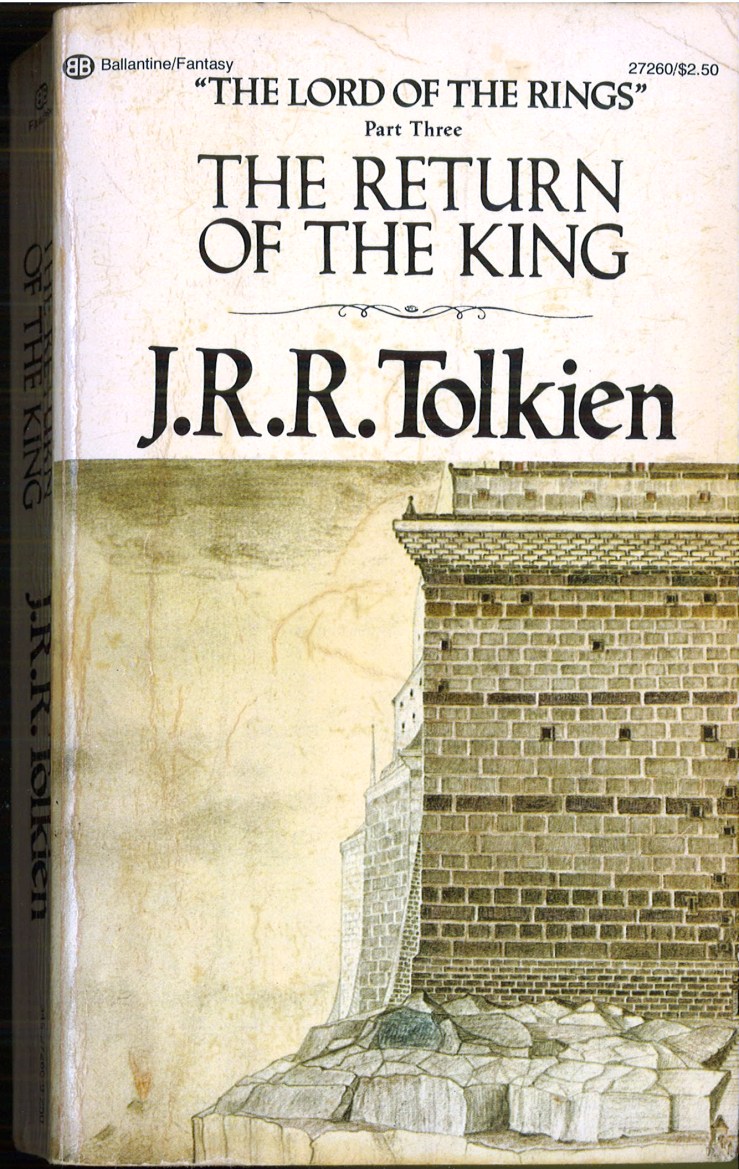
The Return of the King by J.R.R. Tolkien. Fifty-sixth printing of a mass market paperback Ballantine Books edition (1977). No designer is credited; cover painting by Tolkien.

Portrait of the Artist’s Wife Seated, Holding Her Right Leg — Egon Schiele

portrait-of-the-artist-s-wife-seated-holding-her-right-leg-1917

Reading Girl with Cat — Leonor Fini

la-fille-au-chat.jpg

“In Between” — Gertrude Stein

Screenshot 2015-11-21 at 4

Three Mighty Ladies from Livonia — Albrecht Durer

three-mighty-ladies-from-livonia-1521

John Frum Cargo Cult Songs

Continue reading “John Frum Cargo Cult Songs”

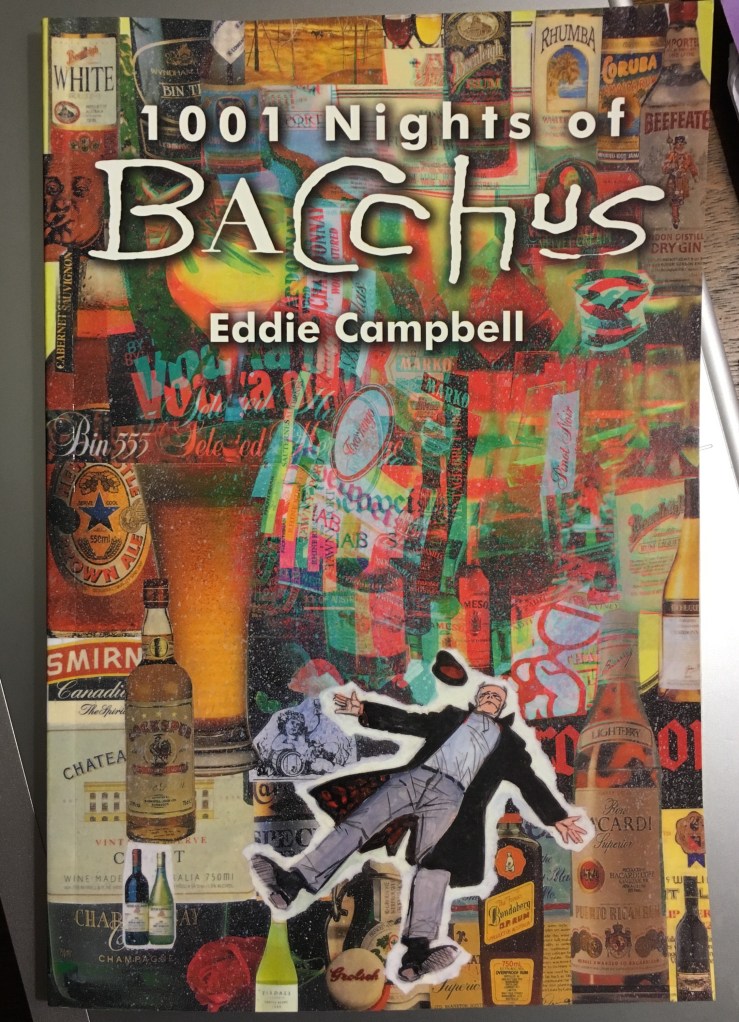
Eddie Campbell’s 1001 Nights of Bacchus (Book acquired, 11.19.2015)

IMG_0657

I took my kids to the bookstore yesterday because they wanted to get some more Choose Your Own Adventure books. We got a bunch of those—and maybe I’ll do a post on those, although I’ve never wanted this blog to be a nostalgia-soaked blog, although maybe that will be a nostalgia-soaked post. My son wanted to check out the comics section; he’s five, and short, and his height matched the “G” section, where he kept grabbing up Green Lantern comics (to which I: put those back). Incorrectly shelved there among the Corps though was Eddie Campbell’s 1001 Nights of Bacchus (to which I: give that here).
IMG_0653The first time I saw Campbell’s art I was shocked. I was 12 or 13—it was in a back issue of Cerebus which I had bought in the comic shop next to the music store where I took trombone lessons (don’t ask)—so, being 12 or 13, I was still capable of shock. Dave Sim had printed (or reprinted?) the prologue, or part of the prologue, from From Hell, Campbell’s book with Alan Moore on the White Chapel/Jack the Ripper murders. What a book. I had never seen anything like that. Campbell’s inky lines seemed savage, severe, violent and sketchy, especially juxtaposed against the work of Sim and Gerhard in that particular issue of Cerebus. (The issue was part of Jaka’s Story).  Continue reading “Eddie Campbell’s 1001 Nights of Bacchus (Book acquired, 11.19.2015)”