RIP Phife Dawg

Allegory of Man’s Choice between Virtue and Vice (detail) — Frans Francken the Younger

Screenshot 2016-03-18 at 7.51.06 PM

Scissors-and-paste man | William Gaddis’s notes toward composing J R

eb1b6f6b730cf59966ae75f4247bec94f055c992e8bf39d5915fc20aaae4672a

William Gaddis’s cut-and-paste notes toward composing his novel J R. Check out more of Gaddis’s notes for J R at the Modern Literature Collection at Washington University. (They also have a really cool new YouTube channel).

Gaddis’s cut-and-paste technique evinces in J R, particularly in the authorial stand-in Jack Gibbs, who muddles about with scraps of ideas in his pockets—scraps that perhaps eventually become (a version of) Gaddis’s last novel Agapē Agape.

I wrote about Agapē Agape here and a recent rereading of J R here.

The con man succeeds (William H. Gass)

An intelligence without integrity (a condition so often found in people of public life) is likely to succumb to the blandishments of ideology; otherwise, the mind’s inherent skepticism will guarantee its safety from superstition and other forms of sugary conjecture. Socrates knew nothing really awful could happen to him if he kept his mind free of unwarranted opinions. True strength, throughout its spectrum, shows itself through unflustered gentleness and forbearance, since only such strength has nothing to fear. The con man succeeds by exploiting the greed of his marks and is often reluctantly admired because wit is on his side, as well as discipline. His cynicism is just good sense and his nose for moral weakness is like the dowser’s wand for water. Similarly, when ill-formed or palpably false ideas make their way through the multitude, it is because the comforts they bring are so ardently desired.If you enjoy the opinions you possess, if they give you a glow, be suspicious. They may be possessing you. An opinion should be treated like a guest who is likely to stay too late and drink all the whiskey.

Plato treated poetic inspiration as a case of such irrational infection: The gods bypass sober skill to make the pen prophetic so that the resulting poem, recited by a rhapsode similarly tranced, becomes an incitement to the mob. Or an unconscious wish, sneaky as an odor, enters the author’s awareness disguised as its opposite, and arranges the stage for a coup d’éclat. Thus the magnetic coil is closed: muse to poet, poet to page, page to performer, and performer to audience, whose applause pleases the muse, encourages the poet, and grants his forbidden desire: to rule.

From William H. Gass’s essay influence. Collected in A Temple of Texts.

Allegory of Man’s Choice between Virtue and Vice (detail) — Frans Francken the Younger

Screenshot 2016-03-18 at 8.05.09 PM

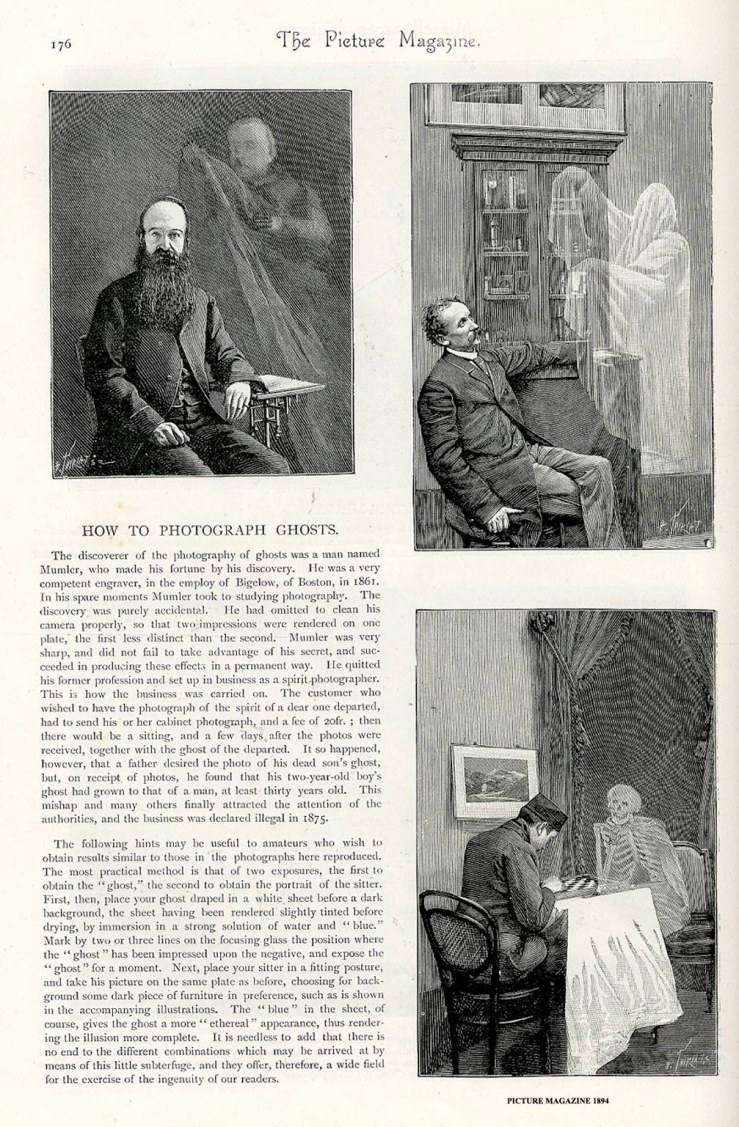
How to Photograph Ghosts

11

Hotel by Railroad — Richard Tuschman

richardhopper-10-900x597

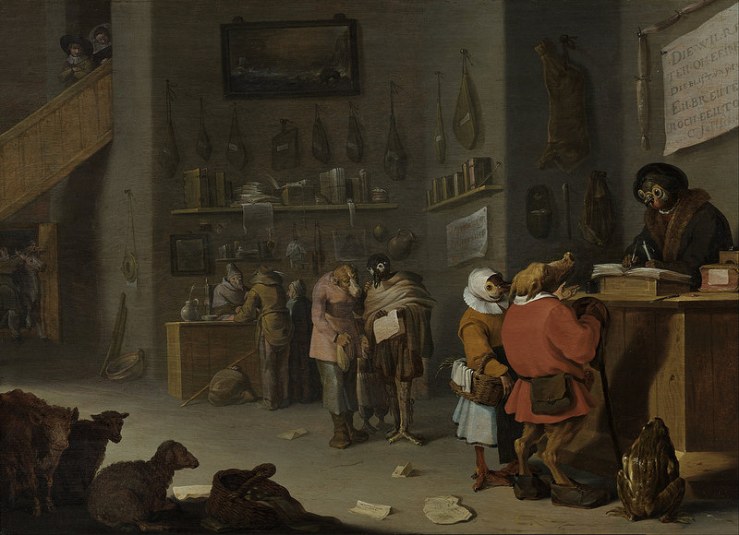
Who Sues for a Cow — Cornelis Saftleven

17015565217_f06394b2af_c

Robert Creeley reads his poem “The Ballad of the Despairing Husband”

Allegory of Man’s Choice between Virtue and Vice (detail) — Frans Francken the Younger

Screenshot 2016-03-18 at 7.49.14 PM

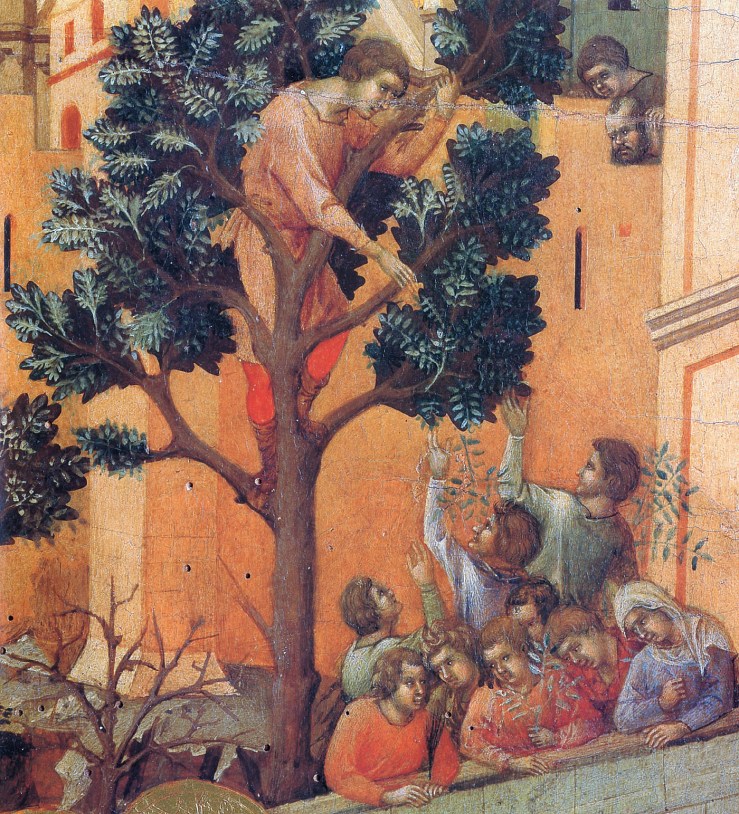
Entry into Jerusalem (detail) — Duccio

entry-into-jerusalem-fragment-1311

Three Books

img_1820

Madness and Civilization by Michel Foucault. English translation by Richard Howard. Second edition Pantheon hardback, 1965. Cover design by Pan Visual, featuring a detail from Bosch’s Christ Carrying the Cross.

img_1819

Correction by Thomas Bernhard. English translation by Sophie Wilkins. 1983 first edition trade paperback by Aventura. Cover design by Keith Sheridan featuring an illustration by Marshall Arisman. I wrote about Correction here.

img_1818

The Tanners by Robert Walser. English translation by Susan Bernofsky. Irregular-sized trade paperback by New Directions, 2009. Cover design by Erik Rieselbach.

Allegory of Man’s Choice between Virtue and Vice (detail) — Frans Francken the Younger

Screenshot 2016-03-18 at 7.47.28 PM

To write often means remembering what never existed (Clarice Lispector)

img_1746

Cryogenics Afterlife — Julia Faber

31_cryogenicsafterlifeweb

Fillmore Jivish (Pavement)

Allegory of Man’s Choice between Virtue and Vice (detail) — Frans Francken the Younger

Screenshot 2016-03-18 at 7.40.57 PM