“December 24, 1971” — Joseph Brodsky

“December 24, 1971”

by

Joseph Brodsky


For V.S.

When it’s Christmas we’re all of us magi.
At the grocers’ all slipping and pushing.
Where a tin of halvah, coffee-flavored,
is the cause of a human assault-wave
by a crowd heavy-laden with parcels:
each one his own king, his own camel.

Nylon bags, carrier bags, paper cones,
caps and neckties all twisted up sideways.
Reek of vodka and resin and cod,
orange mandarins, cinnamon, apples.
Floods of faces, no sign of a pathway
toward Bethlehem, shut off by blizzard.

And the bearers of moderate gifts
leap on buses and jam all the doorways,
disappear into courtyards that gape,
though they know that there’s nothing inside there:
not a beast, not a crib, nor yet her,
round whose head gleams a nimbus of gold.

Emptiness. But the mere thought of that
brings forth lights as if out of nowhere.
Herod reigns but the stronger he is,
the more sure, the more certain the wonder.
In the constancy of this relation
is the basic mechanics of Christmas.

That’s what they celebrate everywhere,
for its coming push tables together.
No demand for a star for a while,
but a sort of good will touched with grace
can be seen in all men from afar,
and the shepherds have kindled their fires.

Snow is falling: not smoking but sounding
chimney pots on the roof, every face like a stain.
Herod drinks. Every wife hides her child.
He who comes is a mystery: features
are not known beforehand, men’s hearts may
not be quick to distinguish the stranger.

But when drafts through the doorway disperse
the thick mist of the hours of darkness
and a shape in a shawl stands revealed,
both a newborn and Spirit that’s Holy
in your self you discover; you stare
skyward, and it’s right there:
a star.

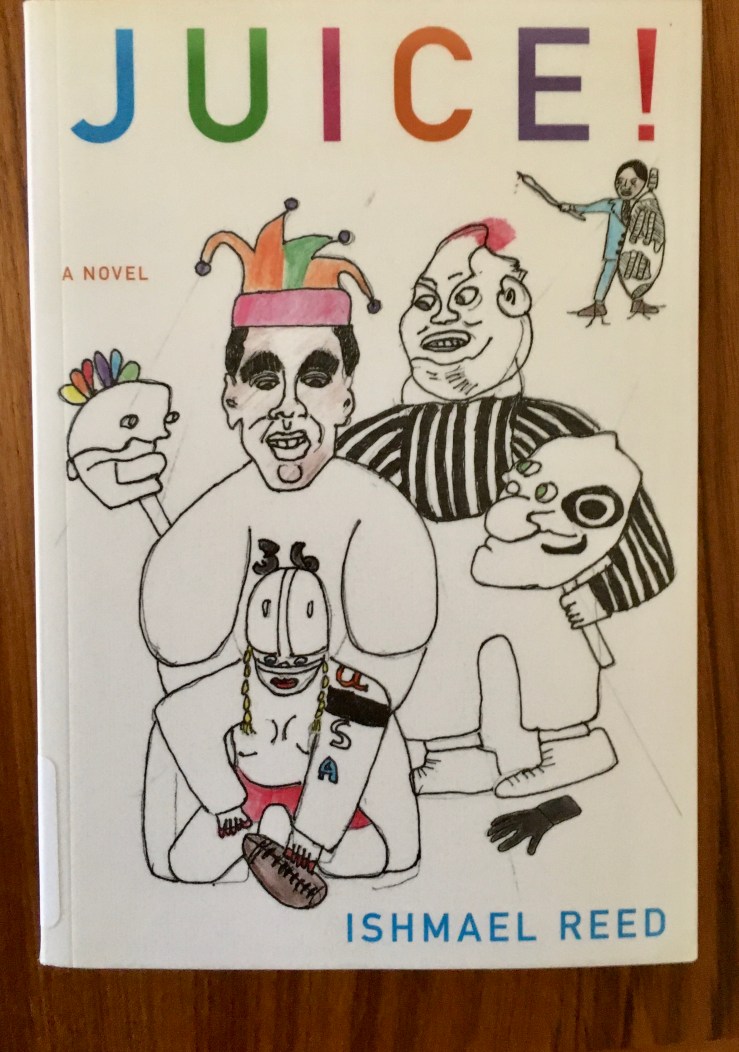
Blog about Ishmael Reed’s novel Juice! (Book acquired, 10 Dec. 2019)

img_4550

I was having a hard time getting into any of the books piled up around my house after I finished Paul Beatty’s fantastic and scathing satire The Sellout a few weeks ago, so I picked up Ishmael Reed’s 2011 novel Juice! It did the trick.

Here’s Reed describing the novel in a short Paris Review interview he did to promote the novel:

I began this one as soon as I heard about the murders. I was vacationing in Hawaii, and the murders ruined my vacation. The media went berserk over the murder of Nicole Simpson, the kind of ideal white woman—a Rhine maiden—one finds in Nazi art and propaganda, murdered allegedly by a black beast. It was a story that reached into the viscera of the American unconscious, recalling the old Confederate art of the black boogeyman as an incubus squatting on top of a sleeping, half-clad white woman. It was also an example of collective blame. All black men became O. J. The murders ignited a kind of hysteria.

Juice! is told in first-person by an aging cartoonist who goes by “Bear” whose obsession with the O.J. Simpson case(s) begins to cost him his friends, family, and career. Reed’s narrator bears more than a passing similarity to Reed himself, and the style of Juice! is decidedly different from Reed’s earlier, zanier novels like Yellow Back Radio Broke-Down and The Terrible Twos. However, the novel, like every novel I’ve read by Reed, diagnoses and dissects the American zeitgeist with howling humor and wild anger. There’s something of a reactionary flavor to Juice! though—its aging narrator has an ugly misogynistic/homophobic/transphobic streak, which the other characters, as well as the narrative construction, continually critique. Juice! creates a strange space of self-satire and self-critique that’s really…ugly—but also reflective and even elegiac in a way. Our narrator “Bear” paces through the realizations of someone whose ideological complaints remain unanswered, outpaced. His story is a howl against a system that, by design, cannot amend itself with its own tools.

While “Bear” is certainly a version of Reed, he is not Reed (an “Ishmael Reed” actually shows up late in the novel, in fact). “Bear” may in fact be a cartoonized Reed, Reed’s self-caricature. Supposedly-well-meaning white women are a favorite target in Juice! In his short Paris Review interview, Reed addressed accusations against him of sexism:

In the 1960s, when black nationalism was in vogue, all black characters had to be portrayed in a positive way, and when the feminist movement was born out of black nationalism, so did all black women. Since the mid-1970s, white feminists have had great influence over which black fiction gets marketed. I’ve gotten a lot of heat from some women in parts of academia, publishing, and book reviewing. On some occasions, they’ve censored my work. The late Joe Wood asked me to write a piece about Oakland politics for The Village Voice. He said that a feminist editor at the time wouldn’t even read it on the grounds that I was a “notorious sexist.”

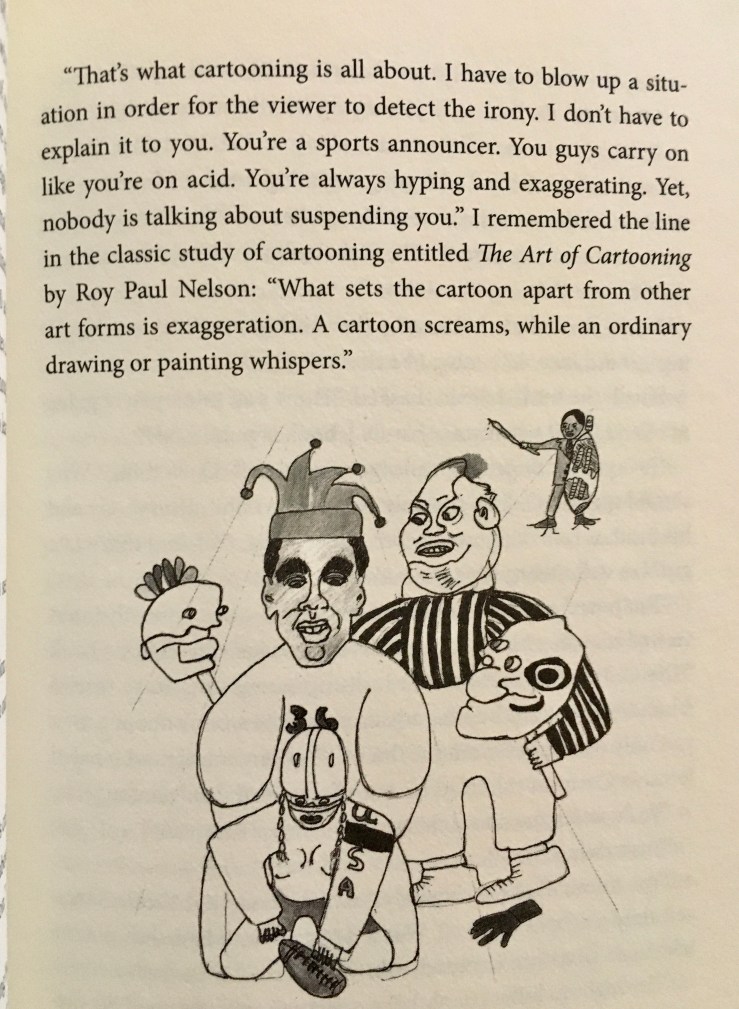
In that same interview, Reed discussed the cartoons he did (as “Bear”) for Juice!–

A publisher wanted to publish Juice! but decided that the cartoons weren’t up to par. So, at the age of seventy, I studied at the Cartoon Art Museum of San Francisco…

img_4553

Reed’s cartoons are sharp and grotesque, and several of them are major plot points in the novel. One of the cartoons (also the novel’s cover illustration), featuring O.J. Simpson taking a direct snap from the US of A (a blonde, natch) is misunderstood—or perhaps understood too well—and Bear nearly loses his job.

img_4554

I haven’t finished Juice! yet—I’m about 50 or so pages from the end—but it’s fascinating both in its structure (discursive, achronological reportorial collage) and its tone (a kind of push-pull of an aging obsessive in crisis). Juice! isn’t my favorite Reed novel, but I’m thankful for this late work’s diagnosis of the Clinton years and beyond.

Father Christmas — J.R.R. Tolkien

father-christmas

Father Christmas drawing of “Me” and “My House,” 1920 by J.R.R. Tolkien (1892–1973).

From The Morgan Library & Museum’s exhibition “Tolkien: Maker of Middle-earth.”

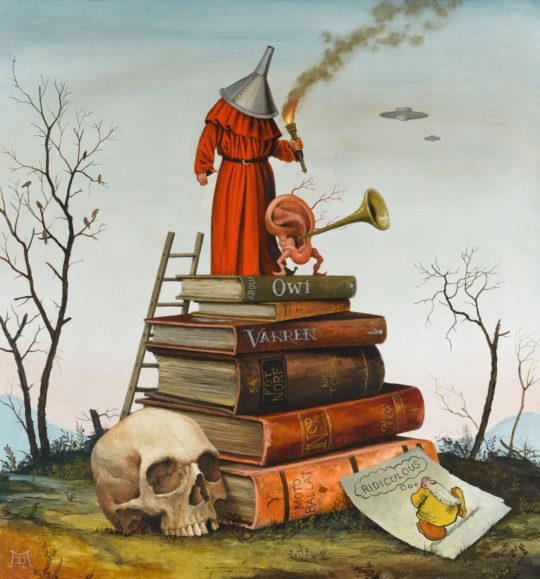
New Accursed Art Club — Nigel Cooke

New Accursed Art Club 2007 by Nigel Cooke born 1973

New Accursed Art Club, 2007 by Nigel Cooke (b. 1973)

Three Books (that were my favorite books I read in 2019 that were published in 2019)

I read very few contemporary books, especially contemporary novels. This reluctance to read contemporary literature isn’t a rule as much as it is a necessity born from the human limitations of my time and the fact that I am a slow reader. (I’ll also admit to a certain wariness towards trends coupled with an antipathy toward publishing hype. (I’m sure many readers detest the trendy/hype couple, as do I. (I’m sure some readers think I use this blog to hype/trend. Forgive me; it’s not my intention. I’m enthusiastic at times.)))

I have no idea what the best books of 2019 are. Maybe I’ll know in 2039 or 2049 or 2079 (when I’ll be a magical one hundred years old).

I’ve been doing these Three Books posts on and off for a few years. They give me something to do on a Sunday, except when I have something to do on a Sunday, in which case, I don’t do them. There are two more Sundays in 2019 and I figured I’d do a Three Books post about the books published this year that I enjoyed most this year. A few jumped readily to mind, including books that were translated or republished in new editions this year, like João Gilberto Noll’s short novel Lord, or Sylvia Townsend Warner’s The Corner That Held Them, or Ann Quin’s 1964 novel BergBut new editions or new/first translations isn’t exactly “2019” is it? Or is it? I mean, these were published in 2019?

Just add them to the list anyway.

And add Anna Burns’ maybe-horror/maybe-comedy novel Milkman to the list, even though it was published in 2018.

And add Anna Kavan’s definitely-horror/definitely-sci-fi novel Ice to the list, even though it was re–published in 2018, a fiftieth anniversary edition. (It’s not a new book, right? New to me though.)

Ann Quin, Anna Burns, Anna Kavan…how about Anne Boyer? For me, 2019 was a variation on Annas, I guess.
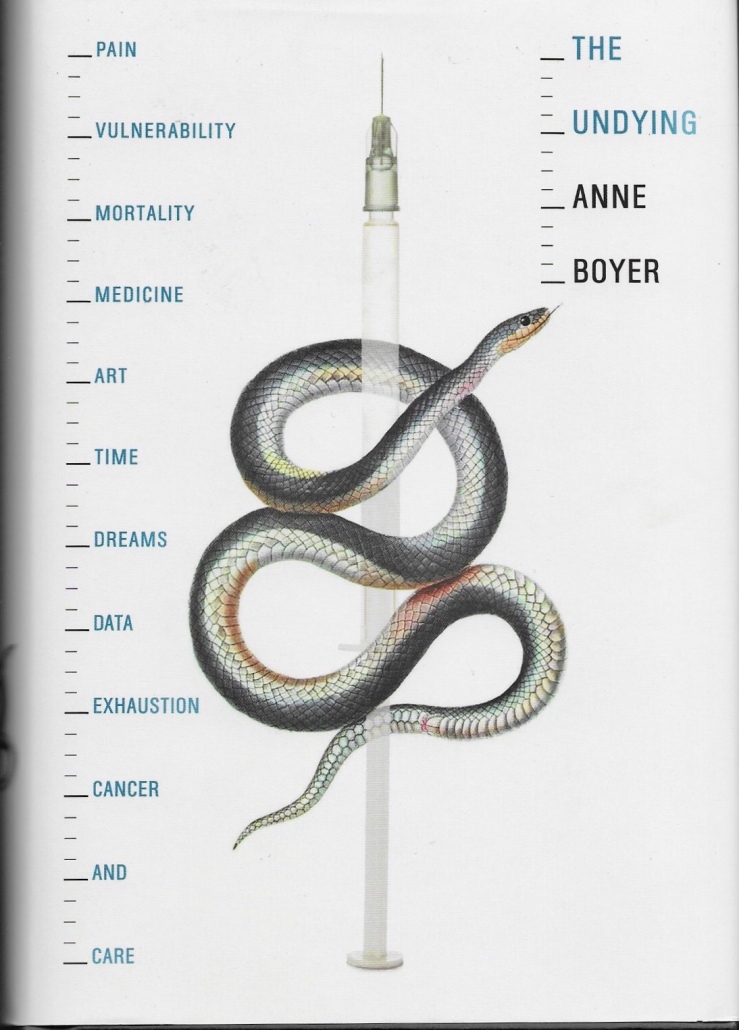
2019-12-22_155858_1

The Undying by Anne Boyer. 2019 first edition hardback from FS&G. Jacket design by Srick&Williams; jacket art by Mykola Davydenko.

This is a wonderfully angry, discursive, recursive book: literary biography, literary criticism, art history, art criticism, Foucault, John Donne, Susan Sontag, Lucretius, Virginia Woolf; a howl at the hoaxers, frauds, self-helperists and their pinkwashed platitudes. And lots of pain, expressed with sentiment that bears no trace of sentimentality.

Boyer’s aphoristic style is engrossing. Her paragraphs and one-liners bear a ludic stamp seemingly at odds with her subject matter. The work of the writing, the heavy burden of smithing those sentences is all but elided—instead we get the clarity of a focused mind drawing together seemingly-disparate threads into a cohesive and compelling memoir that transcends the personal without necessarily meaning to.

Showing is a betrayal of the real, which you can never quite know with your eyes in the first place, and if you are trying to survive for the purpose of literature, showing and not telling is reason enough to endure the disabling processes required for staying alive.

Thank you again to BLCKDGRD for sending me this strange angry beautiful book.
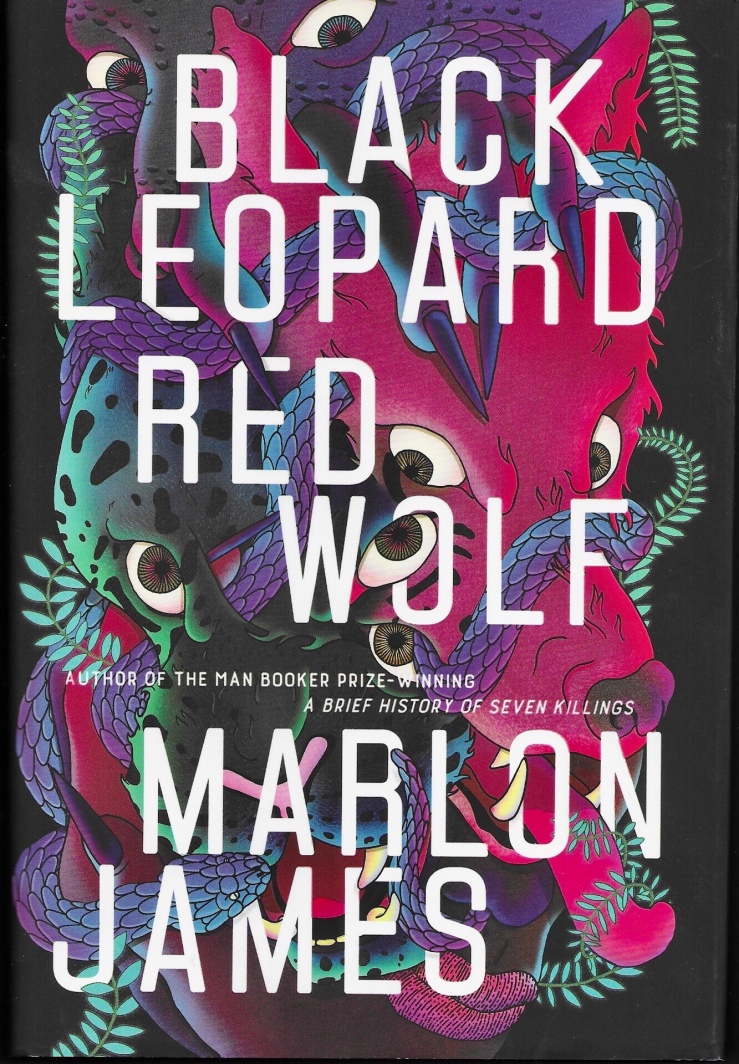
2019-12-22_155858

Black Leopard, Red Wolf by Marlon James. 2019 first edition hardback from Random House. Jacket design by Helen Yentus; jack illustration by Pablo Gerardo Camacho.

I wrote a review of Black Leopard, Red Wolf that I titled “Marlon James’s Black Leopard, Red Wolf is a postmodern fantasy novel that challenges the conventions of storytelling itself.”

Black Leopard, Red Wolf makes me think of that trend/hype problem I mentioned above—novels that get hyped, novels that seem trendy (“It’s Game of Thrones in a medieval mythical Africa!”) and then maybe not read. I think a lot of people read BL/RW though, and many found it Not to Their Taste, which, fine. I loved. it. From my review:

Black Leopard, Red Wolf is clearly Not for Everybody. It’s violent and strange, and the sex in it will likely upset conservative readers. It’s also shaggy and unwieldy. It probably has a future as a cult novel. You just sort of have to go with its fluid (in every sense of that word) program and enjoy the ride. I enjoyed it very much and am looking forward to the sequel.
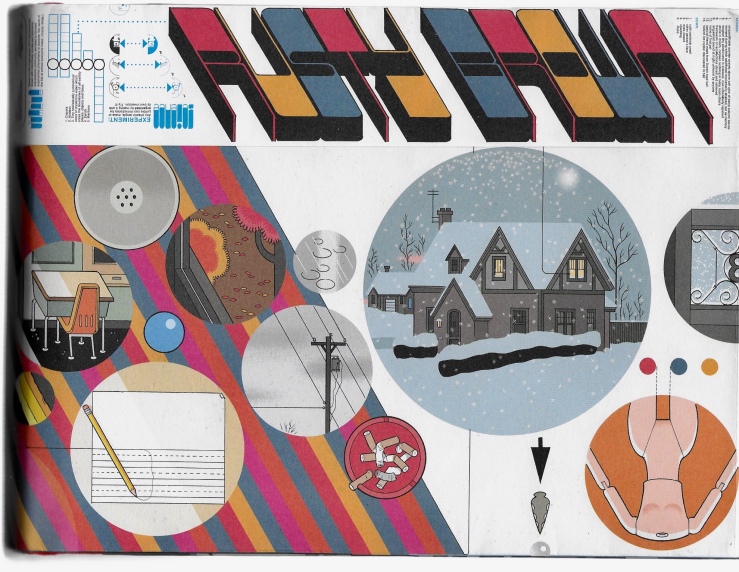
Rusty Brown by Chris Ware. 2019 first edition hardback from Pantheon. No cover designer or artist credited, but the work is unquestionably Ware’s.

A masterpiece. I reviewed it for The Comics Journal, stating that,

Rusty Brown is a sprawling story about memory and perception, about minor triumphs and chronic failures, about how our inner monologues might not match up to the reality around us. In Ware’s world, life can be blurry, spotty, fragmented. His characters are so bound up in their own consciousnesses that they cannot see the bigger picture that frames them.

Rusty Brown is only the first part of (what I understand to be) a two-part novel. It took Ware eighteen years to finish. Maybe we’ll know in 2037 if it was in fact a really great important best favorite novel of 2019. Or maybe not.

But I love it now, and I loved these books this year.

Leader of Legions of Literary Lunatics — Mike Davis

mike-davis-final_low-copy-1050x1126-540x579-1

Leader of Legions of Literary Lunatics by Mike Davis

“Radio” — Tom Clark

“Radio”

by

Tom Clark


Don’t hurt the radio for
Against all
Solid testimony machines
Have feelings
Too

Brush past it lightly
With a fine regard
For allowing its molecules
To remain 100% intact

Machines can think like Wittgenstein
And the radio’s a machine
Thinking softly to itself
Of the Midnight Flower
As her tawny parts unfold

In slow motion the boat
Rocks on the ocean
As her tawny parts unfold

The radio does something mental
To itself singingly
As her tawny parts unfold
Inside its wires
And steal away its heart

Two minutes after eleven
The color dream communicates itself
The ink falls on the paper as if magically
The scalp falls away
A pain is felt
Deep in the radio

I take out my larynx and put it on the blue chair
And do my dance for the radio
It’s my dance in which I kneel in front of the radio
And while remaining motionless elsewise
Force my eyeballs to come as close together as possible
While uttering a horrible and foreign word
Which I cannot repeat to you without now removing my larynx
And placing it on the blue chair

The blue chair isn’t here
So I can’t do that trick at the present time

The radio is thinking a few licks of its own
Pianistic thoughts attuned to tomorrow’s grammar
Beautiful spas of seltzery coition
Plucked notes like sandpaper attacked by Woody Woodpecker

The radio says Edwardian farmers from Minnesota march on the Mafia
Armed with millions of radioactive poker chips

The radio fears foul play
It turns impersonal
A piggy bank was smashed
A victim was found naked
Radio how can you tell me this
In such a chipper tone
Your structure of voices is a friend
The best kind
The kind one can turn on or off
Whenever one wants to
But that is wrong I know
For you will intensely to continue
And in a deeper way
You do

Hours go by
And I watch you
As you diligently apply
A series of audible frequencies
To tiny receptors
Located inside my cranium
Resulting in much pleasure for someone
Who looks like me
Although he is seated about two inches to my left
And the both of us
Are listening to your every word
With a weird misapprehension
It’s the last of the tenth
And Harmon Killebrew is up
With a man aboard

He blasts a game-winning home run
The 559th of his career
But no one cares
Because the broadcast is studio-monitored for taping
To be replayed in 212 years

Heaven must be like this, radio
To not care about anything
Because it’s all being taped for replay much later

Heaven must be like this
For as her tawny parts unfold
The small lights swim roseate
As if of sepals were the tarp made
As it is invisibly unrolled
And sundown gasps its old Ray Charles 45 of Georgia
Only through your voice

Last Look Mirror — Eric Fischl

2017.043pp

Last Look Mirror, 2017 by Eric Fischl (b. 1948)

Drawing by Father Christmas of the Aurora Borealis — J.R.R. Tolkien

aurora-borealis

Drawing by Father Christmas of the Aurora Borealis, 1926 by J.R.R. Tolkien (1892–1973).

From The Morgan Library & Museum’s exhibition “Tolkien: Maker of Middle-earth.”

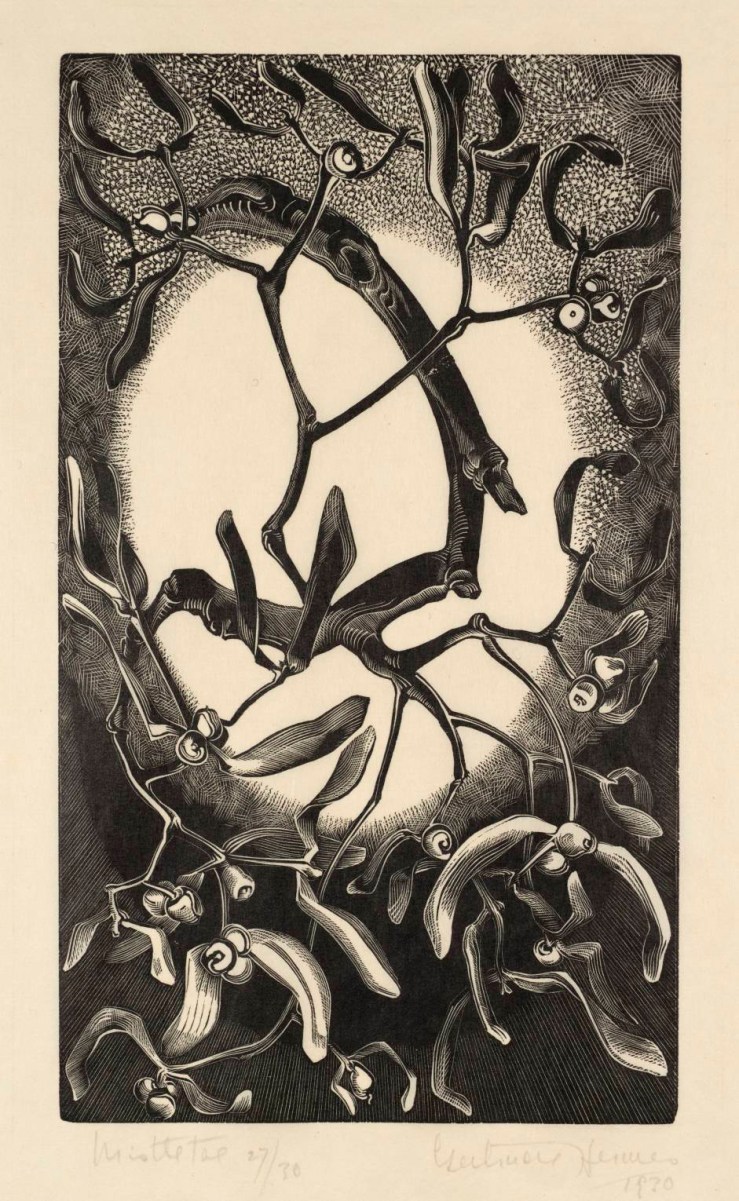
Mistletoe — Gertrude Hermes

thegorgeousdaily.com-gertrude-hermes-12

Mistletoe, 1930 by Gertrude Hermes (1901–1983)

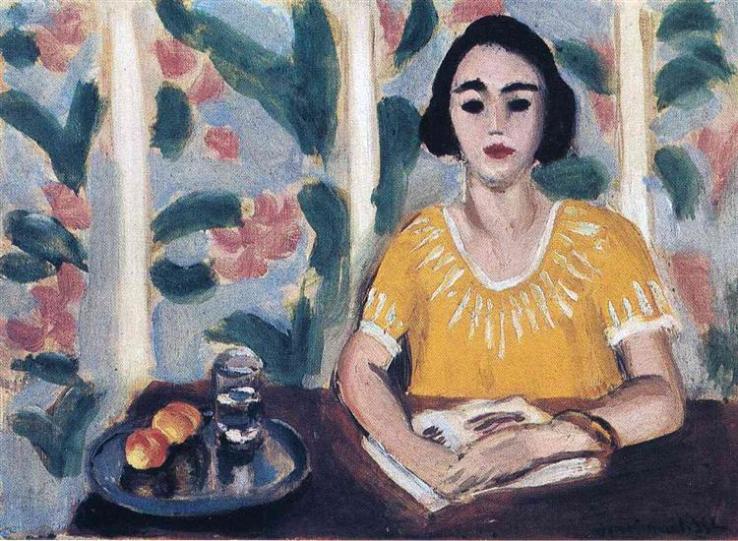
Woman Reading with Peaches — Henri Matisse

woman-reading-with-peaches-1923.jpglarge

Woman Reading with Peaches, 1923 by– Henri Matisse (1869–1954)

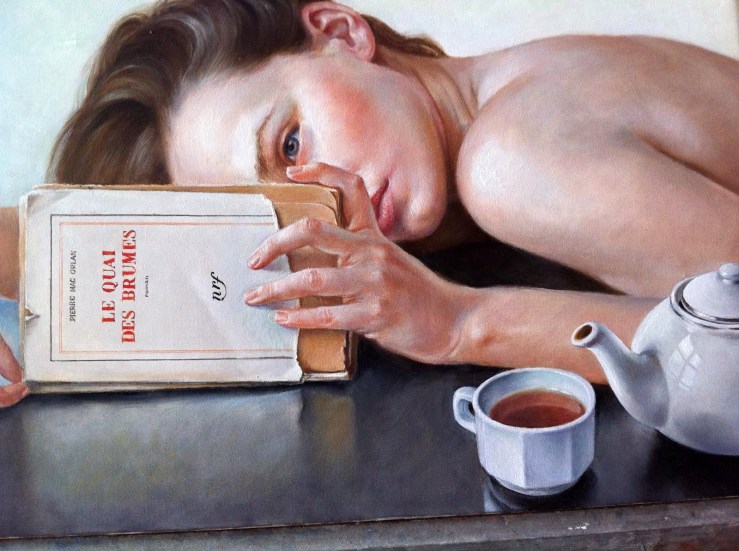
Untitled (Le Quai des brumes) — Francine van Hove

1475134729-007

Untitled by Francine van Hove (b. 1942)

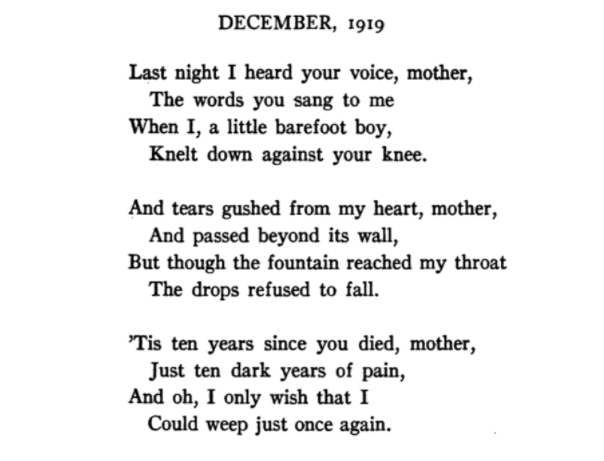
December, 1919 — Claude McKay

Screenshot 2019-12-17 at 5.42.38 PM

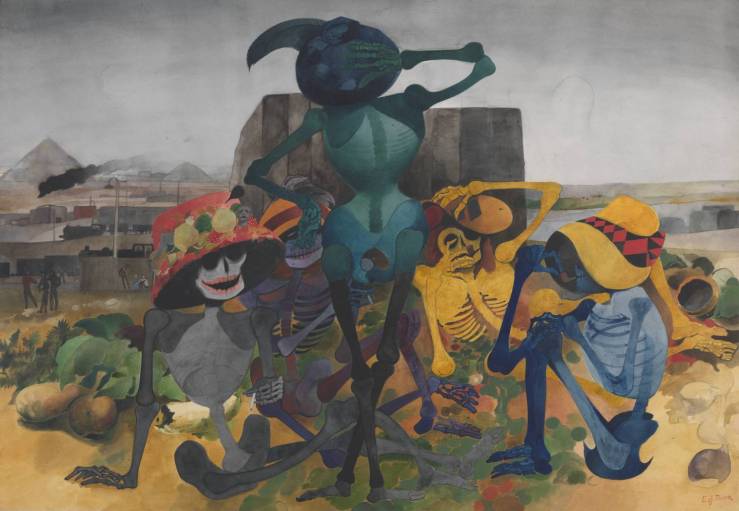
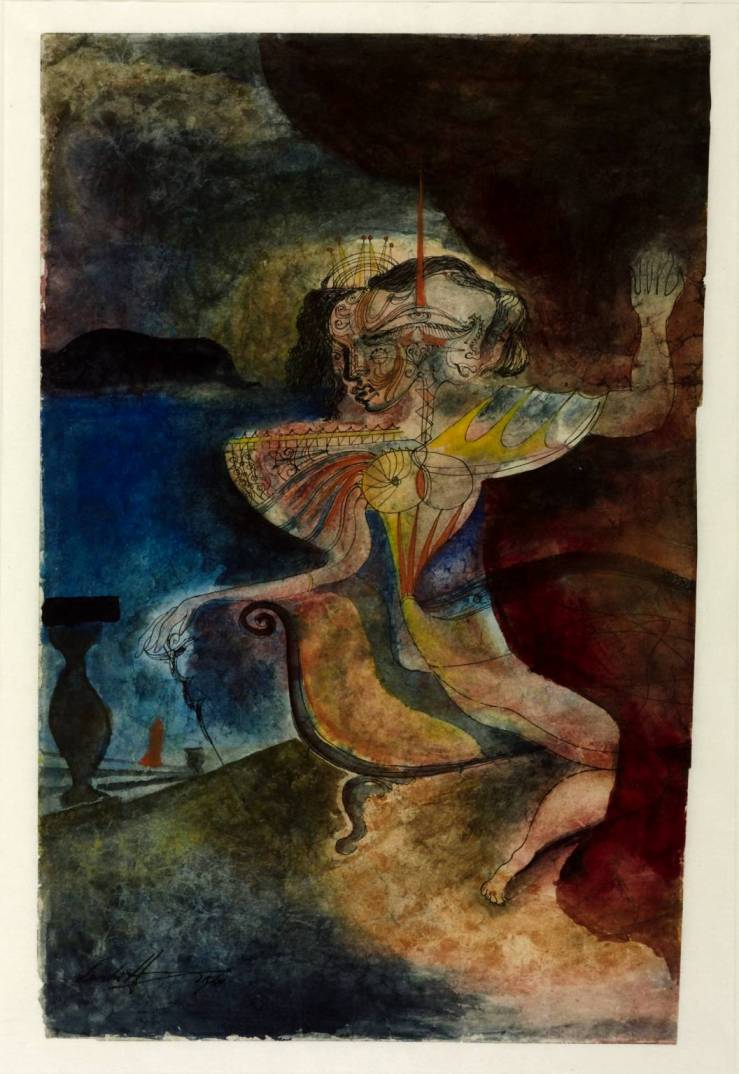
Skeleton Party — Edward Burra

Skeleton Party circa 1952-4 by Edward Burra 1905-1976

Skeleton Party, 1954 by Edward Burra (1905–1976)

List with no name #63

  1. The Tree of Life
  2. Holy Motors
  3. The Master
  4. Upstream Color
  5. Hard to Be a God
  6. Boyhood
  7. Inherent Vice
  8. Inside Llewelyn Davis
  9. The Beach Bum
  10. Blade Runner 2049
  11. Moonrise Kingdom
  12. mother!
  13. Carol
  14. Mad Max: Fury Road
  15. The Tale of the Princess Kaguya
  16. Meek’s Cutoff
  17. Spider-Man: Into the Spiderverse
  18. Blue Caprice
  19. Green Room
  20. Frances Ha
  21. Under the Skin
  22. Samsara
  23. Martha Marcy May Marlene
  24. The Handmaiden
  25. The Hateful Eight
  26. Love & Friendship
  27. The Lobster
  28. Once Upon a Time in Hollywood
  29. Under the Silver Lake
  30. Only Lovers Left Alive
  31. Suspiria 
  32. Zama
  33. Phantom Thread
  34. The Last Jedi
  35. The Favourite
  36. I Heard You Paint Houses
  37. Roma
  38. Edge of Tomorrow
  39. The Turin Horse
  40. Only God Forgives
  41. Lady Bird
  42. Get Out
  43. The Lost City of Z
  44. Your Highness
  45. The Grand Budapest Hotel
  46. Arrival
  47. The Wind Rises
  48. Tale of Tales
  49. Drive
  50. It Follows


Courtesan — Leslie Hurry

The Courtesan 1941 by Leslie Hurry 1909-1978

Courtesan, 1945 by Leslie Hurry (1909–1978)

Jonathan Buckley’s The Great Concert of the Night (Book acquired, sometime early December 2019)

img_4539

Jonathan Buckley’s novel The Great Concert of the Night is forthcoming from NYRB early next year (like, in a few weeks). NYRB’s blurb:

David has just spent New Year’s Eve alone, watching Le Grand Concert de la Nuit, a film in which his former lover Imogen starred. In the early hours of the new year, consoled and tormented by her ethereal presence, he begins to write. What follows is a brilliantly various journal, chronicling a year in the life of a thinking man. David works as a curator at the ailing Sanderson-Perceval Museum in southern England, whose small collection of porcelain, musical instruments, crystals, velvet mushrooms, and glass jellyfish is as eccentric and idiosyncratic as the long-dead collectors’ tastes. David himself is a connoisseur of the derelict and nonutilitarian, of objects removed from the flow of time. Refusing the imposed order of a straightforward chronology, his journal moves fluidly back and forth in time, filled with fragments of life remembered, imagined, and recorded, from memories of his past life with Imogen or with his ex-wife, Samantha, to reflections on the lives and relics of female saints or the history of medicine. There are quotations from Seneca, Meister Eckhart, and the Goncourt brothers mixed in with the equally compelling imagined words of fictional film directors, actors, and, always, the fascinating Imogen, who is alive now only “in the perpetual present of the sentence.” In The Great Concert of the Night, Jonathan Buckley expertly interweaves sexual despair, cultural critique, the plot lines of one man’s quietly brilliant life, and the problems and paradoxes of writing, especially writing about and to the dead.