“Banal Story” — Ernest Hemingway

“Banal Story”

by

Ernest Hemingway


So he ate an orange, slowly spitting out the seeds. Outside, the snow was turning to rain. Inside, the electric stove seemed to give no heat and rising from his writing-table, he sat down upon the stove. How good it felt! Here, at last, was life.

He reached for another orange. Far away in Paris, Mascart had knocked Danny Frush cuckoo in the second round. Far off in Mesopotamia, twenty-one feet of snow had fallen. Across the world in distant Australia, the English cricketers were sharpening up their wickets. There was Romance.

Patrons of the arts and letters have discovered The Forum, he read. It is the guide, philosopher, and friend of the thinking minority. Prize short-stories—will their authors write our best-sellers of to-morrow?

You will enjoy these warm, homespun, American tales, bits of real life on the open ranch, in crowded tenement or comfortable home, and all with a healthy undercurrent of humor.

I must read them, he thought.

He read on. Our children’s children—what of them? Who of them? New means must be discovered to find room for us under the sun. Shall this be done by war or can it be done by peaceful methods?

Or will we all have to move to Canada?

Our deepest convictions—will Science upset them? Our civilization—is it inferior to older orders of things?

And meanwhile, in the far-off dripping jungles of Yucatan, sounded the chopping of the axes of the gum-choppers.

Do we want big men—or do we want them cultured? Take Joyce. Take President Coolidge. What star must our college students aim at? There is Jack Britton. There is Dr. Henry Van Dyke. Can we reconcile the two? Take the case of Young Stribling.

And what of our daughters who must make their own Soundings? Nancy Hawthorne is obliged to make her own Soundings in the sea of life. Bravely and sensibly she faces the problems which come to every girl of eighteen.

It was a splendid booklet.

Are you a girl of eighteen? Take the case of Joan of Arc. Take the case of Bernard Shaw. Take the case of Betsy Ross.

Think of these things in 1925—Was there a risqué page in Puritan history? Were there two sides to Pocahontas? Did he have a fourth dimension?

Are modern paintings—and poetry—Art? Yes and No. Take Picasso.

Have tramps codes of conduct? Send your mind adventuring.

There is Romance everywhere. Forum writers talk to the point, are possessed of humor and wit. But they do not try to be smart and are never long-winded.

Live the full life of the mind, exhilarated by new ideas, intoxicated by the Romance of the unusual. He laid down the booklet.

And meanwhile, stretched flat on a bed in a darkened room in his house in Triana, Manuel Garcia Maera lay with a tube in each lung, drowning with the pneumonia. All the papers in Andalucia devoted special supplements to his death, which had been expected for some days. Men and boys bought full-length colored pictures of him to remember him by, and lost the picture they had of him in their memories by looking at the lithographs. Bull-fighters were very relieved he was dead, because he did always in the bull-ring the things they could only do sometimes. They all marched in the rain behind his coffin and there were one hundred and forty-seven bull-fighters followed him out to the cemetery, where they buried him in the tomb next to Joselito. After the funeral every one sat in the cafés out of the rain, and many colored pictures of Maera were sold to men who rolled them up and put them away in their pockets.

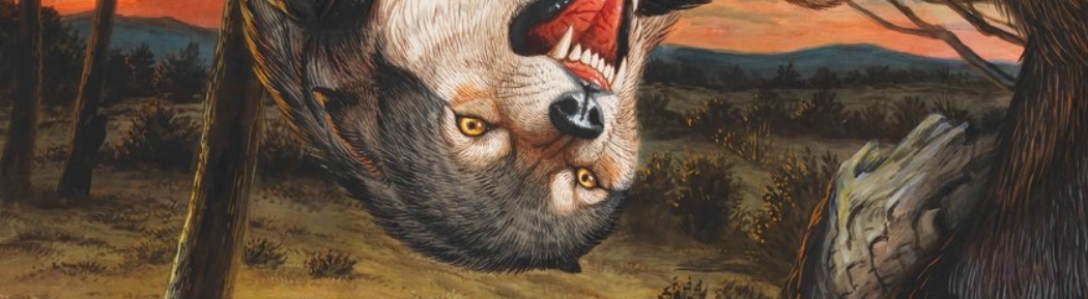
The Owl Is Fake — John Jacobsmeyer 

594956

The Owl Is Fake2019 by John Jacobsmeyer (b. 1964)

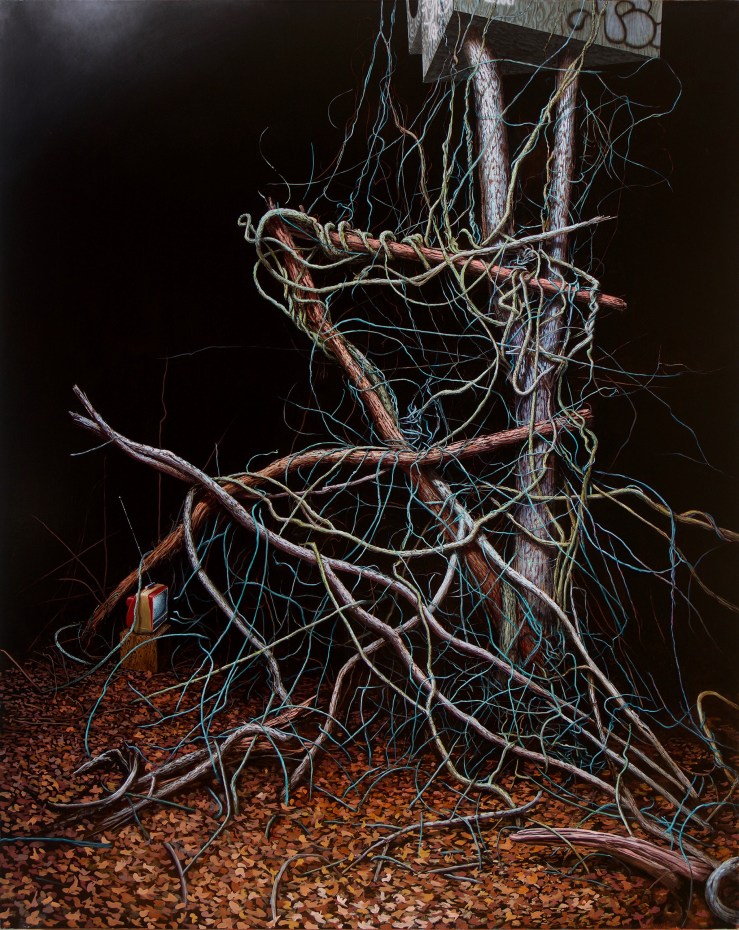
Mending Wall — Chester Arnold

normalized

Mending Wall, 2018 by Chester Arnold (b. 1952)

A Charles Portis miscellany, a signed Stanley Elkin oddity, and Rudolph Wurlitzer’s cult novel Nog (Books acquired, 21 Feb. 2020)

img_5024

I went to my beloved used bookstore the first three Fridays in February, searching for a few things: novels by Rudolph Wurlitzer (no luck); Titus Alone, the last novel in Mervyn Peake’s “Gormenghast” trilogy (no luck; might have to order it); the penultimate Harry Potter novel (for my nine-year-old; plenty of copies—apparently his sister never made it that far).

did pick up Escape Velocity, a compendium of the late great Charles Portis’s journalism, essays, and short stories. There’s also a three-act play, Delray’s New Moon, which The Arkansas Repertory Theatre performed in 1996, and a 2001 interview with Portis that was part of The Gazette Project, which comprised a series of interviews with staff of the now-defunct Arkansas Gazette.

Portis worked for the Gazette early in his career, but it’s Civil Rights reporting for The New York Herald Tribune that’s more immediately compelling. Stories on the Klan rallies, Birmingham terror, and the assassination of Medgar Evers seem to add a new complexity and dimension to the South of Portis’s novels Norwood and The Dog of the South.

The essays in Escape Velocity seem especially promising, and also seem to inform the novels—at least the first one I read, “That New Sound from Nashville,” did. There’s something almost-gonzo about Portis’s technique (some of his early journalism vibrates with local color and ironic editorializing, too).

I’ve only read two of the five short stories in the collection. All are quite short, and the two I read feel like sketches, to be honest. Still, I’m interested in the fiction that Portis produced after his last novel Gringos, and three of the stories are from that era, along with the play Delray’s New Moon, which I hope will be richer than the stories I’ve read so far.

img_5025

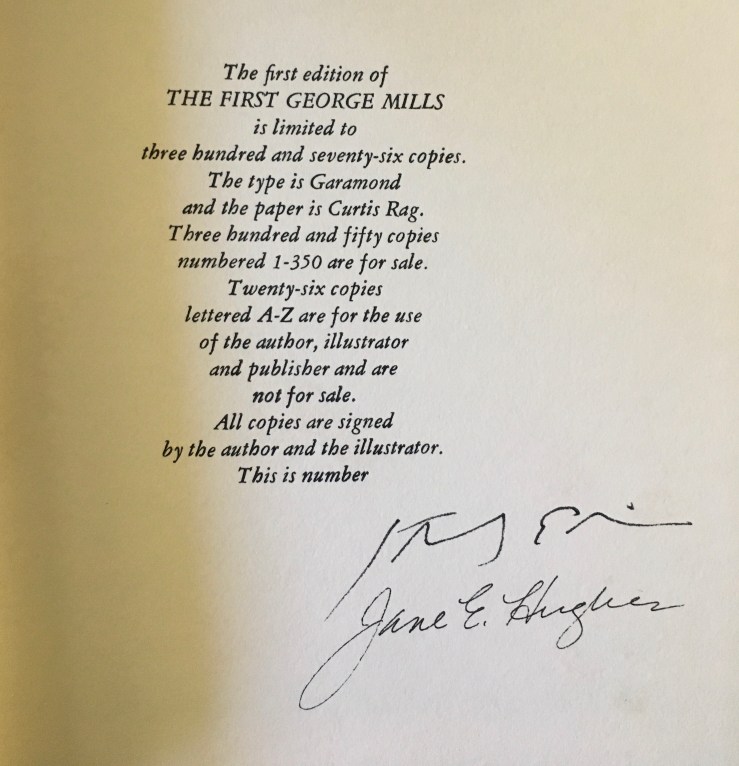
At the bookstore, I spied the gilt spine of The First George Mills, a 1980 oddity that comprises the first part (roughly 50 pages) of Stanley Elkin’s 1982 novel George Mills. The spine struck me as odd—so thin, so irregularly-shaped, etc. The book itself seemed like a novelty almost, and I was surprised to find Elkin’s signature at the end. I was even more surprised to find the signature of Jane Hughes, the apparent illustrator of this volume, whose illustrations do not appear in my copy. A bit of internet browsing seems to suggest that Hughes’s illustrations—of horses—were glued insets. Still, I was happy to forgo five bucks of my trade credit for Elkin’s signature.

When I got home from the bookstore a copy of Rudolph Wurlitzer’s cult classic 1969 novel Nog had arrived in the mail from Two Dollar Radio (along with a sticker and a bookmark and a thank you note—godbless indie publishers). I will be reading this book next, starting tonight. Here is the Thomas Pynchon blurb that made me interested in Wurlitzer:

Wow, this is some book, I mean it’s more than a beautiful and heavy trip, it’s also very important in an evolutionary way, showing us directions we could be moving in — hopefully another sign that the Novel of Bullshit is dead and some kind of re-enlightenment is beginning to arrive, to take hold. Rudolph Wurlitzer is really, really good, and I hope he manages to come down again soon, long enough anyhow to guide us on another one like Nog.

I did not go to the bookstore on this day, the last Friday of February 2020. I finished Gormenghast instead.

This Must Be the Place — Audun Grimstad

image-asset-1

This Must Be the Place, 2015 by Audun Grimstad (b. 1985)

Reification #49 — Dario Maglionico

image1415

Reification #49, 2018 by Dario Maglionico (b. 1986)

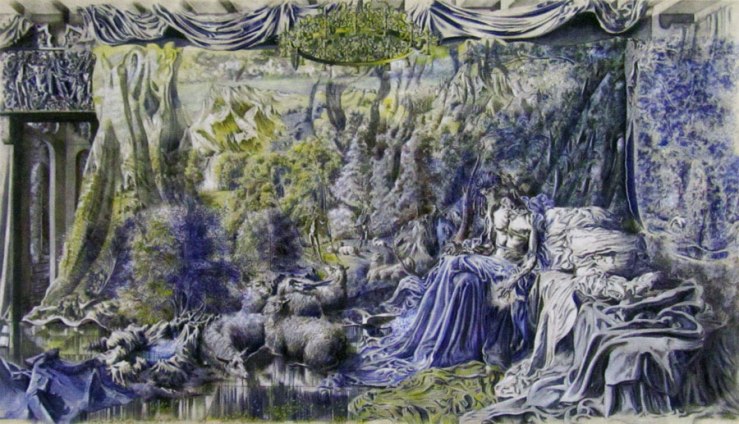
The Tapestry — Robin Ironside

03_lg

The Tapestry, c. 1944 by Robin Ironside (1912-1965)

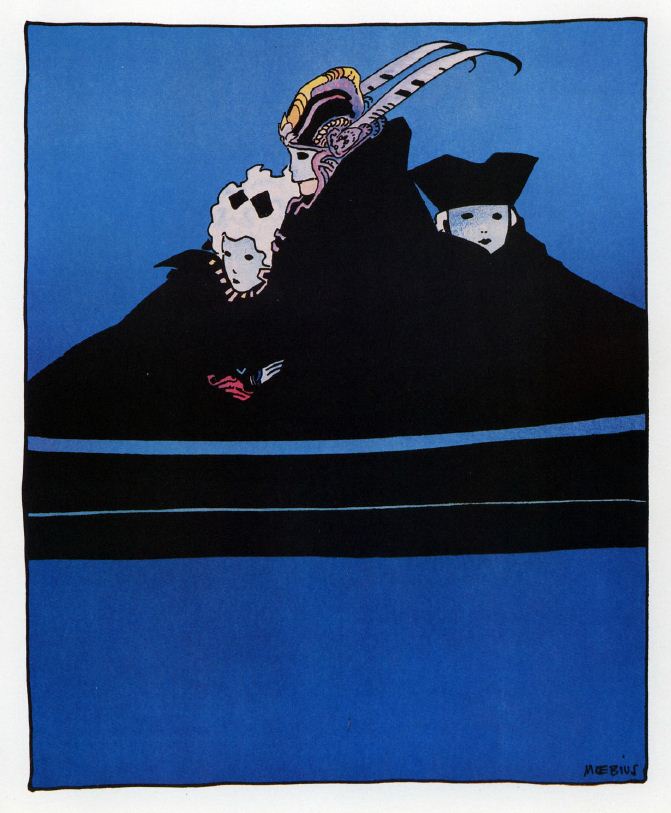
Venetian Carnival — Moebius

venetian moebius

Venetian Carnival by Moebius (Jean Giraud, 1938-2012)

Battle of Lights, Coney Island, Mardi Gras — Joseph Stella

a459db121a3c3d9671c23e26e28d1d73

Battle of Lights, Coney Island, Mardi Gras, 1914 by Joseph Stella (1877–1946)

Self-Portrait as Fat King — Julie Heffernan

a823d58c4ffb78ba-jh-6274-web

Self-Portrait as Fat King, 2017 by Julie Heffernan (b. 1956)

Posted in Art

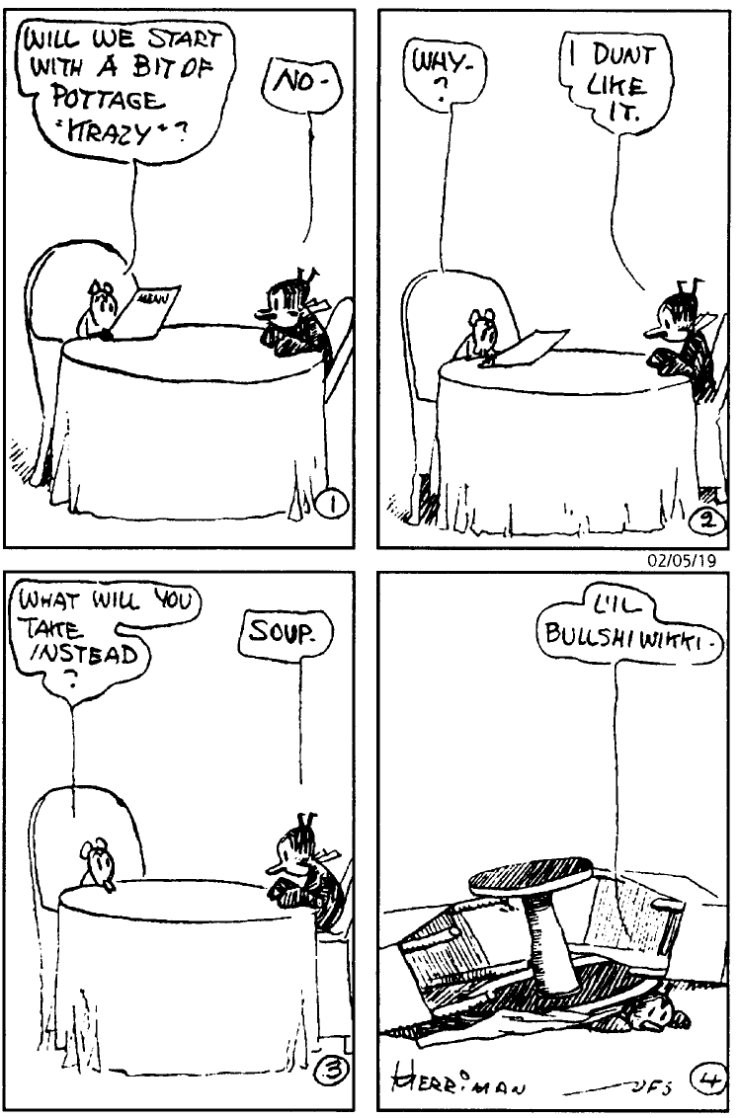
L’il Bullshiwikki (George Herriman’s Krazy Kat)

krazy-kat-19190205-s

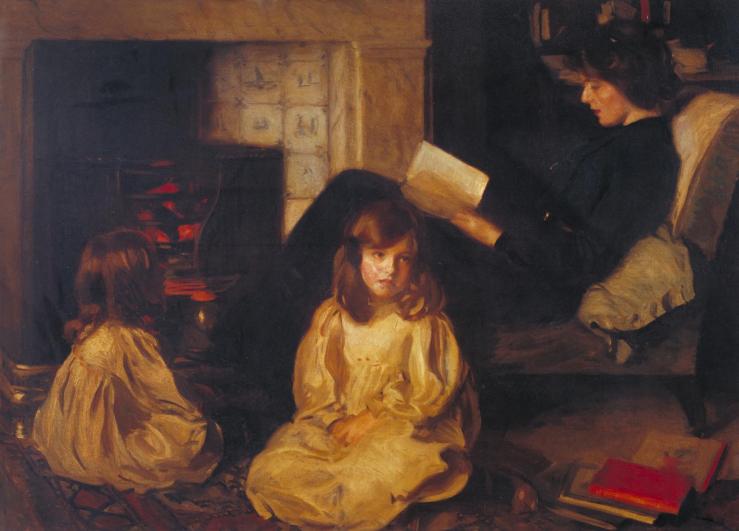
The Fairy Tale — Harrington Mann

The Fairy Tale 1902 by Harrington Mann 1864-1937

The Fairy Tale, 1902 by Harrington Mann (1864–1937)

Endless Energy for Limitless Living — Rockwell Kent

635931193246669925-laf-rockwell-kent-05-copy

Endless Energy for Limitless Living, 1946 by Rockwell Kent (1882-1971)

Two Books (Books acquired, 7 and 14 Feb. 2020)

2020-02-23_113226

Robinson by Muriel Spark. Penguin Books, 1964. Cover drawing by Terence Greer.

I have not yet read Muriel Spark, but I’ve noted she’s been compared to Ann Quin and Anna Kavan. Robinson looked more interesting to me (and shorter) than her more famous novels The Prime of Miss Jean Brodie and Memento Mori, and I love this cover.

2020-02-23_113226_1

Alchemy by Titus Burckhardt. Penguin Books,1974. Cover design by Walter Brooks, using a drawing from Basilius Valentinus’s “Aurelia Occulta Philosophorum” in Theatrum Chemicum, Argentoratie, 1614. vol. IV. Chocked full of glorious black and white images.

Read “I Don’t Talk Service No More,” a short story by Charles Portis

“I Don’t Talk Service No More”

by

Charles Portis


Once you slip past that nurses’ station in the east wing of D-3, you can get into the library at night easy enough if you have the keys. They keep the phone locked up in a desk drawer there but if you have the keys you can get it out and make all the long-distance calls you want to for free, and smoke all the cigarettes you want to, as long as you open a window and don’t let the smoke pile up so thick inside that it sets off the smoke alarm. You don’t want to set that thing to chirping. The library is a small room. There are three walls of paperback westerns and one wall of windows and one desk.

I called up Neap down in Orange, Texas, and he said, “I live in a bog now.” I hadn’t seen him in forty-odd years and I woke him up in the middle of the night and that was the first thing out of his mouth. “My house is sinking. I live in a bog now.” I told him I had been thinking about the Fox Company Raid and thought I would give him a ring. We called it the Fox Company Raid, but it wasn’t a company raid or even a platoon raid, it was just a squad of us, with three or four extra guys carrying pump shotguns for trench work. Neap said he didn’t remember me. Then he said he did remember me, but not very well. He said, “I don’t talk service no more.”

We had been in reserve and had gone back up on the line to relieve some kind of pacifist division. Those boys had something like “Live and Let Live” on their shoulder patches. When they went out on patrol at night, they faked it. They would go out about a hundred yards and lie down in the paddies, and doze off, too, like some of the night nurses on D-3. When they came back, they would say they had been all the way over to the Chinese outposts but had failed to engage the enemy. They failed night after night. Right behind the line the mortar guys sat around in their mortar pits and played cards all day. I don’t believe they even had aiming stakes set up around their pits. They hated to fire those tubes because the Chinese would fire right back. Continue reading “Read “I Don’t Talk Service No More,” a short story by Charles Portis”

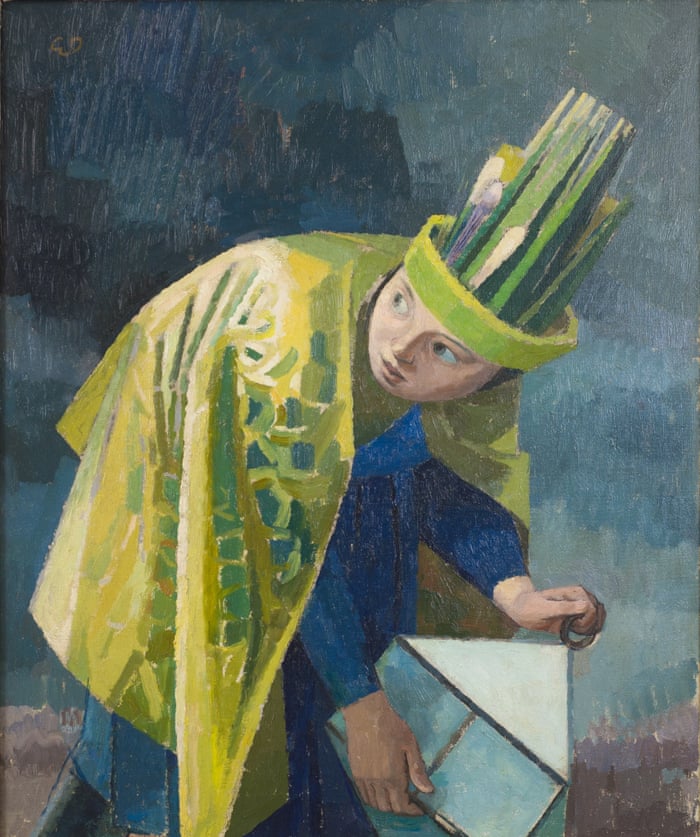
February — Evelyn Dunbar

aefa208a-417a-4e77-bce6-b3329ab85b96-1707x2040-1

February, 1938 by Evelyn Dunbar (1906-1960)

The Sisters — Ralph Peacock

The Sisters 1900 by Ralph Peacock 1868-1946

Screenshot 2020-02-21 at 11.53.31 PM

The Sisters, 1900 by Ralph Peacock (1868–1946)