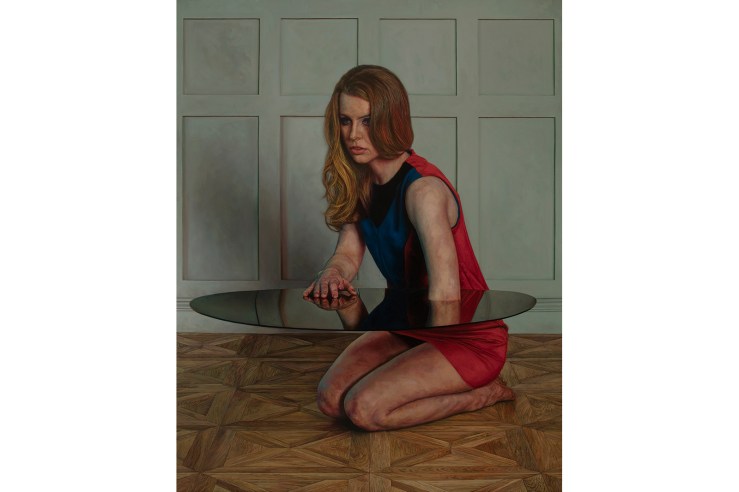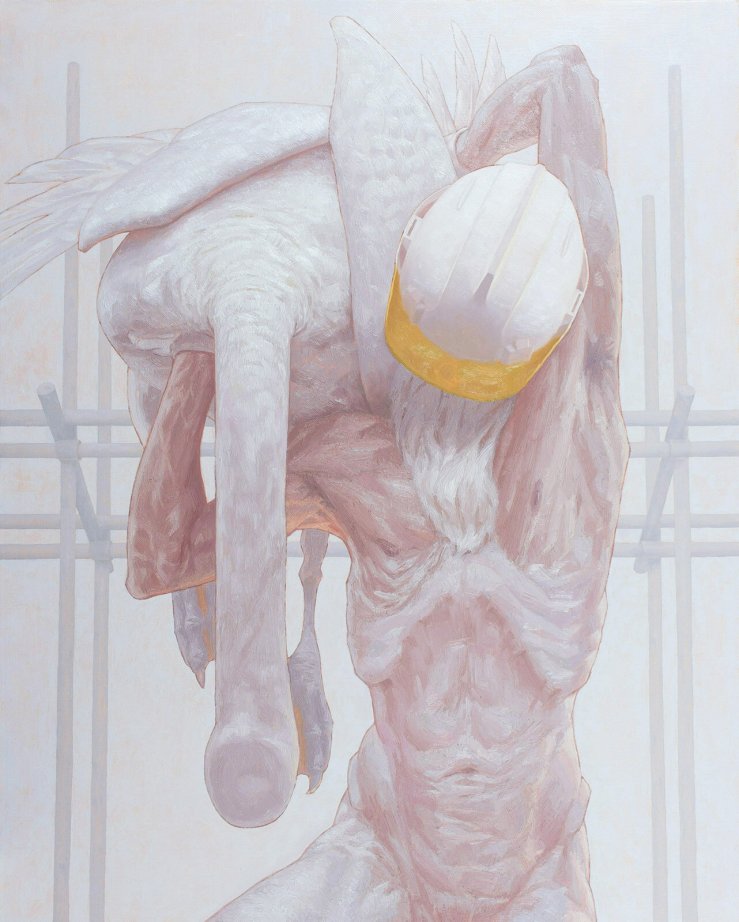
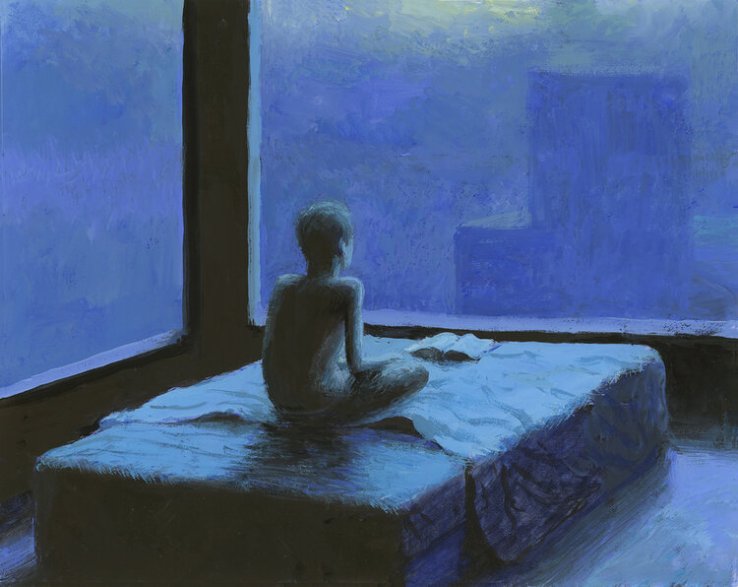
Study for Night Reading — Aron Wiesenfeld

Study for Night Reading, 2020 by Aron Wiesenfeld (b. 1972)

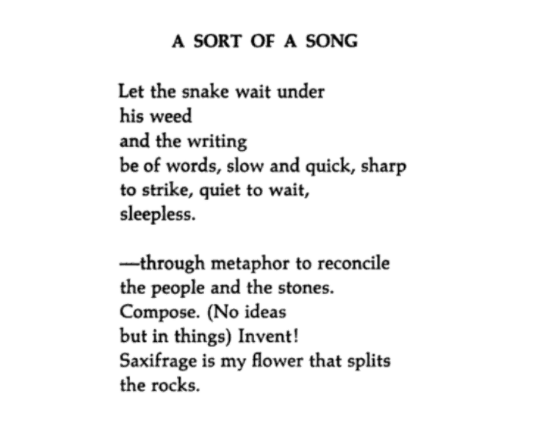
“A Sort of Song” — William Carlos Williams

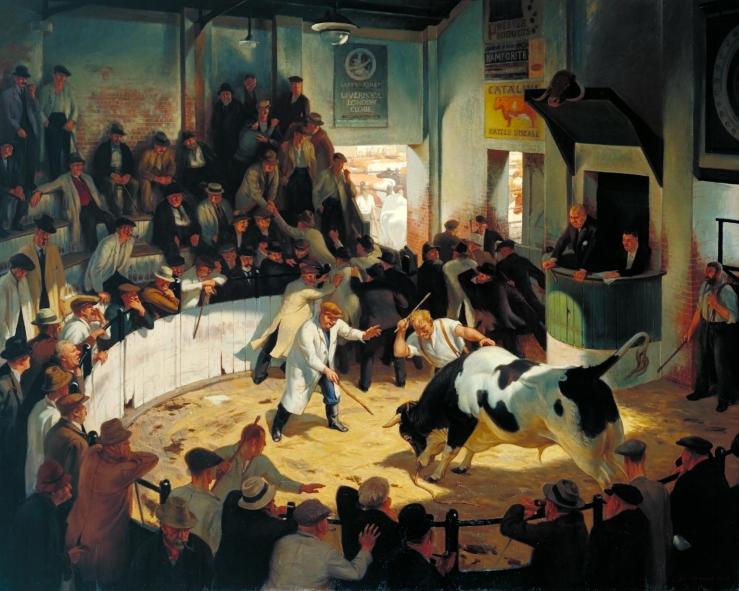
Commotion in the Cattle Ring — James Bateman

Commotion in the Cattle Ring, 1935 by James Bateman (1893–1959)

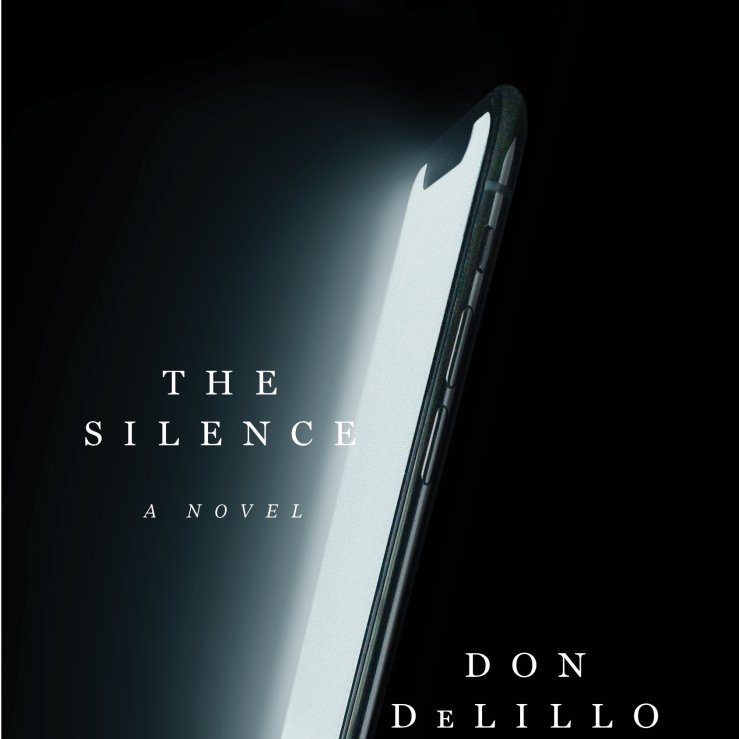
Don DeLillo’s new book The Silence is a slim disappointment

Don DeLillo’s latest fiction The Silence is set on Super Bowl Sunday in the year 2022. The story, such as it is, takes place over the course of a few hours, focusing primarily on five characters who gather in a New York apartment to watch the big game. The quintet is unable to see the game though because, for reasons unknown and never really explored, contemporary communication systems and technologies fail worldwide. No email, no internet, no teevee.

“Seemingly all screens have emptied out, everywhere. What remains for us to see, hear, feel?” the narrator—or maybe one of the characters—wonders. Other characters insist that what’s happening is the beginning of World War III (The Silence opens with Einstein’s famous quote about World War IV being fought with sticks and stones). “The drone wars,” another quips blankly, worrying—is he worrying?—that the “drones have become autonomous.”

We’re told of chaos, panic, and “small riots” in response to this unexplained failure of technology, but DeLillo doesn’t show us any of the pandemonium, let alone evoke much of a sense of anxiety about the titular silence. Instead, the book plods along a course of droll ennui and flat utterances that I suppose are meant to sound profound. “What if we are not what we think we are?” asks a character, and if DeLillo is pulling our leg with such banal dialogue, there’s little in The Silence to signal that the book is open to an ironic reading.

Instead we get blank references to Einstein, deep time, mass surveillance, and Jesus of Nazareth, as if these would-be motifs can signal meaning (or, like, lack of meaning, man!?) on their own. Characters repeat buzzwords; a dude riffs on microplastics; another treats his auditor to a pre-coital definition of capitalism. “The woman realizes she is still in the thrall of cryptocurrencies” is a real sentence in this book.

The rhetorical moves here have long been staples of DeLillo’s toolkit, but the verbal obliquity of The Silence feels anemic. The sentences are thin, the book is thin. The ideas don’t stick. Or rather, the insights that DeLillo offers here seem, well, obvious.

I used the verb plods a few paragraphs above, which doesn’t seem like the obvious choice for such a skinny book. I checked out an ebook of The Silence from my library and read it in about 75 minutes. (I am not a fast reader.) DeLillo’s publisher Scribner lists the hardback at 128 pages. I imagine the font must be huge and the margins pretty wide. What I read could’ve fit neatly into 40 or 50 pages of a mass-market paperback. (The hardback retails for twenty US dollars.) The American cover insists that The Silence is a novel, but it sure doesn’t read like one.

Despite its brevity, The Silence plods. For a book with a plane crash, a football game, casual sex, planet-wide panic, and the maybe-advent of WW III, The Silence is notably listless. Perhaps that’s by design, but if so it’s a design I didn’t care for.

Reviews and descriptions of DeLillo’s last novel Zero K (2016) deterred me from reading it, even though I liked its predecessor Point Omega (2010) more than many reviewers. I was intrigued by The Silence’s brevity, hopeful that DeLillo might pack the narrative with rich sentences and deep thoughts. I was hoping that he might bring some of the magic that we got in Pafko at the Wall (1992), a wonderful novella that DeLillo repurposed as the prologue for Underworld (1997).

But no. The Silence is a slim disappointment, a scant morality play whose thinly-sketched characters speak at (and not to) each other liked stoned undergrads. At least it’s short.

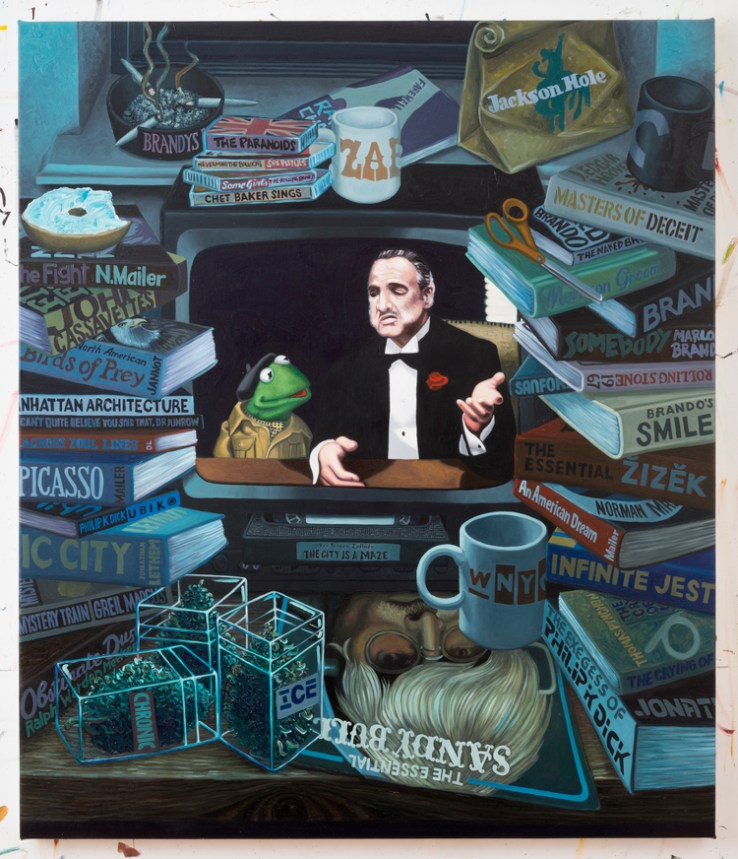
Perkus Tooth Still Life (Chronic City) — Tom Sanford

Perkus Tooth Still Life (Chronic City), 2016 by by Tom Sanford (b. 1975)

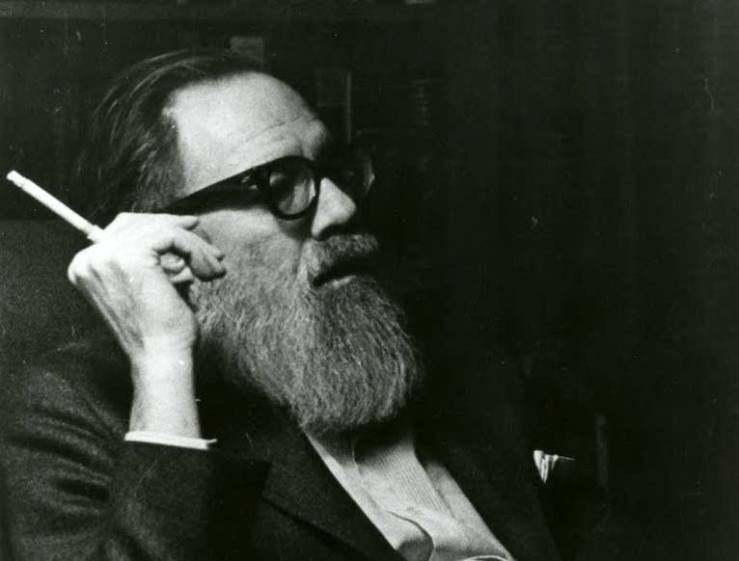
“What do we make of the Mr. Bones voice, the minstrel voice, as employed in Berryman’s most successful work, much of it written during the high period of the civil rights movement?” | Rick Moody on John Berryman

What do we make of the Mr. Bones voice, the minstrel voice, as employed in Berryman’s most successful work, much of it written during the high period of the civil rights movement? What do we make of Henry’s agonized dream life in our own times of crisis? And what of the author? And why is the Poetry Foundation assigning a review of Berryman’s letters, today, when they could instead review a new volume by an African American poet?

There is, it is fair to say, a stomach churning that goes with this assignment. Should I not properly imagine that I, a middle-aged white writer of privilege, am, however inadvertently, being conscripted into this review such that I might avoid rocking the boat on a now-contested figure of 20th-century confessional literature when some helping of opprobrium appears more than justifiable? Let me be plain. In the present context, it is impossible to read Berryman’s magnum opus without the keenest discontent about the use of dialect. Berryman’s conduct as a man, as a father, as a husband, as a professor, as indicated in his work and in his biography, is very often difficult to bear witness to, even at a 50-year remove. The tide has shifted so dramatically in 2020 that it is hard to know why it is a public service to review the volume at hand.

These are the third and fourth paragraphs of Rick Moody’s essay “Unspeakably Miserable For the Most Part,” published this week at the Poetry Foundation. Ostensibly a review of the new collection The Selected Letters of John Berryman (edited by Philip Coleman and Calista McRae), Moody’s essay continues for another dozen paragraphs.

MMXX — Martin Wittfooth

MMXX, 2020 by Martin Wittfooth (b. 1981)

Black Hole — Ian Cumberland

Black Hole, 2016 by Ian Cumberland (b. 1983)

Cormac McCarthy’s Cinematic Trash

The above is an unsigned New York Times article published on 8 Nov. 1998.

Cormac’s Trash was released in 1999.

In a 2001 interview, producer Mylène Moreno suggests that the short film did not violate McCarthy’s privacy:

AC: You’re also showing the short “Cormac’s Trash,” that you produced and your husband Rafe Greenlee wrote and directed, about how the obsessed fans of the elusive, reclusive El Paso resident/writer Cormac McCarthy try to smoke him out, one even going so far as to go through his trash. How did that project come about?

MM: From the moment we arrived, Cormac’s presence loomed very large. There was always a lot of buzz about him. We lived near him and were always aware of his presence in the neighborhood, though we never saw him. He was Rafe’s favorite author. The film explores Cormac’s relationship to El Paso’s artists and its literary community. As a lawyer, Rafe was interested in privacy issues, and he takes the position in the film that he’s not going to cross the line — even though the film reveals that others probably have. He was careful about revealing the sorts of things found in Cormac’s trash. He didn’t show all of what was in there.

I think we should leave Cormac’s trash alone.

Blog about some recent reading

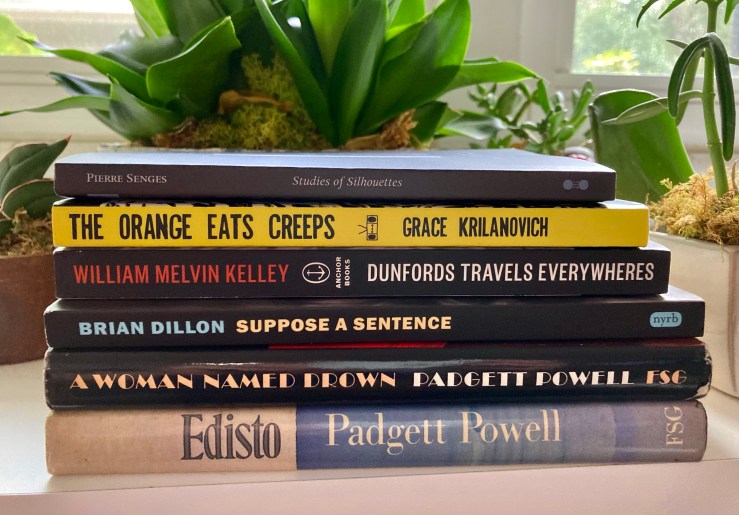
From the bottom of the stack to the top:

I read most of Padgett Powell’s 1984 debut Edisto in a few sittings, settling down easily into its rich evocation of a strange childhood in the changing Southern Sea Islands. I’d always been ambivalent about Powell, struggling and failing to finish some of his later novels (Mrs. Hollingsworth’s MenThe Interrogative Mood), but Edisto captured me from its opening lines. The story takes two simple tacks–it’s a coming of age tale as well as a stranger-comes-to-town riff. Powell’s sentences are lively and invigorating; they show refinement without the wearing-down of being overworked. The book is fresh, vital.

So when I finished Edisto, I thought I’d go for some more early Padgett. On Friday I picked up his second novel, A Woman Named Drown, started it that afternoon, and put it down 70 pages later the following afternoon. There wasn’t a single sentence that made me want to read the next sentence. Worse, it was turning into an ugly slog, a kind of attempt to refine Harry Crews’s dirty south into something closer to grimy eloquence. I like gross stuff, but this wasn’t my particular flavor.

In between, I took another palate cleansing essay from Brian Dillon’s collection Suppose a Sentence. Dillon’s collection of essays is perfect for resetting a reader’s mood between texts. Each essay reflects, sometimes obliquely, sometimes more directly on a single sentence from a range of authors. Good stuff.

I am working on a full review of William Melvin Kelley’s cult classic Dunfords Travels Everywheres. I have misused the phrase “cult classic” in the preceding sentence Dunfords has been long out of print, almost impossible to find, and largely unheralded for the past few decades. However, new editions from Anchor are rectifying this problem. The book is weird, a bit shaggy, funny and perplexing. More thoughts to come.

When I put down Powell’s A Woman Named Drown I picked up Grace Krilanovich’s novel The Orange Eats Creeps. I bought Orange back in July, pulling it out based on its spine (Two Dollar Radio, a small press I admire) and its title (c’mon!). The Steve Erickson blurb sealed the deal. I’m really digging Orange right now. It’s a novel about Slutty Teenage Hobo Vampire Junkies (the narrators term) bumming around and sucking blood and drugs in the Pacific Northwest. It reminds me a lot of Kathryn Bigelow’s film Near Dark, Tim Hunter’s film River’s Edge, and Harmony Korine’s film Gummo. There’s also a healthy dose of Twin Peaks in here, as well as the abject contours of Charles Burns’s Black Hole.

I’ve also been using Pierre Senges’s Studies of Silhouettes (English translation by Jacob Siefring) as literary palate cleansers, opening the book at random to read Senges’s strange riffs on Kafka’s leads. As Siefring’s blurb puts it, “Each of the texts in this work proceed from the fragments and cryptic beginnings found scattered throughout the notebooks Max Brod took possession of after Kafka’s death.” The results are sometimes very funny, sometimes profound, sometimes both. I hope to have a fuller review down the line.

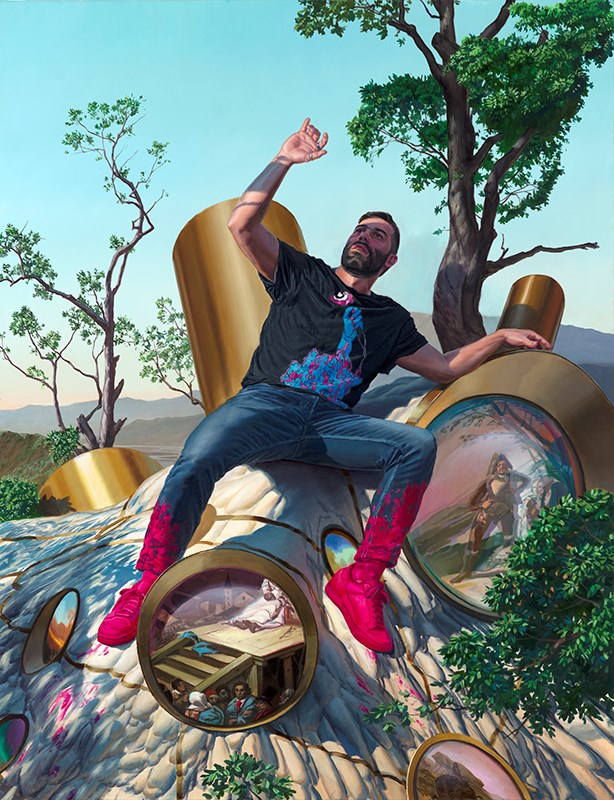
Midas — Adam Miller

Midas, 2020 by Adam Miller (b. 1979)

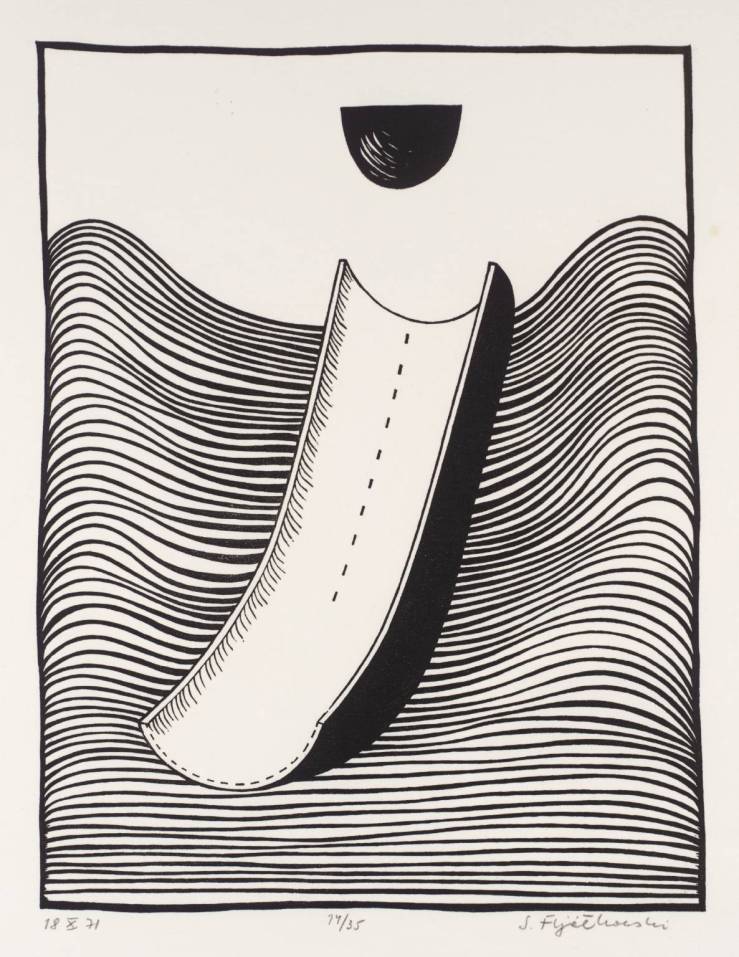
October 18, 1971 — Stanislaw Fijalkowski

October 18, 1971, 1971 by Stanislaw Fijalkowski (b. 1922)

Love and the Anti-Void — Jean-Pierre Roy

Love and the Anti-Void, 2020 by Jean-Pierre Roy (b. 1974)

Could Barthelme be considered your literary father?

BLVR: Could Barthelme be considered your literary father? He played a significant role in the shaping of Edisto, yes?

Padgett Powell: Barthelme edited the book, cutting for cleanliness and strength. In terms of my overall development as a writer, he lamented that he had found me already “fully formed.” By this he meant that I was, then, formed by my vision of realistic writing as more or less an amalgam of Faulkner and O’Connor and Williams and Percy and, say, Mailer.

I could not at the time make sense of Barthelme and Beckett and so forth. I never would have had I not, in knowing Don personally, seen that he was a red-blooded normal dude, not a wacko that the writing might suggest. Before I met him in fact I anticipated a Warhol kind of beast. He showed up in jeans and a yoked cowboy shirt a little drunk and introducing himself as Don and shaking hands firmly. We had not had a teacher to that point in our tour in Houston who would deign shake hands.

I referred to Don, as did many of the students, as Uncle Don. He did not shape Edisto beyond cleaning up, with considerable deftness, what I gave him. He could have been a professional editor of the highest caliber. He did in fact select the ten non-consecutive chapters that were sent to the New Yorker. They admitted later that they would not have seen that excerpt had they been given the entire book at first.

I assumed some influence from Don along what we’ll call surreal lines only later. Either that or I just naturally got tired or empty of the purely realistic utterance. I’ve swung so far in this direction now that I’m virtually unpublishable. Don himself at this age was swinging back to realism; he was a man of sense.

From a 2006 Believer interview with Padgett Powell.

Three Books (Books acquired, 16 Oct. 2020–John Barth, Walker Percy, and Padgett Powell)

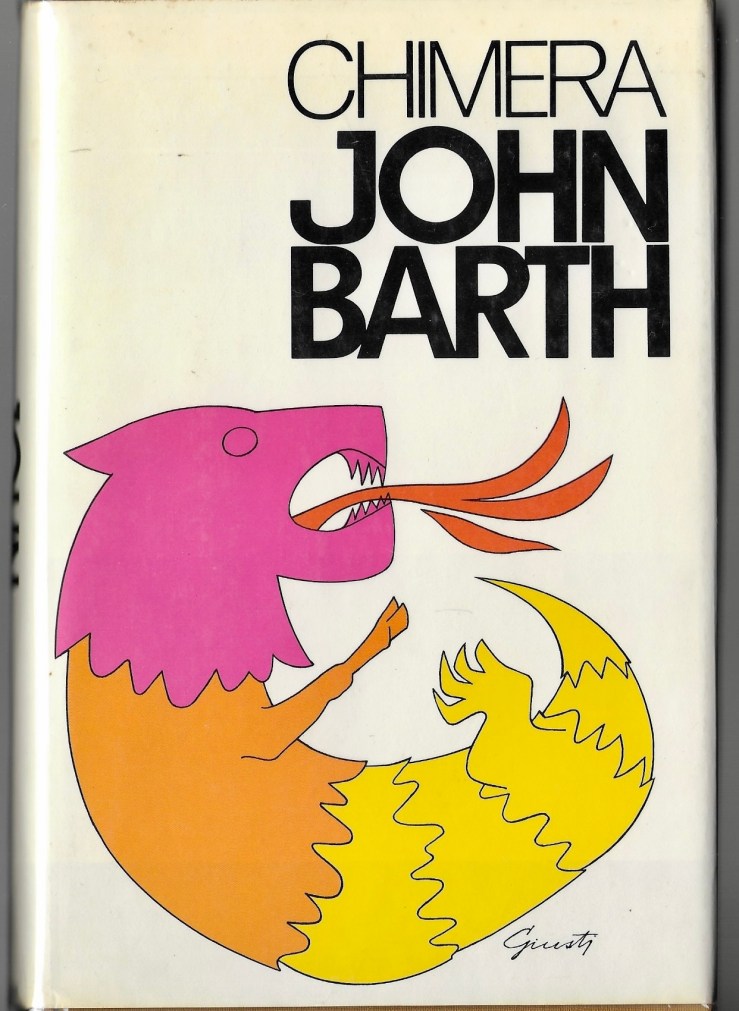
Chimera by John Barth. First edition 1973 hardback from Random House. Jacket design by George Giusti.

I couldn’t pass up this pristine first edition Barth today when browsing the used bookstore with my kids. I first read Chimera twenty or more years ago, as an undergrad, and it broke my brain a bit.

The Last Gentleman by Walker Percy. Second printing 1972 trade paperback from Noonday. Cover design by Janet Halverson.

Earlier this year in the same used bookshop I came across a first edition hardback copy of Percy’s 1971 novel Love in the Ruins. I hadn’t read Percy at the time (I’ve since loved his later novel Lancelot and been kinda sorta iffy on his famous debut The Moviegoer), but Janet Halverson’s oh-so-seventies Schoolhouse Rock!ish cover grabbed my attention. I really wish I’d bought it now (I think it was six bucks). Two weeks ago I came across two more Percys (Percies?) with Halverson covers, but let them be. But not today—at least not for this copy of The Last Gentleman.

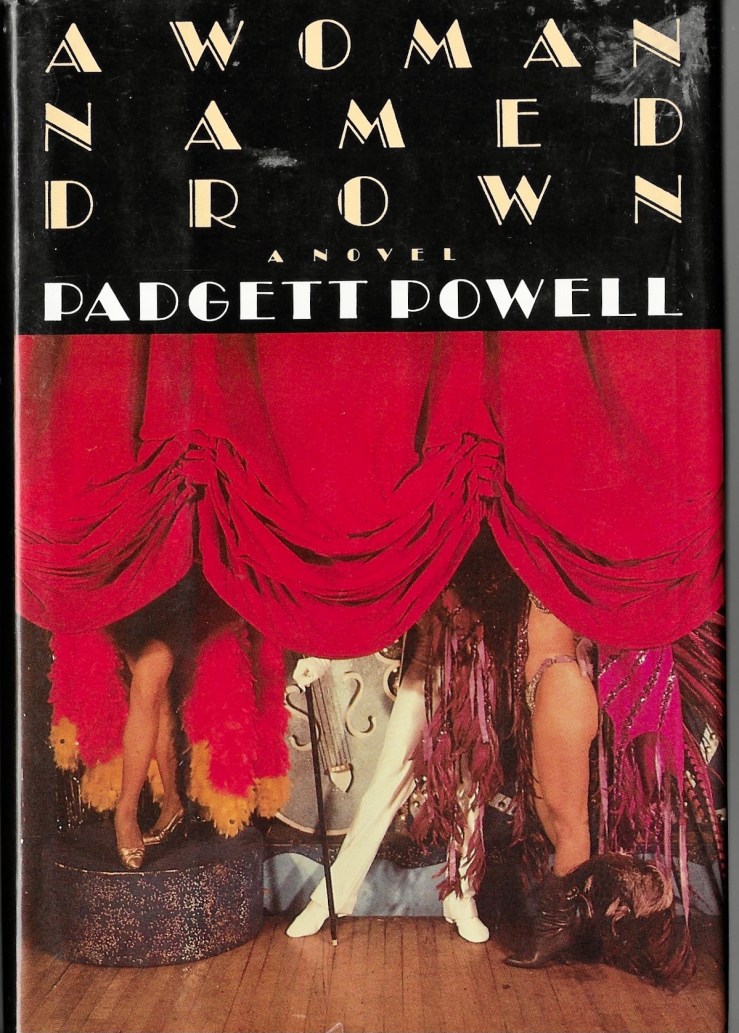
A Woman Named Drown by Padgett Powell. First edition 1987 hardback from FS&G.. Jacket design by Cynthia Krupat, using a photograph by William Wegman.

On the aforementioned-fortnight-last trip to the bookstore, I picked up, somewhat at random, Padgett Powell’s first novel Edisto. I finished it in three days, enjoying it very much, so I couldn’t pass up this copy of his slim second novel today.

Atlas — Dragan Bibin

Atlas, 2020 by Dragan Bibin (b. 1984)

Did not make the second show