Ignorance and Bigotry | From William Blades’ The Enemies of Books

“Ignorance and Bigotry”

from

William Blades’

The Enemies of Books 


IGNORANCE, though not in the same category as fire and water, is a great destroyer of books. At the Reformation so strong was the antagonism of the people generally to anything like the old idolatry of the Romish Church, that they destroyed by thousands books, secular as well as sacred, if they contained but illuminated letters. Unable to read, they saw no difference between romance and a psalter, between King Arthur and King David; and so the paper books with all their artistic ornaments went to the bakers to heat their ovens, and the parchment manuscripts, however beautifully illuminated, to the binders and boot makers.

There is another kind of ignorance which has often worked destruction, as shown by the following anecdote, which is extracted from a letter written in 1862 by M. Philarete Chasles to Mr. B. Beedham, of Kimbolton:—

“Ten years ago, when turning out an old closet in the Mazarin Library, of which I am librarian, I discovered at the bottom, under a lot of old rags and rubbish, a large volume. It had no cover nor title-page, and had been used to light the fires of the librarians. This shows how great was the negligence towards our literary treasure before the Revolution; for the pariah volume, which, 60 years before, had been placed in the Invalides, and which had certainly formed part of the original Mazarin collections, turned out to be a fine and genuine Caxton.”

I saw this identical volume in the Mazarin Library in April, 1880. It is a noble copy of the First Edition of the “Golden Legend,” 1483, but of course very imperfect. Continue reading “Ignorance and Bigotry | From William Blades’ The Enemies of Books”

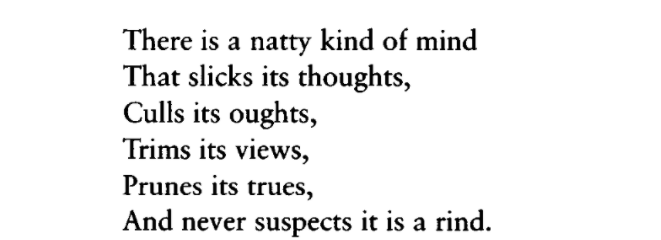
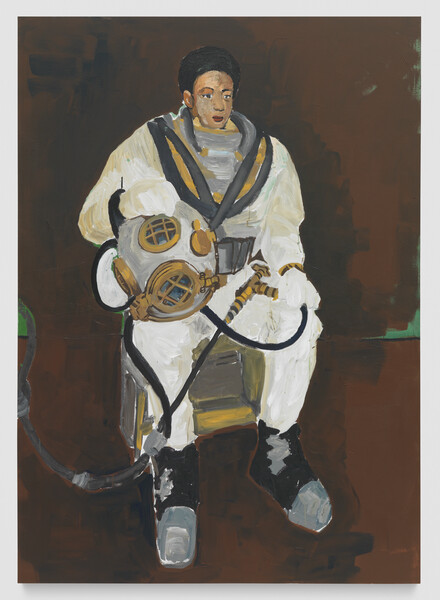
“Unsuspecting” — Jean Toomer

Lavender Embrace — Jordan Casteel

Lavender Embrace, 2018 by Jordan Casteel (b. 1989)

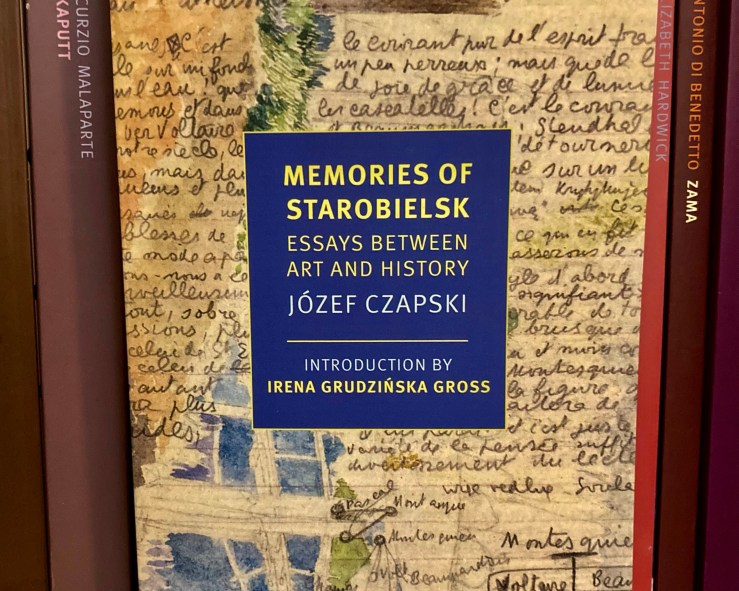
Józef Czapski’s Memories of Starobielsk (Book acquired, 7 Feb. 2022)

Józef Czapski’s Memories of Starobielsk: Essays between Art and History is forthcoming from NYRB in Alissa Valles’s translation. Their blurb:

Interned with thousands of Polish officers in the Soviet prisoner-of-war camp at Starobielsk in September 1939, Józef Czapski was one of a very small number to survive the massacre in the forest of Katyń in April 1940. Memories of Starobielsk portrays these doomed men, some with the detail of a finished portrait, others in vivid sketches that mingle intimacy with respect, as Czapski describes their struggle to remain human under hopeless circumstances. Essays on art, history, and literature complement the memoir, showing Czapski’s lifelong engagement with Russian culture. The short pieces on painting that he wrote while on a train traveling from Moscow to the Second Polish Army’s strategic base in Central Asia stand among his most lyrical and insightful reflections on art.

Untitled — Beauford Delaney

Untitled (Man in African Dress), 1972 by Beauford Delaney (1901–1979)

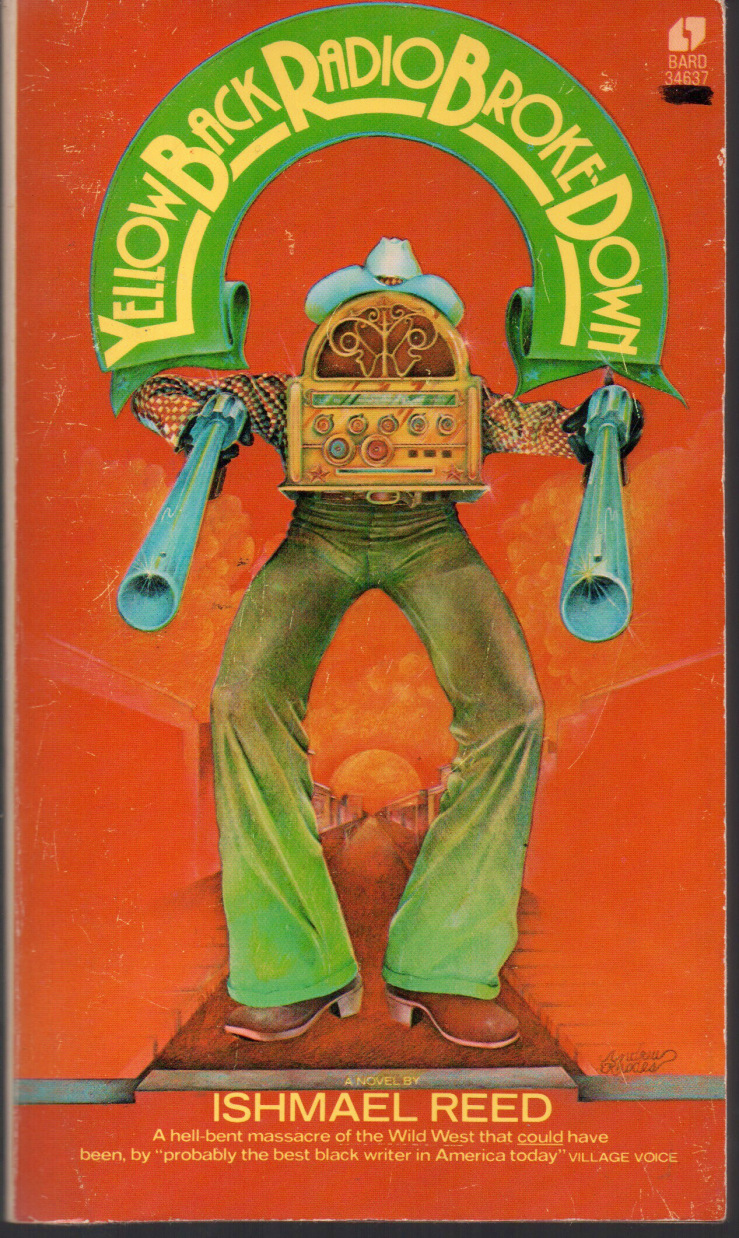
A review of Yellow Back Radio Broke-Down, Ishmael Reed’s syncretic Neo-HooDoo revenge Western

img_0548

Ishmael Reed’s second novel Yellow Back Radio Broke-Down tells the story of the Loop Garoo Kid, a “desperado so onery he made the Pope cry and the most powerful of cattlemen shed his head to the Executioner’s swine.”

The novel explodes in kaleidoscopic bursts as Reed dices up three centuries of American history to riff on race, religion, sex, and power. Unstuck in time and unhampered by geographic or technological restraint, historical figures like Lewis and Clark, Thomas Jefferson, John Wesley Harding, Groucho Marx, and Pope Innocent (never mind which one) wander in and out of the narrative, supplementing its ironic allegorical heft. These minor characters are part of Reed’s Neo-HooDoo spell, ingredients in a Western revenge story that is simultaneously comic and apocalyptic in its howl against the dominant historical American narrative. Yellow Back Radio Broke-Down is a strange and marvelous novel, at once slapstick and deadly serious, exuberant in its joy and harsh in its bitterness, close to 50 years after its publication, as timely as ever.

After the breathless introduction of its hero the Loop Garoo Kid, Yellow Back Radio Broke-Down initiates its plot. Loop’s circus troupe arrives to the titular city Yellow Back Radio (the “nearest town Video Junction is about fifty miles away”), only to find that the children of the town, “dressed in the attire of the Plains Indians,” have deposed the adults:

We chased them out of town. We were tired of them ordering us around. They worked us day and night in the mines, made us herd animals harvest the crops and for three hours a day we went to school to hear teachers praise the old. Made us learn facts by rote. Lies really bent upon making us behave. We decided to create our own fiction.

The children’s revolutionary, anarchic spirit drives Reed’s own fiction, which counters all those old lies the old people use to make us behave.

Of course the old—the adults—want “their” land back. Enter that most powerful of cattlemen, Drag Gibson, who plans to wrest the land away from everyone for himself. We first meet Drag “at his usual hobby, embracing his property.” Drag’s favorite property is a green mustang,

a symbol for all his streams of fish, his herds, his fruit so large they weighed down the mountains, black gold and diamonds which lay in untapped fields, and his barnyard overflowing with robust and erotic fowl.

Drag loves to French kiss the horse, we’re told. Oh, and lest you wonder if “green” here is a metaphor for, like, new, or inexperienced, or callow: No. The horse is literally green (“turned green from old nightmares”). That’s the wonderful surreal logic of Reed’s vibrant Western, and such details (the novel is crammed with them) make Yellow Back Radio Broke-Down a joy to read.

Where was I? Oh yes, Drag Gibson.

Drag—allegorical stand-in for Manifest Destiny, white privilege, capitalist expansion, you name it—Drag, in the process of trying to clear the kids out of Yellow Back Radio, orders all of Loop’s troupe slaughtered.

The massacre sets in motion Loop’s revenge on Drag (and white supremacy in general), which unfolds in a bitter blazing series of japes, riffs, rants, and gags. (“Unfolds” is the wrong verb—too neat. The action in Yellow Back Radio Broke-Down is more like the springing of a Jack-in-the-box).

Loop goes about obtaining his revenge via his NeoHooDoo practices. He calls out curses and hexes, summoning loas in a lengthy prayer. Loop’s spell culminates in a call that goes beyond an immediate revenge on Drag and his henchmen, a call that moves toward a retribution for black culture in general:

O Black Hawk American Indian houngan of Hoo-Doo please do open up some of these prissy orthodox minds so that they will no longer call Black People’s American experience “corrupt” “perverse” and “decadent.” Please show them that Booker T and MG’s, Etta James, Johnny Ace and Bojangle tapdancing is just as beautiful as anything that happened anywhere else in the world. Teach them that anywhere people go they have experience and that all experience is art.

So much of Yellow Back Radio Broke-Down is turning all experience into art. Reed spins multivalent cultural material into something new, something arguably American. The title of the novel suggests its program: a breaking-down of yellowed paperback narratives, a breaking-down of radio signals. Significantly, that analysis, that break-down, is also synthesized in this novel into something wholly original. Rhetorically, Yellow Back Radio Broke-Down evokes flipping through paperbacks at random, making a new narrative; or scrolling up and down a radio dial, making new music from random bursts of sound; or rifling through a stack of manic Sunday funnies to make a new, somehow more vibrant collage.

Perhaps the Pope puts it best when he arrives late in the novel. (Ostensibly, the Pope shows up to put an end to Loop’s hexing and vexing of the adult citizenry—but let’s just say the two Holy Men have a deeper, older relationship). After a lengthy disquisition on the history of hoodoo and its genesis in the Voudon religion of Africa (“that strange continent which serves as the subconscious of our planet…shaped so like the human skull”), the Pope declares that “Loop Garoo seems to be practicing a syncretistic American version” of the old Ju Ju. The Pope continues:

Loop seems to be scatting arbitrarily, using forms of this and that and adding his own. He’s blowing like that celebrated musician Charles Yardbird Parker—improvising as he goes along. He’s throwing clusters of demon chords at you and you don’t know the changes, do you Mr. Drag?

The Pope here describes Reed’s style too, of course (which is to say that Reed is describing his own style, via one of his characters. The purest postmodernism). The apparent effortlessness of Reed’s improvisations—the prose’s sheer manic energy—actually camouflages a tight and precise plot. I was struck by how much of Yellow Back Radio Broke-Down’s apparent anarchy resolves into a bigger picture upon a second reading.

That simultaneous effortlessness and precision makes Reed’s novel a joy to jaunt through. Here is a writer taking what he wants from any number of literary and artistic traditions while dispensing with the forms and tropes he doesn’t want and doesn’t need. If Reed wants to riff on the historical relations between Indians and African-Americans, he’ll do that. If Reed wants to assess the relative values of Thomas Jefferson as a progressive figure, he’ll do that. If Reed wants to attack his neo-social realist critics, he’ll do that. If Reed wants to critique the relationship between militarism and science, he’ll do that. If Reed wants to tell some really dirty jokes about a threesome, he’ll do that. And you can bet if he wants some ass-kicking Amazons to show up at some point, they’re gonna show.

And it’s a great show. Yellow Back Radio Broke-Down begins with the slaughter of a circus troupe before we get to see their act. The real circus act is the novel itself, filled with orators and showmen, carnival barkers and con-artists, pistoleers and magicians. There’s a manic glee to it all, a glee tempered in anger—think of George Herriman’s Krazy Kat, or Thomas Pynchon’s zany rage, or Robert Downey Sr.’s satirical film Putney Swope.

Through all its anger, Yellow Back Radio Broke-Down nevertheless repeatedly affirms the possibility of imagination and creation—both as cures and as hexes. We have here a tale of defensive and retaliatory magic. Yellow Back Radio Broke-Down is the third novel of Reed’s novels I’ve read (after Mumbo Jumbo and The Free-Lance Pallbearers), and my favorite thus far. Frankly, I needed the novel right now in a way that I didn’t know that I needed it until I read it; the contemporary novel I tried to read after it felt stale and boring. So I read Yellow Back Radio Broke-Down again. The great gift here is that Reed’s novel answers to the final line of Loop’s prayer to the Loa: “Teach them that anywhere people go they have experience and that all experience is art.” Like the children of Yellow Back Radio, Reed creates his own fiction, and invites us to do the same. Very highly recommended.

[Ed. note — Biblioklept first published this review in February of 2017.]

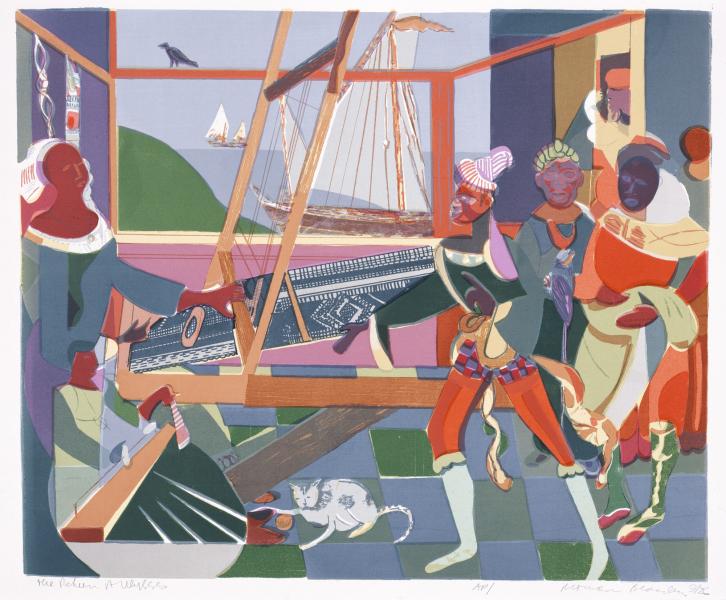
Return of Ulysses — Romare Bearden

Return of Ulysses, 1976 by Romare Bearden (1911-1988)

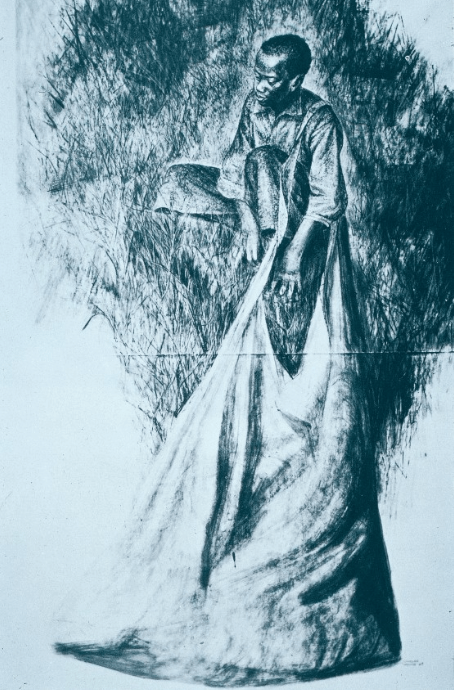
Saturday’s Child — Charles White

Saturday’s Child, 1965 by Charles White (1918-1979)

Slow Decay | From William Blades’ The Enemies of Books

“Dust and Neglect”

from

William Blades’

The Enemies of Books 


DUST upon Books to any extent points to neglect, and neglect means more or less slow Decay.

A well-gilt top to a book is a great preventive against damage by dust, while to leave books with rough tops and unprotected is sure to produce stains and dirty margins.

In olden times, when few persons had private collections of books, the collegiate and corporate libraries were of great use to students. The librarians’ duties were then no sinecure, and there was little opportunity for dust to find a resting-place. The Nineteenth Century and the Steam Press ushered in a new era. By degrees the libraries which were unendowed fell behind the age, and were consequently neglected. No new works found their way in, and the obsolete old books were left uncared for and unvisited. I have seen many old libraries, the doors of which remained unopened from week’s end to week’s end; where you inhaled the dust of paper-decay with every breath, and could not take up a book without sneezing; where old boxes, full of older literature, served as preserves for the bookworm, without even an autumn “battue” to thin the breed. Occasionally these libraries were (I speak of thirty years ago) put even to vile uses, such as would have shocked all ideas of propriety could our ancestors have foreseen their fate.

I recall vividly a bright summer morning many years ago, when, in search of Caxtons, I entered the inner quadrangle of a certain wealthy College in one of our learned Universities. The buildings around were charming in their grey tones and shady nooks. They had a noble history, too, and their scholarly sons were (and are) not unworthy successors of their ancestral renown. The sun shone warmly, and most of the casements were open. From one came curling a whiff of tobacco; from another the hum of conversation; from a third the tones of a piano. A couple of undergraduates sauntered on the shady side, arm in arm, with broken caps and torn gowns—proud insignia of their last term. The grey stone walls were covered with ivy, except where an old dial with its antiquated Latin inscription kept count of the sun’s ascent. The chapel on one side, only distinguishable from the “rooms” by the shape of its windows, seemed to keep watch over the morality of the foundation, just as the dining-hall opposite, from whence issued a white-aproned cook, did of its worldly prosperity. As you trod the level pavement, you passed comfortable—nay, dainty—apartments, where lace curtains at the windows, antimacassars on the chairs, the silver biscuit-box and the thin-stemmed wine-glass moderated academic toils. Gilt-backed books on gilded shelf or table caught the eye, and as you turned your glance from the luxurious interiors to the well-shorn lawn in the Quad., with its classic fountain also gilded by sunbeams, the mental vision saw plainly written over the whole “The Union of Luxury and Learning.”

Continue reading “Slow Decay | From William Blades’ The Enemies of Books”

Americans love being conned (Ishmael Reed)

img_0548

It was Bo Shmo and the neo-social realist gang. They rode to this spot from their hideout in the hills. Bo Shmo leaned in his saddle and scowled at Loop, whom he considered a deliberate attempt to be obscure. A buffoon an outsider and frequenter of sideshows.

Bo Shmo was dynamic and charismatic as they say. He made a big reputation in the thirties, not having much originality, by learning to play Hoagland Howard Carmichael’s “Buttermilk Sky” backwards. He banged the piano and even introduced some novel variations such as sliding his rump across the black and whites for that certain effect.

People went for it. It was an all the newspapers. He traveled from coast to coast exhibiting his ass and everything was fine until the real Hoagland Howard Carmichael (the real one) showed up and went for Bo Shmo’s goat. He called him a lowdown patent thief and railed him out of town. You would think that finding themselves duped, the impostor’s fans would demand his hide. Not so, Americans love being conned if you can do it in a style that is both grand and entertaining. Consider P.T. Barnum’s success, Semple McPherson and other notables. A guy who rigs aluminum prices can get himself introduced by Georgie Jessel at 100 dollars a plate but stealing a can of beer can get you iced.

So sympathetic Americans sent funds to Bo Shmo which he used to build one huge neo-social realist Institution in the Mountains. Wagon trains of neo-social realist composers writers and painters could be seen winding up its path.

From Ishmael Reed’s 1969 novel Yellow Back Radio Broke-Down, which I am loving the hell out of.

On Fran Ross’s postmodern picaresque novel Oreo

img_5795

Fran Ross’s 1974 novel Oreo is an overlooked masterpiece of postmodern literature, a delicious satire of the contemporary world that riffs on race, identity, patriarchy, and so much more. Oreo is a pollyglossic picaresque, a metatextual maze of language games, raps and skits, dinner menus and vaudeville routines. Oreo’s rush of language is exuberant, a joyful metatextual howl that made me laugh out loud. Its 212 pages galloped by, leaving me wanting more, more, more.

Oreo is Ross’s only novel. It was met with a handful of confused reviews upon its release and then summarily forgotten until 2000, when Northeastern University Press reissued the novel with an introduction by UCLA English professor Harryette Mullen(New Directions offered a wider release with a 2015 reissue, including Mullen’s introduction as an afterword.)

Mullen gives a succinct summary of Oreo in the opening sentence of her 2002 essay “‘Apple Pie with Oreo Crust’: Fran Ross’s Recipe for an Idiosyncratic American Novel“:

In Fran Ross’s 1974 novel Oreo, the Greek legend of Theseus’ journey into the Labyrinth becomes a feminist tall tale of a young black woman’s passage from Philadelphia to New York in search of her white Jewish father.

Mullen goes on to describe Oreo as a novel that “explores the heterogeneity rather than the homogeneity of African Americans.”

Oreo’s ludic heterogeneity may have accounted for its near-immediate obscurity. Ross’s novel celebrates hybridization and riffs–both in earnestness and irony—on Western tropes and themes that many writers of the Black Arts Movement of the 1960s and ’70s specifically rejected.

Indeed, Oreo still feels ahead of its time, or out of its time, as novelist Danzy Senna repeatedly notes in her introduction to the New Directions reissueSenna points out that “Oreo resists the unwritten conventions that still exist for novels written by black women today,” and writes that Ross’s novel “feels more in line stylistically, aesthetically, with Thomas Pynchon and Kurt Vonnegut than with Sonia Sanchez and Ntzoke Shange.”

In his review of Oreo, novelist Marlon James also posits Ross’s place with the postmodernists, suggesting that “maybe Ross is closer in spirit to the writers in the 70s who managed to make this patchwork sell,” before wryly noting, “Of course they were all white men: Vonnegut, Barth, Pynchon, and so on.”

Of course they were all white men. And perhaps this is why Oreo languished out of print so long. Was it erasure? Neglect? Institutional racism and sexism in publishing and literary criticism? Or just literal ignorance?

In any case, Ross belongs on the same postmodern shelf with Gaddis, Pynchon, Barth, Reed, and Coover. Oreo is a carnivalesque, multilingual explosion of the slash we might put between high and low. It’s a metatextual novel that plays zanily with the plasticity of its own form. Like Coover, Elkin, and Barthelme, Ross’s writing captures the spirit of mass media; Oreo is forever satirizing commercials, television, radio, film (and capitalism in general).

Ross plays with the page as well, employing quizzes, menus, and charts into the text, like this one, from the novel’s third page:

Screenshot 2020-07-24 at 3.14.00 PM

Oreo won me over with the postmodern paragraph that followed this chart, which I’ll share in full:

 A word about weather

There is no weather per se in this book. Passing reference is made to weather in a few instances. Assume whatever season you like throughout. Summer makes the most sense in a book of this length. That way, pages do not have to be used up describing people taking off and putting on overcoats.

What happens in Oreo? Well, it’s a picaresque, sure, but it goes beyond, as Ralph Ellison put it, being “one of those pieces of writing which consists mainly of one damned thing after another sheerly happening.” (Although there are plenty of damned things happening, sheerly or otherwise, after each other.)

Oreo is a mock-epic, a satirical quest for the titular Oreo to discover the “secret of her birth,” using clues left by her white Jewish father who, like her mother, has departed. All sorts of stuff happens along the way–run ins with rude store clerks, attempted muggings, rhyming little people with a psychopathic son camping in the park, a short voice acting career, a soiree with a “rothschild of rich people,” a witchy stepmother, and a memorable duel with a pimp. (And more, more, more.)

Throughout it all, Oreo shines as a cartoon superhero, brave, impervious, adaptable, and full of wit—as well as WIT (Oreo’s self-invented “system of self- defense [called] the Way of the Interstitial Thrust, or WIT.” In “a state of extreme concentration known as hwip-as [Oreo could] engage any opponent up to three times her size and weight and whip his natural ass.)

Indeed, as Oreo’s uncle declares, “She sure got womb, that little mother…She is a ball buster and a half,” underscoring the novel’s feminist themes as well as its plasticity of language. Here “womb” becomes a substitution for “balls,” a symbol of male potency busted in the next sentence. This ironic inversion might serve as a synecdoche for Oreo’s entire quest to find her father, a mocking rejoinder to patriarchy. As Oreo puts it, quite literally: “I am going to find that motherfucker.”

Find that motherfucker she does and—well, I won’t spoil any more. Instead, I implore you to check out Oreo, especially if you’re a fan of all those (relatively) famous postmodernist American novels of the late twentieth century. I wish someone had told me to read Oreo ages ago, but I’m thankful I read it now, and I look forward to reading it again. Very highly recommended.

[Ed. note — Biblioklept first published this review in July of 2020.]

The Three Marys — Henry Ossawa Tanner

The Three Marys, 1910 by Henry Ossawa Tanner (1859-1937)

How to Read James Joyce’s Ulysses (and Why You Should Avoid “How-to” Guides Like This One)

[Editorial note: What follows is an edit of a piece I first posted on June 16, 2010–Bloomsday. Today marks the 100th anniversary of the first publication of James Joyce’s masterpiece Ulysses. I tried to come up with something original, but I found I had nothing to say that I hadn’t already said here, which essentially amounts to, Read Ulysses. It’s not nearly as difficult as its reputation might suggest. And it’s really funny.]

James Joyce’s Ulysses is a celebrated and praised novel. However, the book’s reputation for density, erudition, and inscrutability still daunts many readers–leading to a glut of guidebooks, summaries, and annotations. Ironically, rather than inviting first-time readers to the text, the sheer volume of these guides to Ulysses can paradoxically repel. Their very existence seems predicated on an intense need, and although some of the guides out there can be helpful, others can get in the way. This need not be. Ulysses deserves its reputation as one the best books in the English language. It generously overflows with insight into the human experience, and it’s very, very funny. And, most importantly, anyone can read it.

Here are a few thoughts on how to read Ulysses, enumerated–because people like lists:

1. Ignore all guides, lists, maps, annotations, summaries, and lectures. You don’t need them; in fact, they could easily weigh down what should be a fun reading experience. Jump right into the text. Don’t worry about getting all the allusions or unpacking all the motifs.

Pretty soon though, you’ll get to the third chapter, known as “Proteus.” It’s admittedly hard to follow. You might want a guide at this point. Or you might just want to give up. (Of course, you might be a genius and totally get what Stephen is thinking about as he wanders the beach. Good for you). If frustration sets in, I suggest skipping the chapter and getting into the rich, earthy consciousness of the book’s hero, Leopold Bloom in chapter four, “Calypso.” It’s great stuff. You can always go back to chapter three later, of course. The real key, at least in my opinion, to reading (and enjoying) Ulysses is getting into Bloom’s head, matching his rhythm and pacing. Do that and you’re golden.

I’ve already advised you, gentle reader, not to follow any guides, so please, ignore the rest of my advice. Quit reading this post and start reading Ulysses.

For those who wish to continue–

2. Choose a suitable copy of the book. The Gabler edition will keep things neat and tidy and it features wide margins for all those clever game-changing annotations you’ll be taking. Several guides, including Harry Blamire’s The New Bloomsday Book align their annotation to the Gabler edition’s pagination.

3. Make a reading schedule and stick to it. The Gabler edition of Ulysses is nearly 700 pages long. That’s a long, long book–but you can read it in just a few weeks. There are eighteen episodes in Ulysses, some longer and more challenging than others, but reading one episode every two days should be no problem. If you can, try to read one episode in one sitting each day. As the book progresses, you’ll find yourself going back to previous chapters to find the figures, motifs, and traces that dance through the book.

4. So you’ve decided you need a guide. First, try to figure out what you want from the guide. Basic plot summary? Analysis? Explication? There’s plenty out there–too much really–so take the time to try to figure out what you want from a guide and then do some browsing and skimming before committing.

The most famous might be Stuart Gilbert’s James Joyce’s Ulysses, a dour book that manages to suck all the fun out of Joyce’s work. In a lecture on Ulysses, Vladimir Nabokov warned “against seeing in Leopold Bloom’s humdrum wanderings and minor adventures on a summer day in Dublin a close parody of the Odyssey,” noting that “it would be a complete waste of time to look for close parallels in every character and every scene in the book.” Nabokov scathingly continued: “One bore, a man called Stuart Gilbert, misled by a tongue-in-cheek list compiled by Joyce himself, found in every chapter the domination of one particular organ . . . but we shall ignore that dull nonsense too.” It’s perhaps too mean to call Gilbert’s guide “nonsense,” but it’s certainly dull. Harry Blamire’s The New Bloomsday Book is a line-by-line annotation that can be quite helpful when Joyce’s stream of consciousness gets a bit muddy; Blamire’s explications maintain a certain analytical neutrality, working mostly to connect the motifs of the book but letting the reader manage meaning. Don Gifford’s Ulysses Annotated is an encyclopedia of minutiae that will get in the way of any first time reader’s enjoyment of the book. Gifford’s notes are interesting but they can distract the reader from the text, and ultimately seem aimed at scholars and fanatics.

Most of the guidebooks I’ve seen for Ulysses share a common problem: they are obtrusive. I think that many readers who want some guidance or insight to aid their reading of Ulysses, rather than moving between books (what a chore!), should listen to some of the fantastic lectures on Joyce that are available. James Heffernan’s lectures for The Teaching Company provide a great overview of the book with some analysis; they are designed to be listened to in tandem with a reading of the book. The best explication I’ve heard though is a series of lectures by Joseph Campbell called Wings of Art. Fantastic stuff, and probably the only guide you really need. It’s unfortunately out of print, but you can find it easily via extralegal means on the internet. Speaking of the internet–there’s obviously a ton of stuff out there. I’ll withhold comment–if you found this post, you can find others, and have undoubtedly already seen many of the maps, schematics, and charts out there.

5. Another strategy: read, but listen to an audiobook as well. This will give you a chance to “reread” the novel. I highly, highly, highly recommend RTÉ’s 1982 full cast production. I reviewed it here some years back.

6. Keep reading. Reread. Add time to that reading schedule you made if you need to. But most of all, have fun. Skip around. If you’re excited about Molly’s famous monologue at the end of the book, go ahead and read it. Again, the point is to enjoy the experience. If you can trick a friend into reading it with you, so much the better. Have at it.

Andrea Notley Crabtree the First — Henry Taylor

Andrea Notley Crabtree the First, 2017 by Henry Taylor (b. 1958)

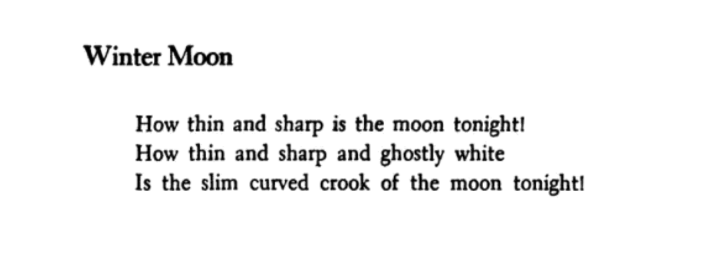
“Winter Moon” — Langston Hughes

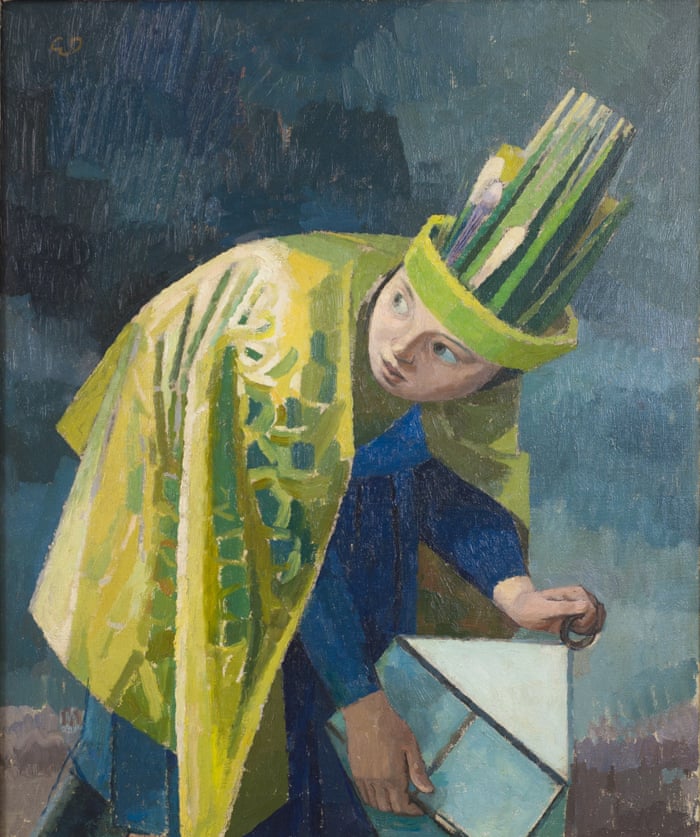
February — Evelyn Dunbar

February, 1938 by Evelyn Dunbar (1906-1960)