Lucia Berlin/Ursula K. Le Guin (Books acquired, 12.11.2015)

IMG_1016

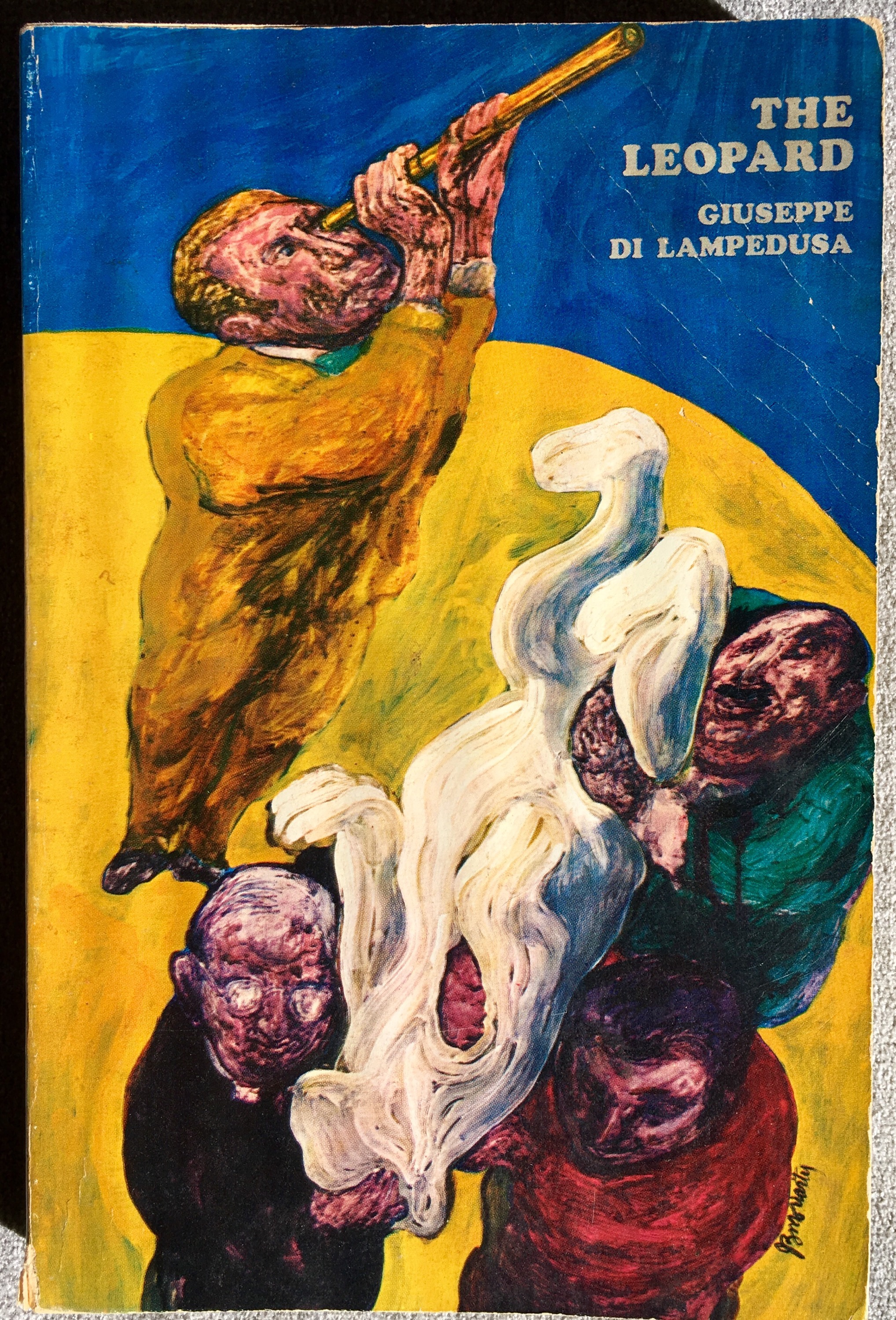
Went to the bookstore this afternoon to pick up the much-acclaimed collection of stories by Lucia Berlin, A Manual for Cleaning Women (typing out the title, I suddenly hear its ambiguities). My trusty local used bookshop didn’t have a copy, but they did have Homesick, and I love Black Sparrow editions, so hey, cool.

IMG_1017

I’ve been tearing through Ursula K. Le Guin’s Hainish novels lately after picking up Rocannon’s World at sorta-random. I’m in the middle of City of Illusion right now, having finished (a third read of) The Dispossessed (fantastic), The Word for World Is Forest (a bit too on-the-nose critique of the Vietnam War; also, James Cameron should send Le Guin some Avatar bucks), and Planet of Exile, which was great. (And oh: George R.R. Martin should send Le Guin some Game of Thrones bucks for that one: Planet of Exile has barbarian invaders from the north, seasons that last for decades, a constant fear that “winter is coming,” and its own white walkers (snow ghouls)).

So well and anyway: I already have a copy of The Left Hand of Darkness, which is the next title in the sequence in which I’m reading the Hainish books. My pilfered copy isfrom years back, and I’ve read it a few times—but I just couldn’t pass up this first edition copy with its lovely Klimtesque cover art by Leo and Diane Dillon.

The Flagellants — Pieter van Laer

flagella

One of the better autobiographical notes I’ve ever read

1563_001

One of the better autobiographical notes I’ve read. This comes from The Norton Anthology of American Literature, Vol. E (8th ed.); my copy of Yellow Back Radio Broke-Down unfortunately doesn’t actually include this note.

The Destruction of the Temple — Samuel Colman

T01980_10.jpg

“I am alive—I guess” — Emily Dickinson

“I am alive—I guess”
by
Emily Dickinson

I am alive—I guess—
The Branches on my Hand
Are full of Morning Glory—
And at my finger’s end—

The Carmine—tingles warm—
And if I hold a Glass
Across my Mouth—it blurs it—
Physician’s—proof of Breath—

I am alive—because
I am not in a Room—
The Parlor—Commonly—it is—
So Visitors may come—

And lean—and view it sidewise—
And add “How cold—it grew”—
And “Was it conscious—when it stepped
In Immortality?”

I am alive—because
I do not own a House—
Entitled to myself—precise—
And fitting no one else—

And marked my Girlhood’s name—
So Visitors may know
Which Door is mine—and not mistake—
And try another key—

How good—to be alive!
How infinite—to be
Alive—two-fold—the birth I had—
And this—besides, in Thee!

Greek Girls Playing at Ball — Frederic Leighton

greek-girls-playing-at-ballhd

“Tomorrow” — Langston Hughes

Screenshot 2015-12-09 at 3

Still Life with Animals — Melchior d’Hondecoeter

still-life-with-animals-1690

“A Psychological Shipwreck,” a story by Ambrose Bierce

“A Psychological Shipwreck”

by Ambrose Bierce


In the summer of 1874 I was in Liverpool, whither I had gone on business for the mercantile house of Bronson & Jarrett, New York.  I am William Jarrett; my partner was Zenas Bronson.  The firm failed last year, and unable to endure the fall from affluence to poverty he died.

Having finished my business, and feeling the lassitude and exhaustion incident to its dispatch, I felt that a protracted sea voyage would be both agreeable and beneficial, so instead of embarking for my return on one of the many fine passenger steamers I booked for New York on the sailing vessel Morrow, upon which I had shipped a large and valuable invoice of the goods I had bought.  The Morrow was an English ship with, of course, but little accommodation for passengers, of whom there were only myself, a young woman and her servant, who was a middle-aged negress.  I thought it singular that a traveling English girl should be so attended, but she afterward explained to me that the woman had been left with her family by a man and his wife from South Carolina, both of whom had died on the same day at the house of the young lady’s father in Devonshire – a circumstance in itself sufficiently uncommon to remain rather distinctly in my memory, even had it not afterward transpired in conversation with the young lady that the name of the man was William Jarrett, the same as my own.  I knew that a branch of my family had settled in South Carolina, but of them and their history I was ignorant.
Continue reading ““A Psychological Shipwreck,” a story by Ambrose Bierce”

The Love Letter — Jacob Ochtervelt

lovelett

The dispossessed (From Richard Hofstadter’s essay “The Paranoid Style in American Politics”)

If, after our historically discontinuous examples of the paranoid style, we now take the long jump to the contemporary right wing, we find some rather important differences from the nineteenth-century movements. The spokesmen of those earlier movements felt that they stood for causes and personal types that were still in possession of their country—that they were fending off threats to a still established way of life. But the modern right wing…feels dispossessed: America has been largely taken away from them and their kind, though they are determined to try to repossess it and to prevent the final destructive act of subversion. The old American virtues have already been eaten away by cosmopolitans and intellectuals; the old competitive capitalism has been gradually undermined by socialistic and communistic schemers; the old national security and independence have been destroyed by treasonous plots, having as their most powerful agents not merely outsiders and foreigners as of old but major statesmen who are at the very centers of American power. Their predecessors had discovered conspiracies; the modern radical right finds conspiracy to be betrayal from on high.

From Richard Hofstadter’s 1964 essay “The Paranoid Style in American Politics.”

Retina

Bernard Sumner’s memoir, Chapter and Verse (Book acquired sometime in November of 2015)

IMG_0971

This afternoon, I finally got into Bernard Sumner’s memoir Chapter and Verse: New Order, Joy Division and Me. Actually, I obviously flicked through it when it showed up, looking at the glossy pictures, dabbling here and there (somehow read not one but two anecdotes about Seal (?)), and then reading the book’s first appendix, a transcript of a recording of Sumner’s hypnotizing Ian Curtis (excuse that mangled clause). The book has a U.S. Hardcover release from Thomas Dunne; their blurb:

Founding member and guitarist of Joy Division and the lead singer of New Order, Bernard Sumner has been famous over the years for his reticence. Until now . . .

An integral part of the Manchester, UK, music scene since the late 1970s, his is the definitive version of the events that created two of the most influential bands of all time.

Chapter and Verse includes a vivid and illuminating account of Bernard Sumner’s childhood, the early days of Joy Division, the band’s enormous critical and popular success, and the subsequent tragic death of Ian Curtis. Sumner describes the formation of New Order, takes us behind the scenes at the birth of classics such as “Blue Monday,” and gives his firsthand account of the ecstasy and the agony of the Haçienda days.

Sometimes moving, often hilarious, and occasionally completely out of control, this is a tale populated by some of the most colorful and creative characters in music history, such as Ian Curtis, Tony Wilson, Rob Gretton, and Martin Hannett. Others have told parts of the story, in film and book form. Now, for the first time, Bernard Sumner gives you chapter and verse.