Two by John Berger (Books acquired, mid-May 2026)

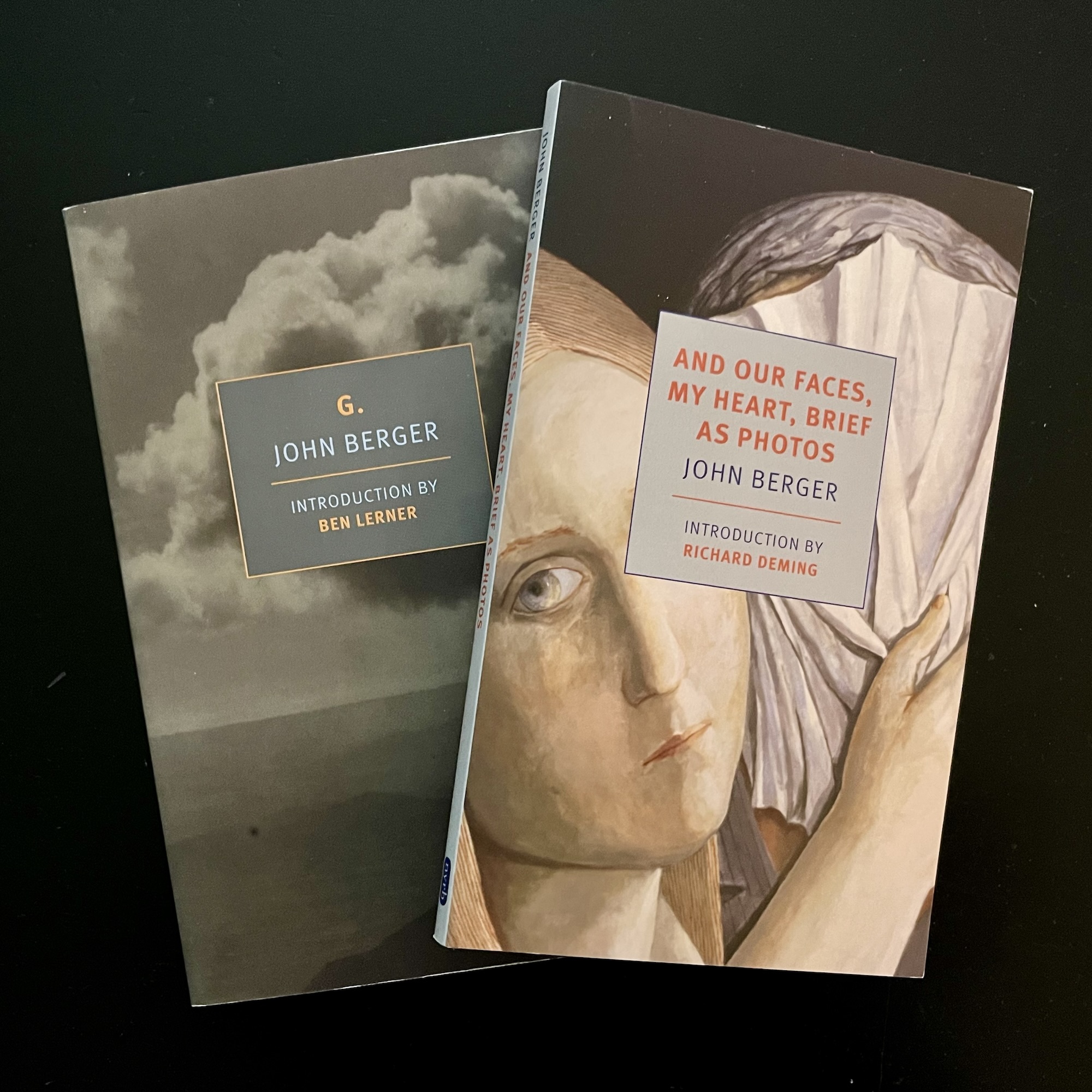
NYRB will publish reprints of two John Berger books on June 16th of this year (why does that date seem so familiar?), his experimental picaresque 1972 classic G., and 1984’s And Our Faces, My Heart, Brief as Photo. I’d never heard of the latter, which NYRB describes as maybe

…the most original of John Berger’s books; certainly, it is among the most moving. A meditation on first and last things, it is divided into two parts, one reflecting on humanity’s relation to time, the other on our place in space.

Here is a paragraph from the middle of G.:

You had to find a third value, a third interest that your social ambition, which, unlike pure ambition, must always wear the dress of conformity, and the idealism of your penises could acknowledge as arbiter. And this third value was property. The third interest was an interest in owning. Not a remote merely financial interest, but a passionate one which stirs you physically, which becomes a sense as acute as the sense of touch. Indeed you have seen to it that your children are taught to touch nothing that is not theirs, not a flower nor an animal nor the hand of a stranger. To touch is to claim as property. To fuck is to possess. And you take possession either by paying rent or by buying outright.
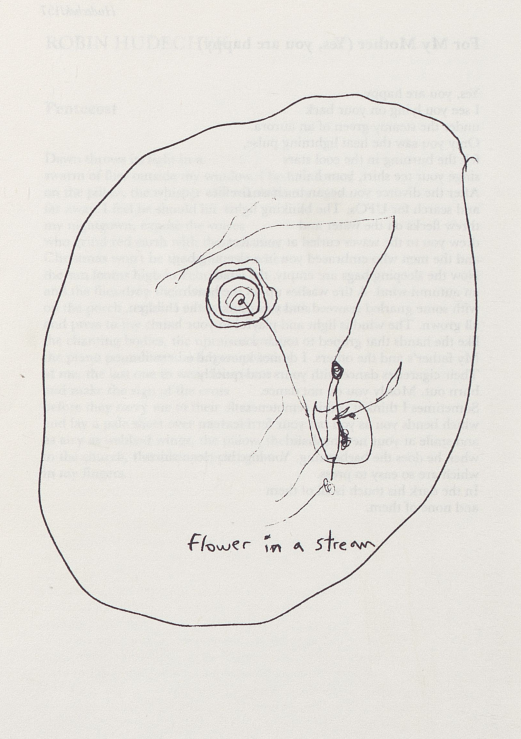
Flower in a Stream — David Berman

Flower in a Stream, c. 1989 by David Cloud Berman (1967-2019). Originally published in Caliban #8, 1990.

Sunday Comix

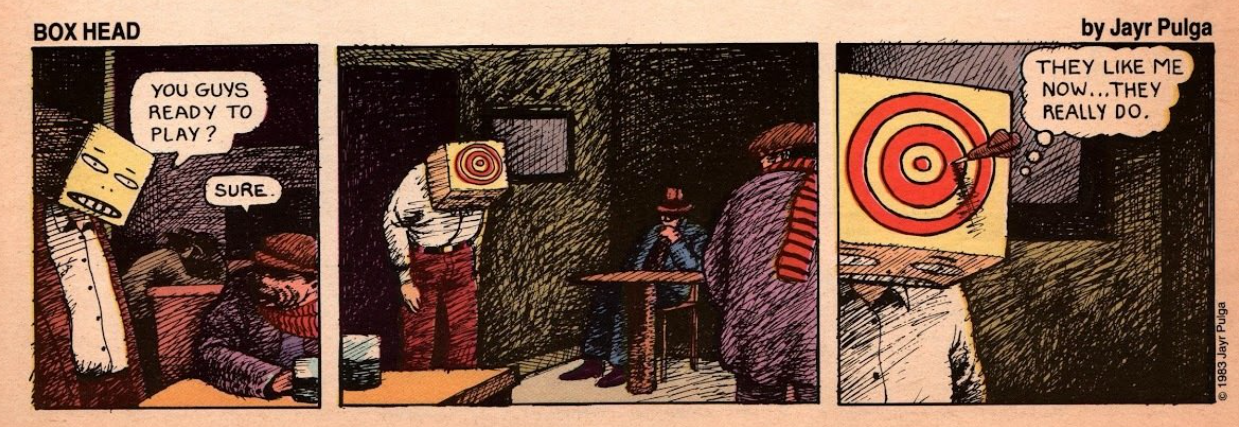
“Box Head” by Jayr Pulga, published in RAW #5, 1983, Raw Books & Graphics.

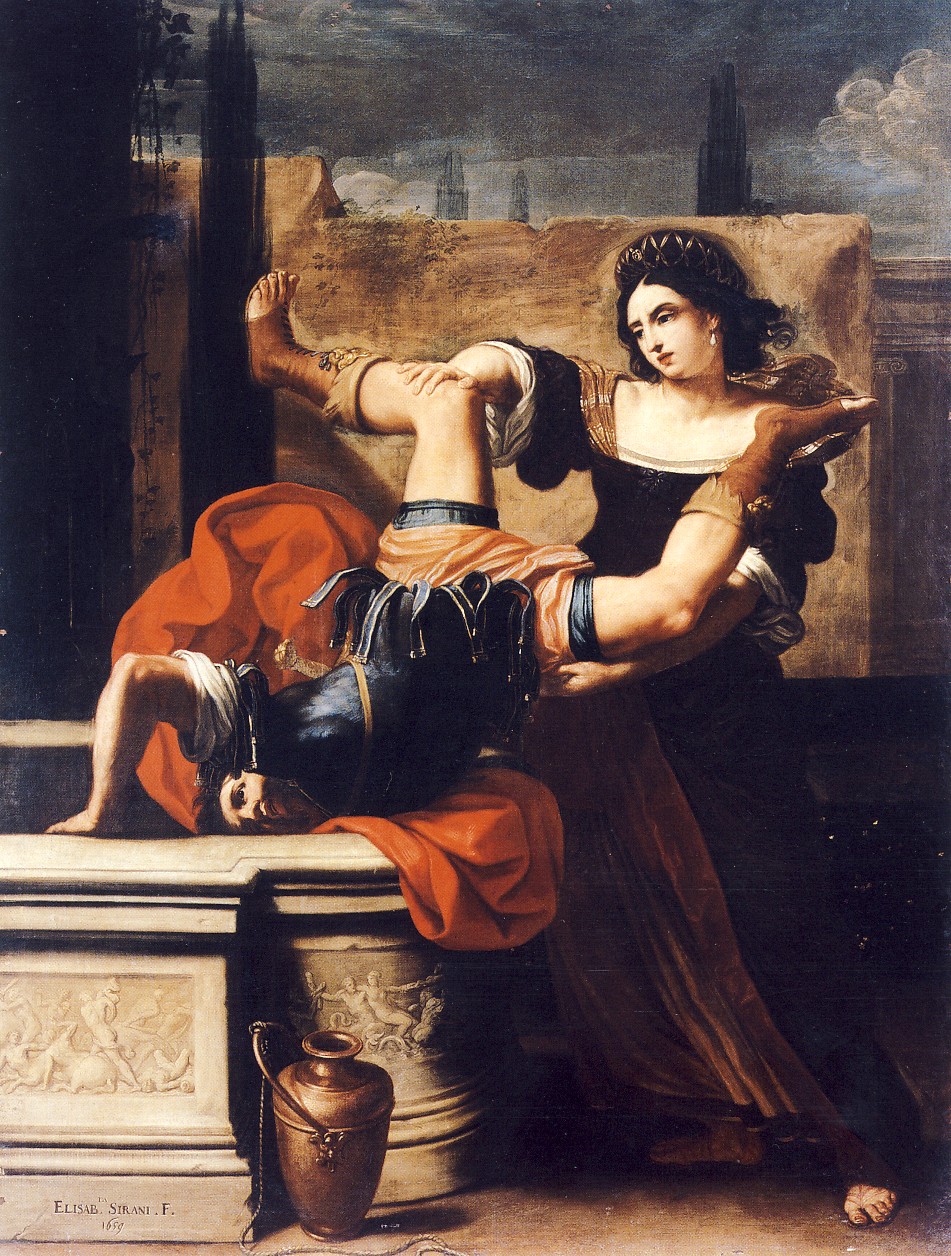
Timoclea Kills the Captain of Alexander the Great — Elisabetta Sirani

Timoclea Kills the Captain of Alexander the Great, 1659 by Elisabetta Sirani (1638–1665)

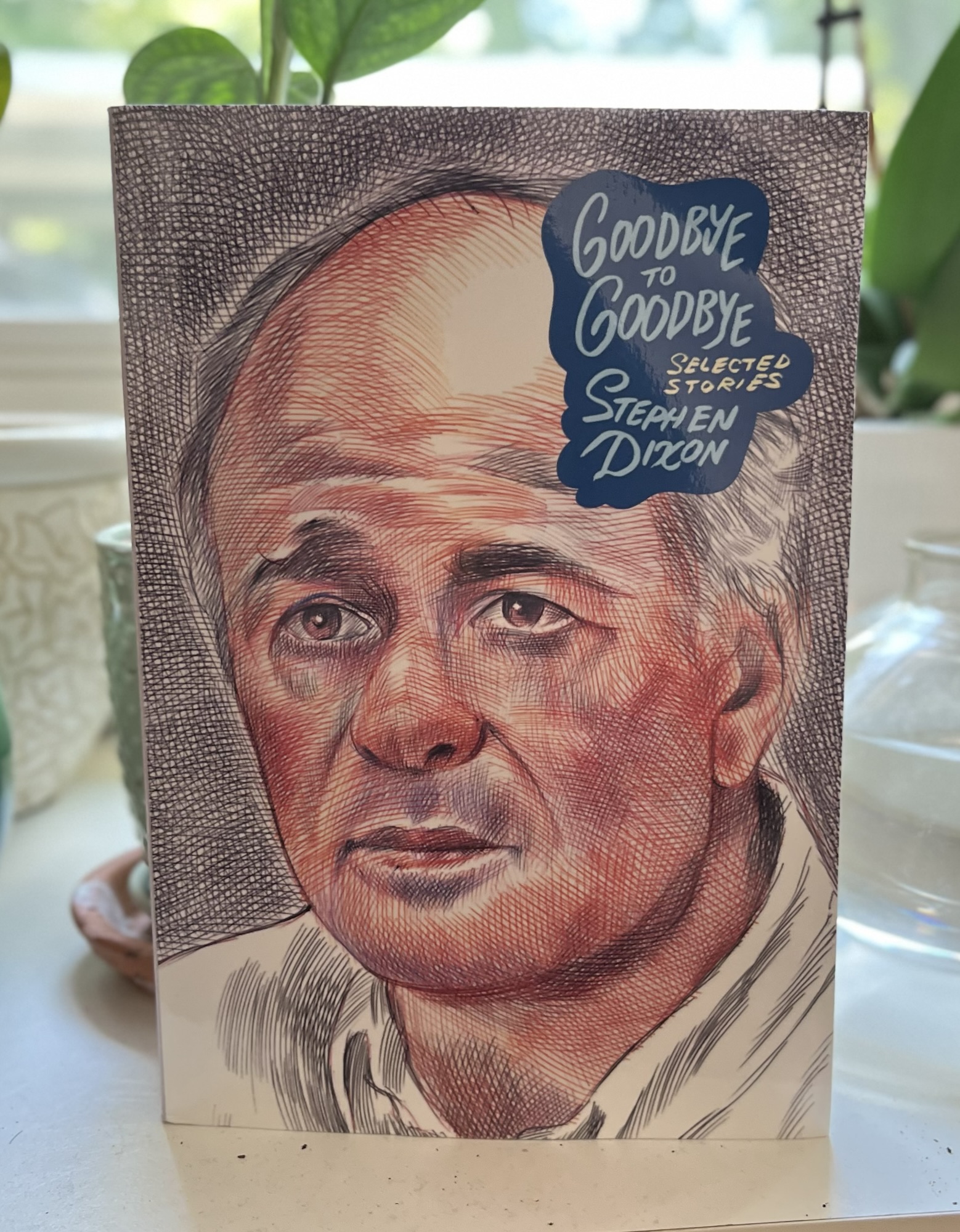
Stephen Dixon’s Goodbye to Goodbye (Book acquired, 19 May 2026)

This October, McSweeney’s will publish an anthology of Stephen Dixon’s short stories. Titled Goodbye to Goodbye (after Dixon’s 1985 short story), this anthology inaugurates a forthcoming wave of Dixonia over the next three years, including editions of I and End of I in paperback, a new edition of Frog next year and a reprint of Interstate the year after that, and, most exciting, a previously-unpublished novel called Half Stories, Full Novel, and Out of Time, a collection of previously-unpublished short stories.

The collection includes “Said,” one of Dixon’s more “experimental” pieces; you can read it here.

Jacket copy:

When Stephen Dixon passed away in 2019, American literature lost, in Jonathan Lethem’s words, “a great secret master.” In a career that spanned six decades, Dixon published over seven hundred short stories and had two novels shortlisted for the National Book Award. Arguably, his innovative work represents the earliest appearance of what we now call autofiction, and many of this generation’s writers count him among their greatest influences.

Goodbye to Goodbye is the first major collection of Dixon’s stories since 1994. The current anthology includes work that spans Dixon’s remarkable career, from his very first published story to previously unpublished works written at the end of his life. The stories have been chosen to reflect the development of Dixon’s ever-evolving style, from earlier, more traditional stories; to pioneering experiments with dialogue, point of view, and sentence structure; to what became his trademark: obsessively self-revising texts that reflect experience as if through a funhouse mirror, paradoxically both truly felt and narratively twisted. As J. Robert Lennon writes in his introduction, Dixon’s work “doesn’t efface its artificiality; it doesn’t want its reader, or its author, to disappear.”

At once deeply personal and comically exuberant, Goodbye to Goodbye showcases both Dixon’s unique perspective on life and his innovative approach to writing.

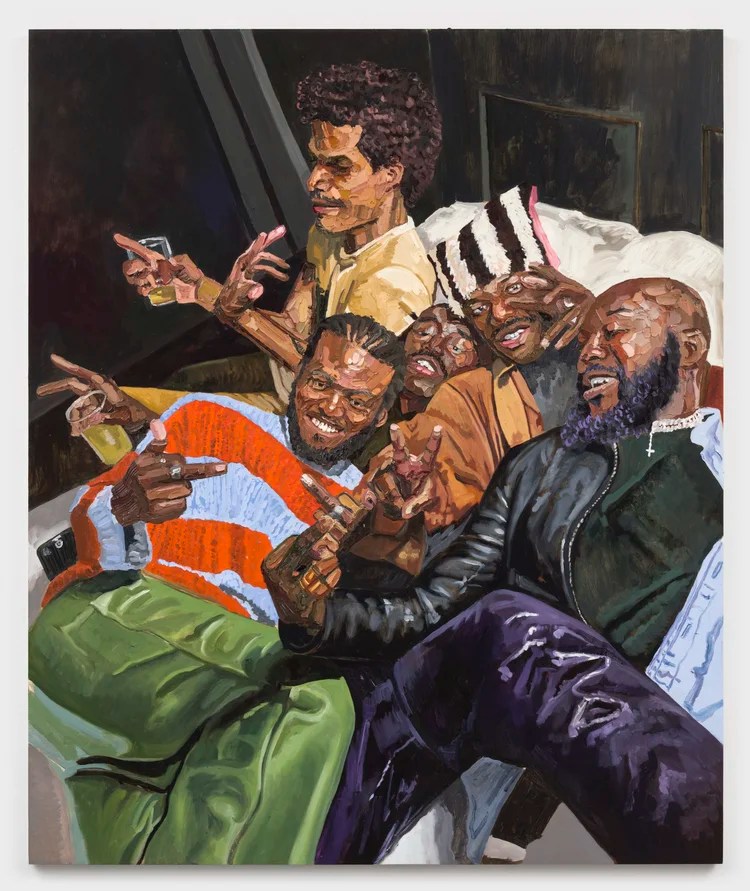
Untitled (Christian’s Birthday) — Gerald Lovell

Untitled (Christian’s Birthday), 2023 by Gerald Lovell (b. 1992)

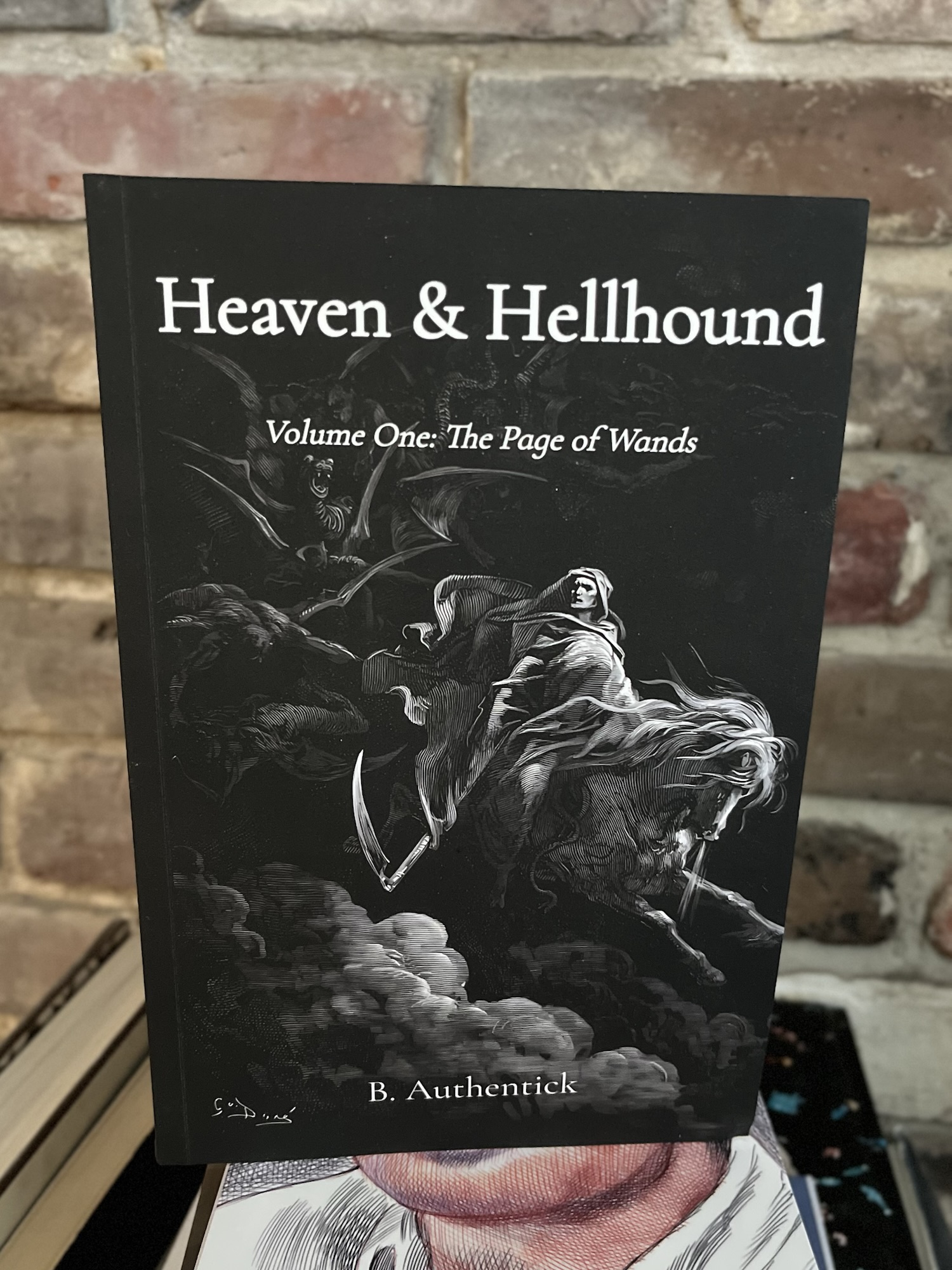
Heaven & Hellhound (Book acquired, 14 May 2026)

The pic above doesn’t really show how massive Heaven & Hellhound is. This 800 pager is by the pseudonymous B. Authentick, and purports to be a “tale of metaphysical realism.” You can learn more about the book (and download it for free) at its website. Blurb:

Heaven & Hellhound is a work of dark literary fiction that weaves together the occult, esoteric philosophy and the eternal struggle between light and shadow. Volume One – The Page of Wands – breaches the eternal threshold where ancient mysteries collide with modern consciousness. Drawn from that liminal space, what divides the sacred from the profane dissolves into something unspeakably horrifying. But for the lantern’s light, the dark night of the soul enshrouds.

Written by B. Authentick, inspired by the engravings of Gustave Doré and the ferocious vision of Vincent van Gogh, this tome is more than a book – it is a talisman, a portal and a companion for those who dare to peer through the veil.
A Trans-Atlantic tale set in 1964 in England and California, the tale channels the esoteric traditions of the Western mystery schools through the lens of Metaphysical Realism, a novel literary mode. It affords a means to storytelling in which the occult is not decoration but physics, the muse is not metaphor but visitor, and the body’s toll is commensurate to the malediction which afflicts its soul. Heaven & Hellhound is a work of literary innovation, published as the foundational text of Metaphysical Realism.

100 Novels

2666, Bolaño

Adventures of Huckleberry Finn, Twain

Adventures & Misadventures of Maqroll, Mutis

Against the Day, Pynchon

The Age of Sinatra, Ohle

Angels, Johnson

Ape & Essence, Huxley

Augustus, Williams

Autobiography of an Ex-Colored Man, Johnson

The Autumn of the Patriarch, García Márquez

The Baron in the Trees, Calvino

Berg, Quin

Billy Budd, Melville

Blood & Guts in High School, Acker

Blue Lard, Sorokin

Brave New World, Huxley

Breaking & Entering, Williams

By Night in Chile, Bolaño

A Canticle for Leibowitz, Miller Jr.

Cat’s Cradle, Vonnegut

The Charterhouse of Parma, Stendhal

Christie Malry’s Own Double Entry, Johnson

The Confidence-Man, Melville

Correction, Bernhard

Crash, Ballard

Days Between Stations, Erickson

The Dead Father, Barthelme

Dog Soldiers, Stone

The Dog of the South, Portis

Fat City, Gardner

The Female Man, Russ

The Franchiser, Elkin

Garbage, Dixon

Gargoyles, Bernhard

Go Down, Moses, Faulkner

Gormenghast, Peake

Gringos, Portis

Gravity’s Rainbow, Pynchon

The Girls of Slender Means, Spark

High Rise, Ballard

The Hearing Trumpet, Carrington

Hurricane Season, Melchor

I Am Not Sidney Poitier, Everett

Ice, Kavan

Infinite Jest, Wallace

The Infernal Desire Machines of Dr. Hoffman, Carter

Interstate, Dixon

J R, Gaddis

Junky, Burroughs

Lanark, Gray

Lancelot, Percy

The Lathe of Heaven, Le Guin

Light in August, Faulkner

Loitering with Intent, Spark

Lord Jim at Home, Brooke

The Lord of the Rings, Tolkien

The Lost Scrapbook, Dara

The Man in the High Castle, Dick

Mason & Dixon, Pynchon

Masters of Atlantis, Portis

Motorman, Ohle

Mumbo Jumbo, Reed

Naked Lunch, Burroughs

Negrophobia, James

Neuromancer, Gibson

Norwood, Portis

The Obscene Bird of Night, Donoso

O Pioneers!, Cather

Oreo, Ross

The Place of Dead Roads, Burroughs

The Plains, Murnane

The Postman Always Rings Twice, Cain

The Public Burning, Coover

Pudd’nhead Wilson, Twain

Queer, Burroughs

Radiant Terminus, Volodine

The Real Cool Killers, Himes

The Recognitions, Gaddis

Silas Marner, Eliot

The Savage Detectives, Bolaño

The Shadow of the Torturer, Wolfe

Smiley’s People, Le Carré

Snow White, Barthelme

The Sot-Weed Factor, Barth

Speedboat, Adler

The Stranger, Camus

Sula, Morrison

Suttree, McCarthy

There Is a Tree More Ancient Than Eden, Forrest

Three Trapped Tigers, Cabrera Infante

True Grit, Portis

Two Serious Ladies, Bowles

UBIK, Dick

Under the Volcano, Lowry

Underworld, DeLillo

Wittgenstein’s Mistress, Markson

Yellow Back Radio Broke Down, Reed

Zama, di Benedetto

Sunday Comix

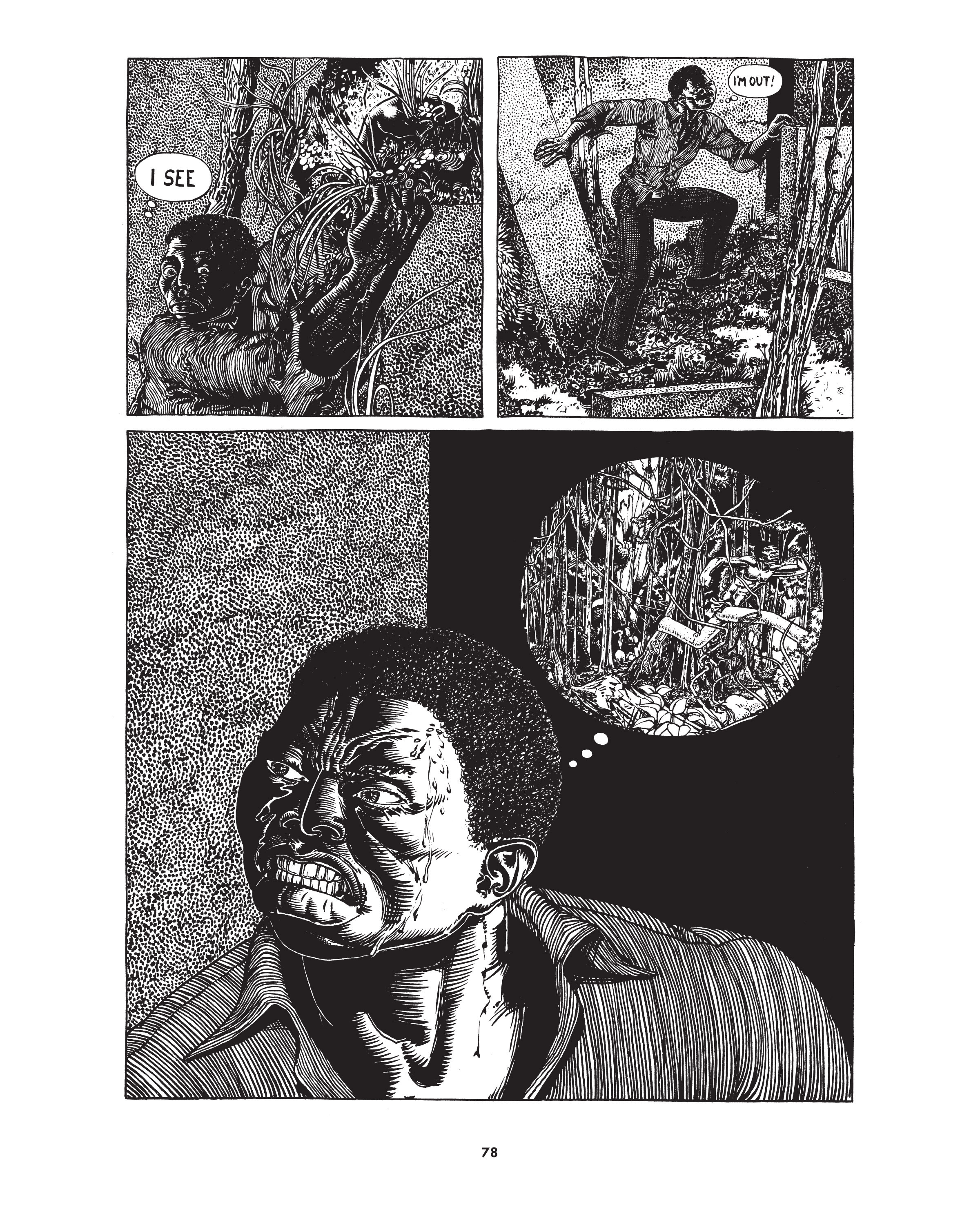
A page from Inner City Romance #3 by Guy Colwell, Last Gasp, 1977. Reprinted by Fantagraphics, 2015.

A Passion Like No Other — Lynette Yiadom-Boakye

A Passion Like No Other, 2012 by Lynette Yiadom-Boakye (b. 1977)

Circle Study #10 — Benny Andrews

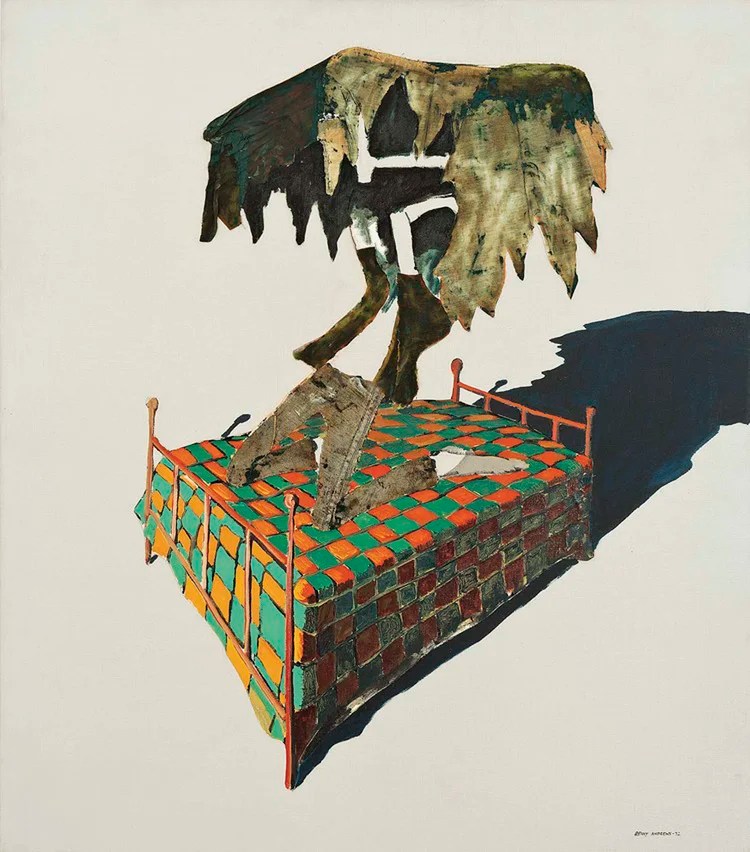
Circle Study #10, 1972 by Benny Andrews (1930-2006)

“Queen Elizabeth’s Rhinoplasty,” a surgical microfiction by J. G. Ballard

“Queen Elizabeth’s Rhinoplasty”

by

J. G. Ballard


Many views were expressed as to what would be the ideal shape of the Queen’s nose, and how it could best be obtained. Some of her surgeons favored the profilometer (Straith, 1938), by which Her Majesty’s nose would emerge after operation with a standard height, tip angle, and bridge line. Other surgeons modeled the patient, trying out various patterns of the future nose in the attempt to obtain Her Majesty’s approval for a particular one.

The principle here was rather like that of trying out a new hat.

Unfortunately, human tissues are prone to thicken and behave in a way that is unpredictable. It was felt unwise, therefore, to lay too much emphasis with Her Majesty on exact details. Generalities were discussed, such as whether a straight or a hollowed-out bridge line was to be aimed at, whether her nose was to be retrousse or not, and whether the tip was to be narrowed or left alone.

Preoperative preparation. The Queen’s nostril vibrissae were cut short and her nose packed with cocaine and adrenalin as for a submucous resection of the septum. General anesthesia was preferred, the Queen’s trachea being intubated and the pharynx carefully packed off around the tube.

The incisions. Bilateral vestibular incisions were made through

the lining of the lateral wall, placed between the alar cartilage and the lateral cartilage. These incisions were carried forward over the apex of each of Her Majesty’s nostrils and met centrally at another incision made by transfixing the septum just below the lower border of its cartilage.

The skin covering of the Queen’s nose was freed on a deep subcutaneous plane right up to the glabella and well around to the sides. This was done with a pair of small curved scissors with blunt points. Where the saw cuts were to be made along the posterior margins of the Queen’s nose, an elevator was introduced via the small lateral incisions. A pair of straight scissors carried up on either side of the cartilaginous septum now left this structure standing free and allowed the lateral cartilages to fall away on the sidewall of the nose, being carried in a mucosal flap. The septum was then trimmed along its anterior aspect to complete the reduction of the bridge line.

There were two schools of thought regarding the instrument to be used for the bone section. One favored the use of the osteome; the other preferred the saw. Much was made of the dangers of bone dust, and its part in producing thickening after operation. Joseph’s nasal saws angled differently for left and right sides were good saws for the purpose. In the revision of the nose tip after previous unsatisfactory surgical intervention, asymmetrical alar cartilages presented special problems difficult of solution by the usual intranasal techniques. The so-called “Aying-boat approach was employed, as described by Rethi (quoted May 1951).

The radical operation on the Queen’s nose carried with it a tendency to bleed. Hematoma formation would lead to excessive thickening, and possibly even to infection. Iced compresses during the first forty-eight hours diminished the edema that occurred in the Queen’s eyelids and cheeks. Packs were removed after twenty-four hours. Her Majesty’s nose was interfered with as little as possible during the next few days, the air way being cleaned with a pledget of cotton wool. The splint was removed after seven days and the Queen instructed in the digital pressure required to maintain the position of the nasal bones. A brisk reactionary hemorrhage was controlled by packing.

Her Majesty was warned that some bruising (black eyes) was likely up to three weeks after the operation, and that her social activities would have to be curtailed. The Queen was also informed that she should not attempt to blow her nose until the intranasal incisions were soundly healed (two weeks).

During after-care, Her Majesty found it difficult to understand that her nose was swollen, and that such edema would settle down slowly and irregularly. Her Majesty was warned that her nose should not be operated upon for a further time within six months of the previous operation.

Sunday Comix

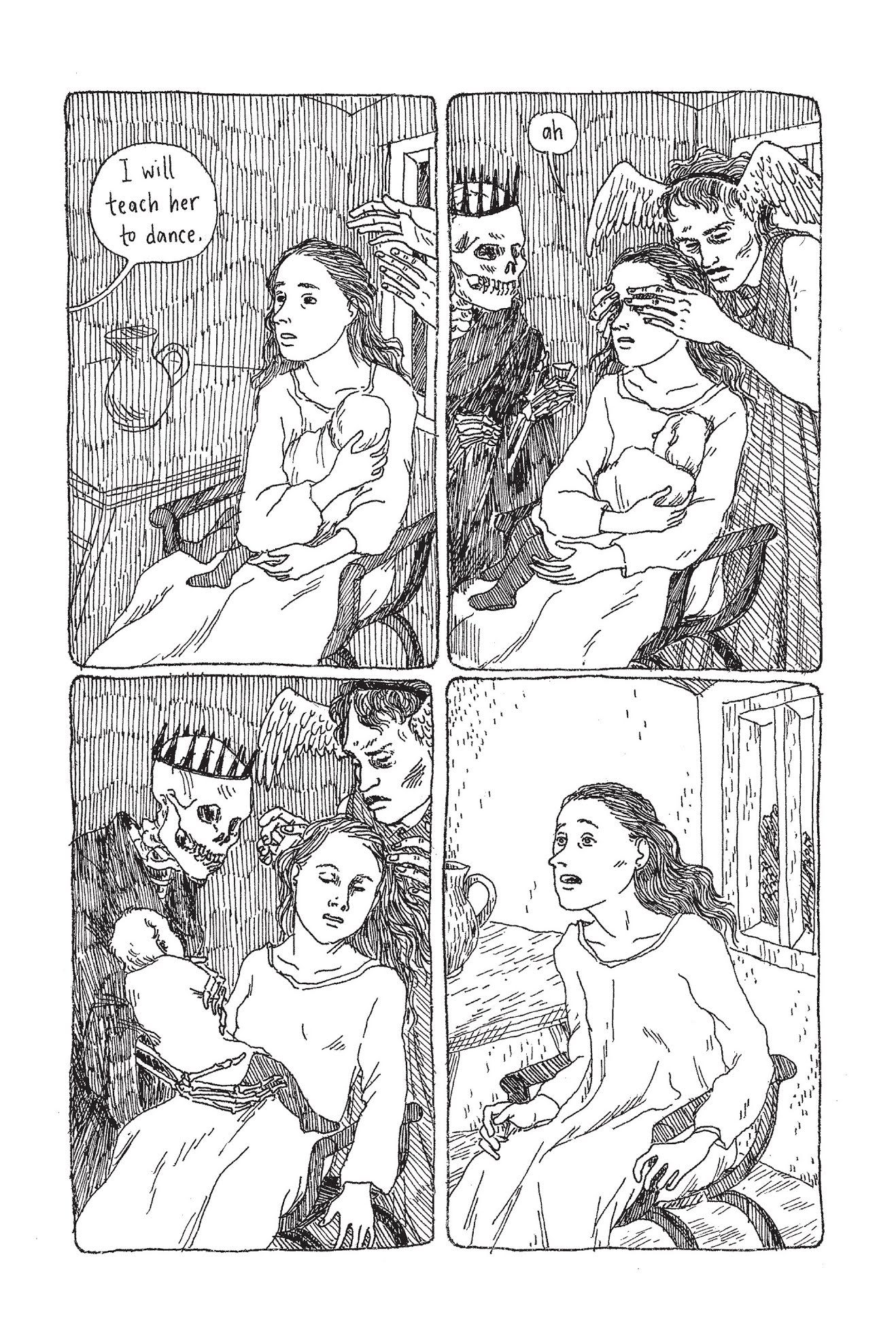
A page from Laid Waste by Julia Gfrörer, Fantagraphics Books, 2016.

(Not really a blog about) Pynchon in Public Day, 2026

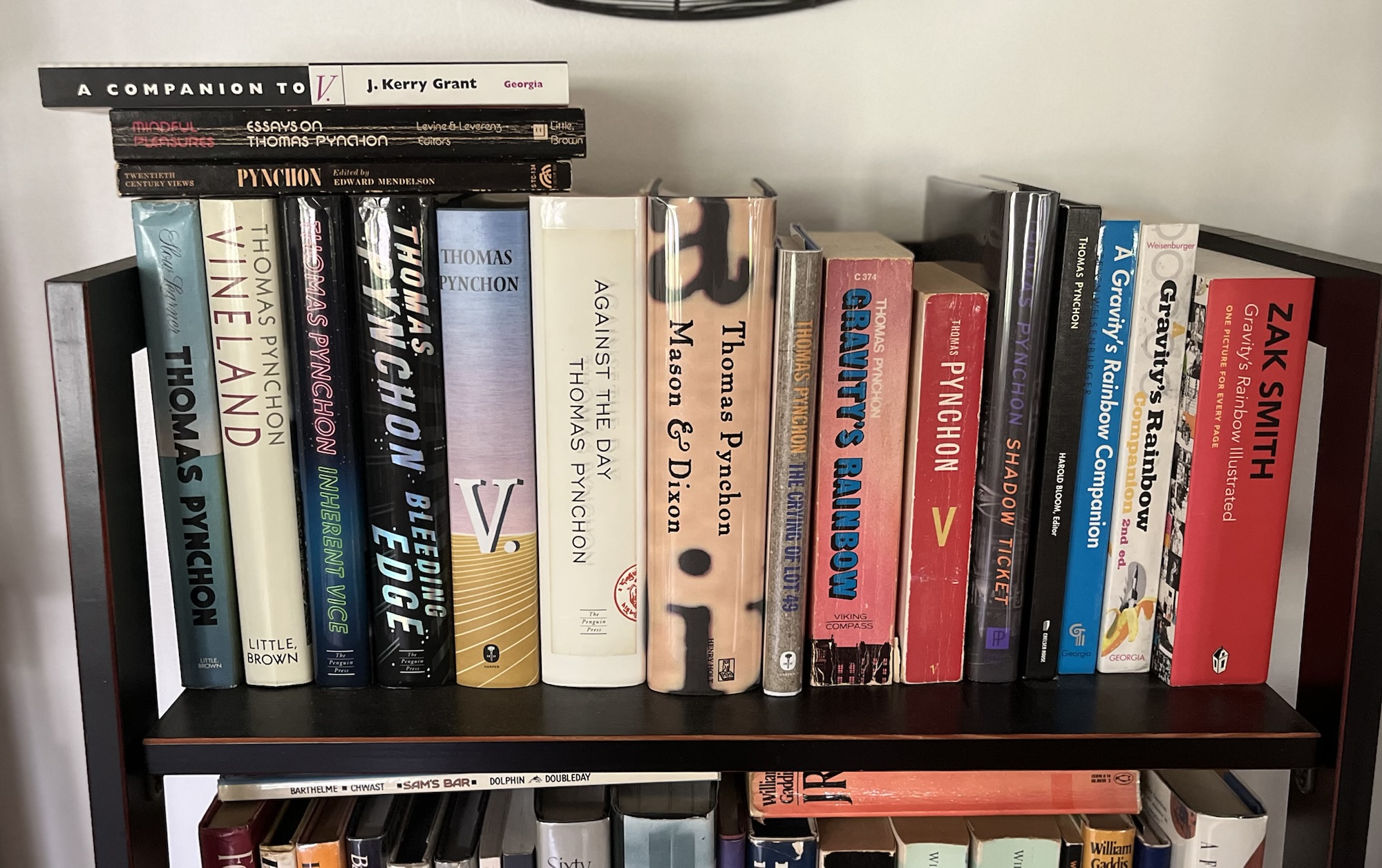
Unless my math or some established facts are incorrect, Thomas Pynchon turned 89 today.

As far as I can tell, the first time I posted something Pynchon-related on Pynchon’s birthday (May 8, obv), was a portrait by James Jean, back in 2013. The next year I directly recognized the date of his birth in a round-up post, and the year after that I recognized what has been semi-formalized into “Pynchon in Public Day.” And then pretty much every year since then I’ve done something or other. In 2018, I had the gall to rank Pynchon’s novels, even though I hadn’t managed to finish Bleeding Edge at that point. I made a correction in August last year, ranking all the novels to date, and then felt the need to correct a list published at The Guardian later that month.

In Sept. 2025 Paul Thomas Anderson’s film One Battle After Another hit theaters. Based loosely (but tightly enough that anyone who read the novel would recognize it in the film) on Pynchon’s 1990 novel Vineland, One Battle After Another was a hit — at least critically and culturally (it recouped its expenses and earned more than any other PTA film, but still wasn’t a mega-hit I guess — but it did much better than PTA’s adaptation of Inherent Vice, which I also loved, which had a very limited cultural impact). One Battle After Another won a bunch of meaningless awards. I loved it!

A few weeks later, Pynchon’s novel Shadow Ticket, a late career treat, hit shelves. I loved it too! In the meantime, I noticed that my favorite local bookstore (at both of its locations) was stocked with new Pynchon volumes which seemed to sell extraordinarily well. The Pynchon Reddit, once a somewhat quiet space to share analyses and tidbits, expanded like an unbelted belly filled with belches. It now suffers from fan art and dudes who feel the need to cast film versions of the Pynchon books they’ve read so far, and endless “What should I read next?” posts.

This is all pretty fucking great! I like that Pynchon’s audience has expanded, that his books are selling, and that people are reading them. And so well yeah — do we still need a Pynchon in Public Day?

Sure, why the hell not. It was always about fun, I think.

I didn’t do any kind of Pynchon post on 8 May 2025. My best friend of the past three decades died unexpectedly in his sleep on 5 May 2025 and I was a wreck. At what I suppose was his wake (a slow, rolling, evolving open house thing where old friends stayed at our house and drank and laughed and cried), I gave one of my dearest friends a copy of Gravity’s Rainbow because he said he wanted to read it. (I suggested V. to start but he wanted the big boy.) Another friend pointed out that there were like fifteen copies of Moby-Dick in the house and generously unencumbered me of a surplus Norton Critical Edition. (Mike, Dave, I know you don’t read this blog anymore, but have you cracked into those giants?)

I think if I had written something for Pynchon in Public Day last year, it would have been about the anticipation for Shadow Ticket and One Battle After Another. But I ended up writing about those things anyway, and so did a lot of other people.

If I was going to write a blog for Pynchon in Public Day, which I am not doing now, I might try to situate Shadow Ticket into his oeuvre (easy; it fits chronologically between Against the Day and Gravity’s Rainbow; it is also B-tier Pynchon. If I had to rank it I’d put it above Vineland and Inherent Vice, at least today. Ask me tomorrow, who knows).

But this isn’t a blog about Pynchon in Public Day.


“Poem” — Langston Hughes

“Poem”

by

Langston Hughes


I loved my friend.
He went away from me. 
There’s nothing more to say. 
The poem ends, 
Soft as it began,—
I loved my friend. 

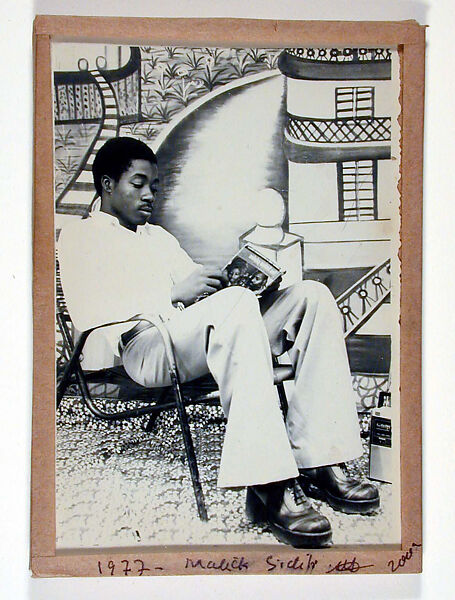
Portrait of Man Reading — Malick Sidibé

Portrait of Man Reading, 1977 by Malick Sidibé (1936-2016)

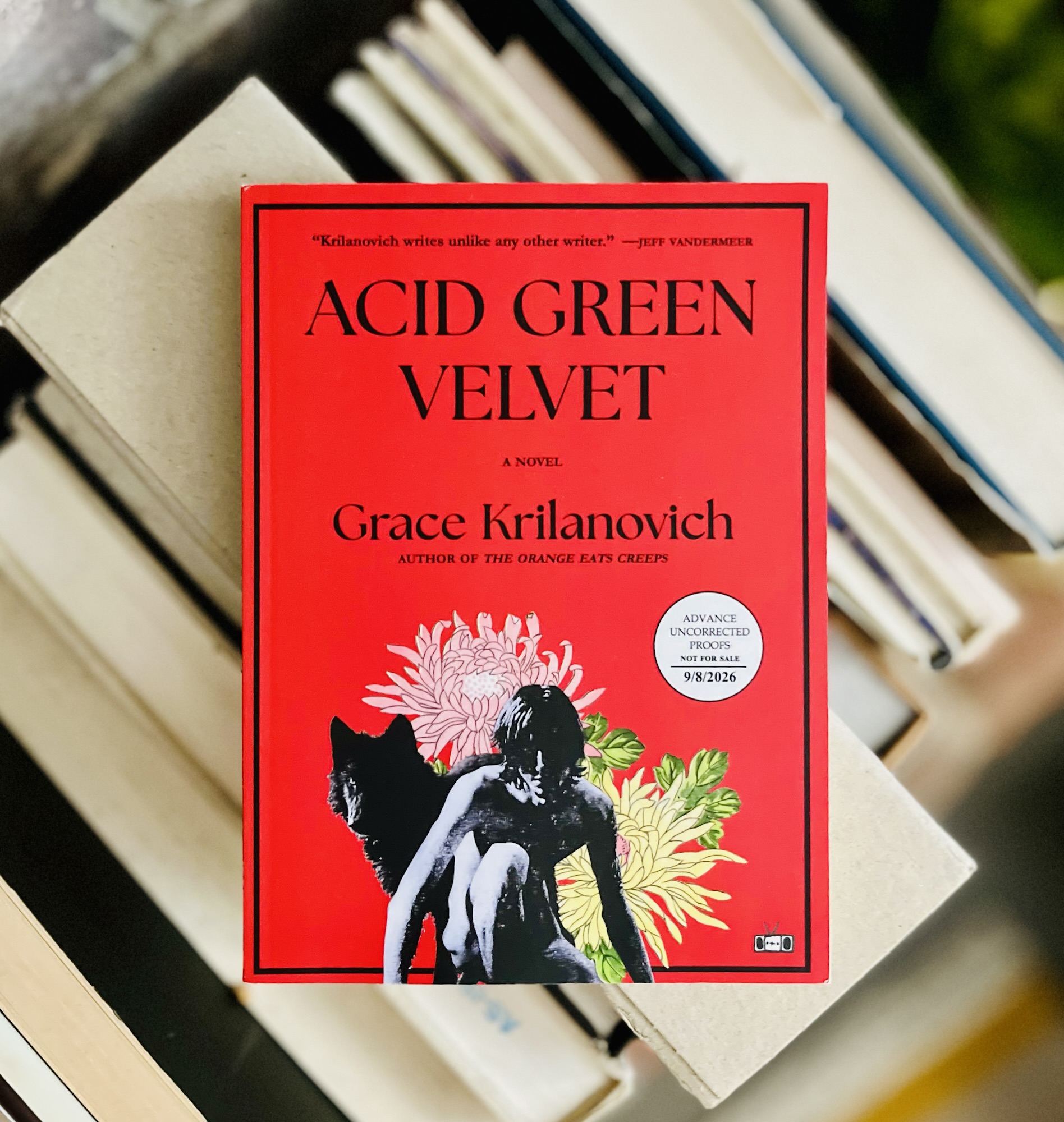
Grace Krilanovich’s Acid Green Velvet (Book acquired, 4 May 2026)

I dug Grace Krilanovich’s “Slutty Teenage Hobo Vampire Junkies” novel The Orange Eats Creeps, calling it good gross stuff in a 2020 review.

Her follow up, Acid Green Velvet, is forthcoming this summer from Two Dollar Radio. Their blurb:

In the late 19th century on the central California coast, two wayward young hoboes — Paulette and Kenneth — threaten to kill a menacing man who wronged them: Paulette’s father, Rodney Eligon.

A handful of years later, the town of Anzar has become the stomping grounds for all manner of cults, eccentrics, earth religions, and communal living. Presiding over the town from the luxe frivolity of their family manor, the Hasleys have ruled Anzar for generations. Their grip on the town is threatened by the rise of the working class, and their union with the itinerant population. Meanwhile, Paulette has taken up residence in the home of Johnny Hasley, a wealthy faux-socialist poseur, hoping to become his wife. Her plans are complicated by boot-prints in the garden signaling the arrival of Kenneth, who carries with him a dark secret that poses a grave threat to both of them.

In Anzar’s cracked mirror, Californian freakiness meets Victorian preoccupations with the domestic, pollution and filth, haunted houses, fringe societies, living death, spiritualism, vampiric women, and class parasites. Acid Green Velvet is a surreal powder keg of nihilism, fathers and their failures, manifest destiny, and American identity, penned in rapturous prose by the fiercest writer of her generation.