Watch Discovering Electronic Music, a 1983 Documentary about Synthesizers and Sampling

Ivan Tsarevich Riding the Grey Wolf — Viktor Vasnetsov

“The Company of Wolves” — Angela Carter

“The Company of Wolves”

by

Angela Carter

One beast and only one howls in the woods by night.

The wolf is carnivore incarnate and he’s as cunning as he is ferocious; once he’s had a taste of flesh then nothing else will do.

At night, the eyes of wolves shine like candle flames, yellowish, reddish, but that is because the pupils of their eyes fatten on darkness and catch the light from your lantern to flash it back to you–red for danger; if a wolf’s eyes reflect only moonlight, then they gleam a cold and unnatural green, a mineral, a piercing colour. If the benighted traveller spies those luminous, terrible sequins stitched suddenly on the black thickets, then he knows he must run, if fear has not struck him stock-still.

But those eyes are all you will be able to glimpse of the forest assassins as they cluster invisibly round your smell of meat as you go through the wood unwisely late. They will be like shadows, they will be like wraiths, grey members of a congregation of nightmare; hark! his long, wavering howl … an aria of fear made audible.

The wolfsong is the sound of the rending you will suffer, in itself a murdering.

It is winter and cold weather. In this region of mountain and forest, there is now nothing for the wolves to eat. Goats and sheep are locked up in the byre, the deer departed for the remaining pasturage on the southern slopes–wolves grow lean and famished. There is so little flesh on them that you could count the starveling ribs through their pelts, if they gave you time before they pounced. Those slavering jaws; the lolling tongue; the rime of saliva on the grizzled chops–of all the teeming perils of the night and the forest, ghosts, hobgoblins, ogres that grill babies upon gridirons, witches that fatten their captives in cages for cannibal tables, the wolf is worst for he cannot listen to reason.

You are always in danger in the forest, where no people are. Step between the portals of the great pines where the shaggy branches tangle about you, trapping the unwary traveller in nets as if the vegetation itself were in a plot with the wolves who live there, as though the wicked trees go fishing on behalf of their friends–step between the gateposts of the forest with the greatest trepidation and infinite precautions, for if you stray from the path for one instant, the wolves will eat you. They are grey as famine, they are as unkind as plague. Continue reading ““The Company of Wolves” — Angela Carter” →

Allegorical Portrait of Dante – Agnolo Bronzino

The Artist with a Skull: Optical Illusion from the Eye Disease — Edvard Munch

The monkeys had some kind of panic attack and bit me all over (Werner Herzog)

wh

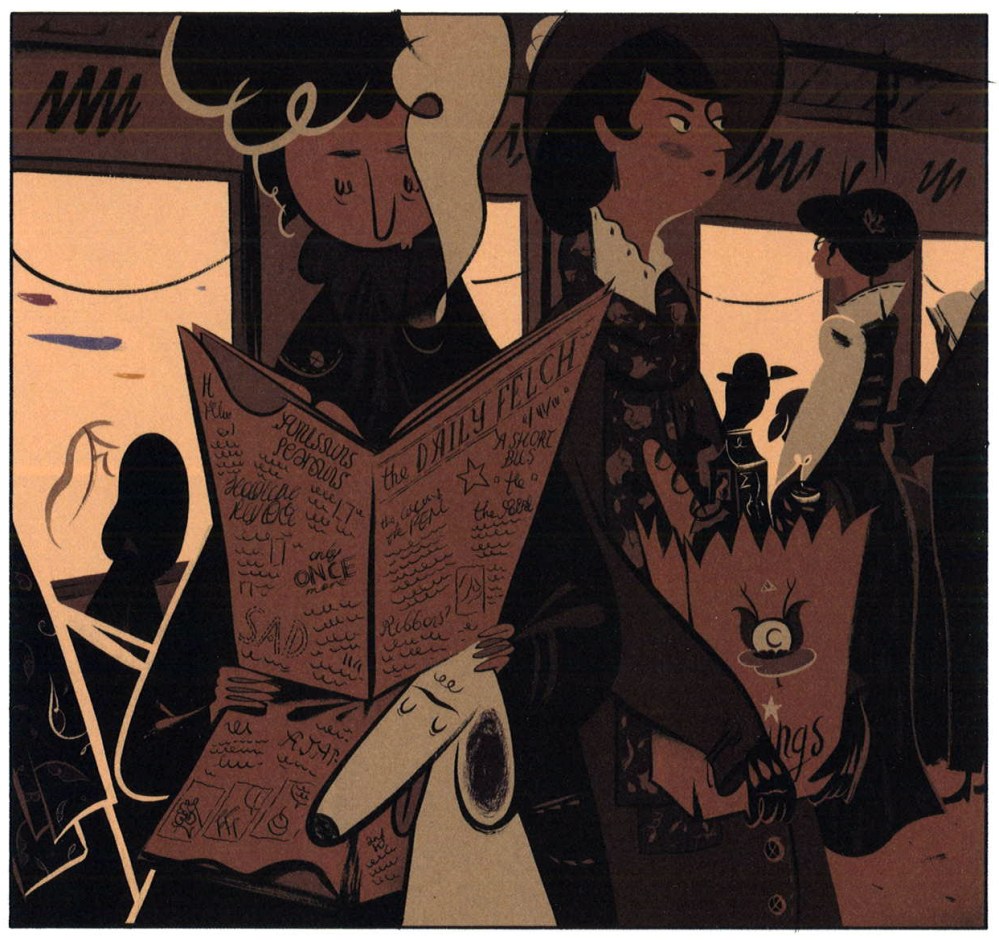
Bus Ride Two — Roman Muradov

(From Roman Muradov’s novella (In a Sense) Lost and Found).

The Short and Curlies, A Short Film by Mike Leigh

“Talent” — Anton Chekhov

“Talent”

by

Anton Chekhov

AN artist called Yegor Savvitch, who was spending his summer holidays at the house of an officer’s widow, was sitting on his bed, given up to the depression of morning. It was beginning to look like autumn out of doors. Heavy, clumsy clouds covered the sky in thick layers; there was a cold, piercing wind, and with a plaintive wail the trees were all bending on one side. He could see the yellow leaves whirling round in the air and on the earth. Farewell, summer! This melancholy of nature is beautiful and poetical in its own way, when it is looked at with the eyes of an artist, but Yegor Savvitch was in no humour to see beauty. He was devoured by ennui and his only consolation was the thought that by to-morrow he would not be there. The bed, the chairs, the tables, the floor, were all heaped up with cushions, crumpled bed-clothes, boxes. The floor had not been swept, the cotton curtains had been taken down from the windows. Next day he was moving, to town.

His landlady, the widow, was out. She had gone off somewhere to hire horses and carts to move next day to town. Profiting by the absence of her severe mamma, her daughter Katya, aged twenty, had for a long time been sitting in the young man’s room. Next day the painter was going away, and she had a great deal to say to him. She kept talking, talking, and yet she felt that she had not said a tenth of what she wanted to say. With her eyes full of tears, she gazed at his shaggy head, gazed at it with rapture and sadness. And Yegor Savvitch was shaggy to a hideous extent, so that he looked like a wild animal. His hair hung down to his shoulder-blades, his beard grew from his neck, from his nostrils, from his ears; his eyes were lost under his thick overhanging brows. It was all so thick, so matted, that if a fly or a beetle had been caught in his hair, it would never have found its way out of this enchanted thicket. Yegor Savvitch listened to Katya, yawning. He was tired. When Katya began whimpering, he looked severely at her from his overhanging eyebrows, frowned, and said in a heavy, deep bass:

“I cannot marry.”

“Why not?” Katya asked softly.

“Because for a painter, and in fact any man who lives for art, marriage is out of the question. An artist must be free.” Continue reading ““Talent” — Anton Chekhov” →

The Garden of Death — Hugo Simberg

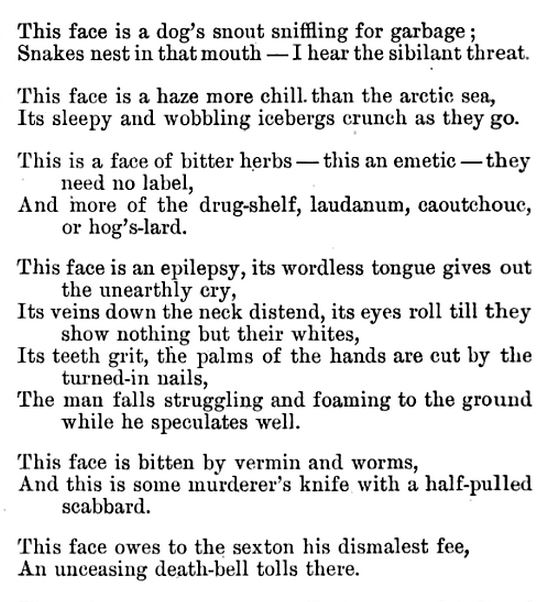
Snakes nest in that mouth (Walt Whitman)

Capture

The Mystical Body Defined — David Ruhlman

3. The mystical body defined

Detail from Descent of Christ into Limbo — Bartolomé Bermejo

tumblr_n98tp0Mwrr1sdtln4o1_1280

William Friedkin Picks DVDs from the Criterion Collection Closet

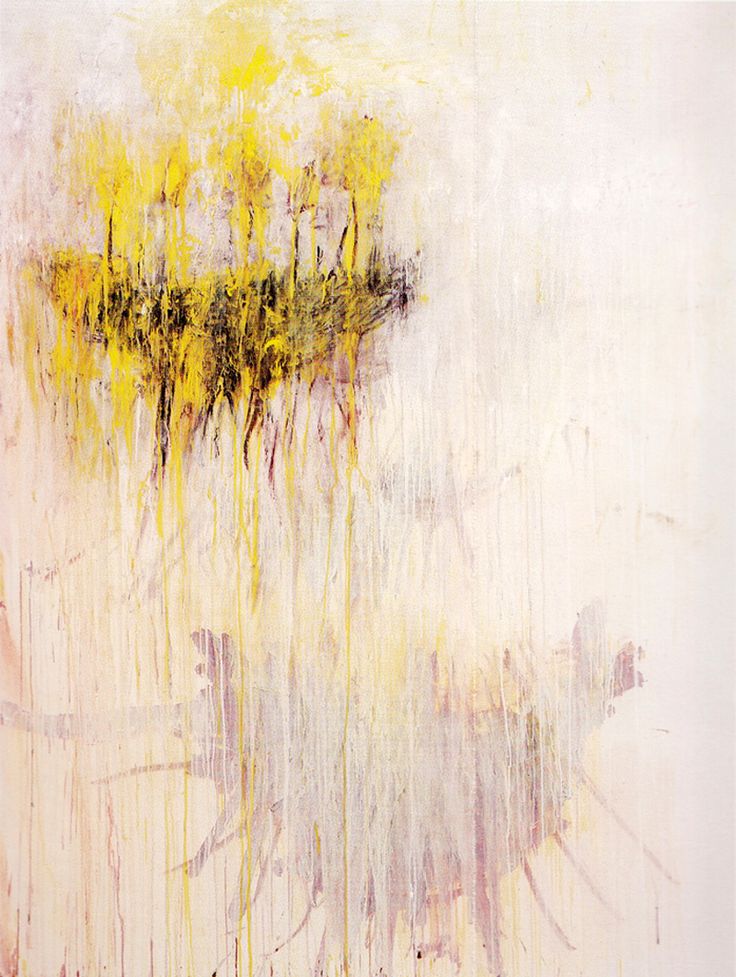
Coronation of Sesostris — Cy Twombly

cy

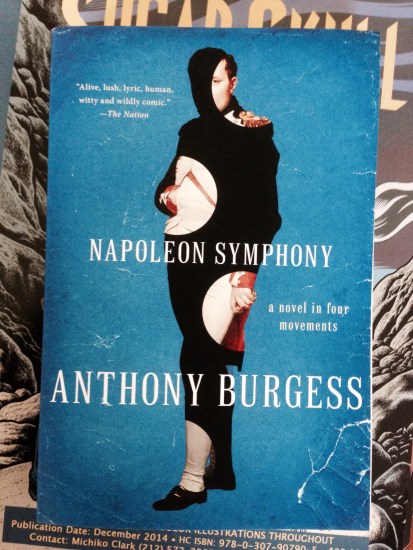
Anthony Burgess’s Napoleon Symphony (Book Acquired, 10.02.2014)

IMG_3446

Anthony Burgess’s 1974 novel Napoleon Symphony gets the trade paperback reissue treatment from Norton. Their blurb:

Anthony Burgess draws on his love of music and history in this novel he called “elephantine fun” to write.

A grand and affectionate tragicomic symphony to Napoleon Bonaparte that teases and reweaves Napoleon’s life into a pattern borrowed—in liberty, equality, and fraternity—from Beethoven’s Third “Eroica” Symphony, in this rich, exciting, bawdy, and funny novel Anthony Burgess has pulled out all the stops for a virtuoso performance that is literary, historical, and musical.