“The Wish To Be a Red Indian” — Franz Kafka

The Wish To Be a Red Indian

If one were only an Indian, instantly alert, and on a racing horse, leaning against the wind, kept on quivering jerkily over the quivering ground, until one shed one’s spurs, for there needed no spurs, threw away the reins, for there needed no reins, and hardly saw that the land before one was smoothly shorn heath when horse’s neck and head would be already gone.

“The Wish To Be a Red Indian” by Franz Kafka.

Untitled (Book) — Philip Guston

See A.K., Chris Marker’s Film About Akira Kurosawa

RIP Chris Marker

RIP French filmmaker Chris Marker, 1921-2012

Like any kid who took way too many film studies courses in college, I was lucky to be introduced to the strange films of Chris Marker, who died at 91 yesterday in Paris. Marker is most famous for his film La jetéea sci-fi post-apocalyptic meditation shot as a series of still photos (the film was later adapted by Terry Gilliam into 12 Monkeys). Marker’s film San Soleil had a particular impact on me: it’s a beautiful, strange film essay, or travel novel, or I don’t know what you call it. Just find it and see it. Here’s the intro:

The Guardian has a proper obituary.

Wheat Field with a Lark — Vincent van Gogh

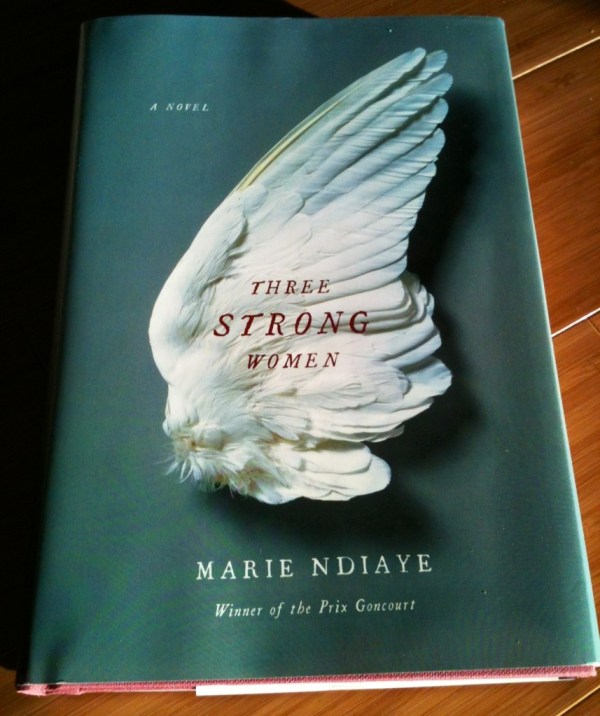
Three Strong Women (Book Acquired, 7.24.2012)


20120724-194511.jpg

Marie NDiaye’s novel Three Strong Women won the Prix Goncourt in 2009 and is now published in English translation (John Fletcher) from Random House. Their blurb:

In this new novel, the first by a black woman ever to win the coveted Prix Goncourt, Marie NDiaye creates a luminous narrative triptych as harrowing as it is beautiful.

This is the story of three women who say no: Norah, a French-born lawyer who finds herself in Senegal, summoned by her estranged, tyrannical father to save another victim of his paternity; Fanta, who leaves a modest but contented life as a teacher in Dakar to follow her white boyfriend back to France, where his delusional depression and sense of failure poison everything; and Khady, a penniless widow put out by her husband’s family with nothing but the name of a distant cousin (the aforementioned Fanta) who lives in France, a place Khady can scarcely conceive of but toward which she must now take desperate flight.

With lyrical intensity, Marie NDiaye masterfully evokes the relentless denial of dignity, to say nothing of happiness, in these lives caught between Africa and Europe. We see with stunning emotional exactitude how ordinary women discover unimagined reserves of strength, even as their humanity is chipped away. Three Strong Women admits us to an immigrant experience rarely if ever examined in fiction, but even more into the depths of the suffering heart.


Still Life with a Book — Lucian Freud

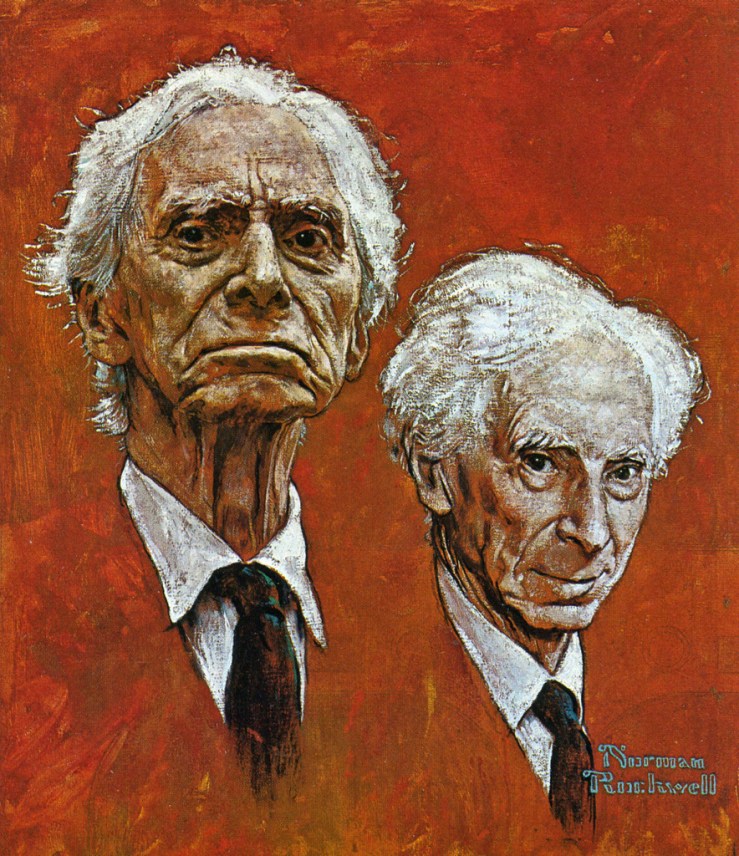
Portrait of Bertrand Russell — Norman Rockwell

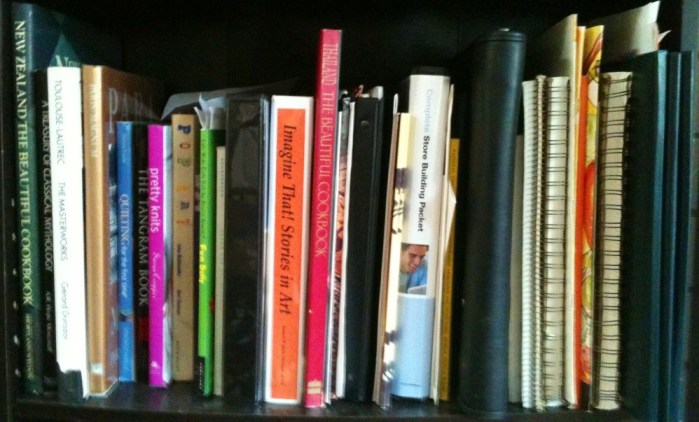
Book Shelves #31, 7.29.2012

20120729-141449.jpg


Book shelves series #31, thirty-first Sunday of 2012

When I started this project I thought it would be a fun way to keep stock of the books that I have, and also a way to perhaps question why I hold on to the books that I hold on to.

I mean, why keep a book after you’ve read it?

Anyway, at times throughout this series I’ve gotten bored, or rushed; other times I’ve thought the idea was stupid, or narcissistic, or something even worse (although I don’t know what).

I like the shelves above the pedestrian, utilitarian jobber that I’ll feature this Sunday and the next: lots of aesthetically pleasing stuff there.

Not so this one, which holds photos and cookbooks and art books and old notebooks and sketchbooks and every kind of etcetera:

20120729-141456.jpg

At least that’s what I thought until I started digging into the cramped top shelf, dutifully bound to this project.

I wound up really enjoying myself, pausing over volumes that I haven’t looked at in ages, like this beauty:

20120729-141509.jpg

I’m not sure if the aesthetic joy of this postcard collection comes across in these lousy iPhone photo shots.

I got this on a trip to London when I was 11. It was just my mom and my brother and I. First we went to Singapore. We were coming back to the States for Christmas, and also to live, eventually. My brother broke his leg in Singapore jumping down some stairs and we didn’t realize it was broken until we got back to Florida.

20120729-141515.jpg

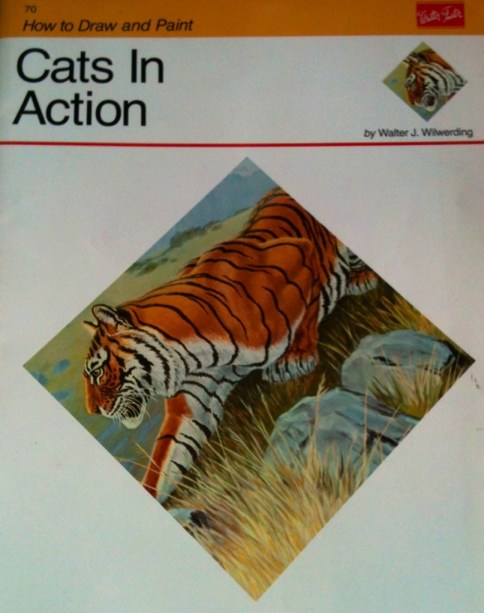
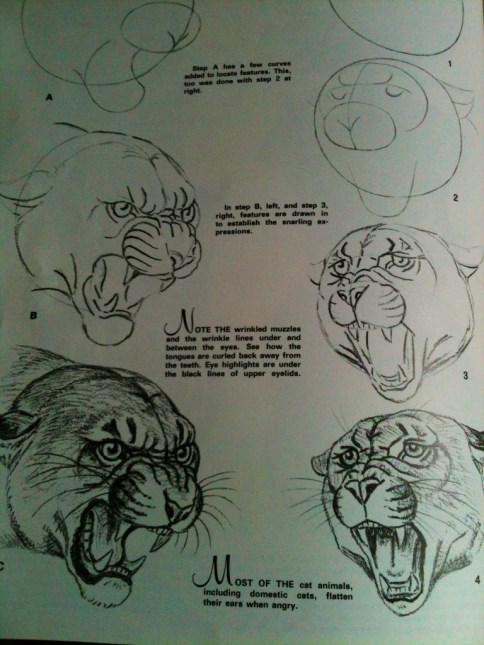
I used to draw and paint all the time, especially as a kid. Mostly animals.

There are at least a dozen skinny books like this on the shelf:
20120729-141522.jpg

I must have done hundreds of these as a kid:
20120729-141546.jpg

The shelf is also full of old comic strip collections that you probably recognize, like these guys:

20120729-141556.jpg

And this guy (and yes, I have the 7″ record from this collection)

20120729-141601.jpg

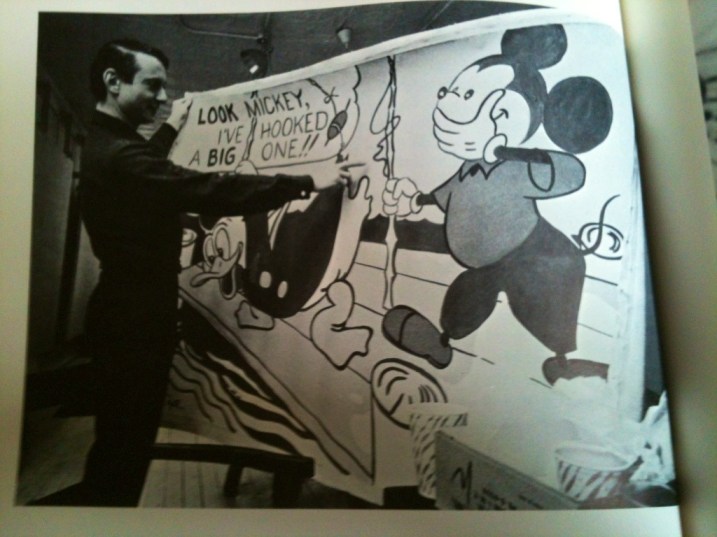
I also spent half an hour revising Rublowsky’s 1965 volume Pop Art, which is kind of fascinating in its contemporary proximity to its subject.

The cover’s not interesting, but Ken Heyman’s photos are; they show the artists in process. This one is kinda famous:

20120729-141609.jpg

And here’s Roy Lichtenstein:

20120729-141616.jpg


“In a House Besieged” — Lydia Davis

In a house besieged lived a man and a woman. From where they cowered in the kitchen the man and woman heard small explosions. “The wind,” said the woman. “Hunters,” said the man. “The rain,” said the woman. “The army,” said the man. The woman wanted to go home, but she was already home, there in the middle of the country in a house besieged.

“In a House Besieged,” from Lydia Davis’s first collection Break It Down (1986); available in The Collected Stories.

Armed Three Master with Daedalus and Icarus in the Sky – Pieter Bruegel the Elder

Still Life (French Novels) — Vincent van Gogh

The Holy Mountain — Alejandro Jodorowsky (Full Film)

Perseus and Medusa — Italo Calvino

At certain moments I felt that the entire world was turning into stone: a slow petrification, more or less advanced depending on people and places but one that spared no aspect of life. It was as if no one could escape the inexorable stare of Medusa. The only hero able to cut off Medusa’s head is Perseus, who flies with winged sandals; Perseus, who does not turn his gaze upon the face of the Gorgon but only upon her image reflected in his bronze shield. Thus Perseus comes to my aid even at this moment, just as I too am about to be caught in a vise of stone— which happens every time I try to speak about my own past. Better to let my talk be composed of images from mythology.

To cut off Medusa’s head without being turned to stone, Perseus supports himself on the very lightest of things, the winds and the clouds, and fixes his gaze upon what can be revealed only by indirect vision, an image caught in a mirror. I am immediately tempted to see this myth as an allegory on the poet’s relationship to the world, a lesson in the method to follow when writing. But I know that any interpretation impoverishes the myth and suffocates it. With myths, one should not be in a hurry. It is better to let them settle into the memory, to stop and dwell on every detail, to reflect on them without losing touch with their language of images. The lesson we can learn from a myth lies in the literal narrative, not in what we add to it from the outside.

The relationship between Perseus and the Gorgon is a complex one and does not end with the beheading of the monster. Medusa’s blood gives birth to a winged horse, Pegasus—the heaviness of stone is transformed into its opposite. With one blow of his hoof on Mount Helicon, Pegasus makes a spring gush forth, where the Muses drink. In certain versions of the myth, it is Perseus who rides the miraculous Pegasus, so dear to the Muses, born from the accursed blood of Medusa. (Even the winged sandals, incidentally, come from the world of monsters, for Perseus obtained them from Medusa’s sisters, the Graiae, who had one tooth and one eye among them.) As for the severed head, Perseus does not abandon it but carries it concealed in a bag. When his enemies are about to overcome him, he has only to display it, holding it by its snaky locks, and this bloodstained booty becomes an invincible weapon in the hero’s hand. It is a weapon he uses only in cases of dire necessity, and only against those who deserve the punishment of being turned into statues. Here, certainly, the myth is telling us something, something implicit in the images that can’t be explained in any other way. Perseus succeeds in mastering that horrendous face by keeping it hidden, just as in the first place he vanquished it by viewing it in a mirror. Perseus’s strength always lies in a refusal to look directly, but not in a refusal of the reality in which he is fated to live; he carries the reality with him and accepts it as his particular burden.

On the relationship between Perseus and Medusa, we can learn something more from Ovid’s Metamorphoses. Perseus wins another battle: he hacks a sea-monster to pieces with his sword and sets Andromeda free. Now he prepares to do what any of us would do after such an awful chore—he wants to wash his hands. But another problem arises: where to put Medusa’s head. And here Ovid has some lines (IV740-752) that seem to me extraordinary in showing how much delicacy of spirit a man must have to be a Perseus, killer of monsters: “So that the rough sand should not harm the snake-haired head (anquiferumque caput dura ne laedat harena), he makes the ground soft with a bed of leaves, and on top of that he strews little branches of plants born under water, and on this he places Medusa’s head, face down.” I think that the lightness, of which Perseus is the hero, could not be better represented than by this gesture of refreshing courtesy toward a being so monstrous and terrifying yet at the same time somehow fragile and perishable. But the most unexpected thing is the miracle that follows: when they touch Medusa, the little marine plants turn into coral and the nymphs, in order to have coral for adornments, rush to bring sprigs and seaweed to the terrible head.

This clash of images, in which the fine grace of the coral touches the savage horror of the Gorgon, is so suggestive that I would not like to spoil it by attempting glosses or interpretations.

From Italo Calvino’s essay “Light,” in Six Memos.

Summertime — Edward Hopper

Paul Gauguin’s Armchair (Still Life with Books) — Vincent van Gogh

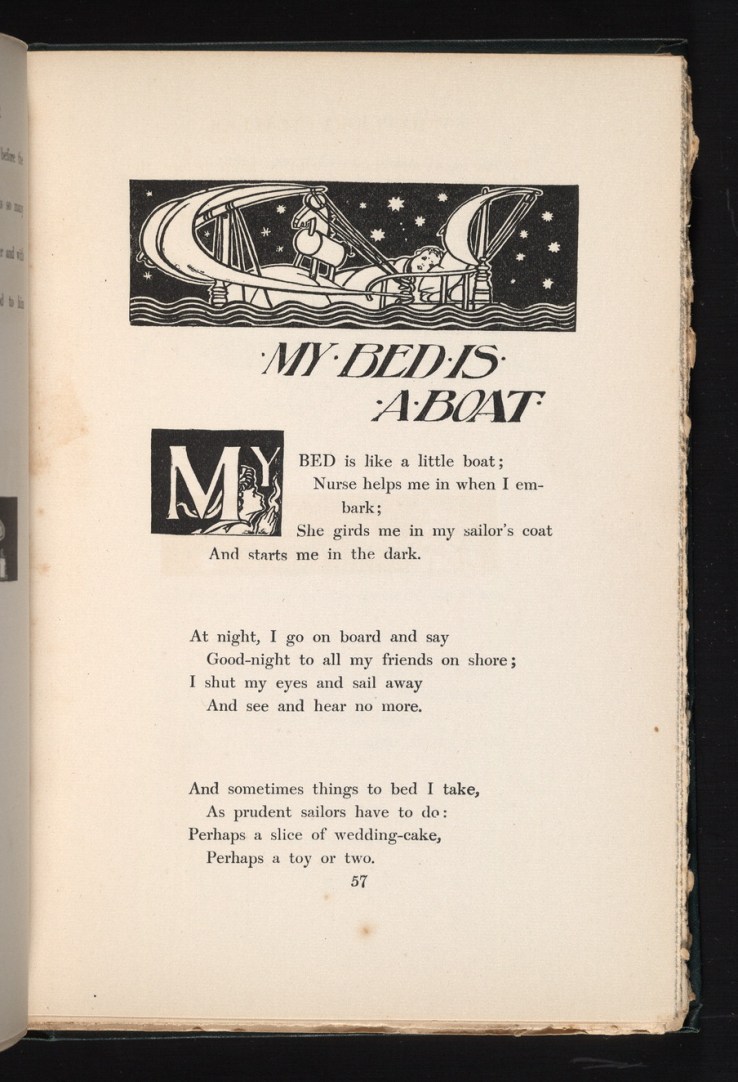
“My Bed Is a Boat” — Robert Louis Stevenson