Werner Herzog on Moral Responsibility

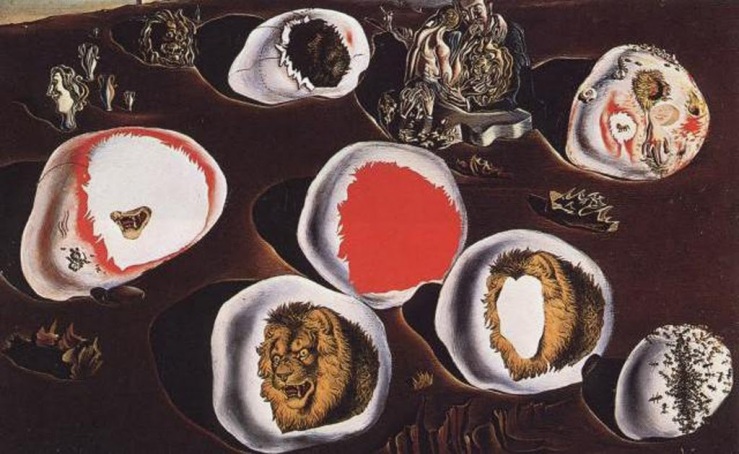
Accommodations of Desire — Salvador Dali

Slavoj Žižek at Occupy Wall Street

The Sopranos Debate Christopher Columbus’s Cultural Legacy (NSFW)

Also, Howard Zinn on Columbus Day.

[Editorial note: Yeah. We know we posted this last year. We still like it though].

Alejandro Jodorowsky Interview (Video)

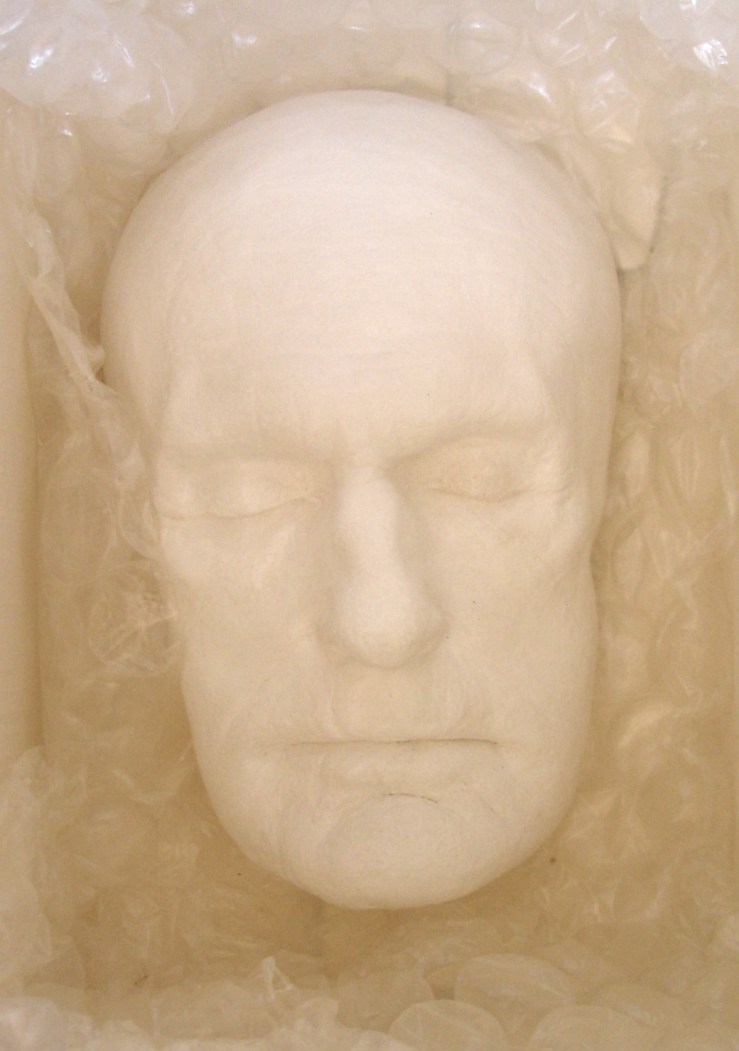
Timothy Leary’s Death Mask

“All These Dreams Are Yours As Well” — Werner Herzog

Books Acquired, 10.08.2011

20111008-120116.jpg

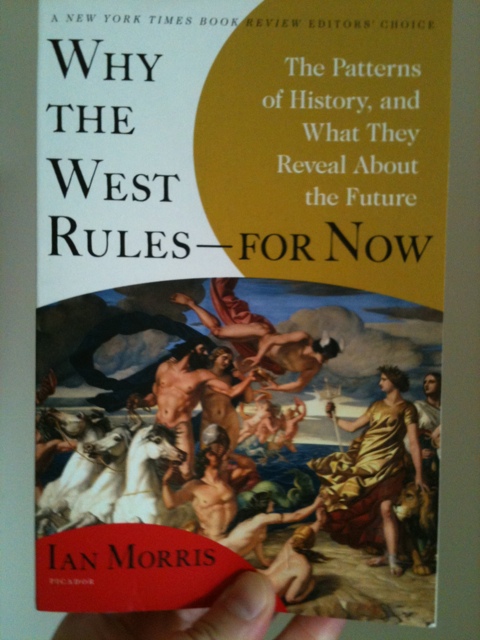
Two reader copies in the mail today. First up, Picador’s new tpb edition of Ian Morris’s Why the West Rules—For Now. This is a big, chunky book. Haven’t had a chance to dip into it yet, but it looks promising, and I recall it receiving positive reviews last year when it debuted in hardback. From the NYT

Fortunately, Morris is a lucid thinker and a fine writer. He uses a minimum of academic jargon and is possessed of a welcome sense of humor that helps him guide us through this grand game of history as if he were an erudite sportscaster. He shows us how different empires were boosted by periods of “axial thought” to surge up the development ladder, only to crumble upon hitting a “hard ceiling,” usually inflicted by what he calls the Five Horsemen of the Apocalypse: climate change, migration, famine, epidemic and state failure.

20111008-120126.jpg

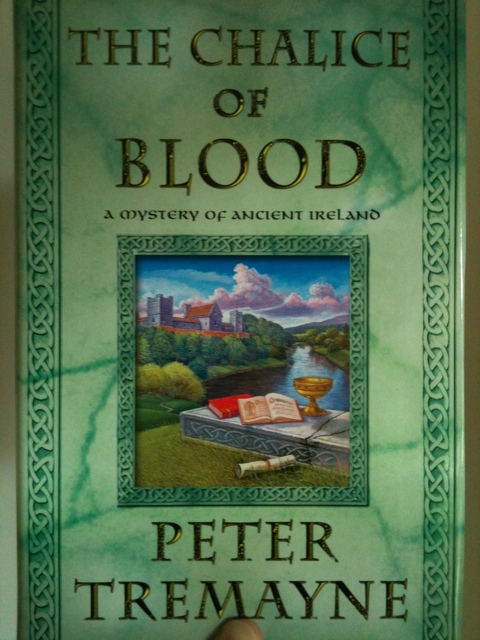
The Chalice of Blood: A Mystery of Ancient Ireland continues Peter Tremayne’s medieval mystery series. Tremayne is the pseudonym of Peter Berresford Ellis, a historian who specializes in the ancient Celts. And while history informs his writing, Tremayne delivers the thrills and dark puzzles that mystery readers demand. Publisher’s description—

Ireland AD 670: When an eminent scholar is found murdered in his cell in the Abbey of Lios Mor, fear spreads among his brethren. His door was secured from the inside, with no other means of exit.  How did the murderer escape? And what was the content of the manuscripts apparently stolen from the scholar’s room?
Abbot Iarnla insists on sending for Sister Fidelma and her companion Brother Eadulf to investigate the killing.  But even before they reach the abbey walls, there is an attempt on their lives. As the mystery deepens, Fidelma and Eadulf must also wrestle with problems of their own, problems which threaten to separate them forever…

Frank Herbert Talks About Dune (Video)

Hunter S. Thompson Talks About Trying to Get The Rum Diary Published

Books Removed from Stack, 10.07.2011

20111006-144432.jpg

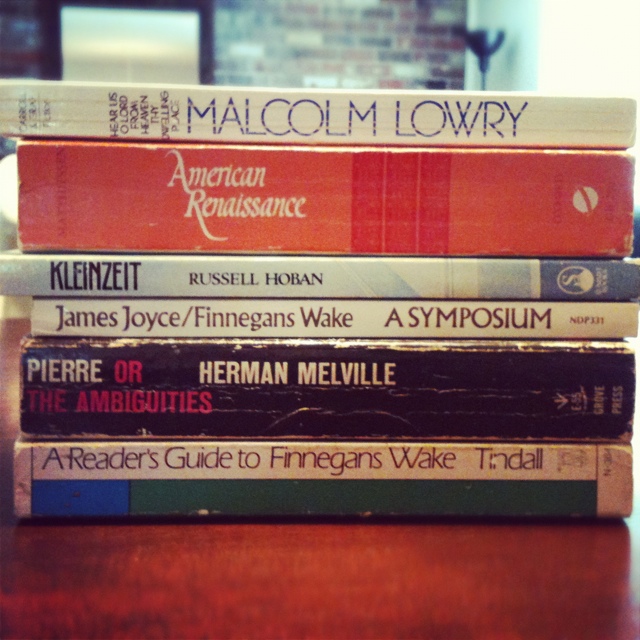
Summer wanes into fall; time to clean out the stack of books in my nightstand. Most volumes were permitted to stay, but I’m going to go ahead and find shelf space for these fellows.

The Lowry book, Hear Us O Lord from Heaven Thy Dwelling Place collects short stories and other writings. It’s a muddled, unfinished affair, and I muddled through not very much of it, leaving it unfinished.

F.O. Matthiessen’s American Renaissance: Art and Expression in the Age of Emerson and Whitman is full of insight and keen writing, but its voluminous scope and long essays kept making me wonder why I wasn’t just reading Hawthorne and Melville themselves. No knock on lit crit, but it seems wiser to spend reading time on the originals.

Speaking of Melville—I gave his incest novel Pierre another (third?) serious shot this summer, influenced by the Matthiessen, I guess. No go. Got distracted. It’s long.

I did finish Kleinzeit by Russell Hoban, a baffling schizophrenic novel that has thwarted every attempt of mine to review it. Here’s a review: it’s a strange, funny novel, a cult novel without a big enough cult.

I read several of the essays in A Symposium (ones by Beckett and William Carlos Williams), as well as the letters it includes (attacking Finnegans Wake) and Sylvia Beach’s reluctant intro. An interesting book but sometimes dry. Its inclusion, along with Tindall’s A Reader’s Guide to Finnegans Wake remind me of the brave week I spent trying to get a handle on Joyce’s language vortex. For whatever reason, I left the Wake in the stack. A dare? A dare.

1937 Orson Welles Screen Test (No, He Did Not Get the Part)

Book Acquired, 10.06.2011

20111006-144405.jpg

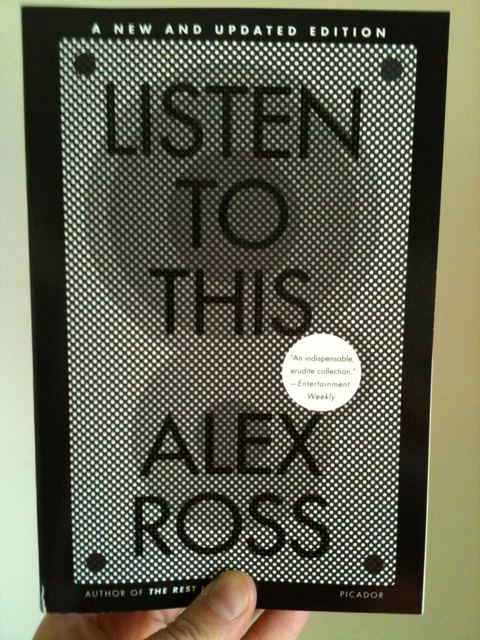
Listen to This by Alex Ross. Publisher Picador’s description—

Listen to This—which collects Alex Ross’s finest writing for The New Yorker since 1994—is the rare book that moves across the entire landscape of music, from classical to rock and back again.  In this series of lively, erudite essays, Ross tells of his own late-blooming discovery of pop, and of how contemporary sounds relate to centuries of musical tradition.  He vividly sketches canonical composers such as Schubert, Verdi, and Brahms; gives us in-depth interviews with modern pop masters such as Björk and Radiohead; and, in a previously unpublished essay, he brilliantly retells hundreds of years of music history—from Renaissance dances to Led Zeppelin—through a few iconic bass lines of celebration and lament. Witty, passionate, and brimming with insight, Listen to This shows how music expresses the full complexity of the human condition.

Portrait of Freud — Salvador Dali

Swedish Poet Tomas Tranströmer Wins the Nobel Prize in Literature

From the Nobel committee–

The Nobel Prize in Literature for 2011 is awarded to the Swedish poet Tomas Tranströmer “because, through his condensed, translucent images, he gives us fresh access to reality”.

Here’s Tranströmer’s “After a Death,” translated by Robert Bly—

Once there was a shock
that left behind a long, shimmering comet tail.
It keeps us inside. It makes the TV pictures snowy.
It settles in cold drops on the telephone wires.

One can still go slowly on skis in the winter sun
through brush where a few leaves hang on.
They resemble pages torn from old telephone directories.
Names swallowed by the cold.

It is still beautiful to hear the heart beat
but often the shadow seems more real than the body.
The samurai looks insignificant
beside his armor of black dragon scales.

“Steinbeck Is Sincere” — William T. Vollmann on East of Eden

William Vollmann writes about John Steinbeck’s East of Eden (excerpted from Imperial via Expelled from Eden)—

The book of his which I admire the most is East of Eden. For a decade now the character of Kate, whom some critics find unconvincing has haunted my head; she’s horrific, she’s pathetic, she’s steady and successful and lonely; she is perfectly what she is. The retelling of the Cain and Abel story is brilliant, the landscape descriptions lovely and lush, the plotting as careful and convincing as the best of George Eliot. And of course there’s a message, a flaw, personified by a Chinese servant who tells us, sometimes at great length, what to think. But Lee has never annoyed me. He speechifies intelligently, at times wittily, and sometimes compassionately. Do I care that nobody I’ve ever met talks like that? He is sincere because Steinbeck is sincere. And this is what I love about Steinbeck most of all, his sincerity.

Agnostic Symbol — Salvador Dali