Dinner with Henry Miller

Vodpod videos no longer available.

Via Ubuweb

Dinner With Henry is a rare, 30-minute documentary about Henry Miller. It is exactly what the title implies: footage of Henry having dinner. With him at the table is the film crew, and actress/model Brenda Venus, to whom Henry was enamoured in the final years of life. Henry – at age 87 – spends the majority of his time speaking on a number of subjects, the most persistent of which is Blaise Cendrars. Occasionally, he complains about the food. That is all. It may not be of much interest to a general audience, but is a curious “slice of life” for any Miller fan who likes to imagine being at the table with him.

Jonathan Safran Foer Talks About His New Book, Tree of Codes

Jonathan Safran Foer’s new book, Tree of Codes, is a cut-up — or cut-out, rather — of Bruno Schulz’s The Street of Crocodiles. More here.

“To Bertholt Brecht” — William Meredith

“To Bertholt Brecht” by William Meredith— 

I’ve heard that you said, when a scene you had revised
Still didn’t suit a man you used to know,
“But I am not Kafka!” What artist hasn’t sized
Himself in the dwindling lacquer row
Of chinese dolls that, with no loss of face,
Can be out back inside one another now
And only a fool quarrel about his place.
There are such ranks; and yet I quarrel with
Those who have put a price on mere despair,
Ranking a man as he can fetch up death
And senselessness, and finding you famous so.
You called your foe by name: a naive faith.
It is a naive disillusion, everywhere
Fudging the good and bad, we must call foe.
The truth is hidden as cunningly from one
Time as another; what they change is the decoys,
And it takes a wily man to use the gun.
I think you would not be fooled by our bully-boys
Who say, “As Brecht said, I live in an age of blood.”
You might stop with an oath their shrill, untimely noise:
Evil is nothing until it touches good.

N. Took the Dice–Alain Robbe-Grillet

Vodpod videos no longer available.

More info here.

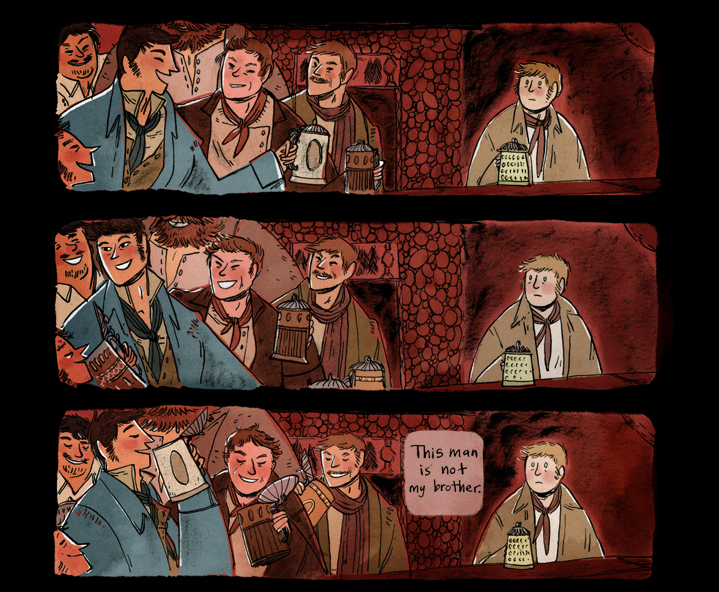
“His Face All Red” — Em Carroll

“His Face All Red” is a lovely, disturbing little self-contained webcomic by Em Carroll. Fratricide, an American gothic setting, and a horrifyingly ambiguous conclusion: what’s not to love? Read it here.

Silly CNN Report on Thomas Pynchon

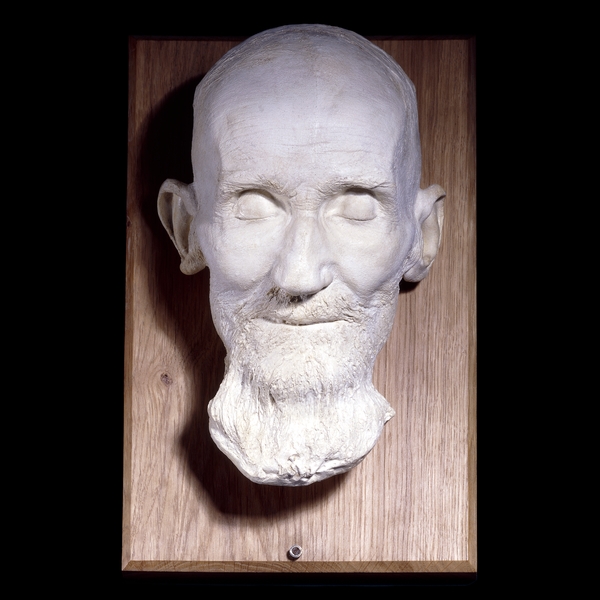
George Bernard Shaw’s Death Mask

Timothy Leary Just Wanted to Meet Thomas Pynchon

Roland Barthes on Alain Robbe-Grillet

From Roland Barthes’s essay Objective Literature: Alain Robbe-Grillet

Robbe-Grillet’s purpose . . . is to establish the novel on the surface: once you can set its inner nature, its “interiority,” between parentheses, then objects in space, and the circulations of men among them, are promoted to the rank of subjects. The novel becomes man’s direct experience of what surrounds him without being able to shield himself with a psychology, a metaphysic, or a psychoanalytic method in his combat with the objective world he discovers. The novel is no longer a chthonian revelation, the book of hell, but of earth–requiring that we no longer look at the world with the eyes of a confessor, of a doctor, or of God himself (all significant hypostases of the classical novelist), but with the eyes of a man walking in his city with no other horizon than the scene before him, no other power than that of his own eyes.

“Time Piece” — Jim Henson

(Via).

“The Discharged Soldier” — William Wordsworth

“The Discharged Soldier” is William Wordsworth’s moving poem about the pain of a war veteran returning home.

No living thing appeared in earth or air,
And, save the flowing water’s peaceful voice,
Sound there was none–but, lo! an uncouth shape,
Shown by a sudden turning of the road,
So near that, slipping back into the shade
Of a thick hawthorn, I could mark him well,
Myself unseen. He was of stature tall,
A span above man’s common measure, tall,
Stiff, lank, and upright; a more meagre man
Was never seen before by night or day.
Long were his arms, pallid his hands; his mouth
Looked ghastly in the moonlight: from behind,
A mile-stone propped him; I could also ken
That he was clothed in military garb,
Though faded, yet entire. Companionless,
No dog attending, by no staff sustained,
He stood, and in his very dress appeared
A desolation, a simplicity,
To which the trappings of a gaudy world
Make a strange back-ground. From his lips, ere long,
Issued low muttered sounds, as if of pain
Or some uneasy thought; yet still his form
Kept the same awful steadiness–at his feet
His shadow lay, and moved not. From self-blame
Not wholly free, I watched him thus; at length
Subduing my heart’s specious cowardice,
I left the shady nook where I had stood
And hailed him. Slowly from his resting-place
He rose, and with a lean and wasted arm
In measured gesture lifted to his head
Returned my salutation; then resumed
His station as before; and when I asked
His history, the veteran, in reply,
Was neither slow nor eager; but, unmoved,
And with a quiet uncomplaining voice,
A stately air of mild indifference,
He told in few plain words a soldier’s tale–
That in the Tropic Islands he had served,
Whence he had landed scarcely three weeks past;
That on his landing he had been dismissed,
And now was travelling towards his native home.
This heard, I said, in pity, “Come with me.”
He stooped, and straightway from the ground took up
An oaken staff by me yet unobserved–
A staff which must have dropped from his slack hand
And lay till now neglected in the grass.
Though weak his step and cautious, he appeared
To travel without pain, and I beheld,
With an astonishment but ill suppressed,
His ghostly figure moving at my side;
Nor could I, while we journeyed thus, forbear
To turn from present hardships to the past,
And speak of war, battle, and pestilence,
Sprinkling this talk with questions, better spared,
On what he might himself have seen or felt.
He all the while was in demeanour calm,
Concise in answer; solemn and sublime
He might have seemed, but that in all he said
There was a strange half-absence, as of one
Knowing too well the importance of his theme,
But feeling it no longer. Our discourse
Soon ended, and together on we passed
In silence through a wood gloomy and still.
Up-turning, then, along an open field,
We reached a cottage. At the door I knocked,
And earnestly to charitable care
Commended him as a poor friendless man,
Belated and by sickness overcome.
Assured that now the traveller would repose
In comfort, I entreated that henceforth
He would not linger in the public ways,
But ask for timely furtherance and help
Such as his state required. At this reproof,
With the same ghastly mildness in his look,
He said, “My trust is in the God of Heaven,
And in the eye of him who passes me!”

The cottage door was speedily unbarred,
And now the soldier touched his hat once more
With his lean hand, and in a faltering voice,
Whose tone bespake reviving interests
Till then unfelt, he thanked me; I returned
The farewell blessing of the patient man,
And so we parted. Back I cast a look,
And lingered near the door a little space,
Then sought with quiet heart my distant home.

Kurt Vonnegut Talks Cat’s Cradle

“I Wanna Know Why We Didn’t Get the Two Kegs of Beer You Promised Us” — Hunter S. Thompson vs. The Hell’s Angels

“Nietszche” — Lydia Davis

“Nietszche” [sic] by Lydia Davis, from Varieties of Disturbance, and reprinted in The Collected Stories of Lydia Davis

Oh, poor Dad. I’m sorry I made fun of you.

Now I’m spelling Nietszche wrong, too.

“Self Portrait at Twenty Years” — Roberto Bolaño

“Self Portrait at Twenty Years,” a poem by Roberto Bolaño, from Laura Healy’s translation of The Romantic Dogs

I set off, I took up the march and never knew
where it might take me. I went full of fear,
my stomach dropped, my head was buzzing:
I think it was the icy wind of the dead.
I don’t know. I set off, I thought it was a shame
to leave so soon, but at the same time
I heard that mysterious and convincing call.
You either listen or you don’t, and I listened
and almost burst out crying: a terrible sound,
born on the air and in the sea.
A sword and shield. And then,
despite the fear, I set off, I put my cheek
against death’s cheek.
And it was impossible to close my eyes and miss seeing
that strange spectacle, slow and strange,
though fixed in such a swift reality:
thousands of guys like me, baby-faced
or bearded, but Latin American, all of us,
brushing cheeks with death.

Six Paul Auster Interviews

Several Paul Auster interviews for those inclined. Also, read our review of his new novel Sunset Park.

Auster on NPR’s Marketplace with Kai Ryssdal.

Auster on NHPR.

Auster at the AV Club.

Auster at The Cult.

Auster at Goodreads.

And, on a video interview with Borders, Auster leaves his shades on for the duration of the interview, perhaps commenting on the brightness of his future.

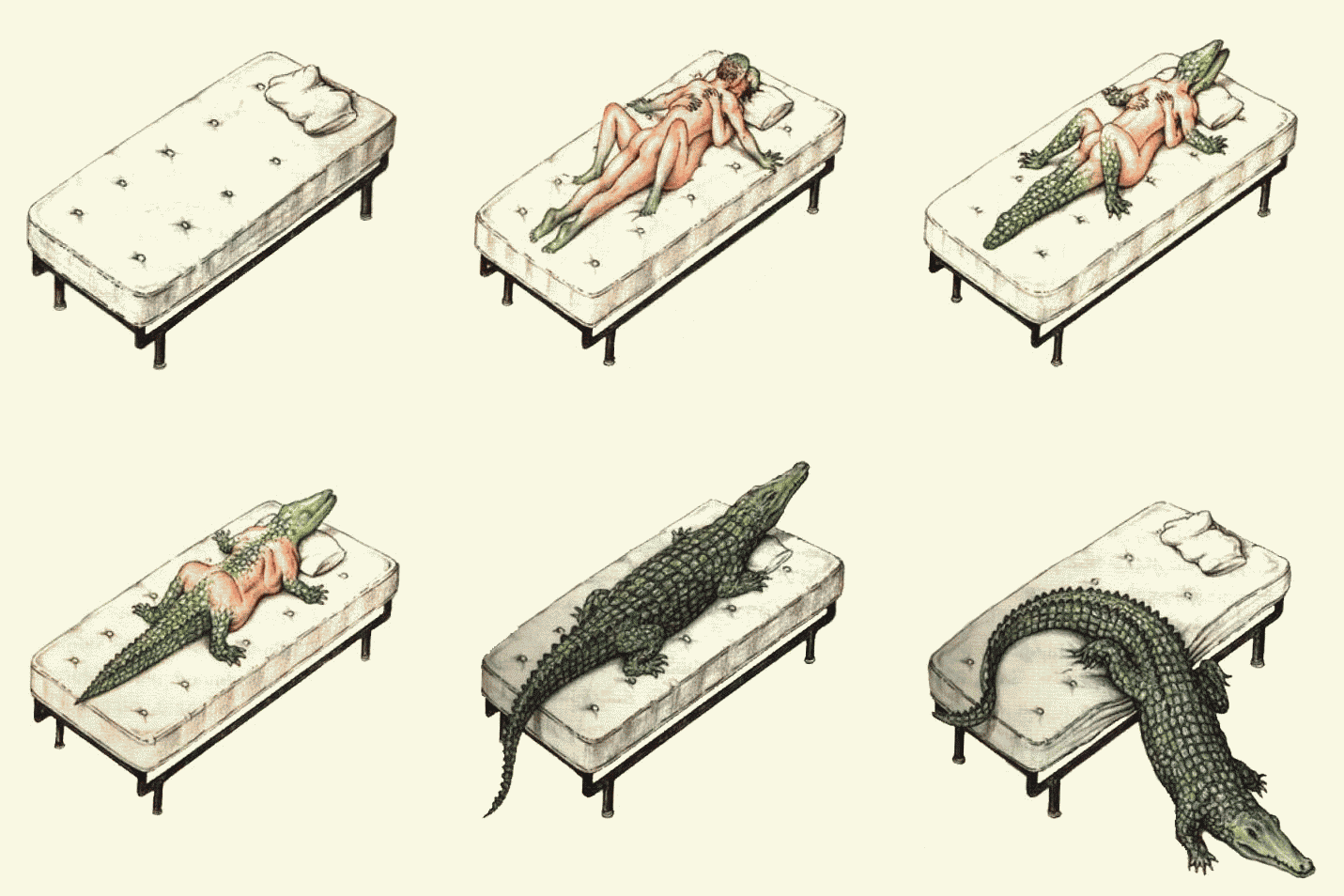
More from Codex Seraphinianus