“I’m Not Sure Why You Love Reading About Drugs” — The Paris Review Interviews Sam Lipsyte

The Paris Review interviews Biblioklept fave Sam Lipsyte. From the interview–

I’m not sure why you love reading about drugs. Maybe at a certain point the reading high is better than actually doing them? That could be preposterous though. I guess I’ve written about drugs a good deal because for a time, in my younger days, certain hard substances were the major elements in my life. My movements and decisions revolved around them. I like to pretend it was all some meaningless blur, but it was a very intense and focused time. I had a daily purpose (to get more drugs) that heightened the experience of being alive (a heightening then nullified by the drugs). I felt very alert during the mission phase of the day. Make no mistake, it was a horrible time, but I’ve always been fascinated by that robotic intensity. Also, it’s a way to give your character something to do, and we all know you have to keep those fuckers in motion, or readers might find out they are just constructions in a fiction! I try to make sure the drug-users in my stories aren’t acting high. Most of them tend to do drugs to get straight anyway. They are in that awful place. So their interactions might seem slightly off, but mostly these could easily be people not doing dangerous drugs. It’s just that occasionally they die from their addictions or else make really bad decisions that lead to more misery. That’s where the comedy kicks in. Drugs are hard to resist for some people because they work really well. And then don’t. But you find that out later.


Many books have been written depicting drug addictions, drug addicts and how drug addiction treatment centers actually work, with varying degrees of consistency.

Umberto Eco Invented Dan Brown

More from The Paris Review’s vaults–a 2008 interview with Umberto Eco

INTERVIEWER: Have you read The Da Vinci Code?

ECO: Yes, I am guilty of that too.

INTERVIEWER: That novel seems like a bizarre little offshoot of Foucault’s Pendulum.

ECO: The author, Dan Brown, is a character from Foucault’s Pendulum! I invented him. He shares my characters’ fascinations—the world conspiracy of Rosicrucians, Masons, and Jesuits. The role of the Knights Templar. The hermetic secret. The principle that everything is connected. I suspect Dan Brown might not even exist.

Harold Bloom Explains Why the New Testament Is an Aesthetic Disappointment

The Paris Review has made their famous cache of author reviews–spanning seven decades–available online. Here’s Harold Bloom griping about the New Testament in a 1991 interview

INTERVIEWER: You’ve written that the Christian Bible is, on the whole, a disappointment.

BLOOM: The aesthetic achievement is so much less than that of the Old—or original—Testament. The New Testament is a very curious work from a literary point of view. So much of it is written by writers who are thinking in Aramaic and writing in demotic Greek. And that curious blend of Aramatic syntax with a Greek vocabulary is a very dubious medium. It’s particularly egregious in the Revelation of St. John the Divine, the Apocalypse, which is a very bad and hysterical and nasty piece of writing. Even the most powerful parts of the New Testament from a literary point of view—certain epistles of Paul and the Gospel of John—are not works that can sustain a close aesthetic comparison with the stronger parts of the Hebrew Bible. It is striking how the Apocalypse of John has had an influence out of all proportion to its aesthetic, or for that matter, I would think, its spiritual value. It is not only an hysterical piece of work, but a work lacking love or compassion. In fact, it is the archetypal text of resentment, and it is the proper foundation for every school of resentment ever since.

Violent J Holds Forth: Highlights from AV Club’s ICP Interview

If you don’t have time to read Nathan Rabin’s epic interview with Violent J of Insane Clown Posse, we offer some highlights–

On the inspiration and rationale behind their revisionist Western, Big Money Rustlas: “You know, just for the fuck of it all.”

On keeping one’s cards close to one’s breast: “I don’t want to give our secrets away, but they might be obvious”

On opinions: “In our opinion, it’s not cool to actually see us doing the murders, as cool as it is to imagine it when you’re hearing the song. That’s our opinion.”

On making quality comedies: “I think the crew that was working the movie, they didn’t respect us. They didn’t respect our humor. I think a lot of them felt like it was a bum job. The attitude on the set every day was shitty. We got into arguments and battles with the crew. We’d be the only ones laughing. To do a comedy, it seems like you would need the whole crew laughing and having fun, to keep that morale up on the set, but the only ones that were having fun were us. The rest of the crew just seemed like, ‘Ah, this shit’s not funny. We’re only doing this because we have to.’ ”

On making career decisions: “We knew it was gonna be basically garbage, but we thought about it and decided to do it.”

On capitalism: “If people knew how little money we actually make, I think it makes us more impressive.”

On logical fallacies in Martin Bashir’s Nightline profile of ICP: “They talked about crime happening and about how some Juggalos have committed these crimes. We made the point that millions of people bought our albums, and out of millions of people, there is going to be some bad apples. I’m sure Barbra Streisand fans have committed crimes as well….”

On what killed Michael Jackson: “It was Martin Bashir’s documentary that eventually killed Michael Jackson.”

On having quotes taken out of context: ” . . .  they took my response to one question and edited it so I looked like I was responding to another question. And what’s scary to me is that this is Nightline. This is a respected piece of American journalism, and they were full of shit.”

On pulling shenanigans: “It’s scary to me to see somebody that’s that trusted pulling shenanigans like that. It’s just fucking crazy to me.”

On being interviewed by Bill O’Reilly: “Looking at that also makes me sick, because I know we could have schooled his ass a lot better than we did. We were kind of weak with it on his show.”

On your loss: “But anybody that can stand there, looking at a rainforest or something and not think that’s a miracle—I mean, that’s their loss. Anybody that can sit there and look at shooting stars or a fucking full moon when it’s red and hanging over the city and not sit there and think, “That looks awesome, and that’s a miracle that we get to see that and have that on this earth and all this shit,” you know, that’s their loss.”

On what it takes to find out if Slick Rick might or might not be interested in performing at The Gathering of the Juggalos: “Just finding out if Slick Rick is interested can be a monthlong process. It’s very fucking drawn out.”

On why ICP declined to play Ozzfest: “It was probably something along the lines of you can’t throw Faygo or something.”

On The Wrestler: “Like, nothing they showed in that movie we didn’t already know. I’m that tuned in to the wrestling world.”

On forgetting that he’s being interviewed: “Do you have an ink pen with you? Or something to mark this down?”

On the internet and clothing: “You can’t download a T-shirt.”

On Nickelodeon and Beyoncé: “I don’t even mind Nickelodeon, or Kids’ Choice Awards, or any of that. I’m not against all that. I’m not against Beyoncé. I love Beyoncé. I’m not against pop music.”

On what people have to realize about “Miracles”: “See, what people have to realize about the “Miracles” video is that that went out into the world, but that wasn’t for the world. That was for Juggalos.”

Thank you for the pure motherfucking magic.

Polar Madness! — Aurorarama’s Book Trailer

We’re loving Jean-Christophe Valtat‘s new book Aurorarama, a steampunk-romance-high-adventure-academic satire-etc. set in the alternaworld of New Venice, an Arctic metropolis. Check out this post at MobyLives for a chance to win a copy of the book.

“Are You Obscene?” — Play the New Interactive Howl Game

Play the new interactive game “Are You Obscene?”  It may be a baldly mercantile device to promote the upcoming Allen Ginsberg biopic Howl, but it’s also pretty fun.

Here’s the trailer for Howl

The Strange and Disorienting World of Authors’ Personal Libraries

Craig Fehrman’s new article “Lost Libraries” (at The Boston Globe) provides a fascinating overview of how author libraries — that is, the books, usually heavily annotated, that authors own — find their way into archives, and why those archives matter. Fehrman begins by detailing the strange case of recently-deceased novelist David Markson, whose personal library was kinda sorta reassembled by fans after a reader named Annecy Liddell bought Markson’s (cleverly-annotated) copy of Don DeLillo’s White Noise–

The news of Liddell’s discovery quickly spread through Facebook and Twitter’s literary districts, and Markson’s fans realized that his personal library, about 2,500 books in all, had been sold off and was now anonymously scattered throughout The Strand, the vast Manhattan bookstore where Liddell had bought her book. And that’s when something remarkable happened: Markson’s fans began trying to reassemble his books. They used the Internet to coordinate trips to The Strand, to compile a list of their purchases, to swap scanned images of his notes, and to share tips. (The easiest way to spot a Markson book, they found, was to look for the high-quality hardcovers.) Markson’s fans told stories about watching strangers buy his books without understanding their origin, even after Strand clerks pointed out Markson’s signature. They also started asking questions, each one a variation on this: How could the books of one of this generation’s most interesting novelists end up on a bookstore’s dollar clearance carts?

Fehrman g0es on to point out that–

David Markson can now take his place in a long and distinguished line of writers whose personal libraries were quickly, casually broken down. Herman Melville’s books? One bookstore bought an assortment for $120, then scrapped the theological titles for paper. Stephen Crane’s? His widow died a brothel madam, and her estate (and his books) were auctioned off on the steps of a Florida courthouse. Ernest Hemingway’s? To this day, all 9,000 titles remain trapped in his Cuban villa.

Why does this matter? As Fehrman notes, “authors’ libraries serve as a kind of intellectual biography.” And while universities do their best to archive these materials, as Fehrman’s article reveals, much of what gets saved is left to chance. For instance, how did David Foster Wallace’s personal library get to the Harry Ransom Archive?

When Wallace’s widow and his literary agent, Bonnie Nadell, sorted through his library, they sent only the books he had annotated to the Ransom Center. The others, more than 30 boxes’ worth, they donated to charity. There was no chance to make a list, Nadell says, because another professor needed to move into Wallace’s office. “We were just speed skimming for markings of any kind.”

“The Warm Fuzzies” — Chris Adrian

Read Biblioklept favorite Chris Adrian’s story “The Warm Fuzzies” at The New Yorker. Excerpt–

There was a time when they had been just the Carters, and not the Carter Family Band, but Molly could barely remember it. There was a time when her father had been a full-time instead of a part-time dentist, and her mother had been the dental hygienist in his office, when they had all gone to regular school instead of home school, when the family car had been a Taurus instead of a short bus, and when Melissa hadn’t even been born. Then her parents woke up one morning—without having seen a vision or having experienced a dark night of the soul—with a new understanding of their lives’ purpose. They both took up the guitar, never having played before, and started to praise Jesus in song.

There was a time, too, before they made albums or went on tours or appeared in Handycam videos produced and directed by their Aunt Jean, which aired (rather late at night ) on the community cable channel and then, eventually, on Samaritan TV, when Molly liked being in the band, and liked being in the family. She had had Melissa’s job once, and had danced as enthusiastically as Melissa did now, and had felt the most extraordinary joy during every performance, whether it was a rehearsal in the garage or a school-auditorium concert in front of three hundred kids. Then one morning two months ago, she had woken up to find that the shine had gone off everything. It was a conversion as sudden as the one her parents had suffered. She had come to breakfast feeling unwell but not sick, and was puzzling over how it was different to feel like something was not right with you and yet feel sure you were in perfect health, but she didn’t know what her problem could be until she noticed how unattractive her father was. It wasn’t his old robe or his stained T-shirt or even how he talked with his mouth full of eggs; he wore those things every morning, and he always talked with his mouth full—it was just how he was. She kept staring at him all through breakfast, and finally he asked her if there was something on his face. “No, sir,” she said, and a little voice—the sort that you hear very clearly even though it doesn’t actually speak—said somewhere inside her, He’s got ugly all over his face.

Laurence Sterne’s Death Mask

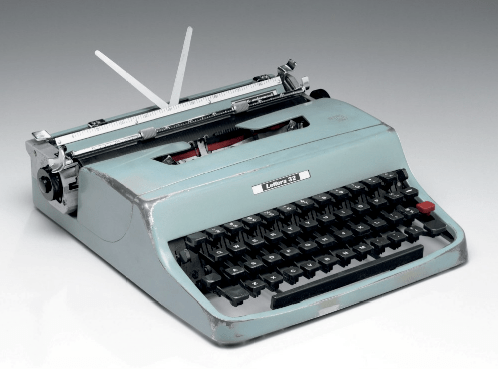
William Burroughs’s Typewriter

So we ran this post of famous authors’ typewriters the other day but we somehow forgot William Burroughs’s typewriter, which is really damn silly ’cause his name is right there on it–

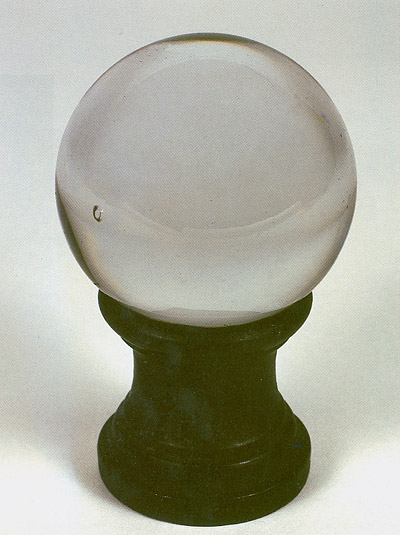
André Breton’s Crystal Ball

More info here.

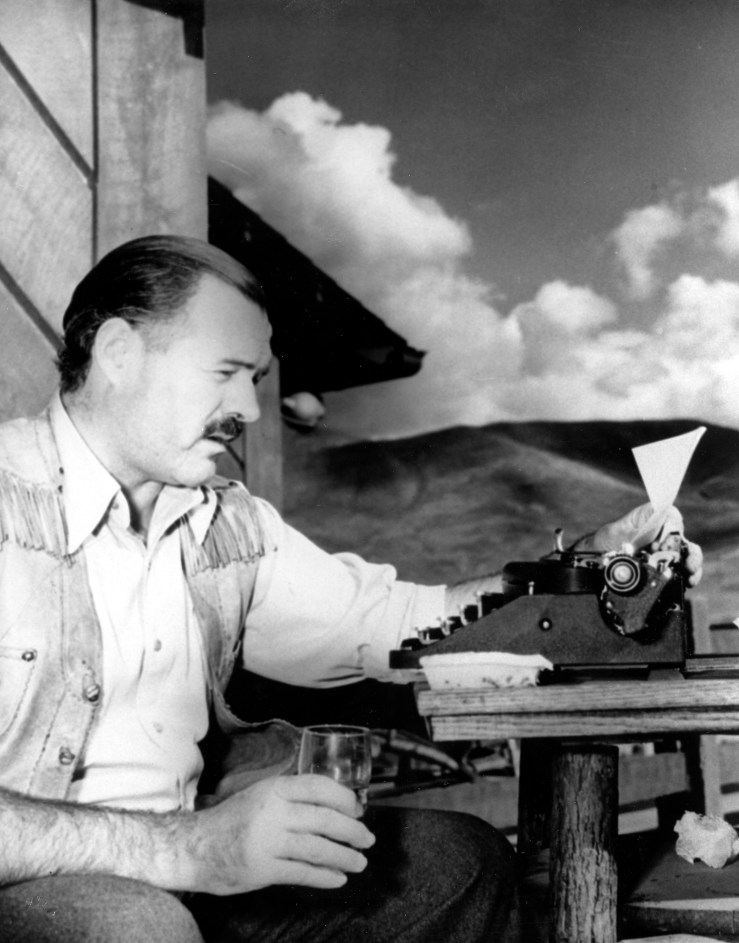
Some Comments on the Impressiveness of a Certain Photograph of Ernest Hemingway

I posted this photograph of Ernest Hemingway yesterday in a series of photos of authors’ typewriters

It seems to me that this photo expresses a minimum of five kinds of awesomeness upon which I must remark. Now, before you gripe about Hemingway being an author more famous at this point for his image than his actual work, get over it. In fact, I’ve already been there and gotten over it. On to the awesomeness–

1. The sky. Look at that sky. And those mountains. (Or are they just hills? I’m from Florida. They look like mountains). Let the sky stand for context. It’s 1939 and Hemingway is writing For Whom the Bell Tolls in Sun Valley, Idaho. How could he write under that sky? How could he not write?

2. That mustache. The authority therein. Handsome but grim. Fierce but refined. I want my own mustache like that.

3. The vest. Oh my god, that vest. The fringe. You can almost smell it. Like he’s a boy, playing cowboys and Indians.

4. The glass. Hemingway, I think, is not drinking water here. I think he is drinking something else. It could be anything (not water), but I think he’s drinking scotch. I’m going to pretend he’s drinking bourbon, but I don’t think it’s bourbon.

5. That expression. If Hemingway is merely posing for a photographer (entirely plausible, highly likely in fact), the pose is nevertheless at the same time utterly real. Is he scrutinizing the words? Squinting in the sun? Is it the booze that has puckered his eyes thusly? That brow, only slightly furrowed (only brows furrow); the arch of his hair, slick but not oily, thrusting back with a calm energy. The slight slouch. The mouth, a bit open; commenting perhaps, or exhaling (no, not exhaling), or maybe perched for another sip.

I love this photo.

Michael Greenberg on Roberto Bolaño

At The New York TimesMichael Greenberg tries to unpack the recent explosion of Roberto Bolaño books now available to English-reading audiences, including Antwerp, The Insufferable Gaucho, and The Return. From Greenberg’s review–

The Chilean writer Roberto Bolaño has to be one of the most improbable international literary celebrities since William Burroughs and Henry Miller, two writers whose work Bolaño’s occasionally resembles. His subjects are sex, poetry, death, solitude, violent crime and the desperate glimmers of transcendence that sometimes attend them. The prose is dark, intimate and sneakily touching. His lens is largely (though not literally) autobiographical, and seems narrowly focused at first. There are no sweeping historical gestures in Bolaño. Yet he has given us a subtle portrait of Latin America during the last quarter of the 20th century — a period of death squads, exile, “disappeared” citizens and state-sponsored terror. The nightmarish sense of human life being as discardable as clay permeates his writing.

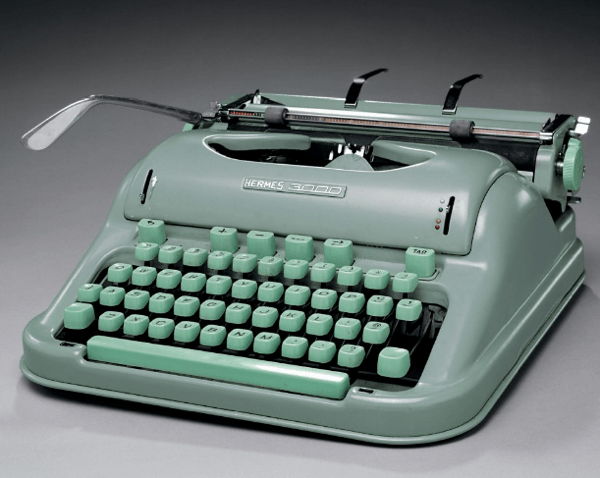
Famous Authors’ Typewriters

Jack Kerouac's Typewriter
Another Kerouac Typewriter
Sylvia Plath's Typewriter
Cormac McCarthy's Typewriter
John Updike's Typewriter
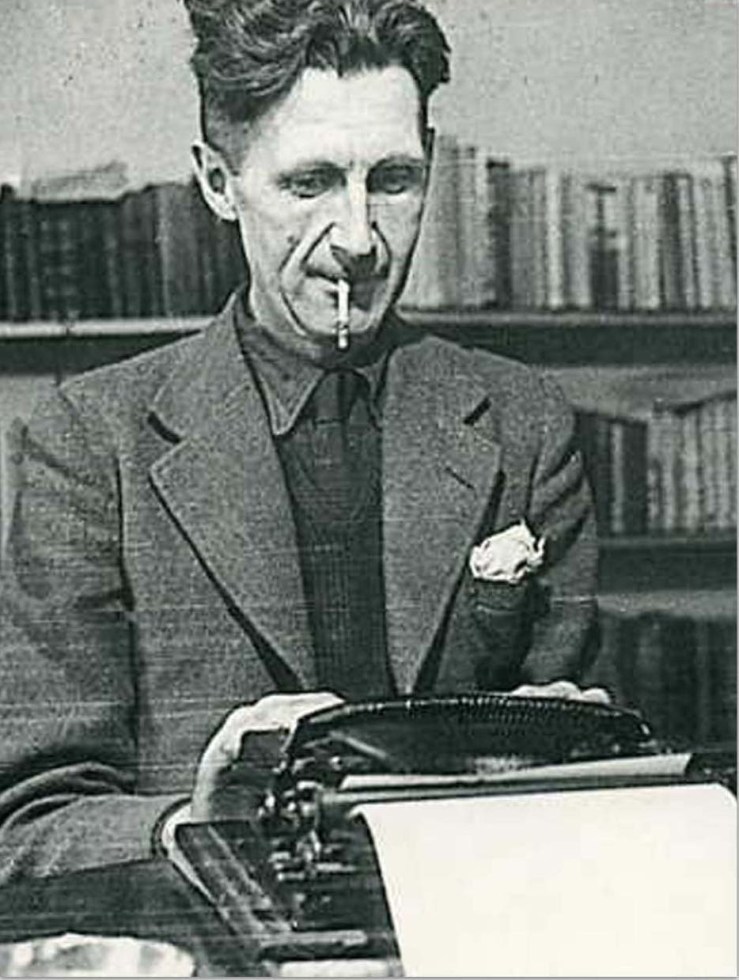
George Orwell Tickling the Keys
Ernest Hemingway's Typewriter
How To Write

Odds and Ends

At A Piece of Monologue, Rhys Tranter reviews Simon Critchley’s “philosophical antidote to the self-help manual,” How to Stop Living and Start Worrying. Read our review of Critchley’s The Book of Dead Philosophers here.

MobyLives expands Flavorwire’s post on author photo clichés to include Melville House authors.

Here’s an author photo we love: Harold Bloom wearing big headphones and looking kinda skeptical and very green (the image is by Paul Festa from his film Apparition of the Eternal Church)–

If you still haven’t done your Juggalo Studies homework for this week, read Camille Dodero’s inspired report from this year’s The Gathering (at The Village Voice). And then watch “Miracles” again, because, hey, it only gets better. It still shocks the eyelids.

We love this tumblr (or is it tumblog?)–Anatomy–even if it looks like they aren’t doing much these days. C’mon guys. We need more gifs like this–

Finally, check out Stanford Kay’s series of paintings of books and bookshelves, “Gutenberg Variations.” Like abstract expressionism, only good (via) —

Charles Burns/Krzysztof Penderecki Mash-up

Okay, “mash-up” might not be the best term, but this video is pretty cool. YouTube user songtotube sets cartoonist Charles Burns’s segment from Peur(s) du Noir to a section of Krzysztof Penderecki’s “Polymorphia.”  Good creepy fun. Or not.

“Ballad of Birmingham” — Dudley Randall

“Ballad of Birmingham” by Dudley Randall

(On the bombing of a church in Birmingham, Alabama, 1963)

“”Mother dear, may I go downtown
Instead of out to play,
And march the streets of Birmingham
In a Freedom March today?”

“No, baby, no, you may not go,
For the dogs are fierce and wild,
And clubs and hoses, guns and jails
Aren’t good for a little child.”

“But, mother, I won’t be alone.
Other children will go with me,
And march the streets of Birmingham
To make our country free.”

“No baby, no, you may not go
For I fear those guns will fire.
But you may go to church instead
And sing in the children’s choir.”

She has combed and brushed her night-dark hair,
And bathed rose petal sweet,
And drawn white gloves on her small brown hands,
And white shoes on her feet.

The mother smiled to know that her child
Was in the sacred place,
But that smile was the last smile
To come upon her face.

For when she heard the explosion,
Her eyes grew wet and wild.
She raced through the streets of Birmingham
Calling for her child.

She clawed through bits of glass and brick,
Then lifted out a shoe.
“O, here’s the shoe my baby wore,
But, baby, where are you?”

Learn more about the September 15th, 1963 terrorist attack in Birmingham, Alabama.