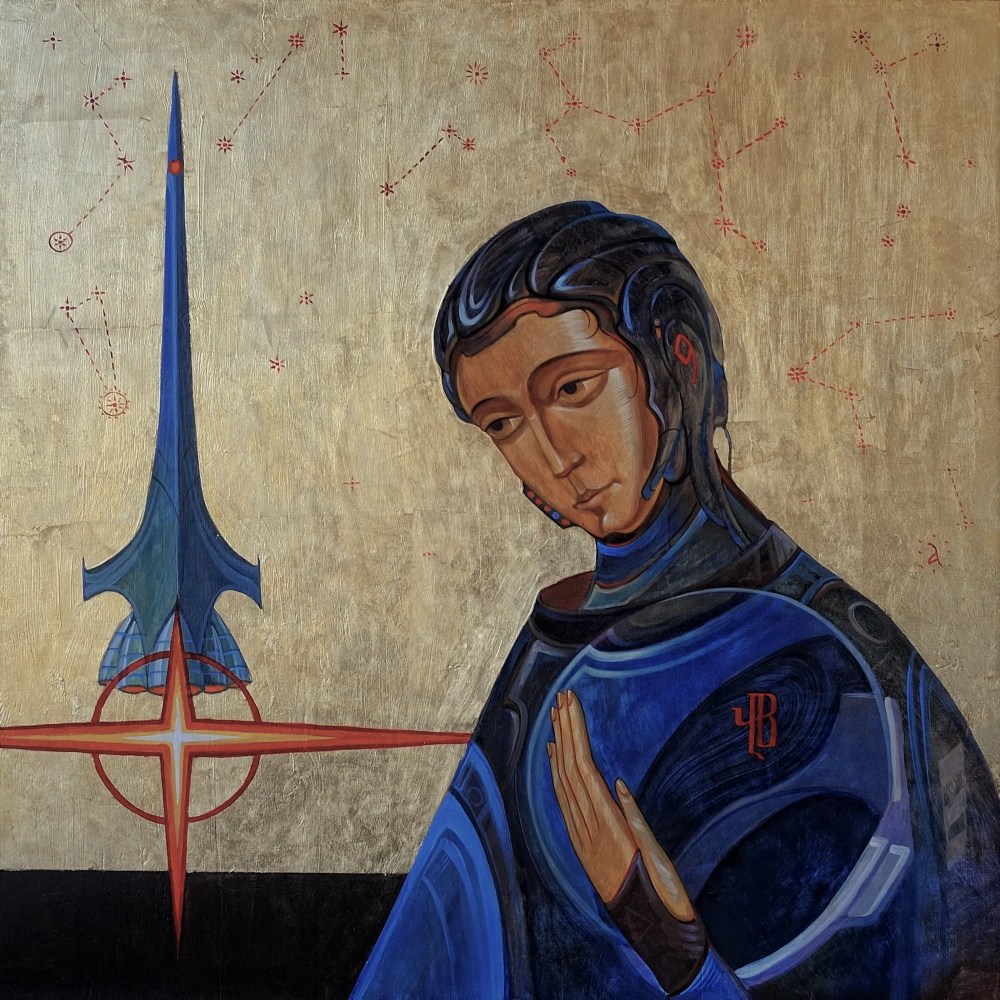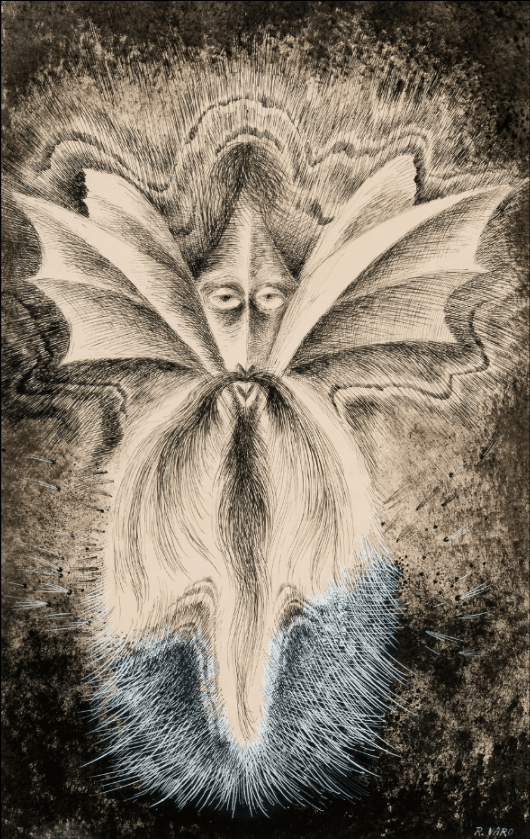
Young Pioneers — Jia Aili

Young Pioneers, 2018 by Jia Aili (b. 1979)

A hat trick in a medicine show, a fevered dream | Blood Meridian

The question was then put as to whether there were on Mars or other planets in the void men or creatures like them. And at this, the judge who had returned to the fire and stood half naked and sweating, spoke and said that there were not and that there were no men anywhere in the universe save those upon the earth. All listened as he spoke; those who had turned to watch him and those who would not.

The truth about the world, he said, is that anything is possible. Had you not seen it all from birth and thereby bled it of its strangeness it would appear to you for what it is, a hat trick in a medicine show, a fevered dream, a trance bepopulate with chimeras having neither analogue nor precedent, an itinerant carnival, a migratory tentshow whose ultimate destination after many a pitch in many a mudded field is unspeakable and calamitous beyond reckoning.

The universe is no narrow thing and the order with it is not constrained by any latitude of its conception to repeat what exists in one part in any other part. Even in this world more things exist without our knowledge than with it and the order in creation which you see is that which you have put there, like a string in a maze, so that you shall not lose your way. For existence has its own order and that no man’s mind can compass, that mind itself being but a fact among others.

A passage from Cormac McCarthy’s Blood Meridian.


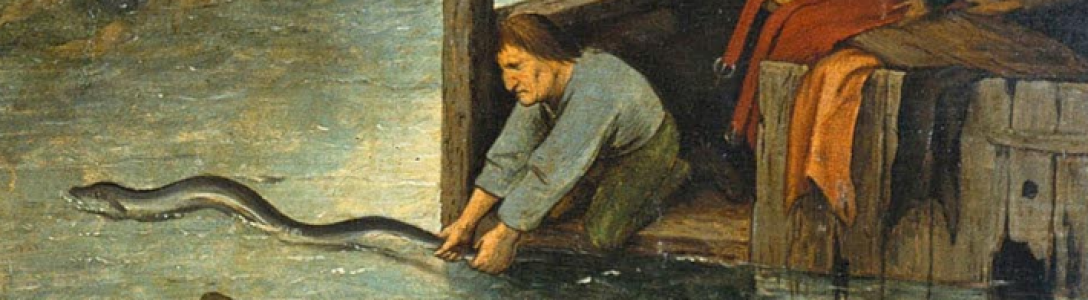
Stag at Sharkey’s — George Bellows


Stag at Sharkey’s, 1909 by George Bellows (1882-1925)

“Let’s Eat!” — Robert Crumb

Read “Mamsell Fredrika,” a haunted Christmas tale by Selma Lagerlöf

“Mamsell Fredrika”

by

Selma Lagerlöf

translated by

Pauline Bancroft Flach


It was Christmas night, a real Christmas night.

The goblins raised the mountain roofs on lofty gold pillars and celebrated the midwinter festival. The brownies danced around the Christmas porridge in new red caps. Old gods wandered about the heavens in gray storm cloaks, and in the Österhaninge graveyard stood the horse of Hel. He pawed with his hoof on the frozen ground; he was marking out the place for a new grave.

Not very far away, at the old manor of Årsta, Mamsell Fredrika was lying asleep. Årsta is, as every one knows, an old haunted castle, but Mamsell Fredrika slept a calm, quiet sleep. She was old now and tired out after many weary days of work and many long journeys,— she had almost traveled round the world,—therefore she had returned to the home of her childhood to find rest.

Outside the castle sounded in the night a bold fanfare. Death mounted on a gray charger had ridden up to the castle gate. His wide scarlet cloak and his hat’s proud plumes fluttered in the night wind. The stern knight sought to win an adoring heart, therefore he appeared in unusual magnificence. It is of no avail, Sir Knight, of no avail! The gate is closed, and the lady of your heart asleep. You must seek a better occasion and a more suitable hour. Watch for her when she goes to early mass, stern Sir Knight, watch for her on the church-road! Continue reading “Read “Mamsell Fredrika,” a haunted Christmas tale by Selma Lagerlöf”

“Scrooge” — Kate Beaton

28.2.86 (1) — Gerhard Richter 

28.2.86 (1), 1986 by Gerhard Richter (b. 1932)

A Mason & Dixon Christmastide | Thomas Pynchon

They discharge the Hands and leave off for the Winter. At Christmastide, the Tavern down the Road from Harlands’ opens its doors, and soon ev’ryone has come inside. Candles beam ev’rywhere. The Surveyors, knowing this year they’ll soon again be heading off in different Directions into America, stand nodding at each other across a Punch-bowl as big as a Bathing-Tub. The Punch is a secret Receipt of the Landlord, including but not limited to peach brandy, locally distill’d Whiskey, and milk. A raft of long Icicles broken from the Eaves floats upon the pale contents of the great rustick Monteith. Everyone’s been exchanging gifts. Somewhere in the coming and going one of the Children is learning to play a metal whistle. Best gowns rustle along the board walls. Adults hold Babies aloft, exclaiming, “The little Sausage!” and pretending to eat them. There are popp’d Corn, green Tomato Mince Pies, pickl’d Oysters, Chestnut Soup, and Kidney Pudding. Mason gives Dixon a Hat, with a metallick Aqua Feather, which Dixon is wearing. Dixon gives Mason a Claret Jug of silver, crafted in Philadelphia. There are Conestoga Cigars for Mr. Harland and a Length of contraband Osnabrigs for Mrs. H. The Children get Sweets from a Philadelphia English-shop, both adults being drawn into prolong’d Negotiations with their Juniors, as to who shall have which of. Mrs. Harland comes over to embrace both Surveyors at once. “Thanks for simmering down this Year. I know it ain’t easy.”
“What a year, Lass,” sighs Dixon.
“Poh. Like eating a Bun,” declares Mason.”

The last paragraphs of Ch. 52 of Thomas Pynchon’s novel Mason & Dixon.

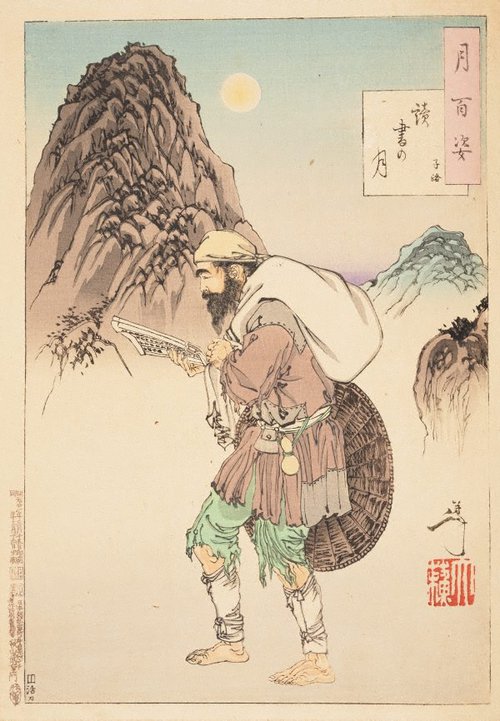
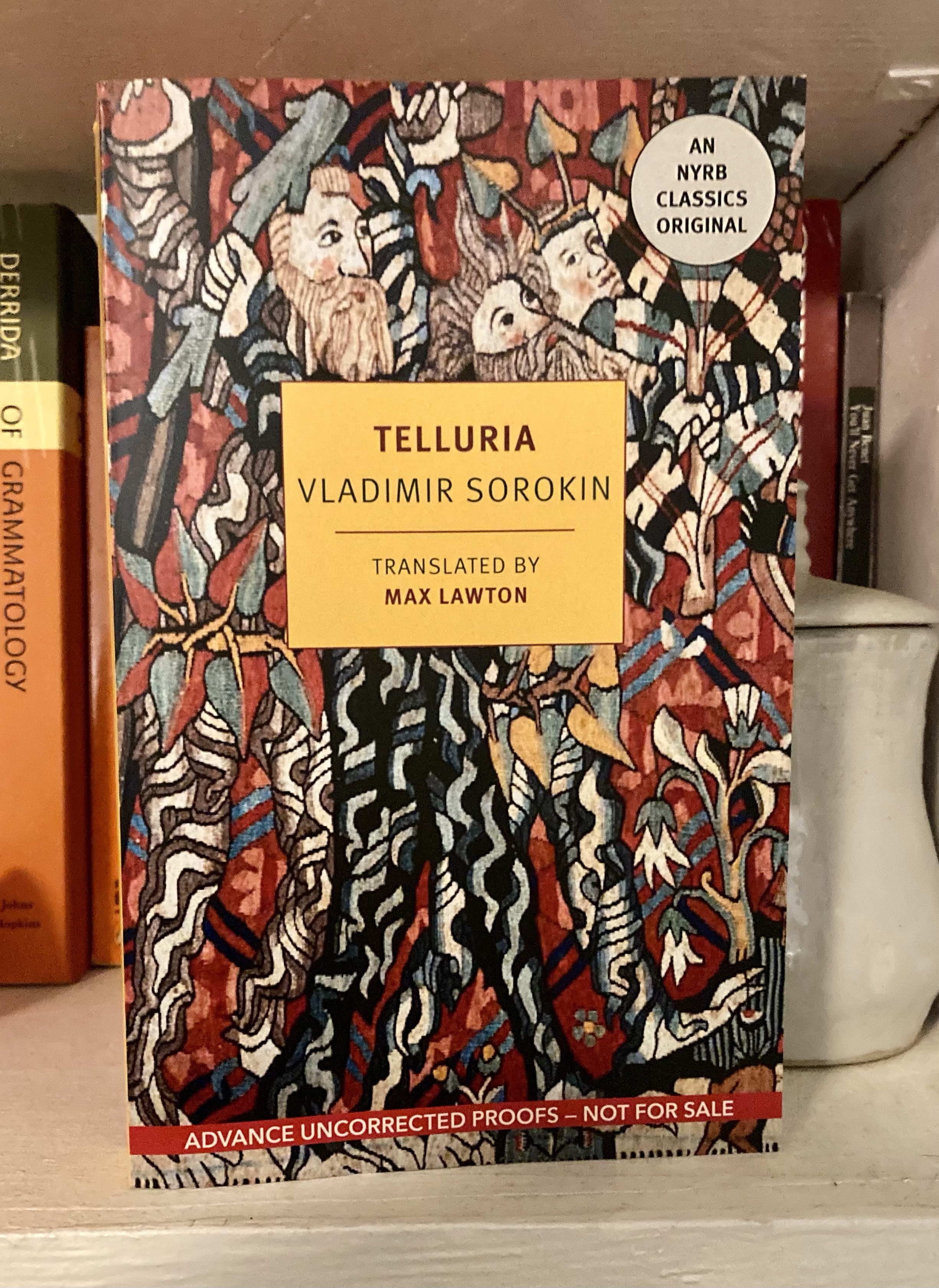
Unread, 2021/Hope to read, 2022

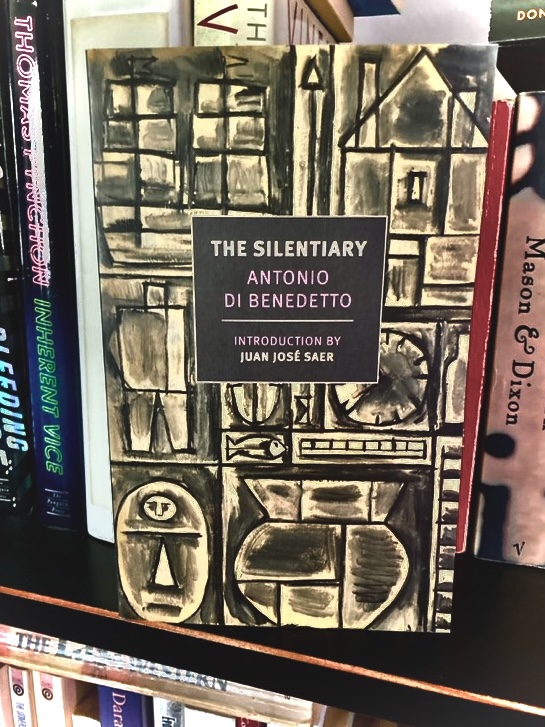
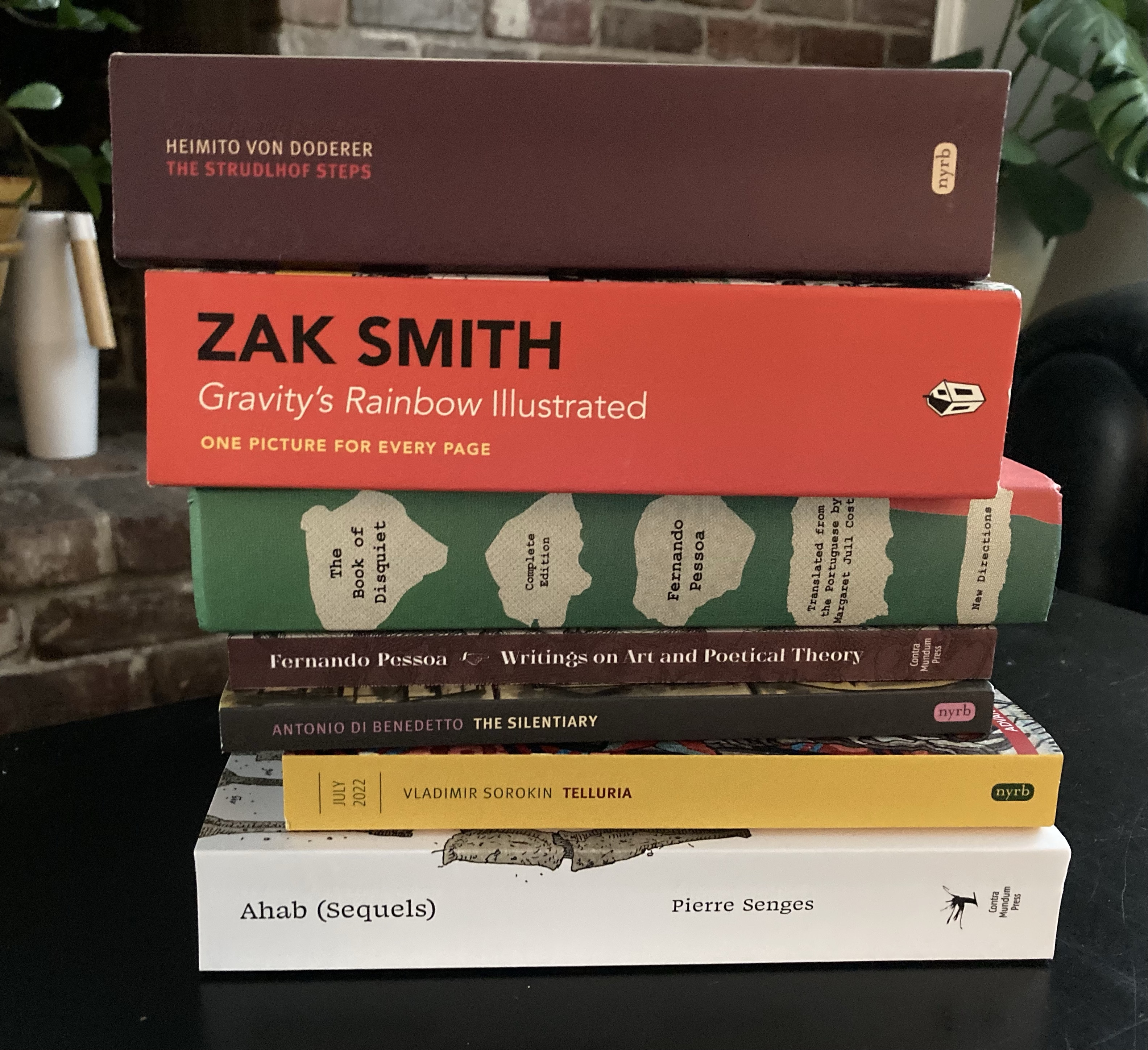
Of course there were millions and millions of books that I left unread in 2021, but here are a few I hope to carve a space for sometime in the next year:

Heimito von Doderer’s The Strudlhof Steps (in translation by Vincent Kling) has been compared to Joyce and Döblin. I got a copy last month and couldn’t commit to the beast’s size. I was trying to make it through Thanksgiving and the end of the 2021 Fall term—this year I’ve favored short books and comfortable rereads I’ve bookended 2021 with rereads of Moby-Dick and Blood Meridian (such comfort!)—The Strudlhof Steps is long long long.

Also long long long (but not as compressed in its typography) is Pierre Senges’ Ahab (Sequels) (in translation is by Jacob Siefring). I’ve dipped into it a few times since I got a copy back in October, but haven’t been able to make the commitment I need to. I’ll get it in in 2022. (Sample here.)

I picked up Alan Garner’s novel Red Shift based on its cover and a blurb from Ursula K. LeGuin—also, it’s pretty short, and, like I’ve said, I’ve done well with short books this year. Hell, maybe I’ll even squeeze it in. Martin Levin’s 1973 minireview in the NYT:

Mr. Garner jump‐cuts nimbly through English history to underscore (I guess) the continuity of such commonalities as love and aggression. Macey is an early Briton, who talks Clockwork Orange style and lays about him in a hypnotic frenzy with his ceremonial stone axe. The axe‐head later becomes a talisman for Thomas Rowley (a 17th‐century citizen who cements it into his chimney) and for Tom, a young 20th‐century Now person, who sells it to the British Museum.

What links these three? Well, there is the artifact. And the place, a rural locus in Cheshire. Finally, there is selfless love —which seems to have survived the centuries. Macey is a twosome with a priestess in the corn festival, who is tender under some trying circumstances. Rowley’s wife stands by him during the bad times of Cromwell. Tom has tender bicycle outings with a student nurse.

Why three periods in time? Well, why not?

I’ve actually read a few chunks of John Berryman’s biography of Stephen Crane (which spine does not read so clearly in yon photograph above). I’ve been picking my way back through Crane, an underappreciated modernist master. I might not read the whole thing straight ever, but I will read it crooked.

Papa Hamlet showed up at the assend of the summer, by which I mean the very beginning of the Fall 2021 semester. This 1889 collaboritve novel by Arno Holz and Johannes Schlaf is available in English translation via James J. Conway for the first time ever. Read an excerpt here.

W.D. Clarke’s novel She Sang to Them, She Sang is a strange shape and volume. Also, for the first time in my life, my eyes are kinda fucked up. I have to wear different cheap glasses to see smaller print. This personal fact is embedded in my encounter with Clarke’s second novel.

I read Kobo Abe’s most famous novel Woman in the Dunes, but failed to get past the first ten pages of Secret Rendezvous (in English translation by Juliet Winters Carpenter). Woman in the Dunes is the sort of thing that I should’ve loved at 19, 20, 25. Maybe Rendezvous will do it for me in ’22.


“Ode to Failure” — Allen Ginsberg

Four Hours — Paul Fenniak

Four Hours, 2020 by Paul Fenniak (b. 1965)

Florida Panther — George Boorujy

Florida Panther, 2020 by George Boorujy

A Blood Meridian Christmas

Cormac McCarthy’s seminal anti-Western Blood Meridian isn’t exactly known for visions of peace on earth and good will to man. Still, there’s a strange scene in the book’s final third that subtly recalls (and somehow inverts) the Christmas story. The scene takes place at the end of Chapter 15. The Kid, erstwhile protagonist of Blood Meridian, has just reunited with the rampaging Glanton gang after getting lost in the desert and, in a vision-quest of sorts, has witnessed “a lone tree burning on the desert” (a scene I once argued was the novel’s moral core).

Glanton’s marauders, tired and hungry, find temporary refuge from the winter cold in the town of Santa Cruz where they are fed by Mexicans and then permitted to stay the night in a barn. McCarthy offers a date at the beginning of the chapter — December 5th — and it’s reasonable to assume, based on the narrative action, that the night the gang spends in the manger is probably Christmas Eve. Here is the scene, which picks up as the gang — “they” — are led into the manger by a boy–

The shed held a mare with a suckling colt and the boy would would have put her out but they called to him to leave her. They carried straw from a stall and pitched it down and he held the lamp for them while they spread their bedding. The barn smelled of clay and straw and manure and in the soiled yellow light of the lamp their breath rolled smoking through the cold. When they had arranged their blankets the boy lowered the lamp and stepped into the yard and pulled the door shut behind, leaving them in profound and absolute darkness.

No one moved. In that cold stable the shutting of the door may have evoked in some hearts other hostels and not of their choosing. The mare sniffed uneasily and the young colt stepped about. Then one by one they began to divest themselves of their outer clothes, the hide slickers and raw wool serapes and vests, and one by one they propagated about themselves a great crackling of sparks and each man was seen to wear a shroud of palest fire. Their arms aloft pulling at their clothes were luminous and each obscure soul was enveloped in audible shapes of light as if it had always been so. The mare at the far end of the stable snorted and shied at this luminosity in beings so endarkened and the little horse turned and hid his face in the web of his dam’s flank.

The “shroud of palest fire” made of sparks is a strange image that seems almost supernatural upon first reading. The phenomena that McCarthy is describing is simply visible static electricity, which is not uncommon in a cold, dry atmosphere–particularly if one is removing wool clothing. Still, the imagery invests the men with a kind of profound, bizarre significance that is not easily explainable. It is almost as if these savage men, naked in the dark, are forced to wear something of their soul on the outside. Tellingly, this spectacle upsets both the mare and her colt, substitutions for Mary and Christ child, which makes sense. After all, these brutes are not wise men.

[Ed. note–Biblioklept first ran a version of this post in 2010. I’m currently rereading Blood Meridian and the strange rare pockets of peace and goodness stand out to me more–the woman who tends the kid’s gunshot wound early in the novel, the cattle drovers who feed him and give him a Green River knife—and maybe even the weirdo hermit who offers him shelter. I’ll look for more moments of peace in all the violence.]

“The Answer” — Jim Carroll

Revolt — John Nash

Revolt, 1969 by John Nash (1893-1977)

Christmas etymologies

A selection from

Christmas in Ritual and Tradition, Christian and Pagan (1912)

by

Clement A. Miles


The names given to the feast by different European peoples throw a certain amount of light on its history. Let us take five of them—ChristmasWeihnachtNoëlCalendas, and Yule—and see what they suggest.

I. The English Christmas and its Dutch equivalent Kerstmisse, plainly point to the ecclesiastical side of the festival; the German Weihnacht (sacred night) is vaguer, and might well be either pagan or Christian; in point of fact it seems to be Christian, since it does not appear till the year 1000, when the Faith was well established in Germany. Christmas and Weihnacht, then, may stand for the distinctively Christian festival, the history of which we may now briefly study. Continue reading “Christmas etymologies”

“Snakes” — Tom Clark