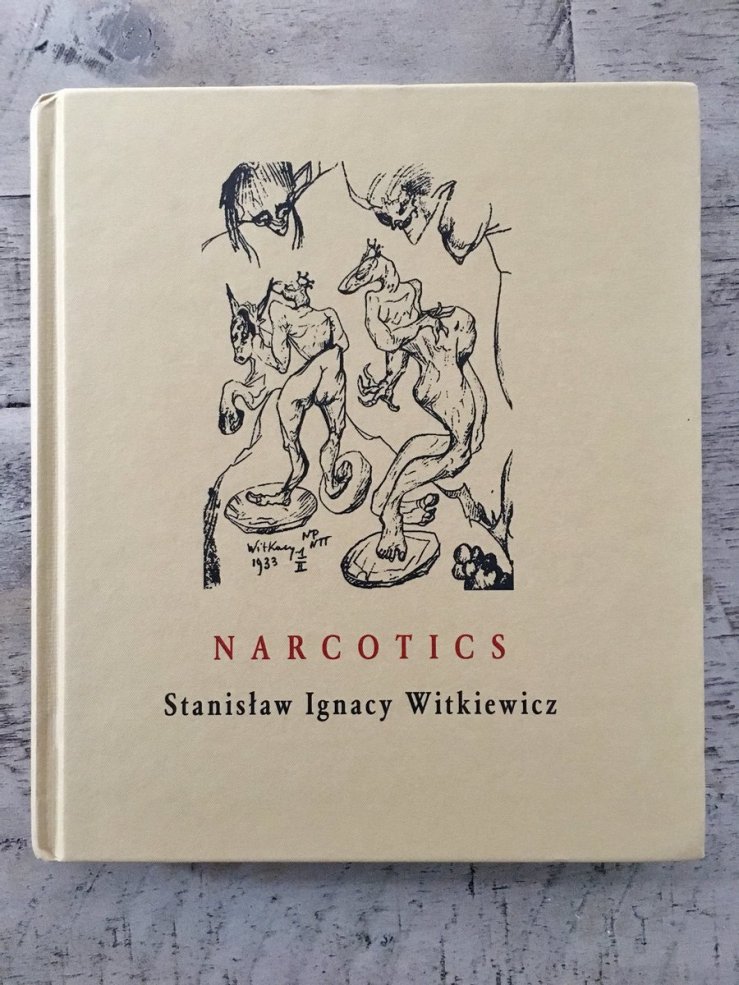
Stanisław I. Witkiewicz’s Narcotics (Book acquired, 5 Feb. 2018)

dvsfm7rvwaaoolo

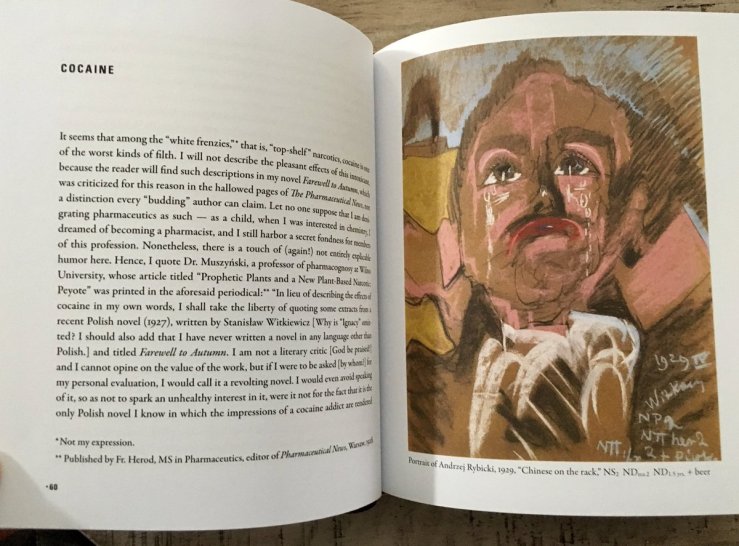
Stanisław I. Witkiewicz’s Narcotics is forthcoming in full-color hardback from Twisted Spoon PressSubtitled “Nicotine, Alcohol, Cocaine, Peyote, Morphine, Ether + Appendices,” the volume consists of Witkiewicz’s musings on his intake of these substances, both in his creative and personal life, as well as the various portraits he composed while taking those substances. Narcotics is translated by Soren Gauger, who also authors a helpful afterword that contextualizes Witkiewicz’s volume. Narcotics was written and published in Poland in the 1930s, and was apparently quite a big hit. I read Witkiewicz’s foreword last night (as well as the section on, um, peyote). In its strange moralizing, the foreword—an apologia really–reminded me a bit of Henri Michaux’s similar exercise, Miserable Miracle, which also strikes a defensive tone at the outset.
dvsfm7qvqaa8cwv

The book, like Witkiewicz’s portraits, is gorgeous. Here is Twisted Spoon’s blurb; full review forthcoming—

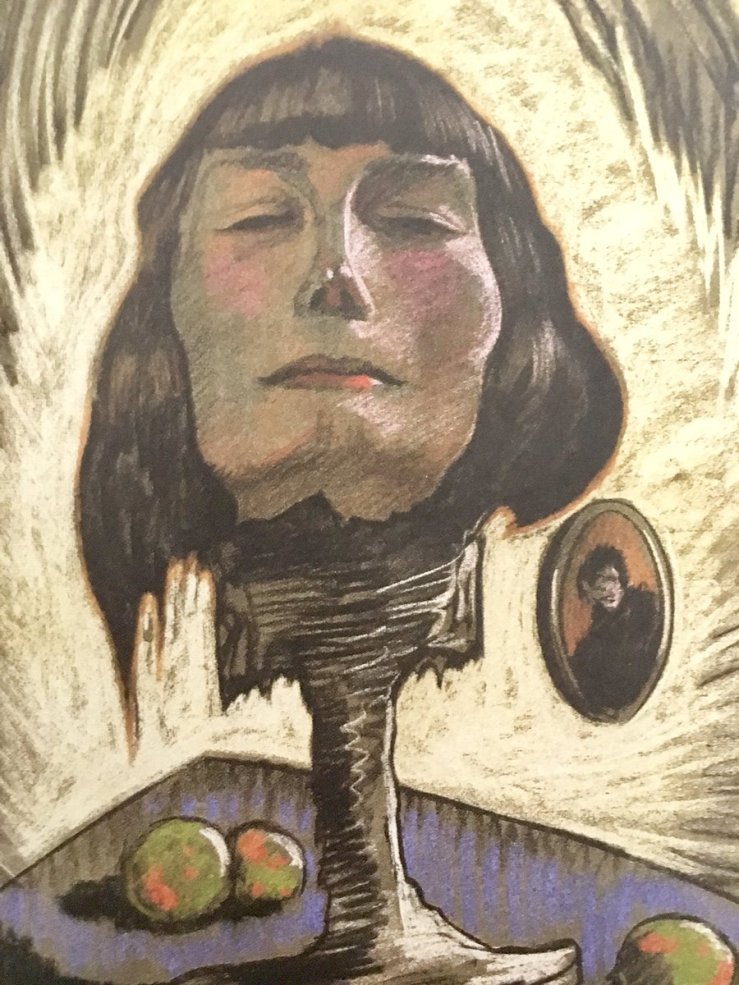
For his “portrait painting firm,” established rules and types for his portrait work, marking the paintings and pastels with corresponding symbols and abbreviations of the substances he had either taken or, in the case of alcohol and nicotine, not taken at the time. Type C were created under the influence of alcohol and “narcotics of a superior grade” to produce abstract compositions he called “Pure Form.” A variety of drugs and their combinations were taken to produce a variety of distortions and effects, and often this would be the portrait subject’s choice. And in some instances a given portrait might be marked with symbols denoting how many days he had gone without smoking or without drinking (and type D were executed to achieve the same results without any artificial means). Different substances resulted in different color combinations or brought out different aspects of the subject’s features or psyche. One stunning series of self-portraits, for example, was executed while on a combination of moderate amounts of beer and cocaine.

In the vein of the well-known drug writings of De Quincey and Baudelaire from a century earlier and those of his contemporaries Walter Benjamin and Jean Cocteau – and foreshadowing the later writings of Aldous Huxley and Carlos Castaneda on psychoactive drugs – Witkacy composed Narcotics in 1930 to discuss and document not only his own experimentation with different substances but the nature of addiction itself and the prevailing social attitude toward drugs, particularly those that were considered “acceptable.” As life became increasingly mechanized, Witkacy felt that a sense of the metaphysical could only be achieved by artificial means, and like Henri Michaux, he produced an extensive oeuvre of singular visual art while under the influence of a variety of substances.

Meandering, acerbic, and burlesque, rife with neologisms and expressions from German, French, English, and Russian, Witkacy dissects Polish society and the art world as well as himself via the hypocrisy surrounding drug use. Since it was first published in the 1930s, Narcotics has achieved a cult status in Poland where it is considered both a modernist classic and a paragon of Witkiewiczian madness. This edition, the first complete translation in English, includes a second appendix written later, passages from the novel Farewell to Autumn, and 34 color reproductions of a cross section of portraits to show how various substances impacted Witkacy’s art.
dvsfm7svoau9vvg

“Karintha” — Jean Toomer

“Karintha”

by

Jean Toomer

from Cane


Her skin is like dusk on the eastern horizon,

O can’t you see it,

O can’t you see it,

Her skin is like dusk on the eastern horizon

. . . When the sun goes down.

Men had always wanted her, this Karintha, even as a child, Karintha carrying beauty, perfect as dusk when the sun goes down. Old men rode her hobby-horse upon their knees. Young men danced with her at frolics when they should have been dancing with their grown-up girls. God grant us youth, secretly prayed the old men. The younger fellows counted the time to pass before she would be old enough to mate with them. This interest of the male, that wishes to ripen a growing thing too soon, could mean no good to her.

Karintha, at twelve, was a wild flash that told the other folks just what it was to live. At sunset, when there was no wind, and the pinesmoke from over by the saw-mill hugged the earth, and you couldn’t see more than a few feet in front, her sudden darting past you was a bit of vivid color, like a black bird that flashes in the light. With the other children one could hear, some distance away, their feet flopping in the two inch dust. Karintha’s running was a whir. It had the sound of the red dust that sometimes makes a spiral in the road. At dusk, during the hush just after the mill had closed down, and before any of the women had started their supper-getting-ready songs, her voice, Wgh-pitched, shrill, would put one’s ears to itching. But no one ever thought to make her stop because of it. She stoned the cows, and beat her dog, and fought the other children . . . Even the preacher, who caught her at mischief, told himself that she was as innocently lovely as a November cotton-flower. Already, rumors were out about her. Homes in Georgia are most often built on the two-room plan. In one, you cook and eat, in the other is where you sit and sleep, and where love goes on. Karintha had seen or heard, perhaps she had felt her parents loving. One could but imitate one’s parents, for to follow them was the way of God. She played home’ with a small boy who was not afraid to do her bidding. That started the whole thing. Old men could 110 longer ride her hobby-horse upon their knees. But young men counted faster.

Her skin is like dusk,

O can’t you see it,

Her skin is like dusk

When the sun goes down.

Karintha is a woman. She who carries beauty, perfect as dusk when the sun goes down. She has been married many times. Old men remind her that a few years back they rode her hobby-horse upon their knees. Karintha smiles, and indulges them when she is in the mood for it. She has contempt for them. Karintha is a woman. Young men run stills to make her money. Young men gamble to make her money. Young men go to the large cities and run on the road. Young men go away to college. They all want to bring her money. These are the young men who thought that all they had to do was to count time. But Karintha is a woman, and she has had a child. A child fell out of her womb onto a bed of pine-needles in the forest. Pine-needles are smooth and sweet. They are elastic to the feet of rabbits . . . A saw-mill was nearby. Its pyramidal saw-dust pile smouldered. It is a year before one completely burns. Meanwhile, the smoke curls up and hangs in odd wraiths about the forest, curls up, and spreads itself out over the valley. . .  Weeks after Karintha returned home, the smoke was so heavy you tasted it in water. Someone made a song:

Smoke is on the hills. Rise up.

Smoke is on the hills, O rise

And take my soul away to Jesus

Karintha is a woman. Men do not know that the soul of her was a growing thing ripened too soon. They will bring their money; they will die not having found it out . . . Karintha at twenty, carrying beauty, perfect as dusk when the sun goes down. Karintha . . .

Her skin is like dusk on the eastern horizon,

O can’t you see it, O can’t you see it,

Her skin is like dusk on the eastern horizon

. . . When the sun goes down.

Goes down . . .

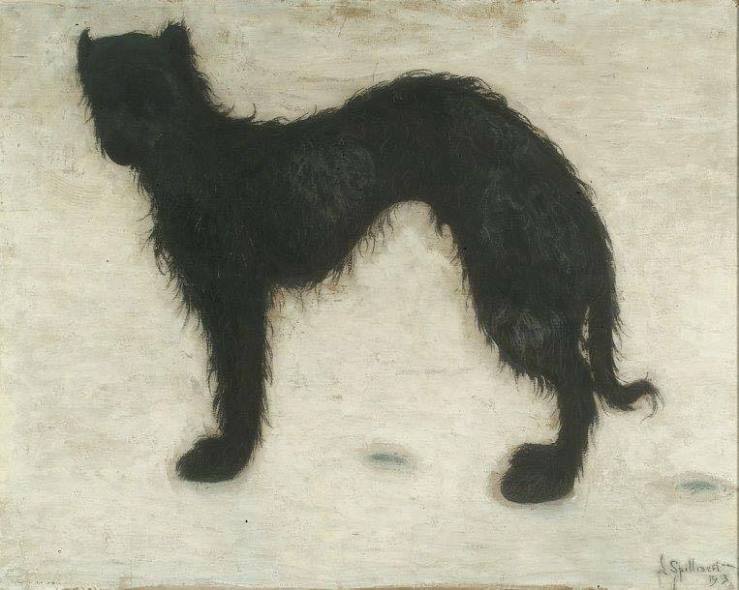
Dog in the Snow — Leon Spilliaert

tumblr_p2eukw6ad81sji0i4o1_1280

Dog in the Snow, by Leon Spilliaert (1881-1946)

The Cost of Careless Looking — Theodoor Galle

cost

Screenshot 2018-02-05 at 8.31.44 PM

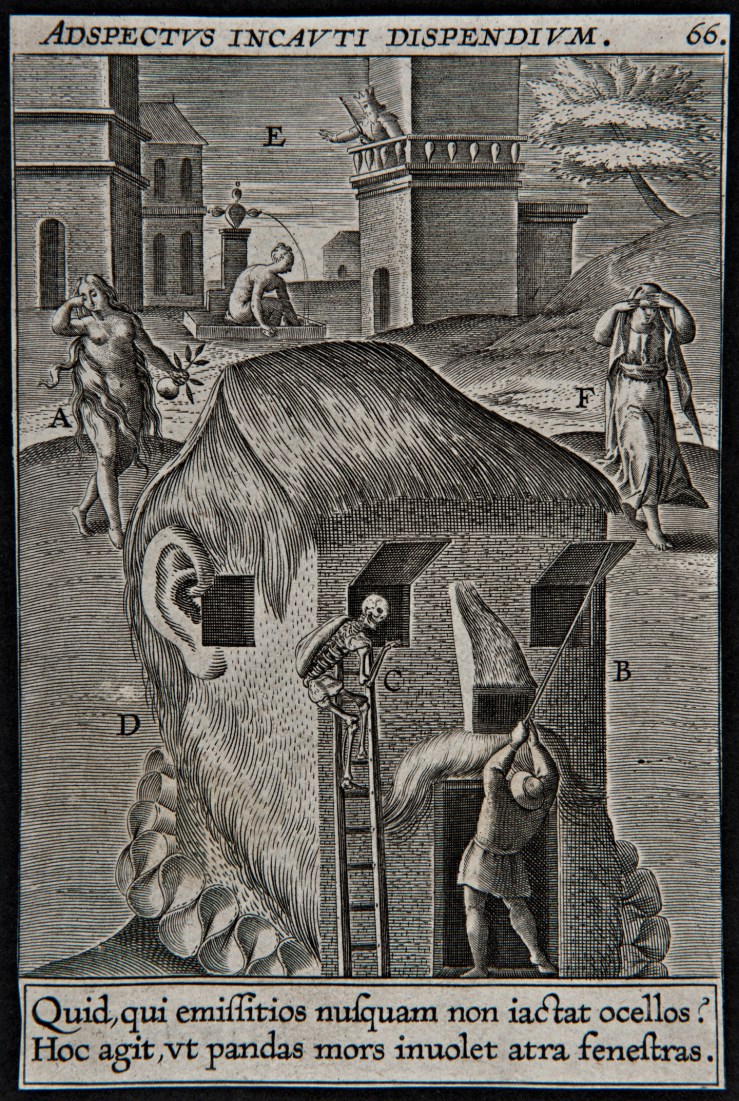
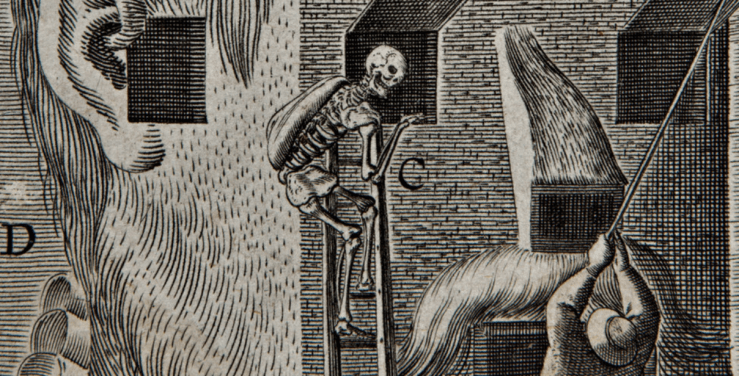
Engraving from Verdicus Christianus (A True Christian), for the chapter Adspectus Incauti Dispendium (The Cost of Careless Looking), 1601, by Theodoor Galle (1671-1733)

Two Girls — Felice Casorati

070-casorati-le2bdue2bbambine2bbd

Screenshot 2018-02-05 at 12.55.40 PM

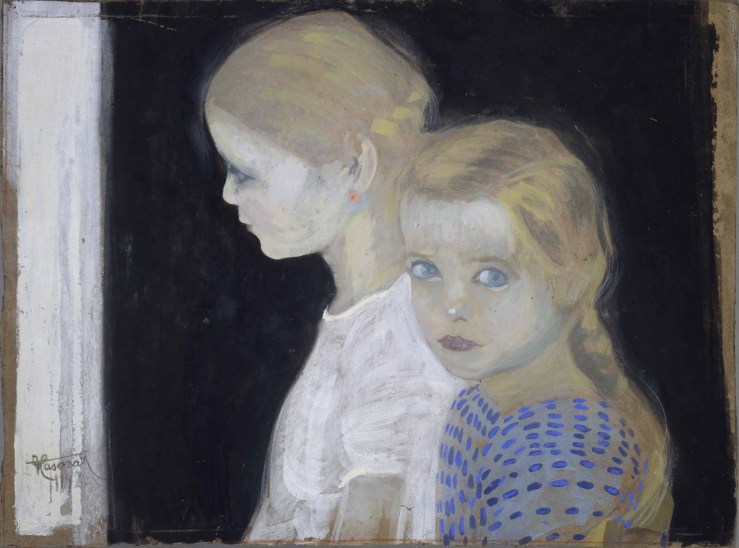
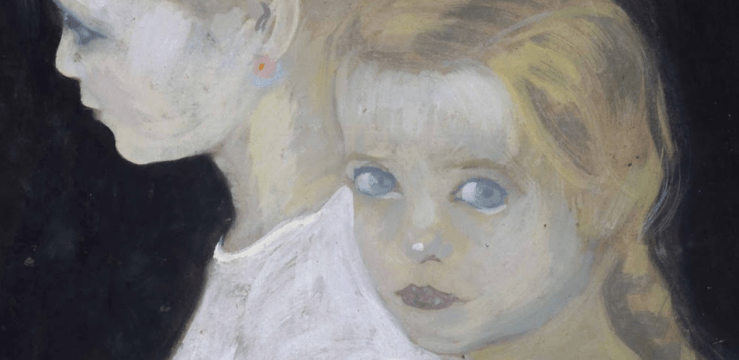
Two Girls, 1912 by Felice Casorati (1883–1963)

Omelette à la Alma | Phantom Thread riff


title2bcard

Rambling Preamble 

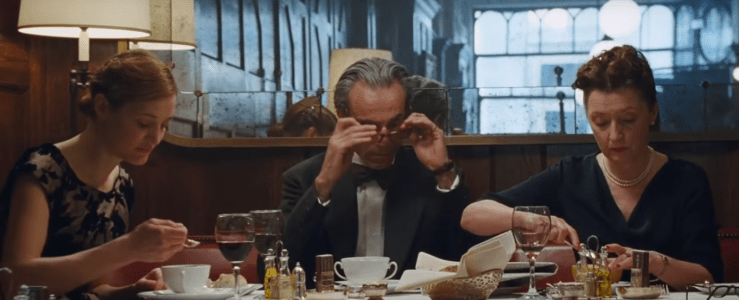
Phantom Thread (2017) is the eighth feature film by writer-director Paul Thomas Anderson. I have been a fan of Anderson’s work since I saw Boogie Nights (1997) in my freshman year of college, and have watched each of his subsequent films in the theater. The theater is the proper place to watch Anderson’s lush, luscious films, although they are also so strong as narratives that they hold up just fine on, say, a 19″ Toshiba television with a built-in VCR, which is how I repeatedly watched Blockbuster-remaindered cassettes of Boogie Nights and Magnolia (1999) circa 1998-2001. But again: The theater is the proper place to see an Anderson film, and Phantom Thread is exceptionally lovely on the big screen—one doesn’t so much watch it as imbibe it, or perhaps, in a reversal of that metaphor, sink into it. What I’m saying is: Watch Phantom Thread in the theater.

Is “Watch it in the theater” not enough in the way of argument, reader? Perhaps you want, like, details?

Here are some details I knew going in to the film (I generally try to avoid reviews and any press on any film I plan to see): The film was written and directed by Paul Thomas Anderson; the film stars Daniel Day-Lewis portraying a fashion designer; the film is set sometime in the 1950s.

My wife and I went to see the film yesterday afternoon and we loved it, then discussed it at length at dinner, and then again this morning over breakfast (perhaps prompted by “breakfast” itself, one of the film’s motifs). It’s a strange, beautiful, perplexing romantic comedy that will disarm and unsettle audiences. I can’t wait to see it again.


Screenshot 2018-02-04 at 3.27.03 PM

The Plot and the Major Characters

1950s. London and countryside environs. Reynolds Jeremiah Woodcock (Daniel Day-Lewis) is a famous fashion designer who dresses the highest of high in European society. He and his sister Cyril (Lesley Manville) run the House of Woodcock, following a precise, obsessive routine. At the film’s outset, Reynolds meets Alma (Vicky Krieps), a waitress in a countryside restaurant. He asks her to dinner that night, and from there the two enter into a strange relationship. The film’s trajectory explores the conflicts and confluences of that strange relationship, tracing how Reynolds’ and Alma’s romance intertwines with Cyril, business, design, and art. (Oh. And Reynolds’ and Cyril’s dead mother).


Cinematography, Score, Costume Design and Set Design

Gorgeous. Like I said, go see the film—the aesthetics are marvelous, rich, sumptuous. I’ve been writing about Paul Thomas Anderson as an auteur (and will continue to do so), but his production team is fantastic, and I think there’s an implicit argument in Phantom Thread itself against the whole auteur concept. (If you listen to or read interviews with Anderson, he will often use the pronoun “We” when discussing his work).


Screenshot 2018-02-04 at 3.26.09 PM

Phantom Thread’s Place in Paul Thomas Anderson’s Filmography

Phantom Thread might be Anderson’s “best” film to date: it is certainly one of the best-acted, best-shot, and best-directed, and its editing and pace move with a more precise rhythm than his looser and more sprawling films. I loved it, but it’s not necessarily my favorite Anderson film. If pressed to choose a favorite, I might point to the weird sprawl of Inherent Vice (2014) or the perfect imperfection of The Master (2012)—or just settle on There Will Be Blood (2007). Many Anderson fans point to Anderson’s shortest film, Punch-Drunk Love (2002) as his best.

In some ways, Phantom Thread has more in common with Punch-Drunk Love than his other films. They are both romantic comedies featuring emotionally-challenged leads who find their way to a strange resolution. In any case, Phantom Thread is an engaging character study focused on just a few intense personalities—like The MasterPunch-Drunk Love, or There Will Be Blood. It’s more focused in its vision than Boogie Nights or Magnolia, and more emotionally “true” than Anderson’s first feature, Hard Eight (1996). Those first three films seem to me particularly beholden to Martin Scorsese and Robert Altman, but Phantom Thread continues to show Anderson overcoming his anxiety of influence. (Although I’ll admit that I was occasionally reminded of Scorsese’s The Age of Innocence (1993) while watching Phantom Thread—probably because of the luxuriant imagery. And Daniel Day-Lewis. Anderson’s film is superior).


The Goddamn Movie Trailer


The discussion of the film that follows contains spoilers, including descriptions of the film’s ending 

Continue reading “Omelette à la Alma | Phantom Thread riff”

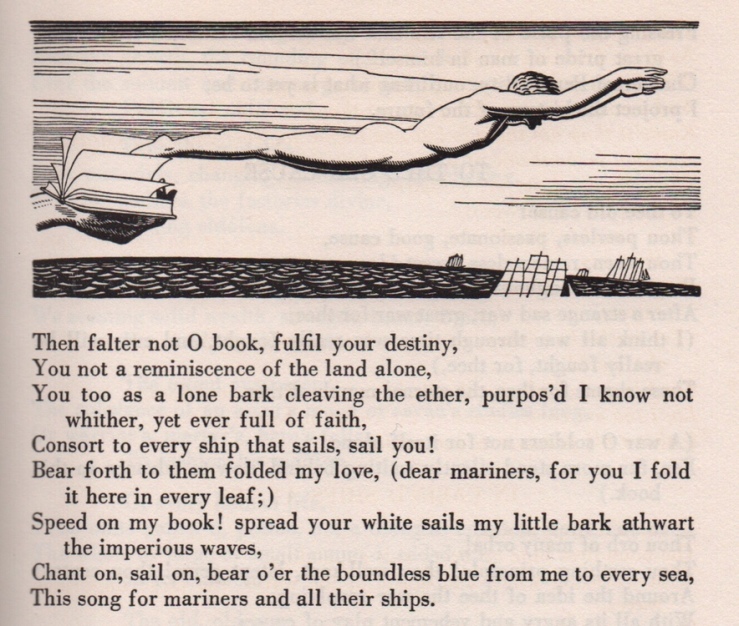
Then falter not O book

img_9015

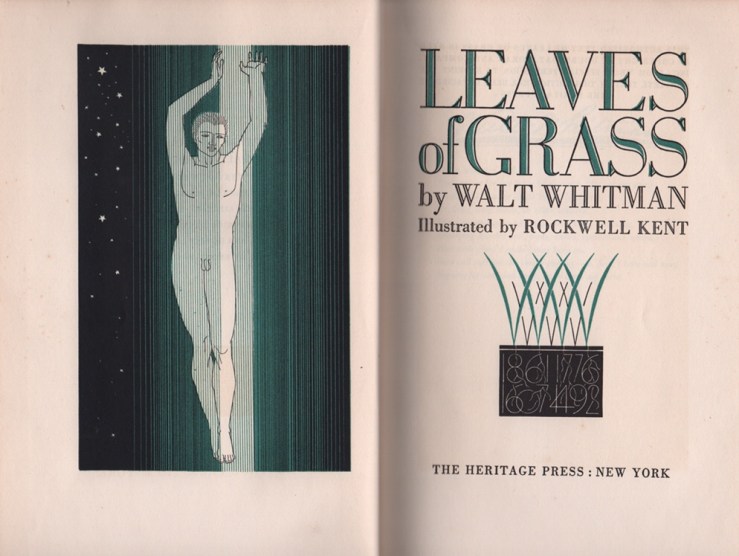
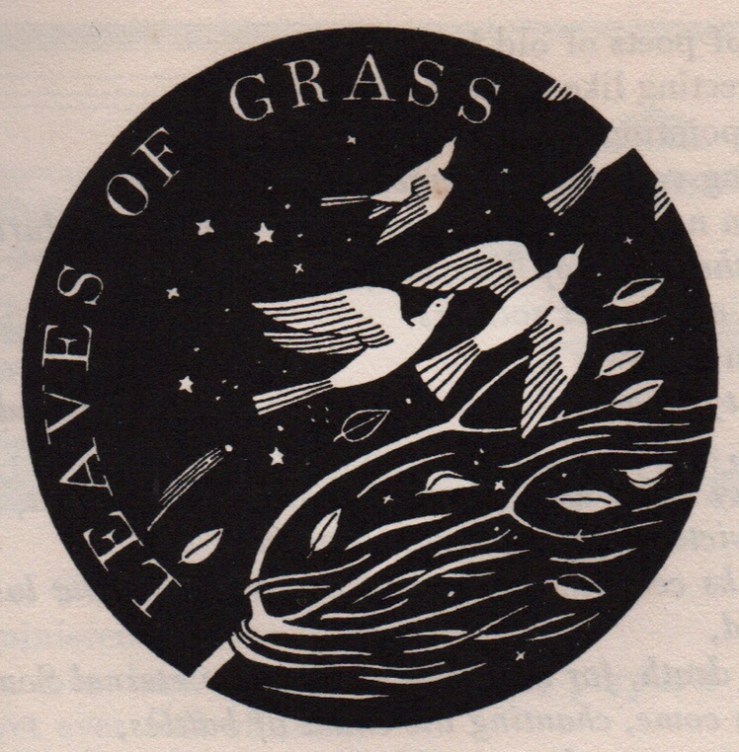
From the Heritage Press edition of Walt Whitman’s Leaves of Grass, illustrated by Rockwell Kent, 1936.

Walt Whitman’s Leaves of Grass, Illustrated by Rockwell Kent (Book acquired, 3 Feb. 2018)

img_9012

I couldn’t pass up on this illustrated Heritage Press copy of Leaves of Grass. I’m not sure of the exact date of publication, but this nice long post on the book suggests it was likely published in 1950 and designed in the mid-thirties.

img_9011

My daughter and I were browsing the poetry section of our favorite used bookshop—quite randomly actually—and she pulled this volume of Leaves of Grass downward like a lever, pretending it might open a secret passage. It didn’t open a secret passage, but when she pushed it back again, I saw Kent’s name on the spine. I love Kent’s work, and I’m a huge Whitman fan, and my copy of Leaves of Grass is literally falling apart. Plus only $10 and I had plenty of store credit…so…

img_9013

I’ll share some of the illustrations and verses over the next few months—a nice excuse to go through Leaves of Grass again.

img_9019

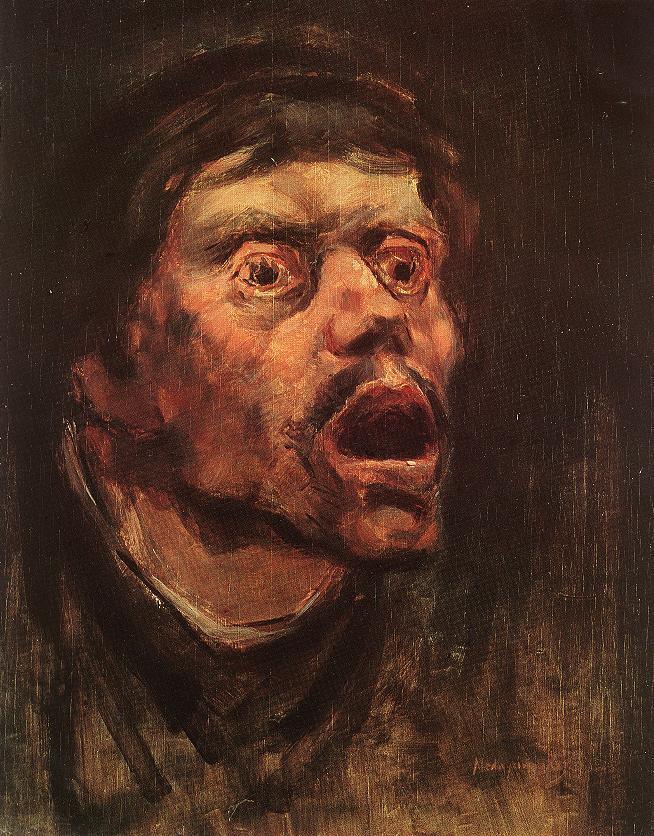
Head of a Tramp — Laszlo Mednyanszky

head-of-a-tramp-1896

Head of a Tramp, 1896 by Laszlo Mednyanszky (1852-1919)

Vignette — Kerry James Marshall

14-vignette

Vignette, 2003  by Kerry James Marshall (b. 1955)

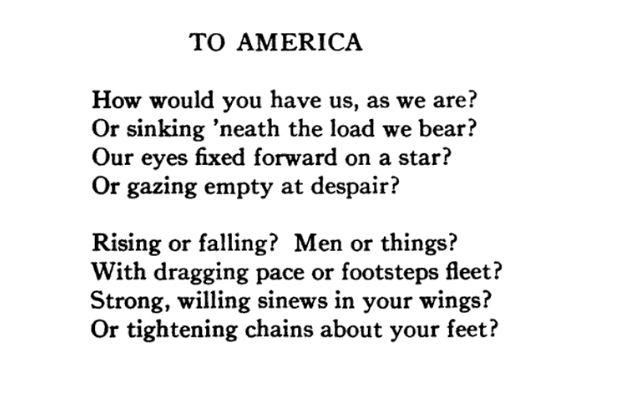
“To America” — James Weldon Johnson

a

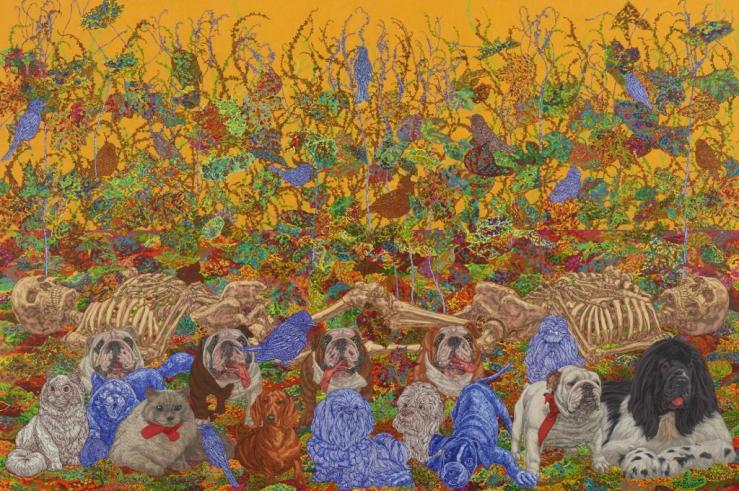
Loyal Retainer: Final Chapter —  Mu Pan

kong_lee_seamless

Loyal Retainer: Final Chapter, 2018 by Mu Pan (b. 1976)


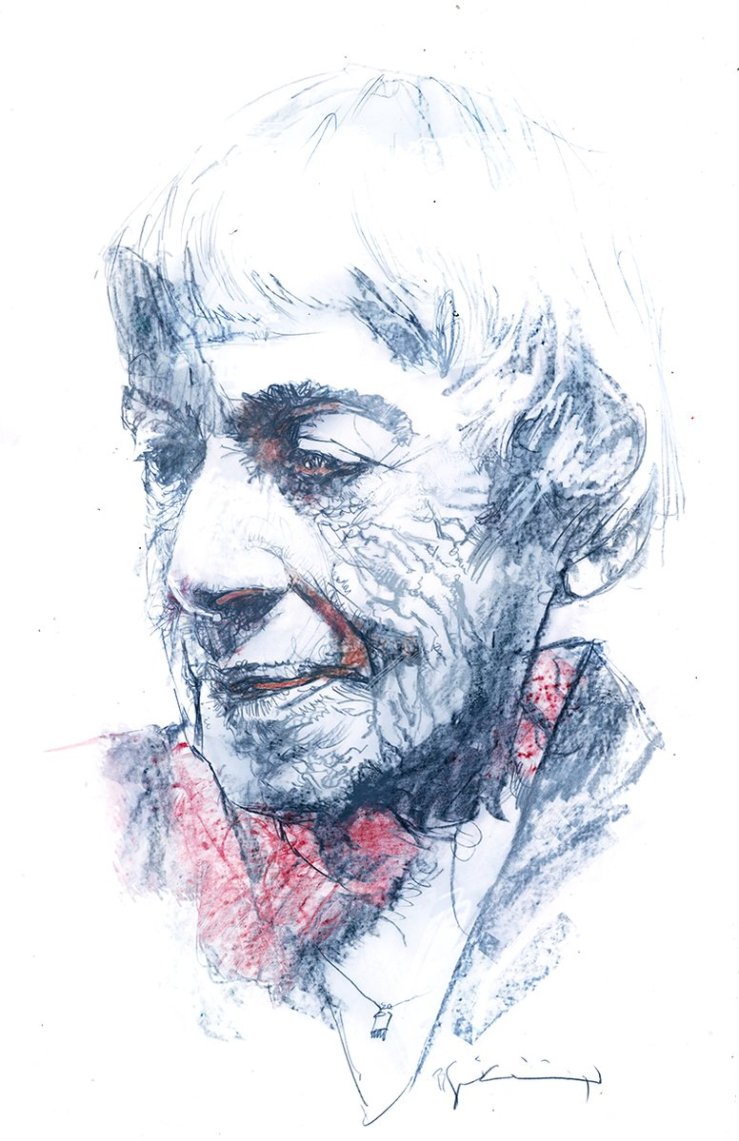
Portrait of Ursula K. Le Guin — Bill Sienkiewicz

duvls2lvwaanjbk

Portrait of Ursula K. Le Guin by Bill Sienkiewicz, via his Twitter

The Nipple I Never Knew — Katherine Kuharic

201520the20nipple20i20never20knew20281024x68129_0

The Nipple I Never Knew, 2015 by Katherine Kuharic (b. 1962)

Minnie Cunningham at the Old Bedford — Walter Richard Sickert

Minnie Cunningham at the Old Bedford 1892 by Walter Richard Sickert 1860-1942

Minnie Cunningham at the Old Bedford, 1892 by Walter Richard Sickert (1860–1942)

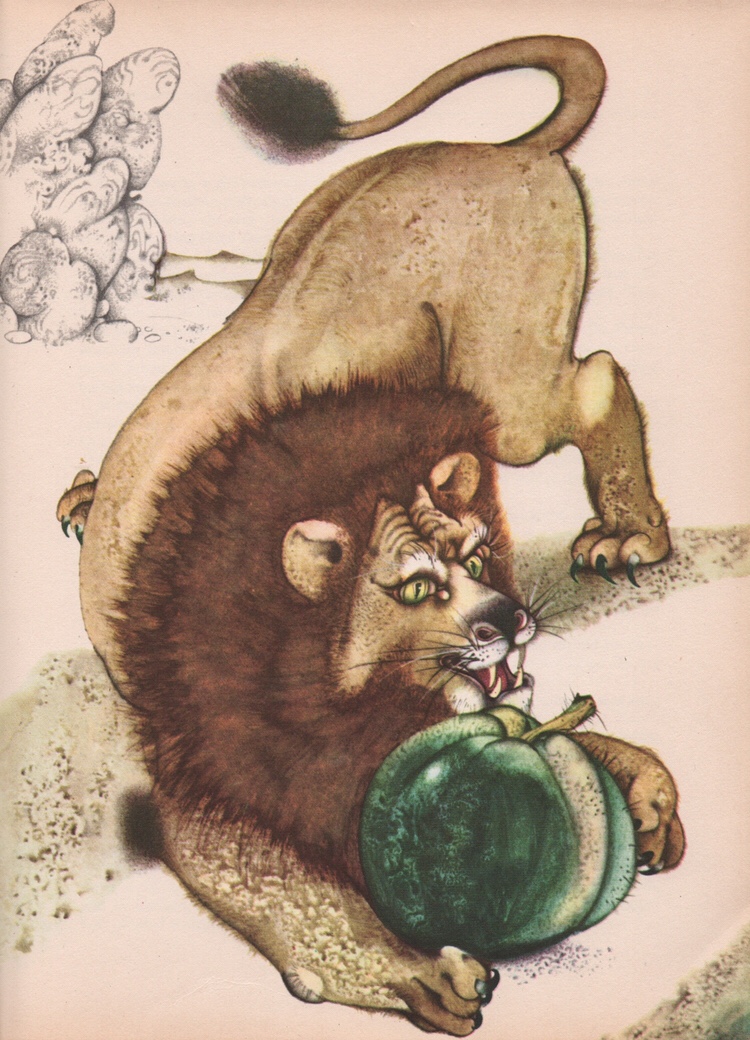
Luděk Maňásek’s illustration for “The Melon Child”

img_8996

Luděk Maňásek’s illustration for “The Melon Child.” From Jaroslav Tichý’s Persian Fairy Tales, Hamlyn, 1970. (English translations in the collection are by Jane Carruth).

Peeping — Ikenaga Yasunari

126

「覗く・恵美子」(Peeping, Emiko) by Ikenaga Yasunari