The Disillusioned One — Ferdinand Hodler

The Disillusioned One, 1892 by Ferdinand Hodler (1853-1918)

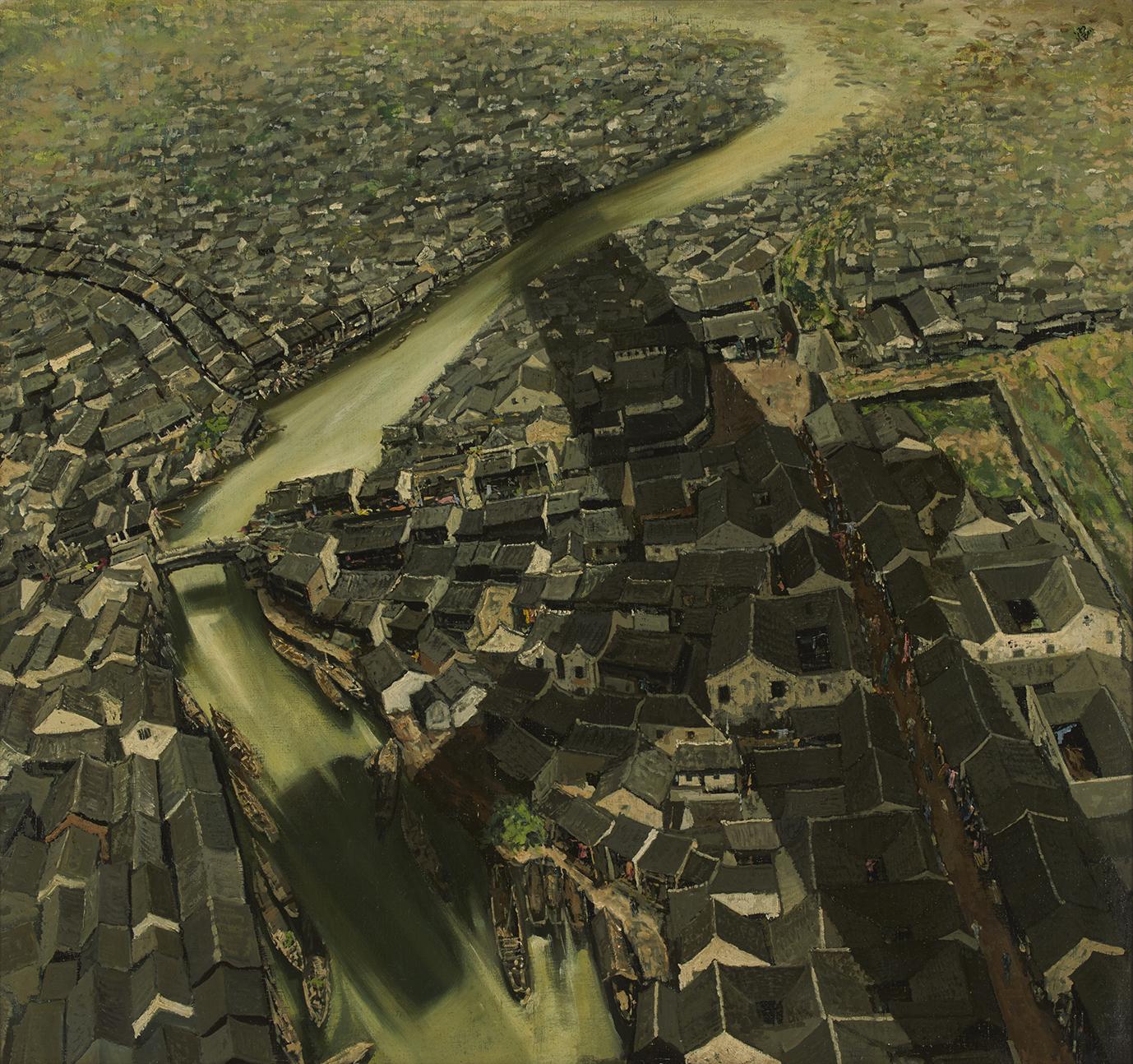
Shadow (Over Suzhou) — Mukai Junkichi

Shadow (Over Suzhou), 1938 by Mukai Junkichi (1901-1995)

William Melvin Kelley’s Dunfords Travels Everywhere (Book acquired, 9 Sept. 2020)

Earlier this summer, I “discovered” the long-neglected novels of William Melvin Kelley, first through an essay on postmodern fiction by Black American authors (I can’t find the essay now, but I think it was by Bernard Bell), and then in a more-widely circulated article at The New Yorker. I then read Kelley’s first novel A Different Drummer and his fourth novel, demWhat I really wanted to read though was Kelley’s final novel, Dunfords Travels Everywheres, which is generally described as his most postmodern and Joycean. 

Dunfords was, at that point, not in print. I had no success finding it at my local used bookshop, so I looked on Abebooks, where I discovered that the cheapest copies were going for a hundred bucks.

Fortunately, Anchor Books has reissued Dunfords Travels Everywheres—it’s out later this month. Even better, they’ve included the many pen-and-ink illustrations for the book that Kelley commissioned from his wife Aiki. These illustrations were not included in the novel’s first edition in 1970. Here is one of her illustrations:

Proper review in the works; for now, here’s publisher Anchor’s blurb:

William Melvin Kelley’s final work, a Joycean, Rabelaisian romp in which he brings back some of his most memorable characters in a novel of three intertwining stories.

Ride on out with Rab and Turt, two o’New Afriqueque’s toughfast, ruefast Texnosass Arangers, as they battle Chief Pugmichillo and ricecure Mr. Charcarl Walker-Rider. Cut in on Carlyle Bedlowe, wrecker of marriage, saver of souls.

Or just along with Chig Dunford, product of Harlem and private schools, on the circular voyage of self-discovery that takes him from Europe’s Café of One Hand to Harlem’s Jack O’Gee’s Golden Grouse Bar & Restaurant.

Beginning on an August Sunday in one of Europe’s strangest cities, Dunfords Travels Everywheres but always returns back to the same point—the “Begending”—where Mr. Charcarl’s dream becomes Chig Dunford’s reality (the “Ivy League Negro” in the world outside the Ivory Tower).

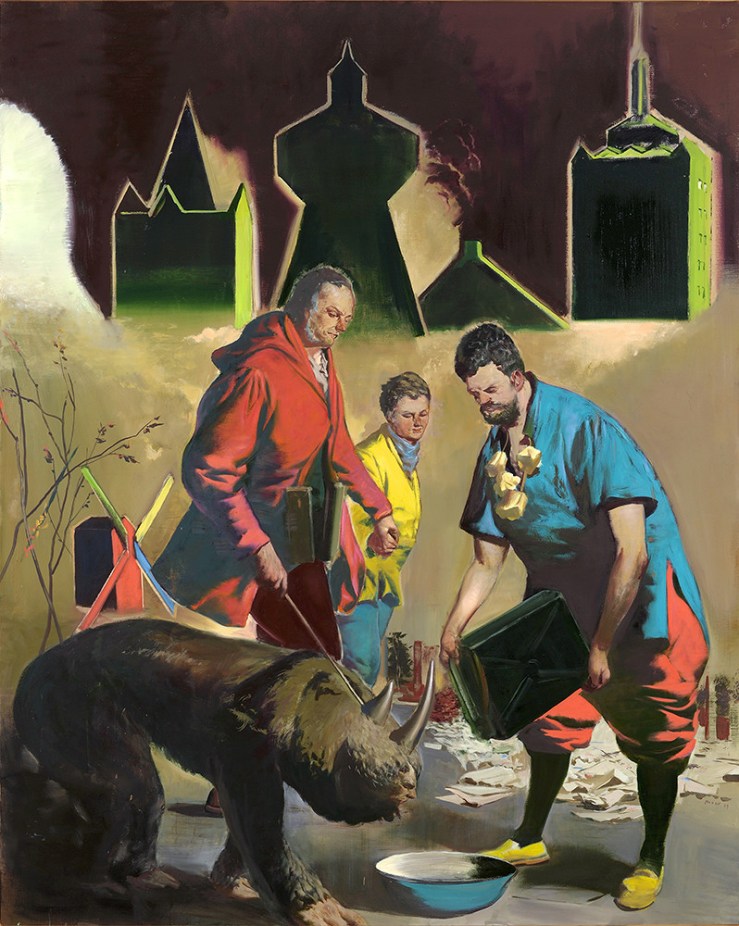
Towers — Neo Rauch

Türme (Towers), 2011 by Neo Rauch (b. 1960)

Untitled — Peter Busch

Untitled, 2020 by Peter Busch (b. 1971)

Atlantic Civilisation — André Fougeron

Atlantic Civilisation, 1953 by André Fougeron (1913–1998)

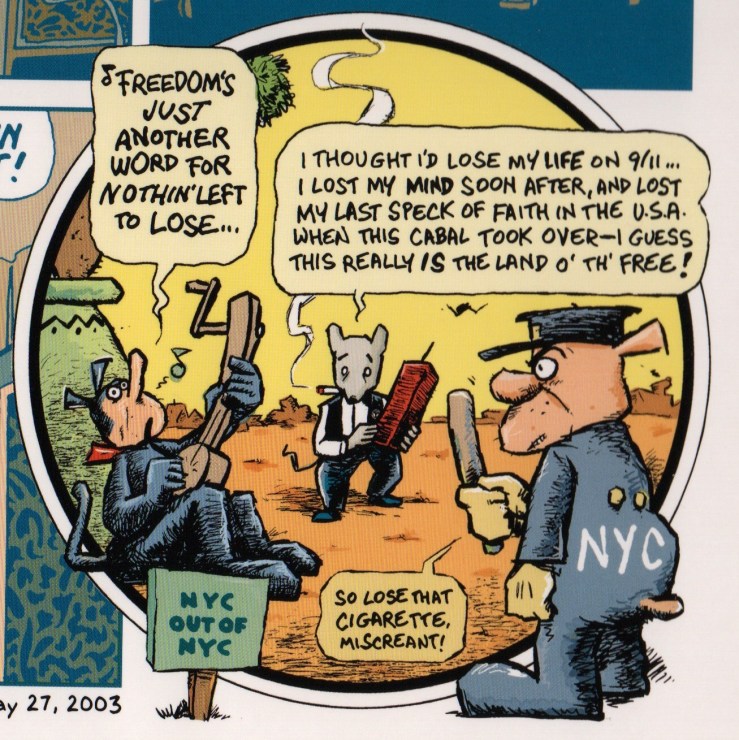
Lost my mind soon after (Art Spiegelman)

From In the Shadow of No Towers by Art Spiegelman, Pantheon, 2004.

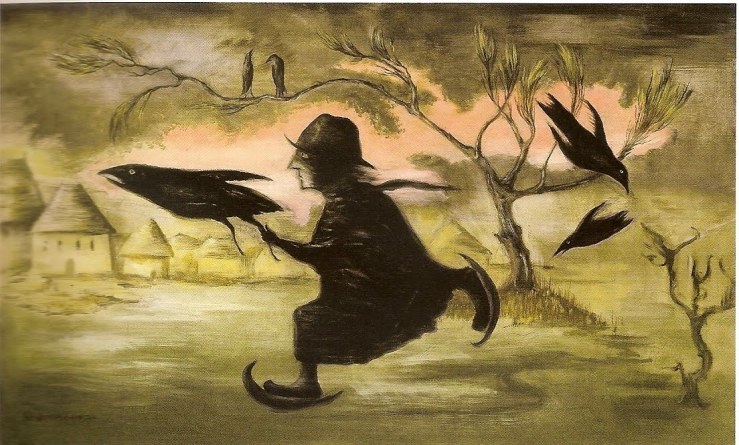
Crow Catcher — Leonora Carrington

Crow Catcher, 1990 by Leonora Carrington (1917–2011)

The Fourteen Daggers — Kay Sage

The Fourteen Daggers, 1942 by Kay Sage (1898-1963)

Almost Paradise — Josh Keyes

Almost Paradise, 2018 by Josh Keyes (b. 1969)

Thanatos — Jacek Malczewski

Thanatos, 1899 by Jacek Malczewski (1854-1929)

The Disillusioned Medea — Paulus Bor

The Disillusioned Medea, c. 1640 by Paulus Bor (1601–1669)

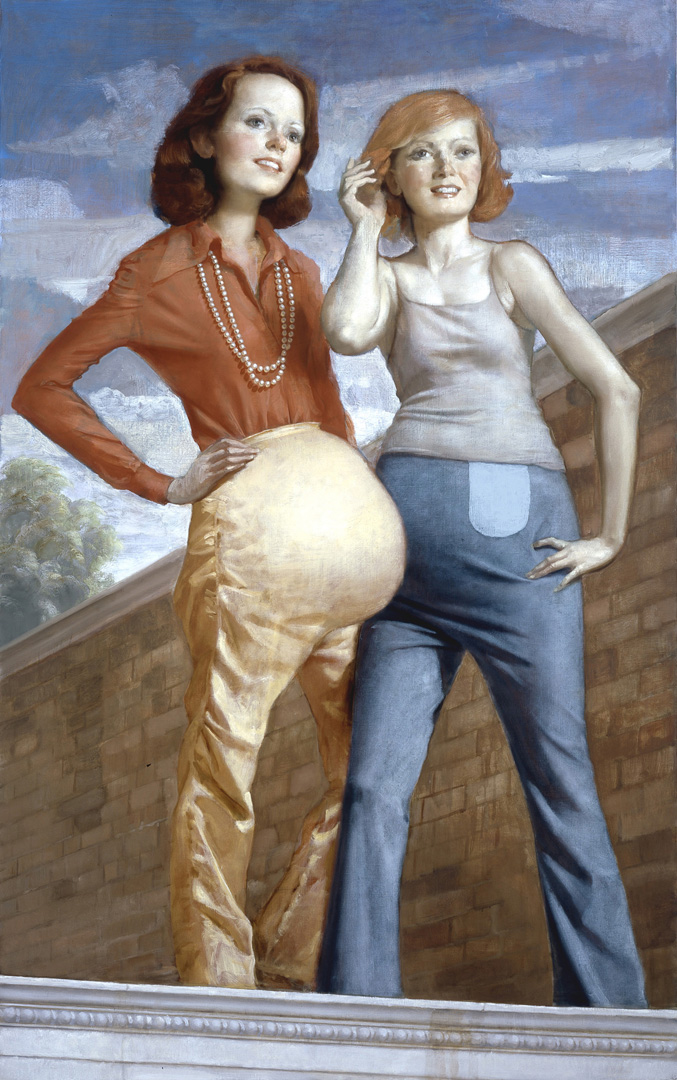
Patch and Pearl — John Currin

Patch and Pearl, 2006 by John Currin (b. 1962)

Prometheus — Mitchell Villa

Prometheus, 2020 by Mitchell Villa

Conrad/Hughes (Books acquired, 2 Aug. 2020)

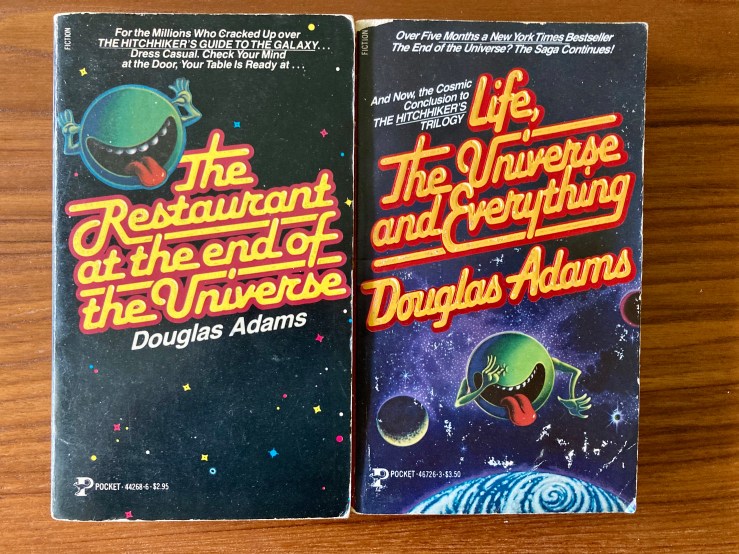
So my son finished Douglas Adams’ A Hitchhiker’s Guide to the Galaxy on Tuesday night, giving me a nice excuse to swing by the used bookstore on Wednesday to pick up the next two entries in the series, The Restaurant at the End of The Universe and Life, the Universe and Everything. I managed to find the same editions I read when I was his age. I gave my copies to one of my students some time in the early 2000s, back when I was teaching high school.

I found the Adams books almost immediately and had an hour to kill, so I strolled around, aiming not to buy anything. I’d been to the shop not a week before and picked up John Brunner’s 600+ page novel Last Stand on Zanzibar—but I thought I’d look for some interesting covers and maybe share them on twitter. And I did:

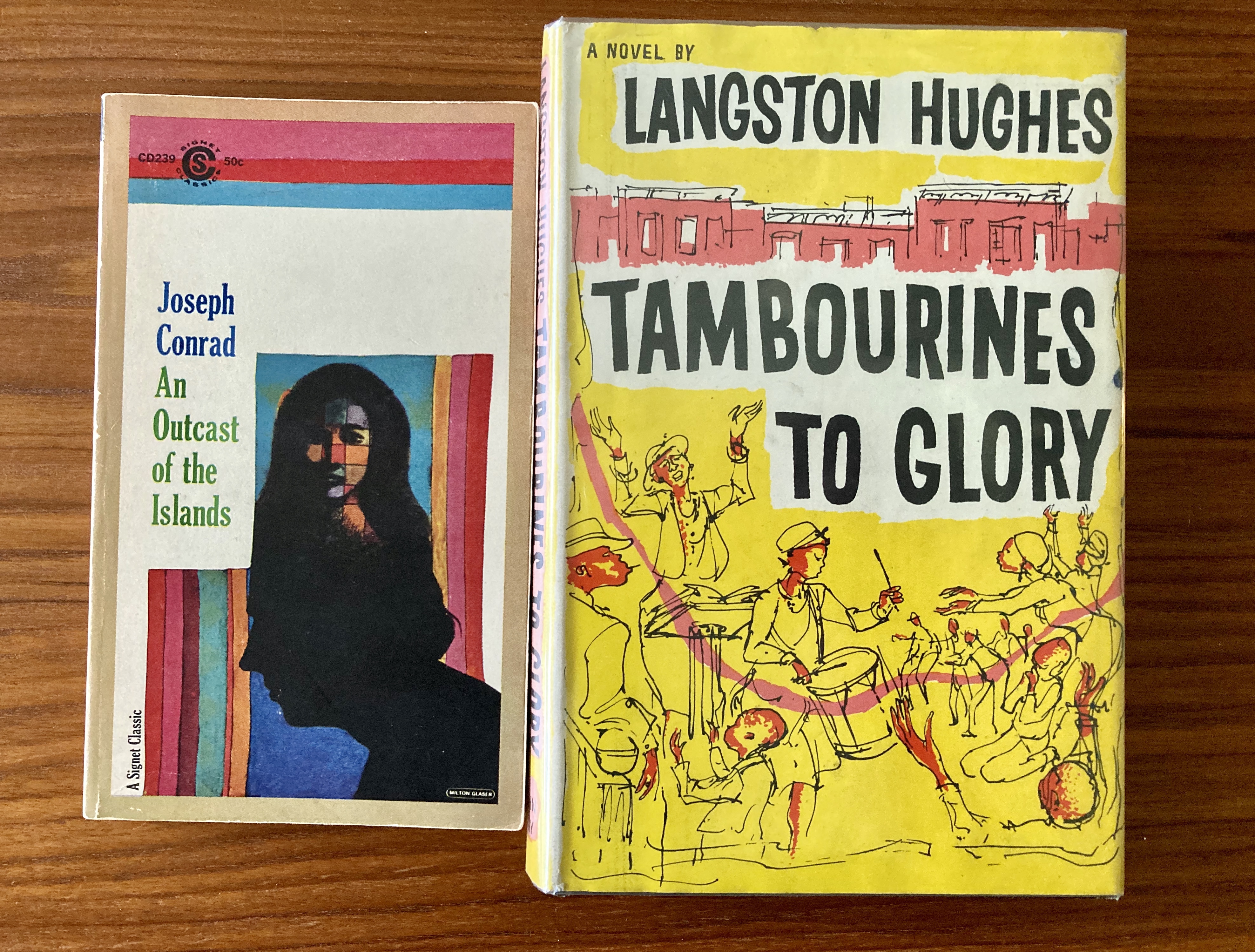
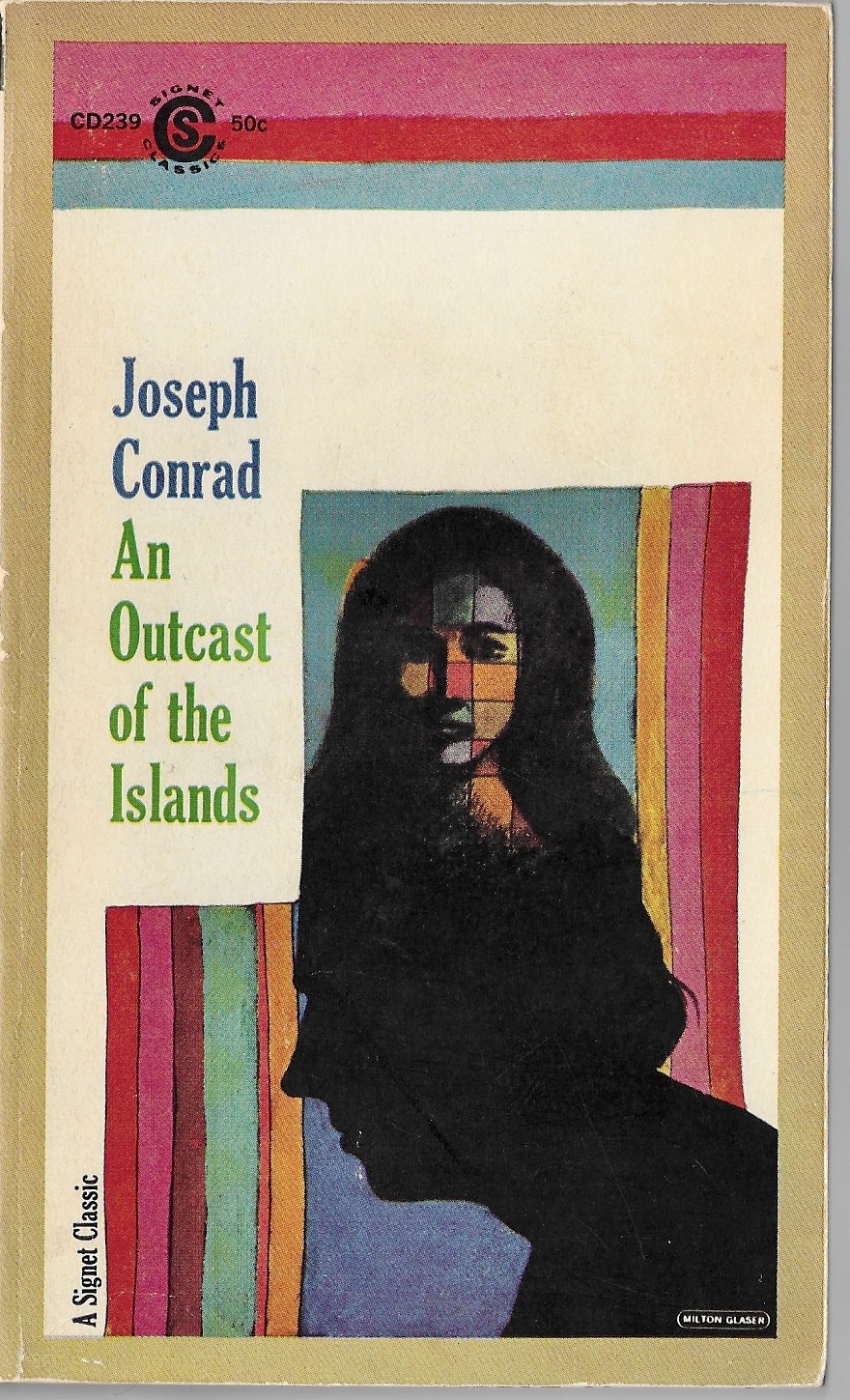
In the end though, I couldn’t pass up two books. First, I found a pristine first-edition Signet paperback of Joseph Conrad’s second novel An Outcast of the Islands with a striking Milton Glaser cover:

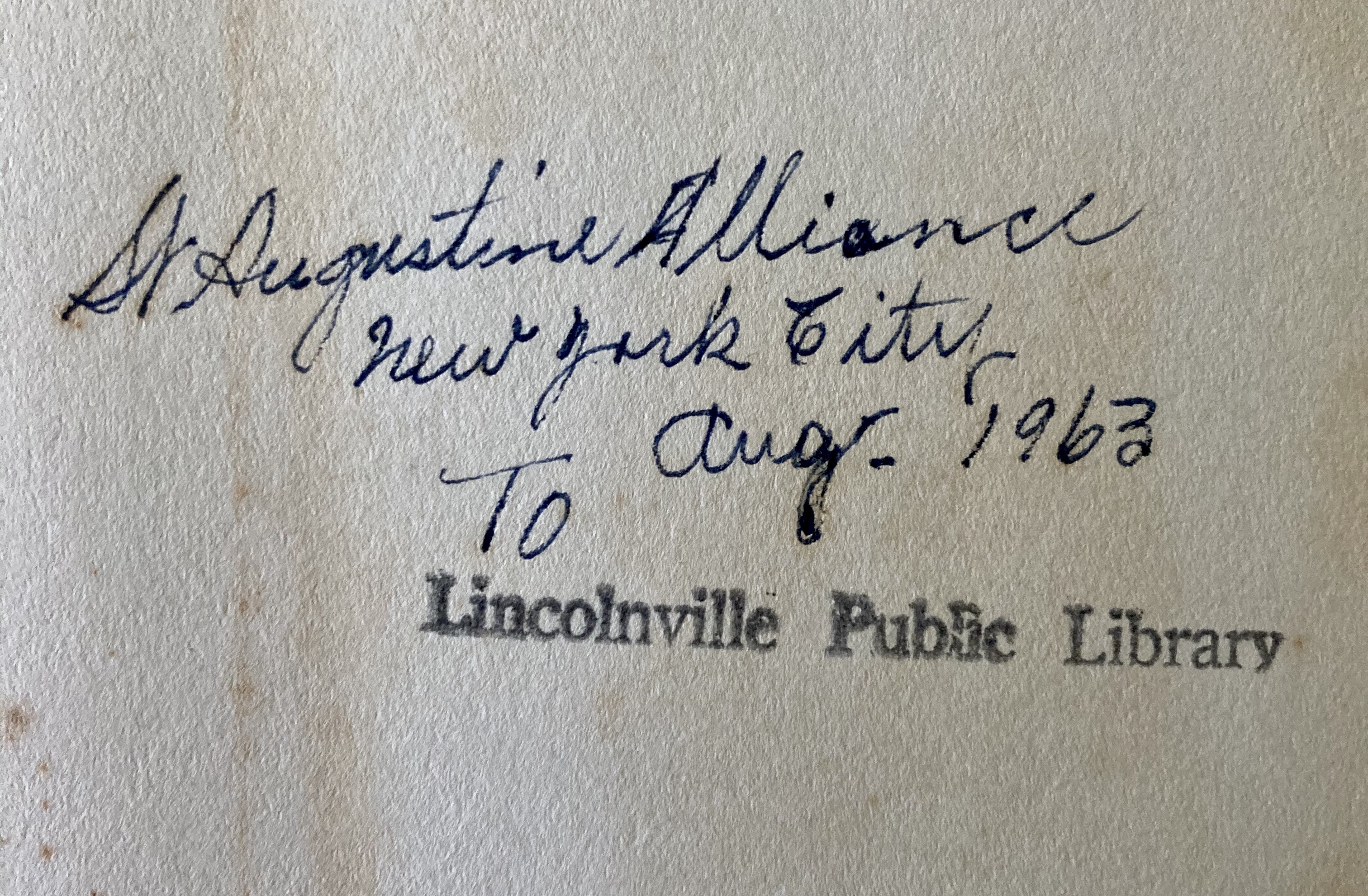
Then I came across a hardback first edition of Langston Hughes’ second novel Tambourines to Glory. At thirty bucks, it ate up the rest of my store credit, but it’s in excellent condition with no damage to the jacket and foxing only on the front flyleaf. It’s an old library book, but was fortunately spared any ugly WITHDRAWN stamps and appears never to have had a pocket in the back. Indeed, I’m not sure if the book was ever even read by anyone. Besides a few stamps identifying the library it once belonged to, the only mark in the book is on the front flyleaf:

Lincolnville is an historic black neighborhood founded by ex-enslaved people in the late 1860s. Famously, St. Augustine (and the “St. Augustine movement”) was a key location in the Civil Rights movement, and protests in the summer of 1964 when demonstrators jumped into the “whites-only” pool at the Monson Motor Lodge. Journalists captured racist motel owner James Brock pouring muriatic acid into the pool during the swim-in. A day after the world saw these images, the Senate passed the Civil Rights Act.

I wonder whose handwriting that is?


“Two Friends” — Pierre Senges

From Studies of Silhouettes by Pierre Senges. English translation by Jacob Siefring. Forthcoming in the fall from Sublunary Editions.

Archive I — Richard Hamilton

Archive I, 1981 by Richard Hamilton (1922–2011)