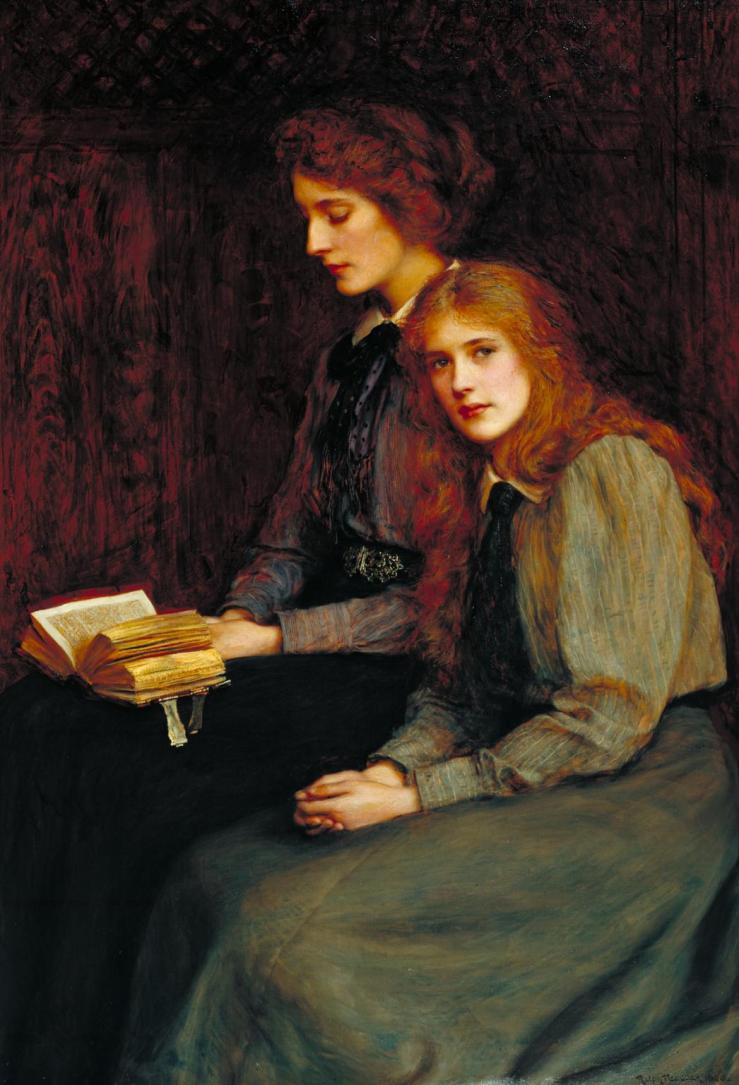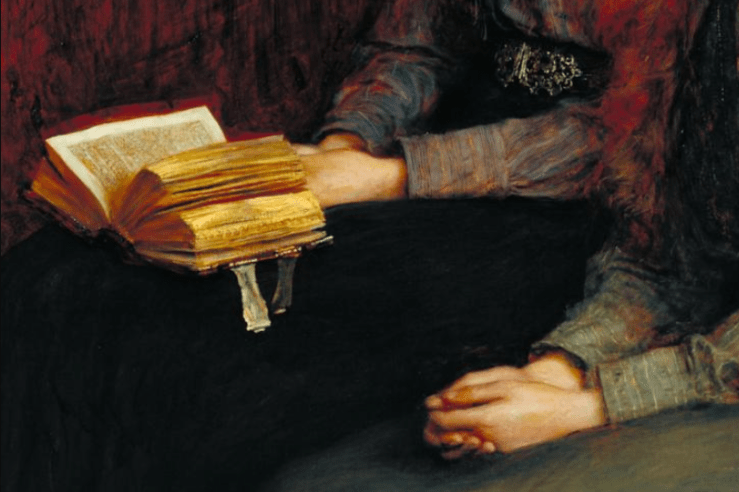
The Sisters — Ralph Peacock

The Sisters 1900 by Ralph Peacock 1868-1946

Screenshot 2020-02-21 at 11.53.31 PM

The Sisters, 1900 by Ralph Peacock (1868–1946)

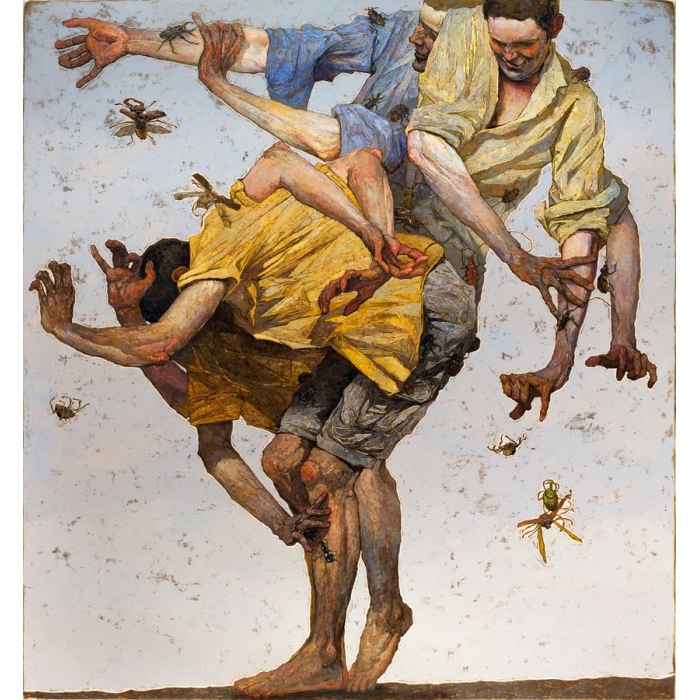
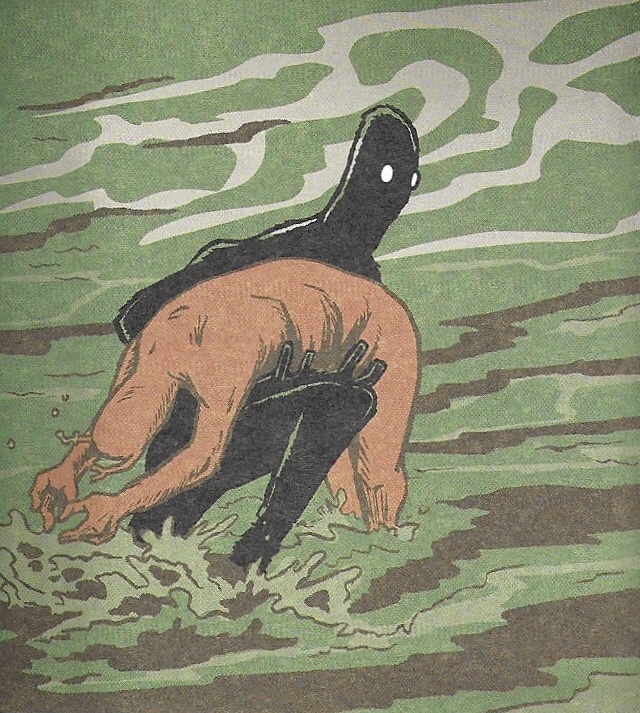
Do Bugs Feel Fear? — Denis Sarazhin

do-bugs-feel-fear

Do Bugs Feel Fear?, 2016 by Denis Sarazhin (b. 1982)

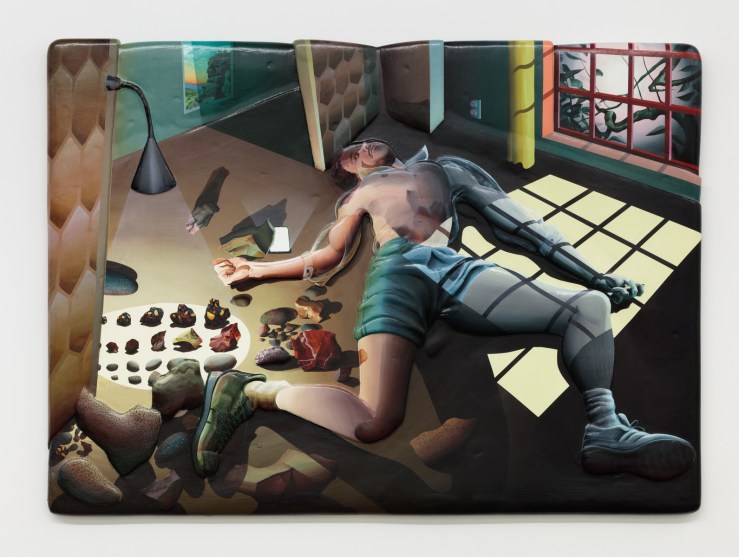
Matinee — Jonathan Wateridge

25matinee

Matinee, 2011 by Jonathan Wateridge (b. 1972)

Blog about some recent reading

img_4994

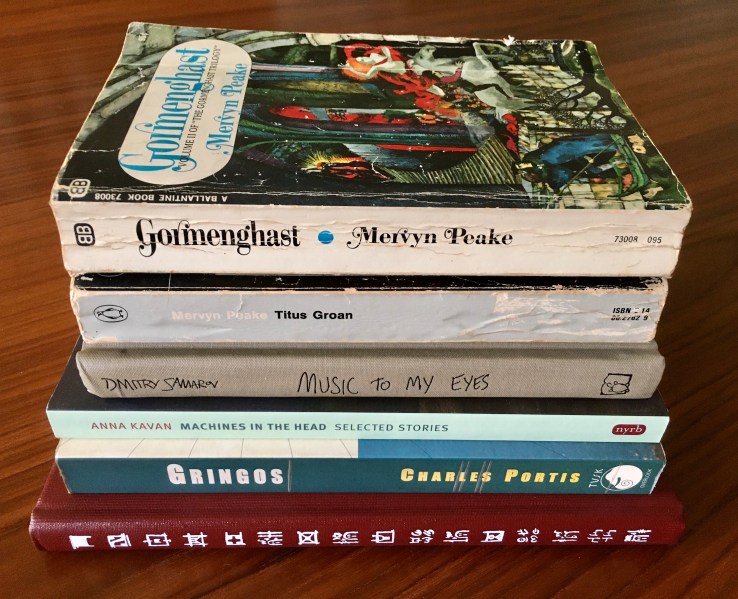
From the top down:

I came across a battered and beautiful copy of Mervyn Peake’s novel Gormenghast by chance a few weeks ago and asked Twitter if the trilogy was any good. The answer was a very enthusiastic, even cultish Yes. I still can’t believe I’d never even heard of Peake’s Gormenghast trilogy until recently—I grew up reading fantasy novels, and Lord of the Rings, the novel that Peake’s trilogy is often compared to, is and was one of my favorite novels of all time. The comparisons to Tolkien though aren’t particularly convincing, beyond the time period the novels were published, and their both being trilogies. Peake’s novels are grungier, wordier, thicker somehow; he plasters word on word on word building a baroque and grotesque world that is rich and full yet nevertheless opaque. He refuses to explain, but he shows. I read Titus Groan, the first novel in the trilogy, in a bit of a fever, feeding on its thickness. It reminded me of Dickens and T.H. White, but also Leonardo’s grotesque caricatures and Aleksei German’s film adaptation of Hard to Be a God. So much abjection! I have failed to discuss the plot: It’s a castle plot, whatever that means. There are insiders and outsiders. An outsider is trying to make his way not just in but also up: That’s Steerpike, the villainous hero of Titus Groan, and Iago-like intellect whose machinations Peake doesn’t just tell us about, but actually harnesses for us to ride around after. Little Titus Groan barely shows up in his eponymous volume, but so far in Gormenghast there’s been a lot more of him, which is cool, even if there’s been less Steerpike so far, which is not so cool. I’m about halfway through and really enjoying it. The novel vacillates between tones, dwelling just a bit-too-long on a bathetic romance before whirling again to other matters: a feral child, assassinations, an exiled retainer in the wild. Great stuff. The books are illustrated by the author:

Peake’s Gormenghast books have been my “big” read so far this year, but I’ve slipped in other texts too of course. Dmitry Samarov’s Music to My Eyes is a sort of love-letter (“love” is maybe not the right word) to the Chicago music scene; it also functions as a memoir of sorts. The vignettes and short essays make for quick and entertaining reads. The book is also illustrated by the author; here is his picture of David Berman:
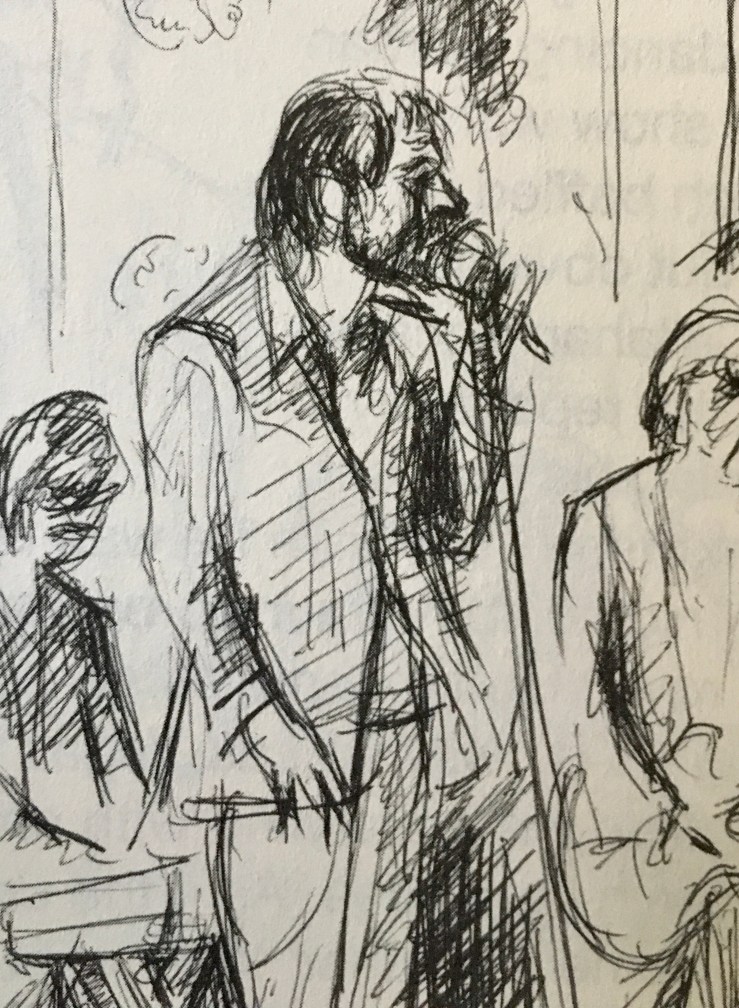
img_4997

I have been slowly making my way through the stories in Anna Kavan’s collection Machines in the Head, which is available (today!) now from NYRB. I have a full review coming next week, but it’s Good Weird Stuff. If you pick it up, I recommend skipping to the later stories and working backwards—Kavan eventually absorbs the Kafka-anxieties that permeate the earlier texts and synthesizes it into something all her own. The book is not illustrated by the author.

The Great American Novelist Charles Portis died yesterday. I pulled his books out, took a pic, wrote a post. Of his five novels, I’ve yet to read Gringos. I ended up reading the first 60-odd pages of it last night, after having pulled it down, and the sentences are too good to not keep going. Portis’s command of voice is amazing, and I love that he’s returned to the first-person here—in this case, the voice of Jimmy Burns, an American living in Merida, working as a part-time tomb raider, but mostly just helping out gringos and Mexicans alike. Gringos is both comic and ominous, cynical and joyful so far. I will keep going. The book isn’t illustrated, but here’s a taste of the prose, from a page I doggeared last night:

And so little fellowship among the writers. They shared a beleaguered faith and they stole freely from one another—the recycling of material was such that their books were all pretty much the same one now—but in private they seldom had a good word for their colleagues.

The notation is about alien-Mayan-conspiracy books, but I think it works as a take on literature in general.

The spine down there at the bottom with its own glyphs is Anasazi, a graphic novel by Mike McCubbins and Matt Bryan. It’s really, really good—I’ve read it twice now, and I have a review planned for The Comics Journal next month. I wrote about it a bit here,  saying;

The joy of Anasazi is sinking into its rich, alien world, sussing out meaning from image, color, and glyphs. The novel has its own grammar. Bryan and McCubbins conjure a world reminiscent of Edgar Rice Burroughs’ Martian novels, Charles Burns’ Last Look trilogy, Kipling’s Mowgli stories, as well as the fantasies of Jean Giraud.

This book is, of course, illustrated by the authors:

img_5001Blog about some recent reading

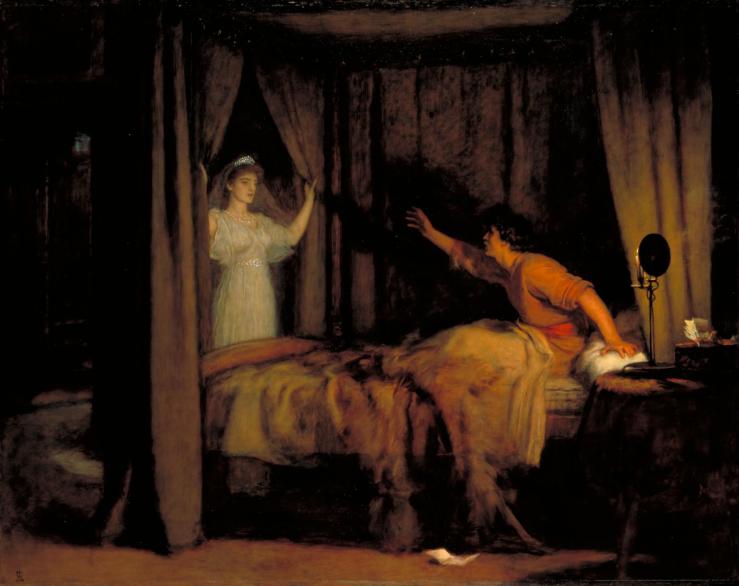
Speak! Speak! — John Everett Millais

Speak! Speak! 1895 by Sir John Everett Millais, Bt 1829-1896

Speak! Speak!, 1895 by John Everett Millais (1829-1896)

Posted in Art

“Lincoln Theatre” — Langston Hughes


“Lincoln Theatre”

by

Langston Hughes


The head of Lincoln looks down from the wall
While movies echo dramas on the screen.
The head of Lincoln is serenely tall
Above a crowd of black folk, humble, mean.
The movies end. The lights flash gaily on.
The band down in the pit bursts into jazz.
The crowd applauds a plump brown-skin bleached
blonde
Who sings the troubles every woman has.
She snaps her fingers, slowly shakes her hips,
And cries, all careless-like from reddened lips!
De man I loves has
Gone and done me wrong …
While girls who wash rich white folks clothes by day
And sleek-haired boys who deal in love for pay
Press hands together, laughing at her song.

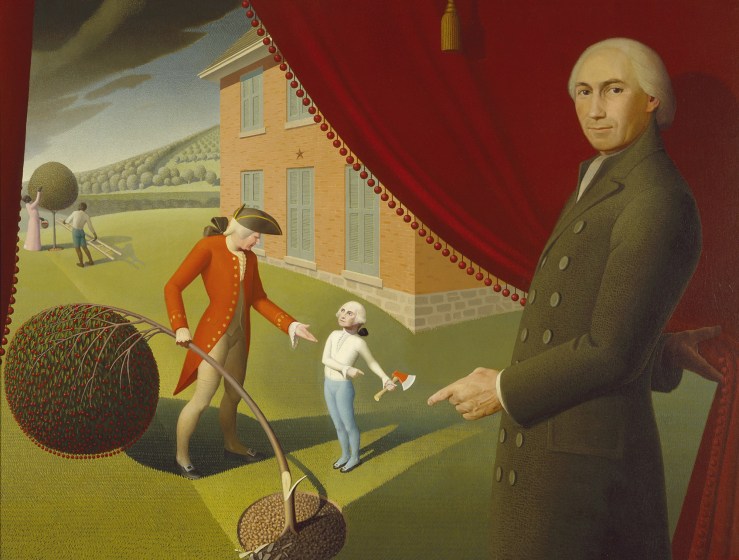
Parson Weems’ Fable — Grant Wood

parson-weemss-fable-amon-carter-museum-of-american-2

Parson Weems’ Fable, 1939 by Grant Wood (1891–1942)

The Centurion’s Servant — Stanley Spencer

sspencer3

The Centurion’s Servant, 1914 by Stanley Spencer (1891–1959)

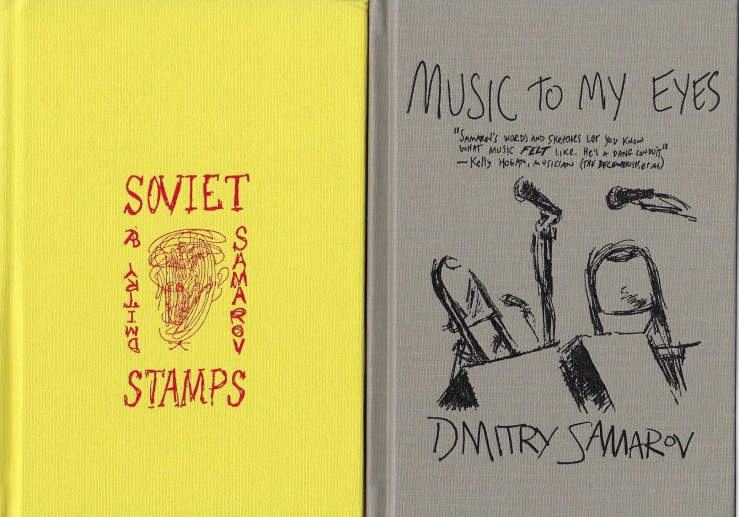
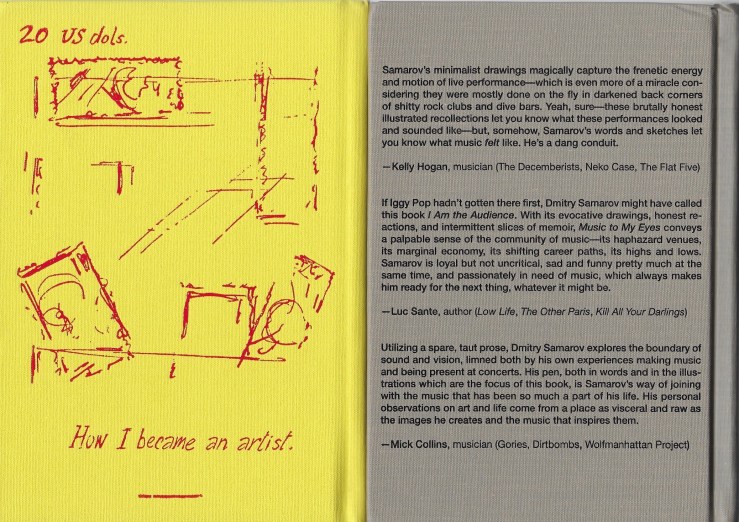
Two by Dmitry Samarov (Books acquired 7 Feb. 2020)

2020-02-16_114625

2020-02-16_114625_1

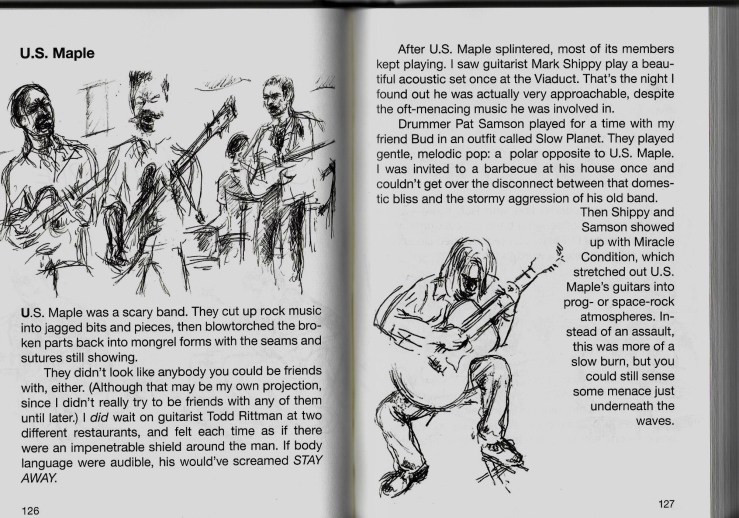
Copies of Dmitry Samarov’s latest books, Soviet Stamps and Music to My Eyes showed up at Biblioklept World Headquarters the other week. I started in on Music to My Eyes, a kind of fragmentary memoir told in sketches (both verbal and literal) of the Chicago music scene. The determiner “the” in the previous sentence is wrong, of course, as is the singular noun “scene” — Samarov’s book shows the diversity of the city’s music, even if fans will be able to connect the dots between bands like Eleventh Dream Day, Mekons, and Brokeback. There are stories that float around Nick Cave, Arto Lindsay, Neko Case, and many, many others. Samarov’s brief chapter on the Silver Jews ends with an anecdote about not getting to meet Berman in 2018. The final lines are heartbreaking: “Maybe there’ll be more songs. Then I could stop being mad at him for walking away too soon.”

Here’s Samarov on U.S. Maple, who made some of the strangest music ever during that weird slice of time from the mid-nineties to the mid-aughts. U.S. Maple is by far the most confounding live band I’ve ever seen; it’s easy to throw around the word deconstruction, but their live performances were deconstructions of rocknroll:

2020-02-16_114625_2

Read my 2012 interview with Dmitry Samarov.

East Village Apartment II — Salman Toor

dsc_8092

East Village Apartment II, 2017 by Salman Toor (b. 1983)

Lover’s Leap — Kyle Dunn

2019_lover27s20leap_4820x206620x20220inches_0

Lover’s Leap, 2019 by Kyle Dunn (b. 1990)

The Seeress of Prevorst — Gabriel von Max

gabriel_von_max_-_the_seeress_of_prevorst

The Seeress of Prevorst, 1892 by Gabriel von Max (1840-1915)

Annunciation — Gely Korzhev

geliy-korzhev-the-painting-of-the-annunciation

Annunciation, 1997 by Gely Korzhev (1925-2012)

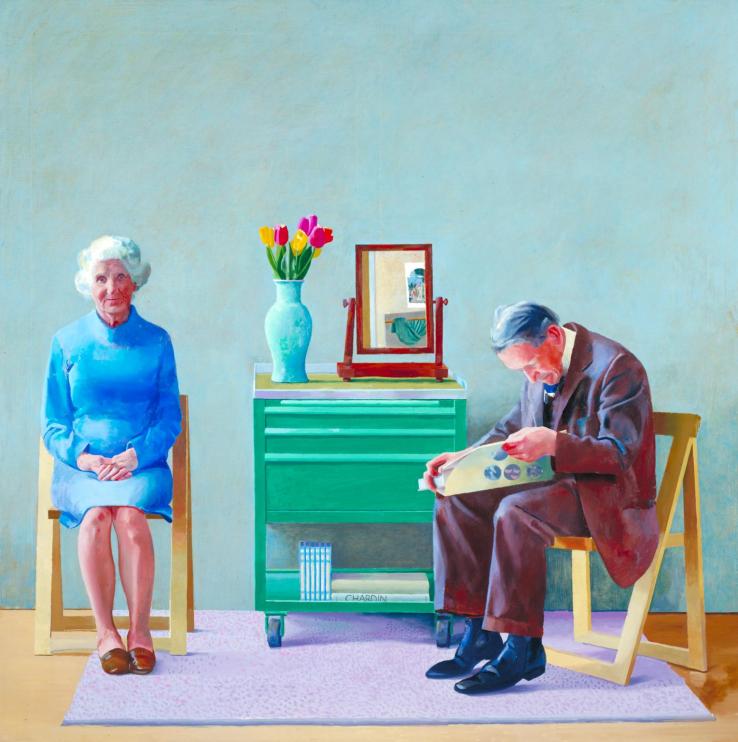
My Parents — David Hockney

My Parents 1977 by David Hockney born 1937

My Parents, 1977 by David Hockney (b. 1937)

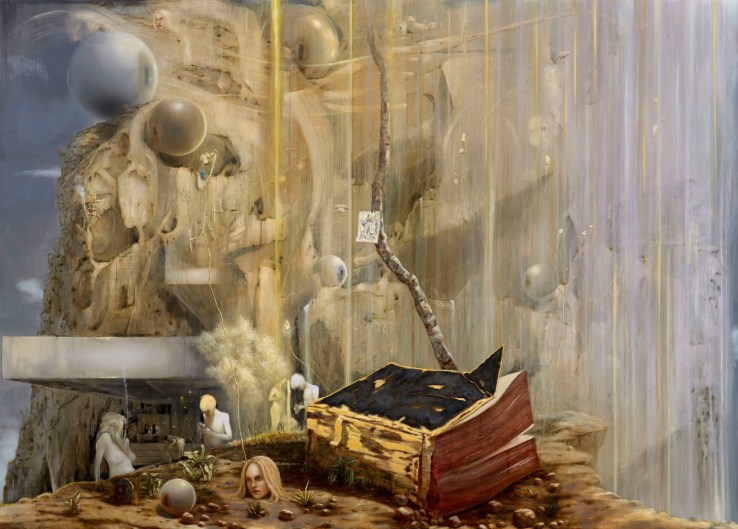
Prospectors — Nigel Cooke

nigelcooke-748-w1500-h1200

Prospectors, 2013 by Nigel Cooke (b. 1973)

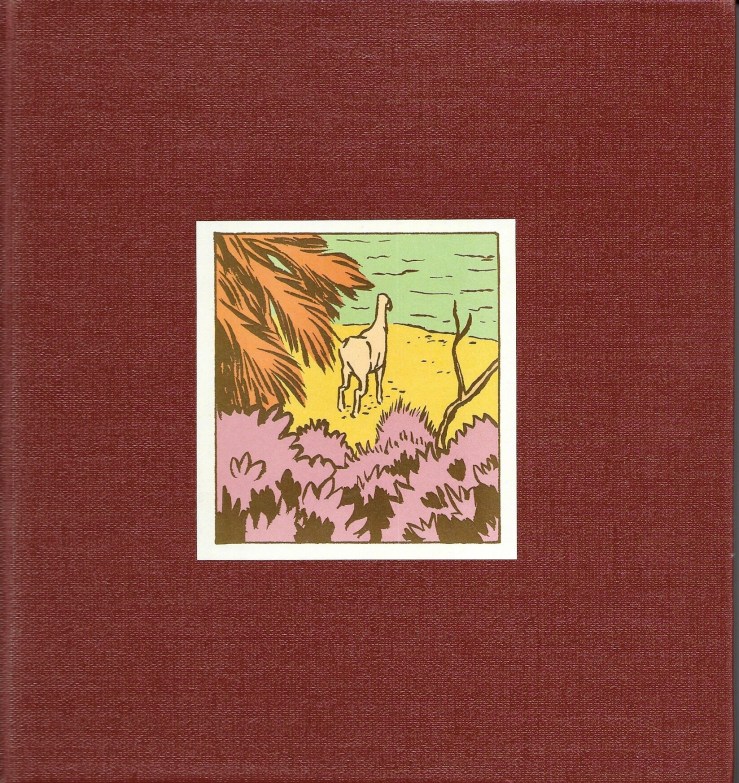
Anasazi (Beautiful and bewildering graphic novel told in its own glyphic language, acquired 6 Feb. 2020)

2020-02-10_164045_2

A week or so ago, Mike McCubbins offered me a review copy of Anasazi, the graphic novel that he made with Matt Bryan. He sent a link to the Anasazi’s Kickstarter page. I skimmed over the art, was impressed and immediately interested, and then read their blurb:

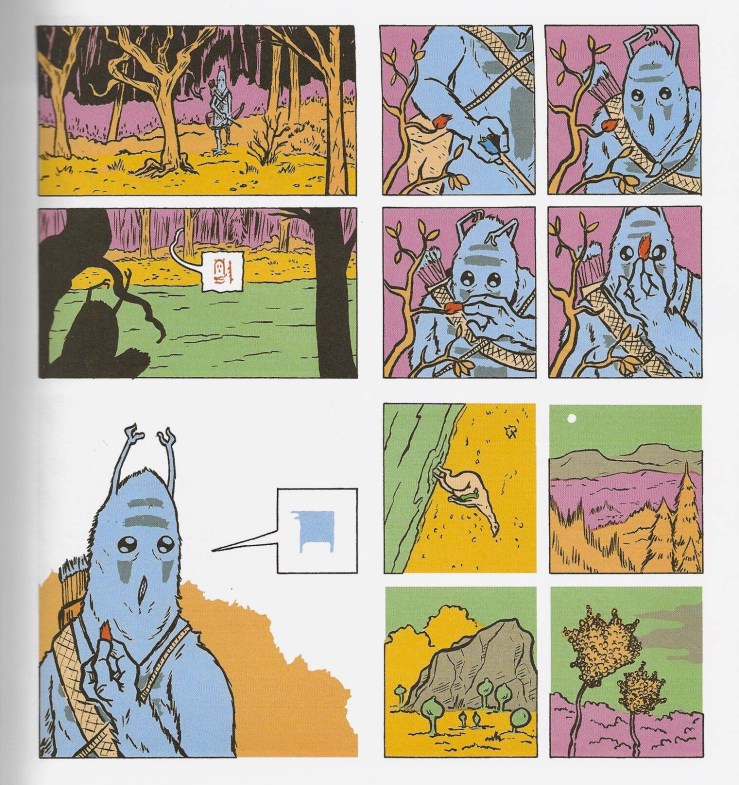
Anasazi is a nearly wordless 212 page, 8″ x 8.5″ full-color cloth-bound graphic novel. Its a story of war, assimilation, and cultural divisions on a colorful alien planet that combines elements of science fiction, fantasy, mythology, world history, and horror.

…16 chapters. 16 words.  There is no English dialogue or exposition in Anasazi. Instead each chapter heading contains an alien language glyph along with a non-English word or phrase meaning and its literal English translation. These glyphs then appear as dialogue throughout the story.

2020-02-10_164045

The art, overview, and the concept of a story told in glyphs intrigued me, and I trusted my intuition not to read the brief “What’s the story?” section of Anasazi until after I’d read the novel. I read it twice; once the night it showed up, and then again the next morning. The story synopsis (three short sentences) hardly spoils the narrative, but it offers enough context for anyone wholly lost to find their footing.

2020-02-10_164045_1

The joy of Anasazi is sinking into its rich, alien world, sussing out meaning from image, color, and glyphs. The novel has its own grammar. Bryan and McCubbins conjure a world reminiscent of Edgar Rice Burroughs’ Martian novels, Charles Burns’ Last Look trilogy, Kipling’s Mowgli stories, as well as the fantasies of Jean Giraud.

The sixteen English words in Anasazi are all chapter names, and all are loan words, as the novel’s title suggests. Some (“M’Aidez,” “Sheol,” “Melaina Chole”) were more familiar to me than others (“Zinduka,” “Gweilo,” “Shuv”), and all take on a strange tone in the novel, as if the glyphs the characters speak are rough transliterations of something far more refined than our alien ears could comprehend.

I really enjoyed Anasazi, and I aim to have a full review soon. But I plan to read it a few more times first.


Burial — Eduardo Berliner

5ecb765e5c48d952a9f14a448f853554

Burial, 2009 by Eduardo Berliner (b. 1978)