With or Without You (Book Acquired, 2.24.2014)

20140303-140548.jpg

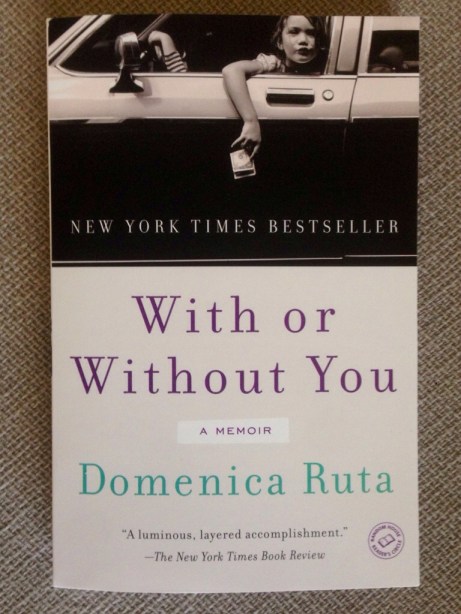
Domenica Ruta’s memoir With or Without You is new in trade paperback next week from Random House. Their blurb:

Domenica Ruta grew up in a working-class, unforgiving town north of Boston, in a trash-filled house on a dead-end road surrounded by a river and a salt marsh. Her mother, Kathi, a notorious local figure, was a drug addict and sometimes dealer whose life swung between welfare and riches, and whose highbrow taste was at odds with her hardscrabble life. And yet she managed, despite the chaos she created, to instill in her daughter a love of stories. Kathi frequently kept Domenica home from school to watch such classics as theGodfather movies and everything by Martin Scorsese and Woody Allen, telling her, “This is more important. I promise. You’ll thank me later.” And despite the fact that there was not a book to be found in her household, Domenica developed a love of reading, which helped her believe that she could transcend this life of undying grudges, self-inflicted misfortune, and the crooked moral code that Kathi and her cohorts lived by.
 
With or Without You is the story of Domenica Ruta’s unconventional coming of age—a darkly hilarious chronicle of a misfit ’90s youth and the necessary and painful act of breaking away, and of overcoming her own addictions and demons in the process. In a brilliant stylistic feat, Ruta has written a powerful, inspiring, compulsively readable, and finally redemptive story about loving and leaving.

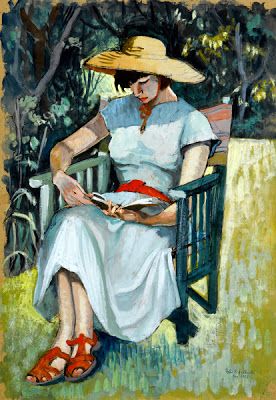
Dig — Sadie Wendell Mitchell

readinglady

“I like the delete key best” (William H. Gass)

When Skizzen first became aware of it, he laughed, for he had miss-spelled “spell.” Well, not exactly. The additional l was a typo. “Spelll.” It was a machine-mad error, but the extra l could be easily deleted. That was one of the great virtues of this new invention. If words magically appeared on the screen (he was often unaware he was typing his fingers flew so fast, so briefly did they need to light upon the keys), they could be sent away just as readily. Not like a note that would leave of its own accord yet could not be erased and could not be said to have disappeared. He had been saying that a spell had been put upon mankind. Writing, not saying. He had been writing that a spell had been put upon our race. As if Circe had changed us into swine so that our little noses were wrinkled by concealed snouts, and inside those of us who possessed a male member a hog’s reproductive implement curled—a pig’s … sexual implement—a memoir of the moment of enchantment. Anyway, we did not see how foolish, how absurd, how wicked we were being. That was the gist.

Joseph had pursued a request for some books that he had asked the library to acquire as far as the library entrance, where a smilling young man had greeted him with this suitcase fulll of magic. We ordered some of these computers, he said with some excitement, and they just came. Want to play? The Music Department had been threatened with digitization, but their three-person claim on modernity was weak. So Professor Skizzen dutifullly sat at one end of a long library table and began pecking away: It is as if a spelll had been put upon mankind. How quickly the spelll enveloped the screen. We oinked and thought it singing, he wrote. The young man approached bearing his grin like a tidbit on a salver, so Skizzen hit DELETE and saw nothing more, neither his practice sentence nor the grin. Go on, the young man said, take it for a spin. Our new system will make it easy for us to keep records, he boasted. The bursar is out of his mind with delight. We rolled in the mud and believed we were bathing, Skizzen wrote, with his best hunt-and-peck. He knew Grin was grinning again, over his shoulder. Let the piker peek, Skizzen thought, I shall complete my edifying lines about the spelll that been put upon mankind. “We fought one another and afterward celebrated the carnage” soon materialized. With writing, he said aloud, the writing inscribes the letters, letters build the words, and, subsequently, the thought arrives—handmade like kneaded bread. With typewriting, you get letters by hammering them into existence. Or out, with x’s, if you don’t like them. With this sweet machine here, you issue a requisition. Well, now, I hadn’t thought about it that way, the Grinner said. With pen and ink, before we write, we think, because we hate the sight of corrections. With the computer we write first and think later, corrections are so easy to perform. I like the delete key best; it has a good appearance, Skizzen said, typing furiously. “We ate our farrow and supposed it was a splendidly healthy, indeed toothsome, way to dine.” Joseph determined to leave something behind as an animal might to signal its presence, so he keyed: “We eagerly awaited our own slaughter, as though we were receiving an award.” Now he spoke it as he played it. “Our haunch would hang in the smokehouse to season, and those of us who remained to feel would feel, like parvenus, that we had Arrived.” I’m glad you got these, he said to the Grin, though the young man didn’t seem to have any more grins to spend. I wonder how many unordered books these cost me. He slid his words the length of the long table where they disappeared over its edge into delete. Then Skizzen took his goatee away where it would be better appreciated.

From William H. Gass’s  novel Middle C.

The Complete Short Stories of J.G. Ballard (Eleventh Riff: The Nineties)

jgb_complete_ss4003111

PREVIOUSLY:

Introductions + stories 1956-1959

Stories of 1960

Stories of 1961

Stories of 1962

“The Subliminal Man,” Black Friday, and Consumerism

Stories of 1963-1964

Stories of 1966

Closing out the sixties

The seventies

The eighties

IN THIS RIFF:

“Dream Cargoes” (1990)

“A Guide to Virtual Death” (1992)

“The Message from Mars” (1992)

“Report from an Obscure Planet” (1992)

“The Secret Autobiography of J G B” (1981/2009)

“The Dying Fall” (1996)

1. “Dream Cargoes” (1990)

By the 1990s Ballard had written essentially the same stories over and over—with diminishing returns. Some of the weakness in the later entries in the Complete Short Stories can be attributed to Ballard’s prescience. The world caught up to him at some point, blunting his satire into something goofier, more cartoonish, but also sharpening the reactionary streak that always glowed under the surface of his writing. At his peak, Ballard used his stories to provoke readers into looking at their culture in a new way, and the best of those stories still retain a futurist power. However, many of the late period stories blazon their moral outrage in a wearisome didactic streak.

1990’s “Dream Cargoes” is paint-by-numbers Ballard: Themes of time, sleep, mutation, ecological disaster, birds, etc. The plot anticipates one of Ballard’s weaker novels, Rushing to Paradise (1994), a day-glo nightmare about misguided attempts to steward the forces of nature. And like Rushing to Paradise, the prose here is weak—Ballard relies on the stock phrases that litter his earliest stories.

2. “The Message from Mars” (1992) / “Report from an Obscure Planet” (1992) / “A Guide to Virtual Death” (1992)

“The Message from Mars” anticipates public disinterest in astronomy (and science in general), the end of NASA’s space shuttle program, and China’s emerging dominance as a world power with space flight capability. So there you go. (It also posits the horror of a President Quayle!). Ballard sends a group of astronauts on a Mars mission, refuses to share their findings with us, and then leaves them, once they land, in their space shuttle, where they live on for decades, silent, incommunicado, alienated from humanity in their self-imposed exile. Ballard’s cynicism is balanced by his refusal to overstate any kind of moral here—the story succeeds in its evocation of mystery.

“Report from an Obscure Planet” is another riff on millennial anxieties, written in the perspective of a “we” condemning the human race for its shortsighted, disastrous treatment of the planet. Ballard doesn’t seem to keen on the future wonders promised by computers:

Driven by the need for a more lifelike replica of the scenes of carnage that most entertained them, the people of this unhappy world had invented an advanced and apparently interiorised version of their television screens, a virtual replica of reality in which they could act out their most deviant fantasies. These three–dimensional simulations were generated by their computers, and had reached a stage of development in the last years of the millennium in which the imitation of reality was more convincing than the original. It may even have become the new reality to the extent that their cities and highways, their fellow citizens and, ultimately, themselves seemed mere illusions by comparison with the electronically generated amusement park where they preferred to play. Here they could assume any identity, create and fulfill any desire, and explore the most deviant dreams.  

While “Report from an Obscure Planet” uses a didactic narrator and a heavy hand to telegraph its message, its companion piece “A Guide to Virtual Death” is far more fun, wicked, and shockingly accurate (if wildly hyperbolic). Sure, yes, okay—another list from Ballard, and okay, yes, sure—I tend to be keen on his lists (“The Index,” “The Assassination of John Fitzgerald Kennedy Considered as a Downhill Motor Race”)—but they also tend to be his strongest pieces. As usual with his list-stories, Ballard feels obligated to begin with a note:

For reasons amply documented elsewhere, intelligent life on earth became extinct in the closing hours of the 20th Century. Among the clues left to us, the following schedule of a day’s television programmes transmitted to an unnamed city in the northern hemisphere on December 23, 1999, offers its own intriguing insight into the origins of the disaster.

6.00 am Porno–Disco. Wake yourself up with his–and–her hard–core sex images played to a disco beat.

7.00 Weather Report. Today’s expected micro–climates in the city’s hotel atriums, shopping malls and office complexes. Hilton International promises an afternoon snow–shower as a Christmas appetiser.

7.15 News Round–up. What our news–makers have planned for you. Maybe a small war, a synthetic earthquake or a famine–zone! charity tie–in.

7.45 Breakfast Time. Gourmet meals to watch as you eat your diet cellulose.

Brief but Essential. Go ahead and read the whole thing.

3. “The Dying Fall” (1996) / “The Secret Autobiography of J G B” (1981/2009)

The American edition of Complete Stories is more complete than the British volume, including two extra stories. “The Dying Fall” (read it here if you like) is an unfortunate last entry, a weak note in a grand tome. It’s not bad; it’s simply not good, yet another revenge tale with a bad wife, etc. It feels like a frame for Ballard to riff on architecture and psychoanalysis.

“The Secret Autobiography of J G B” is much stronger (you can read it here), although it was also composed at his peak and republished (“rediscovered”) after his death. The final lines would have made a fitting end for the entire collection:

When the summer was followed by a mild autumn, B had established a pleasant and comfortable existence for himself. He had abundant stocks of tinned food, fuel, and water with which to survive the winter. The river was nearby, clear and free of all pollution, and petrol was easy to obtain, in unlimited quantities, from the filling stations and parked cars. At the local police station, he assembled a small armory of pistols and carbines, to deal with any unexpected menace that might appear.

But his only visitors were the birds, and he scattered handfuls of rice and seeds on his lawn and on those of his former neighbors. Already he had begun to forget them, and Shepperton soon became an extraordinary aviary, filled with birds of every species.

Thus the year ended peacefully, and B was ready to begin his true work.

4. On the horizon:

I am done! Sort of. One more post—I’ll revisit these riffs and select the tales that I would include in a collection I would call The Essential Short Stories of J.G. Ballard.

Elegant Woman in Library — Edouard Gelhay

9b59115eab0cb7f2b248b0568d77a948

“Martyrdom of Saint Erasmus” (William H. Gass)

week11-0064

There were images that had nowhere to hang but in his head, images he remembered from books but of which he had no other copy; particularly one, from a strangely beautiful illuminated manuscript called The Hours of Catherine of Cleves, that depicted the martyrdom of Saint Erasmus. The presumptive saint lies on a raised plank, naked except for a loincloth. His abdomen has been opened and his intestines attached to a windlass erected above him. Thereupon, like a length of sausage or a length of rope, his innards are being wound by two figures, one male, one possibly female, each working hard to turn the spokes, their faces, however, averted from the scene. The saint does not appear to have wrists or hands. Eight turns have already been taken. The sky is empty except for a few clouds; the earth is empty except for two hills and some small yellow flowers. Around this painting, framed like a picture, is a delicate thin line made of curlicues and a field of tiny petals stalked by imaginary butterflies. At the bottom a small boy wearing a collar of thin sticks is riding a hobbyhorse.

His curiosity aroused by this calamitous vision, Skizzen sought more bio concerning Saint Erasmus. One source simply said that “although he existed, almost nothing is known about him.” This sentence stayed with Skizzen as stubbornly as the piteous illumination. What a blessed condition Erasmus must have enjoyed! Although he existed, almost nothing was known of him. Although nothing was known of him, as a saint, he existed. He existed, yet he had lived such a saintly life there was nothing of him to be known. Still another authority was not as sanguine. It claimed that the cult of Erasmus spread with such success that twelve hundred years later the martyr was invoked as one of the Fourteen Holy Helpers, whoever they were, and had become patron saint of sailors as well as kids who had colic. What was known, during those hundreds of years, was not known of the saint but of some figure he had thrown about himself as you would a ghostly garment or a costume for the dance. Proudly, Professor Skizzen pasted Erasmus in his memory book. A.d. 300. He was sprayed with tar and set alight. He was jailed, rescued by an angel, disemboweled. On a day in a.d. He died for me.

From William H. Gass’s novel  Middle C.

Silence — Tantiana Deiry

631e6a6db45c6b3232f1561d55cb4258

“Everything has been merely attempted, nothing completed” (Thomas Bernhard)

At the same time I had to tell myself that we invariably made excessive demands of everything and everybody: nothing is done thoroughly enough, everything is imperfect, everything has been merely attempted, nothing completed. My unhealthy craving for perfection had come to the surface again. It actually makes us ill if we always demand the highest standards, the most thorough, the most fundamental, the most extraordinary, when all we find are the lowest, the most superficial, the most ordinary. It doesn’t get us anywhere, except into the grave. We see decline where we expect improvement, we see hopelessness where we still have hope: that’s our mistake, our misfortune. We always demand everything, when in the nature of things we should demand little, and that depresses us. We see somebody on the heights, and he comes to grief while he is still on the low ground. We want to achieve everything, and we achieve nothing. And naturally we make the highest, the very highest demands of ourselves, completely leaving out of account human nature, which is after all not made to meet the highest demands. The world spirit, as it were, overestimates the human spirit. We are always bound to fail because we set our sights a few hundred per cent higher than is appropriate. And if we look, wherever we look, we see only people who have failed because they set their sights too high. But on the other hand, I reflect, where should we be if we constantly set our sights too low?

From Thomas Bernhard’s novel Concrete.

First Reader — John George Brown

f0a8c1518203e6e58749f42315129a4f

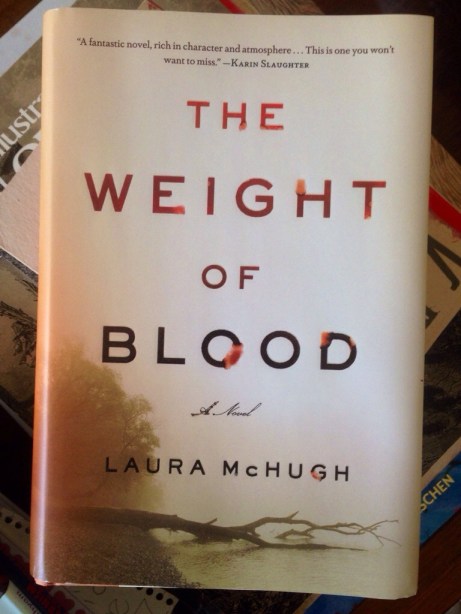
Bitter Eden (Book Acquired, 2.12.2014)

20140223-181957.jpg

This one looks pretty good. Blurb from publisher Picador:

Bitter Eden is based on Tatamkhulu Afrika’s own capture in North Africa and his experiences as a prisoner of war during World War II in Italy and Germany. This frank and beautifully wrought novel deals with three men who must negotiate the emotions that are brought to the surface by the physical closeness of survival in the male-only camps. The complex rituals of camp life and the strange loyalties and deep bonds among the men are heartbreakingly depicted. Bitter Eden is a tender, bitter, deeply felt book of lives inexorably changed, and of a war whose ending does not bring peace.

Read an excerpt here.

“The Breathing Author” by Gerald Murnane

From Delphic Intimations: Dialogues with Australian Writers and Critics, ed. Pradeep Trikha. 2007: Sarup & Sons, New Delhi.

I have preserved Australian spelling and style.

***

“The Breathing Author” — Gerald Murnane

This essay is the edited version of a talk given at the final session of the Gerald Murnane Research Seminar, held at the University of Newcastle on 20-21 September 2001.

I cannot conceive of myself reading a text and being unmindful that the object before my eyes is a product of human effort.

Much of my engagement with a text consists of my speculating about the methods used by the writer in the putting together of the text, or about the feelings and beliefs that drove the writer to write the text, or even about the life story of the writer.

What I am about to tell you today is the sort of detail that I would have been eager to know if it had been my fate to be a person who was drawn to read these books (points to the stack of his books near by) rather than the person who was drawn to write them.

I have for long believed that a person reveals at least as much when he reports what he cannot do or has never done as when he reports what he has done or wants to do.

I have never been in an aeroplane.

I have been as far north from my birthplace as Murwillumbah in New South Wales and as far south as Kettering in Tasmania; as far east as Bemm River in Victoria and as far west as Streaky Bay in South Australia. The distance between Murwillumbah in the north and Kettering in the south is about 1500 km. It so happens that the distance between Streaky Bay in the west and Orbost in the east is about the same. Until I calculated these distances a few days ago, I was quite unaware that my travels had been confined to an area comprising almost a square, but my learning this was no surprise to me.

I became confused, or even distressed, whenever I find myself among streets or roads that are not arranged in a rectangular grid or are so arranged but not so that the streets or roads run approximately north-south and east-west. Whenever I find myself in such a place, I feel compelled to withdraw from social intercourse and all activities other than what I call finding my bearings. These I try to find by reference to the sun or to roads or streets the alignments of which are known to me. I know I have found my bearings when I can visualise myself and my surroundings as details of a map that includes the northern suburbs of Melbourne and such prominent east-west or north-south thoroughfares of those suburbs as Bell Street or Sydney Road.

My trying to find my bearings takes much mental effort, and I fail more often than I succeed. I often believe I have succeeded but later refer to maps and find that my visualised map was wrong. When I discover this, I feel compelled to attempt a complicated exercise that I have probably never succeeded at. I am compelled first to recall the scene where I tried to find my bearings, then to recall the visualised map that proved to be wrong, and last to try to correct my remembered self, as it were: to relive the earlier experience but with the difference that I get my correct bearings. I sometimes feel this compulsion many years after the original event. While writing these notes, for example, I was compelled to recall the evening in November 1956 when I visited for the first time the suburb or Brighton, on Port Phillip Bay. It was my last day of secondary school, and my class had to meet at the home of the school captain and later to take a train into Melbourne to see a film. I arrived in Brighton by bus, in the company of boys who knew their way around that quarter of Melbourne. Later, when our class arrived on foot at Brighton Beach railway station, I stood with them on the platform where they had gathered, but I was convinced that we were waiting for the train from Melbourne. After the train had arrive and we had boarded, I remained convinced for some time that we were travelling away from Melbourne, and my peace of mind was continually disturbed during the rest of the evening by my wondering how I had so utterly lost my bearings at the railway station. Just now, as I said, I was compelled to relive that experience of more than forty years ago, but I failed yet again to understand how the map of Melbourne in my mind had been stood on its head.

I cannot understand the workings of the International Date Line.

Continue reading ““The Breathing Author” by Gerald Murnane”

Macbeth Consulting the Vision of the Armed Head — Henry Fuseli

Woman Reading at Home — Karin Kinser

a0966dbeadaa8b582325134919ce5fa7

“To poison a person or a party of persons with the sacramental wine” and other ideas from Nathaniel Hawthorne’s Note-Books


  1. A house to be built over a natural spring of inflammable gas, and to be constantly illuminated therewith. What moral could be drawn from this? It is carburetted hydrogen gas, and is cooled from a soft shale or slate, which is sometimes bituminous, and contains more or less carbonate of lime. It appears in the vicinity of Lockport and Niagara Falls, and elsewhere in New York. I believe it indicates coal. At Fredonia, the whole village is lighted by it. Elsewhere, a farm-house was lighted by it, and no other fuel used in the coldest weather.
  2. Gnomes, or other mischievous little fiends, to be represented as burrowing in the hollow teeth of some person who has subjected himself to their power. It should be a child’s story. This should be one of many modes of petty torment. They should be contrasted with beneficent fairies, who minister to the pleasures of the good.
  3. Some very famous jewel or other thing, much talked of all over the world. Some person to meet with it, and get possession of it in some unexpected manner, amid homely circumstances.
  4. To poison a person or a party of persons with the sacramental wine.
  5. A cloud in the shape of an old woman kneeling, with arms extended towards the moon.


From Nathaniel Hawthorne’s American Note-Books.

Briti — Harold Harvey

8515a39aef9564b8de7e6a5e67a2ee95

“The Death of the Moth” — Virginia Woolf

“The Death of the Moth”

by

Virginia Woolf

Moths that fly by day are not properly to be called moths; they do not excite that pleasant sense of dark autumn nights and ivy-blossom which the commonest yellow-underwing asleep in the shadow of the curtain never fails to rouse in us. They are hybrid creatures, neither gay like butterflies nor sombre like their own species. Nevertheless the present specimen, with his narrow hay-coloured wings, fringed with a tassel of the same colour, seemed to be content with life. It was a pleasant morning, mid-September, mild, benignant, yet with a keener breath than that of the summer months. The plough was already scoring the field opposite the window, and where the share had been, the earth was pressed flat and gleamed with moisture. Such vigour came rolling in from the fields and the down beyond that it was difficult to keep the eyes strictly turned upon the book. The rooks too were keeping one of their annual festivities; soaring round the tree tops until it looked as if a vast net with thousands of black knots in it had been cast up into the air; which, after a few moments sank slowly down upon the trees until every twig seemed to have a knot at the end of it. Then, suddenly, the net would be thrown into the air again in a wider circle this time, with the utmost clamour and vociferation, as though to be thrown into the air and settle slowly down upon the tree tops were a tremendously exciting experience.

The same energy which inspired the rooks, the ploughmen, the horses, and even, it seemed, the lean bare-backed downs, sent the moth fluttering from side to side of his square of the window-pane. One could not help watching him. One was, indeed, conscious of a queer feeling of pity for him. The possibilities of pleasure seemed that morning so enormous and so various that to have only a moth’s part in life, and a day moth’s at that, appeared a hard fate, and his zest in enjoying his meagre opportunities to the full, pathetic. He flew vigorously to one corner of his compartment, and, after waiting there a second, flew across to the other. What remained for him but to fly to a third corner and then to a fourth? That was all he could do, in spite of the size of the downs, the width of the sky, the far-off smoke of houses, and the romantic voice, now and then, of a steamer out at sea. What he could do he did. Watching him, it seemed as if a fibre, very thin but pure, of the enormous energy of the world had been thrust into his frail and diminutive body. As often as he crossed the pane, I could fancy that a thread of vital light became visible. He was little or nothing but life.

Yet, because he was so small, and so simple a form of the energy that was rolling in at the open window and driving its way through so many narrow and intricate corridors in my own brain and in those of other human beings, there was something marvellous as well as pathetic about him. It was as if someone had taken a tiny bead of pure life and decking it as lightly as possible with down and feathers, had set it dancing and zig-zagging to show us the true nature of life. Thus displayed one could not get over the strangeness of it. One is apt to forget all about life, seeing it humped and bossed and garnished and cumbered so that it has to move with the greatest circumspection and dignity. Again, the thought of all that life might have been had he been born in any other shape caused one to view his simple activities with a kind of pity. Continue reading ““The Death of the Moth” — Virginia Woolf”

Woman Reading — Ellen Dreibelbis

a375ff47097e6fea4fb01c01eecf0ce1