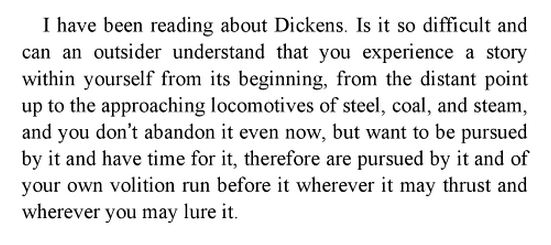
(From Kafka’s Diaries).

(From Kafka’s Diaries).

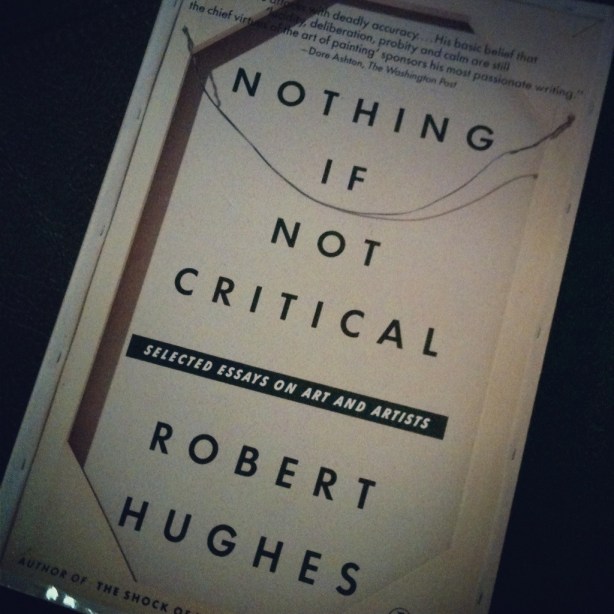
Collection of Robert Hughes essays, Nothing If Not Critical.
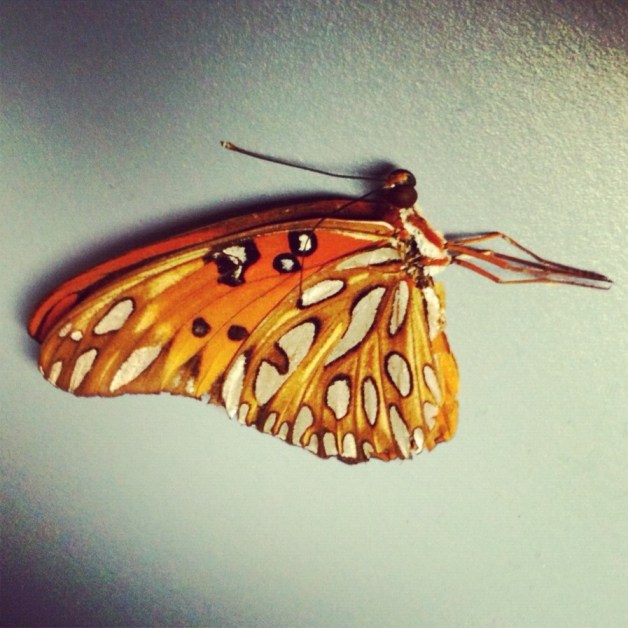
I also found this butterfly on the ground an hour before finding the book:
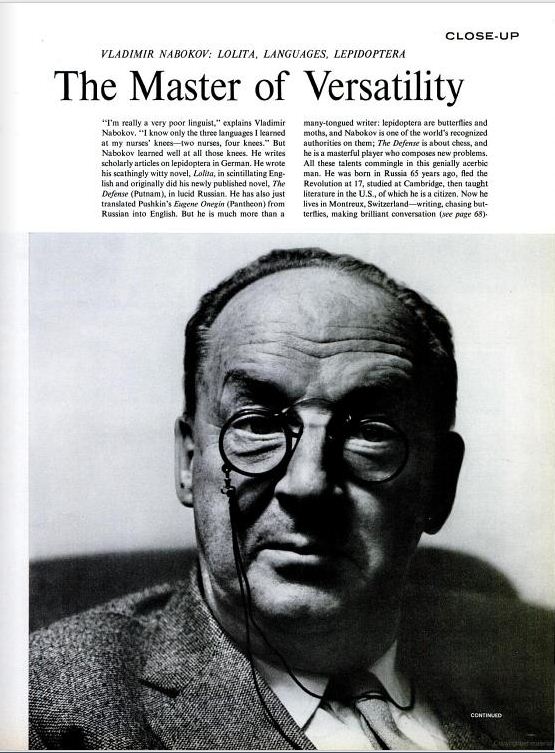
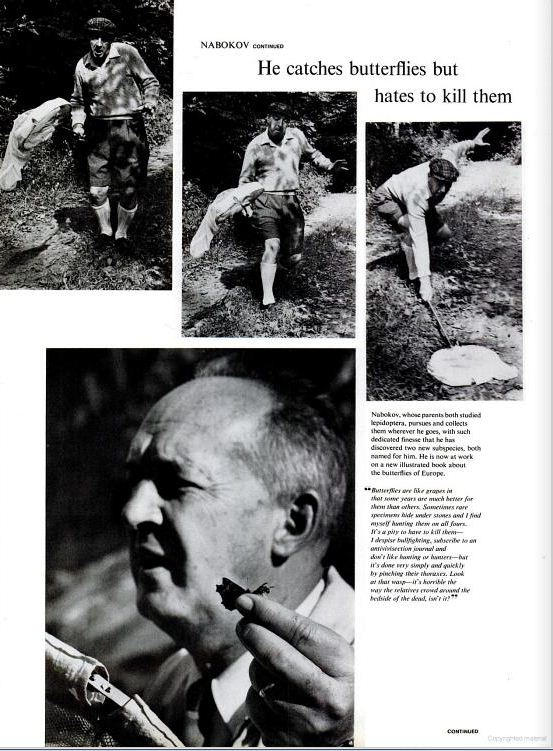
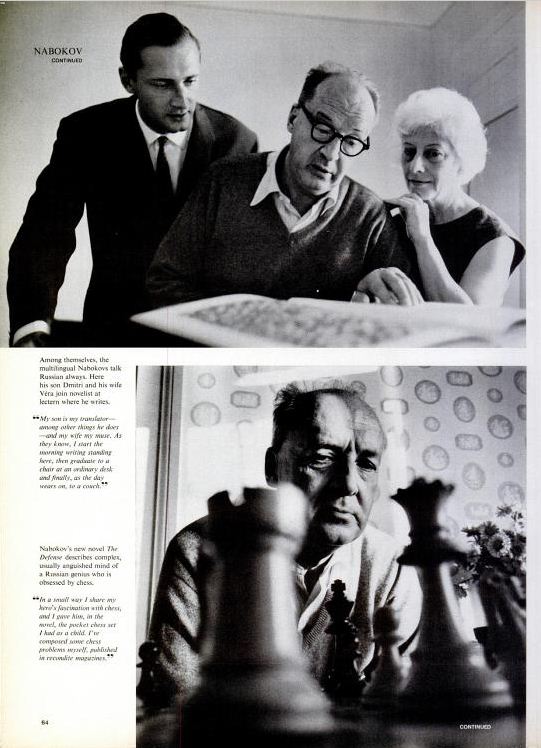
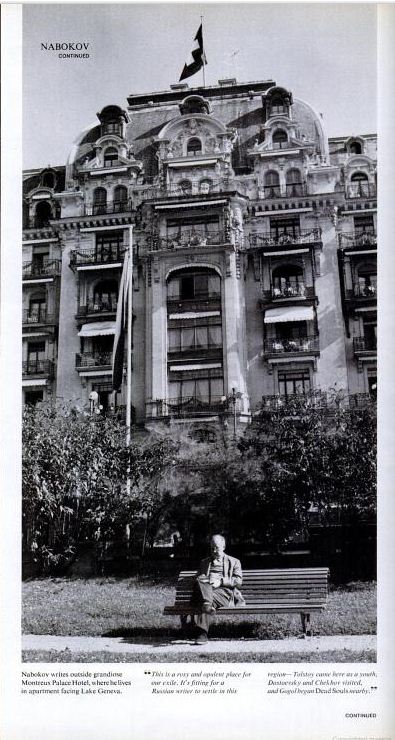
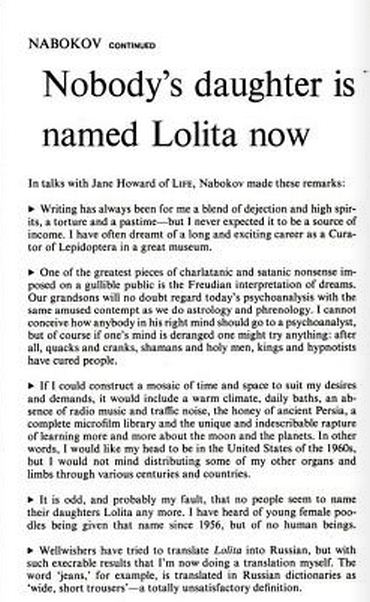
(From a 1964 LIFE profile; my favorite line: “It is odd, and probably my fault, that no people seem to name their daughters Lolita anymore. I have heard of young female poodles being given that name since 1956, but of no human beings.”)

(From Kafka’s diaries).


“Bobok,” a short story by Fyodor Dostoevsky:
Bobok — From Somebody’s Diary
Semyon Ardalyonovitch said to me all of a sudden the day before yesterday: “Why, will you ever be sober, Ivan Ivano- vitch? Tell me that, pray.”
A strange requirement. I did not resent it, I am a timid man; but here they have actually made me out mad. An artist painted my portrait as it happened: “After all, you are a literary man,” he said. I submitted, he exhibited it. I read: “Go and look at that morbid face suggesting insanity.”
It may be so, but think of putting it so bluntly into print. In print everything ought to be decorous; there ought to be ideals, while instead of that…
Say it indirectly, at least; that’s what you have style for. But no, he doesn’t care to do it indirectly. Nowadays humour and a fine style have disappeared, and abuse is accepted as wit. I do not resent it: but God knows I am not enough of a literary man to go out of my mind. I have written a novel, it has not been published. I have written articles – they have been refused. Those articles I took about from one editor to another; everywhere they refused them: you have no salt they told me. “What sort of salt do you want?” I asked with a eer. “Attic salt?”
They did not even understand, For the most part I translate from the French for the booksellers. I write advertisements for shopkeepers too: “Unique opportunity! Fine tea, from our own plantations… ” I made a nice little sum over a panegyric on his deceased excellency Pyotr Matveyitch. I compiled the “Art of pleasing the ladies”, a commission from a bookseller. I have brought out some six little works of this kind in the course of my life. I am thinking of making a collection of the bons mobs of Voltaire, but am afraid it may seem a little flat to our people. Voltaire’s no good now; nowadays we want a cudgel, not Voltaire. We knock each other’s last teeth out nowadays. Well, so that’s the whole extent of my literary activity. Though indeed I do send round letters to the editors gratis and fully signed. I give them all sorts of counsels and admonitions, criticise and point out the true path. The letter I sent last week to an editor’s office was the fortieth I had sent in the last two years. I have wasted four roubles over stamps alone for them. My temper is at the bottom of it all.
I believe that the artist who painted me did so not for the sake of literature, but for the sake of two symmetrical warts on my forehead, a natural phenomenon, he would say. They have no ideas, so now they are out for phenomena. And didn’t he succeed in getting my warts in his portrait – to the life. That is what they call realism.
Continue reading “Read “Bobok,” a Short Story by Fyodor Dostoevsky”

W.G. Sebald’s poetry collection After Nature. Not really poetry. Or maybe it is poetry. I don’t know what poetry is.
From Kafka’s Diaries.

INTERVIEWERDo you not consider yourself a serious novelist?
ELLISI recently got into one of those weird, terrible fights writers can find themselves in with a friend who has for a long time been writing novels he can’t get published. For twenty-five years I’ve been trying to help him. He can’t rise to the occasion. He can’t write a novel because he doesn’t have the passion to write a novel. He’s writing a novel to make the money, get the film rights, become famous, whatever—all the wrong reasons. When he asked me to read the latest one, I told him, “Look, if this novel is superpassionate, and it really is about shit you’re going through, and pain, and it means the fucking world to you, by all means send it to me.” He said, “Yeah, it’s totally all those things,” and he sent it to me, and it was absolutely like all the others. I flipped out. I went ballistic on him. I said, “You never took this seriously! From the time you were twenty-three, it was always some kind of sterile exercise, like an imitation of a novel. And you never talk passionately about writers. I never hear you talk about books you’re reading. You just saw that a young writer in the eighties could make some cash from a literary novel. It was moneymaking to you.” And my friend was shocked, or pretended to be. “You know, it’s really amazing to hear you say that, Bret, because looking at your career and reading your books, I never thought you actually took it seriously. I saw your books as trendy knockoffs. I saw you as kind of a hack. I never thought you were really serious.” I mean, he’s not representative of the kind of person anyone should take seriously in literary matters, but when my friend said that, I’ll admit it gave me pause. I thought, What does it mean to be a “serious” novelist? Regardless of how my books have turned out, or how some people might have read them, I clearly don’t think I write trendy knockoffs. My books have all been very deeply felt. You don’t spend eight years of your life working on a trendy knockoff. In that sense I’ve been serious. But I don’t do lots of things that other serious writers do. I don’t write book reviews. I don’t sit on panels about the state of the novel. I don’t go to writer conferences. I don’t teach writing seminars. I don’t hang out at Yaddo or MacDowell. I’m not concerned with my reputation as a writer or where I stand relative to other writers. I’m not competitive or professionally ambitious. I don’t think about my work and my career in an overarching or systematic way. I don’t think about myself, as I think most writers do, as progressing toward some ideal of greatness. There’s no grand plan. All I know is that I write the books I want to write. All that other stuff is meaningless to me.

Book shelves series #40, fortieth Sunday of 2012
So we dip into the penultimate book shelf in this series, the one I shot last week in hazy hangover.
(This shelf is lower right; I’ll be working down to up and right to left).
Kids puzzles and a toy accordion block some books on folklore, history, and music.

As always, sorry for the glare, blur, and poor lighting. Blame my ancient iPhone 3gs .
A book my grandmother gave me a few years ago:

Sample:

This is a wonderful old collection:

Pissing in the Snow: I’ve gone to that well more than once.

Kind of a motley crew here; the Barthes is misshelved but the lit crit shelves above are too full, so . . .

Musical bios. More of these are scattered around the house. I gave away a few recently.
Some of these books made it on to a list I wrote of seven great books about rock and roll.

Anthony Scaduto’s Dylan bio, which I, ahem, *borrowed* from my uncle years ago.
It made the rounds in high school but I managed to get it back somehow (but not its cover):


From Kafka’s unfinished and very strange story “Memoirs of the Kalda Railway.” Collected in Diaries.

The other side of this interactivity is interpassivity. The obverse of interacting with the object (instead of just passively following the show) is the situation in which the object itself takes from me, deprives me of, my own passivity, so that it is the object itself which enjoys the show instead of me, relieving me of the duty to enjoy myself. Almost every VCR aficionado who compulsively records movies (myself among them), is well aware that the immediate effect of owning a VCR is that one effectively watches less films than in the good old days of a simple TV set. One never has time for TV, so, instead of losing a precious evening, one simply tapes the film and stores it for a future viewing (for which, of course, there is almost never time). Although I do not actually watch the films, the very awareness that the films I love are stored in my video library gives me a profound satisfaction and, occasionally, enables me to simply relax and indulge in the exquisite art of far’niente – as if the VCR is in a way watching them for me, in my place. VCR stands here for the big Other, the medium of symbolic registration. It seems that, today, even pornography functions more and more in an interpassive way: X-rated movies are no longer primarily the means destined to excite the user for his (or her) solitary masturbatory activity – just staring at the screen where “the action takes place” is sufficient, it is enough for me to observe how others enjoy in the place of me.
Slavoj Žižek in How to Read Lacan.
 Biblioklept