Sunday Comix

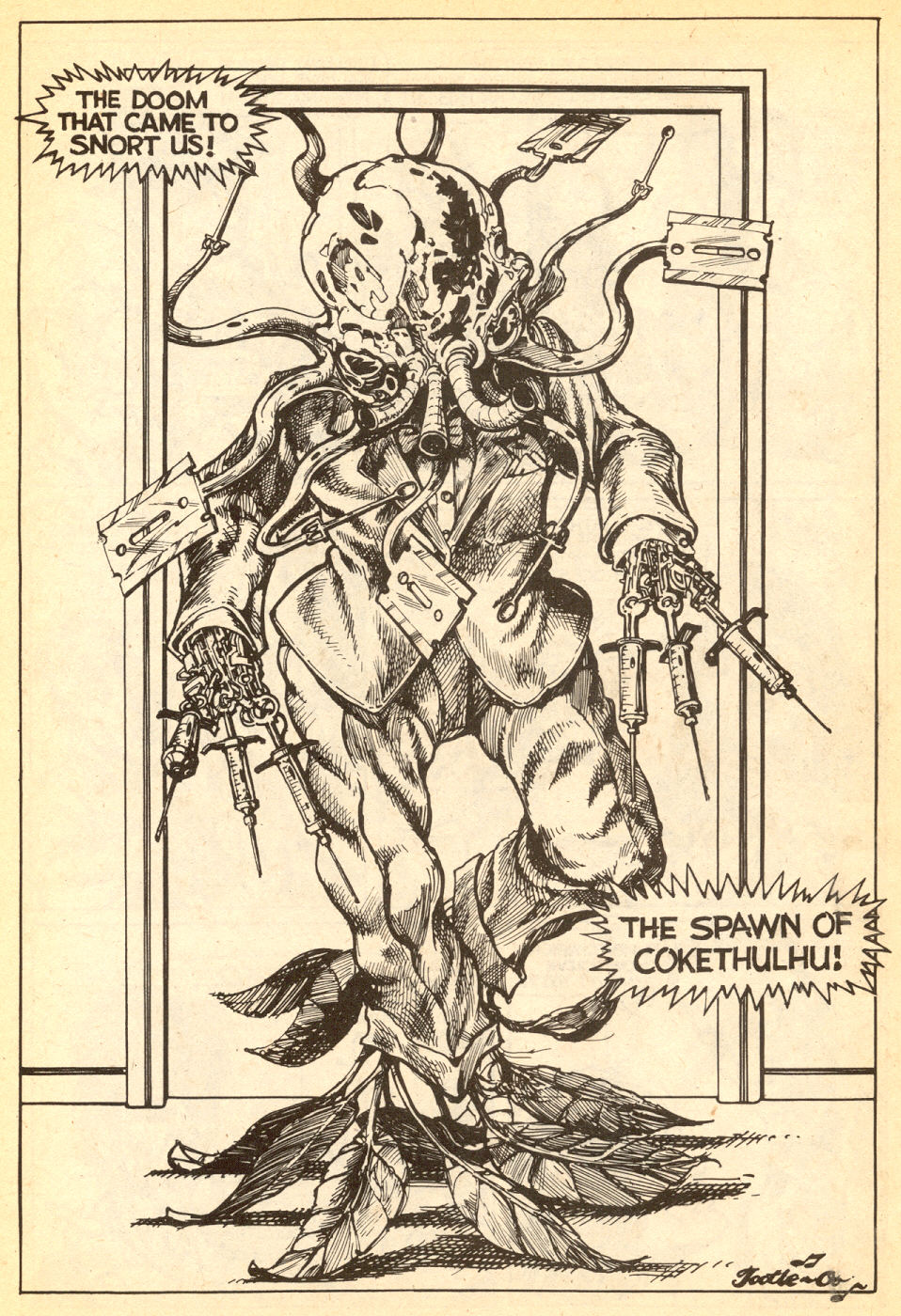
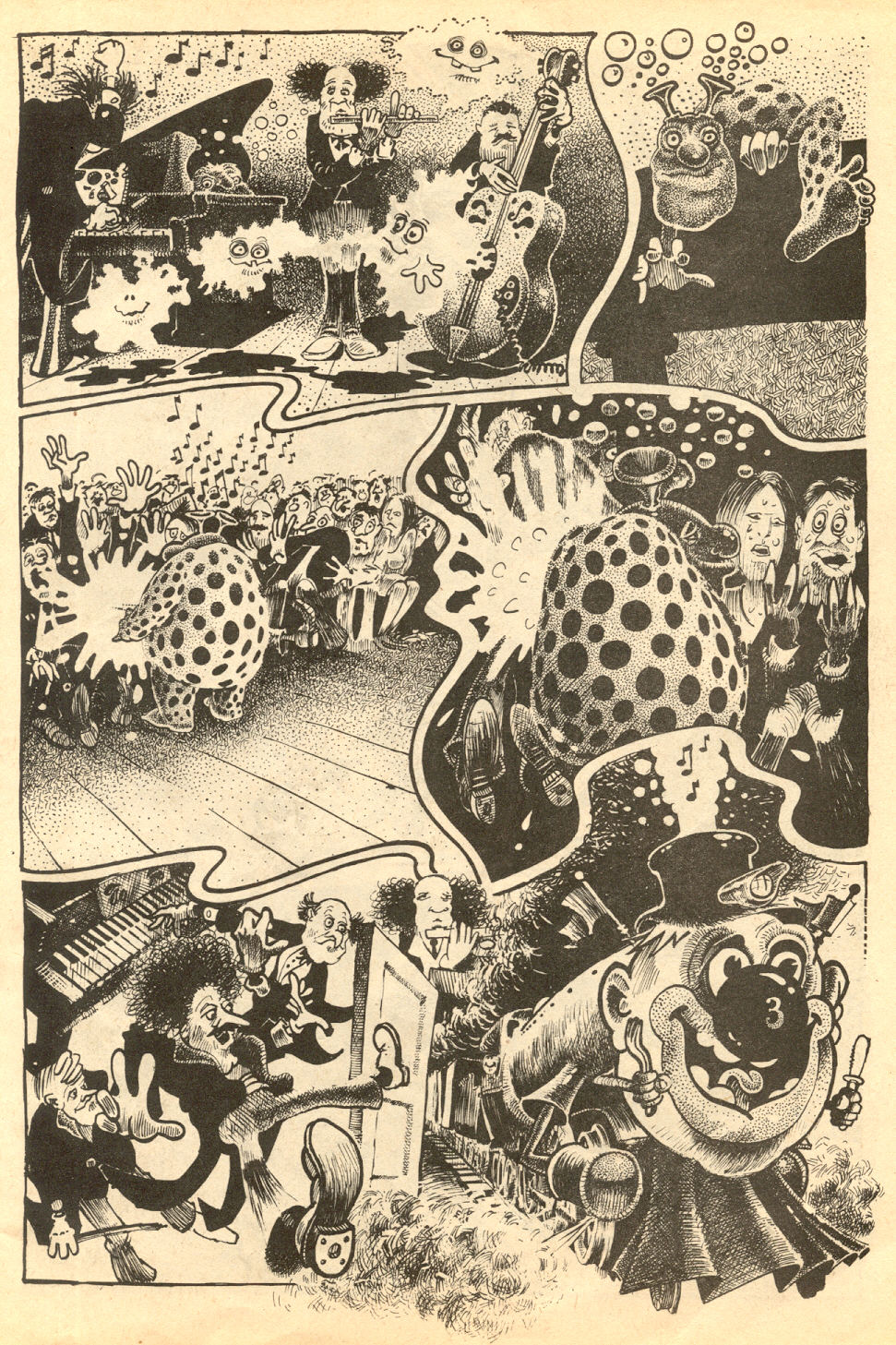
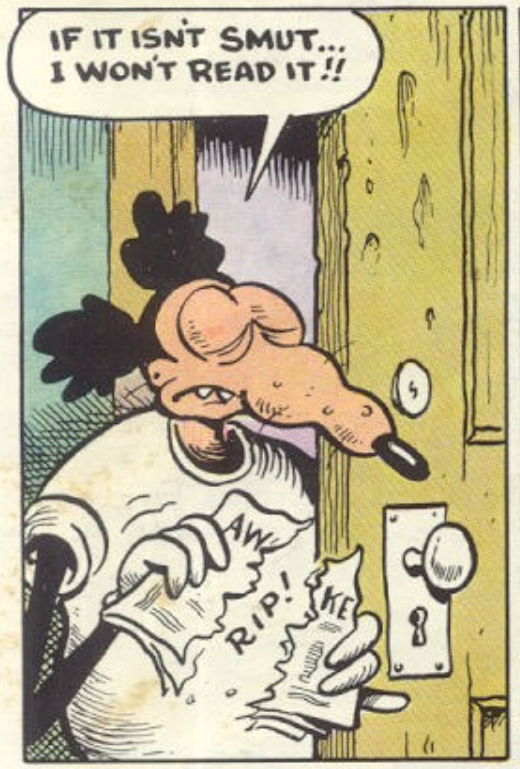
From “Rude Interlude” by Robert E. Armstrong, Mickey Rat #4, 1982.

Five environmental comix from Ron Cobb for Earth Day

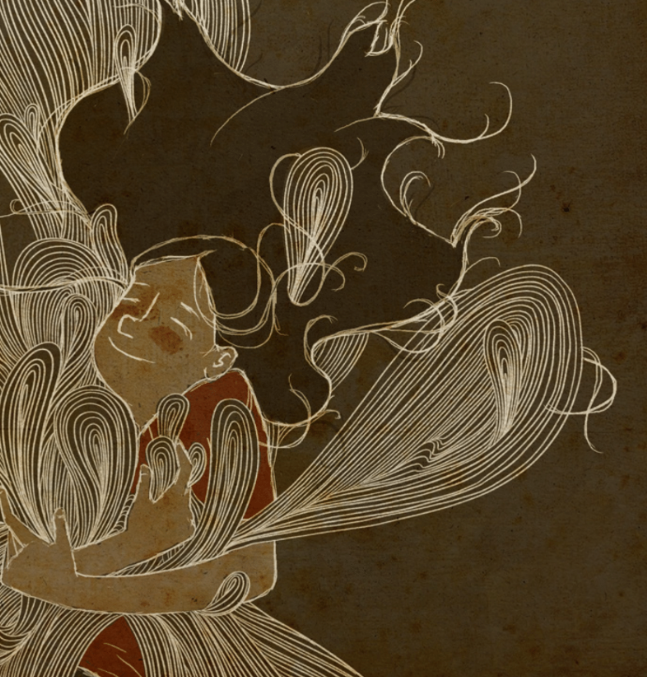
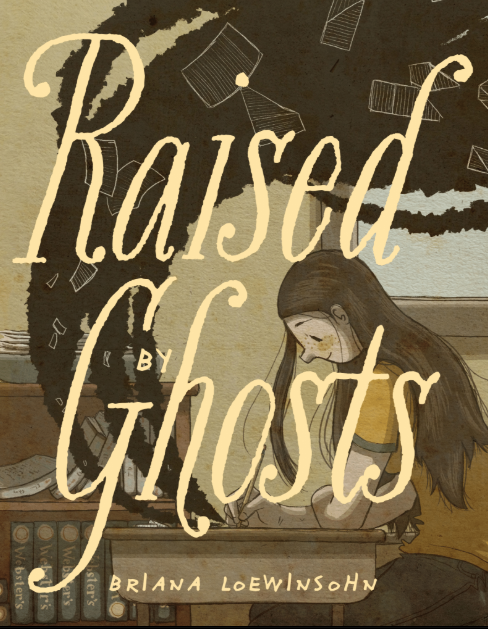
Briana Loewinsohn’s graphic novel Raised by Ghosts turns absence into haunting art

A decade ago I finally tossed out most of the contents of an old shoebox crammed with high-school nostalgia. Notes from ex-girlfriends, summer postcards, flyers from local shows, a handful of choice mixtapes. Some Polaroids. Our stupid band’s stupid lyrics, which we usually forgot or simply abandoned live. There was even a pair of fat shoelaces. The pain of return always hits me hard at such times, and I got dizzy. That box was crammed the scraps of an older life.

The preceding paragraph is an unfair opening to a review of Briana Loewinsohn’s excellent graphic memoir Raised by Ghosts. Reading Raised by Ghosts felt like opening that old shoebox: painful, dizzying, beautiful. Loewinsohn is one of usone of us to borrow a chant from Tod Browning’s Freaks. “Sometimes I feel like I am an alien at this school…But there are other aliens here,” protagonist Briana writes in her diary.

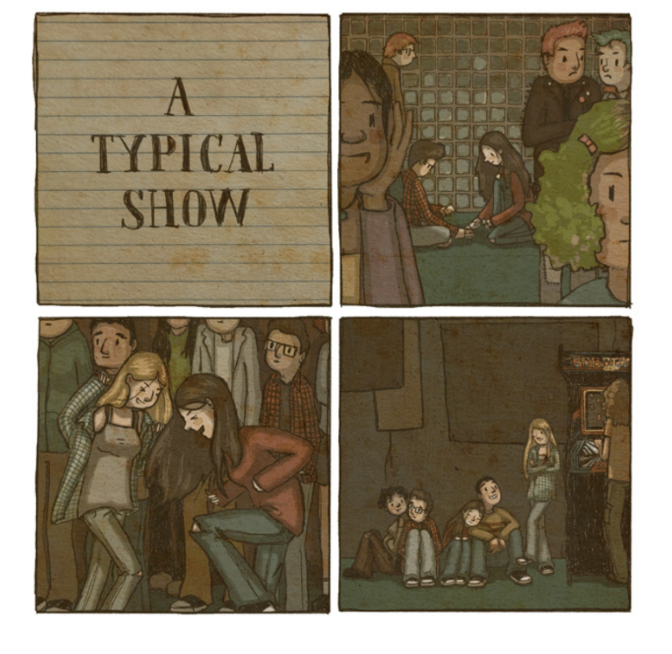
Raised by Ghosts covers Briana’s seven rough years through middle and high school. These are the gay nineties. The narrator, like Loewinsohn herself, is about my age, which makes reading Raised by Ghosts an eerie act of self-recognition. It’s not a conventional memoir—it doesn’t hold your hand or deliver a clean, linear narrative. Instead, it moves like memory does: in flashes, in vignettes, in small sensory moments that coalesce into something greater than the sum of their parts. Everything here feels true. We have here the relics of a teenage moondream, those little ghosts of the past that flicker through memory like frayed photos freed from the rubberbanded bundle in an old Converse box. Briana’s adolescence unfurls as an ebb and flow of loneliness and acceptance among fellow weirdos. She finds her people, but never quite makes the scene; she dances at the live show but finds as much fun in playing cards in the back.

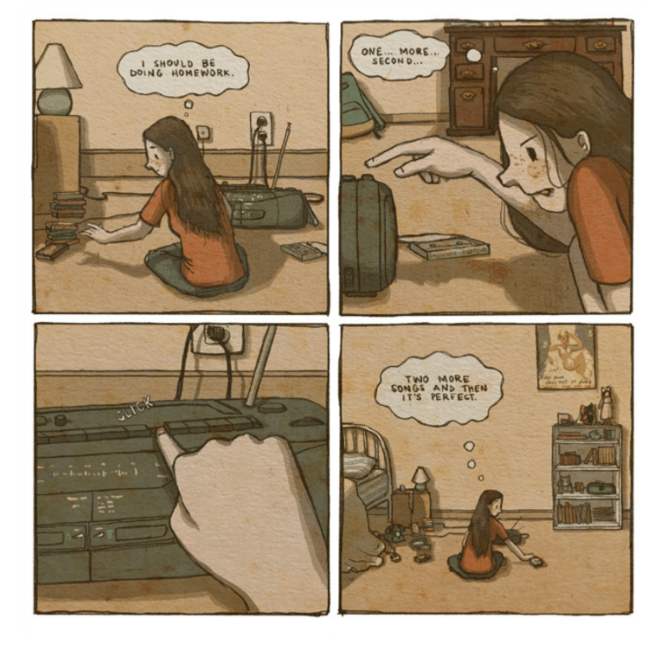
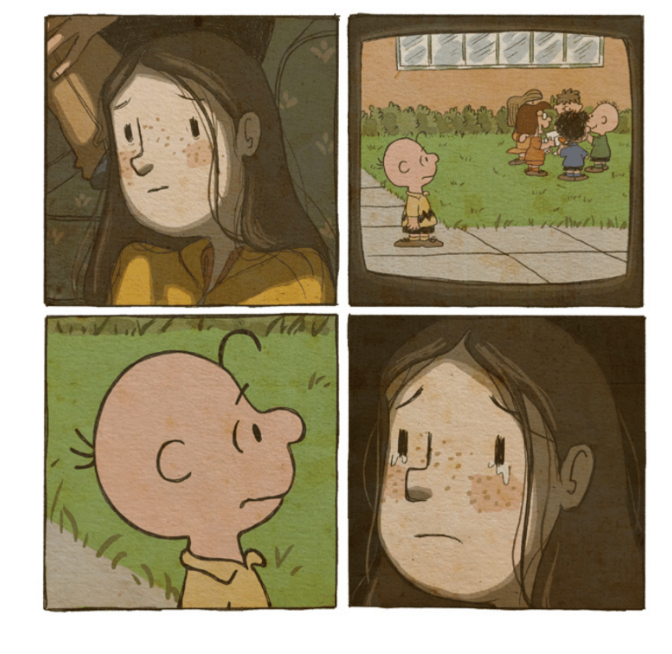
Loewinsohn’s art conveys Raised by Ghosts’ emotional weight. Soft, muted tones in drab olive and rust hues fill square panels that often resemble fading Polaroids. Candids and close-ups capture the messiness of high school. Briana is a sympathetic and endearing character, her sensitivity registering in ways she cannot understand herself, as when she skips out on a living-room VHS double feature. Oliver Stone’s Natural Born Killers would be way too much after the tragedy of You’re a Good Man, Charlie Brown.

Loewinsohn includes full handwritten pages to accompany the traditional comic strips in Raised by Ghosts. These handwritten pages serve as a kind of diary, but often take on subtle visual changes that suggest other media. Often, the handwritten pages mimic the form of the long notes bored Briana composes in class to pass to friends. A passage composed on graph paper praises the note-writing skills of a particular friend; the technique suggests this friend prefers squares to lines. A passage on a brown paper lunch bag reflects on how Briana’s father always takes the time to write her name in detailed, expressive lettering. The variations of handwritten pages enrich the narrative and subtly inform us of Briana’s artistic development.

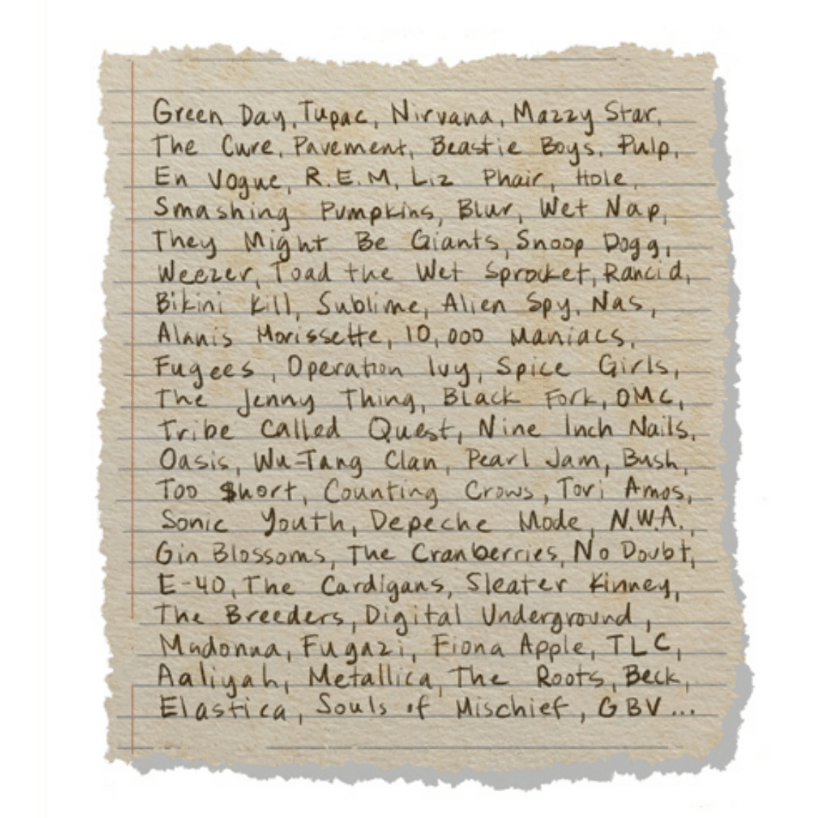
My favorite of the handwritten passages though is simply a list of bands scrawled on lined paper. When I got to that page, about a third of the way into Raised by Ghosts, I was already persuaded by the book–but the page of band names seemed so utterly true, so beautiful and banal. We used to do that, I thought, and: Why did we used to do that? knowing the answer has no good intellectual answer.

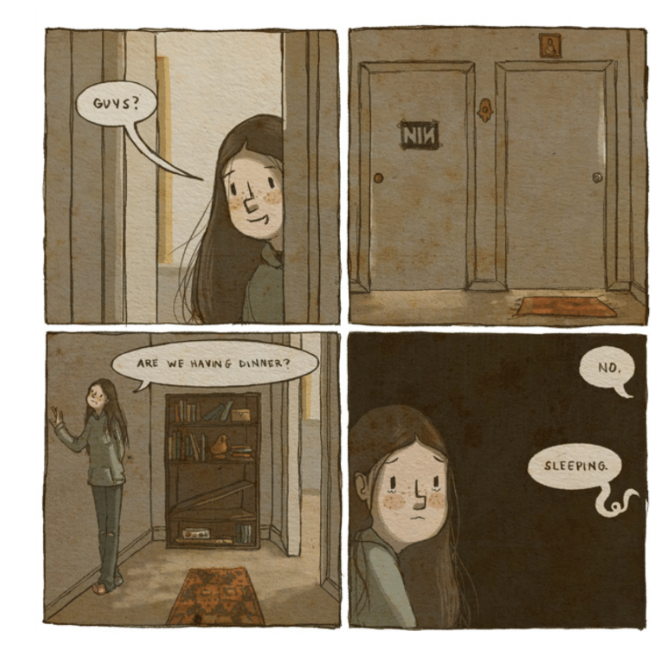
But let’s get to the ghosts. Loewinsohn never “shows” us Briana’s parents, yet the picture we get of them is hardly incomplete: a distant, detached mother and a father in arrested development. “I would say I was raised in an AA meeting,” Briana remarks of her mother, noting that it’s often hard for single mothers to find childcare. Of her father’s abode: “My pop’s house is a combination of Indiana Jones’ office, Pee Wee’s playhouse, and an opium den. I am kinda like a roommate here.”

Briana’s parents exist in Raised by Ghosts the way memories of the absent often do—fragmented, elusive, more felt than seen. Loewinsohn never lets them fully materialize, yet their presence, or lack thereof, shapes Briana’s interactions with her world. Neither parent offers Briana guidance. She’s a latchkey kid left to cobble her own sense of belonging among friends, music, and the small rituals of adolescence. In the absence of stability, she builds meaning from mixtapes, handwritten notes, and fleeting moments of connection.

And art. The memoir climaxes in a moment of transformation—an act of self-possession and, ultimately, self-creation. Throughout Raised by Ghosts, Briana moves through a world shaped by absence, by the ghosts of parents who are physically present but emotionally distant. Yet, in the book’s remarkable penultimate sequence, she steps beyond that absence, beyond memory’s hazy grip, into a space that is entirely her own. The panels swirl into a dreamscape of shifting lines—formless and chaotic at first—until Briana gathers them together, lassoing meaning from the void. It is a moment of artistic alchemy, where creation becomes a form of agency, a way to shape her own narrative rather than just mimic one. When she carries those lines from dream to waking life, the transition is profound: she is no longer just a kid collecting relics of meaning from the world around her—she is an artist, making meaning herself.

Publisher Fantagraphics labels Raised by Ghosts as a “young adult graphic novel,” and teenagers will likely identify with Briana’s story—the loneliness, the search for belonging, the quiet acts of self-definition. They may also feel a strange twinge of envy for a world that no longer exists. Being a latchkey kid could be lonely, but it was not without its freedoms. Those of us who were teenage weirdos in the nineties will see in Loewinsohn’s memoir not a young adult novel, but rather a reflective elegy composed by a mature artist in control of her talent. Raised by Ghosts lingers like the echo of an old song in your dim memory — you know the one, right? It’s a memoir about growing up in the margins, about finding meaning in scraps and silence, about turning absence into something tangible. It haunts, in the very best way.

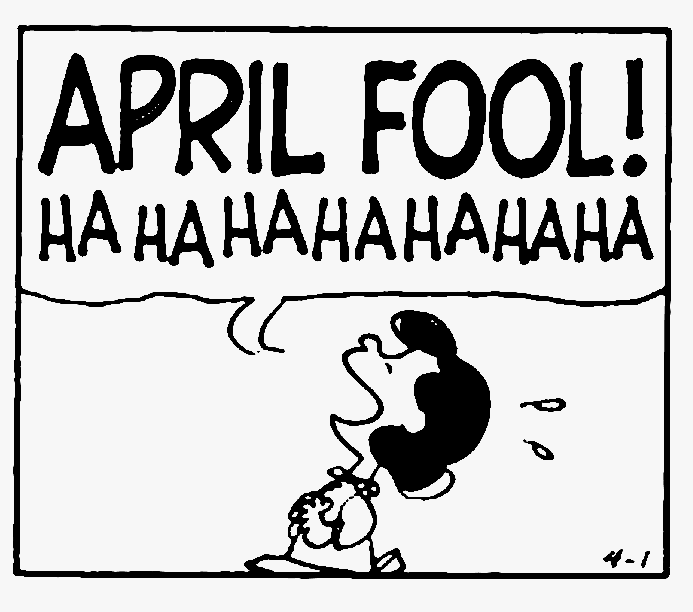
April Fool! (Peanuts)

Maggie Umber’s Chrysanthemum Under the Waves blends horror, surrealism, and poetic fragmentation into a haunting vision of the uncanny

Maggie Umber calls the nine pieces collected in Chrysanthemum Under the Waves “comics,” so I will call them comics too. The term “comics” has long encompassed a wide range of visual storytelling techniques, resisting attempts to confine it to rigid structures, and Chrysanthemum Under the Waves shows the form’s expansive potential, blending horror, surrealism, and poetic fragmentation to tap into the alienation, paranoia, and repression that lurks under the surface of everyday life.

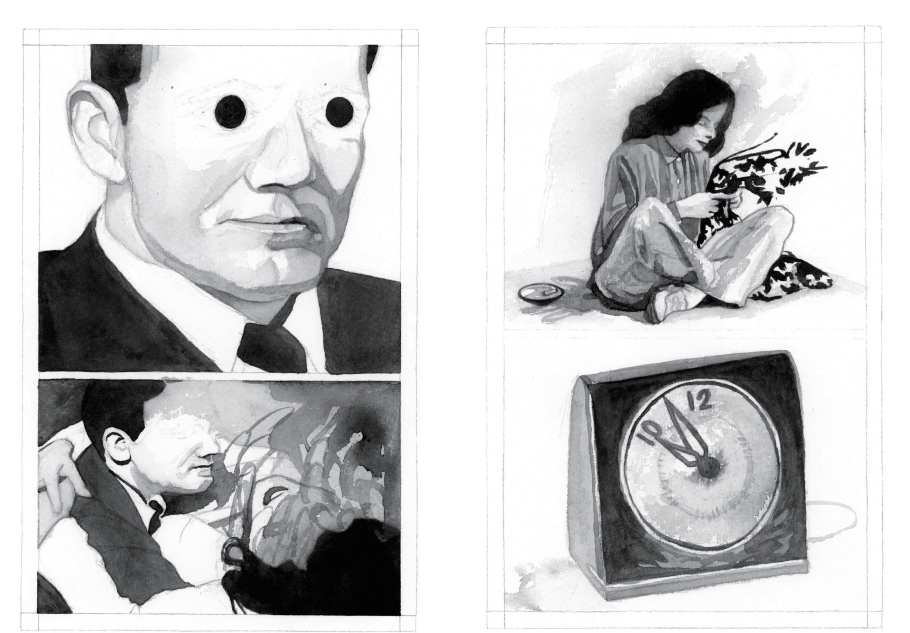
The stories here resist conventional narrative logic, which will likely confound any reader expecting something traditional. Umber eschews the common building blocks of the medium: there are no speech bubbles, no thought balloons, no panels stacking up into a coherent sequence. In fact, the few pages that use multiple panels feel like an anomaly. Most of the work in Chrysanthemum is confined to single, expansive images. Yet, these full-page spreads do not recall the bombastic splash pages of Jack Kirby or other Golden Age comics. Instead, they underscore the inherent incompleteness of storytelling. No artwork, no story, can ever present a full picture of reality—there are always gaps, always gutters. And in these gaps, dread and unease fester.

Umber’s comics aren’t so much about exploring the fragmentation of storytelling; rather, they showcase it as an aesthetic choice. It’s a choice that generates a palpable tension, a constant refusal to return to any resolution. There is no resolving tonic chord here. The uncanny permeates these pages—not in the sense of something foreign intruding upon the familiar, but as if the familiar itself has been subtly warped. Maybe this horror is “real,” maybe it’s not—but what is certain is its presence. The world Umber paints is one of perpetual strangeness, captured in black-and-white, shaded with grays. Pen and ink, printmaking, and watercolor all blur together in a form that makes us feel the unease before we can even articulate it.
And while Umber’s work is refreshing in its uniqueness, it is by no means sui generis, but rather part of  a clear tradition. As Umber notes in her introduction, Chrysanthemum started as a one-off “adaptation” of Shirley Jackson’s 1949 story “The Tooth.” If you have read “The Tooth” (and if you haven’t, do yourself a favor and resolve that problem) — if you have read “The Tooth,” you will likely recognize the uncanny unease that permeates Chrysanthemum. In her intro, Umber identifies James Harris as the agent of this unease: “James Harris snuck up on me when I was distracted by other things.” James Harris is a strange character who wanders in and out of not only “The Tooth,” but several of the other stories in Jackson’s The Lottery. Indeed, the original subtitle of The Lottery was not and Other Stories, but rather The Adventures of James Harris. This is the James Harris of the 17th century ballad “The Daemon Lover”; he is also the oblique star of Chrysanthemum Under the Waves. Look and you will find him in each of Umber’s tales, sliding like a shadow in and out of panels and gaps.
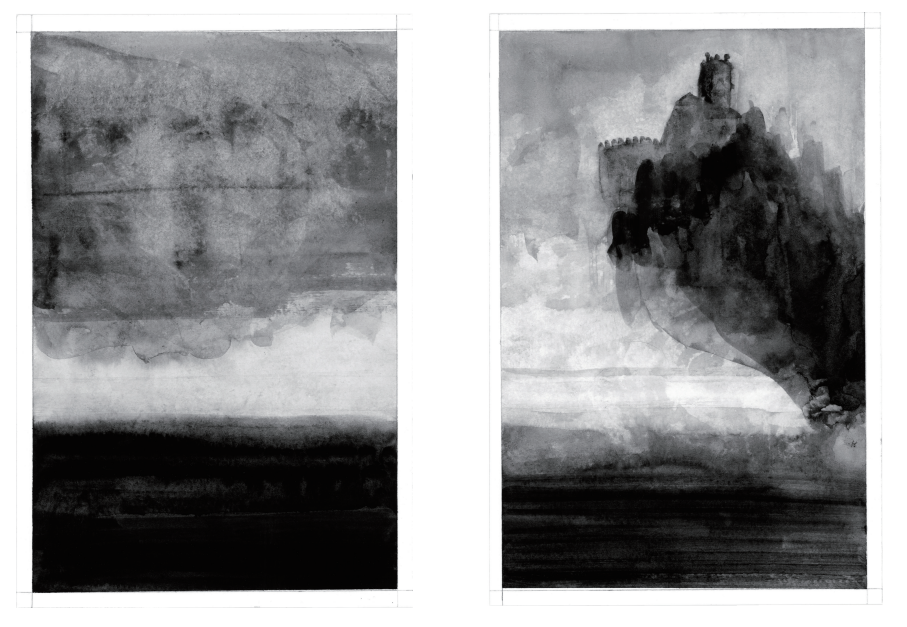
You will find so much more there as well–there are direct allusions to Goya’s Caprichos and Black Paintings, as well as nods to Toulouse-Lautrec and Sylvia Plath. There’s also a strong echo of Jackson’s American Gothic precursors and successors: Nathaniel Hawthorne, Edgar Allan Poe, Emily Dickinson, David Lynch, Kathy Acker — and, far less famously, Jason Schwartz. Chrysanthemum Under the Waves most reminded me of Schwartz’s prose-poem John the Posthumous, so much so that I read it again to confirm my notion.
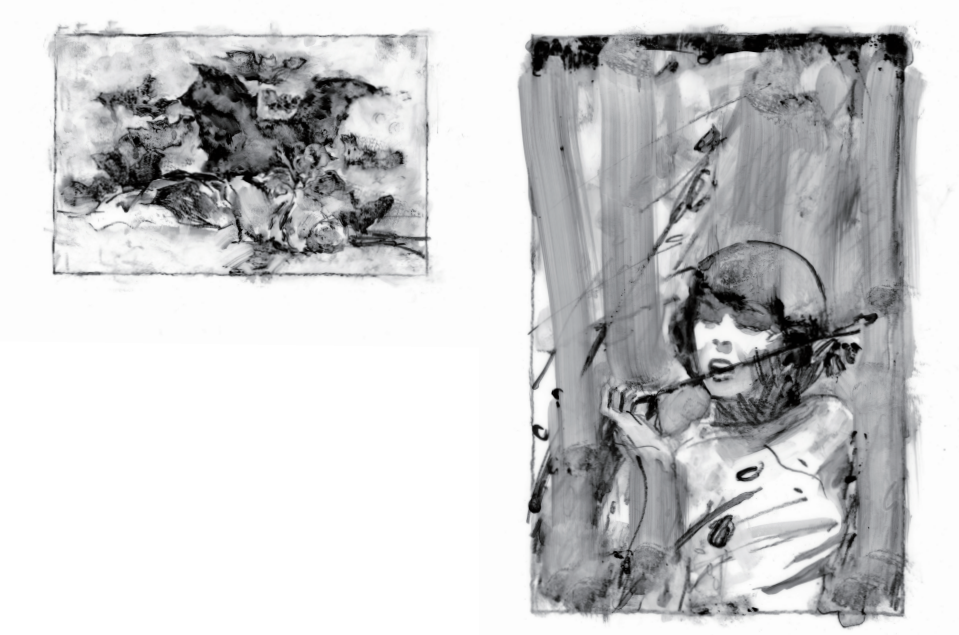
I’ve failed to remark so far on the apparent plots of the tales here. I found myself arrested by the ominous vibes in my first readings, and I still could not pin down a summary. At the same time, I feel that Umber clearly knows “what’s happening” in her stories, even if she keeps that information in the gaps and margins, out of the panel, but still, maybe, hidden in the pictures. The lead story, “Those Fucking Eyes,” is a collision of horror and beauty, twisting the artist’s gaze  into something self-possessed and austere. “Rine” plays with fragmentation and distortion while evoking a ghostly presence. We get a gentleman caller, a broken bridge, a bouquet of flowers that flickers between reality and illusion. “Intoxicated” takes on a Gothic Toulouse-Lautrec aesthetic, unraveling into surreal rage and rejection. “The Devil Is a Hell of a Dancer” retells the “James Harris” ballad; it’s the first time written language infiltrates one of the stories.
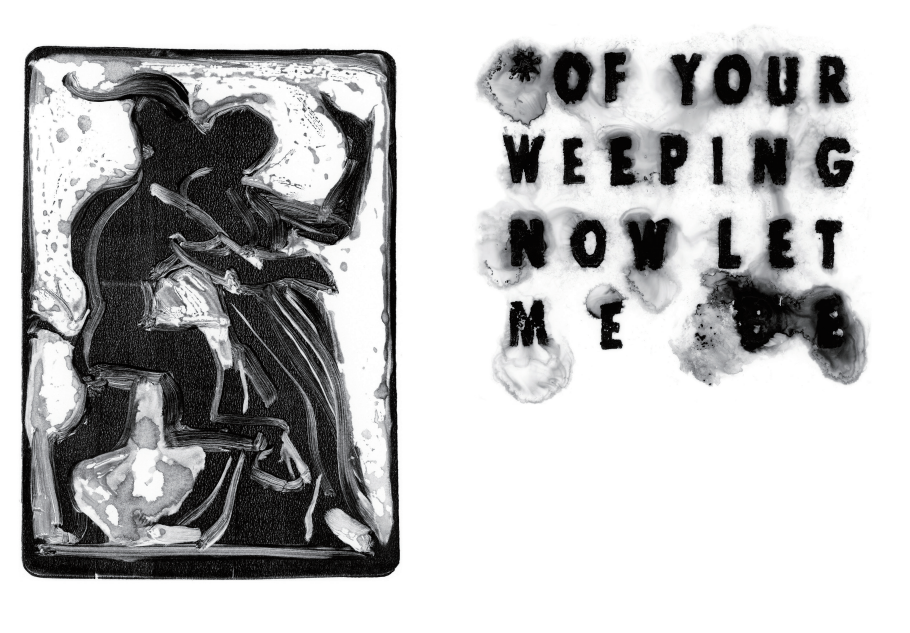
The title track, “Chrysanthemum” is a surreal noir fantasia punctured by a cup of coffee, with daemon lover James Harris hovering menacingly in the background. It seems to reinterpret Shirley Jackson as does the aforementioned “The Tooth” — itself a revision of Charlotte Perkins Gilman’s suffocating 1892 classic, “The Yellow Wall-Paper.” The shortest comic, “There Is Water” unfolds like a koan, enigmatic and meditative. Standout “The Witch” returns to Goya but also channels the American Gothic vein. The piece might be a nightmare one of Hawthorne’s characters endures. There are clouds, castles, dreams, doors, flickering horror. Is that a witch burning? And do the flames morph into a glimpse of Goya’s Saturn, only to resolve into the shadowed face of a woman? Shadows and erasures pulse through the imagery. It is both the strongest and longest piece in the collection. The book ends with “The Rock,” another riff on the the ballad “James Harris.” It’s a fitting end, conclusive but elusive. What remains rattles: unsettled, open, and always strange.
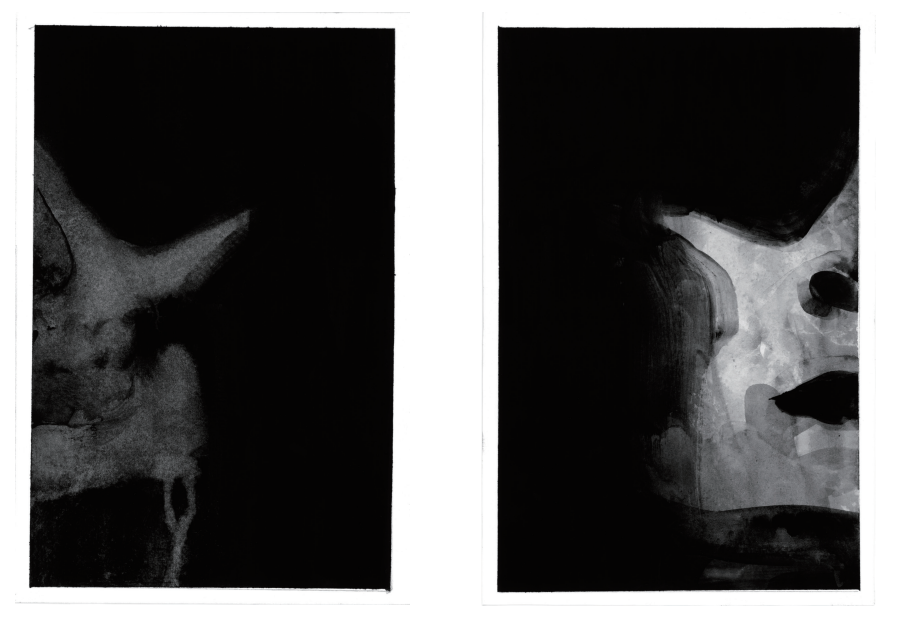
Chrysanthemum Under the Waves is a haunting, layered work that defies easy categorization. Umber’s pieces blend literary, artistic, and Gothic influences into a unique vision that expands the possibilities her chosen medium’s conventions. With its distinctive style and  careful attention to space and detail, Chrysanthemum Under the Waves is a compelling read. Highly recommended.

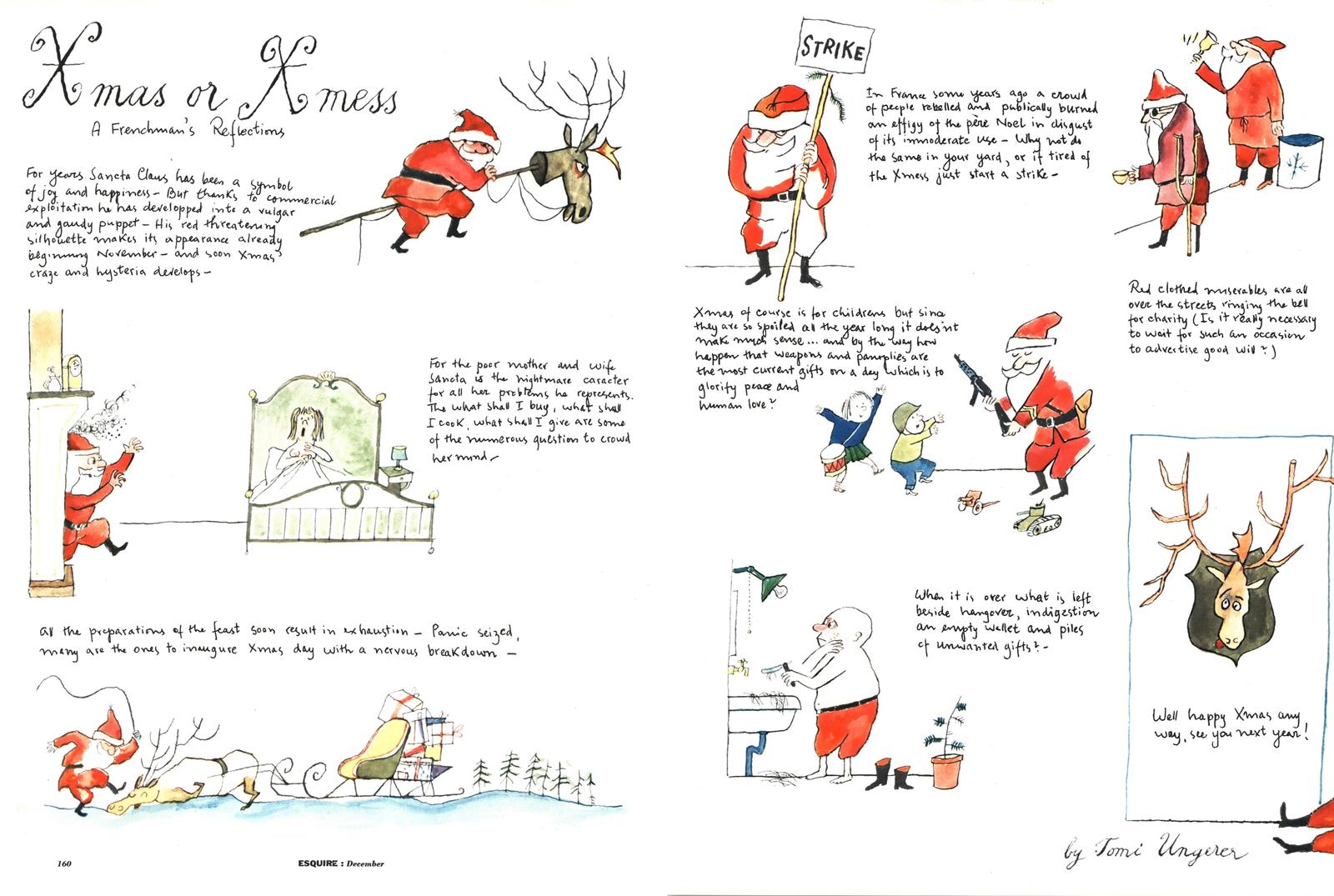
Xmas or Xmess — Tomi Ungerer

A comic by Tomi Ungerer, from the 1 Dec. 1958 issue of Esquire.

Dec. 16th (Peanuts)

Charles Burns’ Final Cut explores the irreal reality of artistic ambition

Charles Burns’ latest graphic novel Final Cut tells the story of Brian, an obsessive would-be auteur grappling with an unrealized film project. Brian hopes to assemble his film — also titled Final Cut — from footage he shoots with friends on a weekend camping trip, but the messiness of reality impinges the weird glories of his vibrant imagination. He cannot bring his vision to the screen. He cannot capture all the “fucked-up shit going on inside my head.”

Capturing all the fucked-up shit going on inside my head is a neat encapsulation of the Artistic Problem in general. It’s not that Brian doesn’t try; if anything, he tries too hard. His best friend and erstwhile cameraman Chris is there to help him, along with his crush Laurie and their friend Tina—but ultimately, these are still kids at play. They indulge Brian’s artistic whims, but at a certain point they’d rather swim, drink, and smoke than shoot yet another scene they can’t comprehend.

Eschewing straightforward narrative conventions, Final Cut unfolds in a blend of flashbacks, dreamscapes, and flights into Brian’s imagination. The book also gives over to Laurie’s consciousness, providing an essential ballast of realism to anchor Brian’s (and Burns’, I suppose) surrealism. Brian would have Laurie as his muse, trying to capture her in his sketchbook, in his film, and in the intense gaze of his mind’s eye. And while Laurie is fascinated by Brian’s visions, she doesn’t understand them.

The last member of Brian’s would-be acting troupe is Tina, an earthy, funny gal who drinks a bit too much. She plays foil to Brian’s ambitions; her animated spirit punctures the seriousness of his film shoot. Again, these are just kids in the woods with a camera and camping gear.

And the film itself? Well, it’s about kids camping in the woods. And an alien invasion. And pod people.

The pod-people motif dominates Final Cut. We get the teens in their larval sleeping bags, transformed into aliens in their cocoons (echoed again in Brian’s imagination and in his sketches). The motif looms larger: Can we really know who a person is? Could they be someone else entirely? Can we really ever know all the fucked-up shit going on inside their head?

Indeed, Don Siegel’s 1956 film Invasion of the Body Snatchers is a major progenitor text for Final Cut. Brian even takes Laurie on a date to a screening of Invasion; he’s so mesmerized by the film that he weeps. Burns renders stills from the film in heavy chiaroscuro black and white, contrasting with the vibrant reds, maroons, and pinks that reverberate through the novel.

Burns recreates stills from another black and white film, Peter Bogdanovich’s 1971 coming-of-age heartbreaker The Last Picture Show. Again, Brian is obsessed with the film—or by the film, perhaps. In particular, he’s infatuated with Cybill Shepherd’s Jacy, whose character he imaginatively merges with his conception of Laurie.

While Invasion of the Body Snatchers is a science-fiction horror film, a deep sense of reality-soaked dread underpins it; The Last Picture Show is utterly real in its evocations of the emotional and physical lives of teenagers. Both films convey a maturity and balance of the fantastic with the real that Brian has not yet purchased via his own experiences, his own failures and heartbreaks. 

The maturity and balance that Brian can imagine but not execute in his Final Cut is precisely the maturity and balance that Burns achieves in his Final Cut. Simply put, Final Cut is the effort of a master performing at the heights of his power, rendered with inspired technical proficiency. It delivers on themes Burns has been exploring from the earliest days of his career.

There’s the paranoia and alienation of adolescence Burns crafted in Black Hole, here delivered in a more vibrant, cohesive, and frankly wiser book. There’s the hallucinatory trauma and repression he conveyed in the X’ed Out trilogy (collected a decade ago as Last Look, the title of which prefigures Final Cut). There’s also an absence of parental authority here, a trope that Burns has deployed since 1991’s Curse of the Molemen. (In Final Cut, Brian’s mentally-unstable mother is a dead-ringer for Mrs. Pinkster, the domestic abuse victim rescued by the child-hero of Curse of the Molemen). There’s all the sinister dread and awful beauty that anyone following Burns’ career would expect, synthesized into his most lucid exploration of the inherent problems of artistic expression.

Ultimately, in Final Cut Charles Burns crafts a portrait of the artist as a weird young man. Brian wrestles with the friction sparked from his vital imagination butting up against cold reality. His ambitious unfinished film mirrors his own incomplete journey as an artist, highlighting the clash between youthful creative fervor and the inevitable constraints of life, experience, and maturity. Burns’ themes of alienation and artistic ambition may be familiar, but Final Cut feels fresh and vibrant, the culmination of the artist’s own entanglements with the irreality of reality. Highly recommended.

RIP Michael Zulli

RIP Michael Zulli, 1952-2024

Comics artist Michael Zulli passed away this week at the age of 71. While Zulli was likely most known for his work on Neil Gaiman’s The Sandman comic (as well as an unpublished comic where Swamp Thing meets Jesus Christ), it was his work on The Puma Blues that really sank into my spirit as a kid.

I came to The Puma Blues in the very early nineties via the proselytizing of Dave Sim in Cerebus comics; I managed to a hold of a handful of back issues from very late in the comic’s run. I of course had no idea what was going on, but that didn’t matter. Working from Stephen Murray’s enigmatic script, Zulli crafted a post-apocalyptic dreamscape, an evocation in black and white. His wild animals always seemed more detailed, more pure, more real than the humans who walked through the world he’d conjured in black and white.

I quit regularly visiting comic shops by the mid-nineties, but if I ever happened to be adjacent to one I’d pop in to look for back issues of The Puma Blues (and a handful of other indie titles). It wasn’t until a decade or so later that (with the extralegal help of the internet) I was able to read the entire series. Great stuff—baffling, evocative, Zulli and Murray’s series ran on its own aesthetic logic.

In a 2016 interview at The Comics Journal to mark the publication of a complete volume of The Puma Blues, Zulli spoke on the work as an act of ecological witnessing:

The nature drawings in Puma especially, but so much of the detail in the book feels like an act of witness.

It is. It’s an idea that we’re surrounded in what scientists call the ecosphere, for lack of a better word. It’s this incredibly beautiful and sophisticated system and somehow we think we’re separate from it? I don’t think so. We are not superior to it, we are a part of it and we should take care of it because in doing so we take care of ourselves as a species, too. If not for nature and the earth’s own sake, do it at least for your sake and your children’s sake. That’s all we have got. One day somebody could stop your electricity. What are you going to do? You’re completely unprepared to think about life without your support systems. I don’t mean to be excessively grim. I see a lot of hope. I cling tenaciously to it, but at the same time, Puma is sort of a shot across the bow to wake the fuck up. Take a real good look around you and see what’s really there. Participate in it. Because like it or not you are part of it.

The 16 Types of Dads (Life in Hell)

The 16 Types of Moms (Life in Hell)

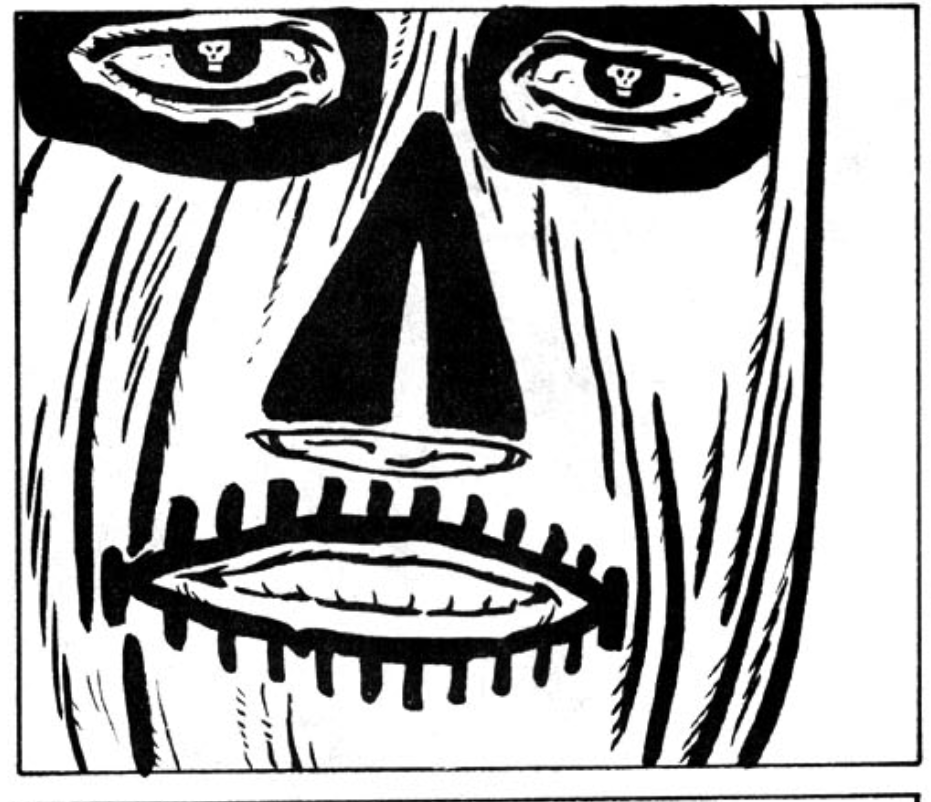
Experience non-existence | From Nicholas Gurewitch’s “Trauma Trooper”

A panel from Nicholas Gurewitch’s “Trauma Trooper.”

Beautiful gory layout (Peanuts)

Behold!!! I am Senta Klaws (George Herriman)

Santa-Kat-1

(Via/more).

Portrait of Edgar Allan Poe — Alberto Breccia

A panel from “Poe? Yuck!”, 1983 by Alberto Breccia (1919-93)

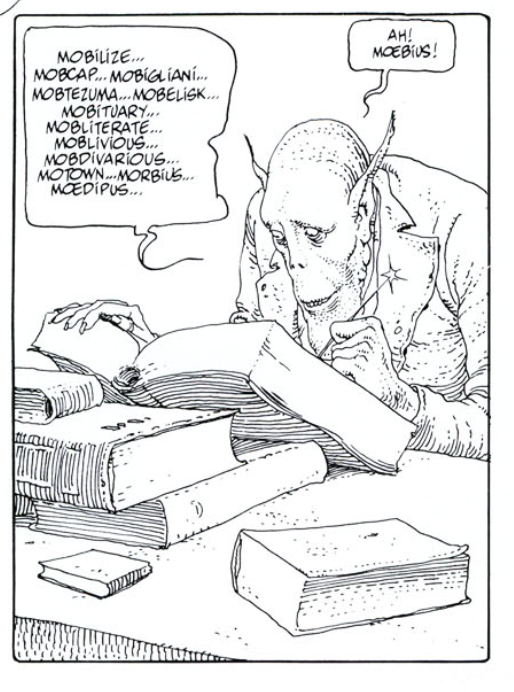
Untitled (From Approaching Centauri) — Moebius

A page from Approaching Centauri by Moebius (Jean Giraud, 1938–2012)

A review of Escape from the Great American Novel, Drew Lerman’s zany satire on art, nature, and capitalism

Drew Lerman’s comic strip Snake Creek takes us into the world of best pals Roy and Dav, weirdos among weirdos in Weirdest Florida. Their adventures and misadventures are both absurdly comic and zanily tragic, calling to mind George Herriman’s Krazy Kat strips and Samuel Beckett’s pessimism, Walt Kelly’s primeval Pogo and Robert Coover’s jivetalk, all rendered in kinetic black ink four-panel doses. I’ve been a big fan of the strip for a few years now, and Lerman’s latest collection Escape from the Great American Novel is his best work to date, a fun, messy, spirited send-up of the relationship between art, nature, and commerce.

Escape from the Great American Novel is a novel in just over 150 strips, spanning the end of August, 2019 through the beginning of August, 2021. If you reflect on those dates for a minute, you might recall that we squeezed in a lot of history there. Many of the (so-called) real-life tensions of that tumultuous time bubble up (and occasionally erupt) in the zany, myth-elastic world of Snake Creek.

Things begin simply enough, with Dav seeking to reclaim his “status as a reader of books.” Our protagonist simply wants to dig in to fine literature, but news of approaching Hurricane Dorian blocks his book time. Lerman is a Miamian (a Floridian like myself), and although the world of Snake Creek reverberates with massive streaks of irreality, it is nevertheless also beholden to real-life forces of nature. Ever the slackers, Dav and Roy are ill-prepared for an impending Cat 5. Lerman lays out a comedic scene that might be familiar to anyone who’s tried to buy batteries and water and plywood at the last minute:

The early Dorian episodes of Escape usher in a critique of capitalism-as-religion, or capitalism-as-philosophy (as opposed to, say, the naked reality of exploitation both of people, animals, and natural resources). Short on capital or material, Dav and Roy concoct a plan to forge receipts, totems of capital that might ward off the angry Nature God Dorian. Lerman sneaks in a reference to the erstwhile hero of William Gaddis’s 1955 novel The Recognitions, the forger Wyatt Gwyon:

The storm passes, post-hurricane sobriety settles in, and Dav finds himself reflective: Just what is he doing with his life? And, maybe more to the point, what can he do to extend that life into immortality? His solution, immediately ridiculed by friend Roy, is to commit himself to writing The Great American Novel:

Dav’s quest takes a solipsistic turn. He plays the tortured artist, his ambition a block to his actual progress in writing The Great American Novel. Lerman satirizes the over-inflated but self-defeating ego of the artist who aspires to surpass all the great works came before him. While the pratfalls of a would-be tortured artist is not a particularly fresh subject matter, Lerman brings vitality to his depiction of Dav’s struggle against the anxiety of influence. If we enjoy mocking Dav, it’s because we understand and empathize with him. Who doesn’t want to contend with the greats?

Dav’s quest also takes a turn away from his shenanigans with Roy. The pair’s riffing has always been the heart of Snake Creek, but Lerman keeps his partners apart for much of Escape. Dav’s dive into writing (or preparing to write, or preparing to prepare to write) distract him from Roy time. Initially, Dav chugs out reams of pages in the thrill of early enterprise. His ego swells, inflated by the grandeur of his illusions:

Only a few strips later, we find Dav’s illusions deflated. “S’all trash!” he declares over the mess of his nascent manuscript. Roy tries to help Dav. Snake Creek folk are all riled up over the plans of some “ollie garx” and the people are protesting. Roy rightfully recognizes potential inspiration here. He can bring his pal back to earth. “Sum sorter politicka thing” is happening, and that might be the inspirational grist Dav needs, right? But Dav rejects him: “I do not wish to know about anything that happened on this earth.” It might be hard to change the course of earthly life with that attitude. Instead of heeding Roy’s advice, Dav falls deeper into navel-gazing, imagining his future success, and generally doing anything except writing.

Dav’s dithering with the typewriter leaves Roy loose and “roving.” An amiable fellow, Roy soon takes up with two Russian oligarchs, Lev and Igor. This nefarious pair wishes to drill for oil in Snake Creek, destroying the weird paradise for profit. They plan to use charismatic, naïve Roy as their mouthpiece, a trusted liaison to the Creek community who can convince the locals on board to “drill baby drill.”

Lerman’s satire of these “ollie garx” and their relations with Roy is riddled with great gags. The oligarchs give Roy bald eagle eggs, which he proceeds to fry up to Dav’s dismay. They take him golfing and try to get him into Ayn Rand. They explain their anti-nature views—Mother Earth isn’t a caring mother but a devouring father who must, in oh-so Freudian terms, be eliminated. (Lerman, who always sneaks literary allusions into his strips, can’t resist referencing Faulkner’s As I Lay Dying during this exchange.) In one of my favorite exchanges in Escape, the oligarchs try to explain to Roy why his main talking point to convince the Snake Creek denizens to drill should be the promise of jobs:

“But people hate jobs” — yes. And it is ideology, but you’re not stupid, reader, although the oligarchs might think you are. Their attempted seduction of sweet Roy plays out against Dav’s egotistical self-seduction into a fantasy of literary greatness in the twin threads of Escape from the Great American Novel. There are meditations on art, immortality, capitalism, and the role of our native environs. There are throwaway jokes on Harold Bloom and arguments over the better English translation of Camus’ L’Etranger. There are drones and fecal preoccupations and a nice ACAB reference; there are anarchist swamp folk and bombs! And there are puns. I hope you like puns.

The strips collected in Escape from the Great American Novel span two years that often felt in “real time” like an eternity. Many of us were separated from friends and family over these months. Lerman’s gambit, intentional or otherwise, is to keep his central characters separated, which adds real tension to a comic novel that otherwise might be a loose collection of funny riffs. As I stated before, Roy and Dav are the heart of Snake Creek, so when Lerman finally reunites them the moment is not just cathartic, it’s literarily metaphysical. For all its sardonic jags, ribald japes, and erudite allusions, Escape from the Great American Novel is in the end a sweet, even heartwarming read (Dav and Roy would find a way to mock this sentiment, I’m sure). I loved it. Highly recommended.
Escape from the Great American Novel is available in print from Radiator Comics.