I don’t remember how old I was the first time I saw Blade Runner (dir. Ridley Scott, 1982), but I do remember that it had an instant and formative aesthetic impact on me. Blade Runner’s dark atmosphere and noir rhythms were cut from a different cloth than the Star Wars and Spielberg films that were the VHS diet of my 1980’s boyhood. Blade Runner was an utterly perplexing film, a film that I longed to see again and again (we didn’t have it on tape), akin to Dune (dir. David Lynch, 1984), or The Thing (dir. John Carpenter, 1982)—dark, weird sci-fi visions that pushed their own archetypes through plot structures that my young brain couldn’t quite comprehend.
By the time Scott released his director’s cut of the film in 1993, I’d read Philip K. Dick’s source novel Do Androids Dream of Electric Sheep? and enough other dystopian fictions to understand the contours and content of Blade Runner in a way previously unavailable to me. And yet if the formal elements and philosophical themes of Blade Runner cohered for me, the central ambiguities, deferrals of meaning, and downright strangeness remained. I’d go on to watch Blade Runner dozens of times, even catching it on the big screen a few times, and riffing on it in pretty much every single film course I took in college. And while scenes and set-pieces remained imprinted in my brain, I still didn’t understand the film. Blade Runner is, after all, a film about not knowing.
Like its predecessor, Blade Runner 2049 (dir. Denis Villeneuve, 2017) is also a film about not knowing. Moody, atmospheric, and existentialist, the core questions it pokes at are central to the Philip K. Dick source material from which it originated: What is consciousness? Can consciousness know itself to be real? What does it mean to have–or not have—a soul?
Set three decades after the original, Blade Runner 2049 centers on KD6-3.7 (Ryan Gosling in Drive mode). K is a model Nexus-9, part of a new line of replicants created by Niander Wallace and his nefarious Wallace Corporation (Jared Leto, who chews up scenery with tacky aplomb). K is a blade runner, working for the LAPD to hunt down his own kind. At the outset of the film, K doesn’t recognize the earlier model Nexuses (Nexi?) he “retires” as his “own kind,” but it’s clear that the human inhabitants of BR ’49’s world revile all “skinjobs” as the same: scum, other, less human than human. K, beholden to his human masters, exterminates earlier-model replicants in order to keep the civil order that the corporate police state demands. This government relies on replicant slave labor, both off-world—where the wealthiest classes have escaped to—and back here on earth, which is recovering from a massive ecological collapse. The recovery is due entirely to Niander Wallace’s innovations in synthetic farming—and his reintroduction of the previously prohibited replicants.
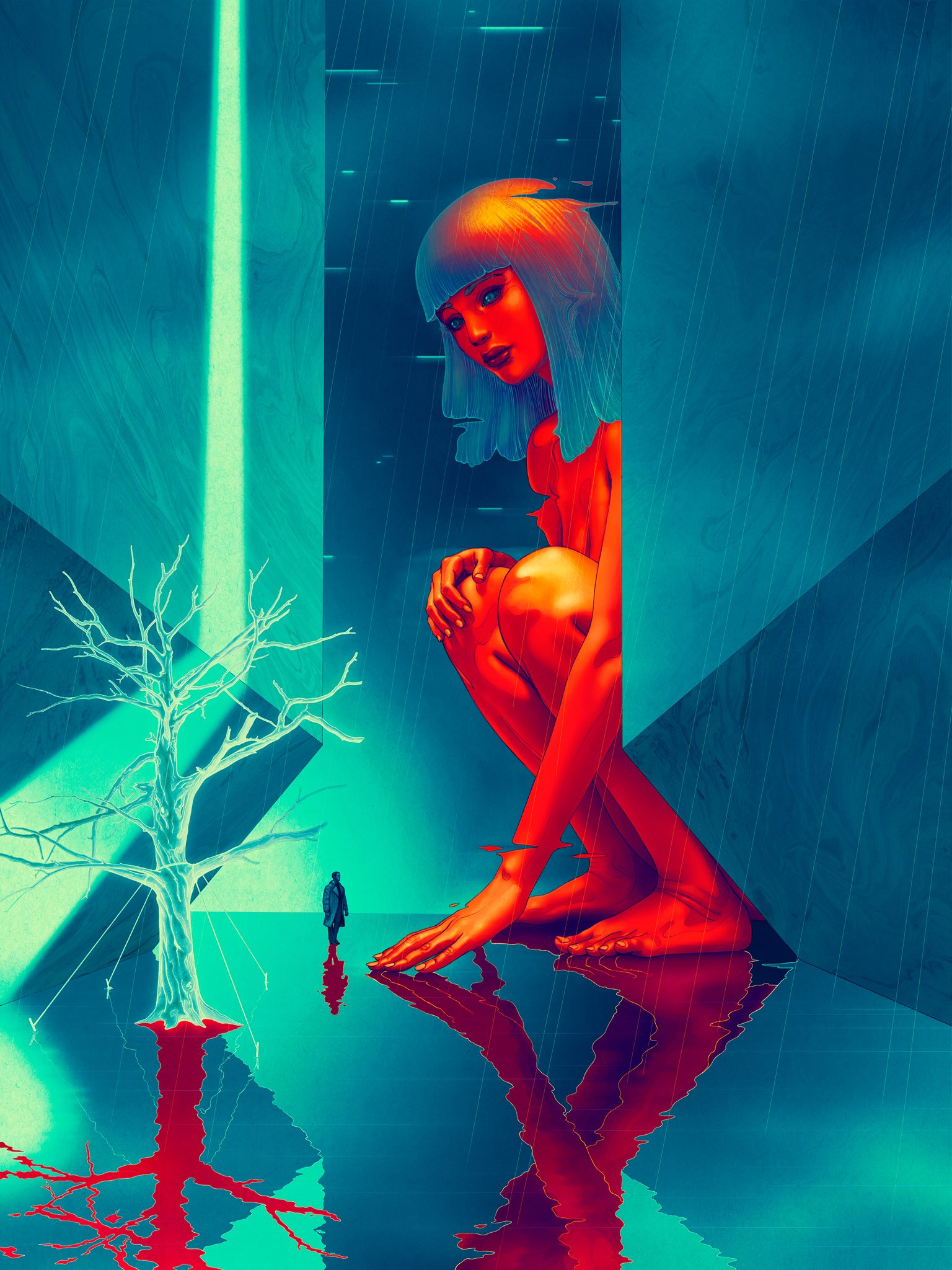
Our boy K “retires” a Nexus-8 at the beginning of the film. This event leads to the film’s first clue: a box buried under a dead tree. This (Pandora’s) box is an ossuary, the coffin for a (ta da!) female replicant (a Nexus-7 if you’re counting). Skip the next paragraph if you don’t want any plot spoilers.
Hannah had driven out to Hollywood proudly on his Triumph motorcycle, he and Altman having settled on a meeting place, whereupon Altman was to guide him the rest of the way to his home in Malibu. But when Altman arrived, Hannah hadn’t showed. The filmmaker waited for an hour, increasingly frustrated, until he noticed, across the street, a peep show and adult video store. As Rapp remembers him putting it, Altman thought to himself, “That fucker would be just crazy enough . . .” He wandered inside the adult emporium and there found Hannah, deeply absorbed.
The article is pretty great, larded with nuggets from Hannah’s correspondence and not a few wild anecdotes. Check it out.
…Kelly’s Heroes, Two-Lane Blacktop, Pat Garrett & Billy the Kid, Cockfighter, Renaldo and Clara, Alien, Wise Blood, Escape from New York, Christine, Repo Man, Paris, Texas, Red Dawn, Pretty in Pink, The Last Temptation of Christ, Wild at Heart, Fire Walk with Me, Fear and Loathing in Las Vegas, The Straight Story, The Green Mile, Big Love, Inland Empire, Twin Peaks: The Return, and so many, many more.
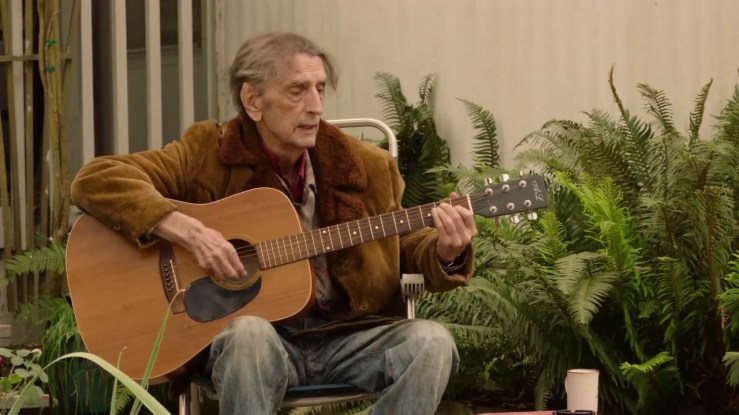
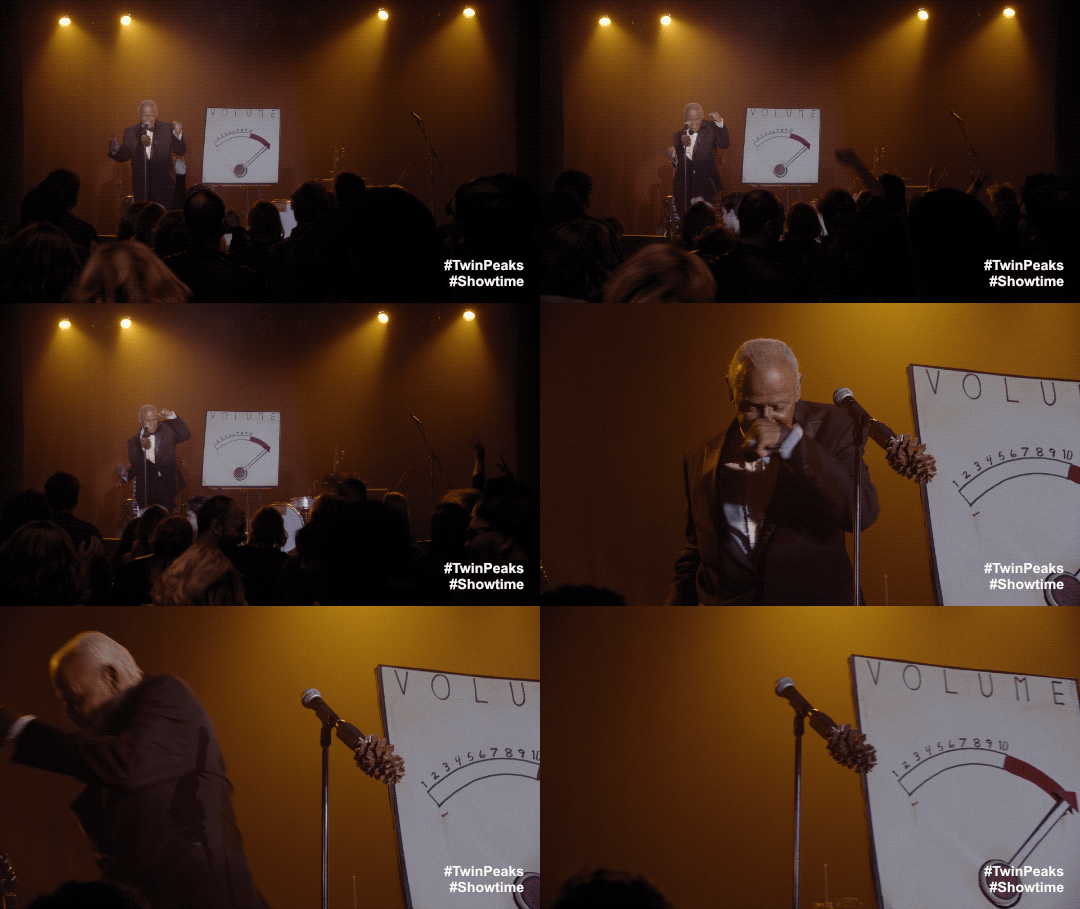
Harry Dean Stanton elevated any film he was in, adding strange depth and soul to characters who may have otherwise been flat. Stanton was what people who write about film call a character actor, a subtly bizarre term, really, if you think about it, one that we use to easily distinguish between leading actors—“stars”—and the folks around them who are far more interesting. The greatest character actors are true artists, and Harry Dean Stanton was the greatest character actor. He did play the lead, occasionally though, as in Paris, Texas (dir. Wim Wenders), a cult film that look let me stop here and say, See Paris, Texas already if you haven’t, it’s amazing. And while he’s not exactly the lead in Repo Man (dir. Alex Cox), he’s certainly the weird bouncing gravity that both anchors the film and propels it forward. (I assume that Repo Man is still required cult film viewing for young folks?). It was a joy to see Stanton one last time this year in Twin Peaks: The Return, where his performance of “Red River Valley” was a standout scene in a show full of standout scenes. While I’ll miss seeing him in new films, Stanton’s long list of roles insures that we’ll still be able to wonder into a film or show and excitedly declare, Oh shit! Harry Dean Stanton is in this!
Even if you don’t like Steely Dan, this 1999 documentary about the making of their 1977 album Aja is fantastic. (The first segment of the YouTube vid might be blocked in your country; watch via this link if so).
First off, the Aja documentary is fucking hilarious—Walter Becker and Donald Fagen come across as the smartest, most venomous guys in the room—a wicked mixture of witty and cruel—-and watching them discuss each track, and each part of each track is fascinating (especially when they pick apart failed guitar solos). The film also features a marvelous supporting cast, including braggart percussionist Bernard Purdie (of “The Purdie Shuffle” fame), and poor old Michael McDonald, who struggled to nail his background parts on “Peg.” What might be most fascinating though is seeing how Fagen and Becker pieced the instrumental tracks of Aja together, bringing in different session musicians—entirely different bands—from day to day. And if you’re still not convinced, here’s a sample (of a sample):
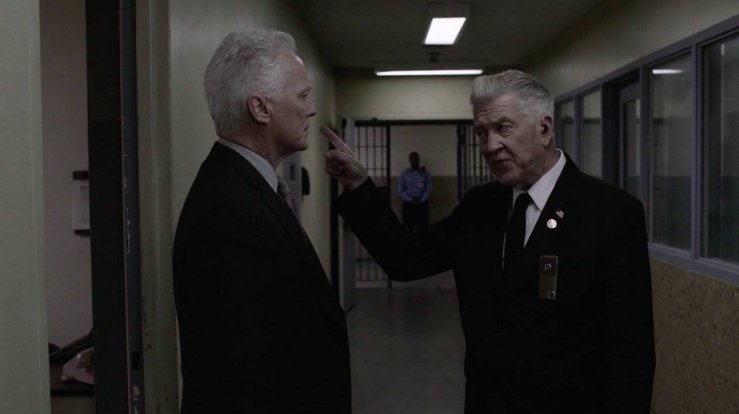
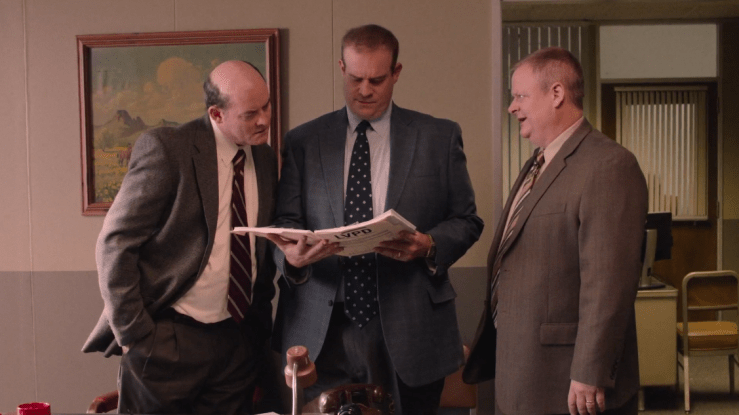
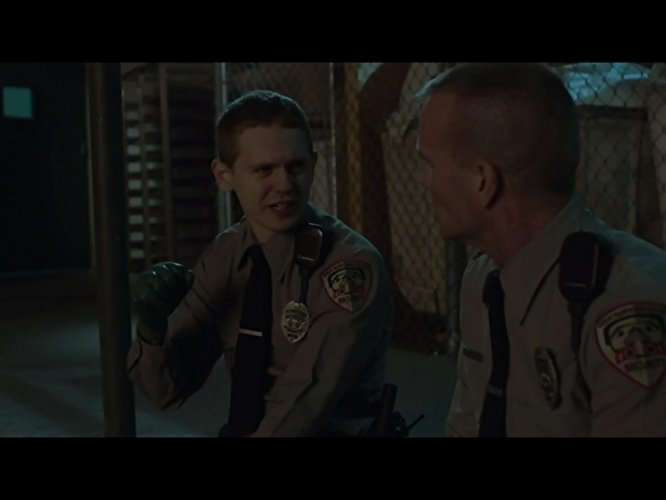
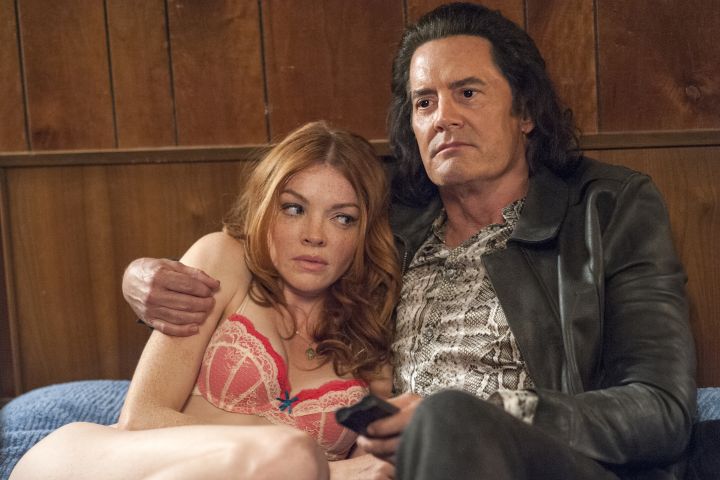
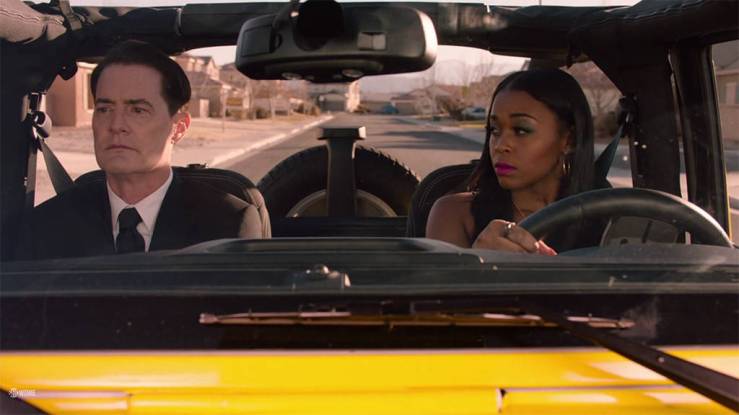
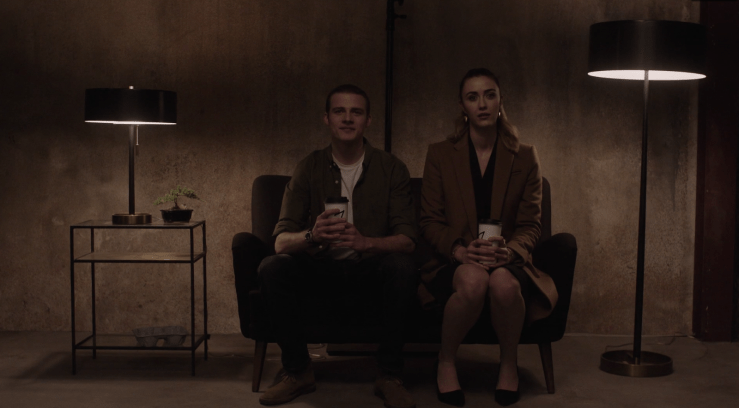
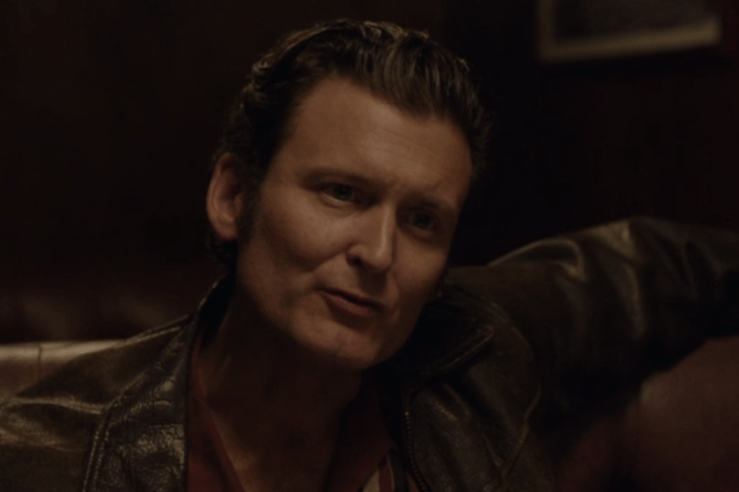
As David Lynch and Mark Frost’s excellent series Twin Peaks: The Return approaches its conclusion this weekend, I have set myself the deeply important task of ranking all (okay, not nearly all) of the new characters we’ve been introduced to this season. They’re ranked from worst to best. The rubric I’m using is my own damn aesthetic intuition.
53. Steven Burnett
Damn. Steven is the worst. Just hated the guy. By the way, Gersten Hayward is not the worst, but obviously she can’t be on this list (even though she’s in that picture above) because she was in the original Twin Peaks, accompanying Leland Palmer on piano for “Come on Get Happy.”
52. Deputy Chad Broxford
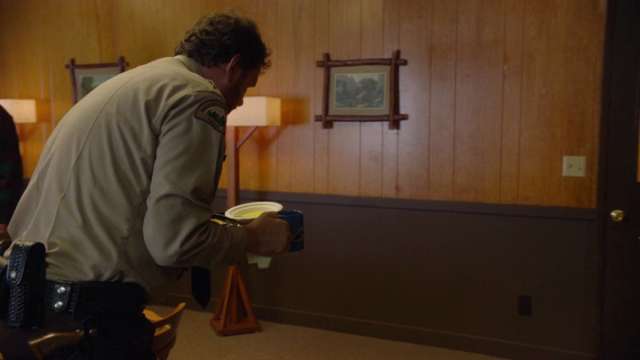
Deputy Chad is a total piece of shit. Watching him get booted from the conference room with his sad ass lunch–two TV dinners and some soup!–was a highlight though.
51. Warden Dwight Murphy
Warden Murphy tried to get slick with Dark Cooper, but, nope. I’m almost certain we will get the whole Mr. Strawberry story by the last ep…right?
50-48. The Fusco Detectives
I loved the Las Vegas plot and I wanted to like these guys but they were so annoying. I mean, I guess that’s the joke, but the joke was vexing.
47. Freddie Sykes
Freddie Sykes telling that story to James is probably the most bored I got during The Return. However, he redeemed himself by punching those dudes who attacked James “James Has Always Been Cool” Hurley. I’m guessing his pugilist skills will come into play in the finale.
46. Darya
We hardly knew ya.
45. Jade
Jade was the first to be kind to Dougie, I realize, so I probably should put her higher on this list.
44-43. Sam and Tracey
Look, these two didn’t get much screen time, but the two-part opener is a classic, and their characters quickly showed that The Return was not going to traffic in nostalgic fan service but instead do something new—something somehow darker and weirder than the original series.
42. Mickey
Mickey is obviously a very minor character, his presence inarguably enhanced by sharing the screen with Harry Dean Stanton’s Carl Rodd. I liked the dude.
41. Ray Monroe
I think we were supposed to hate Ray and I hated Ray. Typing out his name I realize that maybe he’s named after Ray Wise, who played Leland (?).
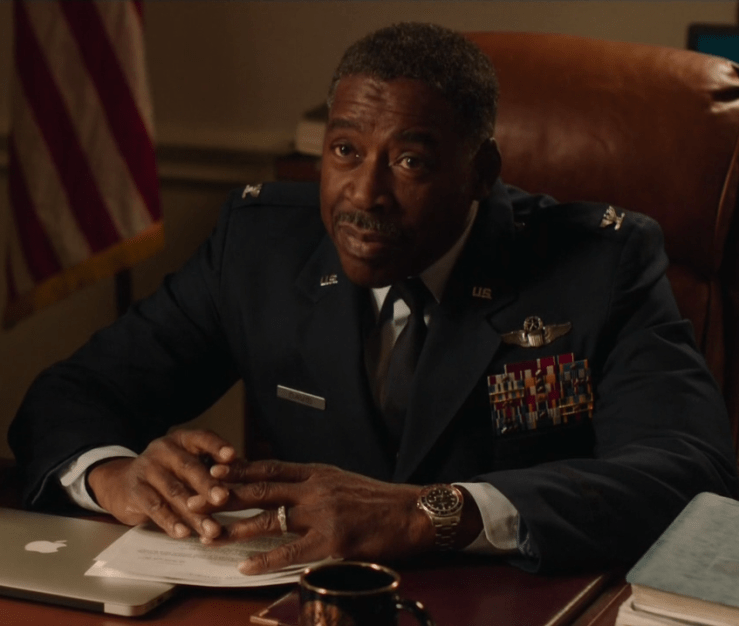
Look, I know—very minor character. But it’s great to see a Ghostbuster on Twin Peaks…and the name echoes the actor who played Major Briggs, one of my favorite Twin Peaks characters.
38. Miriam
I do so hope she survives.
37. Principal William Hastings
Not a particularly interesting character until his utter breakdown and eventual death. Loved seeing Shaggy bawl.
36. Hank
Like so many of the minor characters in Twin Peaks: The Return who show up for a brief monologuish-dialogue, Hank shows us a character drenched in his own paranoid concerns, ready to spin off into his own madness, or his own sitcom. Like, make that sitcom. I’d watch it.
35. Ike the Spike
Ike’s look when he realized that he’d bent his murder-spike was heartbreaking and hilarious.
34-33. The Evolution of the Arm and Philip Jeffries’ reincarnation.
Are these two a cheat? I’m not sure. I mean…I guess in a way they aren’t “new”…and in a way they aren’t really “characters…except they are and they are.
32. Gordon Cole’s date
I would watch this sitcom.
31. Becky Burnett
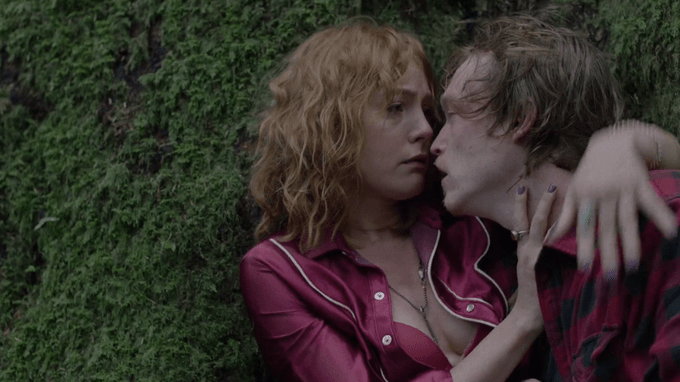
Becky at times seemed like an easy shorthand to show that not much has changed in the sweet dark little town of Twin Peaks. The “I Love How You Love Me” scene is one of the best in the series though.
30. Charlie
Is Charlie ranked so high on this list simply because his introduction also brings the return of Audrey?
29. Beverly Paige
I was really hoping that Lynch would do more with Beverly.
28. Sonny Jim
Sonny Jim rules.
27. Wally Brando
So I accidentally watched episode 4 of Twin Peaks: The Return instead of episode 2 (like, I watched ep 1, then watched ep 4 the next night, thinking it was ep 2—I could probably write a whole essay on that). Anyway, Wally Brando’s monologue is the most ridiculous moment in a kinda ridiculous episode, an episode that contains maybe my favorite moment in The Return—Bobby Briggs breaking down when he sees Laura Palmer’s picture. Brando’s monologue, delivered to a Sheriff Truman who endures it with weary and forced goodwill, seems like a send-up of everything quirky in the original Twin Peaks run.
26-25. Wilson and Randall
Goddamnit, Wilson, get it together!
24+. The Farm Gang
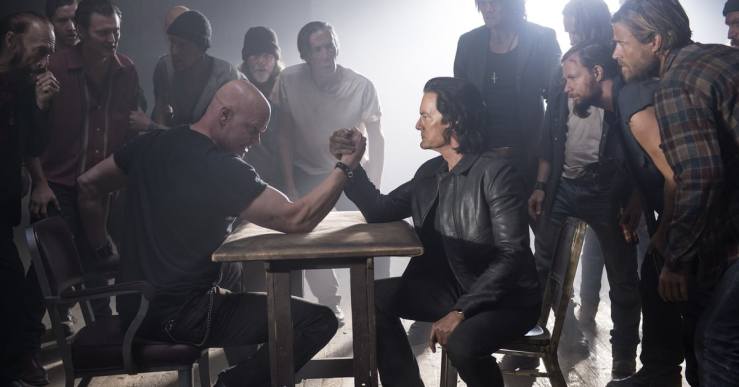
Dark Cooper arm wrestling Renzo is a great scene in a series larded with great scenes—a dark and violent satire on Hollywood machismo, but one that helps subtly propel one of the major plots of The Return: “The starting position is much more comfortable.” It’s the out-of-place-looking guy at the end who asks Dark Coop if he needs any money who really cracks me up.
23. Anthony Sinclair
Tom Sizemore’s Anthony Sinclair freaking out to the conga line is pretty great. The moment when Dougie gives him an accidental, dandruff-inspired back rub that leads to his break down is transcendent.
22. Duncan Todd
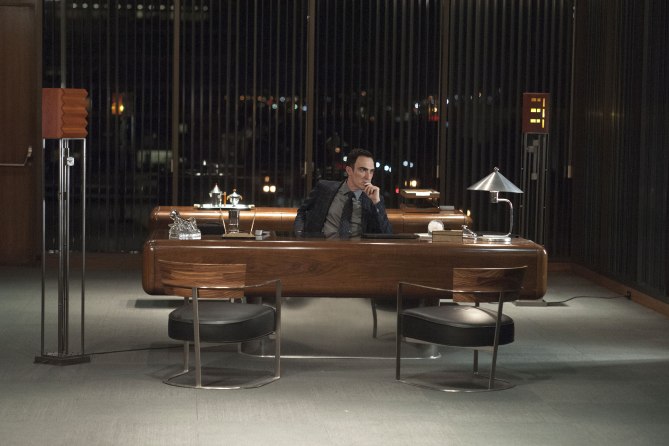
Patrick Fischler was great but underused as Duncan Todd. I liked to pretend that he was the same character who got so scared behind Winkie’s in Mulholland Drive.
21. Constance Talbot
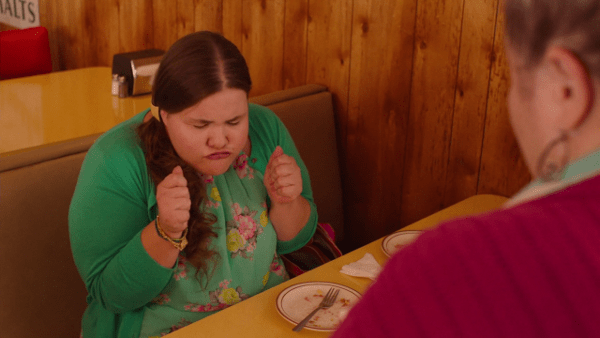
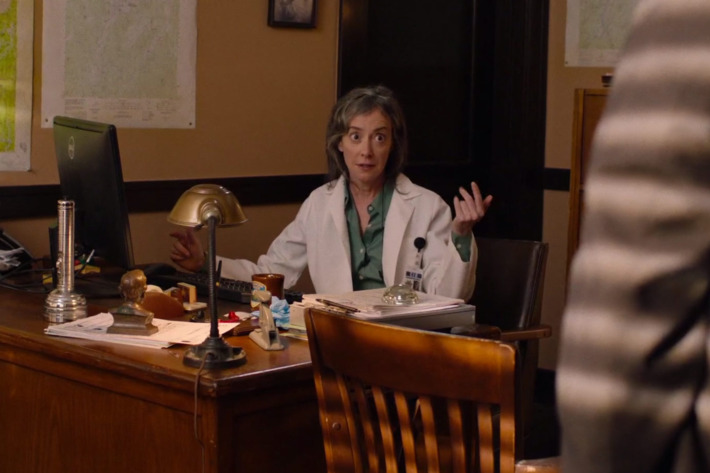
Jane Adams is a really underrated actor and every scene with Constance Talbot was a treat (especially her interactions with Albert).
As a character, the Eyeless Woman is obviously a cipher, but her introduction in the third episode is one of the most arresting moments of the series.
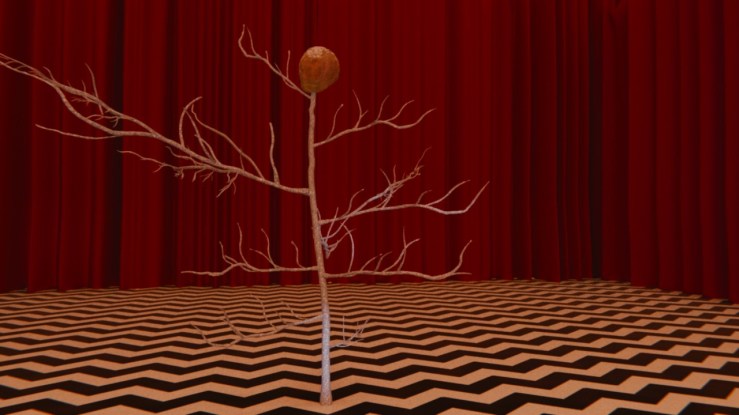
18. The Experiment
Again, maybe a bit of a stretch of what a “character” might be—but my affinity for the characters I’ve liked best in The Return is very much bound in the aesthetics of their scenes—and I don’t know if I’ll ever see a television show as aesthetically compelling and confounding as the eighth episode of The Return. (And I watched it for the first and second times that I saw it on a fucking iPhone on an airplane).
17-16. Chantal and Hutch
These two wandered in from a Tarantino movie. Again, a spin-off sitcom, please.
15+. All the minor characters in those end scenes at The Roadhouse
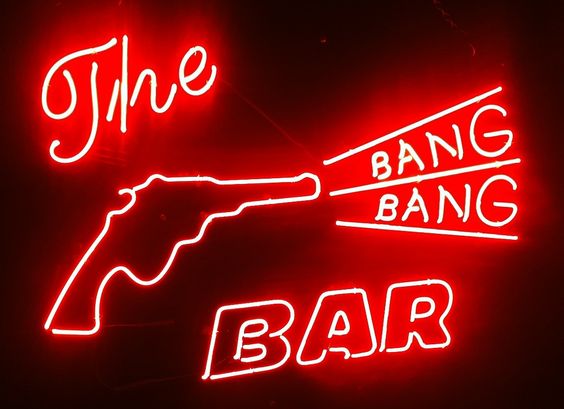
One of my favorite things about The Return is its rough pattern of ending up at The Roadhouse (or The Bang Bang Bar, if you like) to witness some tender grotesquerie.
14. MC
MC proudly presents THE Nine Inch Nails. MC proudly presents James “James Was Always Cool” Hurley. MC proudly presents “Audrey’s Dance.” And best of all…MC proudly dances to ZZ Top’s “Sharp Dressed Man” in one of the most sublimely silly sequences of the season.
13+. All the bands who played at The Roadhouse
The first performance of one of these bands in The Return, the Chromatics playing “Shadow,” provides a wonderfully cathartic rush from the dark tension that builds up in the two-part opener.
12. ….but especially Rebekah del Rio
My dream is to go to that place.
11. Bushnell Mullins
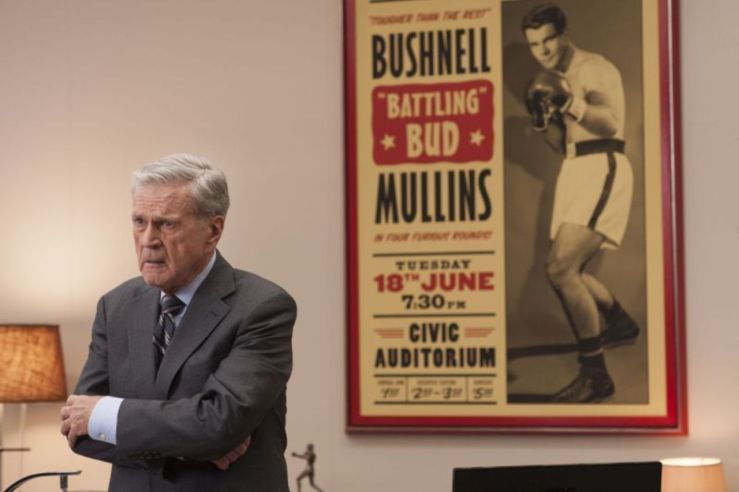
Bushnell Mullins ended up being one of the characters in The Return who I found genuinely moving. I hope we get to see him again.
10. Sheriff Frank Truman
Look. I know we’re all holding out for Harry Truman to show up somehow at the end. But Robert Forster is a ringer, and he’s done a great job this season. It’s also fun to pretend that he’s a doppelganger of his Mulholland Drive character.
9-8. The Mitchum Brothers
Like Bushnell, I ended up surprised by just how endearing these two turned out. Their devotion and loyalty to Dougie and his family (and Candie) seem absolutely genuine. And like Bushnell, I hope we’ll see them again.
7. Candie
God bless Candie.
6. Richard Horne
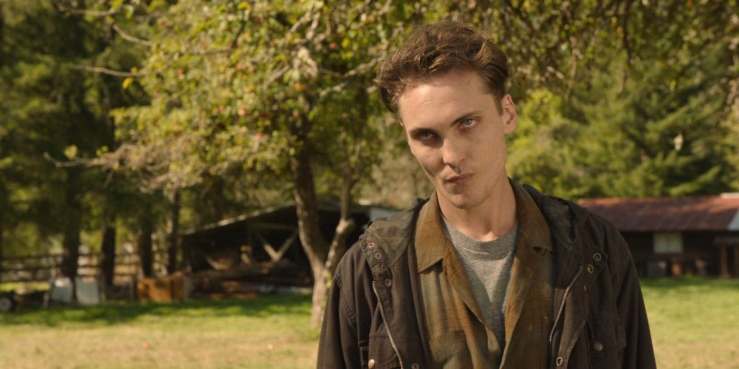
Richard Horne is the worst. Okay, I started this stupid list by declaring that Steven Burnett was the worst…but Richard is, like, awful. Menacing, horrific, a little bit goofy—Lynchian. You sort of want to save him a little, which you also know is a stupid mistake.
5. The Woodsman
“Gotta light?”
4. Janey-E Jones
Janie-E not being in the top three on my list is proof that this list is stupid. Naomi Watts is amazing in The Return. I hope (a version of Dougie) finds his way back to her and Sonny Jim, just as Agent Dale Cooper promised.
3. Dark Cooper
Dark Cooper, or Evil Cooper, or the doppelganger, or whatever you want to call him might not technically belong on a list of “new” Twin Peaks characters, because we know he was there at the very end of the final series. But c’mon. He can’t not be included. Dark Cooper was a cipher with depth, violent, but also radiating a strange sexiness as well as an ironic sense of humor. I’ll miss his black glowing energy.
2. Diane
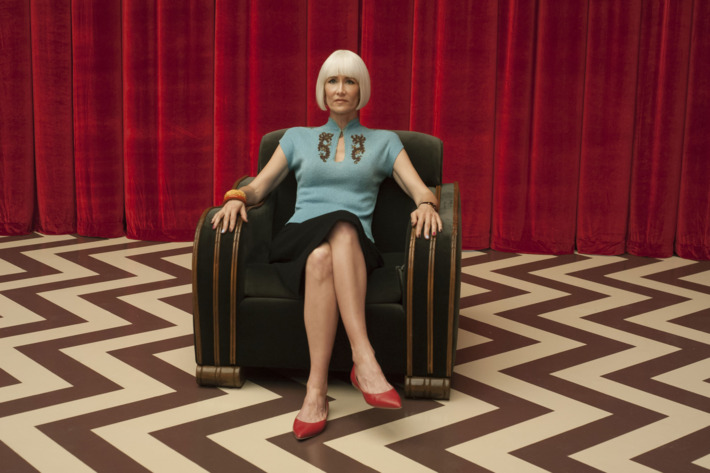
I didn’t read any of the press stuff for Twin Peaks—I didn’t know that Michael Ontkean wouldn’t be back as Sheriff Truman, for example, or that Robert Forster would be in as another Sheriff Truman—which made watching The Return even more of a thrill. Probably the biggest little casting thrill though was Laura Dern showing up as Diane. (I gasped). Laura Dern is one of my favorite actresses, and she only seems to get better from role to role. (I’m still surprised how many Lynch fans haven’t seen Inland Empire, a film in which she is absolutely amazing). It would be difficult for me to overstate how perfectly Dern’s Diane fits into the visual logic of The Return—I have pretty much avoided all coverage of the new series, so I don’t know if anyone’s written an essay on all of her costumes yet, but I’d love to read one eventually. My hope is that we’ll see some kind of resolution with Diane (even if it’s a bizarre and unsettling resolution) in the finale—is there a non-tulpa Diane out there? Please.
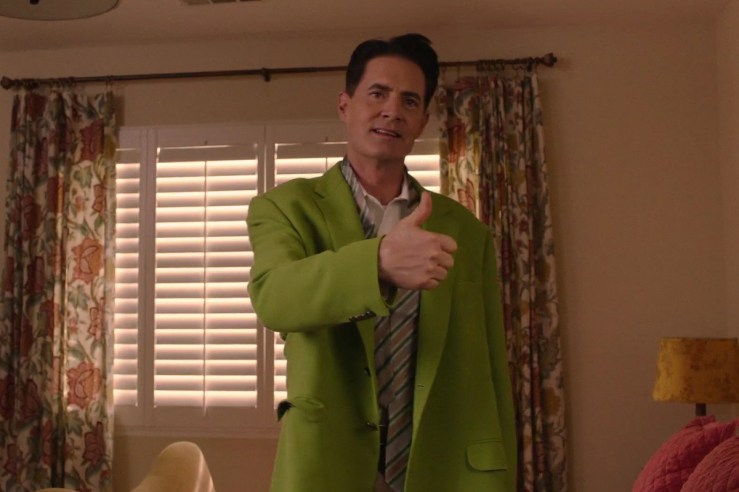
1. Dougie Jones
Agent Dale Cooper’s return in episode 16 is a supremely satisfying moment, but I’ll miss Dougie dearly. I have often used the word “Lynchian” to convey ideas like sinister, paranoid, dark, and weird—and I think the word fits. But a glowing optimism underwrites all that’s dark in the Lynchverse, and this light finds its avatar in Dougie, a kind of holy fool who’s protected and guided by the kindness of others. Thumbs up.
Anyway, here’s a list I put together in about five minutes of 25 films missing from their list. I did limit myself to one entry by a director for some silly reason–otherwise I’d end up with a bunch of films by three people on here. I’m sure I missed hundreds of other films. But, hey, it’s all in the name of stupid fun.
Mulholland Drive
Ponyo
Hard to Be a God
In the Mood for Love
Upstream Color
WALL-E
The Hateful Eight
Holy Motors
Drive
No Country for Old Men
The Master
Fantastic Mr. Fox
Bright Star
Children of Men
The Tree of Life
Russian Ark
Only Lovers Left Alive
Dredd
Talk to Her
Adaptation
A History of Violence
Pan’s Labyrinth
The Assassination of Jesse James by the Coward Robert Ford