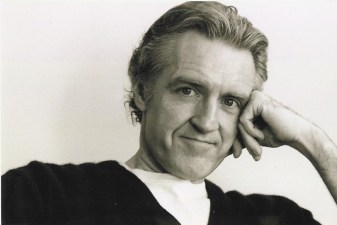
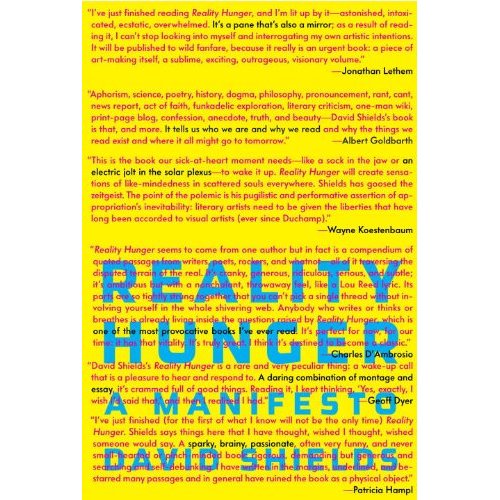
Reality Hunger — David Shields

Just what, exactly, is David Shields’s Reality Hunger supposed to be about? He’s brazen enough to slap the subtitle “A Manifesto” right there under the title, suggesting a work of sustained principles calling for something to change or happen for some reason, but after reading the damn thing, I still have no real idea what he really wants or why I should care. If I had to venture a guess, it seems that Shields is suggesting that we quit reading, writing, and publishing “standard novels” and that “realism” in letters can only be located in lyric essays and other works free from genre constraint (even the memoir is too artificial for Shields, and autobiography ultimately represents facts without truth).

I think what he really wants is authenticity, which repeatedly gets called “reality,” a term he (repeatedly) fails to satisfactorily define. Reality Hunger seems to argue that authenticity in the 21st century must take the form of synthesis, must chop up and recombine disparate elements, genres, cultural artifacts. To that end, Shields’s book is a tour-de-force of citation and appropriation. Aspiring toward an aphoristic tone, Shields organizes the book into 618 short sections over 200 or so pages; most of the sections are not his work, but come rather from myriad sources across different cultures and eras. I have no problem with this (c’mon, this is Biblioklept!) and Shields clearly demonstrates that the practice is hardly new in the history of story-telling, rhetoric, or philosophy.

My real problem is the self-seriousness of it all. Shields aspires to “break” reality into his text by reapportioning and recombining varied citations, but this bid for authenticity is, of course, utterly artificial, often stolid, and not nearly as fun as such a playful medium would suggest. Even worse, it’s not really a proper synthesis; that is, in stacking bits of other people’s work together with some of his own thin connective tissue, Shields hasn’t achieved an authentic blend or, to use a term he’d hate, anything novel, anything new. The jarring stylistic shifts between sections will lead serious readers repeatedly to the book’s appendix to find out who originated the words Shields is copping.

If Reality Hunger approaches having a point, it comes in the book’s penultimate chapter, “Manifesto.” Here, he attacks “standard novels.” The term is appropriated from W.G. Sebald, a writer of marvelous and strange novels that Shields would love to be essays. In one of the few original lines in the book, Shields dismissively writes that “Novel qua novel is a form of nostalgia.” He goes on to argue that the personal/lyric essay is more closely aligned with philosophy, history, and science than novels, and that novels no longer have any legitimate response to these more “real” concerns. Which is utter bullshit, really, and seems more than anything to prove that Shields is probably not that well-read, despite his massive cut and paste catalog. Not that I think that he’s not that well-read. He just picks and chooses, according to his taste, what novels get to escape being “standard.” How can one read contemporary masterpieces like The Rings of Saturn or Infinite Jest or 2666 or Underworld and honestly say that they don’t hold value? Shields, of course, does/would presumably find room for these in his “manifesto.”

The most embarrassing chapter of Reality Hunger, “Hip-hop,” also reveals the most about Shields’s program. It’s also one of the few chapters to feature long sections of Shields’s own original prose. In a turgid, humorless, overly-analytical “defense” of hip-hop and “sampling culture,” Shields describes how hip-hop works, riffing on the function of “realness” in hip-hop, and grasping at the larger implications of a normalized recombinant art form within modern culture. And though I agree with pretty much everything that Shields has to say about piracy and copyright laws, the drastic artificiality of his style and tone is really too much here. It’s like someone trying to explain why a joke is funny.

The worst though is Shields’s assertion that “Our culture is obsessed with real events because we experience hardly any.” The sentence itself is a clever bit of sophistry that falls apart under any real scrutiny. I can name a dozen “real events” that I experienced in the last few hours alone, including eating dinner with my family, talking with my wife, and putting my daughter to bed. Complaining that we are denied “real events,” like the mopes Shields cites from Douglas Coupland’s Generation X who lament their “McLives,” is a way of excusing ourselves from the intensity of being present–at all times–in our own lives. The vapid philosophy of the spoiled whiners in Reality Bites wasn’t attractive back in the early nineties and it’s downright repellent now.

So what does it all add up to? I think that Reality Hunger works well as a description of post-postmodernity. And as much as I’ve ranted against it here it’s actually quite enjoyable as a compendium of clever quotations. As a manifesto though, it’s an utter failure. To be fair, he had no shot of convincing me that the novel is or should be dead. There’s just too much evidence to the contrary.

Reality Hunger is now available in hardback from Knopf.

Marginalia in the Digital Age

In her article in yesterday’s New York Times, Patricia Cohen reports on Emory University’s efforts to preserve Salman Rushdie’s archive. In addition to the regular files, folders, books, and other paper materials one might expect, Rushdie gave Emory four Apple computers. The school decided to create an emulator that would allow visitors to see–and play with–Rushdie’s work:

At the Emory exhibition, visitors can log onto a computer and see the screen that Mr. Rushdie saw, search his file folders as he did, and find out what applications he used. (Mac Stickies were a favorite.) They can call up an early draft of Mr. Rushdie’s 1999 novel, “The Ground Beneath Her Feet,” and edit a sentence or post an editorial comment.

Pretty neat. I love the idea of interaction and it’s great how technology has allowed for wider audiences to access archival materials. I’ve really been enjoying looking over the David Foster Wallace archive at the Harry Ransom Center, for instance, something made entirely possible through digital archiving. But Cohen’s article also details some of the problems and limitations of the “digital-born” material:

Electronically produced drafts, correspondence and editorial comments, sweated over by contemporary poets, novelists and nonfiction authors, are ultimately just a series of digits — 0’s and 1’s — written on floppy disks, CDs and hard drives, all of which degrade much faster than old-fashioned acid-free paper. Even if those storage media do survive, the relentless march of technology can mean that the older equipment and software that can make sense of all those 0’s and 1’s simply don’t exist anymore.

This got me thinking, again, about all the rosy-toned optimism surrounding e-readers like the Kindle and iPad. Marginalia, annotation, and scholia, whether from the quills of medieval monks, enlightenment scientists, or prickly book reviewers, has long served as a conduit of information and criticism often rivaling the importance of the document being marked. Kindle users can highlight, dog-ear, and annotate their e-texts now, but how permanent are these marginalia–especially when Amazon has already shown how easily the books can be removed from their owners (along with those owners’ notes!)? Given Apple’s penchant for DRM, it’s likely that you won’t be able to trust the iPad to secure your annotations either. And while my own paltry scribblings in the volumes I own are hardly on par with Coleridge’s annotations, the books that I have most heavily annotated are also those dearest to me. At best, my marginalia might call attention to some notable aspect of a great text; at least, they record something about the person I was when I saw fit to write in the book at that moment.

Biblioklept Interviews Melville House’s Dennis Johnson

Dennis Johnson, along with wife Valerie Merians, heads Melville House Publishing, an independent book house putting out some of the best stuff on the market today. They also have a bookstore in Brooklyn that regularly hosts all kinds of neat literary-type events. Melville House is the outgrowth of Johnson’s literary blog MobyLives, an insightful source of reportage on the literary world today. In 2007, the Association of American Publishers awarded Melville House the Miriam Bass Award for Creativity in Independent Publishing and in 2009 The Village Voice declared Melville House “The Best Small Press of the Year.” I talked to Johnson by phone last week and he answered my questions with patience and humor. We discussed how Johnson finds the marvelous books he publishes, translation, novellas, and upcoming releases from Melville House. After the interview he was kind enough to ask me about my own blog and offer me some encouraging words. Just a few days after our talk it was announced that one of Melville House’s recent publications, The Confessions of Noa Weber by Gail Hareven had won the 2010 Best Translated Book Award for fiction.

Biblioklept: I want to begin by congratulating Melville House on Hans Fallada’s novel, Every Man Dies Alone. It’s done really well both critically and commercially. The book is something of a “recovered classic,” published just last year for the first time in English. Can you tell us a little bit about how Melville House came to publish the book?

Dennis Johnson: Well, it was a search it’s a real saga about hunting down that book. I’m always interested in finding material from that part of the world and that time of history because I think a good deal of very good literature was lost between the two wars. And it’s just writing that I like a lot. So a friend of mine, the fashion designer Diane von Furstenberg had family that came through that part of the world at that time and I asked her if she had any recommendations and she told me I should look into Hans Fallada, who I’d never heard of. So I tracked down a couple of his titles that had been translated–because he was a bestselling writer here in the 1930s–and it took a while but I found some of those books which had been out of print for a long time and I really loved them. And then, von Furstenberg told me that his best one had never been translated. That was Every Man Dies Alone. And so we set about going after it and acquiring it. And, at that point, once we’d discovered it, it was pretty easy sailing. But tracking down his stuff that had been translated and finding out more about him was really kind of a fun bit of detective work.

B: Did Michael Hoffman translate it specifically for Melville House?

DJ: Yeah, he did. We hired him to do it.

B: Is that normally how you go about with these works–like Nanni Balestrini’s Sandokan or Imre Kertész’s The Union Jack? Hiring a translator?

DJ: Well, there’s a couple of things you can do. You can find the translator, or you can reprint things that have been translated already, if you think it’s already a good translation–that’s a less expensive way to do a translated book. So for example, with the Fallada, I bought some old translations of his other books and published them simultaneously with the new translation of Every Man. There was, you know, there was no old translation to buy. But two of his other books, two great books, one called The Drinker and one called Little Man, What Now? I thought were pretty well translated so we just bought those old translations. They were out of print, they were available [for publication].

B: It seems like a lot of the books you guys put out are–I don’t know how to put it–recovered classics or cult books or just books that English-reading audiences just aren’t necessarily exposed to. Is that purposeful with Melville House?

DJ: I think we have a fairly mixed list. The names you were citing a minute ago . . . Balestrini, he’s only been translated once, I think, thirty or forty years ago. But he’s a very prominent writer in Italy. And it wasn’t exactly a “discovery,” it was just someone that we thought American audiences should know about. Imre Kertész on the other hand is extremely famous, he’s a Nobel Prize winner and he’s published by Knopf. We were thrilled when he wanted to come to Melville House. So, you know, some of these writers are here, some are not. We publish some well known writers, some very obscure writers. We try to mix it up. You know, there’ s no rule, just good literature.

B: Can you talk a little bit about the Contemporary Art of the Novella series? How did it come about?

DJ: Well, we originally had a series called just the Art of the Novella. It’s classics, many of them translated, classics from around the world, lots of European classics, and some of those are new translations that we did it, some are old translations that we reprinted. And that series did really, really well and people really seemed to love it so we decided that we would do a contemporary version of that series and try to mix it up the same way. And so the new series has new discoveries in it, some old reprints, things from around the world, we’re expanding beyond Europe and Russia, we’ve got a native Japanese author named Banana Yoshimoto in it coming out, we’ve got African writers, South American writers . . . It’s been off to a very good launch. I think we’ve done about fourteen or fifteen books in that series so far and it’s going really well. You know, it’s very hard to publish translation in the United States. It doesn’t . . . it doesn’t sell. It’s hard to keep it in store for a long time. And it’s expensive to do translated books because you have to pay your translator. In the Contemporary series we often use new translations because it’s new work that’s never been translated before and that can get very expensive because you’ve got two authors, you know, you have to pay the author, the translator, and that’s why a lot of people are cutting back on doing translations. But we wanted to keep doing translations and we had to figure out a way to keep doing it and one idea we had was, if we had this series of short novels . . . well, one, they’re just cheaper to do, they cost less to buy from another publisher, they cost less to make because they’re less paper and they cost less to translate because they’re shorter. And you know, you pay by how long. So, it suddenly became a more economical way for us to publish translated books. The booksellers, they like the Contemporary series. They get the whole series and they keep it in the store. So, for example, we’re about to do a deal with a new book store in Fort Greene called Greenlight where they would do a whole wall of these books. Other stores do a spin-rack of these books. And they just keep them. And what usually happens with new books is you just get a few weeks in the bookstore and if it doesn’t sell they return it. And so we would get really creamed on the translated work because it wouldn’t have very long in the store and it’s hard to get publicity for them and then they just didn’t have enough time to sell. But, if they’re taking the whole series and keeping them on display, forever, well, then these books have a real chance of surviving. So there were a lot of good reasons for us to do a Contemporary series. And in the end, the reason was that it allowed us to keep doing really good, serious, translated work.

B: What do you think about “rock star” writers like Haruki Murakami and Roberto Bolaño whose English translations sell very well? Does that help the prospects of translated books at all?

DJ: Well, every year there are one or two books that are translated that do very well. But they’re the exception to the rule. At any given point in the year, you look at the New York Times bestseller list for fiction, there’s almost never a translated book on it. Or if there is, it’s some, you know, Scandinavian murder mystery or something. It’s very rare it’s a serious work of literature. So I would say those writers are the exception to the rule. But it’s certainly does help those of us selling translated fiction to be able to point to those things. It encourages booksellers to give us a chance.

B: Can you tell us a little bit about upcoming titles and authors you’re excited about?

DJ: Well, we’re doing another Fallada–

B: Wolf Among Wolves, right?

DJ: We’re doing Wolf among Wolves in May. And we’re doing the paperback for Every Man Dies Alone at the end of this month, as a matter of fact. So those are two that I’m really excited about. We have some really great nonfiction coming out. We just published a book about North Korea called The Cleanest Race. It’s about understanding North Korea through its propaganda. It’s got a lot of really wild art showing the propaganda posters and movie stills and things. And then we’ve got some novels coming out, one from a young British writer named Lee Rourke. It’s the first novel. It’s called The Canal and I think it’s one of the very best novels we’ve ever published. It’s generating a lot of excitement. We’re doing another one with Kertész next year, which is a big novel called Fiasco. He wrote a trilogy years ago about his experience in the camps. What was he, fifteen or something, when he was sent to Auschwitz-Birkenau, working in a Nazi factory trying to turn coal into gasoline? And he wrote a novel called Fatelessness about that and another one called Kaddish for an Unborn Child. And Knopf published Kaddish and Fatelessness but they never published Fiasco. So we’re really excited about that.

B: Something I enjoy about MobyLives is your perspective as a publisher covering real news about book selling.

DJ: Thanks. It’s a labor of love. If you look at the historic arc of the website, you can see that we became more informed by being a publisher. I wasn’t a publisher when I started it and it was much more general-interest reader kind of thing. I try to get help. I try to make the staff here participate, I think it makes it a little more wide-ranging.

B: So, have you ever stolen a book?

DJ: Sure, yeah. I used to steal a lot of books from my brother. I remember stealing Gore Vidal’s Burr. My big brother’s a lot older than me and he left the house when I was a kid and I remember stealing a lot of his books. So Burr yeah, a novel Vidal wrote about Aaron Burr. Fantastic book. I still have it. He hasn’t asked for it back. I don’t think he knows.

The Believer Book Award Editors’ Shortlist Announced

The new issue of The Believer popped up in the mail today (just as I’m finishing up the art issue from way back in November). This issue announces the editors’ short list, full of books I haven’t read. Here’s the list with editors’ comments (from their website):

Christopher Miller, “The Cardboard Universe: A Guide to the World of Phoebus K. Dank” (Harper Perennial)
Miller’s second novel is a delight: an antic encyclopedia, a remarkably sustained (five-hundred-plus-page) riff on the life and work of Philip K. Dick, a Day-Glo Pale Fire, and maybe the best pure comic novel of the year. Dueling annotators pick over the writings of the late Phoebus K. Dank, endlessly drawing and erasing the line between genius and hack.

Percival Everett, “I Am Not Sidney Poitier” (Graywolf)
With more than twenty books to his name, Percival Everett is not only one of the most prolific modern American writers, but one of the most diverse, tackling just about every genre there is, and freely mixing them. He is also one of our best: I Am Not Sidney Poitier is further proof of that. Not Sidney is the name of the modest, unflappable protagonist, who happens to inherit wealth at an early age and winds up spending a lot of time with Ted Turner. Race, class, TBS, the films of Sidney Poitier, and the value of a college education are but some of the themes. It’s also funny as hell.

Mary Robison, “One D.O.A., One on the Way” (Counterpoint)
Eve Broussard is a Hollywood location scout in her post-apocalyptic hometown of New Orleans. Her experience in this profession is matched only by her cynicism. Eve is married to Adam Broussard, who has inherited land and money, is chronically ill, and has an identical (and mostly interchangeable) twin brother, Saunders. With Eve as our guide, we ride shotgun through kudzu-laden landscapes, bourbon-drenched love affairs, and an education in Louisiana gun laws. Robison’s ultraterse “chapters” and deadpan dialogue create a visceral New Orleans, and the effect of a morning-after Southern gothic.

Blake Butler, “Scorch Atlas” (featherproof)
Like the best sur-reality, Butler’s alien world is made from the building blocks of everyday life—rooms filled with hair and “teeth that wouldn’t fit inside a car.” His novels and stories are linguistically twisted dispatches from a half-house, half-body in which the author himself seems to be imprisoned. While he struggles to escape into the outside world, he remains obsessed with what’s at the end of the next abysmal hallway.

Padgett Powell, “The Interrogative Mood” (Ecco)
Padgett Powell’s newest novel is unlike his past novels, and is unlike any novel—every sentence in this 164-page book is a question directed at “you.” Prying, intimate, damning, insulting, inane, and innocent are these inquisitions. What at first might strike as a literary gimmick, impossible to sustain, becomes (as “you” surrender to it) an act of intense private meditation, as well as a flagrantly solipsistic display of your most private self.

David Shields on His New Book Reality Hunger

Here’s David Shields talking about his new book Reality Hunger:

Here’s a review of the book at Times Flow Stemmed.

David Foster Wallace’s Papers, Annotations, and More

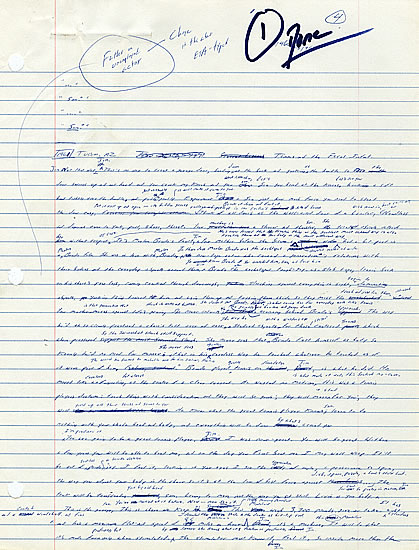
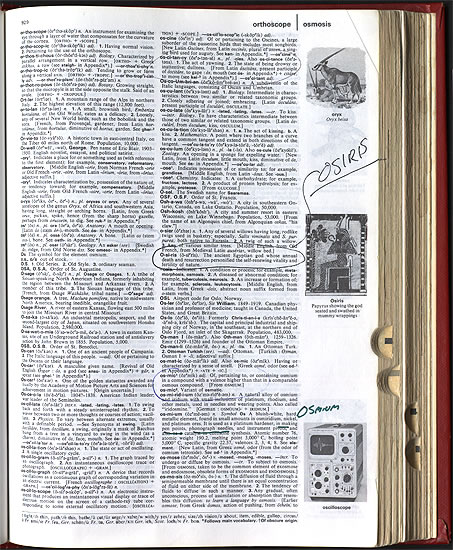
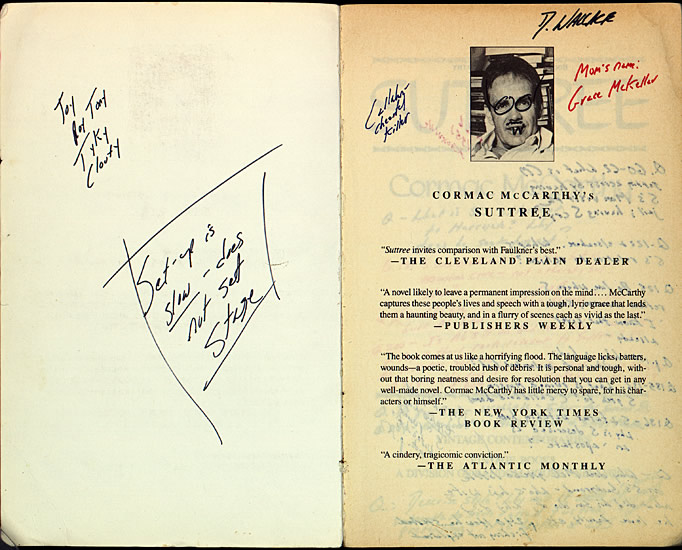
The New York Times and dozens of other sources reported yesterday that the University of Texas acquired David Foster Wallace’s papers, including his personal library. The Harry Ransom Center at UT already has lots of Wallace’s stuff up at their site and it’s frankly astounding. There are handwritten pages from Infinite Jest, images from annotated copies of some of Wallace’s novels, including Cormac McCarthy’s Suttree and Don DeLillo’s Players, and pictures of Wallace’s dictionary with words circled like neroli, cete, and suint. Begin exploring Wallace’s archive here.

First page of a handwritten draft of Infinite Jest
DFW's dictionary
Inside cover of David Foster Wallace's annotated copy of Players by Don DeLillo.
Inside cover of David Foster Wallace's annotated copy of Suttree by Cormac McCarthy.

On Movie Tie-in Covers

Is there anything worse than a beloved book sporting a movie tie-in cover? (Okay. Maybe Oprah’s blazon is worse).

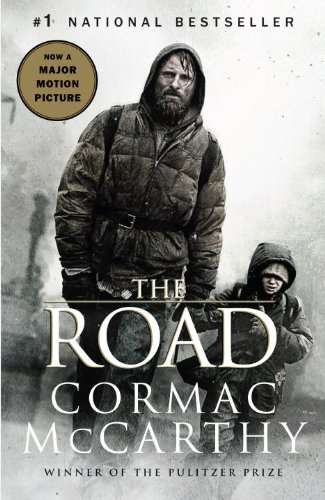
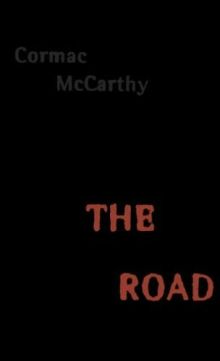
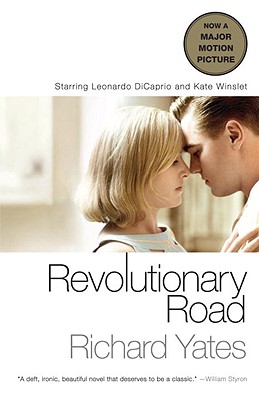
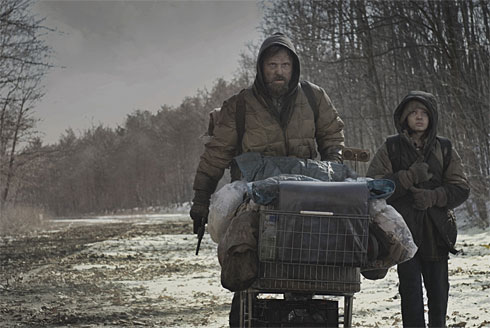
It’s not like the original cover was that great, or that the movie was that bad, but the whole enterprise of slapping grim Viggo Mortensen all over Cormac McCarthy’s The Road doesn’t seem to make much sense (maybe they didn’t realize that the film was going to flop and hoped that it would re-energize book sales). It seems like a slight to any reader new to the book. The austere original cover omits all imagery and thus places McCarthy’s language front and center. Movie tie-ins tend to plaster major Hollywood actors all over the cover, making it difficult for readers to re-frame or re-image the characters that those actors are playing–it’s an egregious intrusion between the writer’s text and the reader. It disrupts visualization. It also tends to look tacky, even when it’s “classy.” Take for example this cover for Richard Yates’s novel Revolutionary Road

I’ve never read the novel, although I’ve often heard it referred to as an under-read or “lost” classic (the film promos made it look dreadfully boring, but there is probably nothing more unfair than judging a book by its movie). Spying its spine, I picked the book up the other day at the bookstore but could not even flick through it. All I could see was Leo and Kate. Then there’s that Big Gold Sticker procliaimng the work is “Now A Major Motion Picture.” The statement, emboldened in all-caps seems set apart in its little golden sphere, but oddly enough there’s a clause that must logically follow it — “Starring Leonardo DiCaprio and Kate Winslet.” The aesthetic logic of the cover though seems to suggest, however ludicrous, that DiCaprio and Winslet actually star in the book. Were I to attempt to read this edition of the book my poor imagination, weakened by years of watery domestic beer and bad television, would not be able to surmount the challenge posed by the cover. Each time I dipped into its pages, surely Yates’s prose, no matter how descriptive or visceral or imagistic, must fall to the glamor of Leo and Kate.
Maybe it’s just me though–I can remember having this problem even in childhood, absolutely hating to read any book that proffered a photograph of a person, especially an actor, masquerading as a character that my imagination was supposed to bring to life. For some reason paintings and other stylized images didn’t –and don’t — offend me in this way.

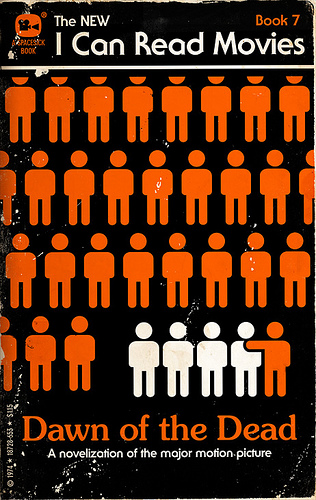
I suppose that movie tie-in covers help sell books and, ultimately, that’s a good thing, but I can’t think of a single one I’ve ever seen that’s aesthetically pleasing. I’m reminded now of Spacesick’s “I Can Read Movies” Series, which achieves the opposite, turning movies into witty, wonderful book covers. Observe:

David Foster Wallace Audio Archive Now Up

A kindly dude by the name of Ryan Walsh has launched a site called The David Foster Wallace Archive. The site collects in one place the loose mp3s that’ve been floating around the web, and includes the Brief Interviews with Hideous Men audiobook in its entirety. There are also interviews, profiles, eulogies, and more. A good starting place: an (as-yet) unpublished piece about a do-gooding boy detested by all. It’s hilarious.

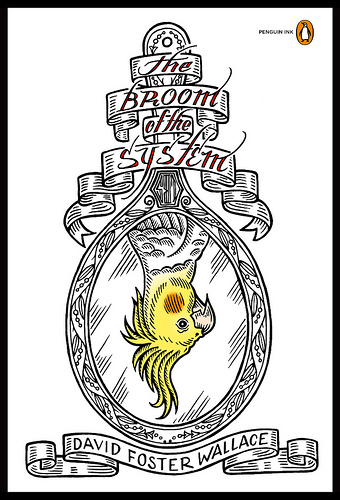
So. It’s kinda sorta Book Covers Week at Biblioklept, and, in keeping with that theme, check out this new cover for Wallace’s debut novel, The Broom of the System. The edition is part of the forthcoming Penguin Ink series and should be available this summer. Art by Duke Riley. We love it.

Why I Dislike Dustjackets

I’m lazy. I let other people do good reporting and then hijack their work. Here’s Dennis Johnson at MobyLives citing a recent Guardian story:

What, exactly, is the point of a dustjacket, asks Peter Robins in this Guardian story. “The clue can’t be in the name: on the shelf, the most dust-prone part of a book is the top, which a jacket doesn’t cover … the jacket remains an unnecessary and vulnerable encumbrance.” And now, he says, “some in the book trade appear to be reaching the same conclusion.”

The Guardian article cites a number of recent books (including Zadie Smith’s latest, Changing My Mind) that forgo jackets in favor of art printed directly on the cover. I wish this trend would normalize in publishing. Dustjackets are annoying. They are ineffective as bookmarks, they tear and curl easily, and they tend to slip off of the book. They make grasping books difficult, especially larger volumes, and I always find myself removing them to read. Because I don’t want to throw away the “cover” of the book, the jacket has hence to languish in some weird droopy unstackable blip in a random corner of my house or office. Again, annoying. I can think immediately of three recentish books which are far more lovable aesthetic objects; all eschew dustjackets.

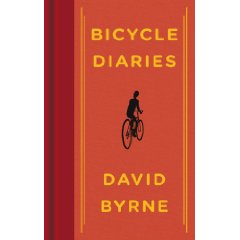
David Byrne’s Bicycle Diaries is a beautiful cloth-bound volume; the biker-icon, title, and author appear to be embossed but are actually slight depressions. A simple sticker on the back of the book displays retail cost and isbn info. The inside front cover and first page display the blurb and author info that one would usually find on a wrap-around. There’s something wonderfully tactile, warm, and pleasing about the book. It’s also a really good read.

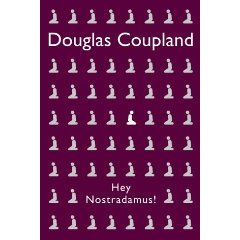
I bought Douglas Coupland’s novel Hey Nostradamus! despite its silly name because I was enamored of its lovely embossed cover. There’s a smooth elegance to the design. The back cover repeats the kneeling figure, leaving room for embossed blurbs. I should really get around to reading it.

McSweeney’s hardcover edition of Chris Adrian’s The Children’s Hospital doesn’t feature anything as fancy as cloth or embossing. No, it’s just a plain old image–a good design, to be sure–but nothing that you wouldn’t expect on a dustjacket. Only there’s no cumbersome dustjacket. McSweeney’s issued the book with a slight wrap-around–more like a bookbelt than a dustjacket–displaying isbn and other info. The peripheral bookbelt was easy to throw away. McSweeney’s has released plenty of beautiful jacketless books, but they also know how to do a jacket right. Several hardback editions of McSweeney’s Quarterly (numbers 13 and 23, for instance) feature “dustjackets” that unfold to reveal short short stories, comics, and paintings. If you’re going to do a dustjacket, make it an aesthetic object worth keeping.

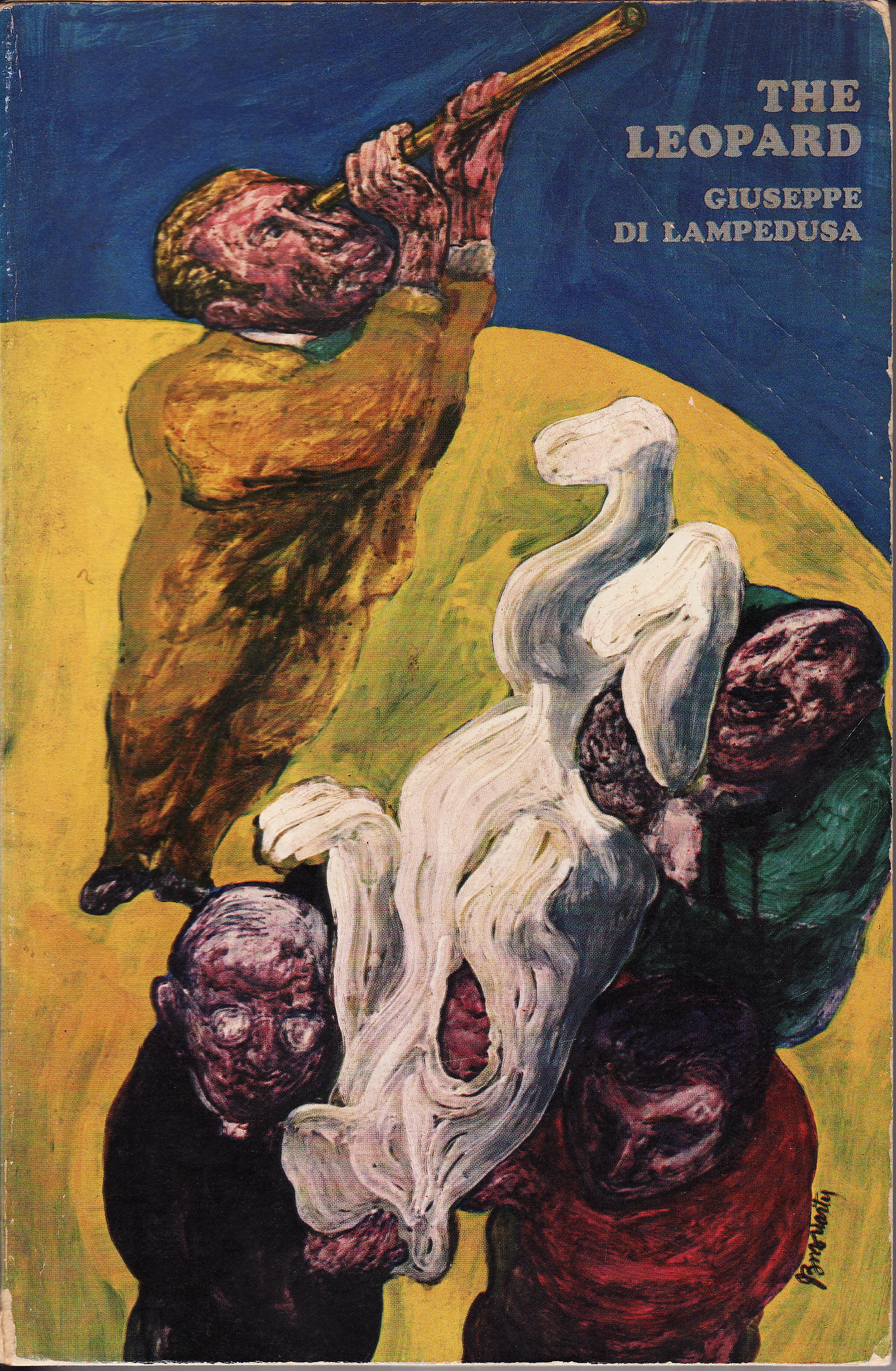
Why Don’t They Make Book Covers Like This Anymore?

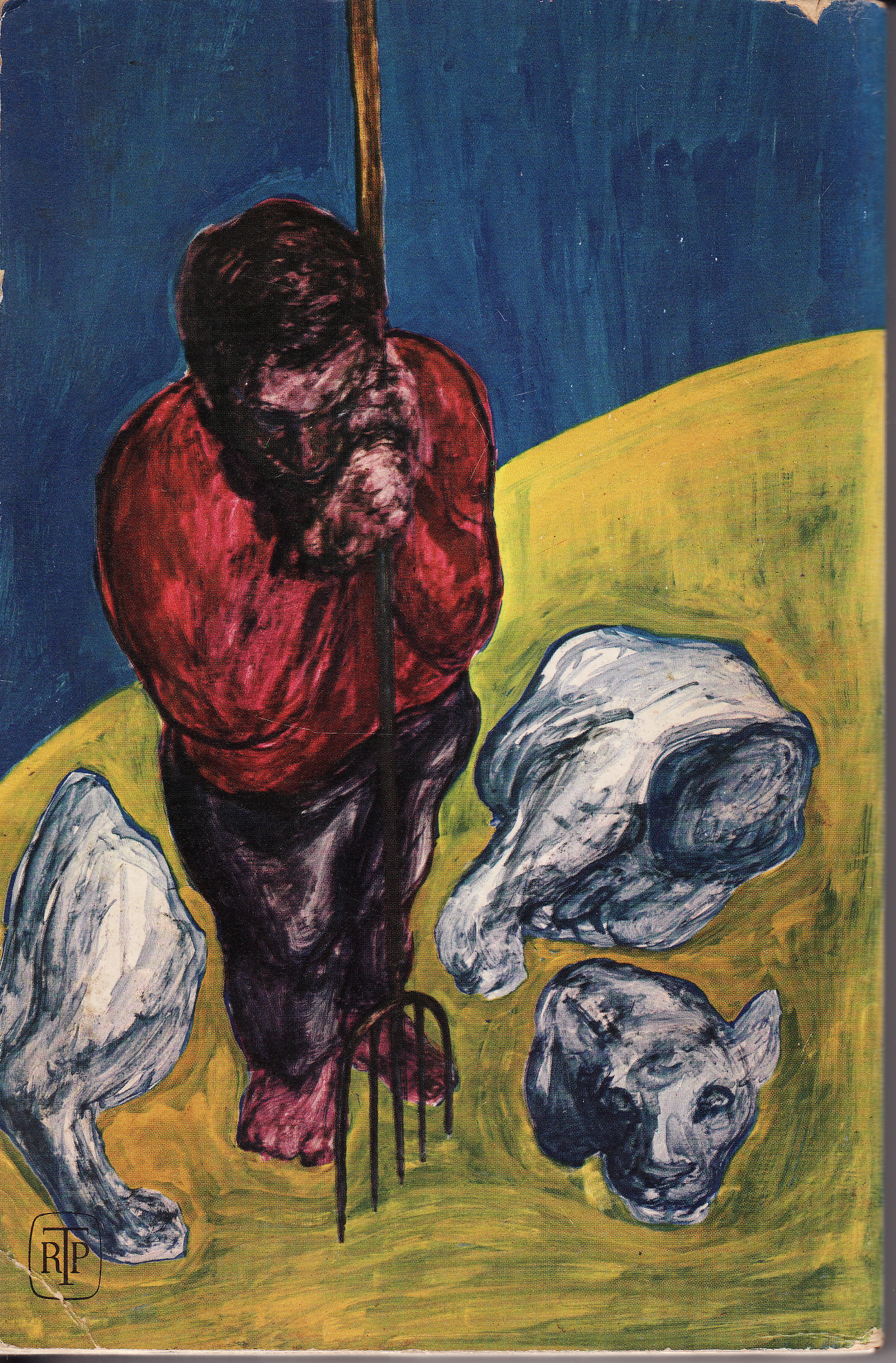
Cover design for Giuseppe di Lampedusa’s The Leopard by Jerome Moriarty, 1966 Time Reading Program edition.

Mark Twain at Stormfield, 1909

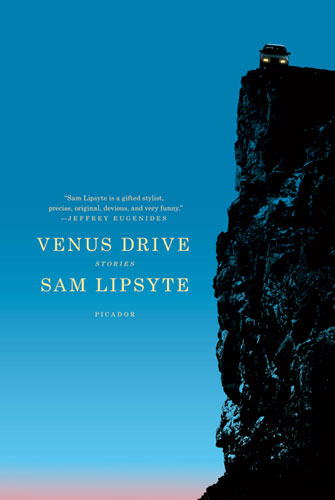
Venus Drive — Sam Lipsyte

Sam Lipsyte’s forthcoming novel The Ask is already poised to be one of the major critical successes of 2010. In concordance with its publication, Picador will print a new trade paperback edition of his short story collection Venus Drive, the first such publication since its original debut from Open City a decade ago.

The thirteen stories in Venus Drive compose a sort of novel-in-stories. The title of the collection takes its name from a banal suburban street mentioned in a few of the stories, and many of the characters seem like iterations of the same type or voice. There are washed up would-be indie rock stars, small-time coke peddlers, and underemployed and overeducated addicts. There are deviants and perverts and outsiders. There are bullies. There are dead or dying mothers, dead or dying sisters. In short, Venus Drive is its own tightly-drawn, tightly-coiled, and highly-compressed world.

As the plot points double and re-double in these stories, so do the themes. “Our culture is afraid of death, and considers it something we must wage battle against,” says Tessa, a pain specialist, a peripheral character in “Cremains.” She continues: “I say, surrender, submit. Go gentle. Terminal means terminal.” Death informs almost all of these stories in some way, and Tessa’s commentary presents the problem with death, or at least the problem these characters have with dealing with death: it’s not easy to go gentle. It goes against our culture and our nature to surrender. If she’s presented as a voice of wisdom, she’s also an ironic character, one of the many would-be authorities Lipsyte’s weirdos and outsiders can’t help but mock. “The Drury Girl,” part-suburban satire and pure pathos, posits a pre-pubescent narrator obsessed with his teenage babysitter; his dad’s cancer plays second fiddle to his lust. Thus the story neatly ties together the overarching themes of Venus Drive, sex and death. Admittedly, these are probably the only real themes of proper literature, but Lipsyte does it so damn well and lays it all out so bare and does so in such humor and grace that it really sticks. It’s good stuff.

That humor is desert-dry, of course, and succeeds so well because his characters are so endearing in their pathetic pathologies. The antiheroes of “Beautiful Game” and “My Life, for Promotional Use Only,” are also-rans in the sordid history of underground rock, addicts approaching washed-up (Are they the same person? Maybe. They have different names, of course. Doesn’t matter). A scene from “Beautiful Game” shows the ambivalence at the core of many of these characters: “At the bank machine, Gary doesn’t check the balance. Better to leave it to the gods. Someday the bank machine will shun him. Why know when?” Gene, the ex-rocker in “My Life, for Promotional Use Only” now suffers the indignities of working for his ex-girlfriend. Everyone in the story is an ex-something, everyone is growing up and leaving art (or is it “Art”?) behind. In a poignant and funny and cruel scene, familiar to many of us, Gene sees some of himself in a waitress:

Rosalie calls over the waitress and they talk for a while about somebody’s new art gallery. The waitress is famous for a piece where she served the Bloody Marys mixed with her menstrual blood. Word had it she overdid the tabasco.

I wait for the moment when our waitress stops being a notorious transgressor of social mores and becomes a waitress again, look for it in her eyes, that sad blink, and order a beer.

Gene, a former “notorious transgressor of social mores” himself feels both sorrow and hate for the waitress. He sees her job as menial and pathetic — just like his own. He doesn’t seem to think much of her art, either. Lipsyte telegraphs so much there with so few words, his sentences clean, spare, precise, and rarely of the compound variety. There’s a truncated, clipped rhythm that Lipsyte builds over the thirteen-story run that helps propel the immediacy of his tales. The stories are short, too; the longest is sixteen pages and most run to eight or ten. Lipsyte’s rhetorical gift is to shine the grubby and, at times, his sentences can feel almost too perfect, too-fussed over–but this (minor) complaint, it must be noted, comes from someone who admires occasional ambiguity or incoherence. Lipsyte removes his own authorial voice and thus achieves lucidity in his characters’ voices; somehow, though — and paradoxically — these voices bear the ghostly trace of his absence. But that seems like a silly conversation, and certainly not one for this post.

Venus Drive reminds me very much of one of my favorite books, Denis Johnson’s Jesus’ Son, which I would also call a novel-in-stories, also a spare and precise collection, also a study of weirdos and addicts and outsiders. Jesus’ Son is something of a standard in creative writing workshops (or at least it used to be) and a sensible teacher would add Venus Drive to her syllabus as well. Finally, like Jesus’ Son, Lipsyte’s book is seething, funny, and poignant, with characters tipped toward some redemption, awful or otherwise, for all their myriad sins. The book might take its name from a geographic location, but the “Venus drive” is also a spiritual inclination toward love and hope. Highly recommended.

Venus Drive is available March 2nd, 2010 in trade paperback from Picador.

Sam Lipsyte Reading from His New Novel, The Ask

You can read the first 20 pages of Sam Lipsyte’s The Ask here.

“Try To Leave Out the Parts That Readers Tend To Skip” and Other Rules for Writing Fiction

Inspired by Elmore Leonard’s “Ten Rules for Writing Fiction,” The Guardian published a collection of various authors’ rules for writing fiction earlier this week. The tone of the responses range from serious to playful to didactic to way-too-specific, with the most common–and obvious–rule being simply to “write.” Authors include Geoff Dyer, Margaret Atwood, Neil Gaiman, Jonathan Franzen, and Roddy Doyle. A few of our favorites:

Elmore Leonard:

3. Never use a verb other than “said” to carry dialogue. The line of dialogue belongs to the character; the verb is the writer sticking his nose in. But “said” is far less intrusive than “grumbled”, “gasped”, “cautioned”, “lied”. I once noticed Mary McCarthy ending a line of dialogue with “she asseverated” and had to stop reading and go to the dictionary.

Margaret Atwood:

5. Do back exercises. Pain is distracting.

Roddy Doyle:

4. Do give the work a name as quickly as possible. Own it, and see it. Dickens knew Bleak House was going to be called Bleak House before he started writing it. The rest must have been easy.

Geoff Dyer:

8. Beware of clichés. Not just the ­clichés that Martin Amis is at war with. There are clichés of response as well as expression. There are clichés of observation and of thought – even of conception. Many novels, even quite a few adequately written ones, are ­clichés of form which conform to clichés of expectation.

Jonathan Franzen

1. The reader is a friend, not an adversary, not a spectator.

8. It’s doubtful that anyone with an internet connection at his workplace is writing good fiction.

Richard Ford:

10. Don’t take any shit if you can ­possibly help it.

“The Narrative Is the Meaning”: More on Ralph Ellison’s Three Days Before the Shooting . . .

After 'Invisible Man' by Ralph Ellison, the Prologue 1999-2000 -- Jeff Wall

Why didn’t Ralph Ellison publish Three Days Before the Shooting . . . in his lifetime? I’m coming to the end of Book I–about one quarter of the way through the massive, newly-published volume from Random House’s Modern Library, and it’s beyond me why Ellison didn’t just publish the damn thing. I’ve been reading a chapter every day or so–a leisurely pace, to be sure (the book isn’t going anywhere, and this is more or less it for Ellison’s fiction), and each chapter reads like a discrete little story, but one that folds right into the overall narrative nonetheless. As I pointed out in my early review of the book, editors John F. Callahan and Adam Bradley suggest that Ellison thought his material was strong but lacked a “meaningful form,” that he didn’t want the book to repeat the picaresque romp of Invisible Man. According to citations in Arnold Rampersad’s Ralph Ellison: A Biography, Ellison always felt a certain ambivalence about his works. Writing about one of the few pieces of fiction he actually allowed published after Invisible Man, a story called “Out of the Hospital and Under the Bar,” Ellison noted that “it stands on its own if only as one of those pieces of writing which consists mainly of one damned thing after another sheerly happening.” Noting that “Out of the Hospital” was part of an unfinished early section of IM, Ellison suggested that his readers, “take this proffered middle, this agon, this passion, and supply their own beginning, and if an ending, a moral, or a perception is needed, let them supply their own. For me, of course, the narrative is the meaning.”

I happen to like one damned thing after another happening in my novels. Here’s what I don’t get–it’s hardly as if Ellison’s connective tissue between his episodes and riffs and romps is weak or insubstantial. Book I of Three Days reads, warts and all, like the beginning of a masterpiece (a de facto flawed masterpiece, of course). I’m not expecting an end or a conclusion or any sense of finality here–editors Callahan and Bradley have judiciously seen to that (perhaps underestimating contemporary audiences’ tolerance for ambiguity)–but, given the sheer weight of Ellison’s writing, and the many, many–over 40!–years that he worked on the second novel, it’s hard to find any exterior reasons as to why he couldn’t just wrap it up. Given that Invisible Man was received as a novel of definitive and important social commentary, was the burden to follow-up too much? Was it the special pressure of having to be the voice of a generation that led to Ellison’s sustained muteness? (Okay, okay, the guy published essays and gave lectures. But you know what I mean).

I can’t help but think of William T. Vollmann as I write this. Vollmann is the greatest living American writer that no one reads. His latest novel Imperial is an opus in the tradition of social realism (as well as the counter-tradition of experimental fiction). It’s 1344 pages, over 250 pages longer than Three Days. It’s particularly ungenerous and frustrating for the few folks that will actually dare to read it. But it’s hardly the pinnacle of Vollmann’s career. The guy’s published almost 20 books in as many years; many of these novels–most of them, really, run to over (many way over) 500 pages. Like Ellison, Vollmann’s best work is a sustained interrogation of culture that surpasses the limits of journalism, while at the same time honoring the journalistic technique’s regard for truth. It seems to me that we no longer live in an age where a writer as erudite and cunning and forceful as Vollmann might be a public figure, and that this has somehow paradoxically freed the man to write and publish whatever he wants. While voluminous Vollmann has left too much for posterity, too many entry points for daunted readers (although The Rifles or The Ice-Shirt will do fine), Ellison seems to have been paralyzed by the monolithic shadow of his canonical entry Invisible Man.

Perhaps Ellison’s unresolved hesitation was the manifestation of his anxiety to get it right, to speak not only perfectly for African-Americans, but also for his generation. The ’50s turned into the ’60s (and then the ’70s, ’80s, and ’90s) and the social spectrum shifted. Against the backdrop of these changes, Ellison still felt like the core schema of his novel applied, yet he also felt the need to continue sculpting its many nuances. Why couldn’t trust his readers to “take this proffered middle, this agon, this passion” and make meaning of it? In any case, we’re left with the not-minor consolation of Three Days, a book which will surely go down in history as one of literature’s greatest puzzles.

“Apocalypse Needs A Breather” — China Miéville Riffs on Hillcoat’s Adaptation of The Road

One of Biblioklept’s favorite weirdos, China Miéville takes on a perceived overabundance of apocalypse movies in his article “The End, The End, The End, Etcetera” published in McSweeney’s #33, aka The Panaroma, aka the giant-assed newspaper issue (here’s a quick review: Jeesy Creezy the thing is massive. It’s like a bizarre aesthetic tchtochke that just happens to be overstuffed with all kinds of great writers writing on all kinds of great stuff. I’ve been trying to digest it on Sundays after breakfast with a few coffees but it’s too big. It’s really too much, and it’s also the sort of document that should tell McSweeney’s-haters to fuck off, or at least reveal them as kinda mean-spirited. It’s like a strange, thorough dream, where Stephen King writes your sports section and William Vollman does in-depth national reporting and Chris Ware handles the comics page. Hang on–that’s probably not a legit review. Anyway).

So Miéville basically tells Hollywood to give it a rest with all the apocalypse movies, saying that it’s not that he doesn’t love them, it’s just that there’s such a surplus as of late. “Hollywood has studied at porn’s knee,” he writes, arguing that end-of-the-world flicks like Armegeddon, The Day After Tomorrow, 2012, Wall-E, 9, The Book of Eli and Deep Impact are “sexual fantasies . . . These apocalyptes are clearly scratching various itches.” Miéville dubs the trend in disaster flicks “bukkakalypse,” arguing that these films are “obsessed not only with the world-drenching spurt itself, but with the Face of the Earth wet with its effects, stoically putting up with the soaking.” Charming. +100 internets to any soul daring enough to google “bukkakalypse.”

Miéville focuses the thrust of his article on John Hillcoat’s film adaptation of Cormac McCarthy’s novel The Road. His shorthand review kinda sorta captures my own ambivalence about the film: “Is The Road a good film? Sure. Maybe. Whatever. It depends on what you mean by ‘good.'” Miéville suggests that, “For all its portent, The Road displays a preemptive nostalgia perhaps even more pronounced than in its pulpier cousins.” Citing the father and the boy’s use of a consumerist emblem, the shopping cart, to move on and “carry the fire,” Miéville goes on to argue that,

The film, then, is structured around a punning triptych. There’s that good, lost consumption early on [the loss of a consumerist world]. Then, in the absence of commodity, there’s the terrible, Hobbesian predatory consumption of cannibalism, relentlessly stressed as an ultimate evil, rather than the relatively everyday sordidness it would almost certainly become. And refuse to eat each other? What then? Then the final iteration of the term. The father at last doubles up, coughing bronchially, and hawks up blood. In that shopless nightmare, what else is afflicting him but consumption.

Puns! Okay. As a committed Marxist or materialist (or whatever he is), of course Miéville’s gonna read The Road as an allegory of apocalypse as loss of consumerist possibility (he reads the whole Coca-Cola-drinking episode as a version of lost sacrament). Fair analysis, I guess–not one I particularly buy, but without getting into a whole ball of wax over the intentional fallacy and whatnot, I think that Miéville’s criticism that the film (and book) doesn’t recognize the Darwinian endgame of “Hobbesian predatory consumption” as “the relatively everyday sordidness it would almost certainly become” kinda sorta misses the whole point of the narrative. In my own review of the book, I argued that McCarthy’s refusal to give into the infanticide that the novel’s schema overwhelmingly predicated was hard to swallow (“cop out,” I believe, was my term), but it also seems to me that the moral impetus of the novel involves a refusal of cannibalism, an idea that to survive as a human is more than just to survive as a body. But back to film.

I didn’t particularly care for Hillcoat’s version of The Road, even though I wanted to, even though the actors were great, even though it looked great, etc. I don’t know what I didn’t like about it (okay, I thought Nick Cave’s score was both awful and intrusive, but that seems minor here). It just seemed thoroughly unnecessary and ultimately unfun. Miéville again, this time on an end-of-the-world film I can’t help but love:

The “hope” at the end of Mad Max: Beyond the Thunderdome is that the lost tribes have managed to turn on a few lights in Sydney. Such hankering for drab normality doesn’t have to be particularly convincing to do its rhetorical job. Just as well, really, because seriously? After all the splendidly coiffed and colorful shenanigans of Tina Turner’s Bartertown, is living in a partially revived Bondi really an improvement? Couldn’t we take everything in a different direction altogether? Do something new? The aspirational Good Futures of these Bad Futures are always their pasts–our present.

Although Miéville gives The Road the credit it deserves for being one of the rare apocalypse flicks that “evades this pre-post-facto nostalgia,” he also reiterates my own criticism: it’s just not that fun. And the end of the world should be fun. Miéville doesn’t mention films like Zombieland, a forgettable but enjoyable farce that posits apocalypse as freewheelin’ opportunity, or the self-aware (but not too-self-aware) pastiche Doomsday, a film that fuses every hoary apocalypse trope into 90 minutes of escapist, ass-kicking, thoroughly nonsensical fun. Neither film aspires to great art (unlike Hillcoat’s take on The Road), nor do these films aim for the catharsis-via-annihilation of blockbuster fare like Armegeddon. They’re just good fun, which is all I really want from the end of the world.

David Foster Wallace Reads “A Radically Condensed History of Postindustrial Life”

The audiobook of Brief Interviews with Hideous Men came out almost a year after its author, David Foster Wallace killed himself, which kinda sorta makes it strange to hear his voice read some of these tales. Here’s Wallace reading “A Radically Condensed History of Postindustrial Life,” a short short short story. As far as audiobooks goes, this collection is fantastic. There’s a great cast here, and the actors, including Bobby Canavale, Will Forte, Christopher Meloni, John Krasinski (who adapted the book into a film which I’ve, despite having had a pirate copy for several months, been too afraid to watch) intuit Wallace’s work and communicate its humor, pathos, and subtlety. The biggest treat though is hearing Wallace’s voice again.