
Gustave Dore’s marvelous illustration’s for Edgar Allan Poe’s poem “The Raven”

“One need not be a Chamber — to be Haunted –” by Emily Dickinson:
One need not be a Chamber — to be Haunted —
One need not be a House —
The Brain has Corridors — surpassing
Material Place —Far safer, of a Midnight Meeting
External Ghost
Than its interior Confronting —
That Cooler Host.Far safer, through an Abbey gallop,
The Stones a’chase —
Than Unarmed, one’s a’self encounter —
In lonesome Place —Ourself behind ourself, concealed —
Should startle most —
Assassin hid in our Apartment
Be Horror’s least.The Body — borrows a Revolver —
He bolts the Door —
O’erlooking a superior spectre —
Or More —
“I reason, Earth is short–” by Emily Dickinson:
I reason, Earth is short —
And Anguish — absolute —
And many hurt,
But, what of that?I reason, we could die —
The best Vitality
Cannot excel Decay,
But, what of that?I reason, that in Heaven —
Somehow, it will be even —
Some new Equation, given —
But, what of that?
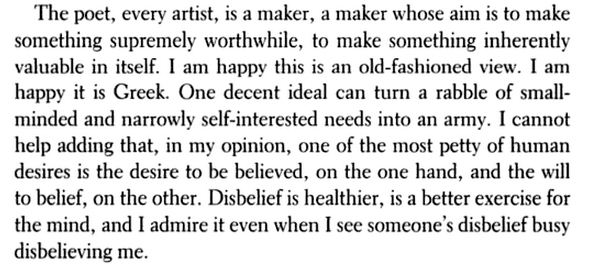
–from William H. Gass’s essay “Finding a Form.”
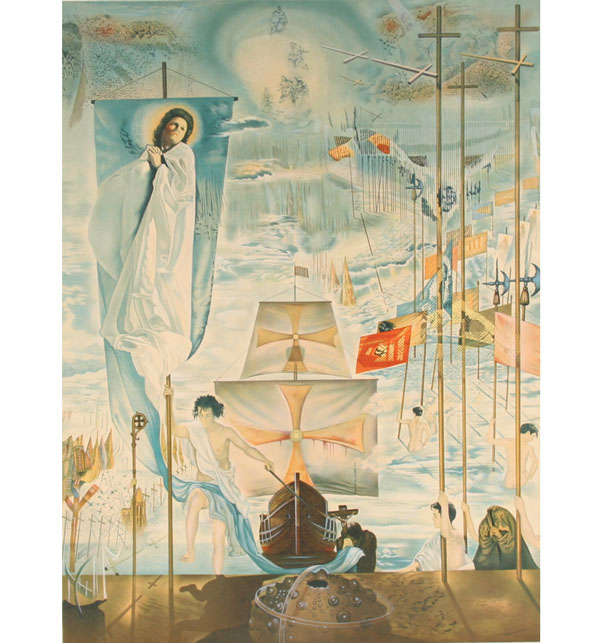
“Prayer of Columbus” by Walt Whitman
A batter’d, wreck’d old man,
Thrown on this savage shore, far, far from home,
Pent by the sea and dark rebellious brows, twelve dreary months,
Sore, stiff with many toils, sicken’d and nigh to death,
I take my way along the island’s edge,
Venting a heavy heart.
I am too full of woe!
Haply I may not live another day;
I cannot rest O God, I cannot eat or drink or sleep,
Till I put forth myself, my prayer, once more to Thee,
Breathe, bathe myself once more in Thee, commune with Thee,
Report myself once more to Thee.
Thou knowest my years entire, my life,
My long and crowded life of active work, not adoration merely;
Thou knowest the prayers and vigils of my youth,
Thou knowest my manhood’s solemn and visionary meditations,
Thou knowest how before I commenced I devoted all to come to Thee,
Thou knowest I have in age ratified all those vows and strictly kept them,
Thou knowest I have not once lost nor faith nor ecstasy in Thee,
In shackles, prison’d, in disgrace, repining not,
Accepting all from Thee, as duly come from Thee.
All my emprises have been fill’d with Thee,
My speculations, plans, begun and carried on in thoughts of Thee,
Sailing the deep or journeying the land for Thee;
Intentions, purports, aspirations mine, leaving results to Thee.
O I am sure they really came from Thee,
The urge, the ardor, the unconquerable will,
The potent, felt, interior command, stronger than words,
A message from the Heavens whispering to me even in sleep,
These sped me on.
By me and these the work so far accomplish’d,
By me earth’s elder cloy’d and stifled lands uncloy’d, unloos’d,
By me the hemispheres rounded and tied, the unknown to the known.
The end I know not, it is all in Thee,
Or small or great I know not–haply what broad fields, what lands,
Haply the brutish measureless human undergrowth I know,
Transplanted there may rise to stature, knowledge worthy Thee,
Haply the swords I know may there indeed be turn’d to reaping-tools,
Haply the lifeless cross I know, Europe’s dead cross, may bud and
blossom there.
One effort more, my altar this bleak sand;
That Thou O God my life hast lighted,
With ray of light, steady, ineffable, vouchsafed of Thee,
Light rare untellable, lighting the very light,
Beyond all signs, descriptions, languages;
For that O God, be it my latest word, here on my knees,
Old, poor, and paralyzed, I thank Thee.
My terminus near,
The clouds already closing in upon me,
The voyage balk’d, the course disputed, lost,
I yield my ships to Thee.
My hands, my limbs grow nerveless,
My brain feels rack’d, bewilder’d,
Let the old timbers part, I will not part,
I will cling fast to Thee, O God, though the waves buffet me,
Thee, Thee at least I know.
Is it the prophet’s thought I speak, or am I raving?
What do I know of life? what of myself?
I know not even my own work past or present,
Dim ever-shifting guesses of it spread before me,
Of newer better worlds, their mighty parturition,
Mocking, perplexing me.
And these things I see suddenly, what mean they?
As if some miracle, some hand divine unseal’d my eyes,
Shadowy vast shapes smile through the air and sky,
And on the distant waves sail countless ships,
And anthems in new tongues I hear saluting me.
“Lobster” by Anne Sexton:
A shoe with legs,
a stone dropped from heaven,
he does his mournful work alone,
he is the old prospector for golf,
with secret dreams of God-heads and fish heads.
Until suddenly a cradle fastens round him
and his is trapped as the U.S.A. sleeps.
Somewhere far off a woman lights a cigarette;
somewhere far off a car goes over a bridge;
somewhere far off a bank is held up.
This is the world the lobster knows not of.
He is the old hunting dog of the sea
who in the morning will rise from it
and be undrowned
and they will take his perfect green body
and paint it red
(Thanks Jescie).
Goethe probably retards the development of the German language by the force of his writing. Even though prose style has often traveled away from him in the interim, still, in the end, as at present, it returns to him with strengthened yearning and even adopts obsolete idioms found in Goethe but otherwise without any particular connection with him, in order to rejoice in the completeness of its unlimited dependence.
From Kafka’s Diaries.
Ask whomever you will but you’ll never find out where I’m lodging,
High society’s lords, ladies so groomed and refined.
“Tell me, was Werther authentic? Did all of that happen in real life?”
“Lotte, oh where did she live, Werther’s only true love?”
How many times have I cursed those frivolous pages that broadcast
Out among all mankind passions I felt in my youth!
Were he my brother, why then I’d have murdered poor Werther.
Yet his despondent ghost couldn’t have sought worse revenge.
That’s the way “Marlborough,” the ditty, follows the Englishman’s travels
Down to Livorno from France, thence from Livorno to Rome,
All of the way into Naples and then, should he flee on to Madras,
“Marlborough” will surely be there, “Marlborough” sung in the port.
Happily now I’ve escaped, and my mistress knows Werther and Lotte
Not a whit better than who might be this man in her bed:
That he’s a foreigner, footloose and lusty, is all she could tell you,
Who beyond mountains and snow, dwelt in a house made of wood.
From Section I of Goethe’s Erotica Romana.

W.G. Sebald’s poetry collection After Nature. Not really poetry. Or maybe it is poetry. I don’t know what poetry is.
Little is known of the life of
Matthias Grünewald of Aschaffenburg.
The first account of the painter
In Joachim von Sandrart’s German Academy
of the year 1675 begins with the notice
that the author knows not one person living
who could provide a written or oral
testimony of that praiseworthy hand.
We may trust the report by Sandrart,
for a portrait in Würzburg museum
has preserved him, aged eighty-two,
wide awake and with eyes uncommonly clear.
Lightly in grey and black,
he writes, Mattheus had painted the outer
wings of an altarpiece made by Dürer
of Mary’s ascension in the
Preachers’ convent in Frankfurt and
thus had lived at around 1505.
Exceedingly strange was the transfiguration
of Christ on Mount Tabor
limned in watercolours, especially
one cloud of wondrous beauty, wherein
above the Apostles convulsed
with awe, Moses and Elijah appear,
a marvel surpassed.
Then in the Mainz cathedral
there had been three altar panels
with facing fronts and reverse
sides painted, one of them
showing a blind hermit who, as he crosses
the frozen Rhine river with a boy
to guide him, is assaulted by two murderers
and beaten to death. Anno 1631 or ’32,
this panel in the wild war of that era
had been taken away and sent off to Sweden
but by shipwreck beside many other
such pieces of art had perished
in the depths of the sea.
At Isenheim, Sandrart had not been,
but had heard of the altar-work there,
which, he writes, was so fashioned that
real life could scarce have been other
and where, it was said, a St. Anthony with
demons meticulously drawn was to be seen.
Except for a St. John with hands clasped
of which he, Sandrart, when at one time in Rome
he was counterfeiting the pope, had caught sight,
with certainty this was all that was not lost
of the work of Aschaffenburg
painter of whom, besides, he knew only
that most of the time he had
resided in Mainz, led a reclusive
melancholy life and been ill-married.
—W.G. Sebald. Chapter II of “…As Snow on the Alps.” From After Nature.
“Carson McCullers,” a poem by Charles Bukowski—
she died of alcoholism
wrapped in a blanket
on a deck chair
on an ocean
steamer.all her books of
terrified lonelinessall her books about
the cruelty
of loveless lovewere all that was left
of heras the strolling vacationer
discovered her bodynotified the captain
and she was quickly dispatched
to somewhere else
on the shipas everything
continued just
as
she had written it
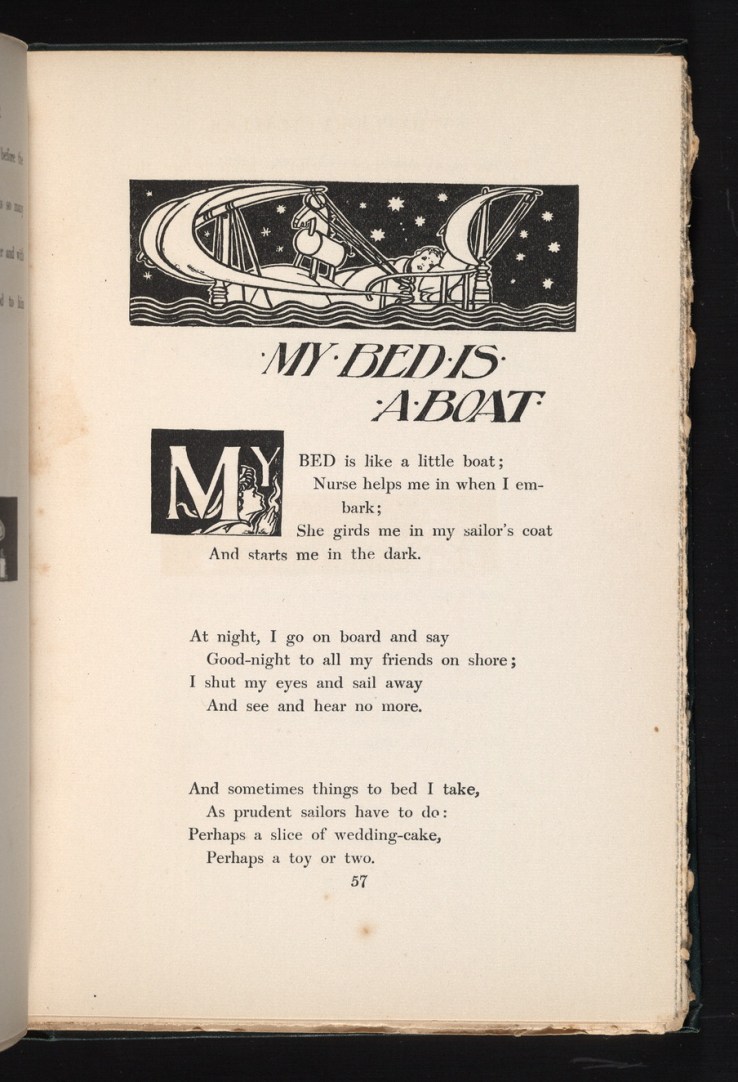
Among the Horses
I dreamed of a woman with no mouth, says the man in bed. I couldn’t help smiling. The piston forces the images up again. Look, he tells her, I know another story that’s just as sad. He’s a writer who lives on the edge of town. He makes a living working a riding school. He’s never asked for much, all he needs is a room and time to read. But one day he meets a girl who lives in another city and he falls in love. They decide to get married. The girl will come to live with him. The first problem arises: finding a place big enough for the two of them. The second problem is where to get the money to pay for it. Then one thing leads to another: a job with a steady income (at the stables he works on commission, plus room, board, and a small monthly stipend), getting his papers in order, registering with social security, etc. But for now, he needs money to get to the city where his fianceé lives. A friend suggests the possibility of writing articles for a magazine. He calculates that the first four would pay for the bus trip there and back and maybe a few days at a cheap hotel. He writes his girlfriend to tell her he’s coming. But he can’t finish a single article. He spends the evenings sitting outdoors at the bar of the riding school where he works, trying to write, but he can’t. Nothing comes out, as they say in common parlance. The man realizes that he’s finished. All he writes are short crime stories. The trip recedes from his future, is lost, and he remains listless, inert, going automatically about his work among the horses.
“Among the Horses” by Roberto Bolaño. Section 11 of his poem-novel Antwerp.

Charles Olson’s Selected Writing (New Directions): In all seriousness, why don’t more publishers go for simple covers like this one? Love it.
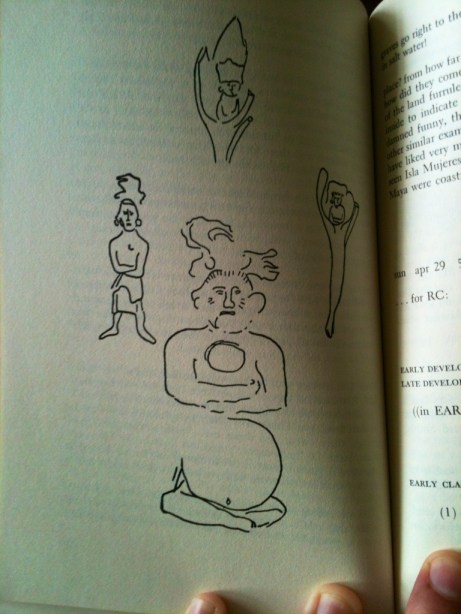
A scribbling:
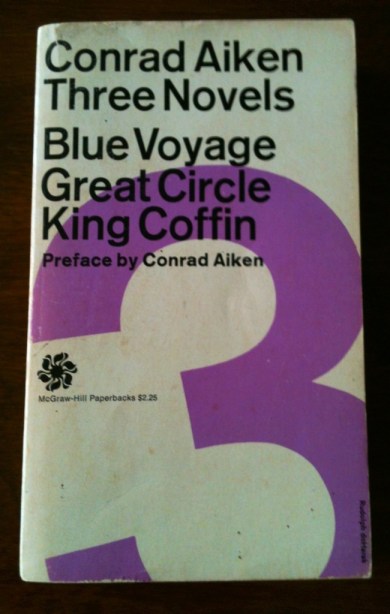
Also, had to pick up something by Conrad Aiken after reading about his influence on Malcolm Lowry:
Charles Olson’s interview with The Paris Review is one of the best things I’ve read in ages. Here’s a nice big chunk from the beginning:
CHARLES OLSON
Get a free chair and sit down. Don’t worry about anything. Especially this. We’re living beings and forming a society; we’re creating a total, social future. Don’t worry about it. The kitchen’s reasonably orderly. I crawled out of bed as sick as I was and threw a rug out the window.
INTERVIEWER
Now the first question I wanted to ask you. What fills your day?
OLSON
Nothing. But nothing, literally, except my friends.
INTERVIEWER
These are very straight questions.
OLSON
Ah, that’s what interviews are made of.
INTERVIEWER
Why have you chosen poetry as a medium of artistic creation?
OLSON
I think I made a hell of a mistake. That’s the first confidence I have. The other is that—I didn’t really have anything else to do. I mean I didn’t even have enough imagination to think of something else. I was supposed to go to Holy Cross because I wanted to play baseball. I did, too. That’s the only reason I wanted to go to Holy Cross. It had nothing to do with being a priest.
INTERVIEWER
Are you able to write poetry while remaining in the usual conditions of life—without renouncing or giving up anything?
OLSON
That’s the trouble. That’s what I’ve done. What I’ve caused and lost. That describes it perfectly. I’ve absolutely.
INTERVIEWER
Are the conditions of life at the beginning of a work . . .
OLSON
I’m afraid as well at the end. It’s like being sunk in a cockpit. I read the most beautiful story about how Will Rogers and Wiley Post were lost; they stomped onto a lake about ten miles from Anchorage, Alaska, to ask an Indian if Anchorage was in that direction and when they took off, they plunged back into the lake. The poor boy was not near enough to rescue them, so he ran ten miles to Anchorage to get the people to come out. He said one of the men had a sort of a cloth on his eye and the guy then knew Post and Rogers were lost. Wiley Post put down on pontoons; so he must have come up off this freshwater lake and went poomp. Isn’t that one of those great national treasures. I’ll deal you cards, man. I’ll make you a tarot.
INTERVIEWER
Does poetry constitute the aim of your existence?
OLSON
Of course I don’t live for poetry; I live far more than anybody else does. And forever and why not. Because it is the only thing. But what do you do meanwhile? So what do you do with the rest of the time? That’s all. I said I promised to witness. But I mean I can’t always.
INTERVIEWER
Would you say that the more you understand what you are doing in your writing, the greater the results?
OLSON
Well, it’s just one of those things that you’re absolutely so bitterly uninterested in that you can’t even live. Somehow it is so interesting that you can’t imagine. It is nothing, but it breaks your heart. That’s all. It doesn’t mean a thing. Do you remember the eagle? Farmer Jones gets higher and higher and he is held in one of the eagle’s claws and he says you wouldn’t shit me would you? That’s one of the greatest moments in American poetry. In fact, it is the great moment in American poetry. What a blessing we got.
INTERVIEWER
Does Ezra Pound’s teaching bear any relevance to how your poems are formed on the page?
OLSON
My masters are pretty pertinent. Don’t cheat your own balloon. I mean—literally—like a trip around the moon—the Jules Verne—I read that trip . . . it is so completely applicable today. They don’t have any improvements yet.
INTERVIEWER
Do you write by hand or directly on the typewriter? Does either method indicate a specific way in which the poem falls on the page?
OLSON
Yeah. Robert Duncan is the first man to ask me the query. He discovered when he first came to see me that I wrote on the machine and never bothered to correct. There’s the stuff. Give me half a bottle. Justice reigns.
 Biblioklept