Portrait of Walt Whitman — Thomas Wilmer Dewing

May 31, ’82.—”From to-day I enter upon my 64th year” (Walt Whitman)

May 31, ’82.—”From to-day I enter upon my 64th year. The paralysis that first affected me nearly ten years ago, has since remain’d, with varying course—seems to have settled quietly down, and will probably continue. I easily tire, am very clumsy, cannot walk far; but my spirits are first-rate. I go around in public almost every day—now and then take long trips, by railroad or boat, hundreds of miles—live largely in the open air—am sunburnt and stout, (weigh 190)—keep up my activity and interest in life, people, progress, and the questions of the day. About two-thirds of the time I am quite comfortable. What mentality I ever had remains entirely unaffected; though physically I am a half-paralytic, and likely to be so, long as I live. But the principal object of my life seems to have been accomplish’d—I have the most devoted and ardent of friends, and affectionate relatives—and of enemies I really make no account.”

From an 1882 letter Walt Whitman wrote to a German friend.

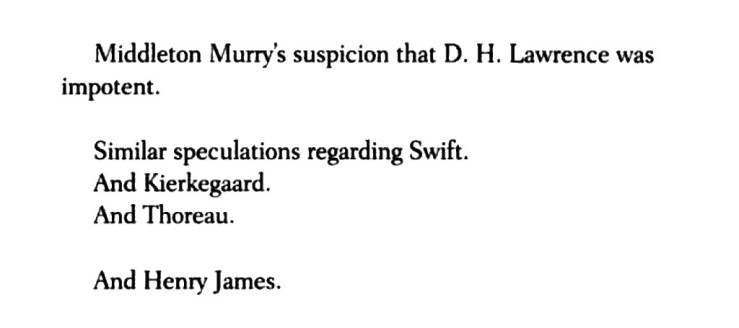
Suspicions (David Markson)

20140529-203223-73943207.jpg

“New literary forms always produce new forms of life” (From Chekhov’s Note-Books)

* * * * *

In the servants’ quarters Roman, a more or less dissolute peasant, thinks it his duty to look after the morals of the women servants.

* * * * *

A large fat barmaid—a cross between a pig and white sturgeon.

* * * * *

At Malo-Bronnaya (a street in Moscow). A little girl who has never been in the country feels it and raves about it, speaks about jackdaws, crows and colts, imagining parks and birds on trees.

* * * * *

Two young officers in stays.

* * * * *

A certain captain taught his daughter the art of fortification.

* * * * *

New literary forms always produce new forms of life and that is why they are so revolting to the conservative human mind.

* * * * *

A neurasthenic undergraduate comes home to a lonely country-house, reads French monologues, and finds them stupid.

* * * * *

People love talking of their diseases, although they are the most uninteresting things in their lives.

* * * * *

An official, who wore the portrait of the Governor’s wife, lent money on interest; he secretly becomes rich. The late Governor’s wife, whose portrait he has worn for fourteen years, now lives in a suburb, a poor widow; her son gets into trouble and she needs 4,000 roubles. She goes to the official, and he listens to her with a bored look and says: “I can’t do anything for you, my lady.”

* * * * *

Women deprived of the company of men pine, men deprived of the company of women become stupid.

* * * * *

–From Anton Chekhov’s Note-Books.

The public is a huge nothing (Kierkegaard)

In order for leveling really to occur, first it is necessary to bring a phantom into existence, a spirit of leveling, a huge abstraction, an all-embracing something that is nothing, an illusion–the phantom of the public. . . . The public is the real Leveling-Master, rather than the leveler itself, for leveling is done by something, and the public is a huge nothing.

The public is an idea, which would never have occurred to people in ancient times, for the people themselves en masse in corpora took steps in any active situation, and bore responsibility for each individual among them, and each individual had to personally, without fail, present himself and submit his decision immediately to approval or disapproval. When first a clever society makes concrete reality into nothing, then the Media creates that abstraction, “the public,” which is filled with unreal individuals, who are never united nor can they ever unite simultaneously in a single situation or organization, yet still stick together as a whole. The public is a body, more numerous than the people which compose it, but this body can never be shown, indeed it can never have only a single representation, because it is an abstraction. Yet this public becomes larger, the more the times become passionless and reflective and destroy concrete reality; this whole, the public, soon embraces everything. . . .

The public is not a people, it is not a generation, it is not a simultaneity, it is not a community, it is not a society, it is not an association, it is not those particular men over there, because all these exist because they are concrete and real; however, no single individual who belongs to the public has any real commitment; some times during the day he belongs to the public, namely, in those times in which he is nothing; in those times that he is a particular person, he does not belong to the public. Consisting of such individuals, who as individuals are nothing, the public becomes a huge something, a nothing, an abstract desert and emptiness, which is everything and nothing. . . .

The Media is an abstraction (because a newspaper is not concrete and only in an abstract sense can be considered an individual), which in association with the passionlessness and reflection of the times creates that abstract phantom, the public, which is the actual leveler. . . . More and more individuals will, because of their indolent bloodlessness, aspire to become nothing, in order to become the public, this abstract whole, which forms in this ridiculous manner: the public comes into existence because all its participants become third parties. This lazy mass, which understands nothing and does nothing, this public gallery seeks some distraction, and soon gives itself over to the idea that everything which someone does, or achieves, has been done to provide the public something to gossip about. . . . The public has a dog for its amusement. That dog is the Media. If there is someone better than the public, someone who distinguishes himself, the public sets the dog on him and all the amusement begins. This biting dog tears up his coat-tails, and takes all sort of vulgar liberties with his leg–until the public bores of it all and calls the dog off. That is how the public levels.

From Soren Kierkegaard’s essay “The Present Age.”

I read the passage first in Dwight Macdonald’s essay “Masscult and Midcult” — it’s the final section of Macdonald’s essay, followed simply by “This is the essence of what I have tried to say.” (The translation in Macdonald’s essay is a bit different than the one I’ve cited/linked to here, which is by Alexander Dru).
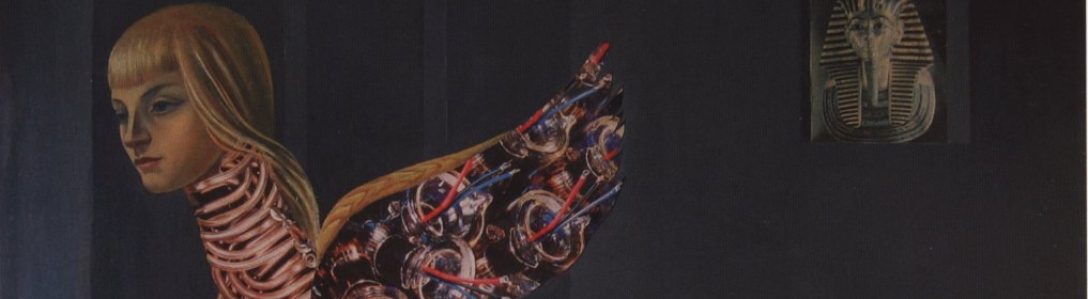
RIP Maya Angelou

600full-maya-angelou

RIP Maya Angelou, 1928-2014

In my time as a teacher, I’ve seen Maya Angelou’s stories and poems—and in particular her memoir I Know Why the Caged Bird Sings—command the attention of students who had previously complained that they hated reading. I’ve seen my classroom library looted of her works; I’ve seen tattered copies of her books passed from hand to hand; I’ve had students ask for More please, more of this, more like this. Angelou’s writing has served as a bridge to life-long reading habits for many young people, and I imagine it will into the future. RIP.

“On the Comparative Place of Interest and Beauty in Works of Art” — Arthur Schopenhauer

“On the Comparative Place of Interest and Beauty in Works of Art”

by

Arthur Schopenhauer

In the productions of poetic genius, especially of the epic and dramatic kind, there is, apart from Beauty, another quality which is attractive: I mean Interest.

The beauty of a work of art consists in the fact that it holds up a clear mirror to certain ideas inherent in the world in general; the beauty of a work of poetic art in particular is that it renders the ideas inherent in mankind, and thereby leads it to a knowledge of these ideas. The means which poetry uses for this end are the exhibition of significant characters and the invention of circumstances which will bring about significant situations, giving occasion to the characters to unfold their peculiarities and show what is in them; so that by some such representation a clearer and fuller knowledge of the many-sided idea of humanity may be attained. Beauty, however, in its general aspect, is the inseparable characteristic of the idea when it has become known. In other words, everything is beautiful in which an idea is revealed; for to be beautiful means no more than clearly to express an idea.

Thus we perceive that beauty is always an affair of knowledge, and that it appeals to the knowing subject, and not to the will; nay, it is a fact that the apprehension of beauty on the part of the subject involves a complete suppression of the will. Continue reading ““On the Comparative Place of Interest and Beauty in Works of Art” — Arthur Schopenhauer”

“Illness and Kafka” — Roberto Bolaño

Capture

Umberto Eco — Rudcef

umberto

Oscar Wilde’s Cigarette Case

This silver cigarette case was presented by Bosie Douglas to his disgraced lover, Oscar Wilde. To launch Gilbert and Sullivan’s latest operetta Patience in America – a satire on Aestheticism – the impresario Richard D’Oyly Carte paid Wilde to undertake an extensive lecture tour of the United States in 1882. To everyone’s surprise (including his own), the flamboyant author and professional aesthete won over America – and the West – to such an extent that his lecture tour had to be extended into the following year.

Via.

“The Gentle Man” — William Carlos Williams

Capture

Portrait of William S. Burroughs — Jonathan Edwards

williamsburroughs

Bruno Jasieński’s The Legs of Izolda Morgan (Book Acquired, 5.01.2014)

20140516-102034.jpg

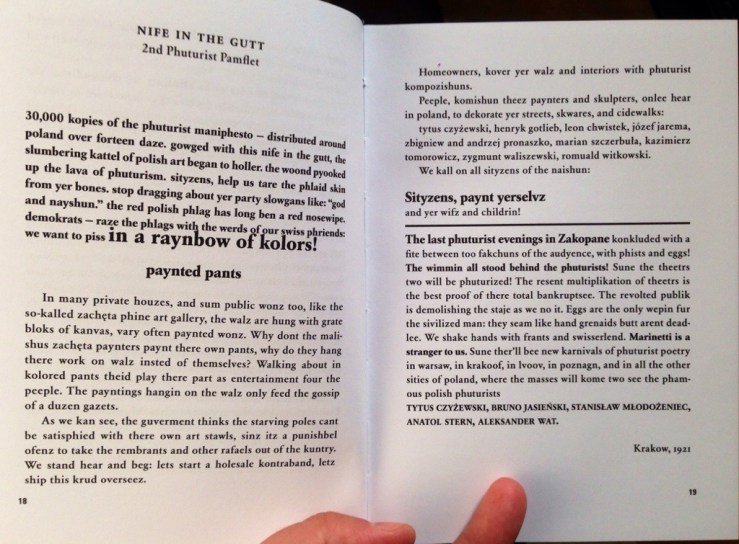
The recent publication of Bruno Jasieński’s The Legs of Izolda Morgan offers another strong argument that Twisted Spoon Press is publishing some of the most fascinating—and most beautiful—books available today. Clothbound and handsomely printed, Izolda Morgan collects several of Jasieński’s futurist manifestos, an essay, stories, and satires.

20140516-093921.jpg

Publisher’s blurb:

Considered the enfant terrible of the Polish avant-garde, lauded by critics and scorned by the public, Bruno Jasieński suddenly declared the end of Futurism in Poland soon after his short “novel” The Legs of Izolda Morgan appeared in 1923. An extraordinary example of Futurist prose, this fantastic tale cautions against the machine supplanting the human while the human body is disaggregated into fetishized constituent parts. As central to Jasieński’s oeuvre, the text is situated here between two seminal manifestoes and the important essay “Polish Futurism,” which signaled the movement’s end in the context of its confused reception in Poland, the towering influence of Mayakovsky, and what set it apart from the futurisms of Italy and Russia. The condensed story “Keys” displays Jasieński’s turn toward satire to lambaste the hypocrisies pervasive in powerful institutions, and this is further developed in the two longer grotesques from his time in the Soviet Union in the 1930s. Translated into English from the Russian for the first time, these two late stories expose the nefarious absurdity of racial persecution and warmongering and the lengths social and political structures will go to underpin them.


A manifesto:

20140516-102256.jpg

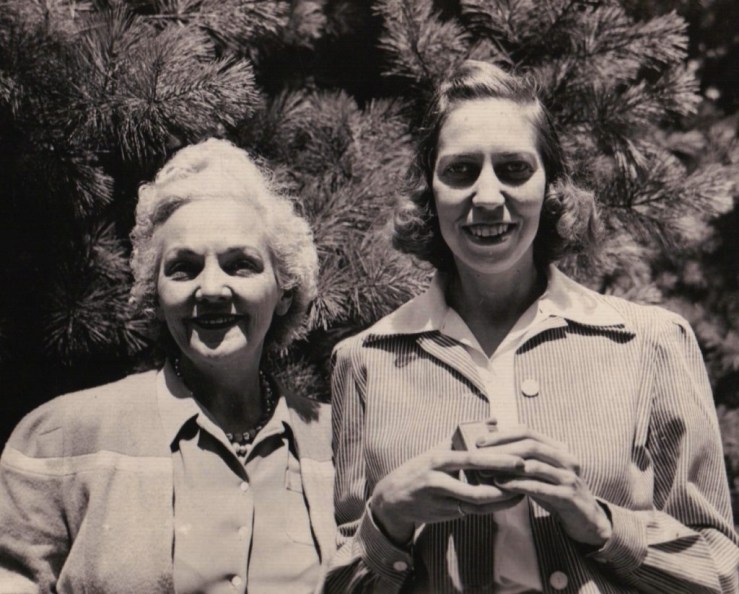
Katherine Anne Porter and Eudora Welty at Yaddo in 1941

Katherine-Anne-Porter-and-Eudora

“His romantic ancestor, his ancestor of the romantic death” | Bolaño and Borges

Jorge Luis Borges is first mentioned in the sixth paragraph of Roberto Bolaño’s masterful short story “The Insufferable Gaucho.” In this paragraph, the narrator tells us that the story’s hero, an ex-judge named Pereda, believed “the best Argentine writers were Borges and his son; any further commentary on that subject was superfluous.”

Several paragraphs later, Bolaño’s narrator explicitly references Borges’s short story “The South,” the precursor text for “The Insufferable Gaucho.” The reference to Borges is tied again to Pereda’s son, the writer Bebe.

Leaving tumultuous Buenos Aires, basically destitute from the Argentine Great Depression, Pereda heads to the countryside to take up residence in his family’s ancient ranch. Departing the train and arriving to a rural town, 

Inevitably, he remembered Borges’s story “The South,” and when he thought of the store mentioned in the final paragraphs his eyes brimmed with tears. Then he remembered the plot of Bebe’s last novel, and imagined his son writing on a computer, in an austere room at a Midwestern university. When Bebe comes back and finds out I’ve gone to the ranch . . . , he thought in enthusiastic anticipation.

Bolaño essentially appropriates the plot of “The South” for his tale “The Insufferable Gaucho” and inserts a version of himself into this revision. Bolaño is “Bebe” here, an author who “wrote vaguely melancholy stories with vaguely crime-related plots,” his name phonically doubling the series of mirrors and precursors that Bolaño, mystery man, leaves as clues: Bebe, B-B, Borges-Bolaño, Belano-Bolaño. (Is this too wild a conjecture, dear reader? Mea culpa). 

And Pereda then? A stand-in for Borges’s Juan Dahlmann (hero of “The South,” who “considered himself profoundly Argentinian”), surely, but also, maybe also—a stand-in for (a version of) Borges.

What I mean to say:

Bolaño, displaced Chilean, writes “The Insufferable Gaucho” as an intertextual love letter to his displaced father, the Argentine Jorge Luis Borges. Continue reading ““His romantic ancestor, his ancestor of the romantic death” | Bolaño and Borges”

Read “Der Kulterer,” a 1962 Thomas Bernhard Short Story, New in Translation

At his wonderful blog The Philosophical Worldview Artist, Douglas Robertson has posted his English translation of Thomas Bernhard’s 1962 story “Der Kulterer.”

Opening lines:

The closer he drew to the day of his release from the penal institution, the more Kulterer dreaded returning to his wife.  He led an existence that was completely withdrawn and completely unheeded by his fellow-inmates, and during his free time, which was often much too long, because in accordance with regulations they worked only five or six hours a day at the printing machines, he would write down his ideas, or as he termed them, “trifling thoughts,” which preoccupied him almost uninterruptedly. 

Schadenfreude, pity, envy (Schopenhauer)

But it is Schadenfreude, a mischievous delight in the misfortunes of others, which remains the worst trait in human nature. It is a feeling which is closely akin to cruelty, and differs from it, to say the truth, only as theory from practice. In general, it may be said of it that it takes the place which pity ought to take—pity which is its opposite, and the true source of all real justice and charity.

Envy is also opposed to pity, but in another sense; envy, that is to say, is produced by a cause directly antagonistic to that which produces the delight in mischief. The opposition between pity and envy on the one hand, and pity and the delight in mischief on the other, rests, in the main, on the occasions which call them forth. In the case of envy it is only as a direct effect of the cause which excites it that we feel it at all. That is just the reason why envy, although it is a reprehensible feeling, still admits of some excuse, and is, in general, a very human quality; whereas the delight in mischief is diabolical, and its taunts are the laughter of hell.

From Arthur Schopenhauer’s “On Human Nature.” Translated by T. Bailey Saunders.