Donald Barthelme’s Sixty Stories in reverse: Chapter the Last, featuring Thirty Stories, Fifteen Stories, and Ten Stories

Previously,

Stories 60-55

Stories 54-49

Stories 48-43

Stories 42-37

Stories 36-31

Stories 30-25

Stories 24-19

Stories 18-13

Stories 12-7

Stories 6-1

I don’t know if there’s a need for a defense of Donald Barthelme, and I do know that I am not the person to mount that defense. I spent the last two months re-reading Sixty Stories along with/against Tracy Daugherty’s 2010 biography of Barthelme, Hiding Man. I read some other stuff, but most of the writing on this cursed website was about Barthelme’s stories.

Here’s the thing: these stories, even when soaked in the juices of their zeitgeist (“The Sandman,” “The Indian Uprising,” “Robert Kennedy Saved from Drowning”) more than hold up. They are still fresh, funny, strange, charming. I suppose they could be more upsetting–Barthelme’s world is never raw, and always displaces the visceral through a heavy salve of ironic refinements (and a three-martini haze).

But Barthelme’s rhetorical contortions vivify the forms that he parodies here—early French modernism (“Eugénie Grandet”) or Kafkaesque existentialism (“Me and Miss Mandible,” “The Sergeant”) or faux-academic essaying (“On Angels”). He transmutes the material into something more. In his introduction to the 2003 Penguin Classics edition of Sixty Stories that I read, David Gates remarks that,

Barthelme is a quintessential writer of the twentieth century, looking Janus-faced to both the past and future, and with a third eye turned inward. Yet he’s also an anomaly. Nobody before him really reads much like him: neither Beckett or Nabokov, nor such minimalist realists as Hemingway, nor such fabulists as Kafka and Borges…Nor has he become anyone’s Dead Father.

Gates’s appellation “Dead Father” is a nod to Barthelme’s best novel as well as the oedipal undercurrent that surges over and under his ouevre. Gates tries to situate Barthelme’s modernism, a modernism beholden to Dead Father Beckett, himself beholden to Dead Father Joyce.

But Gates never comes out and states what I think is clear after re-reading Sixty Stories (especially against Daugherty’s Barthelme biography)–Barthelme’s success is that he is a failed modernist. In his 1981 interview with J.D. O’Hara, Barthelme stated,

…my father was an architect of a particular kind—we were enveloped in modernism. The house we lived in, which he’d designed, was modern and the furniture was modern and the pictures were modern and the books were modern.

Raised a Modernist, Barthelme transcends Modernism.

And yet he was reticent of any terms that might fix him as something other. In a 1980 interview with Larry McCaffery, he called “‘postmodernism’…the least ugly, most descriptive” of the terms that had been used to pigeonhole his fiction.

He hedged more in his 1987 essay “Not Knowing,” musing that it was “not altogether clear as to who is supposed to be on the bus and who is not.” Postmodernism though is really just a descriptor. And we’re all on the bus.

Gates eventually settles on Barthelme as a “Dark Uncle” of literature, as opposed to a Dead Father. Like Nabokov, Gates suggests Barthelme may have imitators, but not true followers. (Gates does posit the potential of George Saunders to get there, and I’d argue no other living American writer (that I know of) would have at one time been fit to take up the Barthelme mantle, but kudos to Saunders for forging his own schmaltzy overly-empathetic path.)

But enough of Gates’s intro. It’s good. It’s very 2003–mentions of David Eggers, Harold Bloom, a lot of handwringing about postmodernism. (Somehow, unless I’m forgetting, Barthelme’s true contemporary Robert Coover isn’t mentioned.)

Anyway. The stuff in Sixty Stories still shines, still sings–and much of it is far more poignant than I would’ve initially credited.

So here are the silly lists.

If you want to turn Sixty Stories into Thirty Stories, here’s my edit (in reverse chronology):

“Bishop,” (previously uncollected, 1981)

“The Emerald,” (previously uncollected, 1981)

“The King of Jazz,” (Great Days, 1979)

“Cortes and Montezuma,” (Great Days, 1979)

“The Great Hug,” (Amateurs, 1976)

“The School,” (Amateurs, 1976)

“I Bought a Little City,” (Amateurs, 1976)

“At the End of the Mechanical Age,” (Amateurs, 1976)

“A Manual for Sons,” (The Dead Father, 1975)

“Eugénie Grandet,” (Guilty Pleasures, 1974)

“Nothing: A Preliminary Account” (Guilty Pleasures, 1974)

“Daumier” (Sadness, 1972)

“The Rise of Capitalism” (Sadness, 1972)

“The Sandman” (Sadness, 1972)

“The Glass Mountain” (City Life, 1970)

“The Policemen’s Ball” (City Life, 1970)

“Kierkegaard Unfair to Schlegel” (City Life, 1970)

“The Phantom of the Opera’s Friend” (City Life, 1970)

“On Angels” (City Life, 1970)

“Paraguay” (City Life, 1970)

“Views of My Father Weeping” (City Life, 1970)

“The Indian Uprising” (Unspeakable Practices, Unnatural Acts, 1968)

“See the Moon?” (Unspeakable Practices, Unnatural Acts, 1968)

“Report” (Unspeakable Practices, Unnatural Acts, 1968)

“Robert Kennedy Saved from Drowning” (Unspeakable Practices, Unnatural Acts, 1968)

“Game” (Unspeakable Practices, Unnatural Acts, 1968)

“The Balloon” (Unspeakable Practices, Unnatural Acts, 1968)

“For I’m the Boy” (Come Back, Dr. Caligari, 1964)

“Me and Miss Mandible” (Come Back, Dr. Caligari, 1964)

“A Shower of Gold” (Come Back, Dr. Caligari, 1964)


If you want to turn Sixty Stories into Fifteen Stories, here’s my edit (in reverse chronology):

“The Emerald,” (previously uncollected, 1981)

“The School,” (Amateurs, 1976)

“At the End of the Mechanical Age,” (Amateurs, 1976)

“A Manual for Sons,” (The Dead Father, 1975)

“Eugénie Grandet,” (Guilty Pleasures, 1974)

“Daumier” (Sadness, 1972)

“Kierkegaard Unfair to Schlegel” (City Life, 1970)

“On Angels” (City Life, 1970)

“Paraguay” (City Life, 1970)

“Views of My Father Weeping” (City Life, 1970)

“The Indian Uprising” (Unspeakable Practices, Unnatural Acts, 1968)

“Robert Kennedy Saved from Drowning” (Unspeakable Practices, Unnatural Acts, 1968)

“Game” (Unspeakable Practices, Unnatural Acts, 1968)

“The Balloon” (Unspeakable Practices, Unnatural Acts, 1968)

“Me and Miss Mandible” (Come Back, Dr. Caligari, 1964)


If you want to turn Sixty Stories into Ten Stories, here’s my edit (in reverse chronology):

“The Emerald,” (previously uncollected, 1981)

“A Manual for Sons,” (The Dead Father, 1975)

“Eugénie Grandet,” (Guilty Pleasures, 1974)

“Daumier” (Sadness, 1972)

“Kierkegaard Unfair to Schlegel” (City Life, 1970)

“Views of My Father Weeping” (City Life, 1970)

“The Indian Uprising” (Unspeakable Practices, Unnatural Acts, 1968)

“Game” (Unspeakable Practices, Unnatural Acts, 1968)

“The Balloon” (Unspeakable Practices, Unnatural Acts, 1968)

“Me and Miss Mandible” (Come Back, Dr. Caligari, 1964)


Vampire — Georgi Mashev

Vampire by Georgi Mashev (1887-1946)

“Entry in an Unknown Hand” — Franz Wright 

“Entry in an Unknown Hand”

by

Franz Wright


And still nothing happens. I am not arrested.
By some inexplicable oversight

nobody jeers when I walk down the street.

I have been allowed to go on living in this
room. I am not asked to explain my presence
anywhere.

What posthypnotic suggestions were made; and
are any left unexecuted?

Why am I so distressed at the thought of taking
certain jobs?

They are absolutely shameless at the bank——
You’d think my name meant nothing to them. Non-
chalantly they hand me the sum I’ve requested,

but I know them. It’s like this everywhere——

they think they are going to surprise me: I,
who do nothing but wait.

Once I answered the phone, and the caller hung up——
very clever.

They think that they can scare me.

I am always scared.

And how much courage it requires to get up in the
morning and dress yourself. Nobody congratulates
you!

At no point in the day may I fall to my knees and
refuse to go on, it’s not done.

I go on

dodging cars that jump the curb to crush my hip,

accompanied by abrupt bursts of black-and-white
laughter and applause,

past a million unlighted windows, peered out at
by the retired and their aged attack-dogs—

toward my place,

the one at the end of the counter,

the scalpel on the napkin.


Watch John Carpenter’s student film, Captain Voyeur

“Blueprints and Others” — John Ashbery

“Blueprints and Others”
by
John Ashbery

The man across the street seems happy,
or pleased. Sometimes a porter evades the grounds.
After you play a lot with the military
you are my own best customer.
I’ve done five of that.
Make my halloween. Ask me not to say it.
The old man wants to see you — now.
That’s all right, but find your own.
Do you want to stop using these?
Last winning people told me to sit on the urinal.
Do not put on others what you can put on yourself.
How to be in the city my loved one.
Men in underwear    …    A biography field
like where we live in the mountains,
a falling. Yes I know you have.
Troves of merchandise, you know, “boomer buzz.”
Hillbilly sculptures of the outside.
(They won’t see anybody.)

The Spirit of Geometry — Rene Magritte

The Spirit of Geometry, 1937 by Rene Magritte (1898-1967)

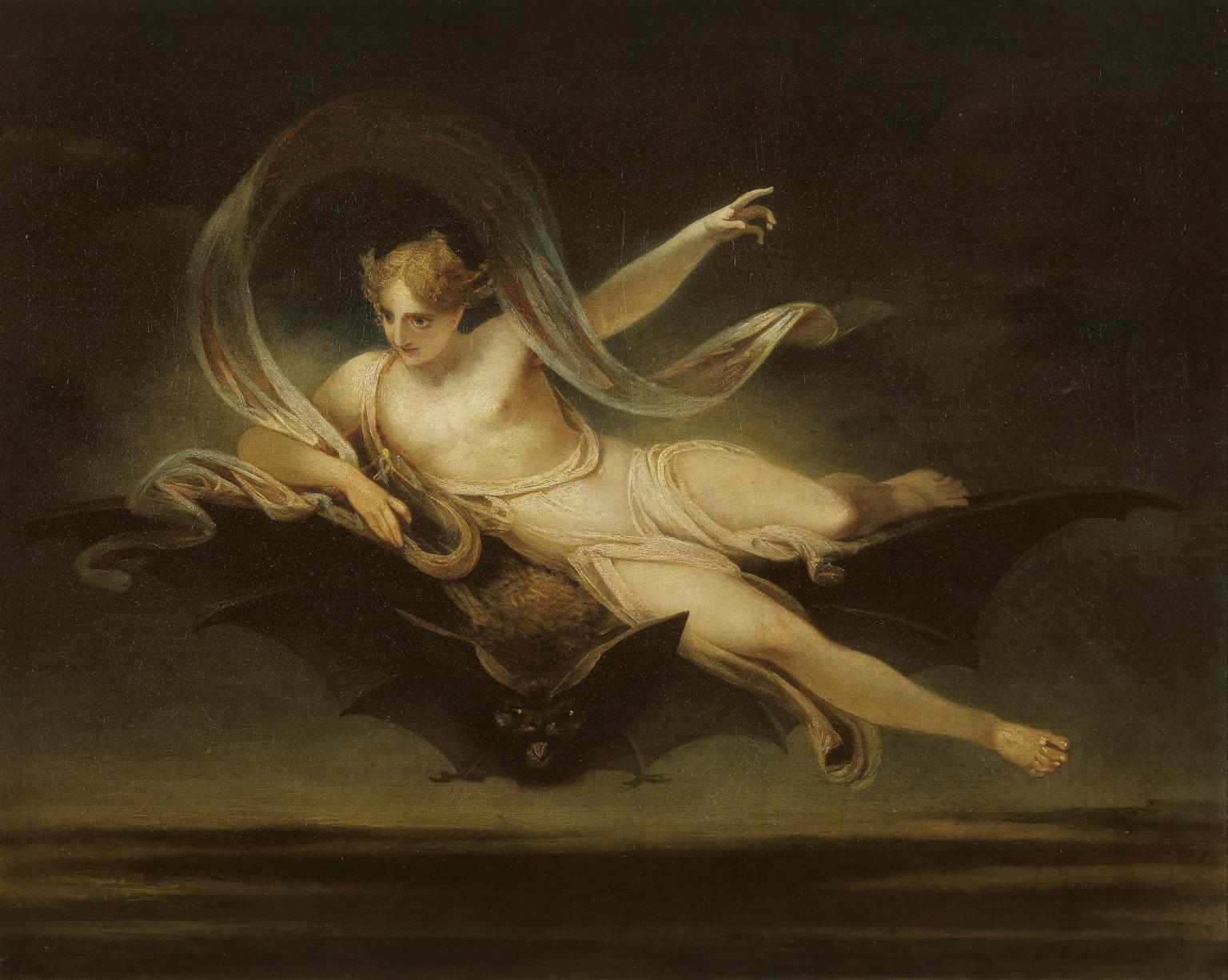
Ariel on a Bat’s Back — Henry Singleton

Ariel on a Bat’s Back, c. 1819 by Henry Singleton (1766-1839)

Read “Waterspider,” a goofy postmodern time travel story by Philip K. Dick

“Waterspider”

by

Philip K. Dick


I

That morning, as he carefully shaved his head until it glistened, Aaron Tozzo pondered a vision too unfortunate to be endured. He saw in his mind fifteen convicts from Nachbaren Slager, each man only one inch high, in a ship the size of a child’s balloon. The ship, traveling at almost the speed of light, continued on forever, with the men aboard neither knowing nor caring what became of them.

The worst part of the vision was just that in all probability it was true.

He dried his head, rubbed oil into his skin, then touched the button within his throat. When contact with the Bureau switchboard had been established, Tozzo said, “I admit we can do nothing to get those fifteen men back, but at least we can refuse to send any more.”

His comment, recorded by the switchboard, was passed on to his co-workers. They all agreed; he listened to their voices chiming in as he put on his smock, slippers and overcoat. Obviously, the flight had been an error; even the public knew that now. But —

“But we’re going on,” Edwin Fermeti, Tozzo’s superior, said above the clamor. “We’ve already got the volunteers.”

“Also from Nachbaren Slager?” Tozzo asked. Naturally the prisoners there would volunteer; their lifespan at the camp was no more than five or six years. And if this flight to Proxima were successful, the men aboard would obtain their freedom. They would not have to return to any of the five inhabited planets within the Sol System.

“Why does it matter where they originate?” Fermeti said smoothly. Continue reading “Read “Waterspider,” a goofy postmodern time travel story by Philip K. Dick”

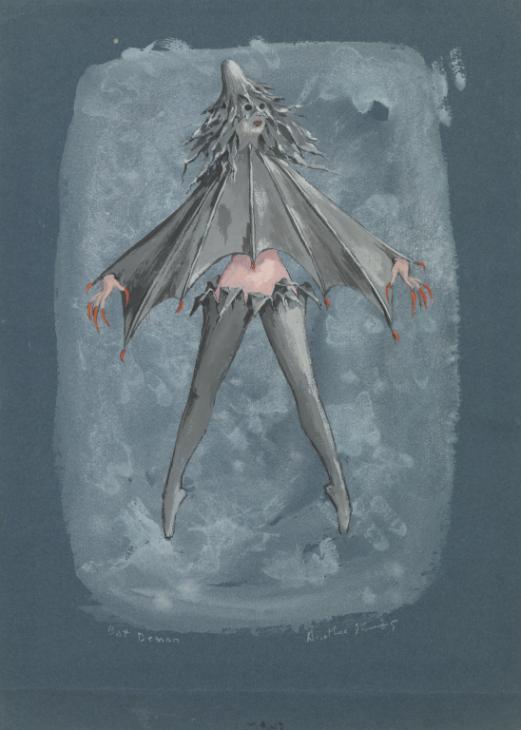
Bat Demon — Dorothea Tanning

Bat Demon, 1950 by Dorothea Tanning (1910-2012)

“Berryman” — W.S. Merwin

“Berryman”

by

W.S. Merwin


I will tell you what he told me
in the years just after the war
as we then called
the second world war

don’t lose your arrogance yet he said
you can do that when you’re older
lose it too soon and you may
merely replace it with vanity

just one time he suggested
changing the usual order
of the same words in a line of verse
why point out a thing twice

he suggested I pray to the Muse
get down on my knees and pray
right there in the corner and he
said he meant it literally

it was in the days before the beard
and the drink but he was deep
in tides of his own through which he sailed
chin sideways and head tilted like a tacking sloop

he was far older than the dates allowed for
much older than I was he was in his thirties
he snapped down his nose with an accent
I think he had affected in England

as for publishing he advised me
to paper my wall with rejection slips
his lips and the bones of his long fingers trembled
with the vehemence of his views about poetry

he said the great presence
that permitted everything and transmuted it
in poetry was passion
passion was genius and he praised movement and invention

I had hardly begun to read
I asked how can you ever be sure
that what you write is really
any good at all and he said you can’t

you can’t you can never be sure
you die without knowing
whether anything you wrote was any good
if you have to be sure don’t write

Antikvariatet (The Second-hand Book Store) — Pauliina Pietilä

Antikvariatet (The Second-hand Book Store), 2014, by Pauliina Pietilä (b. 1982)

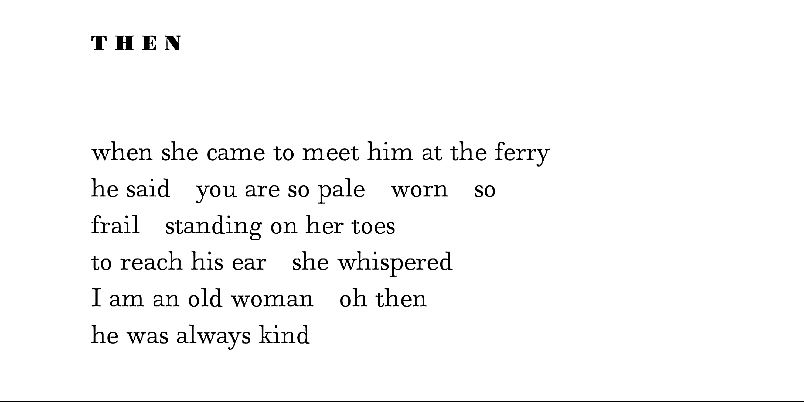
“Then” — Grace Paley

Oil on a Wet Road — Ithell Colquhoun

Oil on a Wet Road, 1963 by Ithell Colquhoun (1906-1988)

Day at the Library — Shannon Cartier Lucy

Day at the Library, 2018 by Shannon Cartier Lucy (b. 1977)

After the Pool — Zoey Frank

After the Pool, 2021 by Zoey Frank (b. 1987)

Poe’s “The Fall of the House of Usher,” but just the punctuation


; ‘ . . , , , , , , , , , . — — , , . ; – , , , . — — , — — — — – — — — — — — – — — – — — . , , — — . — — — — ? ; . , , , , . , , , , , ; , , , — — — — , – , – . , . , , ; . , , — — — — , , . . . — — — — , , , , . , , — — — — ; . , , , . . , , , , , , , , , , , , , . , , , , – , , , ; , , , , . , , , , , — — , , , , , , , , ” ” — — , , . — — — — . — — ? — — . , , . , , , , — — , , . — — , , , — — , , , , – . , . . . , – . . ; , . – , . , , . , , , , . , . , . , , , , . , , . — — , , , , , , — — — — . , . , , . . . . , , , . , ; , , , . . , , , . , . . , , . , , , , — — . , , . ; , , , . , , , ! . . ; , , ; , ; , ; , , , ; – ; — — , , . , , . , , . , , , , , , , , . — — ; — — . , , , . . ( ) — — , , , – — — , – , , , . , , . , , . , , , — — , , . . , , ; , , . ; ; ; ; ; , , . . ” , ” , ” . , , , . , , . , , , . , , , — — . , , , , . ” , , , , . , , , — — – — — , , , — — , , , , . , , , — — – — — — — , , . ” , ” , , ” ( ) . ” , ( ) , , , . ; . . , , , ; , . . , , . , ; , ( ) ; — — , , . , ; . , , , . , , , , . . , , , . . . , . , , , , — — ( ) . , , . , . , , , , . , , , , . , , , , . . , ; , . , . , , , , . . , , , ( ) , . . , , , , , , , . , ” , ” , , : — — . , , — — — — . ‘ — — ! . . , , , ; ( — — — — ) ; , , , . . ‘ – ; , ( ! ) , . . , , , , , , . . , , ‘ ; ( , , , ! ) , , – . . , – ; , , , , — — . , ‘ ( * ) , . , , . , , , , , . , . , , ( ) . , , — — , , — — , , . — — — — , , ( ) , . , , , — — . , . — — , , — — , , . ” ” ; ” ” ; ” ” ; ” ” ; ” ” , ‘ , ; ” ” ; ” ” . ” , ” ; , , . , , — — — — . , , , , , ( ) , . , , , . ( ) , , – . , , , , . , . , . ( , , ) , , ; , , . , , , – , , , , , , , . , , , , . , , . , , . ; , , , , , . , , — — . , , , , . , , , , , . , , . . . , , . , , — — . ; , , . , , , . , , , , , . — — . , , . , , , . — — . . , , — — , , , , . . ; , , . , , , , — — , — — , , , . , , ( ) , , . , . . , , , , . , , — — , , — — . — — , . ” ? ” , — — ” ? — — , ! . ” , , , . . , , , . ; ; ( ) – , . — — , . , , . ” — — ! ” , , , , , . ” , , — — . ; — — . . , : — — . ” ” ” ; ‘ ; , , . , , ; , ( ) . , , , , , . – , , , . , , : ” , , , , , , , , , , , , , , ; , , , , – . ” , , ; ( ) — — , , , , , , ( ) . , , ; , , , , , , , . : ” , , ; , , , , , ; — — , ; , . , , , , , , , . ” , — — , , ( ) , , , — — ‘ . , , , , , , , . ; , , , , . , , ; , . — — , . , , — — . , , : ” , , , , , , ; , , . ” , — — , , — — , , , , , . , ; . . , . , , ; ; , , , . , . ” ? — — , , . — — — — — — , , , — — — — , , ! — — — — ! ! ? . — — , — — — — ! — — – — — — — ! ! — — ‘ , – , ! — — , , , , ! ! ? ? ? ? ? ! ” — — , , — — ” ! ! ” , , , . — — . , . — — , , , – , , . , , . . , ; . , , – – , , . , — — — — — — — — — — ” . ” * , . , , . — — ” , ” . .

Poe’s “The Fall of the House of Usher,” but just the punctuation.

Donald Barthelme’s Sixty Stories in reverse, Part X

I am rereading Donald Barthelme’s Sixty Stories, starting with the sixtieth story and working my way to the first and writing about it.

Previous entries:

Stories 60-55

Stories 54-49

Stories 48-43

Stories 42-37

Stories 36-31

Stories 30-25.

Stories 24-19

Stories 18-13

Stories 12-7

In this post, stories 6-1, the beginning/end.

6. “The Balloon” (Unspeakable Practices, Unnatural Acts, 1968)

I’ve read “The Balloon” more than any other Barthelme story. I’ve read it at least three times a year, every year, for the past ten years, in the context of an American Literature after 1865 course I teach every Fall-Spring-Summer. It’s widely-anthologized. It’s over-anthologized. It’s probably most folks only exposure to Barthelme, which I think is strange—I think it’s a particularly challenging Barthelme story, even though it’s the Barthelme story I’ve read more than any other Barthelme story.

My students are often exasperated by the story, which seems to lack any traditional plot or character—but I think that’s kind of the point. “The Balloon” is about the creation of “The Balloon.” It’s a story about a story, as much as Barthelme would have protested the notion. This interpretation is not particularly radical. Just earlier this month, the writer Donald Antrim did a reading of “The Balloon” for The New Yorker’s fiction podcast. After the reading, fiction editor Deborah Treisman engages (or tries to engage) Antrim in a discussion of the meaning of the balloon. Antrim insists on rebuking the balloon’s metaphoricity, repeatedly claiming it’s a “real” balloon. Treisman points out that it’s just a story.

Le Ballon, 1862 by Édouard Manet

In his Barthelme biography Hiding Man, Tracy Daugherty spends several pages explaining allusions to Édouard Manet’s 1862 lithograph Le Ballon and the scandal that erupted when Manet showed his painting Olympia in 1865. Daugherty writes,

As many readers have observed, Don’s story considers public responses to art. But besides this general theme, he had in mind a specific set of reactions, in a crucial time.

In invoking Manet’s balloon and the Olympia scandal, Don encoded in his story an early chapter of the art that nourished him throughout his career; an art inseparable from social change, resistant to strict ordering, and opposed to the narrowing of perceptions required by commodification.

Daugherty’s analysis encapsulates what I take to be the signal passage of “The Balloon,” which passage you can read here.

2020-07-16_161411

5. “Will You Tell Me?” (Come Back, Dr. Caligari, 1964)

One of Barthelme’s more formally challenging stories, “Will You Tell Me?” begins strange (“Hubert gave Charles and Irene a nice baby for Christmas”) and gets even stranger. It’s a subtle satire on soap operas and convoluted prize (“The French countryside (the countryside of France) was covered with golden grass”) shot through anarchic glee:

In the cellar Paul continued making his bombs, by cellarlight. The bombs were made from tall Schlitz cans and a plastic substance which Paul refused to identify. The bombs were sold to other boys Paul’s age to throw at their fathers.

Note the ever-present oedipal theme in Barthelme’s work.

4. “For I’m the Boy” (Come Back, Dr. Caligari, 1964)

Like most of Barthelme’s stories, “For I’m the Boy” is a rewarding re-read. Among the stories in Sixty Stories culled from Come Back, Dr. Caligari, “For I’m the Boy” has a somewhat straightforward plot: A man named Bloomsbury has divorced his wife. He takes his two friends Whittle and Huber with her to the airport to see her off so that there will be no “weeping.” They then drive home, stopping for a bottle of brandy on the way. Whittle and Huber demand details of the divorce from Bloomsbury:

It would be interesting as well as instructive Whittle said casually, to know for instance at what point the situation of living together became untenable, whether she wept when you told her, whether you wept when she told you, whether you were the instigator or she was the instigator, whether there were physical fights involving bodily blows or merely objects thrown on your part and on her part, if there were mental cruelties, cruelties of what order and on whose part, whether she had a lover or did not have a lover, whether you did or did not, whether you kept the television or she kept the television, the disposition of the balance of the furnishings including tableware, linens, light bulbs, beds and baskets, who got the baby if there was a baby, what food remains in the pantry at this time, what happened to the medicine bottles including Mercurochrome, rubbing alcohol, aspirin, celery tonic, milk of magnesia, No-Doze and Nembutal, was it a fun divorce or not a fun divorce, whether she paid the lawyers or you paid the lawyers, what the judge said if there was a judge, whether you asked her for a “date” after the granting of the decree or did not ask, whether she was touched or not touched by this gesture if there was such a gesture, whether the date if there was such a date was a fun thing or not a fun thing – in short we’d like to get the feel of the event he said.

Give us the feeling,” they insist, but Bloomsbury refuses. At the end of the story Whittle and Huber literally beat it out of him with a brandy bottle and tire iron. The feeling emerges in the form of tears and blood.

In Hiding Man, Daugherty makes a strong argument that “For I’m the Boy” serves as an early aesthetic statement from Barthelme: art is “our most refined public expression of what is private, unreachable, unsayable…it fails–words cannot do the trick–but it is the best we have…art’s value lies in the fact that it offers forms for our experiences.”

2020-07-16_161411_1

3. “Me and Miss Mandible” (Come Back, Dr. Caligari, 1964)
“Me and Miss Mandible” is an excellent and absurd story told by an adult man who is “officially a child.” Here is the story’s opening:

Miss Mandible wants to make love to me but she hesitates because I am officially a child; I am, according to the records, according to the gradebook on her desk, according to the card index in the principal’s office, eleven years old. There is a misconception here, one that I haven’t quite managed to get cleared up yet. I am in fact thirty-five, I’ve been in the Army, I am six feet one, I have hair in the appropriate places, my voice is a baritone, I know very well what to do with Miss Mandible if she ever makes up her mind.

Our narrator handles the mix-up (if it could be called a mix-up) with bemused aplomb. Unlike the hero of Barthelme’s 1976 story “The Sergeant,” who similarly awakes to find himself affixed with the wrong identity, the narrator of “Mandible” seems to find opportunity in his predicament. There’s nothing especially sinister here; the situation is Kafkaesque, but the tone isn’t. The narrator gets to see the American educational system through the eyes of an experienced adult: “Everything is promised my classmates and I, most of all the future. We accept the outrageous assurances without blinking.”

As the story develops, the narrator comes to understand that these promises are perhaps undeliverable:

We read signs as promises. Miss Mandible understands by my great height, by my resonant vowels, that I will one day carry her off to bed. Sue Ann interprets these same signs to mean that I am unique among her male acquaintances, therefore most desirable, therefore her special property as is every thing that is Most Desirable. If neither of these propositions work out then life has broken faith with them.

I myself, in my former existence, read the company motto (“Here to Help in Time of Need”) as a description of the duty of the adjuster, drastically mislocating the company’s deepest concerns. I believed that because I had obtained a wife who was made up of wife-signs (beauty, charm, softness, perfume, cookery) I had found love. Brenda, reading the same signs that have now misled Miss Mandible and Sue Ann Brownly, felt she had been promised that she would never be bored again. All of us, Miss Mandible, Sue Ann, myself, Brenda, Mr. Goodykind, still believe that the American flag betokens a kind of general righteousness.

But I say, looking about me in this incubator of future citizens, that signs are signs, and that some of them are lies. This is the great discovery of my time here.

2. “A Shower of Gold” (Come Back, Dr. Caligari, 1964)

In “A Shower of Gold,” we find Peterson, “a minor artist” with a bad liver, mulling over whether or not to sell out by appearing on the television show Who Am I? He’s tormented by a series of absurd “punishments” for even considering selling out, including having the President of the United States show up and destroy one of his pieces of art. Finally though, broke and beerless, he condescends to the appearance. The tale ends with an epiphanic monologue:

I was wrong, Peterson thought, the world is absurd. The absurdity is punishing me for not believing in it. I affirm the absurdity. On the other hand, absurdity is itself absurd. Before the emcee could ask the first question, Peterson began to talk. “Yesterday,” Peterson said to the television audience, “in the typewriter in front of the Olivetti showroom on Fifth Avenue, I found a recipe for Ten Ingredient Soup that included a stone from a toad’s head. And while I stood there marveling a nice old lady pasted on the elbow of my best Haspel suit a little blue sticker reading THIS INDIVIDUAL IS A PART OF THE COMMUNIST CONSPIRACY FOR GLOBAL DOMINATION OF THE ENTIRE GLOBE. Coming home I passed a sign that said in ten-foot letters COWARD SHOES and heard a man singing “Golden earrings” in a horrible voice, and last night i dreamed there was a shoot- out at our house on Meat Street and my mother shoved me in a closet to get me out of the line of fire.” The emcee waved at the floor manager to turn Peterson off, but Peterson kept talking. “In this kind of world,” Peterson said, “absurd if you will, possibilities nevertheless proliferate and escalate all around us and there are opportunities for beginning again. I am a minor artist and my dealer won’t even display my work if he can help it but minor is as minor does and lightning may strike even yet. Don’t be reconciled. Turn off your television sets,” Peterson said, “cash in your life insurance, indulge in a mindless optimism. Visit girls at dusk. Play the guitar. How can you be alienated without first having been connected? Think back and remember how it was.” A man on the floor in front of Peterson was waving a piece of cardboard on which something threatening was written but Peterson ignored him and concentrated on the camera with the little red light. The little red light jumped from camera to camera in an attempt to throw him off balance but Peterson was too smart for it and followed wherever it went. “My mother was a royal virgin,” Peterson said, “and my father a shower of gold. My childhood was pastoral and energetic and rich in experiences which developed my character. As a young man I was noble in reason, infinite in faculty, in form express and admirable, and in apprehension…” Peterson went on and on and although he was, in a sense, lying, in a sense he was not.

Peterson takes up the mantle Perseus, an ironic hero for an absurd world.

1. “Margins” (Come Back, Dr. Caligari, 1964)

“Margins” is one of only two stories collected in Sixty Stories to directly address race relations in the United States (the other one is “The Sandman”). Interestingly, the “first” story of Sixty Stories is close to pure dialogue, the form that that Barthelme would land on almost exclusively in his latter years. The dialogue here is between Edward, a white man, and Carl, a black man. Edward is critiquing the margins and handwriting of a sandwich board Carl is wearing. This is the text of the sandwich board:

I Was Put In Jail in Selby County Alabama For Five Years For Stealing A Dollar and A Half Which I Did Not Do. While I Was In Jail My Brother Was Killed & My Mother Ran Away When I Was Little. In Jail I Began Preaching & I Preach to People Wherever I Can Bearing the Witness of Eschatological Love. I Have Filled Out Papers for Jobs But Nobody Will Give Me a Job Because I Have Been In Jail & The Whole Scene Is Very Dreary, Pepsi Cola. I Need Your Offerings to Get Food. Patent Applied For & Deliver Us From Evil.

Edward’s microaggressions swell to macroaggressions: “You look kind of crummy,” he tells Carl, and then asks, “Do you think I’m a pretty color…Are you envious?” When Carl replies, “No,” Edward pauses before offering a baffled, “but I’m what.” Carl tries to shift the conversation to something of substance: “Let’s talk about values or something.” Carl recommends a few books to Edward: Italo Svevo’s As a Man Grows Older and John Hawkes’s The Cannibal and The Beetleleg. But Edward isn’t interested in making connections. He demands to know Carl’s “inner reality.” But like Bloomsbury in “For I’m the Boy,” Carl keeps that inner reality for himself: “‘It’s mine,’ Carl said quietly.”

The aggression mounts: Edward accuses Carl of having lied on his sign about stealing a dollar and a half. Carl protests, but does admit to being a biblioklept:

“Mostly in drugstores, ” Carl said. “I find them good because mostly they’re long and narrow and the clerks tend to stay near the prescription counters at the back of the store, whereas the books are usually in those little revolving racks near the front of the store. It’s normally pretty easy to slip a couple in your overcoat pocket, if you’re wearing an overcoat ”

“But…”

“Yes, ” Carl said, “I know what you’re thinking. If I’ll steal books I’ll steal other things. But stealing books is metaphysically different from stealing like money. Villon has something pretty good to say on the subject I believe.

At the end of the story, Carl asks Edward to put on his sign for a minute so Carl can use a nearby restroom. “Boy, they’re kind of heavy aren’t they?” Edward declares, to which Carl replies, “They cut you a bit.” Barthelme notes Carl delivers the line with “a malicious smile.”

“Margins” might seem oblique on a first read, but rereading it there’s a lack of subtlety to Barthelme’s approach–the trading of the sign is a bit heavy handed. But the final strange image saves the story: “When Carl returned the two men slapped each other sharply in the face with the back of the hand-that beautiful part of the hand where the knuckles grow.”

Summary thoughts: Everything here is pretty strong. “Margins” and “Shower of Gold” have an energy that might make up for some zany misteps and heavyhanded symbolism, and “Will You Tell Me?” is a difficult but rewarding read. “Me and Miss Mandible” is Essential Barthelme (as is “The Balloon,” of course). Rereading “Mandible” simply confirmed its excellence. In contrast, I’ll admit that I didn’t remember “For I’m the Boy” at all, but found it to be surprisingly strong and unexpectedly moving for something that didn’t stick with me when I first read Sixty Stories. 

Going forward (in reverse): At some point early in this reverse reread I thought, Hey, maybe I’ll do the same thing with Forty Stories, but now, no, no, no. Maybe next year, maybe never. I will have one final post though. I’ll read David Gates’s introduction to my Penguin Classics edition of Sixty Stories and offer my own edits: Thirty StoriesFifteen Stories, and Ten Stories.