Rainbows in zoos (Calvin & Hobbes)

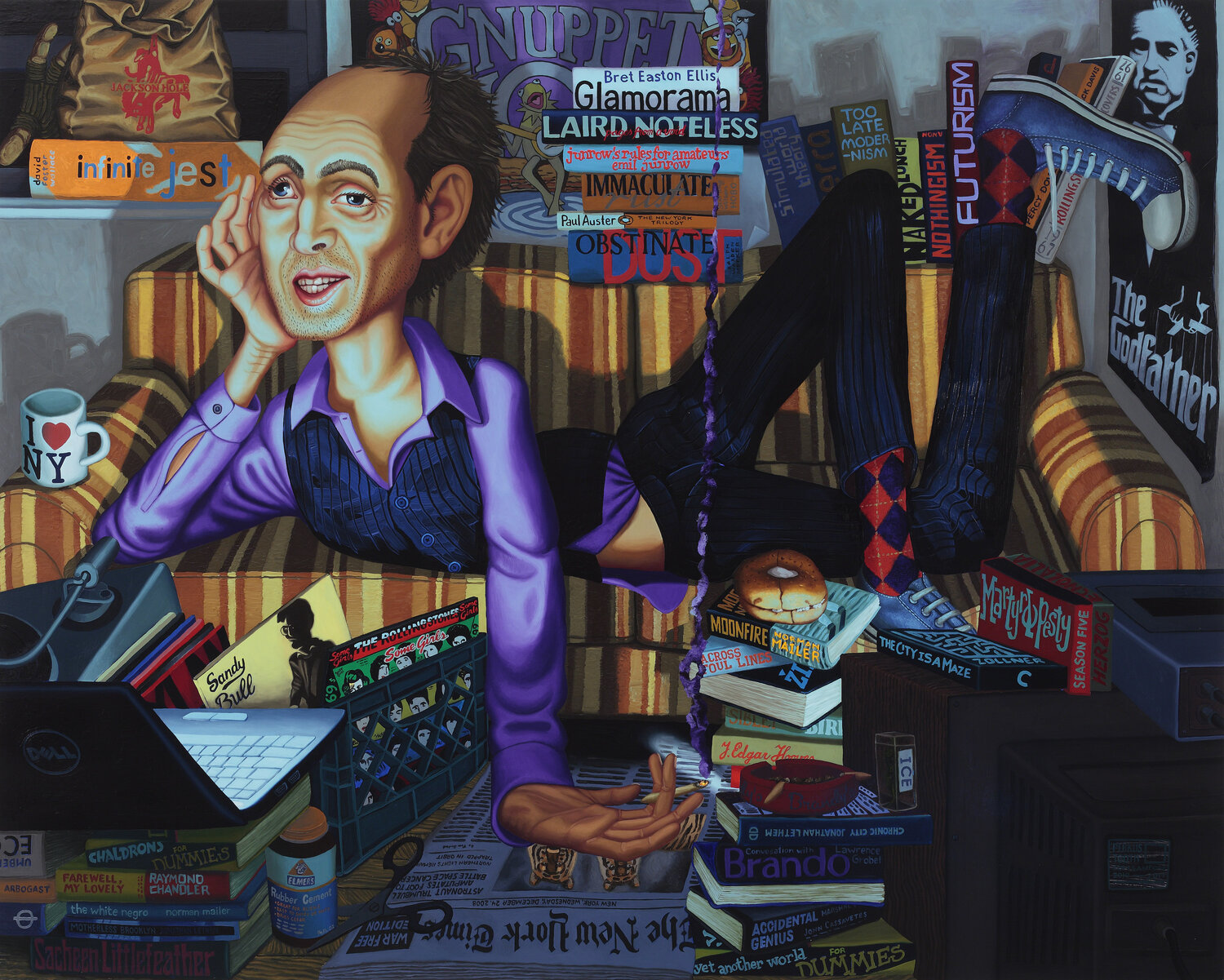
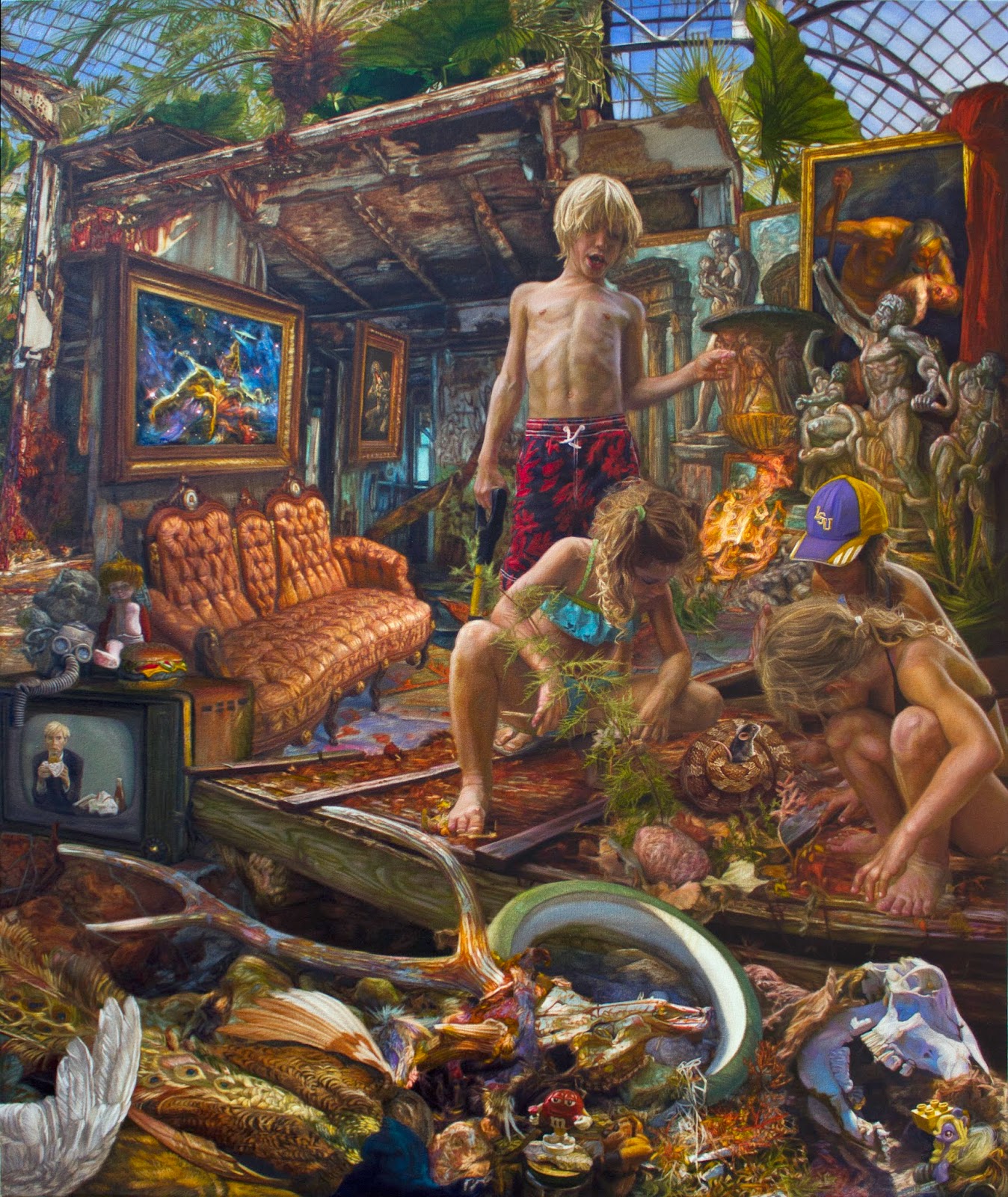
Perkus Tooth — Tom Sanford

Perkus Tooth, 2011 by by Tom Sanford (b. 1975)

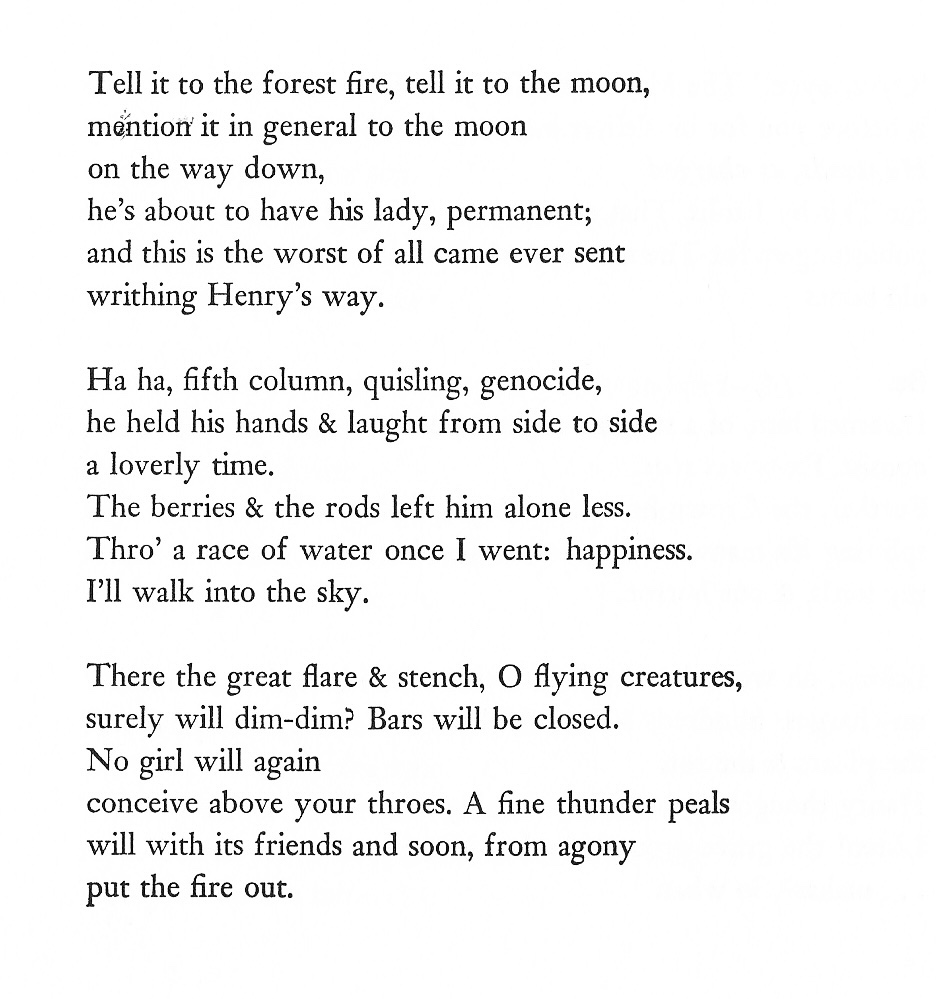
“Tell it to the forest fire, tell it to the moon” (Dream Song 44) | John Berryman

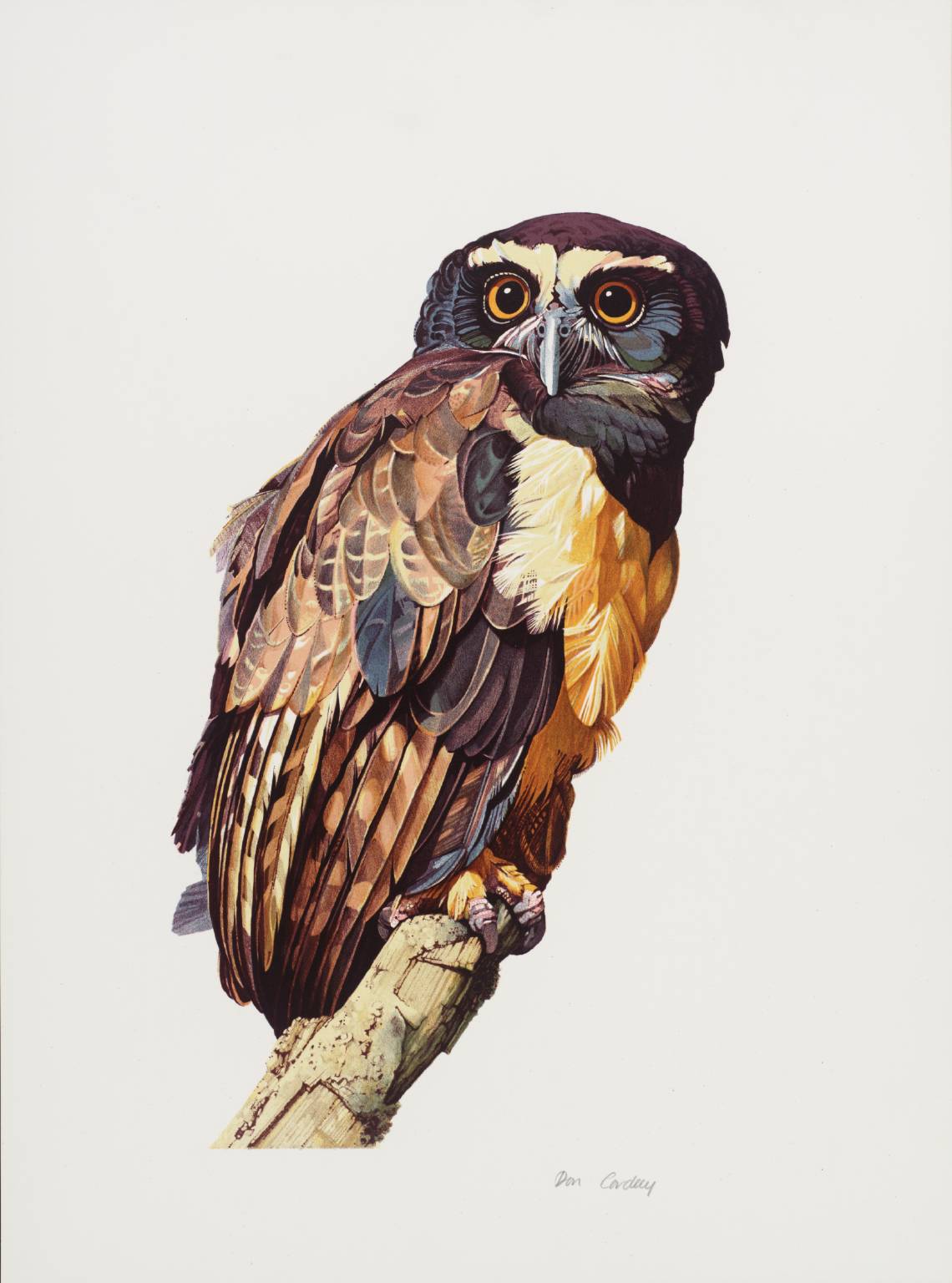
Spectacled Owl — Don Cordery

Spectacled Owl, 1973 by Don Cordery (b. 1942)

“Ulrikke” — Jorge Luis Borges

“Ulrikke”

by

Jorge Luis Borges

Translated by Andrew Hurley


Hann tekr sverthtt Gram ok leggri methal their abertVolsunga Saga, 27

My story will be faithful to reality, or at least to my personal recollection of reality, which is the same thing. The events took place only a short while ago, but I know that the habit of literature is also the habit of interpolating circumstantial details and accentuating certain emphases. I wish to tell the story of my encounter with Ulrikke (I never learned her last name, and perhaps never will) in the city of York. The tale will span one night and one morning.

It would be easy for me to say that I saw her for the first time beside the Five Sisters at York Minster, those stained glass panes devoid of figural representation that Cromwell’s iconoclasts left untouched, but the fact is that we met in the dayroom of the Northern Inn, which lies outside the walls. There were but a few of us in the room, and she had her back to me. Some-one offered her a glass of sherry and she refused it.

“I am a feminist,” she said. “I have no desire to imitate men. I find their tobacco and their alcohol repulsive.”

The pronouncement was an attempt at wit, and I sensed this wasn’t the first time she’d voiced it. I later learned that it was not like her—but what we say is not always like us.

She said she’d arrived at the museum late, but that they’d let her in when they learned she was Norwegian.

“Not the first time the Norwegians storm York,” someone remarked.

“Quite right,” she said. “England was ours and we lost her—if, that is, anyone can possess anything or anything can really be lost.”

It was at that point that I looked at her. A line somewhere in William Blake talks about girls of soft silver or furious gold, but in Ulrikke there was both gold and softness. She was light and tall, with sharp features and gray eyes. Less than by her face, I was impressed by her air of calm mystery. She smiled easily, and her smile seemed to take her somewhere far away. She was dressed in black—unusual in the lands of the north, which try to cheer the dullness of the surroundings with bright colors. She spoke a neat, precise English, slightly stressing the r’s. I am no great observer; I discovered these things gradually.

We were introduced. I told her I was a professor at the University of the Andes, in Bogotá. I clarified that I myself was Colombian.

“What is ‘being Colombian’?”

“I’m not sure,” I replied. “It’s an act of faith.”

“Like being Norwegian,” she said, nodding.

I can recall nothing further of what was said that night. The next day I came down to the dining room early. I saw through the windows that it had snowed; the moors ran on seamlessly into the morning. There was no one else in the dining room. Ulrikke invited me to share her table. She told me she liked to go out walking alone.

I remembered an old quip of Schopenhauer’s.

“I do too. We can go out alone together,” I said.

We walked off away from the house through the newly fallen snow. There was not a soul abroad in the fields. I suggested we go downriver a few miles, to Thorgate. I know I was in love with Ulrikke; there was no other person on earth I’d have wanted beside me.

Suddenly I heard the far-off howl of a wolf. I have never heard a wolf howl, but I know that it was a wolf. Ulrikke’s expression did not change.

After a while she said, as though thinking out loud: “The few shabby swords I saw yesterday in York Minster were more moving to me than the great ships in the museum at Oslo.”

Our two paths were briefly crossing: that evening Ulrikke was to continue her journey toward London; I, toward Edinburgh.

“On Oxford Street,” she said, “I will retrace the steps of DeQuincey, who went seeking his lost Anna among the crowds of London.”

“DeQuincey,” I replied, “stopped looking. My search for her, on the other hand, continues, through all time.”

“Perhaps,” Ulrikke said softly, “you have found her.”

I realized that an unforeseen event was not to be forbidden me, and I kissed her lips and her eyes.

She pushed me away with gentle firmness, but then said: “I shall be yours in the inn at Thorgate. I ask you, meanwhile, not to touch me. It’s best that way.”

For a celibate, middle-aged man, proffered love is a gift that one no longer hopes for; a miracle has the right to impose conditions. I recalled my salad days in Popayán and a girl from Texas, as bright and slender as Ulrikke, who had denied me her love.

I did not make the mistake of asking her whether she loved me. I realized that I was not the first, and would not be the last. That adventure, perhaps the last for me, would be one of many for that glowing, determined disciple of Ibsen.

We walked on, hand in hand.

“All this is like a dream,” I said, “and I never dream.”

“Like that king,” Ulrikke replied, “who never dreamed until a sorcerer put him to sleep in a pigsty.”

Then she added: “Ssh! A bird is about to sing.”

In a moment we heard the birdsong.

“In these lands,” I said, “people think that a person who’s soon to die can see the future.”

“And I’m about to die,” she said.

I looked at her, stunned.

“Lets cut through the woods,” I urged her.

“We’ll get to Thorgate sooner.”

“The woods are dangerous,” she replied. We continued across the moors.

“I wish this moment would last forever,” I murmured.

“Forever is a word mankind is forbidden to speak,” Ulrikke declared emphatically, and then, to soften her words, she asked me to tell her my name again, which she hadn’t heard very well.

“Javier Otárola,” I said.

She tried to repeat it, but couldn’t. I failed, likewise, with Ulrikke.

“I will call you Sigurd,” she said with a smile.

“And if I’m to be Sigurd,” I replied, “then you shall be Brunhild.”

Her steps had slowed. “Do you know the saga?” I asked. “Of course,” she said. “The tragic story that the Germans spoiled with their parvenu Nibelungen.”

I didn’t want to argue, so I answered: “Brunhild, you are walking as though you wanted a sword to lie between us in our bed.”

We were suddenly before the inn. I was not surprised to find that it, like the one we had departed from, was called the Northern Inn.

From the top of the staircase, Ulrikke called down to me: “Did you hear the wolf? There are no wolves in England anymore. Hurry up.”

As I climbed the stairs, I noticed that the walls were papered a deep crimson, in the style of William Morris, with intertwined birds and fruit. Ulrikke entered the room first. The dark chamber had a low, peaked ceiling. The expected bed was duplicated in a vague glass, and its burnished mahogany reminded me of the mirror of the Scriptures. Ulrikke had already undressed. She called me by my true name, Javier. I sensed that the snow was coming down harder. Now there was no more furniture, no more mirrors. There was no sword between us. Like sand, time sifted away. Ancient in the dimness flowed love, and for the first and last time, I possessed the image of Ulrikke.

Hannah at Twelve — Zoey Frank

Hannah at Twelve, 2020 by Zoey Frank (b. 1987)

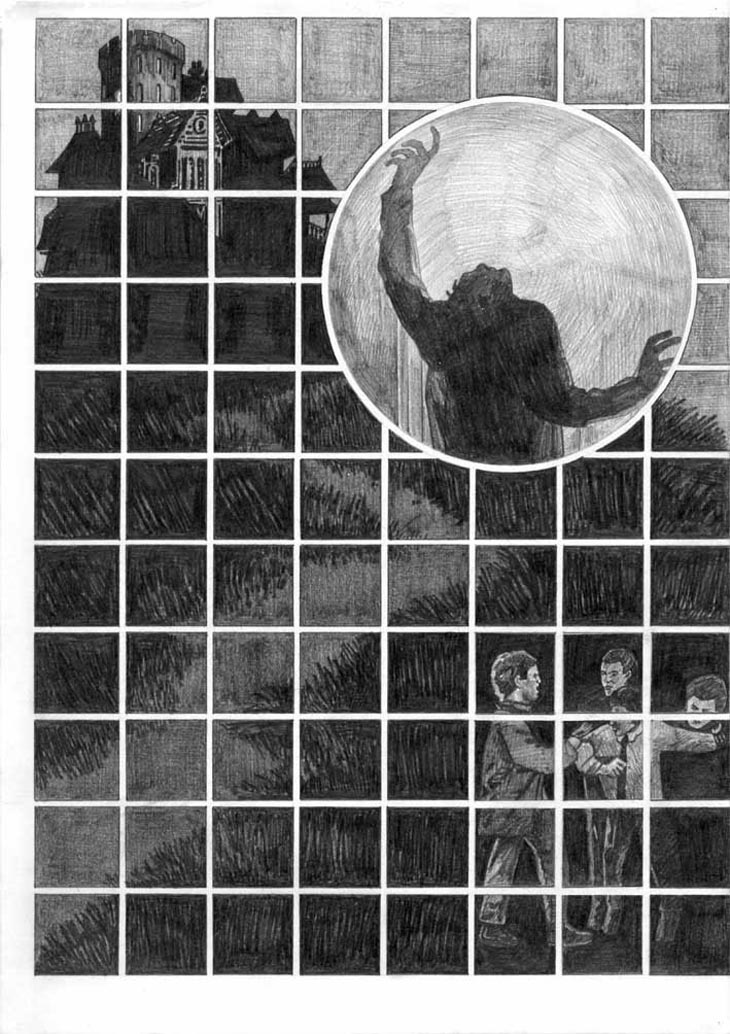
Untitled (from The Masterpiece Part 4 – A Weekend In The Country) — Olivia Plender

From The Masterpiece Part 4 – A Weekend In The Country, 2005 by Olivia Plender (b. 1977)

Spectacularly Dying — Isaac McCaslin 

Spectacularly Dying2014 by Isaac McCaslin (b. 1989)

“The Blackstone Rangers” — Gwendolyn Brooks

“The Blackstone Rangers”
by
Gwendolyn Brooks

I
AS SEEN BY DISCIPLINES
There they are.
Thirty at the corner.
Black, raw, ready.
Sores in the city
that do not want to heal.
II
THE LEADERS
Jeff. Gene. Geronimo. And Bop.
They cancel, cure and curry.
Hardly the dupes of the downtown thing
the cold bonbon,
the rhinestone thing. And hardly
in a hurry.
Hardly Belafonte, King,
Black Jesus, Stokely, Malcolm X or Rap.
Bungled trophies.
Their country is a Nation on no map.
Jeff, Gene, Geronimo and Bop
in the passionate noon,
in bewitching night
are the detailed men, the copious men.
They curry, cure,
they cancel, cancelled images whose Concerts
are not divine, vivacious; the different tins
are intense last entries; pagan argument;
translations of the night.
The Blackstone bitter bureaus
(bureaucracy is footloose) edit, fuse
unfashionable damnations and descent;
and exulting, monstrous hand on monstrous hand,
construct, strangely, a monstrous pearl or grace.
III
GANG GIRLS
A Rangerette
Gang Girls are sweet exotics.
Mary Ann
uses the nutrients of her orient,
but sometimes sighs for Cities of blue and jewel
beyond her Ranger rim of Cottage Grove.
(Bowery Boys, Disciples, Whip-Birds will
dissolve no margins, stop no savory sanctities.)
Mary is
a rose in a whiskey glass.
Mary’s
Februaries shudder and are gone. Aprils
fret frankly, lilac hurries on.
Summer is a hard irregular ridge.
October looks away.
And that’s the Year!
                     Save for her bugle-love.
Save for the bleat of not-obese devotion.
Save for Somebody Terribly Dying, under
the philanthropy of robins. Save for her Ranger
bringing
an amount of rainbow in a string-drawn bag.
“Where did you get the diamond?” Do not ask:
but swallow, straight, the spirals of his flask
and assist him at your zipper; pet his lips
and help him clutch you.
Love’s another departure.
Will there be any arrivals, confirmations?
Will there be gleaning?
Mary, the Shakedancer’s child
from the rooming-flat, pants carefully, peers at
her laboring lover ….
                     Mary! Mary Ann!
Settle for sandwiches! settle for stocking caps!
for sudden blood, aborted carnival,
the props and niceties of non-loneliness—
the rhymes of Leaning.

The Settlement — Peter Martensen 

The Settlement, 2016 by Peter Martensen (b. 1953)

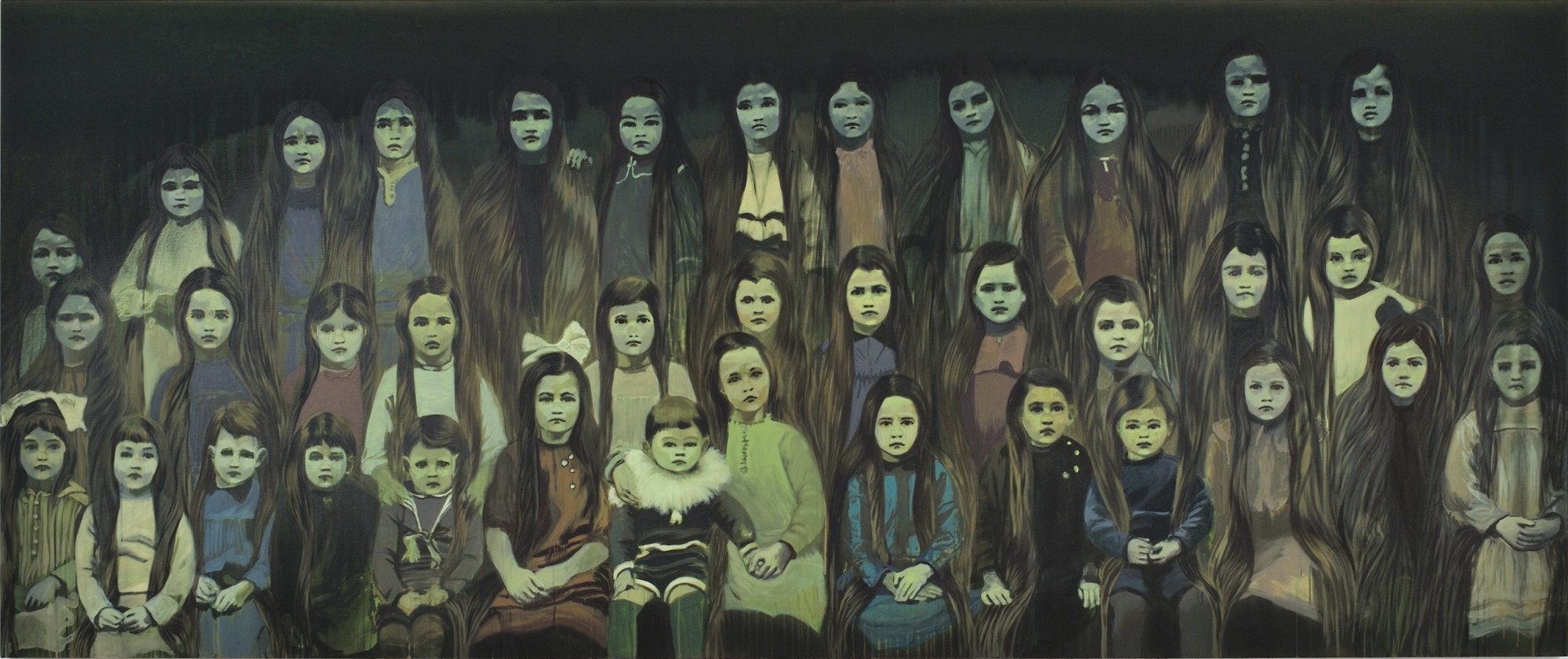
Les Sorcières — Claire Tabouret

Les Sorcières (The Witches), 2013 by Claire Tabouret (b.1981)

A Careful Disorderliness | Forty Riffs on Moby-Dick

I did not set out to write forty riffs on Herman Melville’s 1851 novel Moby-Dick but that’s where I ended up. I don’t think what I’ve done here is a resource of any worth, but I do hope to encourage people to read this funny, humane, poetic, and devastating novel.

Here are links by chapter to the riffs I riffed on Moby-Dick in 2021.


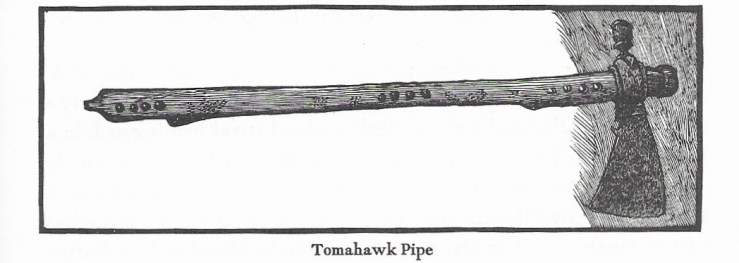
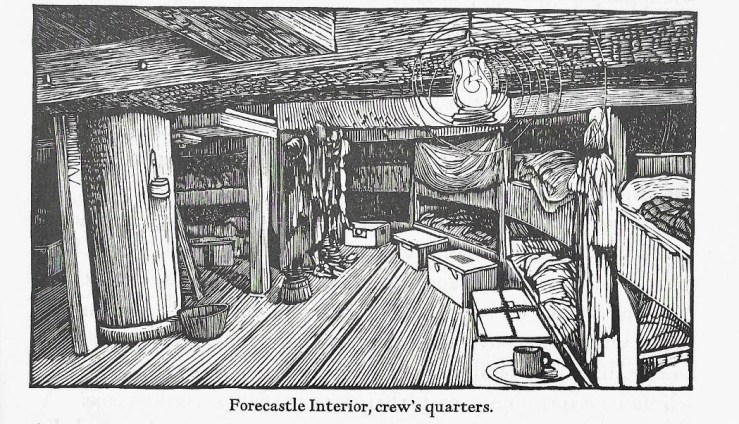
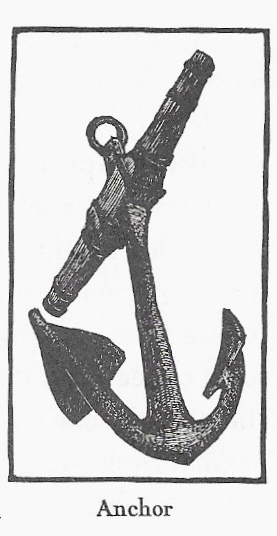
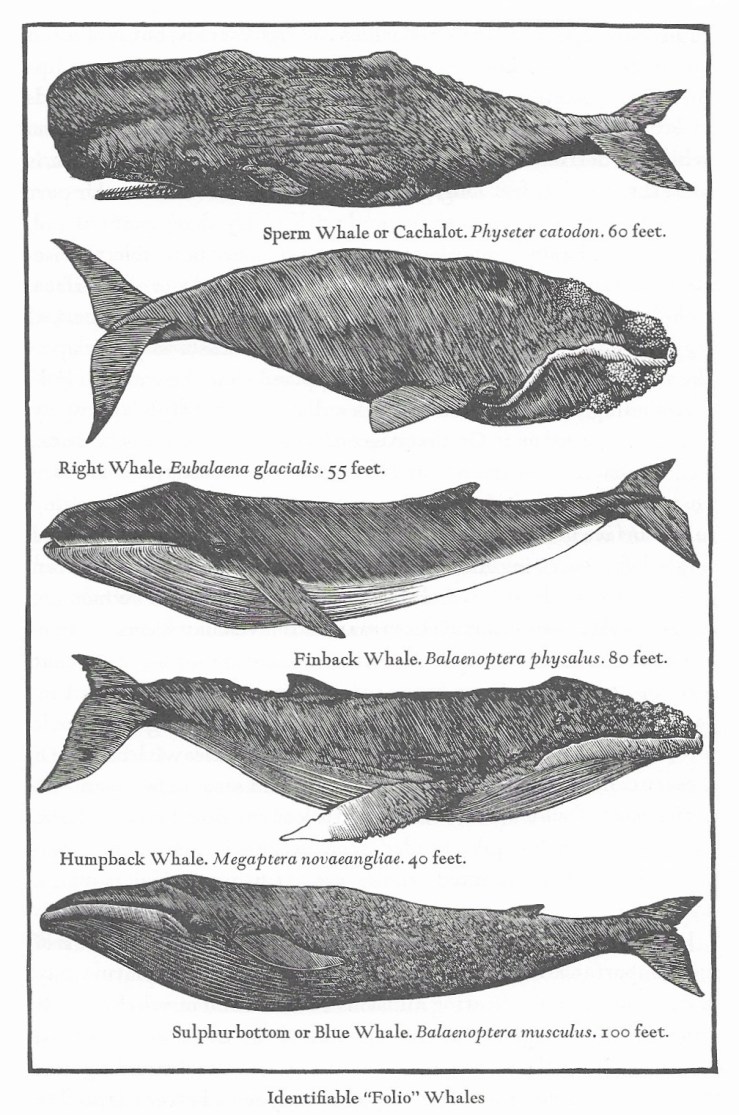
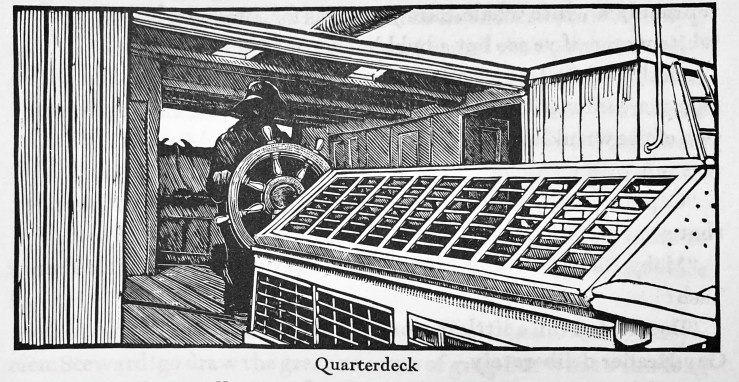
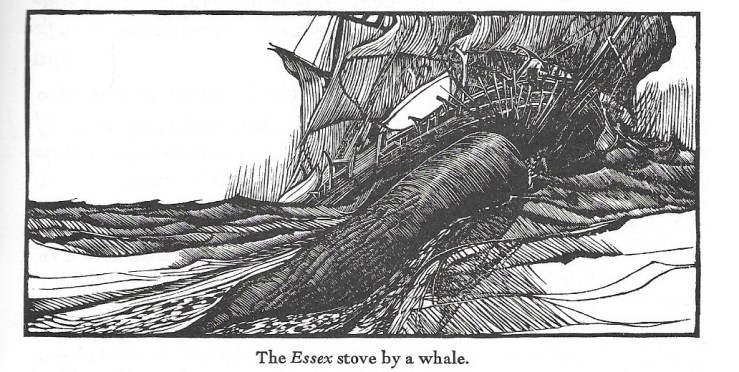
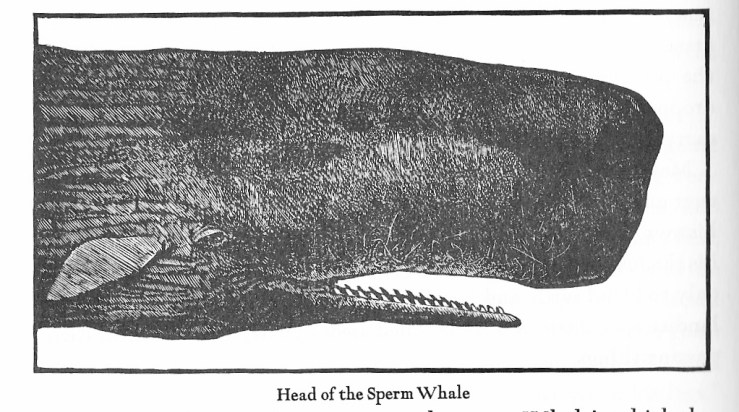
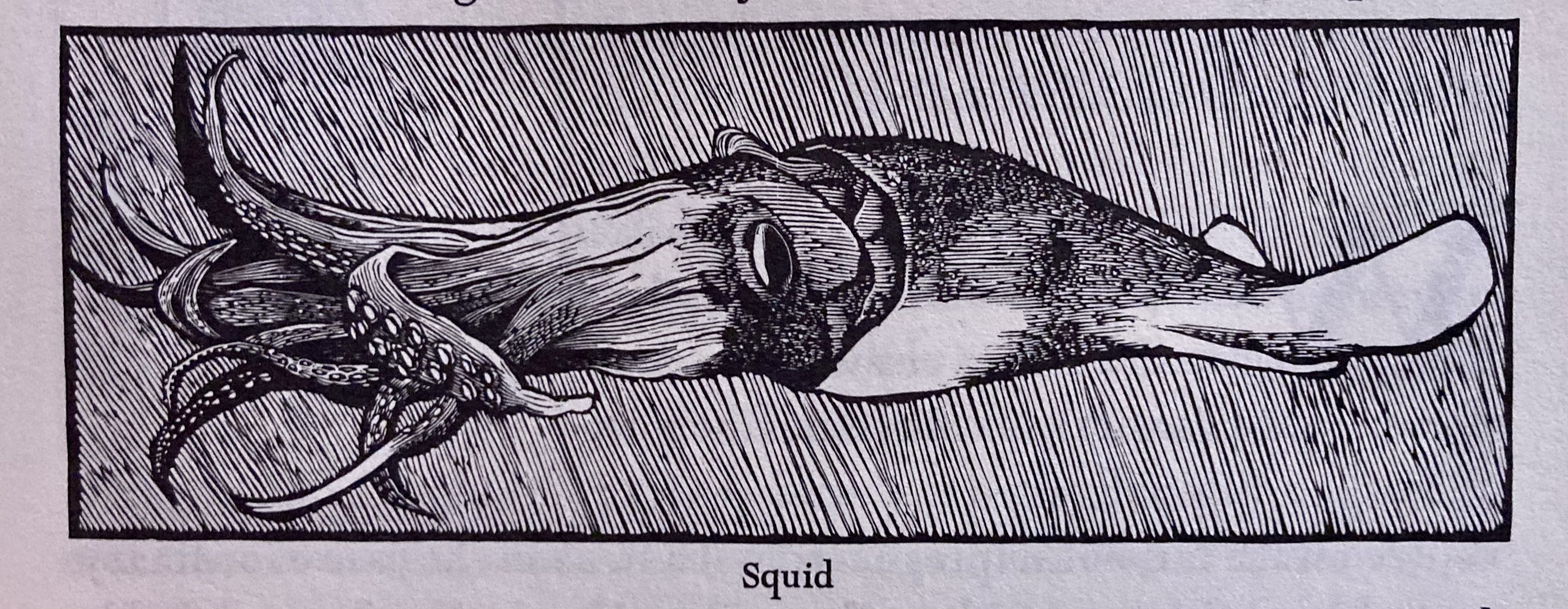
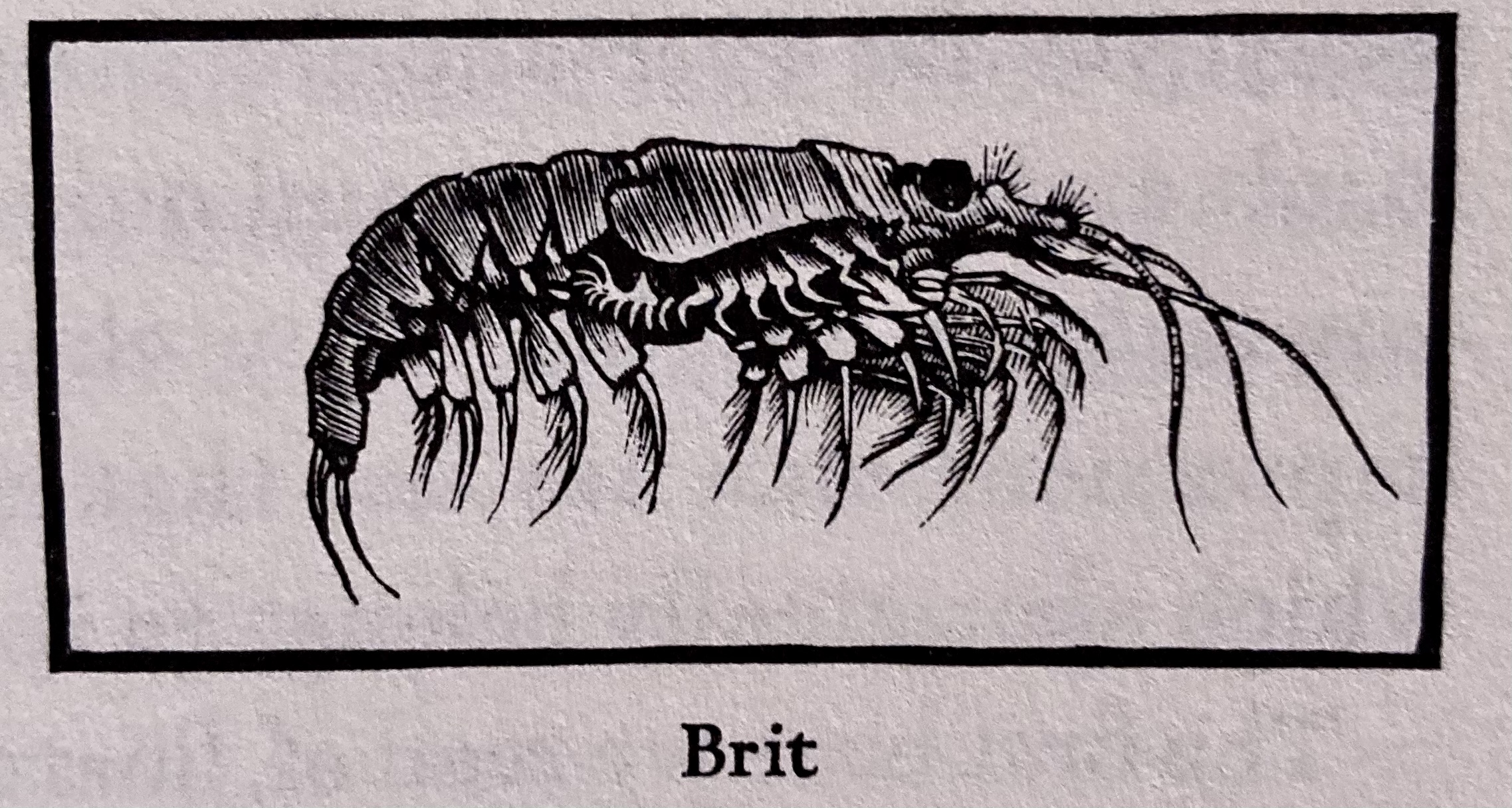
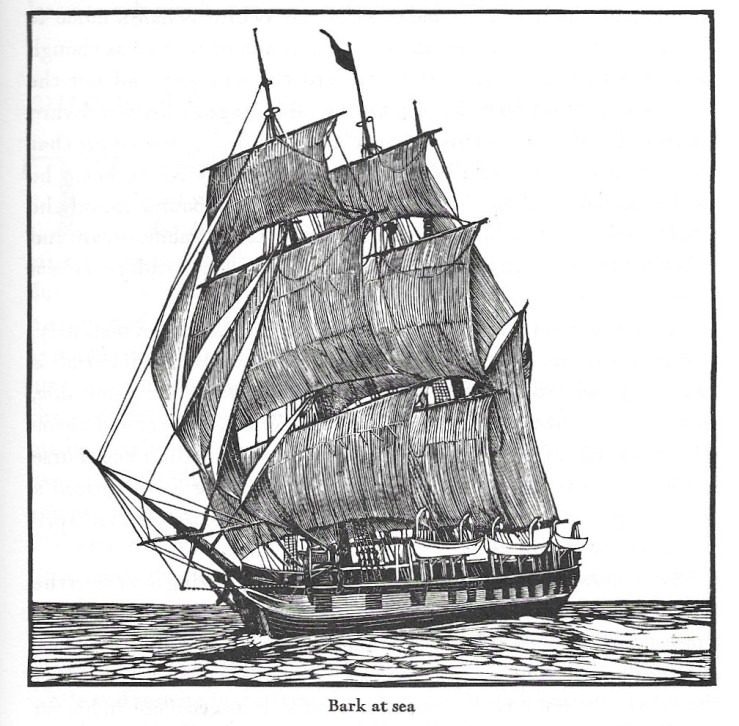
Illustrations in this post are by the American artist Barry Moser.


Ch. 1 (The great flood-gates of the wonder-world swung open)

Ch. 2-4  (Nameless, unimaginable, silent form or phantom)

Ch. 5-8  (All these things are not without their meanings)

Ch. 9-13  (No more my splintered heart and maddened hand were turned against the wolfish world)

Ch. 14-16 (Oblique hints)

Ch. 17-19  (Humbug or bugbear)

Ch. 20-22 (First kick)

Ch. 23-27 (Whaling may well be regarded as that Egyptian mother who bore offspring themselves pregnant from her womb)

Ch. 28-32 (God keep me from ever completing anything)

Ch. 33-35 (Your identity comes back in horror)

Ch. 36 (Talk not to me of blasphemy, man; I’d strike the sun if it insulted me)

Ch. 37-48 (And of all these things the Albino whale was the symbol. Wonder ye then at the fiery hunt?)

Ch. 49-54 (Certain queer times and occasions in this strange mixed affair we call life)

Ch. 55-57  (The great Leviathan is that one creature in the world which must remain unpainted to the last)

Ch. 58-60 (A certain wondrous, inverted visitation of one of those so called judgments of God which at times are said to overtake some men)

Ch. 61-73 (The mystic-marked whale remains undecipherable)

Ch. 74-75 (Why then do you try to “enlarge” your mind? Subtilize it.)

Ch. 76-80 (A very precious perishing)

Ch. 81-83 (There are some enterprises in which a careful disorderliness is the true method)

Ch. 84-86  (Doubts of all things earthly, and intuitions of some things heavenly)

Ch. 87 (There is no folly of the beasts of the earth which is not infinitely outdone by the madness of men)

Ch. 88-90 (Loose-fish/fast-fish)

Ch. 91-93 (The intense concentration of self in the middle of such a heartless immensity, my God! who can tell it?)

Ch. 94-98 (Let us squeeze ourselves universally into the very milk and sperm of kindness)

Ch. 99 (“I look, you look, he looks; we look, ye look, they look”)

Ch. 100 (Face set like a flint)

Ch. 101-05 (Horror-struck at this antemosaic, unsourced existence of the unspeakable terrors of the whale)

Ch. 106-08 (The ineffaceable, sad birth-mark in the brow of man, is but the stamp of sorrow in the signers)

Ch. 109-11 (Millions of mixed shades and shadows, drowned dreams, somnambulisms, reveries)

Ch. 112 (Death is only a launching into the region of the strange Untried)

Ch. 113-17 (Our souls are like those orphans whose unwedded mothers die in bearing them)

Ch. 118-19 (Thy incommunicable riddle, thy unparticipated grief)

Ch. 120-22 (All of us are Ahabs)

Ch. 123 (Wild nights)

Ch. 124-26 (Human sort of wail)

Ch. 127-29 (A life-buoy of a coffin! Does it go further?)

Ch. 130-32 (The least heedful eye seemed to see some sort of cunning meaning in almost every sight)

Ch. 133-34 (That wild simultaneousness of a thousand concreted perils)

Ch. 135-Epilogue (The drama’s done)

And because I landed (or drowned?) at forty, here’s Ahab, near the end of the novel, wailing on forty:

Oh, Starbuck! it is a mild, mild wind, and a mild looking sky. On such a day—very much such a sweetness as this—I struck my first whale—a boy-harpooneer of eighteen! Forty—forty—forty years ago!—ago! Forty years of continual whaling! forty years of privation, and peril, and storm-time! forty years on the pitiless sea! for forty years has Ahab forsaken the peaceful land, for forty years to make war on the horrors of the deep! Aye and yes, Starbuck, out of those forty years I have not spent three ashore. When I think of this life I have led; the desolation of solitude it has been; the masoned, walled-town of a Captain’s exclusiveness, which admits but small entrance to any sympathy from the green country without—oh, weariness! heaviness! Guinea-coast slavery of solitary command!—when I think of all this; only half-suspected, not so keenly known to me before—and how for forty years I have fed upon dry salted fare—fit emblem of the dry nourishment of my soil!—when the poorest landsman has had fresh fruit to his daily hand, and broken the world’s fresh bread to my mouldy crusts—away, whole oceans away, from that young girl-wife I wedded past fifty, and sailed for Cape Horn the next day, leaving but one dent in my marriage pillow—wife? wife?—rather a widow with her husband alive! Aye, I widowed that poor girl when I married her, Starbuck; and then, the madness, the frenzy, the boiling blood and the smoking brow, with which, for a thousand lowerings old Ahab has furiously, foamingly chased his prey—more a demon than a man!—aye, aye! what a forty years’ fool—fool—old fool, has old Ahab been! Why this strife of the chase? why weary, and palsy the arm at the oar, and the iron, and the lance? how the richer or better is Ahab now?

(I feel richer now after the re-read.)

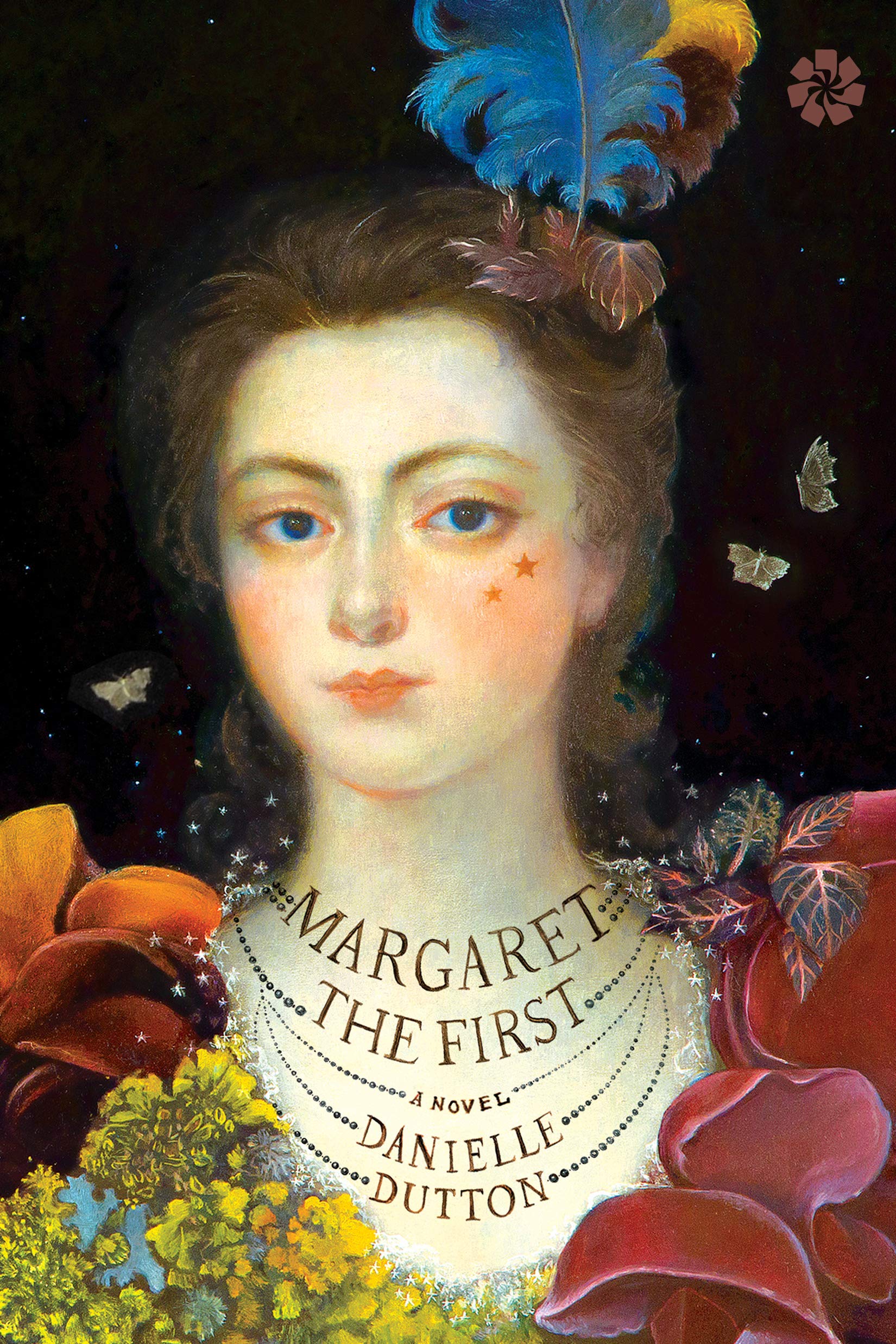
She made the world her book | On Danielle Dutton’s novel Margaret the First

Margaret Lucas Cavendish, Duchess of Newcastle-upon-Tyne was born to a wealthy aristocratic family who took the royalist side in the English Civil War. She spent her teen years attending the exiled Queen Henrietta Maria as a handmaiden. She soon married William Cavendish, the Marquess of Newcastle (and a steadfast royalist), and lived with him in exile in Antwerp. During this time, she began writing and publishing strange volumes on various topics—science, fashion, language, wit, and the act of writing itself. Her eccentric writing mirrored her eccentric habits. Simultaneously shy and fame-hungry, often depressed or elated and manic, Cavendish earned and maintained a notorious reputation over her lifetime.

Danielle Dutton somehow condenses Cavendish’s starbright life into a slim 160 pages in her novel Margaret the First. This imaginative near-biography borrows from Cavendish’s own writings as well as an essay on Cavendish by Virginia Woolf.  Woolf thought Cavendish a cautionary tale. In A Room of One’s Own, Woolf describes her as a brilliant but uneducated woman who “frittered her time away scribbling nonsense and plunging ever deeper into obscurity and folly.” Dutton captures that reputation early in the novel: “Mad Madge,” goes the cry among a crowd of onlookers at the novel’s outset (the crowd includes the diarist Samuel Pepys). However, Dutton is far more sympathetic toward Margaret, conjuring for us a natural composer. Consider these lines from Margaret the First’s opening paragraph:

She made the world her book, took a piece of coal and marked a blank white wall. Later, she made sixteen smaller books: untitled, sewn with yarn. Her girlhood heroes were Shakespeare, Ovid, Caesar. She wrote them in beside thinking-rocks and humming-shoes and her favorite sister, Catherine, who starred in all but five. Snow fell fast as she sat by the nursery fire; ink to paper, then she sewed. The last book told a tale of hasty gloom, teeming with many shades of green: emerald, viridian, a mossy black. In it we meet a miniature princess who lives in a seashell castle and sleeps in sheets woven from the eyelids of doves.

Dutton roped me in with “tale of hasty gloom,” but the images in that last sentence—sheets woven from the eyelids of doves!—propelled my reading on.

We see here Cavendish as a creator of both books and her own world. Dutton’s narrator notes Cavendish—or shall I use Margaret here?—Dutton’s narrator notes that our protagonist not only writes her books, but sews them. The image of creation as fashion—as literally fashioning objects and ideas—repeats throughout Margaret the First. Margaret tells her patient older husband William that “dressing is the poetry of women.” She finds near-epiphanic inspiration in a masquerade costume worn by Christina, Queen of Sweden, who dresses as an Amazon warrior, baring her breasts to the entire court. Later she wonders, “why must grammar be like a prison for the mind? Might not language be as a closet full of gowns? Of a generally similar cut, with a hole for the head and neck to pass, but filled with difference and a variety of trimmings so that we don’t grow bored?”

Critics of Cavendish attacked her spelling and grammar; Woolf declared her “crack-brained and bird-witted.” Dutton’s portrait though gives us something closer to Emily Dickinson or William Blake. Margaret’s an eccentric who turns her eccentricity into a strange new art that resisted grammar that would be “a prison for the mind.”

And yet Dutton is never too-beholden to her subject. We are never told that Margaret is a genius; rather, Dutton attunes us to Margaret’s own singular perceptions—we feel flashes of genius, but also feel Margaret’s frustrated inability to harness that genius into a form that seventeenth-century England can recognize. She is always at the margin of the circle, too eccentric to orbit neatly with the intellectual luminaries whom she encounters.

We also feel the tinges of Margaret’s melancholic mental instability. Alone in a carriage, she retreats into her mind’s eye:

I found myself in an unknown universe, whirling far into space. African servants, dogs in hats, platonic ideals, sparkling conversation, and ivy-coated quadrangles with womanizing captains, dueling earls, actors. I met Father Cyprien de Gamache, her majesty’s wily confessor; William, a poet, who claimed to be Shakespeare’s son; and a giggling dwarf called Jeffry, who’d been presented to the queen in a pie. I met the ladies-in-waiting, too, who hardly looked my way, busy as they were, bickering over who went where and when, who wore what and when, who fetched what and why, who said what and to whom, and who gave her the right to say that.

Tellingly, the cluttered images in Margaret’s fantasy dissolve into the too-banal reality of the grammar of manners: who can wear what, who can say what, and so on. To cop a phrase from Blake, those “mind-forg’d manacles” are hard to break. Indeed, mind-forg’d manacles tend to break those who resist them. “Much Madness is divinest Sense,” Emily Dickinson noted, but also pointed out that those who resist the grammar of manners are “straightway dangerous -/ And handled with a Chain.”

Margaret avoids the chain, and if the world is a bit too much for her to bear at time, she fashions it into Something Else. This is the joy of Margaret the First. Dutton could have crafted the tale as a tragedy, but instead she gives us something else—something rich, generative, imagistic, occasionally unsettling, and ultimately deeply endearing. Highly recommended.

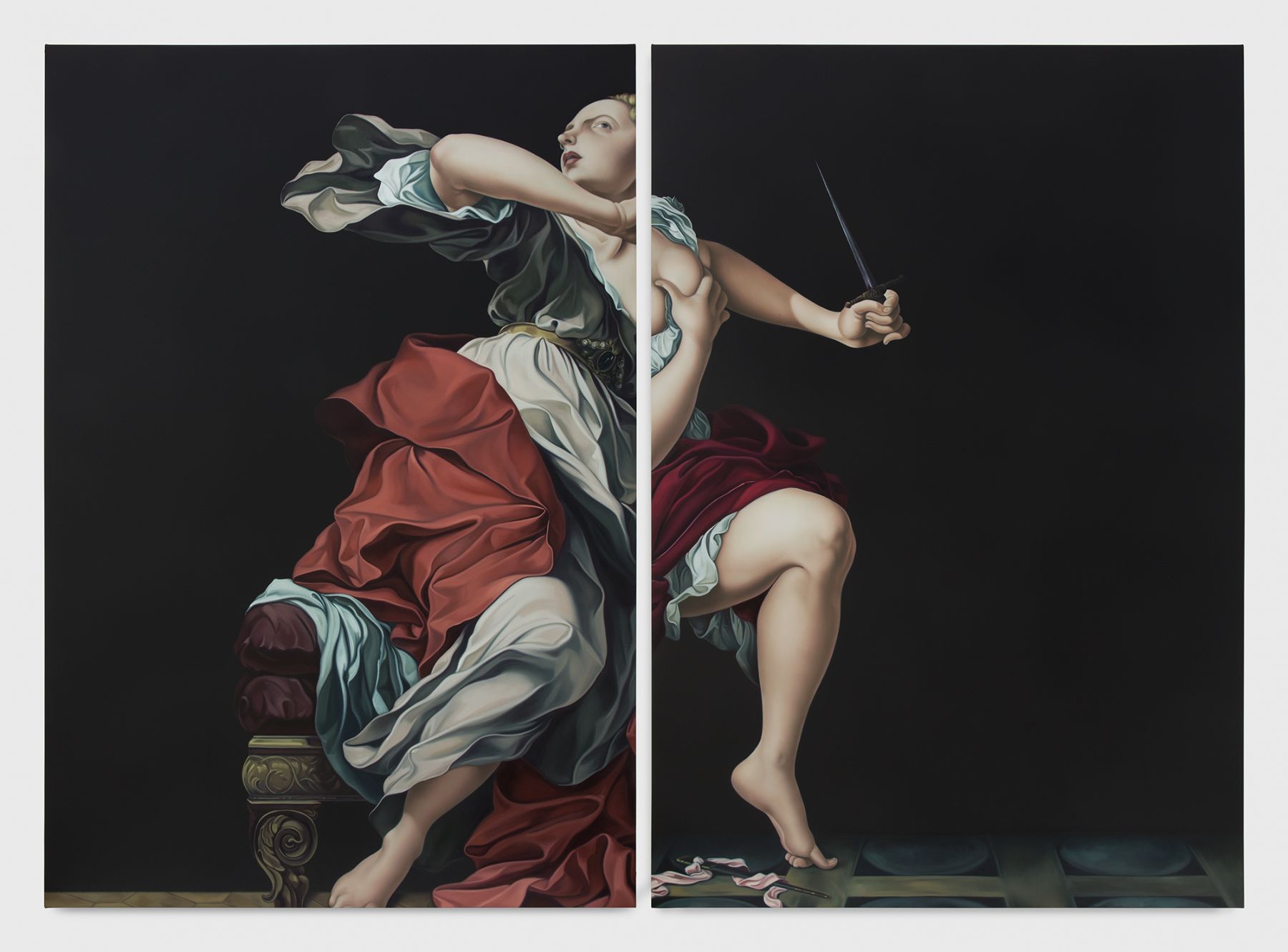
Caught Fire and Fury — Jesse Mockrin

Caught Fire and Fury, 2019 by Jesse Mockrin (b. 1981)

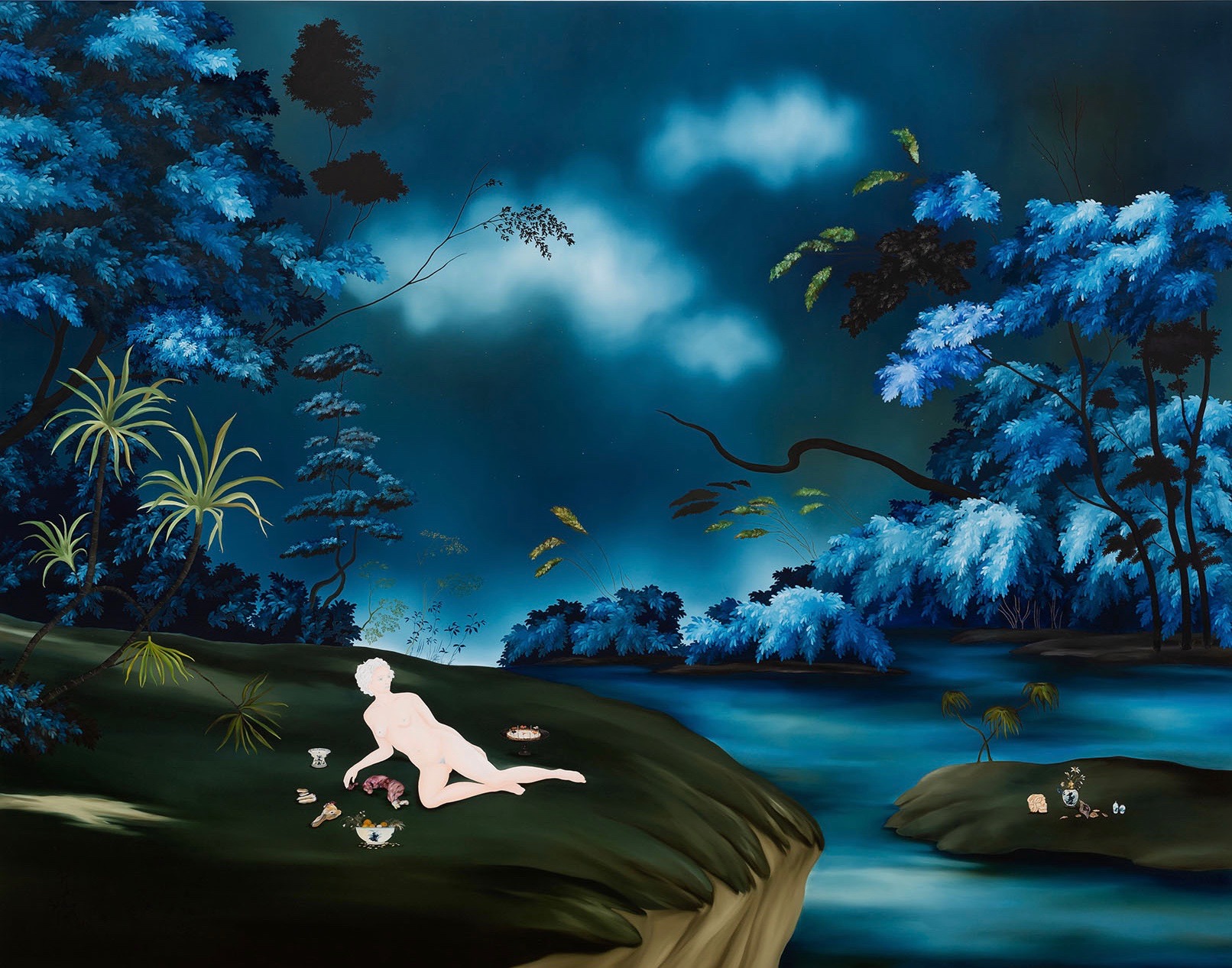
This Is the Beast with a Thousand Mouths That Must Be Fed Twice a Day — Sanam Khatibi

This Is the Beast with a Thousand Mouths That Must Be Fed Twice a Day, 2017 by Sanam Khatibi (b. 1979)

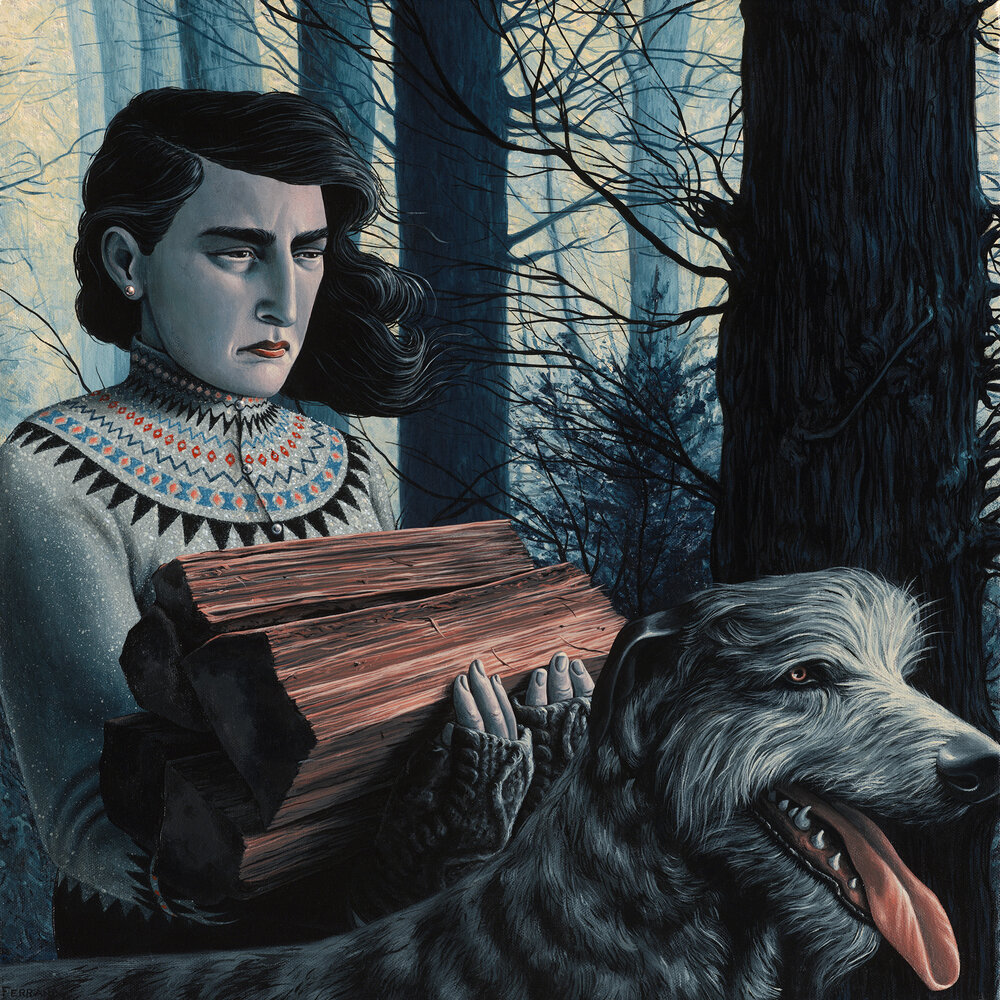
We Had Different Plans — Gregory Ferrand

We Had Different Plans, 2020 by Gregory Ferrand (b. 1975)

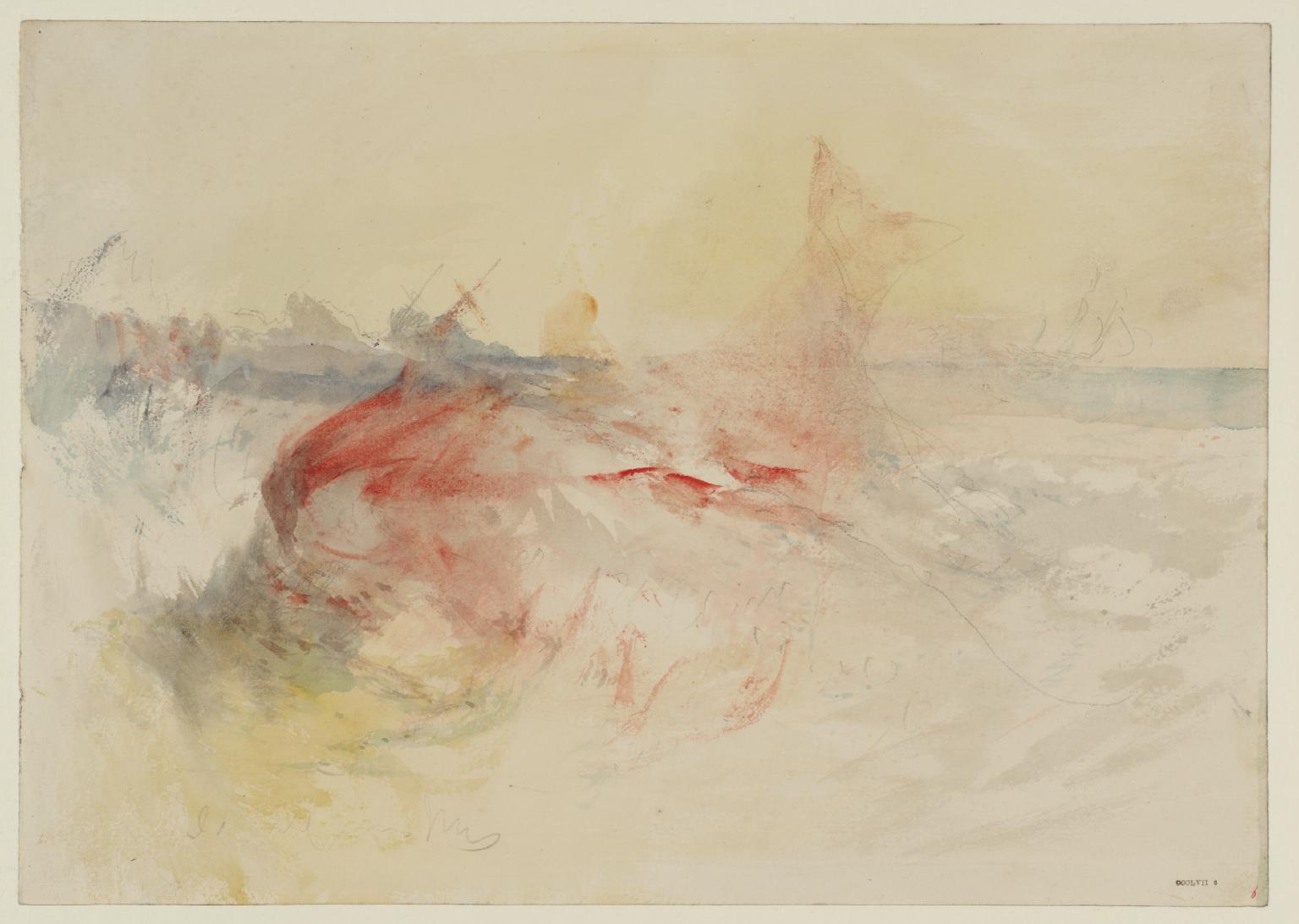
A Harpooned Whale — J.M.W. Turner

A Harpooned Whale, 1845 by Joseph Mallord William Turner (1775-1851)