“Helping,” a short story by Robert Stone

“Helping”

by

Robert Stone


One gray November day, Elliot went to Boston for the afternoon. The wet streets seemed cold and lonely. He sensed a broken promise in the city’s elegance and verve. Old hopes tormented him like phantom limbs, but he did not drink. He had joined Alcoholics Anonymous fifteen months before.

Christmas came, childless, a festival of regret. His wife went to Mass and cooked a turkey. Sober, Elliot walked in the woods.

In January, blizzards swept down from the Arctic until the weather became too cold for snow. The Shawmut Valley grew quiet and crystalline. In the white silences, Elliot could hear the boards of his house contract and feel a shrinking in his bones. Each dusk, starveling deer came out of the wooded swamp behind the house to graze his orchard for whatever raccoons had uncovered and left behind. At night he lay beside his sleeping wife listening to the baying of dog packs running them down in the deep moon-shadowed snow.

Day in, day out, he was sober. At times it was almost stimulating. But he could not shake off the sensations he had felt in Boston. In his mind’s eye he could see dead leaves rattling along brick gutters and savor that day’s desperation. The brief outing had undermined him.

Sober, however, he remained, until the day a man named Blankenship came into his office at the state hospital for counselling. Blankenship had red hair, a brutal face, and a sneaking manner. He was a sponger and petty thief whom Elliot had seen a number of times before.

“I been having this dream,” Blankenship announced loudly. His voice was not pleasant. His skin was unwholesome. Every time he got arrested the court sent him to the psychiatrists and the psychiatrists, who spoke little English, sent him to Elliot. Continue reading ““Helping,” a short story by Robert Stone”

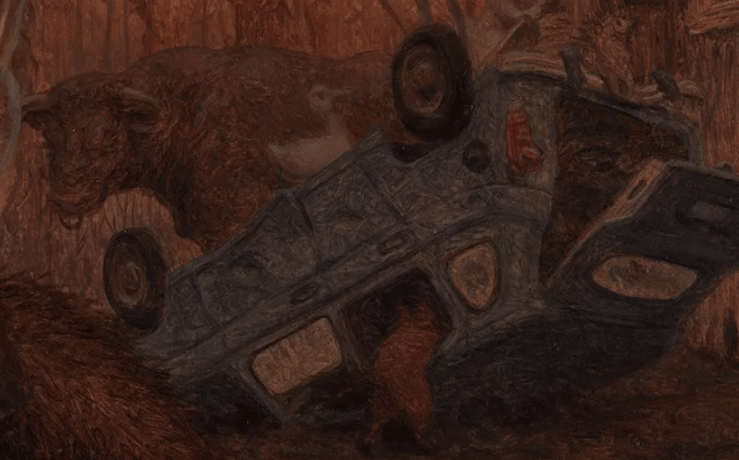
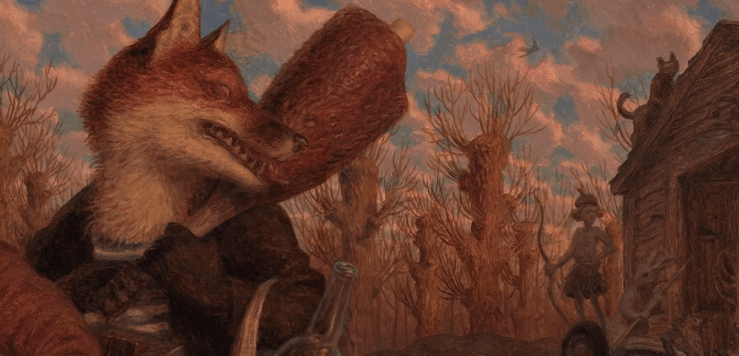
The Hedgerow Rebellion, 1962 — Peter Ferguson

ferguson-hedgerow-rebellion-1962-medium

Screenshot 2019-08-20 at 6.13.06 PMScreenshot 2019-08-20 at 6.13.22 PMScreenshot 2019-08-20 at 6.13.44 PM

The Hederow Rebellion, 1962 by Peter Ferguson (b. 1968)

Lost Horizon — Dan Lydersen

losthorizon

Lost Horizon, 2017 by Dan Lydersen (b. 1980)

Books acquired, 15 Aug. 2019

img_3825

I went to the used bookstore last week to pick up some of my daughters required reading for school. I fucked up and picked up a heavily-annotated copy of Elie Wiesel’s Night which I will have to return maybe tomorrow or Wednesday.

While there, I picked up Fup by Jim Dodge. I was looking for Dodge’s novel Stone Junction (a twitter-based recommendation based on my taking to Charles Portis), but I couldn’t find a copy. But Fup looked neat. And it’s illustrated (by Norman Green).

img_3857

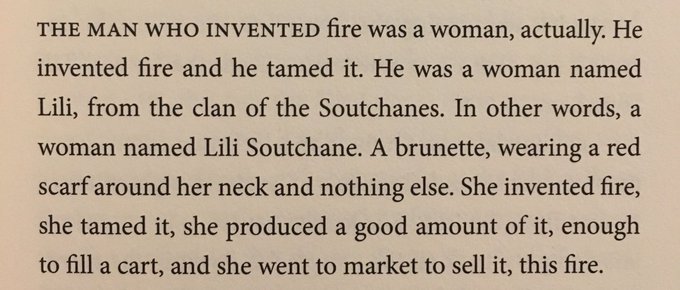
I also picked up Manuela Draeger’s In the Time of the Blue Bell in English translation by Brian Evenson. Draeger is one of French author Antoine Volodine’s pseudonyms. It’s good stuff. Here is the first paragraph:

ECDS3K3XUAAkTvN

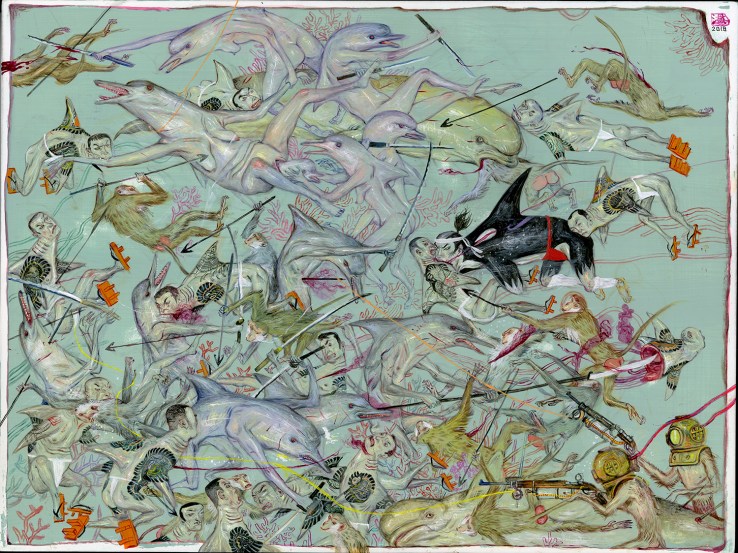
Dolphins — Mu Pan

dolphins

Screenshot 2019-08-18 at 10.32.38 AMScreenshot 2019-08-18 at 10.32.13 AMScreenshot 2019-08-18 at 10.31.55 AM

Dolphins, 2018 by Mu Pan (b. 1976)

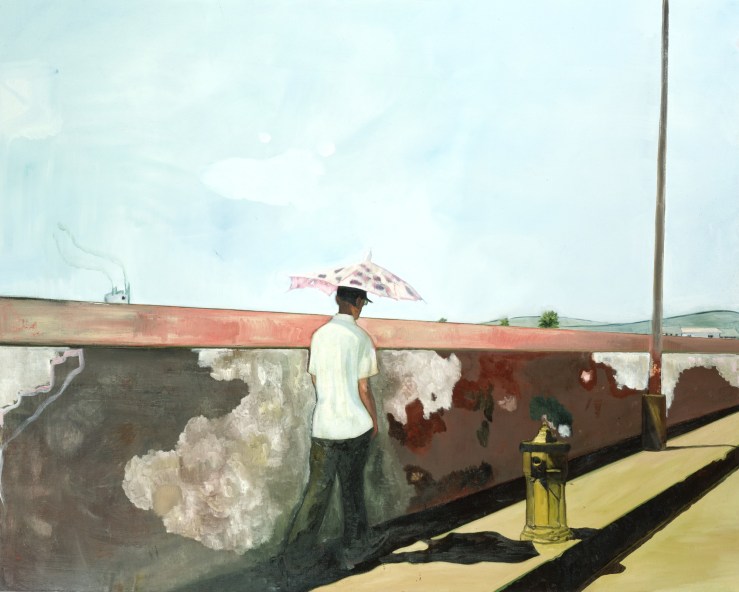
Lapeyrouse Wall — Peter Doig

w1siziisijexoduxmyjdlfsiccisimnvbnzlcnqilcitcmvzaxplidiwmdb4mjawmfx1mdazzsjdxq

Lapeyrouse Wall, 2004 by Peter Doig (b. 1959)

“The Mountebank” — Jorge Luis Borges

“The Mountebank”

by

Jorge Luis Borges

Translated by Andrew Hurley


One day in July, 1952, the man dressed in mourning weeds appeared in that little village on the Chaco River.* He was a tall, thin man with vaguely Indian features and the inexpressive face of a half-wit or a mask. The townsfolk treated him with some deference, not because of who he was but because of the personage he was portraying or had by now become. He chose a house near the river; with the help of some neighbor women he laid a board across two sawhorses, and on it he set a pasteboard coffin with a blond-haired mannequin inside. In addition, they lighted four candles in tall candleholders and put flowers all around. The townsfolk soon began to gather. Old ladies bereft of hope, dumbstruck wide-eyed boys, peons who respectfully took off their pith hats—they filed past the coffin and said: My condolences, General. The man in mourning sat sorrowfully at the head of the coffin, his hands crossed over his belly like a pregnant woman. He would extend his right hand to shake the hand extended to him and answer with courage and resignation: It was fate. Everything humanly possible was done. A tin collection box received the two-peso price of admission, and many could not content themselves with a single visit.

What kind of man, I ask myself, thought up and then acted out that funereal farce—a
fanatic? a grief-stricken mourner? a madman? a cynical impostor? Did he, in acting out his mournful role as the macabre widower, believe himself to be Perón? It is an incredible story, but it actually happened—and perhaps not once but many times, with different actors and local variants. In it, one can see the perfect symbol of an unreal time, and it is like the reflection of a dream or like that play within a play in Hamlet.

The man in mourning was not Perón and the blond-haired mannequin was not the woman Eva Duarte, but then Perón was not Perón, either, nor was Eva, Eva—they were unknown or anonymous persons (whose secret name and true face we shall never know) who acted out, for the credulous love of the working class, a crass and ignoble mythology.

Stars ‘n Tarnation — Scott Greene

s_greene_starsntarnationScreenshot 2019-08-16 at 9.29.26 AMScreenshot 2019-08-16 at 9.28.53 AM

Stars ‘n Tarnation, 2013 by Scott Greene

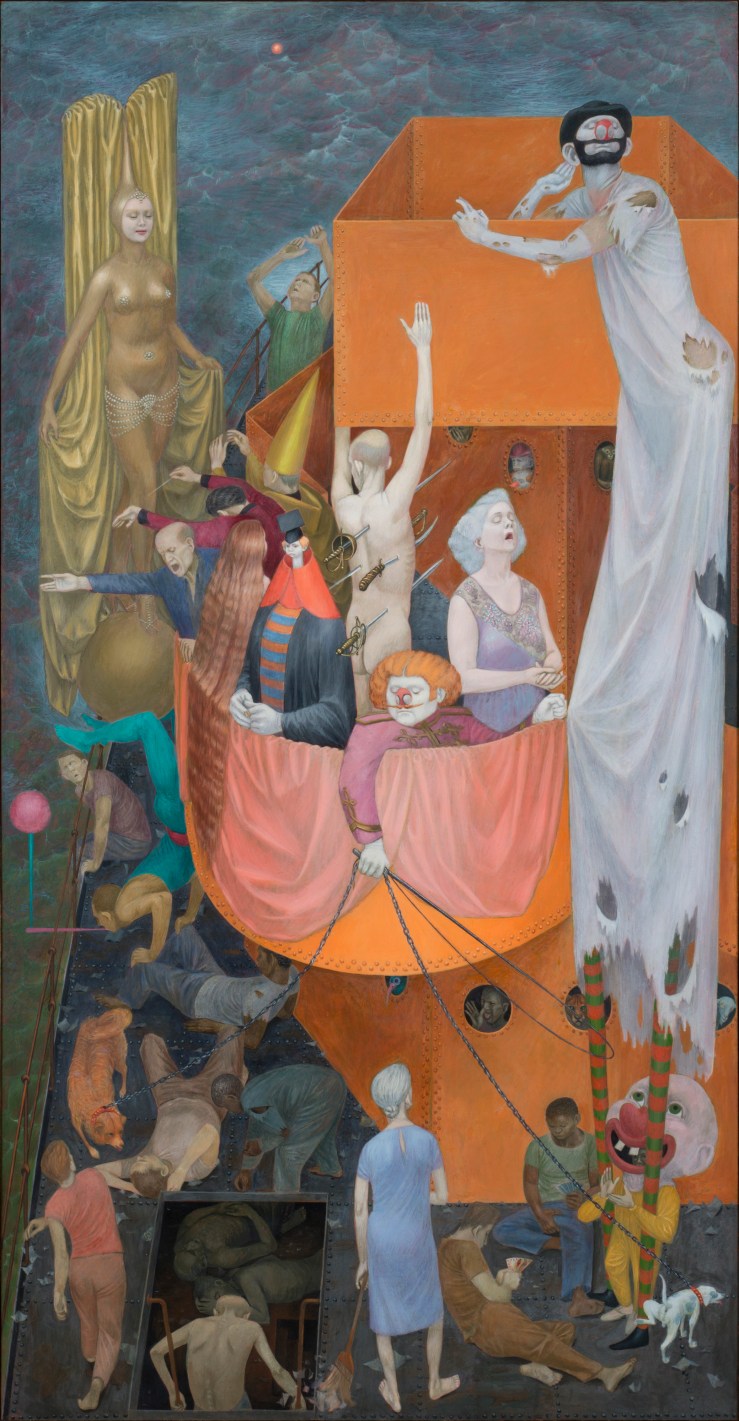
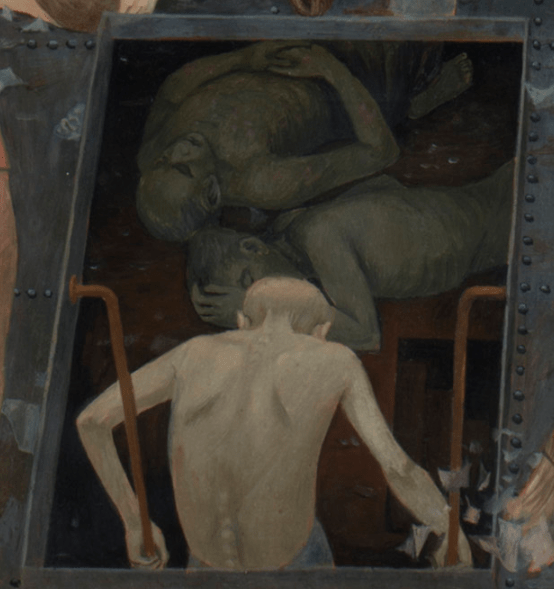
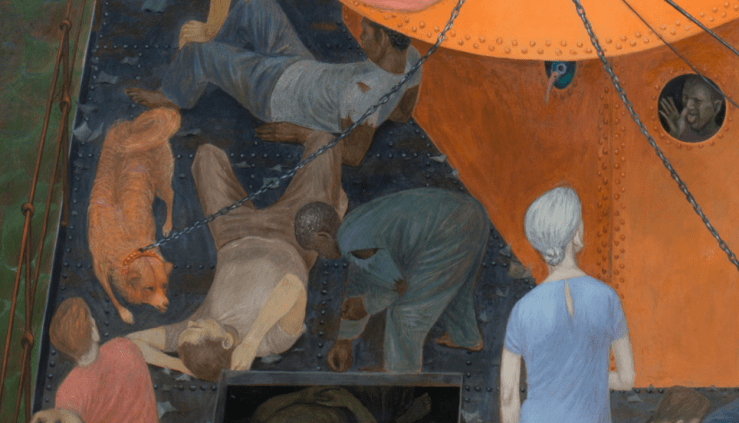
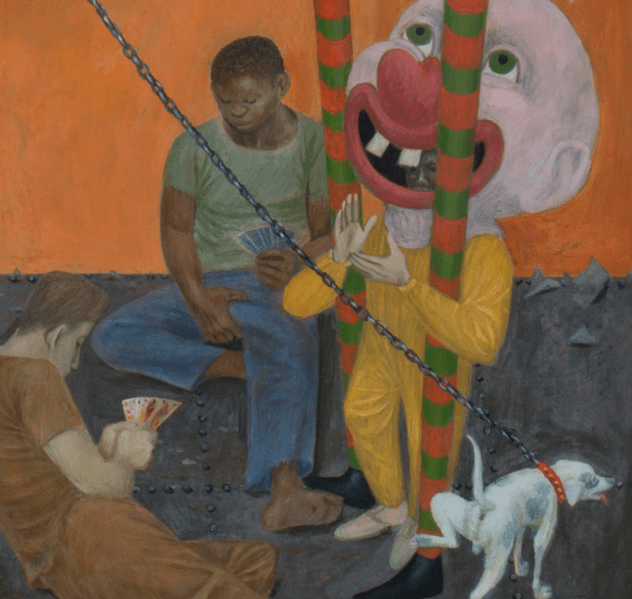
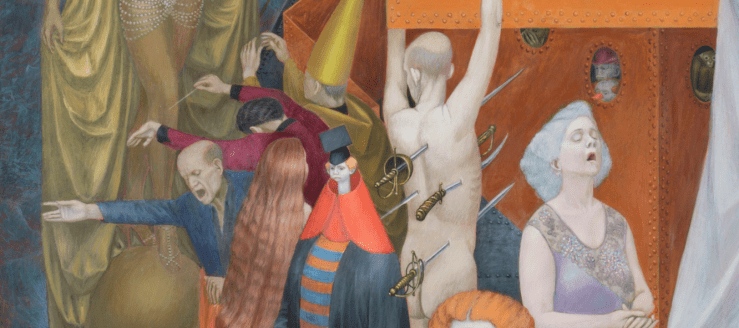
The Showboat — Henry Koerner

110 West 80 St-4R, NY, NY 10024
212 874 3879Screenshot 2019-07-15 at 9.18.08 PMScreenshot 2019-07-15 at 9.17.52 PMScreenshot 2019-07-15 at 9.17.32 PMScreenshot 2019-07-15 at 9.17.12 PMScreenshot 2019-07-15 at 9.16.44 PMScreenshot 2019-07-15 at 9.16.20 PMScreenshot 2019-07-15 at 9.15.44 PMScreenshot 2019-07-15 at 9.15.18 PMScreenshot 2019-07-15 at 9.14.45 PM

The Showboat, 1948 by Henry Koerner (1915-1991)

We proceeded through wood-paths to Walden Pond | Nathaniel Hawthorne’s journal entry for August 15th, 1842

August 15th.–George Hillard and his wife arrived from Boston in the dusk of Saturday evening, to spend Sunday with us. It was a pleasant sensation, when the coach rumbled up our avenue, and wheeled round at the door; for I felt that I was regarded as a man with a household,–a man having a tangible existence and locality in the world,–when friends came to avail themselves of our hospitality. It was a sort of acknowledgment and reception of us into the corps of married people,–a sanction by no means essential to our peace and well-being, but yet agreeable enough to receive. So we welcomed them cordially at the door, and ushered them into our parlor, and soon into the supper-room. . . . The night flitted over us all, and passed away, and up rose a gray and sullen morning, . . . and we had a splendid breakfast of flapjacks, or slapjacks, and whortleberries, which I gathered on a neighboring hill, and perch, bream, and pout, which I hooked out of the river the evening before. About nine o’clock, Hillard and I set out for a walk to Walden Pond, calling by the way at Mr. Emerson’s, to obtain his guidance or directions, and he accompanied us in his own illustrious person. We turned aside a little from our way, to visit Mr. —-, a yeoman, of whose homely and self-acquired wisdom Mr. Emerson has a very high opinion. We found him walking in his fields, a short and stalwart and sturdy personage of middle age, with a face of shrewd and kind expression, and manners of natural courtesy. He had a very free flow of talk; for, with a little induction from Mr. Emerson, he began to discourse about the state of the nation, agriculture, and business in general, uttering thoughts that had come to him at the plough, and which had a sortof flavor of the fresh earth about them. His views were sensible and characteristic, and had grown in the soil where we found them; . . . and he is certainly a man of intellectual and moral substance, a sturdy fact, a reality, something to be felt and touched, whose ideas seem to be dug out of his mind as he digs potatoes, beets, carrots, and turnips out of the ground.

After leaving Mr. —-, we proceeded through wood-paths to Walden Pond, picking blackberries of enormous size along the way. The pond itself was beautiful and refreshing to my soul, after such long and exclusive familiarity with our tawny and sluggish river. It lies embosomed among wooded hills,–it is not very extensive, but large enough for waves to dance upon its surface, and to look like a piece of blue firmament, earth-encircled. The shore has a narrow, pebbly strand, which it was worth a day’s journey to look at, for the sake of the contrast between it and the weedy, oozy margin of the river. Farther within its depths, you perceive a bottom of pure white sand, sparkling through the transparent water, which, methought, was the very purest liquid in the world. After Mr. Emerson left us, Hillard and I bathed in the pond, and it does really seem as if my spirit, as well as corporeal person, were refreshed by that bath. A good deal of mud and river slime had accumulated on my soul; but these bright waters washed them all away.

We returned home in due season for dinner, . . . To my misfortune, however, a box of Mediterranean wine proved to have undergone the acetous fermentation; so that the splendor of the festival suffered some diminution. Nevertheless, we ate our dinner with a good appetite, and afterwards went universally to takeour several siestas. Meantime there came a shower, which so besprinkled the grass and shrubbery as to make it rather wet for our after-tea ramble. The chief result of the walk was the bringing home of an immense burden of the trailing clematis-vine, now just in blossom, and with which all our flower-stands and vases are this morning decorated. On our return we found Mr. and Mrs. S—- , and E. H—-, who shortly took their leave, and we sat up late, telling ghost-stories. This morning, at seven, our friends left us. We were both pleased with the visit, and so, I think, were our guests.

From Nathaniel Hawthorne’s American Note-Books.


In Lieu of Flowers and Blood — Richard Oelze

oel2016

Screenshot 2019-08-15 at 4.30.55 PMScreenshot 2019-08-15 at 4.30.43 PMScreenshot 2019-08-15 at 4.30.19 PM

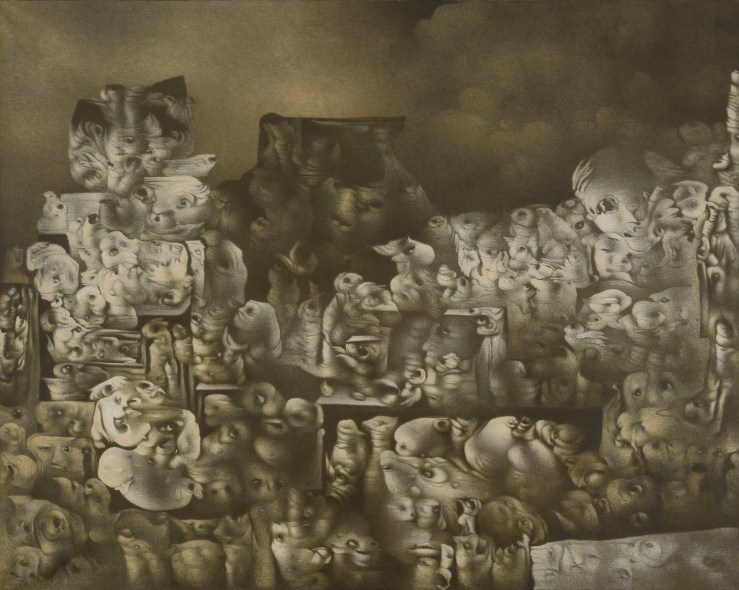
In Lieu of Flowers and Blood, 1963 by Richard Oelze (1900-1980)

Into Taihu — Liu Xiaodong

feature_2010into_taihu_3

Into Taihu, 2010 by Liu Xiaodong (b. 1963)

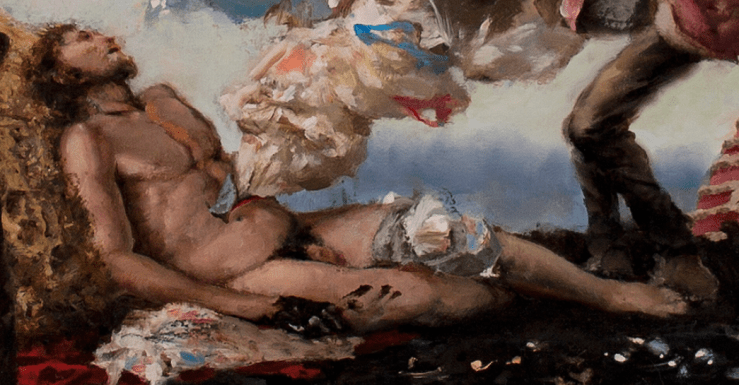
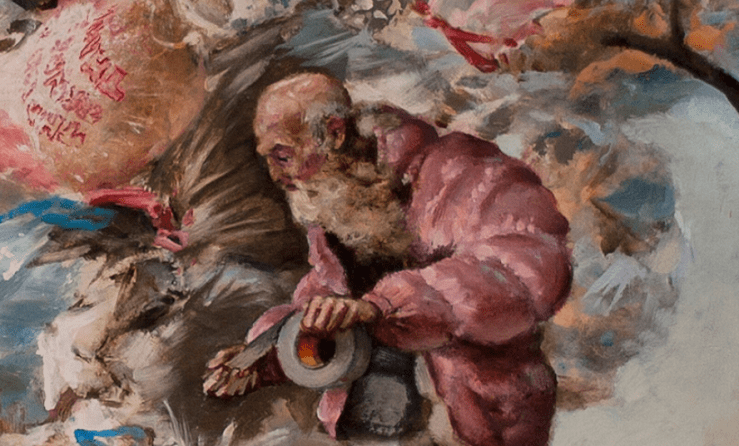
Held —  Lukifer Aurelius

lukifer-aurelius-held_1024x1024

Held by Lukifer Aurelius

“Reapers” — Jean Toomer

Screenshot 2019-08-13 at 10.17.59 AM

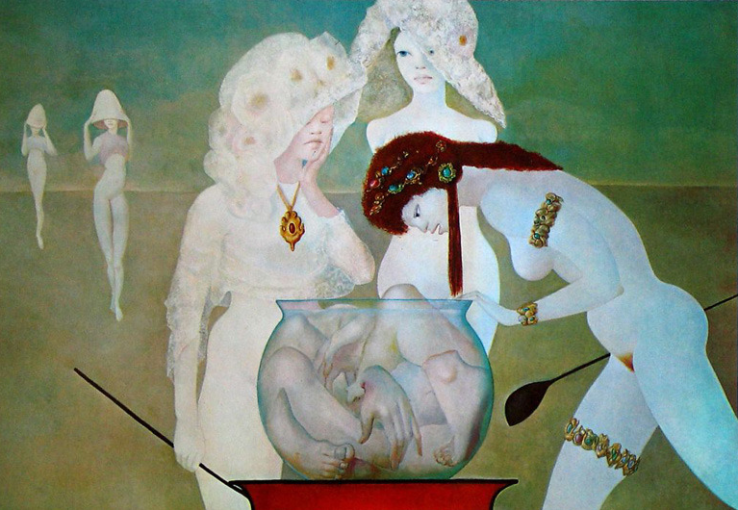
The Strangers — Leonor Fini

Screenshot 2019-08-13 at 10.09.04 AM

The Strangers, 1968 by Leonor Fini  (1908-1996)

Blog about Chris Ware’s Rusty Brown (Book acquired, 7 Aug 2019)

img_3799-1

I finally dug into Chris Ware’s forthcoming graphic novel, Rusty Brown yesterday. A finished review copy arrived on August 7th, 2019, the day that David Berman died.

I had spent some time simply looking at the book’s exquisite book jacket, which unfolds into a kind of two-sided poster thing, complete with notes and suggestions how the reader might personalize the jacket by folding it in different ways. The spine section of the jacket is also quite amusing—a sort of TV Guide goof that stages Rusty Brown as a television special (in four parts, including comedy, western, sci-fi, and drama). There’s also a crossword puzzle, a maze, and other minutiae. If you’ve read Ware, you’ll know that his work is often crammed with little details like this. Here are two pictures that fail to capture how gorgeous this thing is:

img_3802-2img_3801-2

Here’s the inside cover, too:

img_3800-1

So well and anyway. I tooled around with the cover for a half hour or so on that Wednesday then started in on making dinner, the making of which was interrupted by a text from a friend telling me about Berman’s suicide.

If you’ve read Chris Ware—maybe you’ve read Jimmy Corrigan: The Smartest Kid on Earth or Building Stories, both of which are exceptional—hell, Building Stories is like the invention of a new genre of reading itself—if you’ve read Chris Ware you likely know that his work can be really fucking sad.

I have not wanted to read anything really fucking sad for the past few days.

(I’ve been rereading Berman’s collection Actual Air and reading Charles Portis’s comic picaresque The Dog of the South.)

On Sunday afternoon I decided to dig in. I met the cast of Rusty Brown:

img_3803-1img_3804-2

–and picked up the setting:

img_3806-1

The introduction of Rusty Brown runs over a 100 pages and intertwines several of the characters’ perspectives. If there’s a lead though, it’s Woody Brown, a miserable son of a bitch who hates his life (wife, kid, teaching job) and daydreams about running away or even killing himself.

img_3782-1

Woody’s poor son, the titular Rusty, daydreams as well, fantasizing that he’s gained superpowers (well, a superpower—incredible hearing) and fixating on his Supergirl action figure, who enters his bored mind when he’s at school. School is bad for Rusty, too; he’s bullied terribly. Ware depicts these scenes with honesty and pathos, but also humor. Consider this little cut scene:

img_3783-1

The comic timing frequently leavens the first part of Rusty Brown. The thought bubble here cracked me up:

img_3805-1

We also meet Alison and Chalky White, a brother and sister who are starting their first day at a new school. They’ve moved in with their grandmother; they’re new to Nebraska, and they’re miserable. Ware runs their story concurrently with the Browns’ story, and the two occasionally sync up in wonderful little plays on perspective.

img_3808

Ware also inserts a version of himself into the story. Mr. Ware is the art teacher at Rusty’s school. Ware’s depiction of Mr. Ware is a kind of mean self-parody, but also very funny and even warm at times.

img_3786-1

Mr. Ware has been working on a series of Pop Art paintings that he hopes will achieve “an intuitive transcendence of culture and corpus.”

img_3785-1

Ware has been working on Rusty Brown for over a decade and a half now (you might’ve read bits of it here and there over the years), and the depth of storytelling here shows. Full review forthcoming, but for now, here’s publisher Pantheon’s blurb:

Rusty Brown is a fully interactive, full-color articulation of the time-space interrelationships of three complete consciousnesses in the first half of a single midwestern American day and the tiny piece of human grit about which they involuntarily orbit. A sprawling, special snowflake accumulation of the biggest themes and the smallest moments of life, Rusty Brown literately and literally aims at nothing less than the coalescence of one half of all of existence into a single museum-quality picture story, expertly arranged to present the most convincingly ineffable and empathetic illusion of experience for both life-curious readers and traditional fans of standard reality. From childhood to old age, no frozen plotline is left unthawed in the entangled stories of a child who awakens without superpowers, a teen who matures into a paternal despot, a father who stores his emotional regrets on the surface of Mars and a late-middle-aged woman who seeks the love of only one other person on planet Earth.


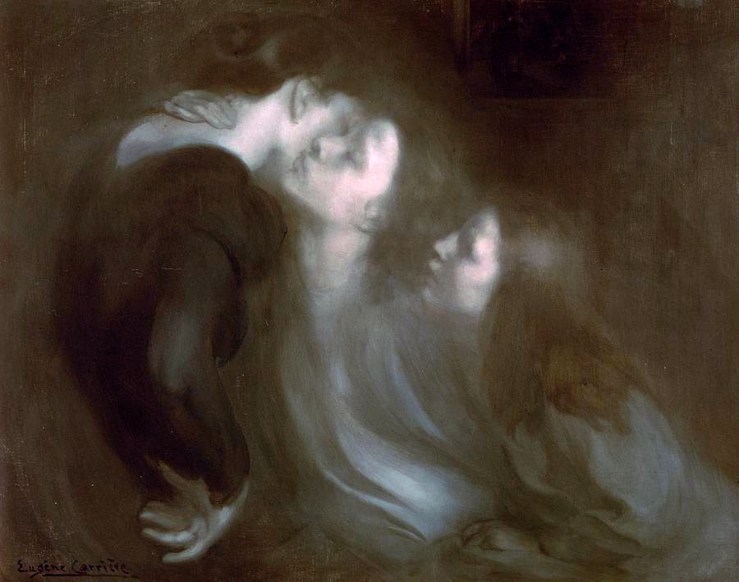
Her Mother’s Kiss — Eugène Carrière

her-mothers-kiss-eugene-carriere
Her Mother’s Kiss, 1899 by Eugène Carrière (1849-1906)