no/Yes.

no thats no way for him has he no manners nor no refinement nor no nothing in his nature slapping us behind like that on my bottom because I didnt call him Hugh the ignoramus that doesnt know poetry from a cabbage thats what you get for not keeping them in their proper place pulling off his shoes and trousers there on the chair before me so barefaced without even asking permission and standing out that vulgar way in the half of a shirt they wear to be admired like a priest or a butcher or those old hypocrites in the time of Julius Caesar of course hes right enough in his way to pass the time as a joke sure you might as well be in bed with what with a lion God Im sure hed have something better to say for himself an old Lion would O well I suppose its because they were so plump and tempting in my short petticoat he couldnt resist they excite myself sometimes its well for men all the amount of pleasure they get off a womans body were so round and white for them always I wished I was one myself for a change just to try with that thing they have swelling up on you so hard and at the same time so soft when you touch it my uncle John has a thing long I heard those cornerboys saying passing the comer of Marrowbone lane my aunt Mary has a thing hairy because it was dark and they knew a girl was passing it didnt make me blush why should it either its only nature and he puts his thing long into my aunt Marys hairy etcetera and turns out to be you put the handle in a sweepingbrush men again all over they can pick and choose what they please a married woman or a fast widow or a girl for their different tastes like those houses round behind Irish street no but were to be always chained up theyre not going to be chaining me up no damn fear once I start I tell you for their stupid husbands jealousy why cant we all remain friends over it instead of quarrelling her husband found it out what they did together well naturally and if he did can he undo it hes coronado anyway whatever he does and then he going to the other mad extreme about the wife in Fair Tyrants of course the man never even casts a 2nd thought on the husband or wife either its the woman he wants and he gets her what else were we given all those desires for Id like to know I cant help it if Im young still can I its a wonder Im not an old shrivelled hag before my time living with him so cold never embracing me except sometimes when hes asleep the wrong end of me not knowing I suppose who he has any man thatd kiss a womans bottom Id throw my hat at him after that hed kiss anything unnatural where we havent 1 atom of any kind of expression in us all of us the same 2 lumps of lard before ever Id do that to a man pfooh the dirty brutes the mere thought is enough I kiss the feet of you senorita theres some sense in that didnt he kiss our halldoor yes he did what a madman nobody understands his cracked ideas but me still of course a woman wants to be embraced 20 times a day almost to make her look young no matter by who so long as to be in love or loved by somebody if the fellow you want isnt there sometimes by the Lord God I was thinking would I go around by the quays there some dark evening where nobodyd know me and pick up a sailor off the sea thatd be hot on for it and not care a pin whose I was only do it off up in a gate somewhere or one of those wildlooking gipsies in Rathfarnham had their camp pitched near the Bloomfield laundry to try and steal our things if they could I only sent mine there a few times for the name model laundry sending me back over and over some old ones odd stockings that blackguardlooking fellow with the fine eyes peeling a switch attack me in the dark and ride me up against the wall without a word or a murderer anybody what they do themselves the fine gentlemen in their silk hats that K C lives up somewhere this way coming out of Hardwicke lane the night he gave us the fish supper on account of winning over the boxing match of course it was for me he gave it I knew him by his gaiters and the walk and when I turned round a minute after just to see there was a woman after coming out of it too some filthy prostitute then he goes home to his wife after that only I suppose the half of those sailors are rotten again with disease O move over your big carcass out of that for the love of Mike listen to him the winds that waft my sighs to thee so well he may sleep and sigh the great Suggester Don Poldo de la Flora if he knew how he came out on the cards this morning hed have something to sigh for a dark man in some perplexity between 2 7s too in prison for Lord knows what he does that I dont know and Im to be slooching around down in the kitchen to get his lordship his breakfast while hes rolled up like a mummy will I indeed did you ever see me running Id just like to see myself at it show them attention and they treat you like dirt I dont care what anybody says itd be much better for the world to be governed by the women in it you wouldnt see women going and killing one another and slaughtering when do you ever see women rolling around drunk like they do or gambling every penny they have and losing it on horses yes because a woman whatever she does she knows where to stop sure they wouldnt be in the world at all only for us they dont know what it is to be a woman and a mother how could they where would they all of them be if they hadnt all a mother to look after them what I never had thats why I suppose hes running wild now out at night away from his books and studies and not living at home on account of the usual rowy house I suppose well its a poor case that those that have a fine son like that theyre not satisfied and I none was he not able to make one it wasnt my fault we came together when I was watching the two dogs up in her behind in the middle of the naked street that disheartened me altogether I suppose I oughtnt to have buried him in that little woolly jacket I knitted crying as I was but give it to some poor child but I knew well Id never have another our 1st death too it was we were never the same since O Im not going to think myself into the glooms about that any more I wonder why he wouldnt stay the night I felt all the time it was somebody strange he brought in instead of roving around the city meeting God knows who nightwalkers and pickpockets his poor mother wouldnt like that if she was alive ruining himself for life perhaps still its a lovely hour so silent I used to love coming home after dances the air of the night they have friends they can talk to weve none either he wants what he wont get or its some woman ready to stick her knife in you I hate that in women no wonder they treat us the way they do we are a dreadful lot of bitches I suppose its all the troubles we have makes us so snappy Im not like that he could easy have slept in there on the sofa in the other room I suppose he was as shy as a boy he being so young hardly 20 of me in the next room hed have heard me on the chamber arrah what harm Dedalus I wonder its like those names in Gibraltar Delapaz Delagracia they had the devils queer names there father Vilaplana of Santa Maria that gave me the rosary Rosales y OReilly in the Calle las Siete Revueltas and Pisimbo and Mrs Opisso in Governor street O what a name Id go and drown myself in the first river if I had a name like her O my and all the bits of streets Paradise ramp and Bedlam ramp and Rodgers ramp and Crutchetts ramp and the devils gap steps well small blame to me if I am a harumscarum I know I am a bit I declare to God I dont feel a day older than then I wonder could I get my tongue round any of the Spanish como esta usted muy bien gracias y usted see I havent forgotten it all I thought I had only for the grammar a noun is the name of any person place or thing pity I never tried to read that novel cantankerous Mrs Rubio lent me by Valera with the questions in it all upside down the two ways I always knew wed go away in the end I can tell him the Spanish and he tell me the Italian then hell see Im not so ignorant what a pity he didnt stay Im sure the poor fellow was dead tired and wanted a good sleep badly I could have brought him in his breakfast in bed with a bit of toast so long as I didnt do it on the knife for bad luck or if the woman was going her rounds with the watercress and something nice and tasty there are a few olives in the kitchen he might like I never could bear the look of them in Abrines I could do the criada the room looks all right since I changed it the other way you see something was telling me all the time Id have to introduce myself not knowing me from Adam very funny wouldnt it Im his wife or pretend we were in Spain with him half awake without a Gods notion where he is dos huevos estrellados senor Lord the cracked things come into my head sometimes itd be great fun supposing he stayed with us why not theres the room upstairs empty and Millys bed in the back room he could do his writing and studies at the table in there for all the scribbling he does at it and if he wants to read in bed in the morning like me as hes making the breakfast for 1 he can make it for 2 Im sure Im not going to take in lodgers off the street for him if he takes a gesabo of a house like this Id love to have a long talk with an intelligent welleducated person Id have to get a nice pair of red slippers like those Turks with the fez used to sell or yellow and a nice semitransparent morning gown that I badly want or a peachblossom dressing jacket like the one long ago in Walpoles only 8/6 or 18/6 Ill just give him one more chance Ill get up early in the morning Im sick of Cohens old bed in any case I might go over to the markets to see all the vegetables and cabbages and tomatoes and carrots and all kinds of splendid fruits all coming in lovely and fresh who knows whod be the 1st man Id meet theyre out looking for it in the morning Mamy Dillon used to say they are and the night too that was her massgoing Id love a big juicy pear now to melt in your mouth like when I used to be in the longing way then Ill throw him up his eggs and tea in the moustachecup she gave him to make his mouth bigger I suppose hed like my nice cream too I know what Ill do Ill go about rather gay not too much singing a bit now and then mi fa pieta Masetto then Ill start dressing myself to go out presto non son piu forte Ill put on my best shift and drawers let him have a good eyeful out of that to make his micky stand for him Ill let him know if thats what he wanted that his wife is fucked yes and damn well fucked too up to my neck nearly not by him 5 or 6 times handrunning theres the mark of his spunk on the clean sheet I wouldnt bother to even iron it out that ought to satisfy him if you dont believe me feel my belly unless I made him stand there and put him into me Ive a mind to tell him every scrap and make him do it out in front of me serve him right its all his own fault if I am an adulteress as the thing in the gallery said O much about it if thats all the harm ever we did in this vale of tears God knows its not much doesnt everybody only they hide it I suppose thats what a woman is supposed to be there for or He wouldnt have made us the way He did so attractive to men then if he wants to kiss my bottom Ill drag open my drawers and bulge it right out in his face as large as life he can stick his tongue 7 miles up my hole as hes there my brown part then Ill tell him I want £ 1 or perhaps 30/- Ill tell him I want to buy underclothes then if he gives me that well he wont be too bad I dont want to soak it all out of him like other women do I could often have written out a fine cheque for myself and write his name on it for a couple of pounds a few times he forgot to lock it up besides he wont spend it Ill let him do it off on me behind provided he doesnt smear all my good drawers O I suppose that cant be helped Ill do the indifferent 1 or 2 questions Ill know by the answers when hes like that he cant keep a thing back I know every turn in him Ill tighten my bottom well and let out a few smutty words smellrump or lick my shit or the first mad thing comes into my head then Ill suggest about yes O wait now sonny my turn is coming Ill be quite gay and friendly over it O but I was forgetting this bloody pest of a thing pfooh you wouldnt know which to laugh or cry were such a mixture of plum and apple no Ill have to wear the old things so much the better itll be more pointed hell never know whether he did it or not there thats good enough for you any old thing at all then Ill wipe him off me just like a business his omission then Ill go out Ill have him eying up at the ceiling where is she gone now make him want me thats the only way a quarter after what an unearthly hour I suppose theyre just getting up in China now combing out their pigtails for the day well soon have the nuns ringing the angelus theyve nobody coming in to spoil their sleep except an odd priest or two for his night office or the alarmclock next door at cockshout clattering the brains out of itself let me see if I can doze off 1 2 3 4 5 what kind of flowers are those they invented like the stars the wallpaper in Lombard street was much nicer the apron he gave me was like that something only I only wore it twice better lower this lamp and try again so as I can get up early Ill go to Lambes there beside Findlaters and get them to send us some flowers to put about the place in case he brings him home tomorrow today I mean no no Fridays an unlucky day first I want to do the place up someway the dust grows in it I think while Im asleep then we can have music and cigarettes I can accompany him first I must clean the keys of the piano with milk whatll I wear shall I wear a white rose or those fairy cakes in Liptons I love the smell of a rich big shop at 7 1/2d a lb or the other ones with the cherries in them and the pinky sugar 11d a couple of lbs of those a nice plant for the middle of the table Id get that cheaper in wait wheres this I saw them not long ago I love flowers Id love to have the whole place swimming in roses God of heaven theres nothing like nature the wild mountains then the sea and the waves rushing then the beautiful country with the fields of oats and wheat and all kinds of things and all the fine cattle going about that would do your heart good to see rivers and lakes and flowers all sorts of shapes and smells and colours springing up even out of the ditches primroses and violets nature it is as for them saying theres no God I wouldnt give a snap of my two fingers for all their learning why dont they go and create something I often asked him atheists or whatever they call themselves go and wash the cobbles off themselves first then they go howling for the priest and they dying and why why because theyre afraid of hell on account of their bad conscience ah yes I know them well who was the first person in the universe before there was anybody that made it all who ah that they dont know neither do I so there you are they might as well try to stop the sun from rising tomorrow the sun shines for you he said the day we were lying among the rhododendrons on Howth head in the grey tweed suit and his straw hat the day I got him to propose to me yes first I gave him the bit of seedcake out of my mouth and it was leapyear like now yes 16 years ago my God after that long kiss I near lost my breath yes he said I was a flower of the mountain yes so we are flowers all a womans body yes that was one true thing he said in his life and the sun shines for you today yes that was why I liked him because I saw he understood or felt what a woman is and I knew I could always get round him and I gave him all the pleasure I could leading him on till he asked me to say yes and I wouldnt answer first only looked out over the sea and the sky I was thinking of so many things he didnt know of Mulvey and Mr Stanhope and Hester and father and old captain Groves and the sailors playing all birds fly and I say stoop and washing up dishes they called it on the pier and the sentry in front of the governors house with the thing round his white helmet poor devil half roasted and the Spanish girls laughing in their shawls and their tall combs and the auctions in the morning the Greeks and the jews and the Arabs and the devil knows who else from all the ends of Europe and Duke street and the fowl market all clucking outside Larby Sharons and the poor donkeys slipping half asleep and the vague fellows in the cloaks asleep in the shade on the steps and the big wheels of the carts of the bulls and the old castle thousands of years old yes and those handsome Moors all in white and turbans like kings asking you to sit down in their little bit of a shop and Ronda with the old windows of the posadas 2 glancing eyes a lattice hid for her lover to kiss the iron and the wineshops half open at night and the castanets and the night we missed the boat at Algeciras the watchman going about serene with his lamp and O that awful deepdown torrent O and the sea the sea crimson sometimes like fire and the glorious sunsets and the figtrees in the Alameda gardens yes and all the queer little streets and the pink and blue and yellow houses and the rosegardens and the jessamine and geraniums and cactuses and Gibraltar as a girl where I was a Flower of the mountain yes when I put the rose in my hair like the Andalusian girls used or shall I wear a red yes and how he kissed me under the Moorish wall and I thought well as well him as another and then I asked him with my eyes to ask again yes and then he asked me would I yes to say yes my mountain flower and first I put my arms around him yes and drew him down to me so he could feel my breasts all perfume yes and his heart was going like mad and yes I said yes I will Yes.

The final paragraph of James Joyce’s Ulysses. 
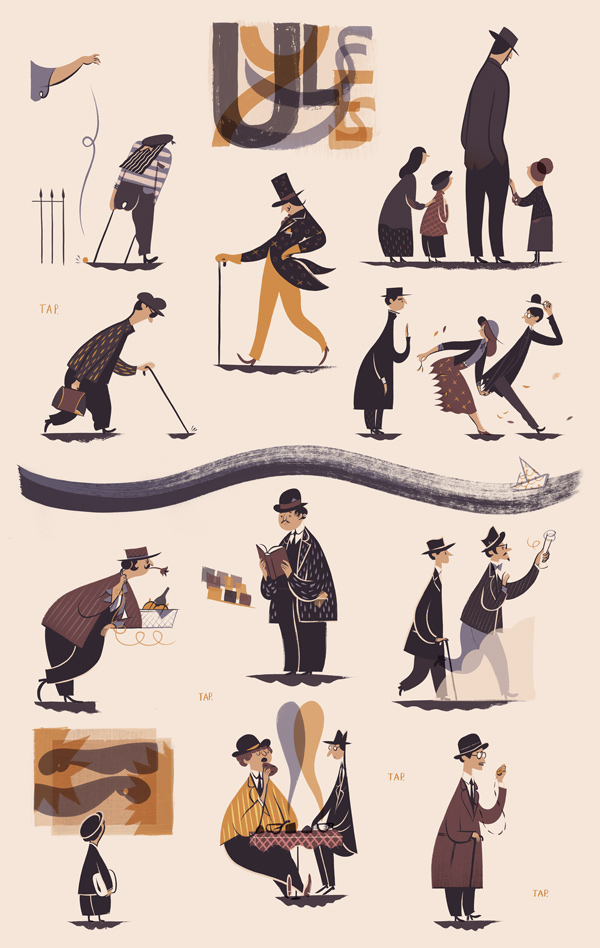
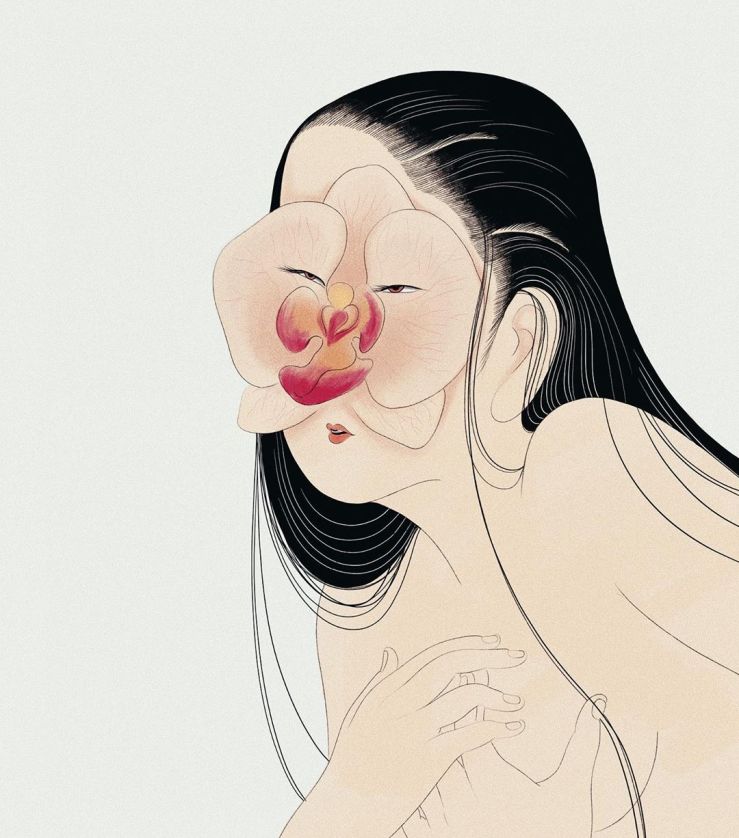
Ulysses (Wandering Rocks) — Roman Muradov

ulysses

Ulysses, 2013 by Roman Muradov


What in water did Bloom, waterlover, drawer of water, watercarrier, returning to the range, admire?

What in water did Bloom, waterlover, drawer of water, watercarrier, returning to the range, admire?

Its universality: its democratic equality and constancy to its nature in seeking its own level: its vastness in the ocean of Mercator’s projection: its unplumbed profundity in the Sundam trench of the Pacific exceeding 8000 fathoms: the restlessness of its waves and surface particles visiting in turn all points of its seaboard: the independence of its units: the variability of states of sea: its hydrostatic quiescence in calm: its hydrokinetic turgidity in neap and spring tides: its subsidence after devastation: its sterility in the circumpolar icecaps, arctic and antarctic: its climatic and commercial significance: its preponderance of 3 to 1 over the dry land of the globe: its indisputable hegemony extending in square leagues over all the region below the subequatorial tropic of Capricorn: the multisecular stability of its primeval basin: its luteofulvous bed: its capacity to dissolve and hold in solution all soluble substances including millions of tons of the most precious metals: its slow erosions of peninsulas and islands, its persistent formation of homothetic islands, peninsulas and downwardtending promontories: its alluvial deposits: its weight and volume and density: its imperturbability in lagoons and highland tarns: its gradation of colours in the torrid and temperate and frigid zones: its vehicular ramifications in continental lakecontained streams and confluent oceanflowing rivers with their tributaries and transoceanic currents, gulfstream, north and south equatorial courses: its violence in seaquakes, waterspouts, Artesian wells, eruptions, torrents, eddies, freshets, spates, groundswells, watersheds, waterpartings, geysers, cataracts, whirlpools, maelstroms, inundations, deluges, cloudbursts: its vast circumterrestrial ahorizontal curve: its secrecy in springs and latent humidity, revealed by rhabdomantic or hygrometric instruments and exemplified by the well by the hole in the wall at Ashtown gate, saturation of air, distillation of dew: the simplicity of its composition, two constituent parts of hydrogen with one constituent part of oxygen: its healing virtues: its buoyancy in the waters of the Dead Sea: its persevering penetrativeness in runnels, gullies, inadequate dams, leaks on shipboard: its properties for cleansing, quenching thirst and fire, nourishing vegetation: its infallibility as paradigm and paragon: its metamorphoses as vapour, mist, cloud, rain, sleet, snow, hail: its strength in rigid hydrants: its variety of forms in loughs and bays and gulfs and bights and guts and lagoons and atolls and archipelagos and sounds and fjords and minches and tidal estuaries and arms of sea: its solidity in glaciers, icebergs, icefloes: its docility in working hydraulic millwheels, turbines, dynamos, electric power stations, bleachworks, tanneries, scutchmills: its utility in canals, rivers, if navigable, floating and graving docks: its potentiality derivable from harnessed tides or watercourses falling from level to level: its submarine fauna and flora (anacoustic, photophobe), numerically, if not literally, the inhabitants of the globe: its ubiquity as constituting 90 % of the human body: the noxiousness of its effluvia in lacustrine marshes, pestilential fens, faded flowerwater, stagnant pools in the waning moon.

From James Joyce’s Ulysses. 

A father is a necessary evil (From James Joyce’s Ulysses)

—A father, Stephen said, battling against hopelessness, is a necessary evil. He wrote the play in the months that followed his father’s death. If you hold that he, a greying man with two marriageable daughters, with thirtyfive years of life, nel mezzo del cammin di nostra vita, with fifty of experience, is the beardless undergraduate from Wittenberg then you must hold that his seventyyear old mother is the lustful queen. No. The corpse of John Shakespeare does not walk the night. From hour to hour it rots and rots. He rests, disarmed of fatherhood, having devised that mystical estate upon his son. Boccaccio’s Calandrino was the first and last man who felt himself with child. Fatherhood, in the sense of conscious begetting, is unknown to man. It is a mystical estate, an apostolic succession, from only begetter to only begotten. On that mystery and not on the madonna which the cunning Italian intellect flung to the mob of Europe the church is founded and founded irremovably because founded, like the world, macro and microcosm, upon the void. Upon incertitude, upon unlikelihood. Amor matris, subjective and objective genitive, may be the only true thing in life. Paternity may be a legal fiction. Who is the father of any son that any son should love him or he any son?

What the hell are you driving at?

I know. Shut up. Blast you. I have reasons.

Amplius. Adhuc. Iterum. Postea.

Are you condemned to do this?

—They are sundered by a bodily shame so steadfast that the criminal annals of the world, stained with all other incests and bestialities, hardly record its breach. Sons with mothers, sires with daughters, lesbic sisters, loves that dare not speak their name, nephews with grandmothers, jailbirds with keyholes, queens with prize bulls. The son unborn mars beauty: born, he brings pain, divides affection, increases care. He is a new male: his growth is his father’s decline, his youth his father’s envy, his friend his father’s enemy.

In rue Monsieur-le-Prince I thought it.

—What links them in nature? An instant of blind rut.

Am I a father? If I were?

Shrunken uncertain hand.

—Sabellius, the African, subtlest heresiarch of all the beasts of the field, held that the Father was Himself His Own Son. The bulldog of Aquin, with whom no word shall be impossible, refutes him. Well: if the father who has not a son be not a father can the son who has not a father be a son? When Rutlandbaconsouthamptonshakespeare or another poet of the same name in the comedy of errors wrote Hamlet he was not the father of his own son merely but, being no more a son, he was and felt himself the father of all his race, the father of his own grandfather, the father of his unborn grandson who, by the same token, never was born, for nature, as Mr Magee understands her, abhors perfection.

Stephen Dedalus, holding forth in Ulysses. (Context, if necessary: The referent of He in the second paragraph is William Shakespeare; the play is of course Hamlet).

I stopped a good while to look at the pigs | Nathaniel Hawthorne’s journal entry for June 15, 1835

SALEM, June 15, 1835.–A walk down to the Juniper. The shore of the coves strewn with bunches of sea-weed, driven in by recent winds. Eel-grass, rolled and bundled up, and entangled with it,–large marine vegetables, of an olive-color, with round, slender, snake-like stalks, four or five feet long, and nearly two feet broad: these are the herbage of the deep sea. Shoals of fishes, at a little distance from the shore, discernible by their fins out of water. Among the heaps of sea-weed there were sometimes small pieces of painted wood, bark, and other driftage. On the shore, with pebbles of granite, there were round or oval pieces of brick, which the waves had rolled about till they resembled a natural mineral. Huge stones tossed about, in every variety of confusion, some shagged all over with sea-weed, others only partly covered, others bare. The old ten-gun battery, at the outer angle of the Juniper, very verdant, and besprinkled with white-weed, clover, and buttercups. The juniper-trees are very aged and decayed and moss-grown. The grass about the hospital is rank, being trodden, probably, by nobody but myself. There is a representation of a vessel under sail, cut with a penknife, on the corner of the house.

Returning by the almshouse, I stopped a good while to look at the pigs,–a great herd,–who seemed to be just finishing their suppers. They certainly are types of unmitigated sensuality,–some standing in the trough, in the midst of their own and others’ victuals,–some thrusting their noses deep into the food,–some rubbing their backs against a post,–some huddled together between sleeping and waking, breathing hard,–all wallowing about; a great boar swaggering round, and a big sow waddling along with her huge paunch. Notwithstanding the unspeakable defilement with which these strange sensualists spice all their food, they seem to have a quick and delicate sense of smell. What ridiculous-looking animals! Swift himself could not have imagined anything nastier than what they practise by the mere impulse of natural genius. Yet the Shakers keep their pigs very clean, and with great advantage. The legion of devils in the herd of swine,–what a scene it must have been!

Sunday evening, going by the jail, the setting sun kindled up the windows most cheerfully; as if there were a bright, comfortable light within its darksome stone wall.

Nathaniel Hawthorne’s journal entry for June 15, 1835. From Passages from the American Note-Books.

Rolled in through the holes in the stories I told

Untitled — Miki Kim

mk4Untitled, 2019 by Miki Kim

“A Thin Damnedness” — Mary MacLane

“A Thin Damnedness”

by

Mary MacLane

from

I, Mary MacLane (1917)


I own Two plain black Dresses and none besides.

And I need no more.

In which two sentences I touch the crux and the keynote and the thin damnedness of my life as it is set: of my life, not of myself, for myself lives naked inside the circle of my life.

But my outer life is spaced by my Two plain Dresses. My Two Dresses measure how far removed I presently am from the wide world of things.

In the world of things a woman is judged not specifically by her morals: not invariably by her reputation: not absolutely by her money: not indubitably by her social prestige: only relatively by her beauty: and as to her brain or lack of it—la-la-la! She is judged in the matter-world simply, completely, entirely by her clothes. It is tacitly so agreed and decreed all over the earth—wherever women are of the female sex and men pursue them.

It is no injustice to any woman. It is the fairest fiat in the unwritten code.

Only a few women, the few specialized breeds, can express the fire or the humanness in them by play-acting or suffragetting or singing or painting or writing or trained-nursing or house-keeping. But there’s not one—from a wandering Romany gypsy, red-blooded and strong-hearted, to an over-guarded overbred British princess—who doesn’t express what she is in the clothes she wears and the way she wears them.

Her clothes conceal and reveal, artfully and contradictorily and endlessly.

It is all a limitless field.

No actor could act Hamlet without that perfect Hamletesque black costume.

A nun’s staid beautiful habit interprets her own meanings within and without.

A woman naked may look markedly pure: the same woman clothed conventionally and demurely may achieve a meanly ghoulishly foul seeming.

One either is made or marred by one’s habiliments.

A woman by her raiment’s make and manner can express more of her wit, her ego, her temper, her humor, her plastic pulsating personality than she could by throwing a bomb, by making a good or bad pudding, by losing her chastity or by traducing her neighbor. The germ and shadow and likelihood of each of those acts is in the fashion and line and detail of her garments.

A jury thinks it tries a woman for a crime. Some of the twelve good and true may admit each to himself that they are trying the color of her eyes or the shape of her chin or the droop of her shoulders. But it’s only her clothes they unwittingly try for murder or theft or forgery, or whatever has tripped her. It may be an alluringly shabby little dress that saves her from the gallows. It may be a hat worn at the wrong angle that is found guilty and sentenced to death. A glove in her lap, a fluttering veil, a little white handkerchief dropped to the floor by her chair—those are what the court tries for life or liberty.—

But it is I I tell about, I and my Two plain Dresses.

In me a smart frock or an unbecoming one makes a surprising difference. I impress my costume with my mixed temperament and it retaliates in kind.

One day I looked a beautiful young creature—one August Saturday in New York it was—in a tailored gown of embroidered linen. With it I wore such a good hat: its color was pale olive: its texture was soft Milan straw: its price was forty dollars. My shoes were gray silk. I so fancied myself that day that I feared lest my writing talent had gone away from me. For God takes away the beer if he gives you the skittles. And in ill-conditioned clothes—some days the weather, the devil, the soddenness of life get into one’s garments and make even fair ones look ill-conditioned—I am plain-faced, plain all over—so plain that the villainies of my nature feel doubtful and I half-think I may be a good woman.

In a life full of people I would own varied delicate beautiful clothes since it is by them one is judged, and since I am quite vain. But no people are in my life. I feel deadlocked. I am caught in a vise made by my own analytic ratiocination. I am not free to live a world-life till I’ve someway expressed Me and learned if not whither I go at least where I stand.

So it’s Two plain Dresses I own and none besides.

It may be I shall not ever again need more.

The Two Dresses are at present of serge and voile. Their identity changes with change of fashion and with wearing out. They are cut well and fit me well. But the Two does not change, nor the plainness. I change only from one Frock to the other and from the other to the one again.

I have various other clothes. A woman—whatever her traits and tempers—garners what she can of handmade under-linens and dainty nightgowns and silk hose and all such private panoply. They are the apparel of her sex rather than her individuality. The uncognizant world is unable to judge her by them. But the woman herself judges and respects herself by the goodness of her intimate garments.

My sex is to me a mystic gift. I marvel over it and clothe it silkenly.

Also I own a healthful-looking percale house-gown or two in which I do housework.

But my passing life, my eerie lonely life, is lived in my Two Dresses and none besides, and I need no more.

Typewriter — Konrad Klapheck

437067944

Typewriter, 1955 by Konrad Klapheck (b. 1935)

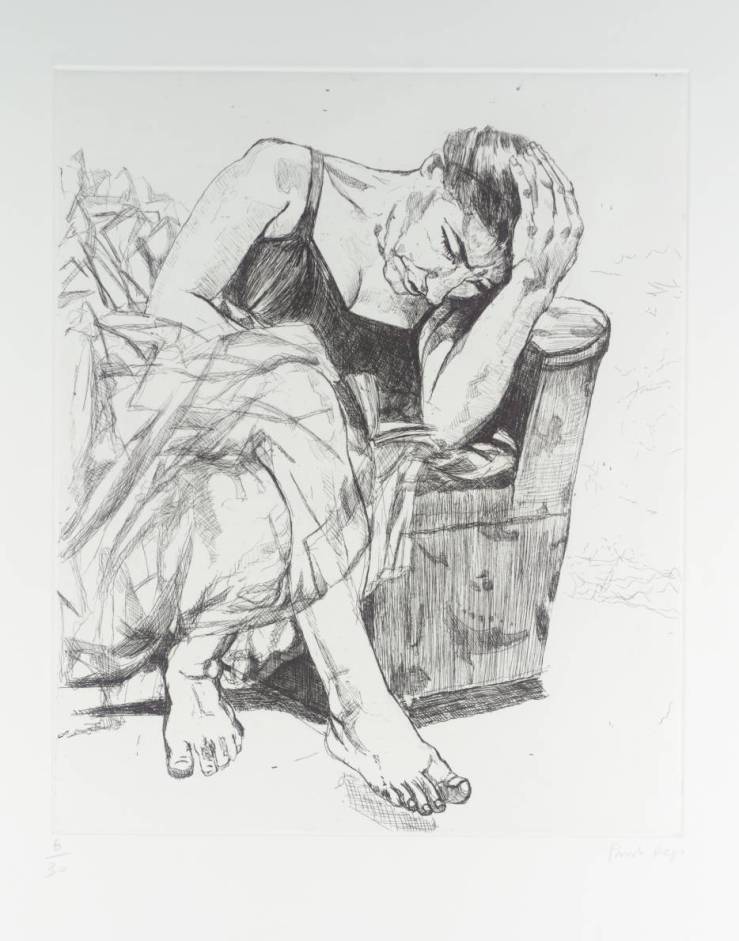
Mist II — Paula Rego

Mist II 1996 by Paula Rego born 1935

Mist II, 1996 by Paula Rego (b. 1935)

“A Problem,” a three-paragraph story by Jorge Luis Borges

“A Problem”

by Jorge Luis Borges

Translated by Andrew Hurley


Let us imagine that a piece of paper with a text in Arabic on it is discovered in Toledo, and that paleographers declare the text to have been written by that same Cede Hamete Benengeli from whom Cervantes derived Don Quixote. In it, we read that the hero (who, as everyone knows, wandered the roads of Spain armed with a lance and sword, challenging anyone for any reason) discovers, after one of his many combats, that he has killed a man. At that point the fragment breaks off; the problem is to guess, or hypothesize, how don Quixote reacts.

So far as I can see, there are three possibilities. The first is a negative one: Nothing
in particular happens, because in the hallucinatory world of don Quixote, death is no
more uncommon than magic, and there is no reason that killing a mere man should disturb one who does battle, or thinks he does battle, with fabled beasts and sorcerers. The second is pathetic: Don Quixote never truly managed to forget that he was a creation, a projection, of Alonso Quijano, reader of fabulous tales. The sight of death, the realization that a delusion has led him to commit the sin of Cain, awakens him from his willful madness, perhaps forever. The third is perhaps the most plausible: Having
killed the man, don Quixote cannot allow himself to think that the terrible act is the work
of a delirium; the reality of the effect makes him assume a like reality of cause, and don Quixote never emerges from his madness.

But there is yet another hypothesis, which is alien to the Spanish mind (even to the Western mind) and which requires a more ancient, more complex, and more timeworn setting. Don Quixote—who is no longer don Quixote but a king of the cycles of Hindustan—senses, as he stands before the body of his enemy, that killing and engendering are acts of God or of magic, which everyone knows transcend the human condition. He knows that death is illusory, as are the bloody sword that lies heavy in his hand, he himself and his entire past life, and the vast gods and the universe.

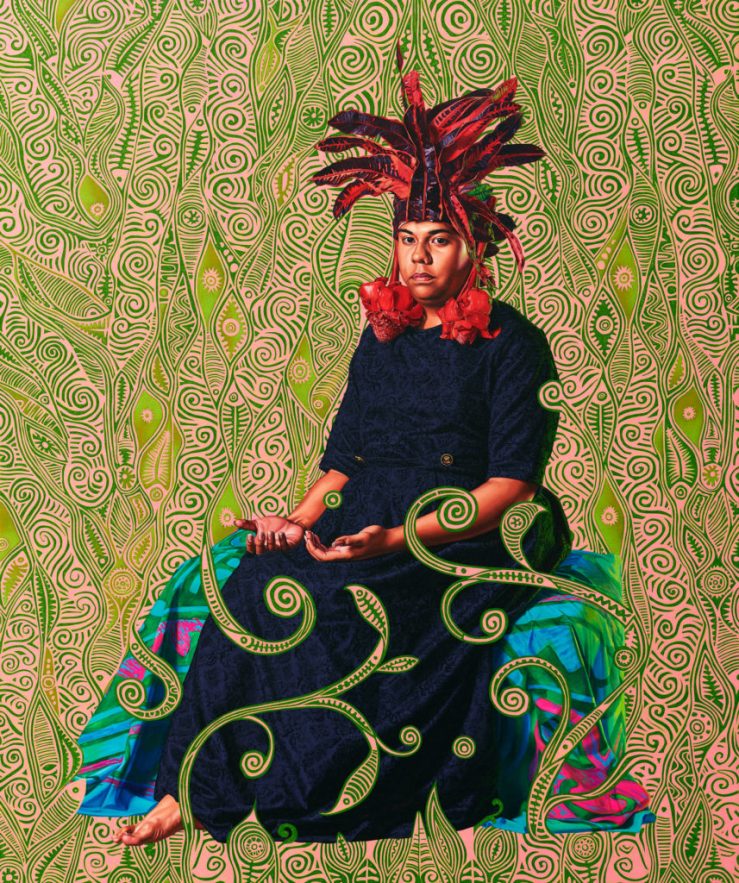
Portrait of Moerai Matuanui — Kehinde Wiley

kw_portrait-of-moerai-matuani_2019-857x1024

Portrait of Moerai Matuanui, 2019 by Kehinde Wiley (b. 1977)

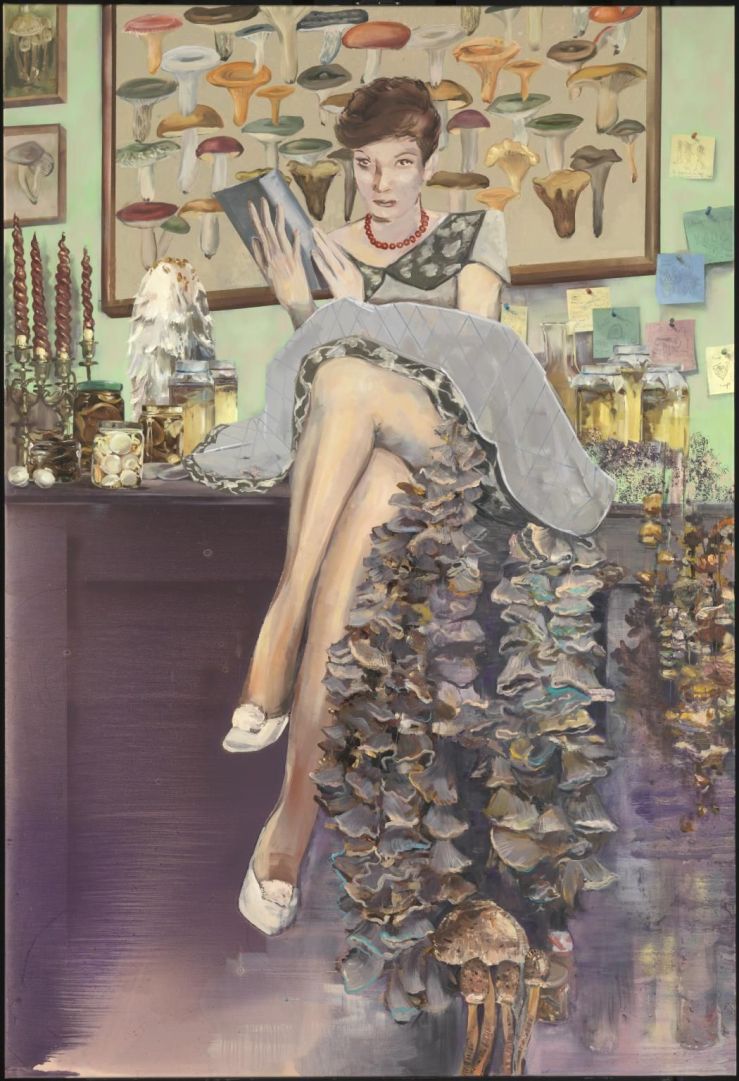
The Alchemist — Paulina Olowska

2595991d75b043b21fc33d654c105098

The Alchemist, 2015 by Paulina Olowska (b. 1976)

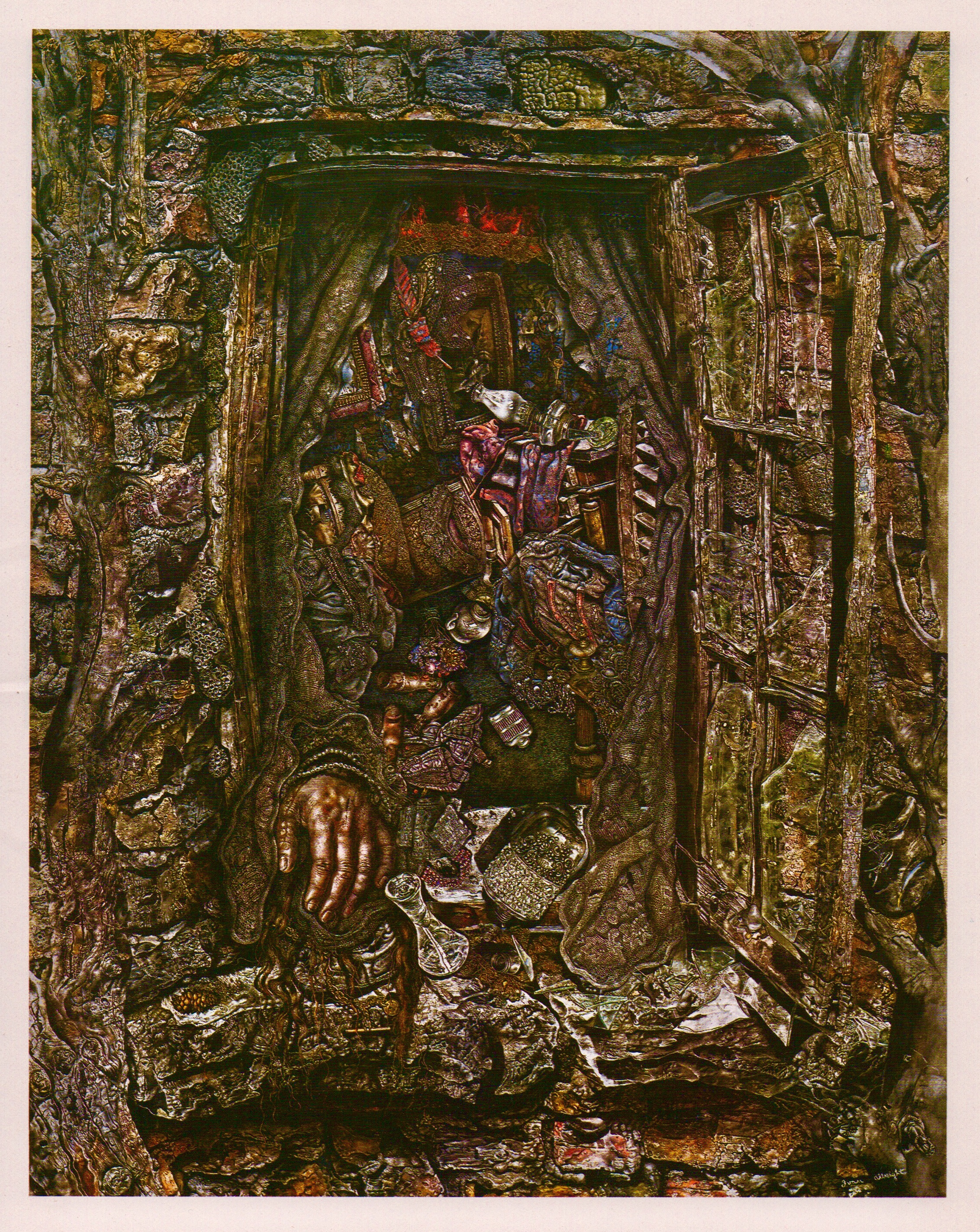
Poor Room — Ivan Albright

img_2992

Poor Room – There is No Time, No End, No Today, No Yesterday, No Tomorrow, Only the Forever, and Forever and Forever Without End (The Window), 1943 by Ivan Albright (1897-1983)

Untitled — Edward Burra

Untitled, 1940 by Edward Burra (1905–1976)

Blog about some recent reading

img_2962-2

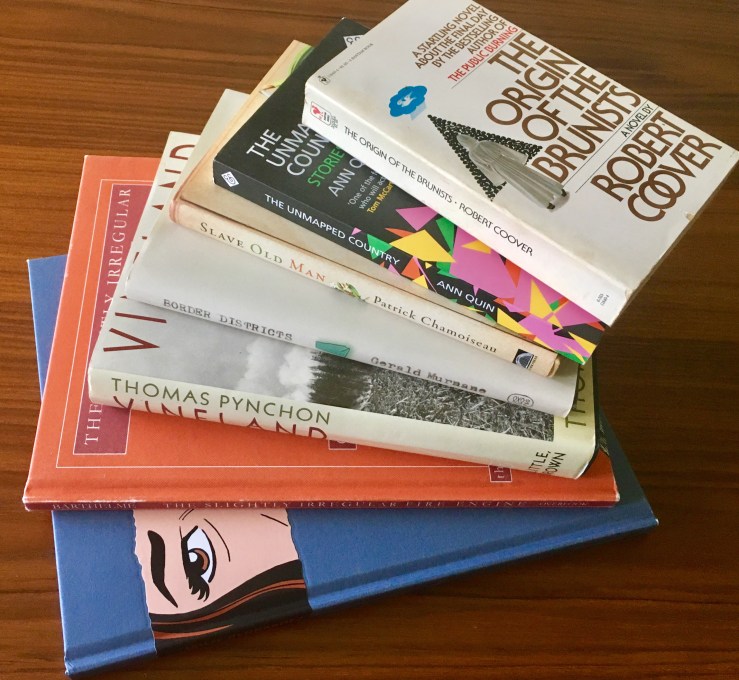
It’s been pretty busy around Biblioklept World Headquarters this week. It’s the first week of my kids’ summer vacation, and they both had birthdays this week, as did I. I managed to read but not write that much—so here’s this lazy post.

I finally finished Robert Coover’s 1966 debut novel The Origin of the Brunists this morning, which I had started with a huge wave of enthusiasm way back at the end of February. The novel has one of the finest second chapters I can remember, a long description of a mine’s implosion, and the rest of the book simply never matches its intensity. Coover conjures a mining town called West Condon, and explores the fallout of the disaster and how it affects seemingly every citizen. The central conflict is between a doomsday cult (the Brunists) and the rest of the town. There are some wonderful moments, but there’s a maudlin streak to the novel that Coover’s later work would satirize. The Origin of the Brunists suffers from the strains of First Novel Syndrome—Coover overstuffs the beast, and doesn’t leaven his unwieldy monster with enough humor. It’s a shaggy read, which, like, fine—I love shaggy novels!—but shagginess should correlate with theme, and Coover’s theme is decidedly unshaggy. You could probably cull a dozen short stories from Origin and end up with a finer book. I ended up reading it out of a sense of duty to the author. Maybe the sequel, which came out a few years ago, is a better affair.

I should have a review of Ann Quin’s first novel Berg out next week, but here is a short review: Go read Berg. It’s extraordinary. It’s so extraordinary that upon finishing it I immediately needed more Quin. I’ve been reading the collection of fragments and stories The Unmapped Country slowly, interspersing them with other reads. Good stuff.

I picked up Linda Coverdale’s translation of Patrick Chamoiseau’s novel Slave Old Man this Friday as I browsed my favorite bookstore as a birthday treat for myself. I read the first two chapters that afternoon. The language is extraordinary, strange, poetic, bracing. More thoughts to come.

I read Gerald Murnane’s Border Districts over the course of three mornings. I then immediately reread it, finding it even more precise and accomplished than I had realized the first time. Murnane’s “fiction” is a compelling meditation on seeing and trying to see what can’t be seen. It’s about place, memory, image, and color—the colors of marbles, of liveries, of racing flags and stained glass windows. It’s also a strange and ironic exercise in literary criticism—but ultimately, it’s about waiting for the epiphanies our stories promise us, and perhaps waiting in vain. Very highly recommended.

I had hoped to write Something Big on Thomas Pynchon’s Vineland but found myself a bit too exhausted at the end of it to muster anything. I know among Pynchon fans it has a certain cult status, but I’d rather pick up Gravity’s Rainbow or Against the Day or Mason & Dixon again than reread Vineland. The book is a shaggy mess, really, with some excellent bits that never properly cohere. (It is possible that the book doesn’t cohere on purpose—there’s a narratological implication that the entire book is simply a film treatment, or, a few characters riffing over a film treatment.) Vineland features characters from other Pynchon novels, notably the Traverse family from Against the Day, as well as folks from Gravity’s Rainbow and The Crying of Lot 49, suggesting that there is of course a Pynchonverse. The book is an indictment on the baby boomers selling out in the seventies and really the eighties, and attack on Nixonia and the rise of Reagan. The indictment could be stronger. Vineland’s also an extended attack on television, but also a love letter to The Tube. (There’s also a motif about cars and driving that I didn’t fully understand.) And there are all the usual Pynchon themes: zeros and ones, preterite and elect, visible and invisible, paranoia, paranoia, paranoia. Probably the weirdest thing about Vineland is that its “B” plot about a ninja and her partner and their strange adventures actually seems to take up way more of the book than the “A” plot (about a daughter and her estranged mother reuniting). I liked the “B” plot a lot better. I’m sure I’ll reread all of Pynchon at some point, but for now, I’d put it at the bottom of this list.

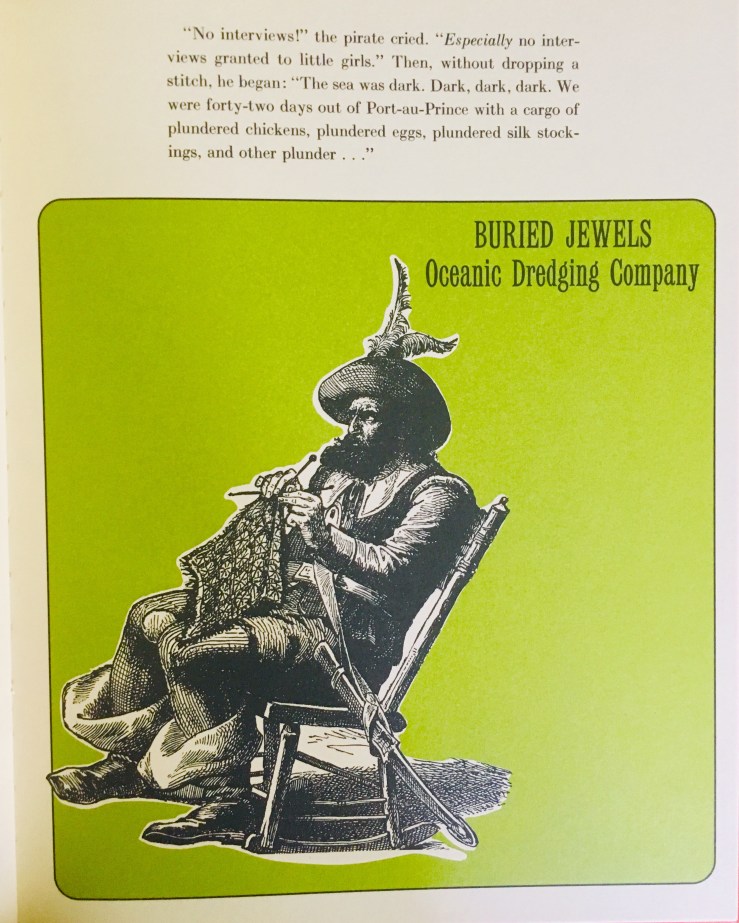
I finally found a copy of Donald Barthelme’s children’s book The Slightly Irregular Fire Engine: Or, the Hithering Thithering Djinn. My kids seem a little too old for it but I dig it, and the collage work (by Barthelme himself) is fun, if not exactly Une Semaine de Bonté.

img_2964-2

I actually did muster a review of Jaime Hernandez latest Love & Rockets book, Is This How you See Me? The review is at The Comics Journal.

Not pictured in the stack above (because I have it out as a digital loan from my local library) is Maria Gainza’s novel (is it a novel?) Optic Nerve, in translation by Thomas Bunstead. I’m a little over half way through, and just really digging it. It’s kinda like a life story told through paintings and art history, but it’s also very much about aesthetics and ways of seeing. It reminds me a lot of  W.G. Sebald, Roberto Bolaño Claire-Louise Bennett, Lucia Berlin, and David Markson, but also really original. Good stuff.