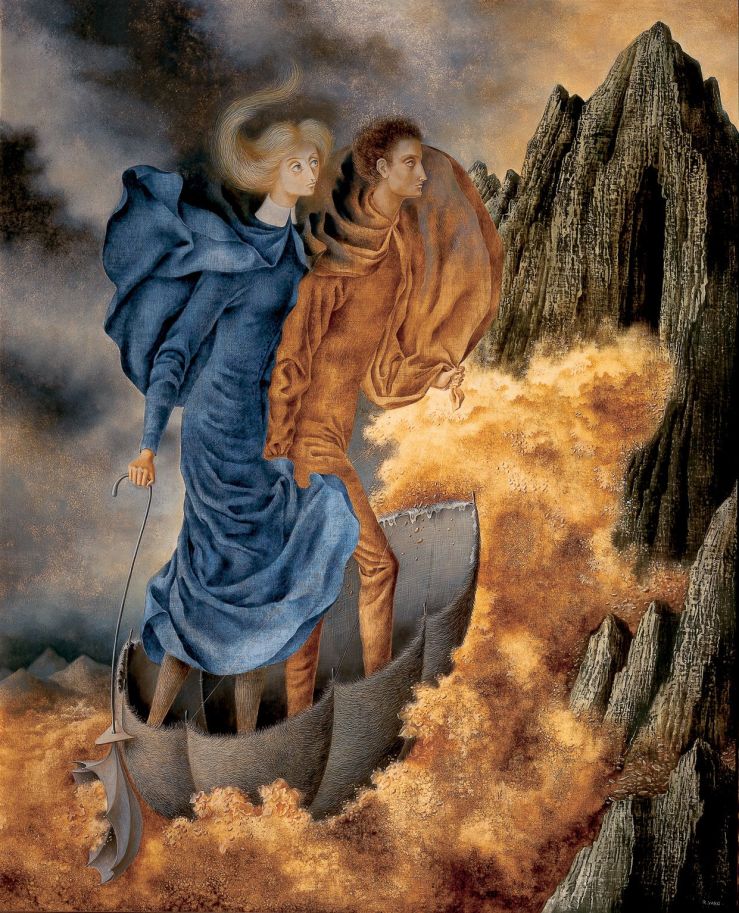
The Escape — Remedios Varo

c88dfd7bf5f2cdf78971920dbb659cc7

The Escape, 1961 by Remedios Varo (1908-1963)

Disparage the press? (From Herman Melville’s novel The Confidence-Man)

“Anything in praise of the press I shall be happy to hear,” rejoined the cosmopolitan, “the more so,” he gravely proceeded, “as of late I have observed in some quarters a disposition to disparage the press.”

“Disparage the press?”

“Even so; some gloomy souls affirming that it is proving with that great invention as with brandy or eau-de-vie, which, upon its first discovery, was believed by the doctors to be, as its French name implies, a panacea—a notion which experience, it may be thought, has not fully verified.”

“You surprise me, Frank. Are there really those who so decry the press? Tell me more. Their reasons.”

“Reasons they have none, but affirmations they have many; among other things affirming that, while under dynastic despotisms, the press is to the people little but an improvisatore, under popular ones it is too apt to be their Jack Cade. In fine, these sour sages regard the press in the light of a Colt’s revolver, pledged to no cause but his in whose chance hands it may be; deeming the one invention an improvement upon the pen, much akin to what the other is upon the pistol; involving, along with the multiplication of the barrel, no consecration of the aim. The term ‘freedom of the press’ they consider on a par with freedom of Colt’s revolver. Hence, for truth and the right, they hold, to indulge hopes from the one is little more sensible than for Kossuth and Mazzini to indulge hopes from the other. Heart-breaking views enough, you think; but their refutation is in every true reformer’s contempt. Is it not so?”

“Without doubt. But go on, go on. I like to hear you,” flatteringly brimming up his glass for him.

“For one,” continued the cosmopolitan, grandly swelling his chest, “I hold the press to be neither the people’s improvisatore, nor Jack Cade; neither their paid fool, nor conceited drudge. I think interest never prevails with it over duty. The press still speaks for truth though impaled, in the teeth of lies though intrenched. Disdaining for it the poor name of cheap diffuser of news, I claim for it the independent apostleship of Advancer of Knowledge:—the iron Paul! Paul, I say; for not only does the press advance knowledge, but righteousness. In the press, as in the sun, resides, my dear Charlie, a dedicated principle of beneficent force and light. For the Satanic press, by its coappearance with the apostolic, it is no more an aspersion to that, than to the true sun is the coappearance of the mock one. For all the baleful-looking parhelion, god Apollo dispenses the day. In a word, Charlie, what the sovereign of England is titularly, I hold the press to be actually—Defender of the Faith!—defender of the faith in the final triumph of truth over error, metaphysics over superstition, theory over falsehood, machinery over nature, and the good man over the bad. Such are my views, which, if stated at some length, you, Charlie, must pardon, for it is a theme upon which I cannot speak with cold brevity…”

From Chapter 24 of Herman Melville’s novel The Confidence-Man.

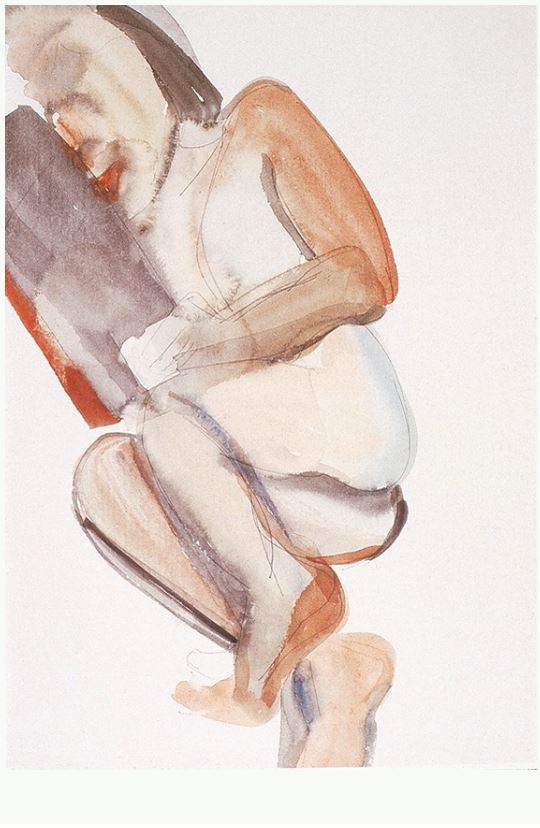
Annie Reading — Lucian Freud

lucian freud

Annie Reading, 1961 by Lucian Freud (1922-2011)

Some sentences on some books I’ve read or have been reading

img_0857

I finished Gerald Murnane’s 1982 novel The Plains last week. The Plains is quite short—it’s a novella really—and is divided into three parts. I read Part I in two sittings, gulping down the first-person narrator’s description of an Australia that exists in some alternate universe, where aristocratic plainsmen of Inner Australia keep grand houses populated by every kind of artisan. The novel’s first 70 pages or so move at a brisk pace, brimming with hints of a mythology that Murnane’s narrator keeps always just outside the frame. I read Parts II and III (much shorter than Part I) at a much slower pace. Murnane’s prose condenses here, his sentences tangling out into thick knots of consciousness. I’m still not sure what to make of the novel’s conclusion.

I’m absolutely crawling through Mario Benedetti’s The Truce (in English translation by Harry Morales). Subtitled The Diary of Martín Santomé, this Uruguayan novel is told in lucid prose. Santomé’s journal entries track his day to day life as a man with three children—the youngest approaching adulthood—who was widowed early in life. He’s just now started up a love affair with a younger colleague (an affair that he doesn’t want to call an affair and an affair which I think is like hey a very bad idea, Martin!). It reminds me a bit of John Williams’ novel Stoner. I’ve been reading one or two of the diary entries a day, usually in the morning before I leave for work. It’s a different way to read a book (at least for me anyway).

Herman Melville’s The Confidence-Man is my big re-read right now. I’m having a lot more fun with it the second time. I think the first time taught me how to read it. I’m moving pretty slowly but that’s fine.

I read most of Antoine Volodine’s Post-Exoticism in 10 Lessons, Lesson 11 in two sittings. I want to write a proper review of the novel, or novella, really, or really it’s something besides a novel or novella—anyway, I want to write a proper review on the thing, but I need to go back and finish his novel Minor Angels, which I started earlier in the summer but lost track of (I think I was trying to plow through the end of Eliot’s Middlemarch at the time).

I’ve read the first and third (but not the second) stories in Helen DeWitt’s new collection Some Trick and…I don’t know. There’s a part of me that doesn’t trust my reaction so far. I know that what she’s doing here would’ve flipped any wig I was wearing ten or twelve years ago, but I find myself not particularly persuaded to keep going. I skipped to the third story because it had a bunch of footnotes, a la DF Wallace and that intrigued me. It’s a bit clever, yes?

I’ve only read two of the stories in Tadao Tsuge’s collection of “alternative manga” (mostly from the sixties and seventies) Slum Wolf (in English translation by Ryan Holmberg), but there’s definitely a different flavor here—rough, weird, and a bit chilling. I hope to post a review of Slum Wolf at The Comics Journal next month.

Not pictured above because I read it on an iPad: The first two chapters of Anders Nilsen’s graphic novel Tongues, which is a loose retelling of the story of Prometheus and a few other myths (maybe). There’s a lot going on it. The art is gorgeous—a bit reminiscent of Geof Darrow, but more not as sprawly. Again, I hope to do a review at TCJ soon on these.

img_0635

Also not pictured because also an e-book: Provisional Biography of Mose Eakins, a two-act play by Evan Dara. You can download the play here without paying upfront: The site instead gives this somewhat cryptic message on payment: “If you please, reciprocation accepted only after reading. Thank you.” The message actually makes sense after you’ve read the play, which is very much about paying for language—literally utterances as commodities. Mose Eakins is “imparlent” — he cannot communicate with those around him. The play is often funny, but also very sad, and it’s impossible not to read it as an allegory for the limitations of real communication in the age of late capitalism. I read it all at once last night. Speaking of which, I need to reciprocate now.


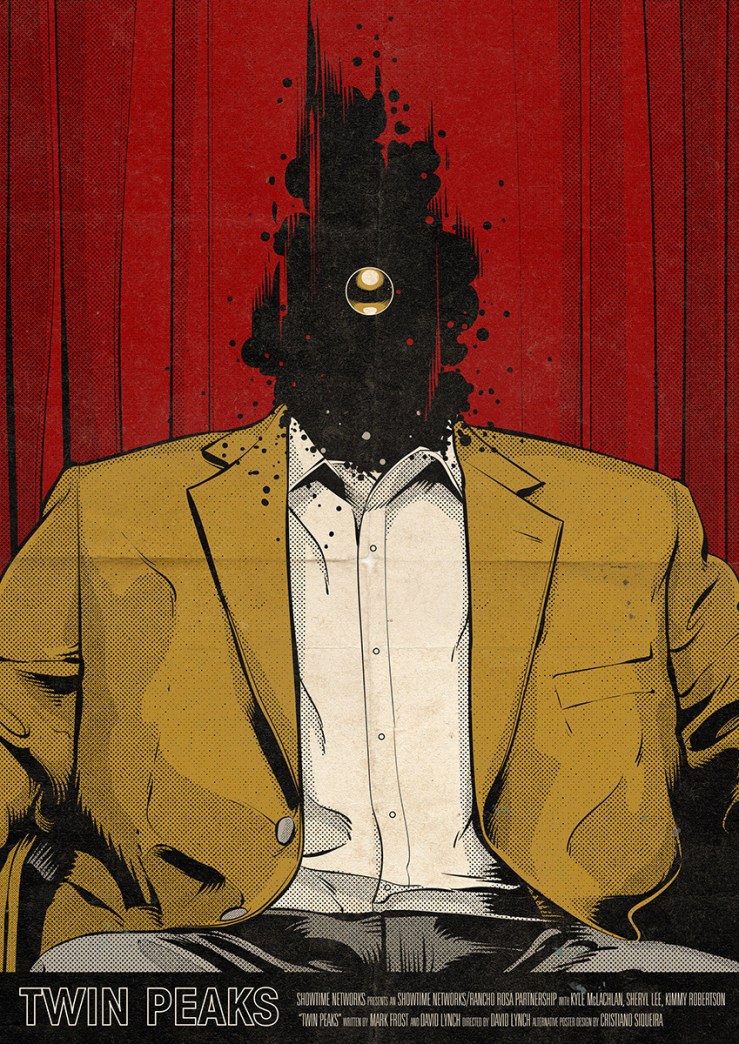
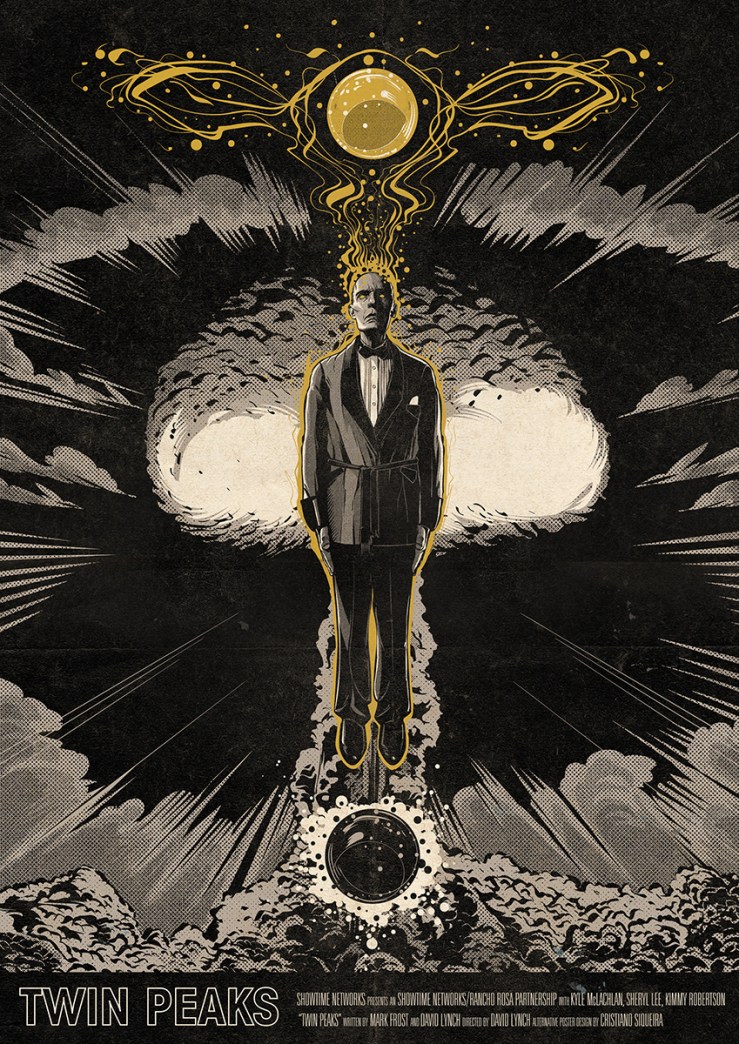
Cristiano Siqueira’s posters for Twin Peaks: The Return

21b4b3b6-f56f-46ff-a167-474799408a56_rw_1200f3e6bfb7-b3c3-456d-9d1e-52a8fff56c89_rw_1200f1edfd74-c9fb-4c3d-a542-3381c2294691_rw_1200ddc36d80-7648-48ec-9b5a-391e8e2fe914_rw_1200

I somehow missed Cristiano Siqueira’s series of posters for Twin Peaks: The ReturnSiqueira did a poster for each episode of David Lynch’s 2017 sequel—19 posters in all, including a bonus poster depicting Audrey. Check out all nineteen posters here.

No writer has produced such inconsistent characters as nature herself has (From Melville’s The Confidence-Man)

…it may be urged that there is nothing a writer of fiction should more carefully see to, as there is nothing a sensible reader will more carefully look for, than that, in the depiction of any character, its consistency should be preserved. But this, though at first blush, seeming reasonable enough, may, upon a closer view, prove not so much so. For how does it couple with another requirement—equally insisted upon, perhaps—that, while to all fiction is allowed some play of invention, yet, fiction based on fact should never be contradictory to it; and is it not a fact, that, in real life, a consistent character is a rara avis? Which being so, the distaste of readers to the contrary sort in books, can hardly arise from any sense of their untrueness. It may rather be from perplexity as to understanding them. But if the acutest sage be often at his wits’ ends to understand living character, shall those who are not sages expect to run and read character in those mere phantoms which flit along a page, like shadows along a wall? That fiction, where every character can, by reason of its consistency, be comprehended at a glance, either exhibits but sections of character, making them appear for wholes, or else is very untrue to reality; while, on the other hand, that author who draws a character, even though to common view incongruous in its parts, as the flying-squirrel, and, at different periods, as much at variance with itself as the butterfly is with the caterpillar into which it changes, may yet, in so doing, be not false but faithful to facts.

If reason be judge, no writer has produced such inconsistent characters as nature herself has. It must call for no small sagacity in a reader unerringly to discriminate in a novel between the inconsistencies of conception and those of life as elsewhere. Experience is the only guide here; but as no one man can be coextensive with what is, it may be unwise in every ease to rest upon it. When the duck-billed beaver of Australia was first brought stuffed to England, the naturalists, appealing to their classifications, maintained that there was, in reality, no such creature; the bill in the specimen must needs be, in some way, artificially stuck on.

But let nature, to the perplexity of the naturalists, produce her duck-billed beavers as she may, lesser authors some may hold, have no business to be perplexing readers with duck-billed characters. Always, they should represent human nature not in obscurity, but transparency, which, indeed, is the practice with most novelists, and is, perhaps, in certain cases, someway felt to be a kind of honor rendered by them to their kind. But, whether it involve honor or otherwise might be mooted, considering that, if these waters of human nature can be so readily seen through, it may be either that they are very pure or very shallow. Upon the whole, it might rather be thought, that he, who, in view of its inconsistencies, says of human nature the same that, in view of its contrasts, is said of the divine nature, that it is past finding out, thereby evinces a better appreciation of it than he who, by always representing it in a clear light, leaves it to be inferred that he clearly knows all about it.

But though there is a prejudice against inconsistent characters in books, yet the prejudice bears the other way, when what seemed at first their inconsistency, afterwards, by the skill of the writer, turns out to be their good keeping. The great masters excel in nothing so much as in this very particular. They challenge astonishment at the tangled web of some character, and then raise admiration still greater at their satisfactory unraveling of it; in this way throwing open, sometimes to the understanding even of school misses, the last complications of that spirit which is affirmed by its Creator to be fearfully and wonderfully made.

At least, something like this is claimed for certain psychological novelists; nor will the claim be here disputed. Yet, as touching this point, it may prove suggestive, that all those sallies of ingenuity, having for their end the revelation of human nature on fixed principles, have, by the best judges, been excluded with contempt from the ranks of the sciences—palmistry, physiognomy, phrenology, psychology. Likewise, the fact, that in all ages such conflicting views have, by the most eminent minds, been taken of mankind, would, as with other topics, seem some presumption of a pretty general and pretty thorough ignorance of it. Which may appear the less improbable if it be considered that, after poring over the best novels professing to portray human nature, the studious youth will still run risk of being too often at fault upon actually entering the world; whereas, had he been furnished with a true delineation, it ought to fare with him something as with a stranger entering, map in hand, Boston town; the streets may be very crooked, he may often pause; but, thanks to his true map, he does not hopelessly lose his way. Nor, to this comparison, can it be an adequate objection, that the twistings of the town are always the same, and those of human nature subject to variation. The grand points of human nature are the same to-day they were a thousand years ago. The only variability in them is in expression, not in feature.

But as, in spite of seeming discouragement, some mathematicians are yet in hopes of hitting upon an exact method of determining the longitude, the more earnest psychologists may, in the face of previous failures, still cherish expectations with regard to some mode of infallibly discovering the heart of man.

From Herman Melville’s novel The Confidence-Man.

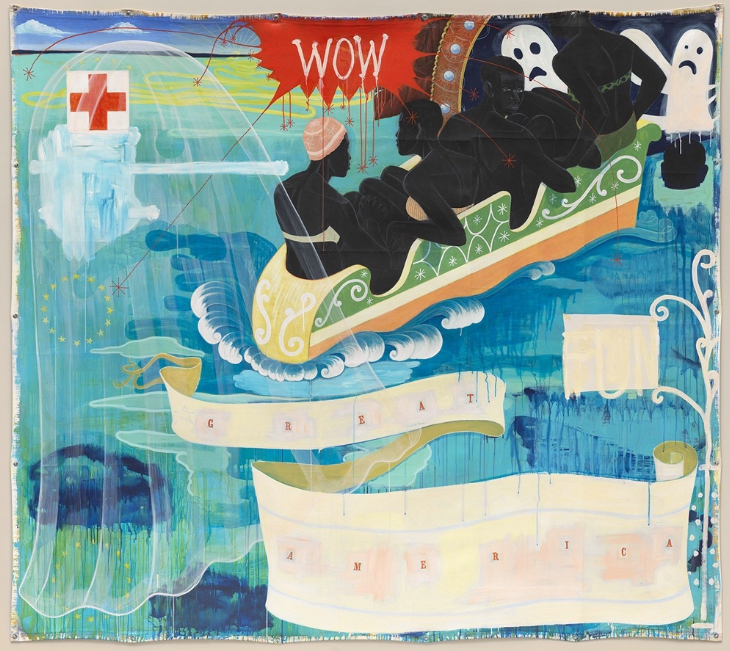
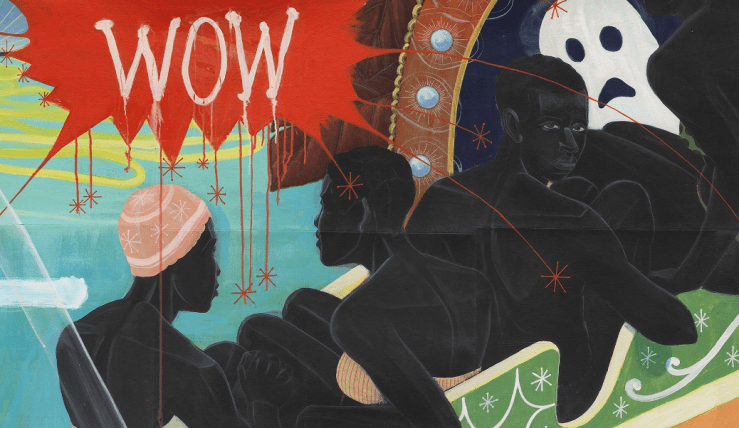
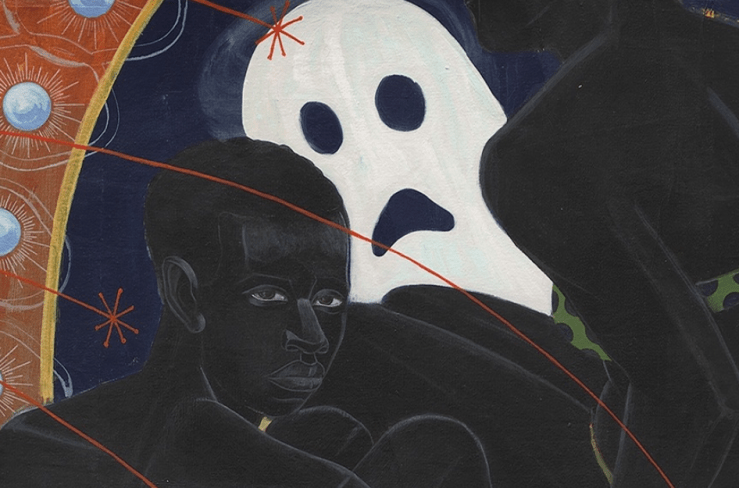
Great America — Kerry James Marshall

Screenshot 2018-08-21 at 4.57.29 PM.png

Great America, 1994 by Kerry James Marshall (b. 1955)

Screenshot 2018-08-21 at 4.58.06 PMScreenshot 2018-08-21 at 4.58.18 PM

Untitled (Pinball Machine) — William Eggleston

8d5313f83d969292a38cc4c5584a7751

Untitled (Pinball Machine), 1971 (from Troubled Waters) by William Eggleston (b. 1939)

What fictional character would Italo Calvino like to be?

Mercutio. Among his virtues, I admire above all his lightness in a world of brutality, his dreaming imagination – as the poet of Queen Mab – and at the same time his wisdom, as the voice of reason amid the fanatical hatreds of Capulets and Montagues. He sticks to the old code of chivalry at the price of his life, perhaps just the sake of style, and yet he is a modern man, skeptical and ironic – a Don Quixote who knows very well what dreams are and what reality is, and he lives both with open eyes.

From The New York Times 1985 obituary of Italo Calvino. The obituary is here citing an interview Calvino did with The New York Times Book Review in late 1984.

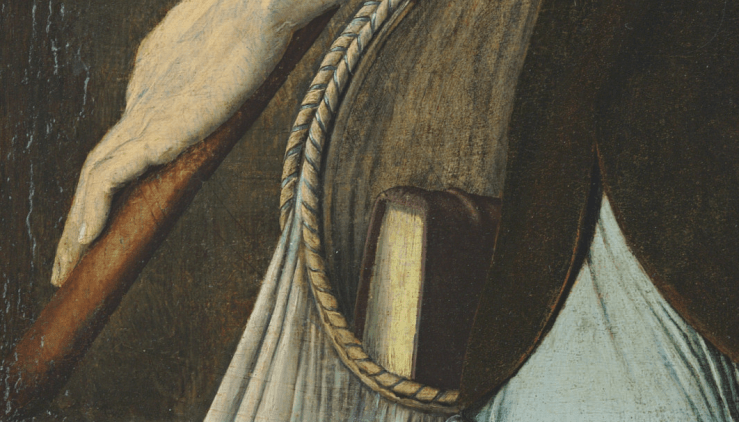
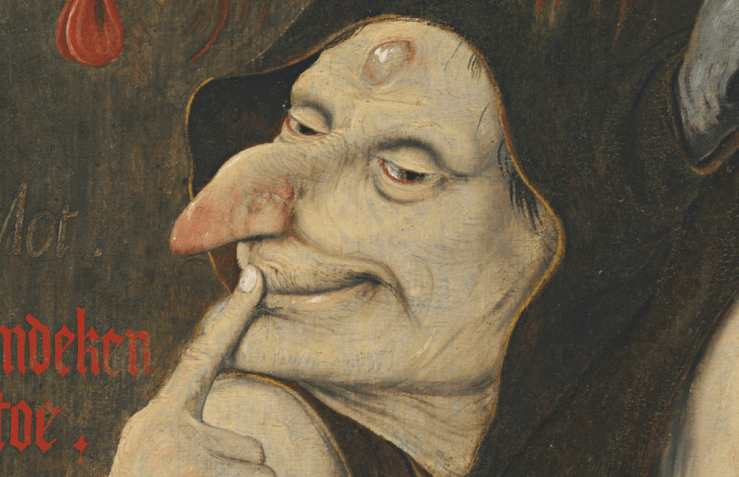
An Allegory of Folly — Quentin Matsys

2009_nyr_02237_0066_000

An Allegory of Folly, early 16th century by Quentin Matsys (1456/1466–1530)

Screenshot 2018-08-19 at 7.52.43 PM

Screenshot 2018-08-19 at 7.53.23 PMScreenshot 2018-08-19 at 7.53.05 PMScreenshot 2018-08-19 at 7.53.42 PM

The Reader — Edouard Manet

25c32589douard2bmanet2bart2b25281092529

The Reader, 1861 by Edouard Manet (1832-1883)

RIP Tom Clark

img_0843

RIP Tom Clark, 1941-2018

The American poet Tom Clark died in the first hour of Saturday, August 18th, 2018 in Berkely California. The cause of the death happened a few hours earlier, late Friday night, as a motorist collided his sedan into Tom Clark as Clark tried to cross the street. Clark was 77.

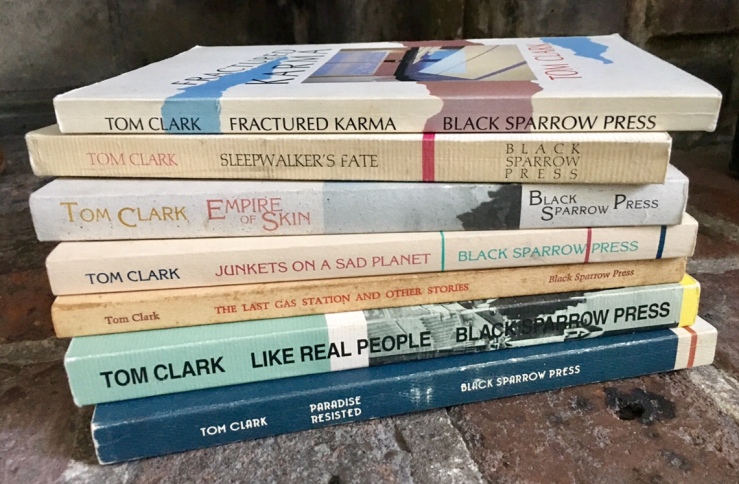
Tom Clark authored over two dozen poetry collections, many published by Black Sparrow Press. He also wrote a number of literary biographies, including a pair on Jack Kerouac, bios of Robert Creeley and Charles Olson, and a biography of John Keats called Junkets from a Sad Planet that is actually a series of poems. (But also actually a biography of Keats). Clark was the poetry editor for The Paris Review from 1963-1973 (maybe you read his interview with Allen Ginsberg there). Clark was also a blogger—an excellent blogger. He updated his blog a few hours before the car collision that killed him.

I first read Tom Clark in the middle of September, 2013. I read Fractured Karma (1990) and I had never heard of him before. I know the time specifically not because I have a good memory (I don’t), but because I wrote about it then:

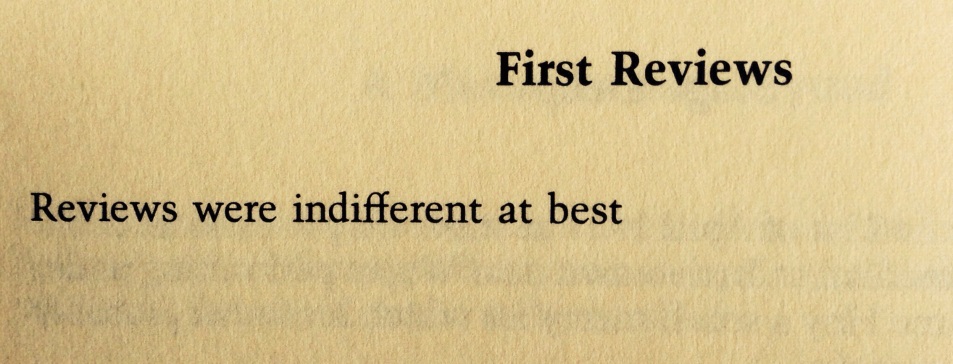
I picked up Tom Clark’s Fractured Karma two weeks ago somewhat randomly. My local bookshop had reorganized some shelves, putting all the Black Sparrow titles together. Fractured Karma must have been on top, because I don’t see how else I would’ve picked up a book with the word “karma” in the title. The book opened to this page:

20130927-141831.jpg

That’s all there is on that page, and something about it—the form, the phrasing—cracked me up. It’s part of a long poem called “He was born blind” about the British comedy actor George Formby. The poem is amazing: I read it there in the store. It reminded me immediately of David Markson’s notecard novels—something about how Clark includes so much reality into his poem. But there’s also this perceptive (if oblique) sense of humor behind it all. I ended up devouring the book, reading the whole thing that weekend. It was one of those holy shit reading moments, frankly. Once I finish typing this I’m going to go pick my kids up and we’re going to go to the bookstore and I’m going to get another Tom Clark book and read it this weekend.

I actually did go to the bookstore after writing that post and pick up another book by Clark, Sleepwalker’s Fate (1992). The store had several books by Clark, and I wasn’t sure which one to get. I remember that the title Sleepwalker’s Fate stood out, so I picked it up and thumbed through it, and I remember reading the poem “Terminator Too” there in the store—it did something electric to me—the goofy title, the winking irony, but also the earnestness of the poem, which paraphrases a few lines from Wordsworth’s Preface to Lyrical Ballads. Here it is:

“Terminator Too” by Tom Clark—

Poetry, Wordsworth
wrote, will have no
easy time of it when
the discriminating

powers of the mind
are so blunted that
all voluntary
exertion dies, and

the general
public is reduced
to a state of near
savage torpor, morose,

stuporous, with
no attention span
whatsoever; nor will
the tranquil rustling

of the lyric, drowned out
by the heavy, dull
coagulation
of persons in cities,

where a uniformity
of occupations breeds
cravings for sensation
which hourly visual

communication of
instant intelligence
gratifies like crazy,
likely survive this age.

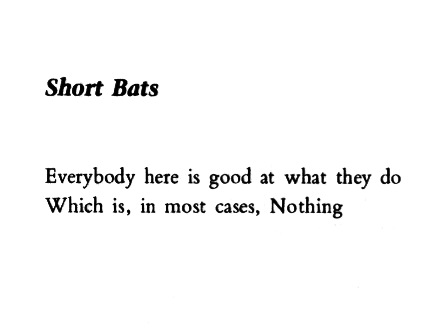
Sleepwalker’s Fate is a good starting place to read Tom Clark’s poetry, as are Fractured Karma and the collection Paradise Revisited (1984). Here’s one from Paradise Revisited:

IMG_3222

The later poetry collection Like Real People (1995) is also pretty great. It includes this humdinger:

Like Real People also includes a series of autobiographical sketches and stories told in an engaging but straightforward manner. The epilogue there is particularly good—Clark mulls over what it means to write an autobiography, straining against his anxieties over framing his own life stories. Tellingly, he lards the essay with quotes and ideas from other folks. Clark’s poetry often takes on the form of translation, citation, history, or reinterpretation (as we see in “Terminator Too,” above), and works like Empire of Skin (1997) and Junkets on a Sad Planet (1994) are particularly ambitious. Empire of Skin is a series of poems that take on the history of the American fur trade through a lens critical of Manifest Destiny. Junkets on a Sad Planet is an impressionistic series of riffs on Keats’ short life (“junkets” is a pun). From Junkets

img_0847

What a lovely condensation of biography, history, and poetic anxiety!

I’ll close with one of my favorite Clark poems, “Heavy,” which discharges poetic anxiety. Clark dedicated the poem to Jack Kerouac and Charles Olson—the gods in the first line, perhaps?–figures he would later write biographies on.

Peace be with Tom Clark.

heavy

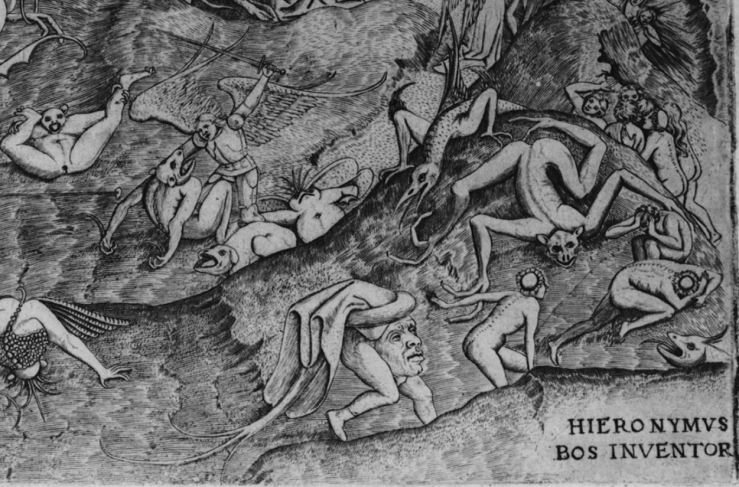
The Last Judgment (Detail) — Alart du Hameel

cc

The Last Judgment (detail) by Alart du Hameel (c. 1478-c. 1506)

Selections from One-Star Amazon Reviews of George Eliot’s Middlemarch

[Editorial note: The following citations come from one-star Amazon reviews George Eliot’s novel Middlemarch (I loved Middlemarch, by the way)I’ve preserved the reviewers’ original punctuation and spelling. More one-star Amazon reviews.].


too literary

No… just.. no

fancy words

a driveling tale

verbage is archaic

too many characters

characters seem fake

author of dubious character

Could not relate to characters

All of the characters are flawed

goes off on philosophical tangents

the sentences run on and on and on

I’m an avid reader and love many of the classics

a maze of literary, historical and mythological references

author whose moral frame of reference is so small-minded

Middlemarch is about a small town called Middlemarch

you won’t be able to fit it in your purse

This is trash, and bordering on fraud

the language should be readable

she can beat you into submission

This book was a book club read

BIG, FREAKING PLOT HOLE

I enjoy English literature

perpetual pontification

This is a Huge book

Sooooo wordy

100s of pages

Good ghod

lacks wit

Yuk


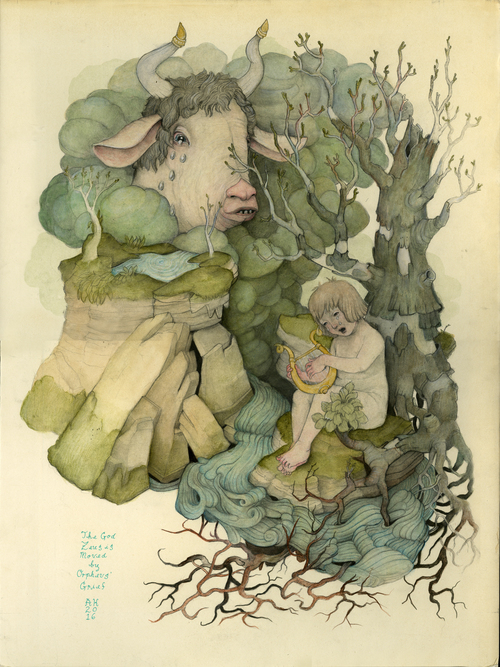
The God Zeus Is Moved by Orpheus’ Grief — Alex Kuno

grieffull

The God Zeus Is Moved by Orpheus’ Grief, 2016 by Alex Kuno

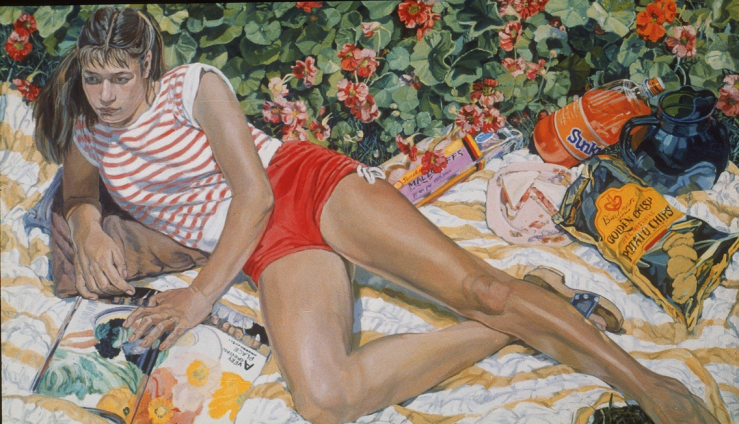
Darlene Reading — Janet Fish

Screenshot 2018-08-17 at 4.35.08 PM

Darlene Reading, 1982 by Janet Fish (b. 1938)

Read “The Policemen’s Ball,” a short story by Donald Barthelme

“The Policemen’s Ball”

by

Donald Barthelme


Horace, a policeman, was making Rock Cornish Game Hens for a special supper. The Game Hens are frozen solid, Horace thought. He was wearing his blue uniform pants.

Inside the Game Hens were the giblets in a plastic bag. Using his needlenose pliers Horace extracted the frozen giblets from the interior of the birds. Tonight is the night of the Policemen’s Ball, Horace thought. We will dance the night away. But first, these Game Hens must go into a three-hundred-and-fifty-degree oven.

Horace shined his black dress shoes. Would Margot “put out” tonight? On this night of nights? Well, if she didn’t– Horace regarded the necks of the birds which had been torn asunder by the pliers. No, he reflected, that is not a proper thought. Because I am a member of the force. I must try to keep my hatred under control. I must try to be an example for the rest of the people. Because if they can’t trust us. . .the blue men. . .

In the dark, outside the Policemen’s Ball, the horrors waited for Horace and Margot.

Margot was alone. Her roommates were in Provincetown for the weekend. She put pearl-colored lacquer on her nails to match the pearl of her new-bought gown. Police colonels and generals will be there, she thought. The Pendragon of the Police himself. Whirling past the dais, I will glance upward. The pearl of my eyes meeting the steel gray of high rank.

Margot got into a cab and went over to Horace’s place. The cabdriver was thinking: A nice-looking piece. I could love her.

Horace removed the birds from the oven. He slipped little gold frills, which has been included in the package, over the ends of the drumsticks. Then he uncorked the wine, thinking: This is a town without pity, this town. For those whose voices lack the crack of authority. Luckily the uniform. . . Why won’t she surrender her person? Does she think she can resist the force? The force of the force?

“These birds are delicious.”

Driving Horace and Margot smoothly to the Armory, the new cabdriver thought about basketball.

Why do they always applaud the man who makes the shot?

Why don’t they applaud the ball?

It’s the ball that actually goes into the net.

The man doesn’t go into the net.

Never have I seen a man going into the net.

Twenty thousand policemen of all grades attended the annual fete. The scene was Camelot, with gay colors and burgees. The interior of the Armory had been roofed with lavish tenting. Police colonels and generals looked down on the dark uniforms, white gloves, silvery ball gowns.

“Tonight?”

“Horace, not now. This scene is so brilliant. I want to remember it.”

Horace thought: It? Not me?

The Pendragon spoke. “I ask you to be reasonable with the citizens. They pay our salaries after all. I know they are difficult sometimes, obtuse sometimes, even criminal sometimes, as we often run across in our line of work. But I ask you despite all to be reasonable. I know it is hard. I know it is not easy. I know that for instance when you see a big car, a ’70 Biscayne hardtop, cutting around a corner at a pretty fair clip, with three in the front and three in the back, and they are all mixed up, ages and sexes and colors, your natural impulse is to– I know your first thought is, All those people! Together! And your second thought is, Force! But I must ask you in the name of force itself to be restrained. For force, that great principle, is most honored in the breach and the observance. And that is where you men are, in the breach. You are fine men, the finest. You are Americans. So for the sake of America, be careful. Be reasonable. Be slow. In the name of the Father and the Son and of the Holy Ghost. And now I would like to introduce Vercingetorix, leader of the firemen, who brings us a few words of congratulation from that fine body of men.”

Waves of applause for the Pendragon filled the tented area.

“He is a handsome older man,” Margot said.

“He was born in a Western state and advanced to his present position through raw merit,” Horace told her.

The government of Czechoslovakia sent observers to the Policemen’s Ball. “Our police are not enough happy,” Colonel-General Cepicky explained. “We seek ways to improve them. This is a way. It may not be the best of all possible ways, but. . . Also I like to drink the official whiskey! It makes me gay!”

A bartender thought: Who is that yellow-haired girl in the pearl costume? She is stacked.

The mood of the Ball changed. The dancing was more serious now. Margot’s eyes sparkled from the jorums of champagne she had drunk. She felt Horace’s delicately Game Hen-flavored breath on her cheek. I will give him what he wants, she decided. Tonight. His heroism deserves it. He stands between us and them. He represents what is best in society: decency, order, safety, strength, sirens, smoke. No, he does not represent smoke. Great billowing oily black clouds. That Vercingetorix has a noble look. With whom is Vercingetorix dancing, at present?

The horrors waited outside patiently. Even policemen, the horrors thought. We get even policemen, in the end.

In Horace’s apartment, a gold frill was placed on a pearl toe.

The horrors had moved outside Horace’s apartment. Not even policemen and their ladies are safe, the horrors thought. No one is safe. Safety does not exist. Ha ha ha ha ha ha ha ha ha ha!