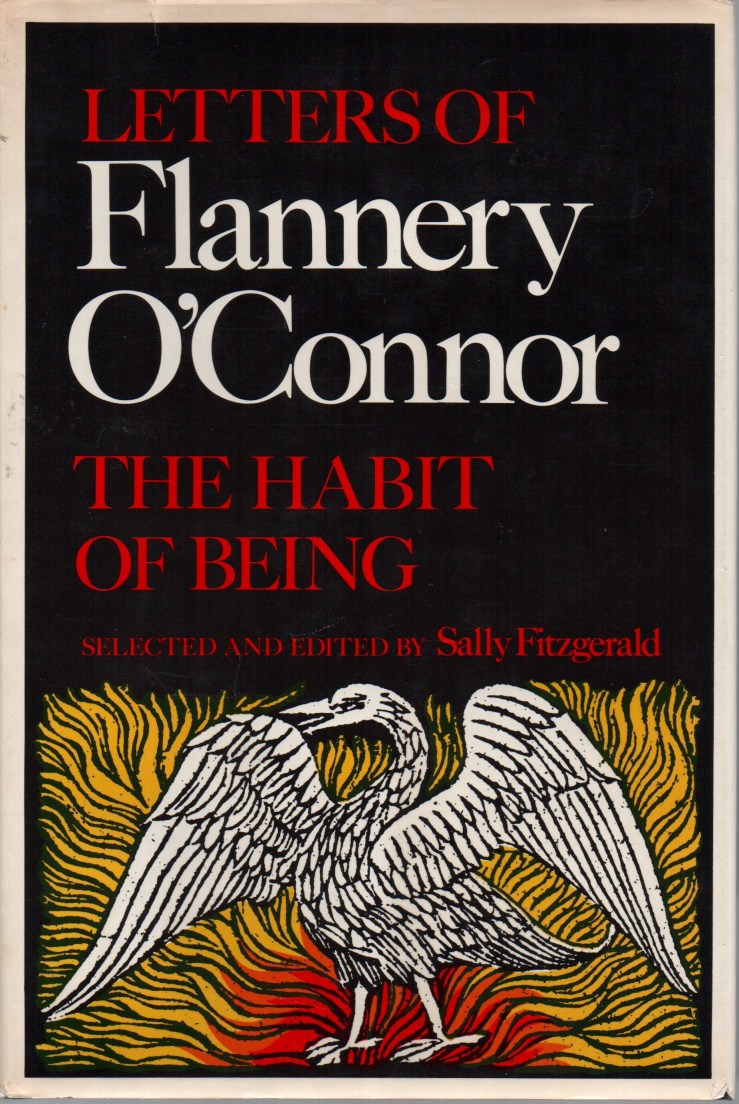
The Habit of Being: Letters of Flannery O’Connor. Edited by Sally Fitzgerald. 1979 2nd edition hardback from FS&G. Jacket design by Janet Halverson. A marvelous book—Fitzgerald’s editing is wonderful here—there’s a rich index that makes this book a pick me up and read me anytime kind of resource. Particularly great are O’Connor’s letters to ‘A,’ a smart reader whom O’Connor struck up a friendship with in letters.
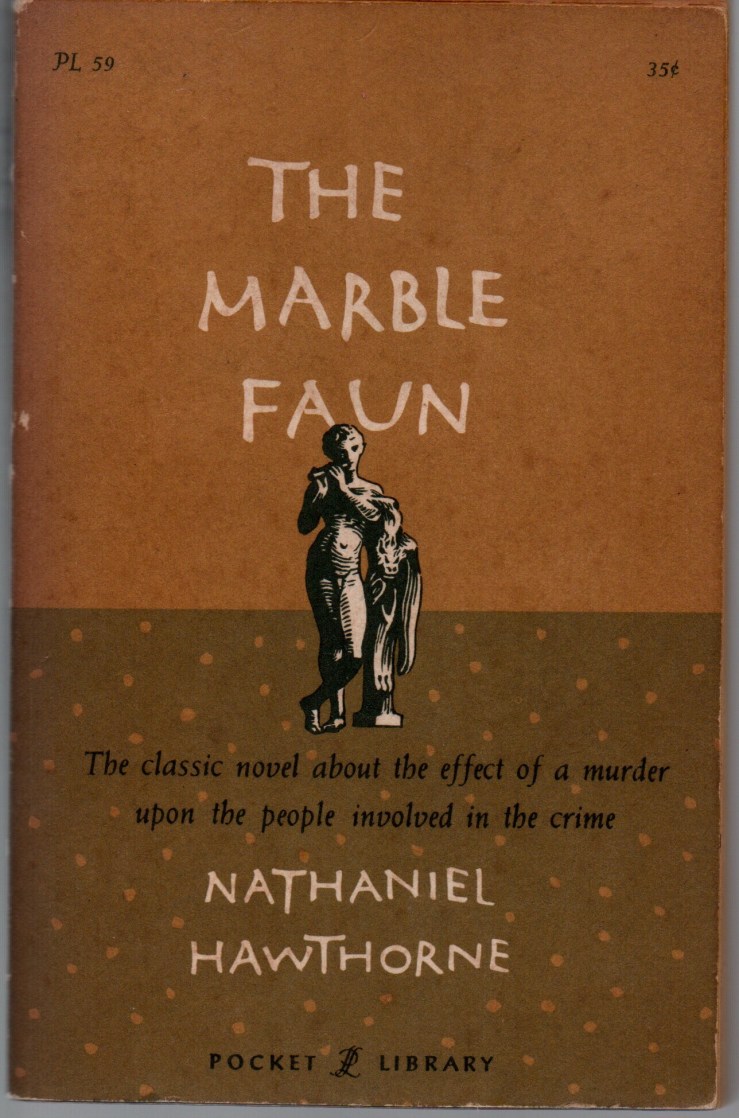
The Marble Faun; or The Romance of Monte Beni by Nathaniel Hawthorne. 1958 mass market paperback by Pocket Books. No designer credited. I love this cover and design—simple and elegant. The Marble Faun is the only Hawthorne novel (book, really) that I’ve yet to read.
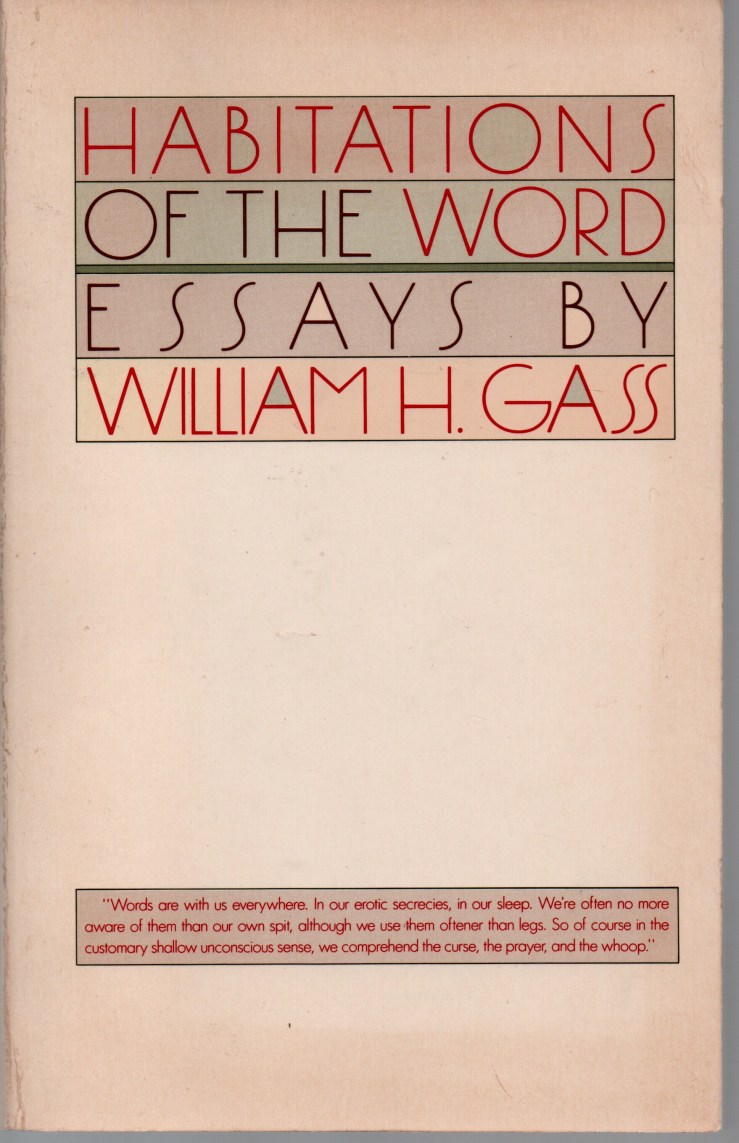
Habitations of the Word: Essays by William H. Gass. 1985 trade paperback by Touchstone/Simon and Schuster. Cover design by Koppel & Scher—and what a great design! (The quotation on the cover is from Gass’s essay “The Soul Inside the Sentence”). I had pulled this book out to find some lines from the first essay, “Emerson and the Essay,” for an American lit class I’m teaching. The essays collected here are brilliant stuff—literary criticism that surpasses “literary criticism.”
I also read Autobiography of Red and Red Doc> by Anne Carson during September-October, but erased everything I tried to write on them. I found Autobiography particularly excellent—a real How is this possible? kind of read.
FOUND AMONG THE PAPERS
OF THE LATE DIEDRICH KNICKERBOCKER.
        A pleasing land of drowsy head it was,
          Of dreams that wave before the half-shut eye;
        And of gay castles in the clouds that pass,
          Forever flushing round a summer sky.
                                         CASTLE OF INDOLENCE.
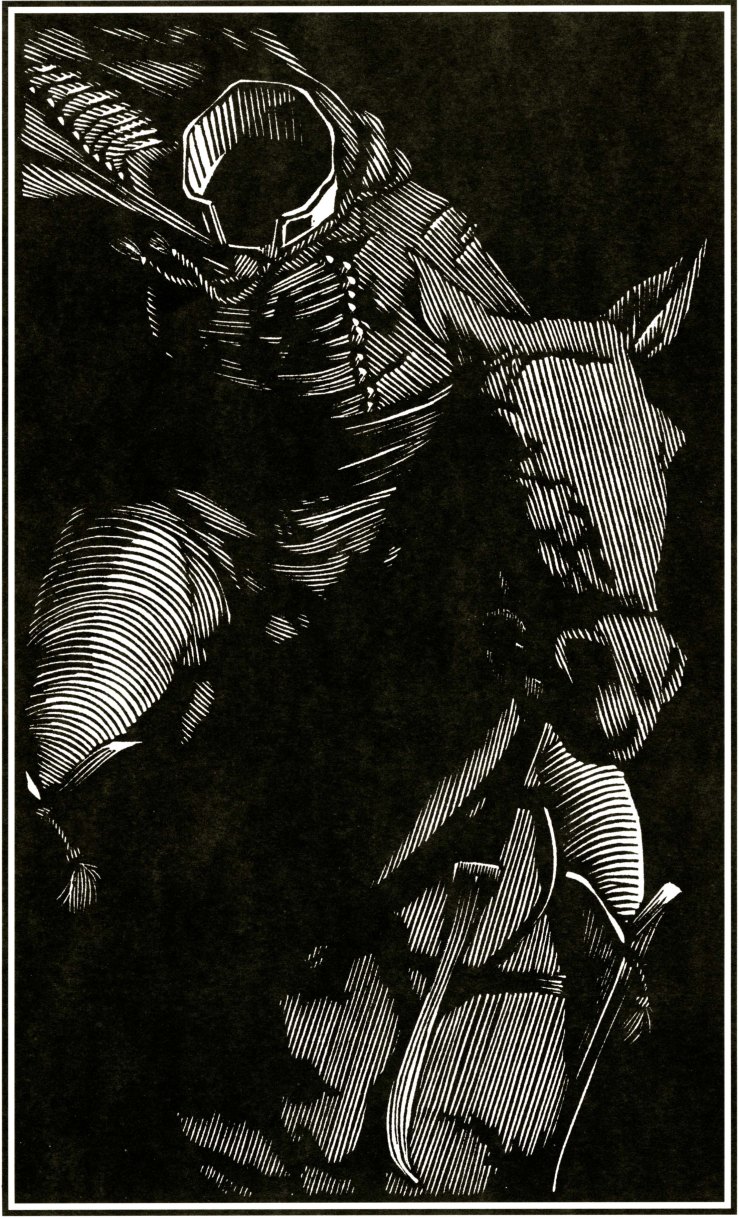
In the bosom of one of those spacious coves which indent the eastern shore of the Hudson, at that broad expansion of the river denominated by the ancient Dutch navigators the Tappan Zee, and where they always prudently shortened sail and implored the protection of St. Nicholas when they crossed, there lies a small market town or rural port, which by some is called Greensburgh, but which is more generally and properly known by the name of Tarry Town. This name was given, we are told, in former days, by the good housewives of the adjacent country, from the inveterate propensity of their husbands to linger about the village tavern on market days. Be that as it may, I do not vouch for the fact, but merely advert to it, for the sake of being precise and authentic. Not far from this village, perhaps about two miles, there is a little valley or rather lap of land among high hills, which is one of the quietest places in the whole world. A small brook glides through it, with just murmur enough to lull one to repose; and the occasional whistle of a quail or tapping of a woodpecker is almost the only sound that ever breaks in upon the uniform tranquillity.
I recollect that, when a stripling, my first exploit in squirrel-shooting was in a grove of tall walnut-trees that shades one side of the valley. I had wandered into it at noontime, when all nature is peculiarly quiet, and was startled by the roar of my own gun, as it broke the Sabbath stillness around and was prolonged and reverberated by the angry echoes. If ever I should wish for a retreat whither I might steal from the world and its distractions, and dream quietly away the remnant of a troubled life, I know of none more promising than this little valley.
From the listless repose of the place, and the peculiar character of its inhabitants, who are descendants from the original Dutch settlers, this sequestered glen has long been known by the name of SLEEPY HOLLOW, and its rustic lads are called the Sleepy Hollow Boys throughout all the neighboring country. A drowsy, dreamy influence seems to hang over the land, and to pervade the very atmosphere. Some say that the place was bewitched by a High German doctor, during the early days of the settlement; others, that an old Indian chief, the prophet or wizard of his tribe, held his powwows there before the country was discovered by Master Hendrick Hudson. Certain it is, the place still continues under the sway of some witching power, that holds a spell over the minds of the good people, causing them to walk in a continual reverie. They are given to all kinds of marvellous beliefs, are subject to trances and visions, and frequently see strange sights, and hear music and voices in the air. The whole neighborhood abounds with local tales, haunted spots, and twilight superstitions; stars shoot and meteors glare oftener across the valley than in any other part of the country, and the nightmare, with her whole ninefold, seems to make it the favorite scene of her gambols.
Roberto Bolaño’s short story “The Return” is so good that it has two perfect opening paragraphs:
I have good news and bad news. The good news is that there is life (of a kind) after this life. The bad news is that Jean-Claude Villeneuve is a necrophiliac.
That’s a hell of a way to start a story! Bolaño lays out his two themes—the afterlife and necrophilia—in a jovial, almost cavalier, but dare I say sweet, even charming way. And then this paragraph:
Death caught up with me in a Paris disco at four in the morning. My doctor had warned me, but some things are stronger than reason. I was convinced, mistakenly (and even now it’s something I regret), that drinking and dancing were not the most hazardous of my passions. Another reason I kept going out every night to the fashionable places in Paris was my routine as a middle manager at Fracsa; I was after what I couldn’t find at work or in what people call the inner life: the buzz that you get from a certain excess.
Those are the first two paragraphs, and maybe they’ll entice you to read the story. However, the following riff includes what some people might consider spoilers; my hope is that if you’ve never read it before, you’ll take it on faith that “The Return” is a great, great story and you’ll go read it and stop reading this riff now. (Maybe come back later though after you’ve read it).
“The Return” is a ghost story that transmutes the horror of death and the abjection of the corpse into love, empathy, and communication—and art. It’s a beautiful ghost tale in the Romantic, Gothic tradition of Edgar Allan Poe, from whom Bolaño drew heavily. However, while Poe’s tales of necrophilia (like the poem “Annabel Lee,” “The Fall of the House of Usher,” and “Berenice” to name just a few) obsess over repression, loss, burial, and imperfect and violent attempts at restoration, Bolaño’s “The Return” offers its readers a peaceful reconciliation with death. It’s collected in The Return (New Directions, English translation by Chris Andrews), which is a perfect introduction to Bolaño—so many great stories there (“Buba,” “Clara,” “William Burns,” etc.). So go read it.








 Biblioklept