The Spot on the Map — Rene Magritte

A Glass Jug (Detail from the Concert of Angels from the Isenheim Altarpiece) — Matthias Grünewald

Three Books

IMG_0046

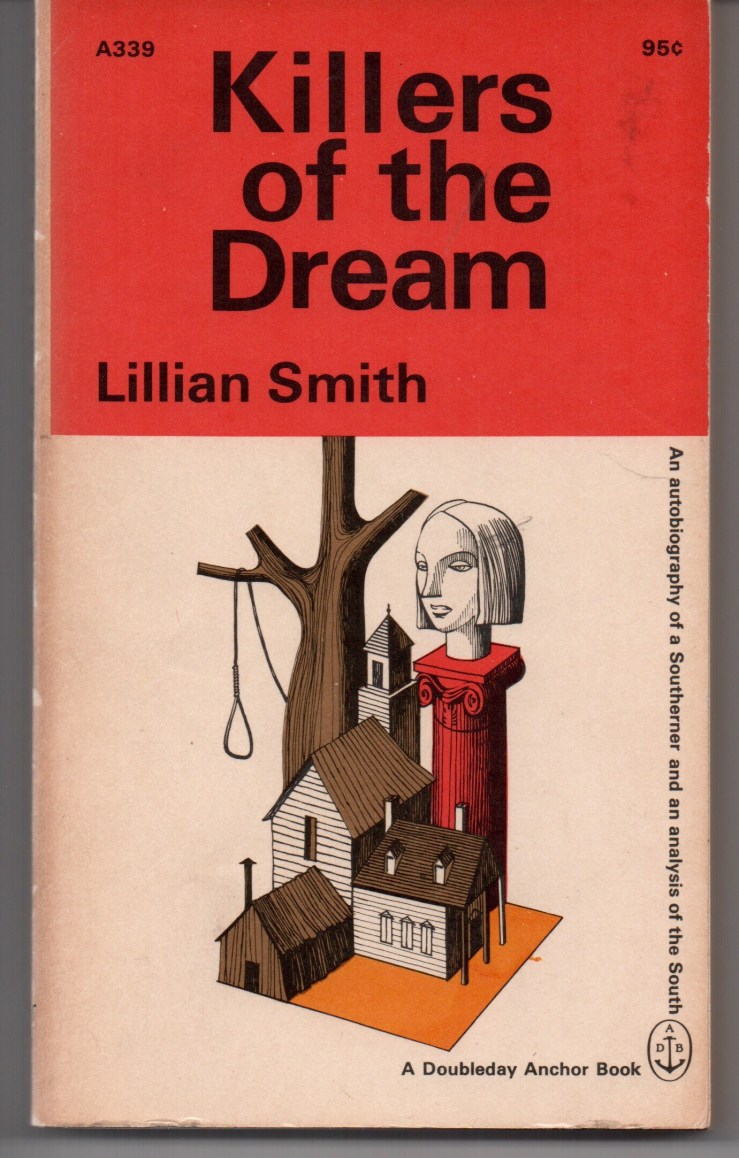
Killers of the Dream by Lillian Smith. Doubleday Anchor, 1963 mass market paperback edition. Cover design by George Giusti. Smith’s memoir-essay-critique is an underappreciated masterful dissection of the South in particular and humanity in general.IMG_0047

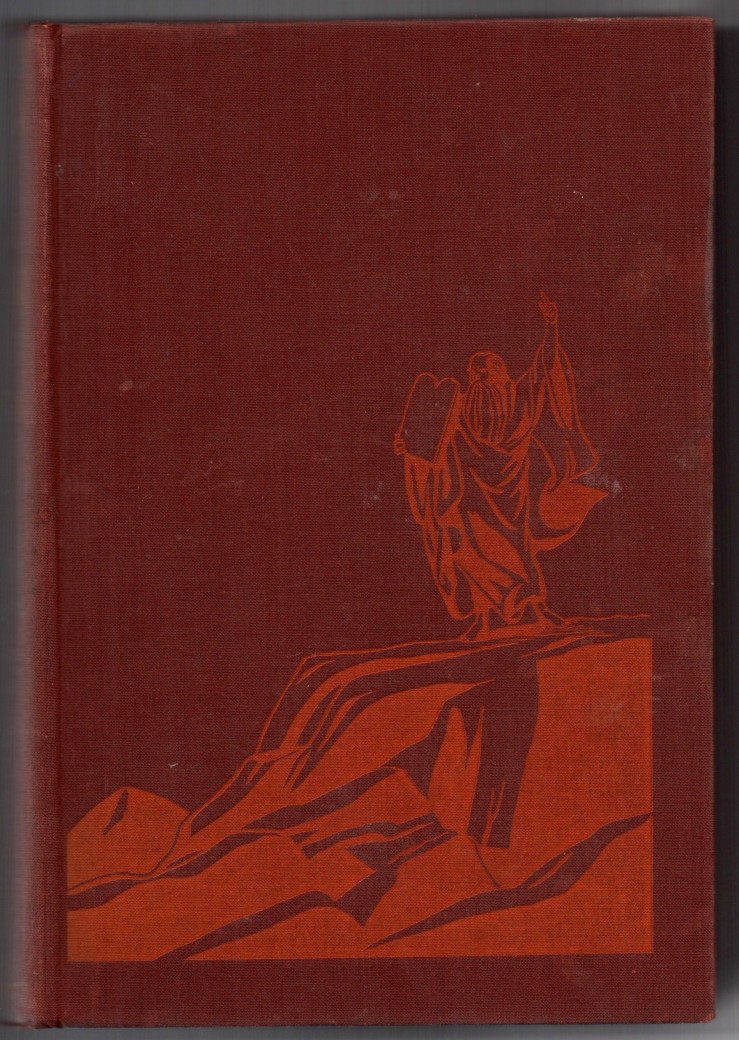
Moses, Man of the Mountain by Zora Neale Hurston. First-edition clothbound hardback from J. B. Lippincott, 1939. The dust jacket is missing, and no designer is credited in the book. I picked this up for eight dollars a few years ago. I lent my paperback copy to a student years ago; she never returned it. (Good for her!).IMG_0048

Afro-Cuban Tales by Lydia Cabrera. 2004 trade paperback by the University of Nebraska Press. Book design by R. Eckersley; cover illustration by Lydia Cabrera. Cabrera (1899-1991), an ethnographer, went beyond documenting the tales and fables of her native Cuba: she synthesized them into new tellings, new variations (not unlike Zora Neale Hurston’s folklore work in Mules and Men and Tell My Horse). Cabrera deserves a wider audience.

Crashed Aeroplane — John Singer Sargent

Exhibition — Mattias Adolfsson

The primary meaning of the gothic romance, then, lies in its substitution of terror for love as a central theme of fiction

The primary meaning of the gothic romance, then, lies in its substitution of terror for love as a central theme of fiction. The titillation of sex denied, it offers its readers a vicarious participation in a flirtation with death—approach and retreat, approach and retreat, the fatal orgasm eternally mounting and eternally checked. More than that, however, the gothic is the product of an implicit aesthetic that replaces the classic concept of nothing-in-excess with the revolutionary doctrine that nothing succeeds like excess. Aristotle’s guides for achieving the tragic without falling into “the abominable” are stood on their heads, “the abominable” itself being made the touchstone of effective art. Dedicated to producing nausea, to transcending the limits of taste and endurance, the gothic novelist is driven to seek more and more atrocious crimes to satisfy the hunger for “too-much” on which he trades.

It is not enough that his protagonist commit rape; he must commit it upon his mother or sister; and if he himself is a cleric, pledged to celibacy, his victim a nun, dedicated to God, all the better! Similarly, if he commits murder, it must be his father who is his victim; and the crime must take place in darkness, among the decaying bodies of his ancestors, on hallowed ground. It is as if such romancers were pursuing some ideal of absolute atrocity which they cannot quite flog their reluctant imaginations into conceiving…

Some would say, indeed, that the whole tradition of the gothic is a pathological symptom rather than a proper literary movement, a reversion to the childish game of scaring oneself in the dark, or a plunge into sadist fantasy, masturbatory horror. For Wordsworth, for instance, heir of the genteel sentimentality of the eighteenth century, gothic sensationalism seemed merely a response (compounding the ill to which it responded) to the decay of sensibility in an industrialized and brutalized world—in which men had grown so callous that only shock treatments of increasing intensity could move them to react.

From Leslie Fiedler’s Love and Death in the American Novel.

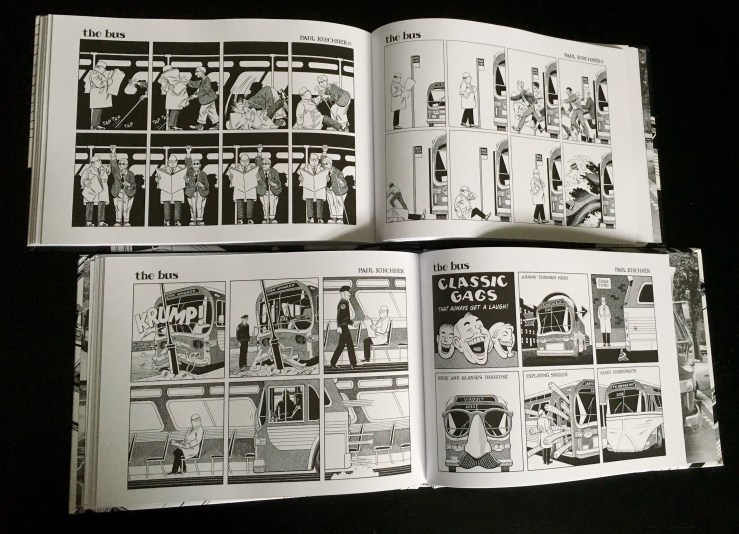
Paul Kirchner’s The Bus…and The Bus 2 (Books acquired, 10.03.2015)

image

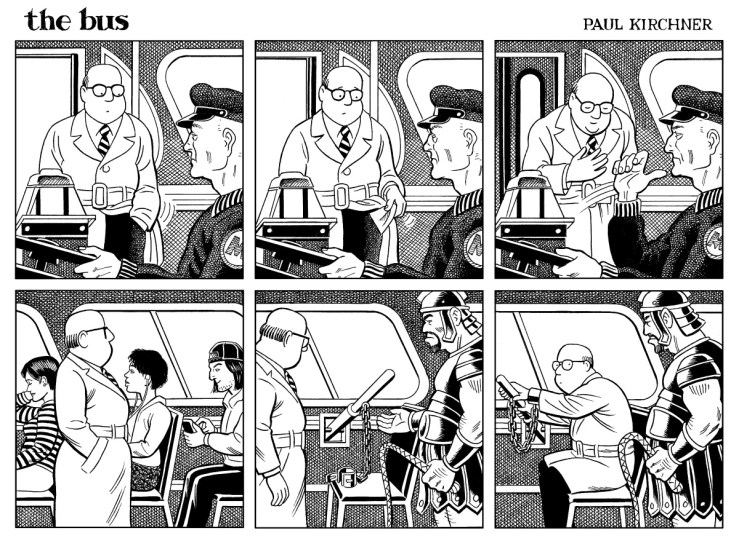
Paul Kirchner’s The Bus is excellent. We know this, yes? Editions Tanibis sent me their copy of the surreal, philosophical strip’s first run. I’ve enjoyed going back through it again (bingeing, to be honest)—Tanibis’s volume is beautiful, crisp, and far more complete than the Imgur album that was such a hit this year.
image

Tanibis also sent along The Bus 2, which publishes late this month, and I’ll have a full review then (some time after Halloween), but for now, a teaser:

02

Breakfast Nook — Charles Blackman

Heliodora — Leonor Fini

ccf070991230fd759bf1826c56c0fce5

The Woodpeckers, Crows, and Hawks Screamed Furiously — Maurice Sendak

image

From Maurice Sendak’s retelling of Wilhelm Grimm’s Dear Mili.

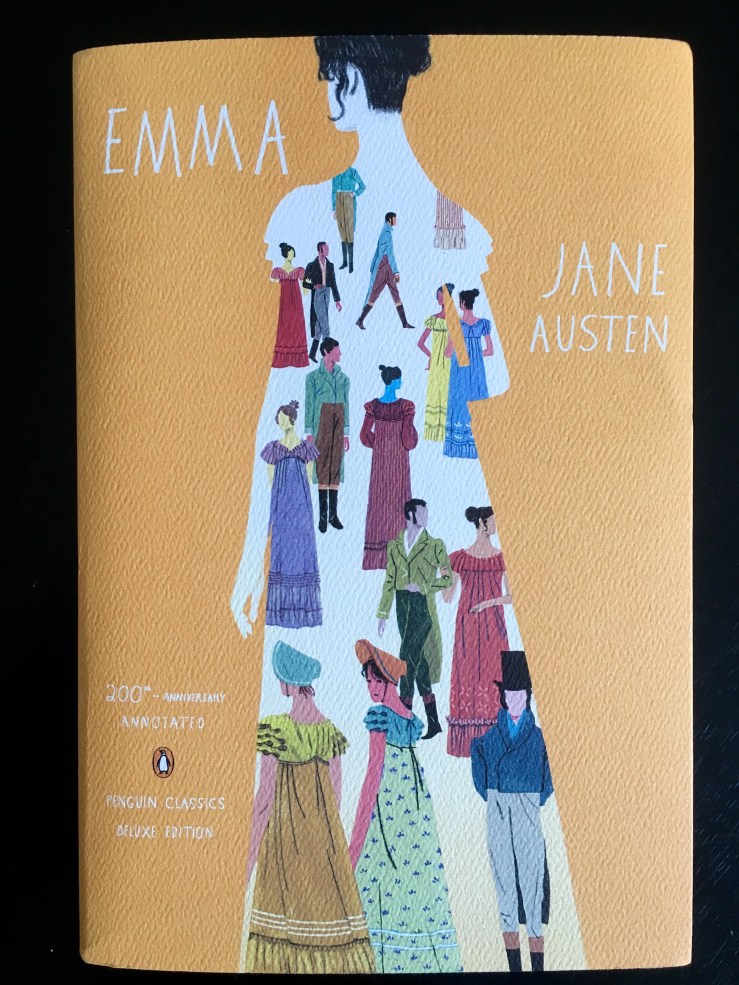
A bicentennial edition of Jane Austen’s Emma from Penguin Classics

IMG_0032

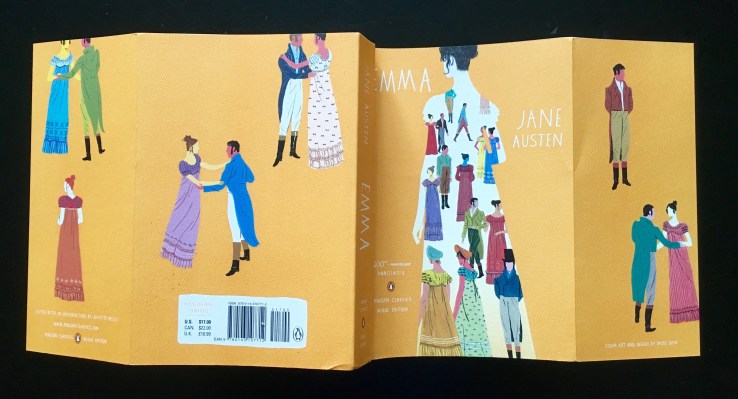
Last month, to mark its bicentennial, Penguin Classics published a deluxe edition of Jane Austen’s novel Emma. It’s a beautiful, hefty book, with deckle edges, French flaps, and a cool cover by Dadu Shin.

IMG_0038

Beyond its obvious aesthetic appeal, Penguin’s new edition offers its readers helpful resources, including a note on spelling in the novel, a glossary, and a range of essays that offer context for better appreciating the plot (topics include “Dancing,” “Food,” and “Health”). Indeed, this edition seems geared towards helping younger readers appreciate and enjoy Emma. In a prefatory note, editor Juliette Wells writes:

This edition is designed to help. It’s a reader’s edition, not a scholarly one. In other words, the information you’ll find here is intended to support your understanding and appreciation of Emma rather than to instruct you in literary terms, theoretical perspectives, or critical debates. In choosing what to include, I’ve borne in mind what I’ve heard from students and others over the years about what has intrigued, and frustrated, them in reading this novel.

Wells’s brief introduction helps offer new readers context about the novel’s composition, publication, and reception. She even offers a short series of tips for reading Emma (sample: “If you’re feeling frustrated or bored because nothing much seems to be happening, remember that Austen’s own contemporaries commented on how little plot Emma contains and how ordinary its characters and events are”). The edition also features helpful maps (by Wells), along with illustrations and title pages from previous editions. The volume concludes with a suggested reading and viewing list “for further exploration.”

Emma is obviously in the public domain and available in plenty of inexpensive versions (like the Dover Thrift copy I read in high school)—but this new Penguin Classics edition makes a strong case for itself as the future go-to version for high school students. Wells’s editorial vision (and the aesthetic design of the book) show a strong love for Austen’s text that will carry over to a new generation of readers.  Continue reading “A bicentennial edition of Jane Austen’s Emma from Penguin Classics”

J.R.R. Tolkien’s manuscript map of Rohan, Gondor, and Mordor

Art of The Lord of the Rings final revised.indd

From the forthcoming The Art of the Lord of the Rings, which collects Tolkiens’s preparatory drawings for his epic. Via/more at Wired.

Ezra Pound — Wyndham Lewis

This is the reason why bards love wine, mead, narcotics, coffee, tea, opium, the fumes of sandal-wood and tobacco (Emerson)

It is a secret which every intellectual man quickly learns, that, beyond the energy of his possessed and conscious intellect he is capable of a new energy (as of an intellect doubled on itself), by abandonment to the nature of things; that beside his privacy of power as an individual man, there is a great public power on which he can draw, by unlocking, at all risks, his human doors, and suffering the ethereal tides to roll and circulate through him; then he is caught up into the life of the Universe, his speech is thunder, his thought is law, and his words are universally intelligible as the plants and animals. The poet knows that he speaks adequately then only when he speaks somewhat wildly, or, “with the flower of the mind;” not with the intellect used as an organ, but with the intellect released from all service and suffered to take its direction from its celestial life; or as the ancients were wont to express themselves, not with intellect alone but with the intellect inebriated by nectar. As the traveller who has lost his way throws his reins on his horse’s neck and trusts to the instinct of the animal to find his road, so must we do with the divine animal who carries us through this world. For if in any manner we can stimulate this instinct, new passages are opened for us into nature; the mind flows into and through things hardest and highest, and the metamorphosis is possible.

This is the reason why bards love wine, mead, narcotics, coffee, tea, opium, the fumes of sandal-wood and tobacco, or whatever other procurers of animal exhilaration. All men avail themselves of such means as they can, to add this extraordinary power to their normal powers; and to this end they prize conversation, music, pictures, sculpture, dancing, theatres, travelling, war, mobs, fires, gaming, politics, or love, or science, or animal intoxication,—which are several coarser or finer quasi-mechanical substitutes for the true nectar, which is the ravishment of the intellect by coming nearer to the fact. These are auxiliaries to the centrifugal tendency of a man, to his passage out into free space, and they help him to escape the custody of that body in which he is pent up, and of that jail-yard of individual relations in which he is enclosed. Hence a great number of such as were professionally expressers of Beauty, as painters, poets, musicians, and actors, have been more than others wont to lead a life of pleasure and indulgence; all but the few who received the true nectar; and, as it was a spurious mode of attaining freedom, as it was an emancipation not into the heavens but into the freedom of baser places, they were punished for that advantage they won, by a dissipation and deterioration. But never can any advantage be taken of nature by a trick. The spirit of the world, the great calm presence of the Creator, comes not forth to the sorceries of opium or of wine. The sublime vision comes to the pure and simple soul in a clean and chaste body. That is not an inspiration, which we owe to narcotics, but some counterfeit excitement and fury. Milton says that the lyric poet may drink wine and live generously, but the epic poet, he who shall sing of the gods and their descent unto men, must drink water out of a wooden bowl. For poetry is not ‘Devil’s wine,’ but God’s wine. It is with this as it is with toys. We fill the hands and nurseries of our children with all manner of dolls, drums, and horses; withdrawing their eyes from the plain face and sufficing objects of nature, the sun, and moon, the animals, the water, and stones, which should be their toys. So the poet’s habit of living should be set on a key so low that the common influences should delight him. His cheerfulness should be the gift of the sunlight; the air should suffice for his inspiration, and he should be tipsy with water. That spirit which suffices quiet hearts, which seems to come forth to such from every dry knoll of sere grass, from every pine-stump and half-imbedded stone on which the dull March sun shines, comes forth to the poor and hungry, and such as are of simple taste. If thou fill thy brain with Boston and New York, with fashion and covetousness, and wilt stimulate thy jaded senses with wine and French coffee, thou shalt find no radiance of wisdom in the lonely waste of the pinewoods.
From Ralph Waldo Emerson’s essay “The Poet.”