The Wretches — Peter Ferguson

x9-The-Wretches

A Woman and Two Children by a Fountain — Francisco Goya

Did Nabokov know Samuel Beckett in Paris?

IMG_8157

From Vladimir Nabokov’s 1970 interview with Alfred Appel. Originally published in Novel, A Forum on Fiction and republished in Strong Opinions. 

The Blow to the Heart — Rene Magritte

“The Right to Take Oneself Off,” an essay by Ambrose Bierce

“The Right to Take Oneself Off”

by

Ambrose Bierce


A person who loses heart and hope through a personal bereavement is like a grain of sand on the seashore complaining that the tide has washed a neighboring grain out of reach. He is worse, for the bereaved grain cannot help itself; it has to be a grain of sand and play the game of tide, win or lose; whereas he can quit—by watching his opportunity can “quit a winner.” For sometimes we do beat “the man who keeps the table”—never in the long run, but infrequently and out of small stakes. But this is no time to “cash in” and go, for you can not take your little winning with you. The time to quit is when you have lost a big stake, your fool hope of eventual success, your fortitude and your love of the game. If you stay in the game, which you are not compelled to do, take your losses in good temper and do not whine about them. They are hard to bear, but that is no reason why you should be.

But we are told with tiresome iteration that we are “put here” for some purpose (not disclosed) and have no right to retire until summoned—it may be by small-pox, it may be by the bludgeon of a blackguard, it may be by the kick of a cow; the “summoning” Power (said to be the same as the “putting” Power) has not a nice taste in the choice of messengers. That “argument” is not worth attention, for it is unsupported by either evidence or anything remotely resembling evidence. “Put here.” Indeed! And by the keeper of the table who “runs” the “skin game.” We were put here by our parents—that is all anybody knows about it; and they had no more authority than we, and probably no more intention.

The notion that we have not the right to take our own lives comes of our consciousness that we have not the courage. It is the plea of the coward—his excuse for continuing to live when he has nothing to live for—or his provision against such a time in the future. If he were not egotist as well as coward he would need no excuse. To one who does not regard himself as the center of creation and his sorrow as the throes of the universe, life, if not worth living, is also not worth leaving. The ancient philosopher who was asked why he did not the if, as he taught, life was no better than death, replied: “Because death is no better than life.” We do not know that either proposition is true, but the matter is not worth bothering about, for both states are supportable—life despite its pleasures and death despite its repose.

It was Robert G. Ingersoll’s opinion that there is rather too little than too much suicide in the world—that people are so cowardly as to live on long after endurance has ceased to be a virtue. This view is but a return to the wisdom of the ancients, in whose splendid civilization suicide had as honorable place as any other courageous, reasonable and unselfish act. Antony, Brutus, Cato, Seneca—these were not of the kind of men to do deeds of cowardice and folly. The smug, self-righteous modern way of looking upon the act as that of a craven or a lunatic is the creation of priests, Philistines and women. If courage is manifest in endurance of profitless discomfort it is cowardice to warm oneself when cold, to cure oneself when ill, to drive away mosquitoes, to go in when it rains. The “pursuit of happiness,” then, is not an “inalienable right,” for that implies avoidance of pain. No principle is involved in this matter; suicide is justifiable or not, according to circumstances; each case is to be considered on its merits and he having the act under advisement is sole judge. To his decision, made with whatever light he may chance to have, all honest minds will bow. The appellant has no court to which to take his appeal. Nowhere is a jurisdiction so comprehensive as to embrace the right of condemning the wretched to life.

Suicide is always courageous. We call it courage in a soldier merely to face death—say to lead a forlorn hope—although he has a chance of life and a certainty of “glory.” But the suicide does more than face death; he incurs it, and with a certainty, not of glory, but of reproach. If that is not courage we must reform our vocabulary.

True, there may be a higher courage in living than in dying—a moral courage greater than physical. The courage of the suicide, like that of the pirate, is not incompatible with a selfish disregard of the rights and interests of others—a cruel recreancy to duty and decency. I have been asked: “Do you not think it cowardly when a man leaves his family unprovided for, to end his life, because he is dissatisfied with life in general?” No, I do not; I think it selfish and cruel. Is not that enough to say of it? Must we distort words from their true meaning in order more effectually to damn the act and cover its author with a greater infamy? A word means something; despite the maunderings of the lexicographers, it does not mean whatever you want it to mean. “Cowardice” means the fear of danger, not the shirking of duty. The writer who allows himself as much liberty in the use of words as he is allowed by the dictionary-maker and by popular consent is a bad writer. He can make no impression on his reader, and would do better service at the ribbon-counter.

The ethics of suicide is not a simple matter; one can not lay down laws of universal application, but each case is to be judged, if judged at all, with a full knowledge of all the circumstances, including the mental and moral make-up of the person taking his own life—an impossible qualification for judgment. One’s time, race and religion have much to do with it. Some people, like the ancient Romans and the modern Japanese, have considered suicide in certain circumstances honorable and obligatory; among ourselves it is held in disfavor. A man of sense will not give much attention to considerations of that kind, excepting in so far as they affect others, but in judging weak offenders they are to be taken into the account. Speaking generally, then, I should say that in our time and country the following persons (and some others) are justified in removing themselves, and that to some of them it is a duty:

One afflicted with a painful or loathsome and incurable disease.

One who is a heavy burden to his friends, with no prospect of their relief.

One threatened with permanent insanity.

One irreclaimably addicted to drunkenness or some similarly destructive or offensive habit.

One without friends, property, employment or hope.

One who has disgraced himself.

Why do we honor the valiant soldier, sailor, fireman? For obedience to duty? Not at all; that alone—without the peril—seldom elicits remark, never evokes enthusiasm. It is because he faced without flinching the risk of that supreme disaster—or what we feel to be such—death. But look you: the soldier braves the danger of death; the suicide braves death itself! The leader of the forlorn hope may not be struck. The sailor who voluntarily goes down with his ship may be picked up or cast ashore. It is not certain that the wall will topple until the fireman shall have descended with his precious burden. But the suicide—his is the foeman that never missed a mark, his the sea that gives nothing back; the wall that he mounts bears no man’s weight And his, at the end of it all, is the dishonored grave where the wild ass of public opinion “Stamps o’er his head but can not break his sleep.”

Three Bathers among the Irises — Paul Ranson

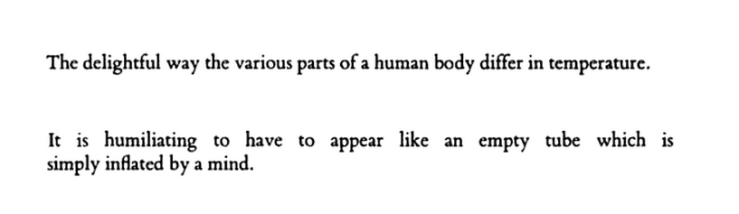
Delightful way/empty tube (Wittgenstein)

Screenshot 2015-08-14 at 5.28.11 PMFrom Culture and Value.

Calling It a Tail Did Not Make It One — Dugald Stewart Walker

dr16

Pallas and Centaur — Sandro Botticelli

“A Gold Slipper” by Willa Cather

“A Gold Slipper”

by

Willa Cather


Marshall McKann followed his wife and her friend Mrs. Post down the aisle and up the steps to the stage of the Carnegie Music Hall with an ill-concealed feeling of grievance. Heaven knew he never went to concerts, and to be mounted upon the stage in this fashion, as if he were a “highbrow” from Sewickley, or some unfortunate with a musical wife, was ludicrous. A man went to concerts when he was courting, while he was a junior partner. When he became a person of substance he stopped that sort of nonsense. His wife, too, was a sensible person, the daughter of an old Pittsburgh family as solid and well-rooted as the McKanns. She would never have bothered him about this concert had not the meddlesome Mrs. Post arrived to pay her a visit. Mrs. Post was an old school friend of Mrs. McKann, and because she lived in Cincinnati she was always keeping up with the world and talking about things in which no one else was interested, music among them. She was an aggressive lady, with weighty opinions, and a deep voice like a jovial bassoon. She had arrived only last night, and at dinner she brought it out that she could on no account miss Kitty Ayrshire’s recital; it was, she said, the sort of thing no one could afford to miss.

When McKann went into town in the morning he found that every seat in the music-hall was sold. He telephoned his wife to that effect, and, thinking he had settled the matter, made his reservation on the 11.25 train for New York. He was unable to get a drawing-room because this same Kitty Ayrshire had taken the last one. He had not intended going to New York until the following week, but he preferred to be absent during Mrs. Post’s incumbency.

In the middle of the morning, when he was deep in his correspondence, his wife called him up to say the enterprising Mrs. Post had telephoned some musical friends in Sewickley and had found that two hundred folding-chairs were to be placed on the stage of the concert-hall, behind the piano, and that they would be on sale at noon. Would he please get seats in the front row? McKann asked if they would not excuse him, since he was going over to New York on the late train, would be tired, and would not have time to dress, etc. No, not at all. It would be foolish for two women to trail up to the stage unattended. Mrs. Post’s husband always accompanied her to concerts, and she expected that much attention from her host. He needn’t dress, and he could take a taxi from the concert-hall to the East Liberty station. Continue reading ““A Gold Slipper” by Willa Cather”

Upright Standing Woman — Egon Schiele

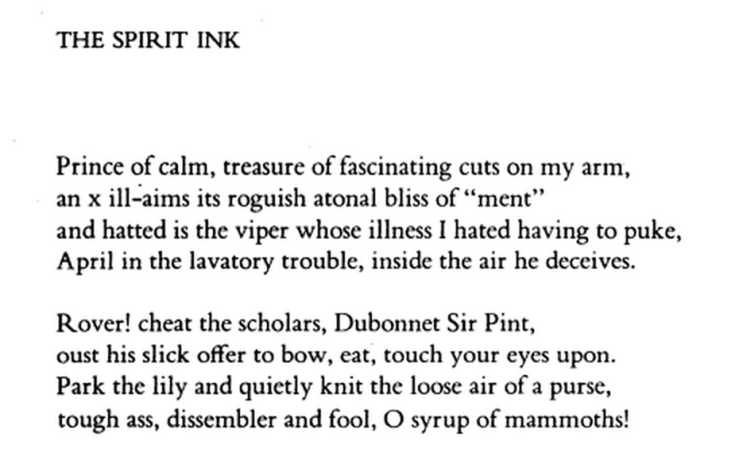
“The Spirit Ink” – Frank O’Hara

Frank O'Hara - The Spirit Ink

Jonah — Albert Pinkham Ryder

Voyage d’Hermès — Moebius

Moebius-VoyageHermes-9

Nila — Walton Ford

Nila Walton Ford

A conversation about New American Stories, an anthology curated by Ben Marcus (Part 1)

IMG_8017

Over the next few weeks, Biblioklept contributor Ryan Chang and I will be discussing New American Stories, an anthology edited—or maybe “curated” is the right word, although I’m not sure—by Ben Marcus.  

Edwin Turner: You got your copy of New American Stories? Let’s talk about the cover, the intro, and the first story,  Saïd Sayrafiezadeh’s “Paranoia.”

Ryan Chang: The cover and the introduction, and hence the context of the selections, elegantly mesh, which is more than I can say for 99% of covers. But I like anything that Mendelsund touches. It’s quiet, understated, but an excellent visual metaphor for what Marcus discusses in his introduction. The best part about this cover is the spot where part of the word “Stories” tries to mingle with the blocked passage from the introduction. The two don’t merely coexist, or mesh at all, but exist in this static conflict. It seems to be what Marcus wants most out of this new anthology; it occurs to me that I don’t have a lot of anthologies because a) I find them pretty boring, b) if it’s going to be an anthology, it’s going to be non-Anglo and -American — most of the time, the anthologies featuring these authors are already on my shelf in one way or another, and when I flip through them in the book store, the new context in which I find an author (say, someone like Richard Yates and Barry Hannah) isn’t new and exciting.


img_8019ET:
The cover is great—spine too. I agree with you that it’s “quiet”—although that’s a strange word, y’know, considering there’s so much going on there—so much text. But the book is handsome, and the cover presents as a baseline postmodern conundrum—
Where does the text begin? The authorship question is there too, on the second page, the “Also by Ben Marcus” page—as if Marcus were the author of the collection. Which in a way he kinda sorta is—the whole mixtape/DJ/curator thing—I mean he’s the author of the “anthology,” the tracklist, the occasion. I’m generally suspicious of the overuse of the term “curator,” but I think it’s ultimately more apt than editor. And Marcus spins a cool set. The book is a tasty gateway drug.

Anthologies were really important to me when I was 15, 16, 23…but now I tend to think of them entirely in teaching terms, often in very jaded terms, honestly. I would love to be able to look over the selections here with fresher eyes, if you know what I mean. As a freshman in college, I read the 1994 anthology The Vintage Book of Contemporary Short Stories, which Tobias Wolff edited. It would be impossible for me to overestimate the importance of that for me—it introduced me to Barry Hannah, Denis Johnson, Ann Beattie, Raymond Carver, and all these other writers who simply weren’t on my radar. In retrospect, I realize that that anthology represented a very particular kind of writing, but I think Wolff captured something of an era there.

RC: The posture of most anthologies is to celebrate/represent the coalesced spirit of a kind of writing, or an era. And I only realized this reading through Marcus’s introduction. He writes, “This anthology aims to present … a sampler of behaviors and feelings we can very nearly have only through reading. A sourcebook of compulsory emotions.” I really like this. The focus of NAS is on language — as is to be expected in Marcus’s hands — and not on, say, a particular identity, era, or whatever. This is an anthology about the breadth of styles and forms — which brings me back to the cover. It’s a really brilliant illustration of Marcus’s guiding aesthetic principle in his own work and here: the productive tension between form and content. The scope of selection is wide, and encouraging from someone known to run in “experimental circles.” This is an anthology about aesthetic modes, not being an American.

ET: Parts of Marcus’s introduction feel a little like a wide-eyed sermon for the choir to me, but maybe I’m being cynical. Maybe I want him to be cynical with me. We all know why we’re here; get to the stories. His riffs on language and what and why we (might) use language offer an adequate “defense” of the title/mission New Stories—but there’s not really an engagement with the American aspect there, which, I suppose, might have played into a deeply ideological thing, a statement thing. Maybe A Sourcebook of Compulsory Emotions is a much much better title. But—but! But that first story, Saïd Sayrafiezadeh’s “Paranoia”—that’s a very American story, or, rather, that’s a story about America: nationalism, capitalism, racism, militarism, football, a Fourth of July scene? Oh, and, paranoia.

RC: The first story is a great opener, I think. It’s a classic realist mode, which, after reading the introduction, will get the reader to think, “Will something weird happen?” The weirdness that happens is the “moral honesty” that Marcus talks about in the introduction: the weirdness is in how normal this story is. I say classic and realist and I mean that the plot is straightforward, its language is plain and mostly functional (that is, free of any acoustical poetic attention or syntactical destruction), and about, quote-unquote, real people. Here’s the weird, and it’s not even that weird: the small talk we take for granted — i.e., when we ask the other person how they’re doing; in “Paranoia,” it’s the weather — becomes this refrain for each section in the story; Sayrafiezadeh deftly shows that repetition — i.e. stability — gives only the illusion of comfort, and that comfort in almost-knowing the weather is a salve against the American reality: that the worst will always happen. I won’t give the story away for anyone reading this post, but “Paranoia” works on two really brilliant moves. They’re pretty obvious maneuvers, but I think it shows that even in a more straightforward form, if one hones in on the tension between form and content — that is, diction/syntax and images the former evokes — some affecting writing is bound to occur. The other way — a commitment to a particular position — political, moral or otherwise — comes off cheap and stale.

ET: “Paranoia” asks its reader to attend closely to diction: “That word’s not called for!” is a through-line in the story. I almost wrote tale for story there (attending to diction), but “Paranoia” is not a tale. There’s no neat bow at the end. It succeeds on vibe, on mood, on the evocation of menace its title promises.

RC: Yeah, you’re right — it demands that the reader divert their attention away from the televised bombings of “the peninsula,” and on the subversive, subdermal ways in which language organizes reality — exactly how Marcus describes language in his introduction.

ET: So…let’s read the last story together next, no? Then, you pick one that’s a reread for you, but not for me, and we’ll read it—and then I’ll do the same—pick a reread for me that you haven’t read? Good?

The Ogre Received Him As Civilly As An Ogre Can — Gustave Dore