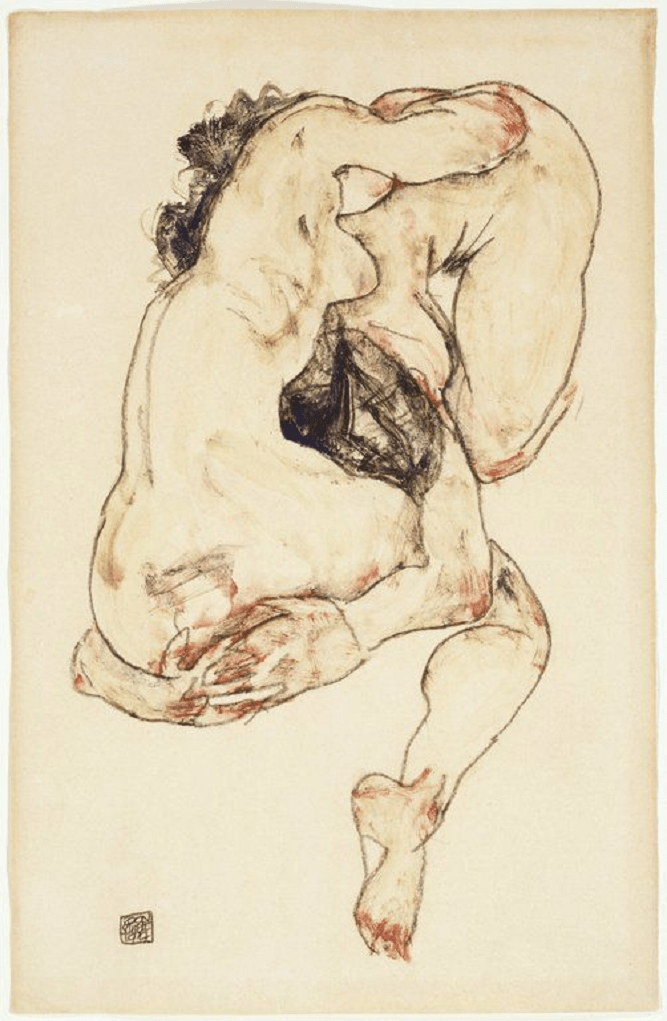
Ghost World — Bijou Karman

GhostWorldwebrescrop

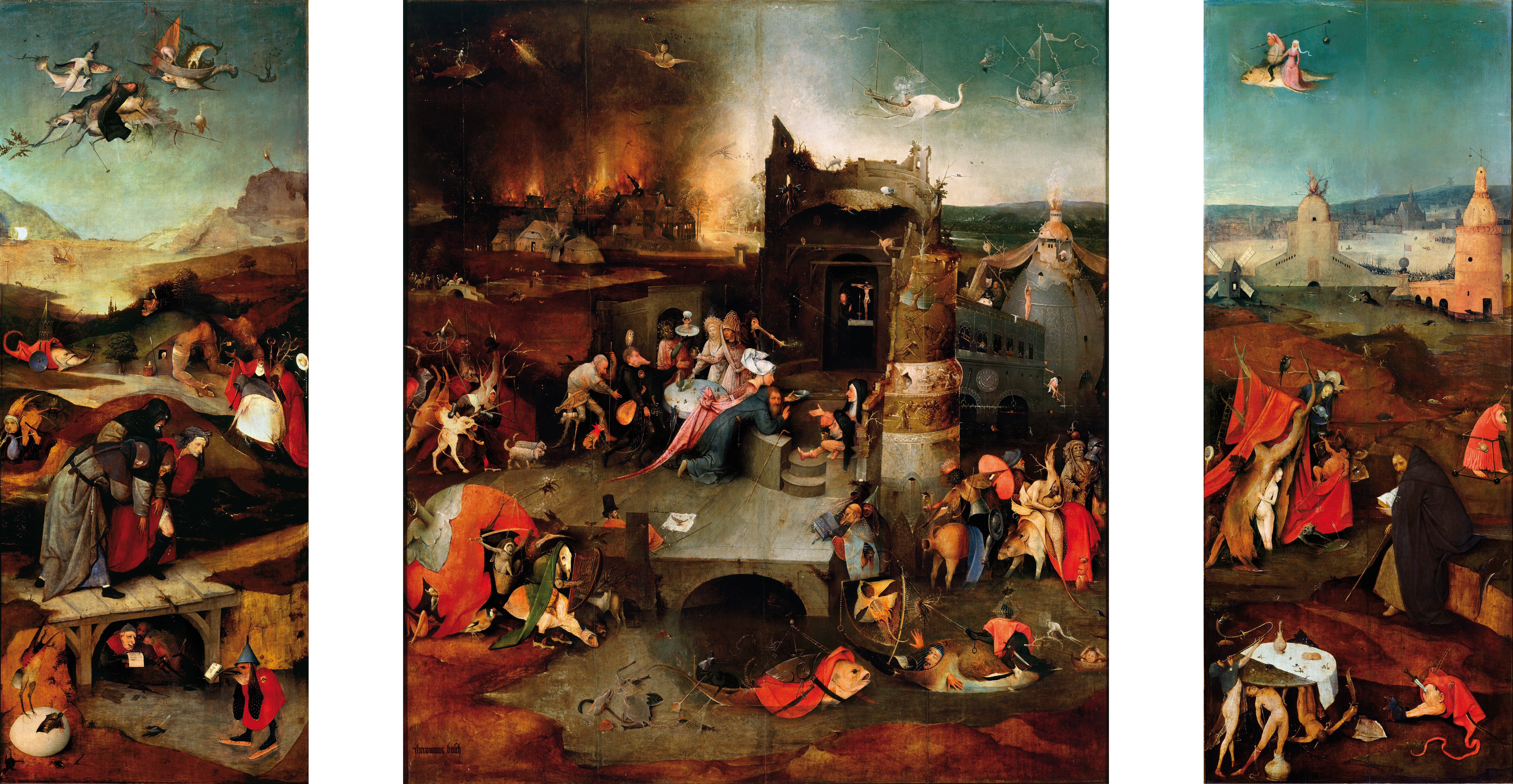
The Temptation of St. Anthony (Detail) — Hieronymus Bosch

20

I put down notes, I edit it. Writing disappears (Slavoj Žižek)

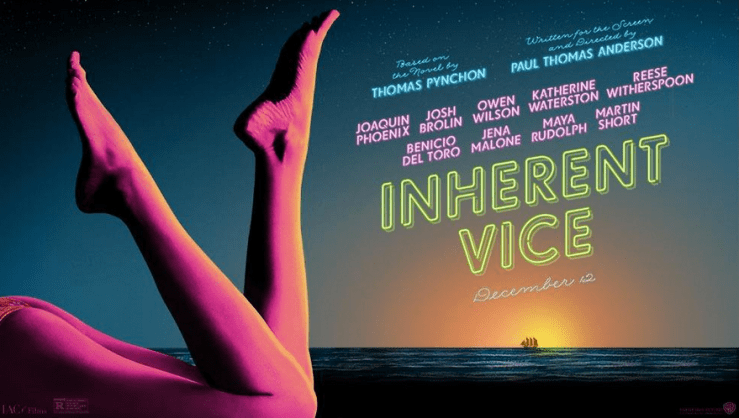
A few quick thoughts on Paul Thomas Anderson’s film Inherent Vice

IV POSTER HORIZONTAL

A. Let’s start with this: I need to see Paul Thomas Anderson’s film adaptation of Thomas Pynchon’s novel Inherent Vice again. Like, I’m compelled. 

B. But maybe a quick sketch before, no? Like, here in my office hours, before an afternoon class, when I should be shuffling through a few early papers—and, like away from the novel, which I’ve been rereading bits of? With the intention of re: point A seeing it again this weekend.

C. A claim, bold or otherwise: PTA’s film is better than Pynchon’s novel.

D. (Apples and oranges, bro, thou protest).

E. Okay so point C: What do I mean by better? I’m not really sure.

F. Maybe what I mean is: PTA slows down Pynchon’s novel. Expands the tension, the euphoria, the weirdness under the lines of dialogue.

G. (The film’s dialogue seems composed entirely from the text of the novel. Verbatim).

H. (But verbatim—how verbatim?: There are those gaps, those wonderful gaps that PTA fills—with color and smoke and sound and legs legs legs).

I. PTA also underlines plot connections for the reader, limning the paranoid contours that connect conspiracy-theory paranoia to vertically-integrated capitalism.

J. Okay, so point I: I’m not saying that clarifying the plot for the viewer (in a way that Pynchon arguably does not) makes the film, better—what I’m saying is that critics who contend the film fails to cohere are maybe missing the point.

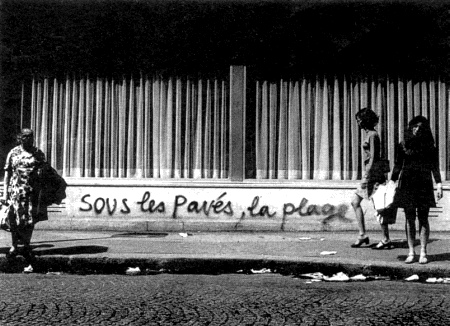
K. Here’s a point: Inherent Vice offers the most coherent and balanced conclusion of any of Paul Thomas Anderson’s film. The final act performs the spirit behind Pynchon’s letters, offering a vision of fraternal love, or of caritas, if not love—of partnerships, of how to feed the hungry, the famished. (Poor famished Bigfoot). Of resistance to the pavement.
tumblr_l13jimngTJ1qahhqf

L. Or, another way to flesh out point C, or revise point C:

PTA gives us—and by us let’s be clear I mean me—a new reading of the novel. (And of course not just PTA, but his marvelous ensemble, too marvelous to remark on at length here). PTA’s reading of Doc’s reunion with Shasta—surely one of the film’s most intense moments—is entirely different than my own reading, and rereading that scene after viewing, I feel like Anderson and Joaquin Phoenix and Katherine Waterston read the scene right, or read the scene, depict the scene, perform the scene in a way that illustrates the darkest strands of sunny smoky searing Inherent Vice.

M. The aforementioned scene—Doc reunited with one (sort of) partner—is balanced neatly against two other key scenes: The final scene between Doc and (sort of) partner Bigfoot, and the scene in which Doc restores Coy to his family. Brother’s keeper.

N. (Parenthetically: I fell in love with the movie in its opening minutes. In those opening drumbeats of Can’s “Vitamin C”).

O. So I have to rush to class and discuss Kate Chopin and not PTA’s Inherent Vice, which is what I’d rather riff on. Not really a world of inconvenience, but…(oh, and I love how that Pynchonian byword echoed through the film).

P. End on P for Pynchon and Paul TA and Promise: Promise to rewatch, reread, rewrite.

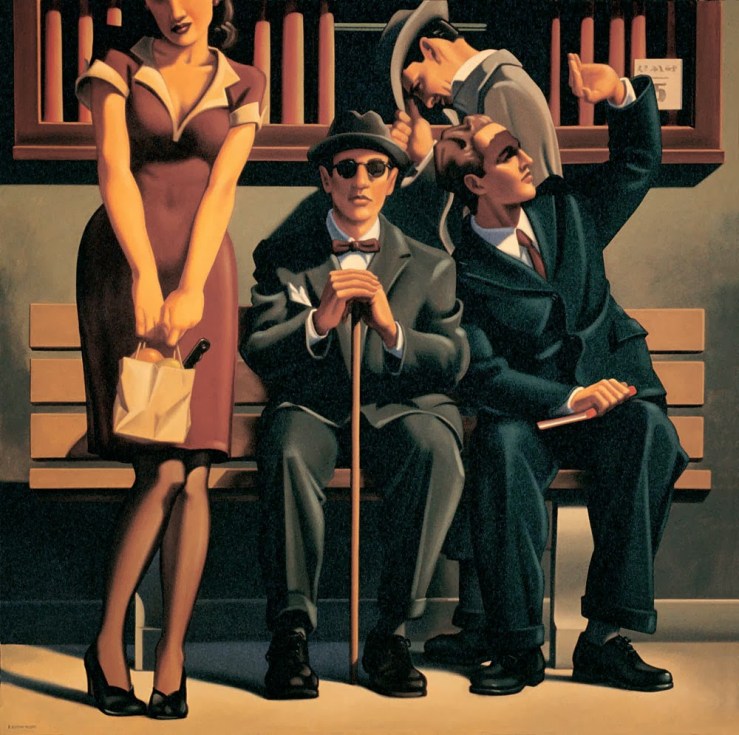
Such a Sight — Kenton Nelson

P-43

Darkroom Scene, Boyhood

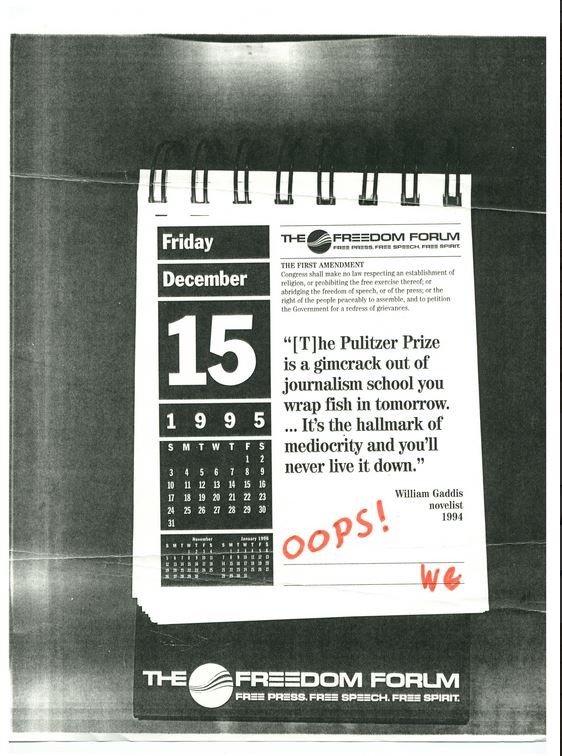
OOPS! (William Gaddis)

wg

Another little nugget from Washington University’s Modern Literature collection. Their description:

The Freedom Forum calendar showing a quote concerning the Pulitzer Prize by William Gaddis on December 15, 1995. Includes autograph commentary by Gaddis.

List with No Name #51

  1. The Master
  2. Inherent Vice
  3. Boogie Nights
  4. There Will Be Blood
  5. Punch Drunk Love
  6. Magnolia
  7. Hard Eight

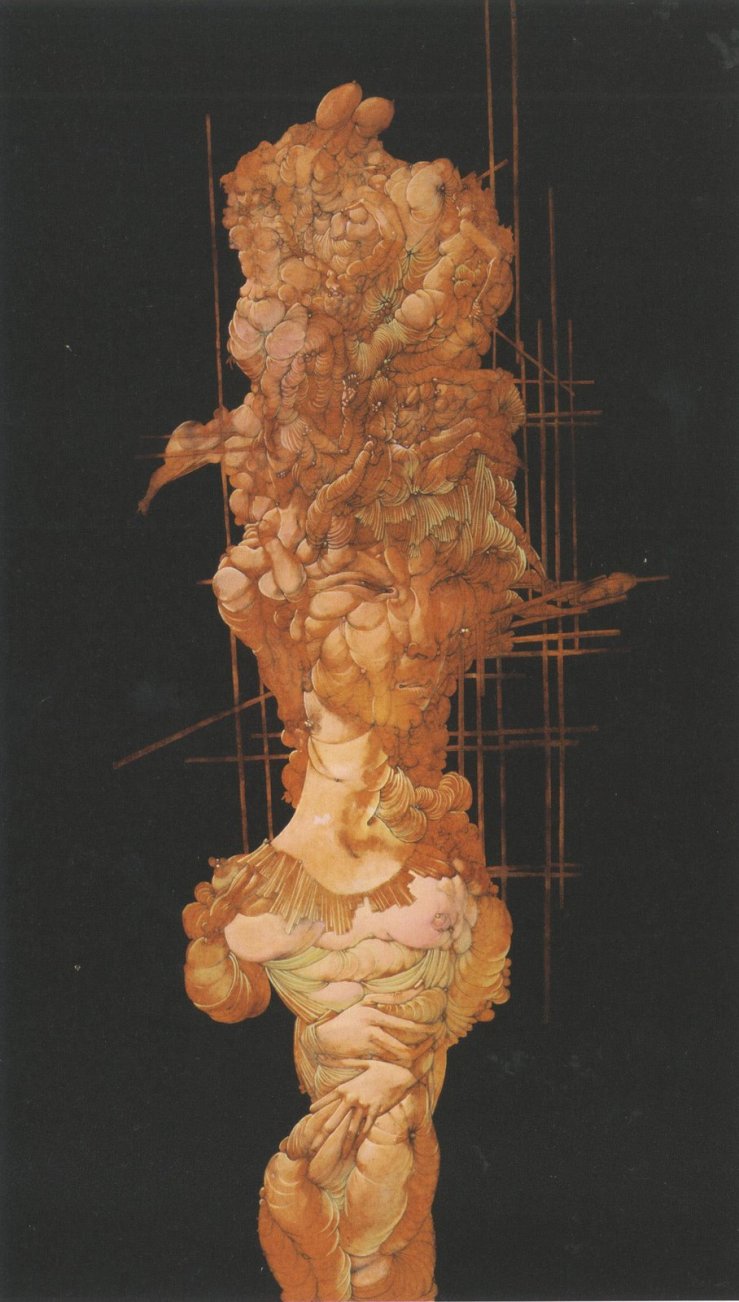
A Thousand Girls — Hans Bellmer

thousand girls bellmer

Fugue — George Boorujy

fugue

George Boorujy’s work is on exhibit in The Baker Museum in Naples, Florida, through the end of this week.

Read my interview with Boorujy here.

“All art etc. etc.”

The true paranoid for whom all is organized in spheres joyful or threatening (Pynchon’s The Crying of Lot 49)

“Please,” the sailor said. “Go on now. You don’t want to stay here.” She looked in her purse, found a ten and a single, gave him the ten. “I’ll spend it on booze,” he said.
“Remember your friends,” said the arthritic, watching the ten.
“Bitch,” said the sailor. “Why didn’t you wait till he was gone?”
Oedipa watched him make adjustments so he’d fit easier against the mattress. That stuffed memory. Register A . . .
“Give me a cigarette, Ramírez,” the sailor said. “I know you got one.”
Would it be today? “Ramírez,” she cried. The arthritic looked around on his rusty neck. “He’s going to die,” she said.
“Who isn’t?” said Ramírez.
She remembered John Nefastis, talking about his Machine, and massive destructions of information. So when this mattress flared up around the sailor, in his Viking’s funeral: the stored, coded years of uselessness, early death, self-harrowing, the sure decay of hope, the set of all men who had slept on it, whatever their lives had been, would truly cease to be, forever, when the mattress burned. She stared at it in wonder. It was as if she had just discovered the irreversible process. It astonished her to think that so much could be lost, even the quantity of hallucination belonging just to the sailor that the world would bear no further trace of. She knew, because she had held him, that he suffered DT’s. Behind the initials was a metaphor, a delirium tremens, a trembling unfurrowing of the mind’s plowshare. The saint whose water can light lamps, the clairvoyant whose lapse in recall is the breath of God, the true paranoid for whom all is organized in spheres joyful or threatening about the central pulse of himself, the dreamer whose puns probe ancient fetid shafts and tunnels of truth all act in the same special relevance to the word, or whatever it is the word is there, buffering, to protect us from. The act of metaphor then was a thrust at truth and a lie, depending where you were: inside, safe, or outside, lost. Oedipa did not know where she was. Trembling, unfurrowed, she slipped sidewise, screeching back across grooves of years, to hear again the earnest, high voice of her second or third collegiate love Ray Glozing bitching among “uhs” and the syncopated tonguing of a cavity, about his freshman calculus; “dt,” God help this old tattooed man, meant also a time differential, a vanishingly small instant in which change had to be confronted at last for what it was, where it could no longer disguise itself as something innocuous like an average rate; where velocity dwelled in the projectile though the projectile be frozen in midflight, where death dwelled in the cell though the cell be looked in on at its most quick. She knew that the sailor had seen worlds no other man had seen if only because there was that high magic to low puns, because DT’s must give access to dt’s of spectra beyond the known sun, music made purely of Antarctic loneliness and fright. But nothing she knew of would preserve them, or him.

From Thomas Pynchon’s novel The Crying of Lot 49.

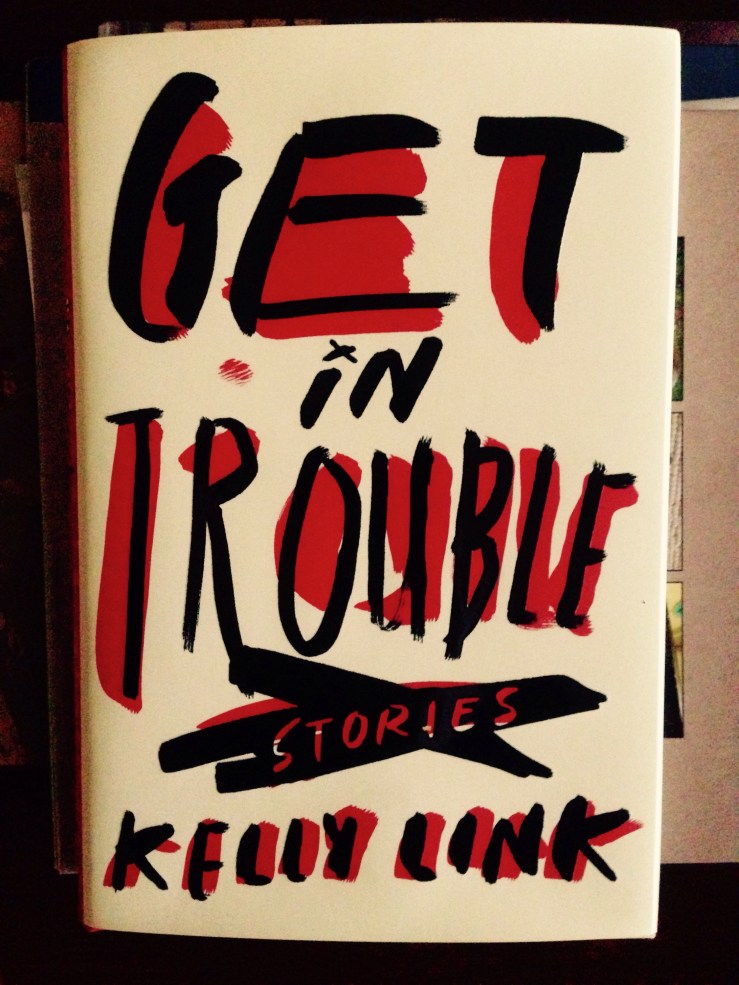
Kelly Link’s Get In Trouble (Book acquired, 1.14.2015)

IMG_4853

Kelly Link’s new collection Get In Trouble is forthcoming from Random House in hardback. Their blurb:

She has been hailed by Michael Chabon as “the most darkly playful voice in American fiction” and by Neil Gaiman as “a national treasure.” Now Kelly Link’s eagerly awaited new collection—her first for adult readers in a decade—proves indelibly that this bewitchingly original writer is among the finest we have.

Link has won an ardent following for her ability, with each new short story, to take readers deeply into an unforgettable, brilliantly constructed fictional universe. The nine exquisite examples in this collection show her in full command of her formidable powers. In “The Summer People,” a young girl in rural North Carolina serves as uneasy caretaker to the mysterious, never-quite-glimpsed visitors who inhabit the cottage behind her house. In “I Can See Right Through You,” a middle-aged movie star makes a disturbing trip to the Florida swamp where his former on- and off-screen love interest is shooting a ghost-hunting reality show. In “The New Boyfriend,” a suburban slumber party takes an unusual turn, and a teenage friendship is tested, when the spoiled birthday girl opens her big present: a life-size animated doll.

Hurricanes, astronauts, evil twins, bootleggers, Ouija boards, iguanas, The Wizard of Oz, superheroes, the Pyramids . . . These are just some of the talismans of an imagination as capacious and as full of wonder as that of any writer today. But as fantastical as these stories can be, they are always grounded by sly humor and an innate generosity of feeling for the frailty—and the hidden strengths—of human beings. In Get in Trouble, this one-of-a-kind talent expands the boundaries of what short fiction can do

The Auditor — Adrian Gottlieb

2_The_Auditor

The Choice of Paris — Ernst Ludwig Kirchner

To give the spirit flesh. The words, who cares? (Thomas Pynchon’s The Crying of Lot 49)

“You don’t understand,” getting mad. “You guys, you’re like Puritans are about the Bible. So hung up with words, words. You know where that play exists, not in that file cabinet, not in any paperback you’re looking for, but—” a hand emerged from the veil of shower-steam to indicate his suspended head—“in here. That’s what I’m for. To give the spirit flesh. The words, who cares? They’re rote noises to hold line bashes with, to get past the bone barriers around an actor’s memory, right? But the reality is in this head. Mine. I’m the projector at the planetarium, all the closed little universe visible in the circle of that stage is coming out of my mouth, eyes, sometimes other orifices also.”

A favorite little riff from Pynchon’s novel The Crying of Lot 49.