Splintering — Atelier Olschinsky

Continue reading “Splintering — Atelier Olschinsky”

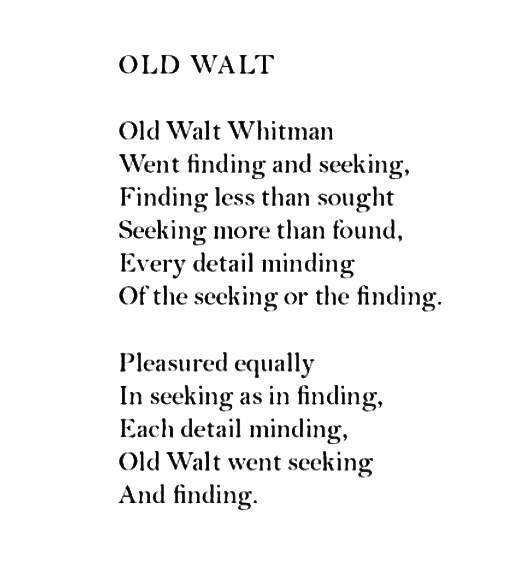
“Old Walt” — Langston Hughes

20140707-173542-63342149.jpg

The Embrace — Egon Schiele

Miruna, A Tale (Book Acquired, 6.24.2014)

20140707-150427-54267363.jpg

I had hoped to read Bogdan Suceavă’s Miruna, A Tale (translated from the Romanian by Alistair Ian Blyth and new from Twisted Spoon Press) over the July 4th weekend—it was the only physical book I took with me out of town—but alas swimming and sun and sand and booze and food and fireworks &c. blocked me.

Very cool little book—and beautiful. (My iPhone pic does no justice to the simple, gorgeous design).

Publisher’s blurb; more to come:

A village in the Carpathian Mountains, one of the last outposts of pre-modernity, an elderly man, sensing his time is short, tells his young grandchildren tales that weave a family saga covering the real history from the 1870s to the time of the telling. One of the children, now grown, is the re-teller of these tales, while the other, Miruna, perhaps has the gift of second sight. Incorporating elements of fantasy common to the storytelling traditions of the Balkans, historical characters mix with imaginary beings in a landscape that recreates the world of an isolated village bearing an unusual name : Evil Vale. Ancestors are talked about as if ancient heroes, and the novel shifts focus between telling about their lives and the storyteller’s own experiences through the prism of the village during both world wars. As past tragedies are presented in a way that the grandchildren might picture and remember them, the novel has been called a kind of meta-fairy tale, a story about the lost tradition of oral storytelling itself, the conveyance of a family history from one generation to the next via the spoken word. With the death of the grandfather, the children realize that confronted with the ubiquitous hand of modernity, which the village has managed to frustrate over a succession of regimes, a whole world of stories and the entire memory of a family and of its idiosyncratic way of life in the village might have been irrevocably lost.

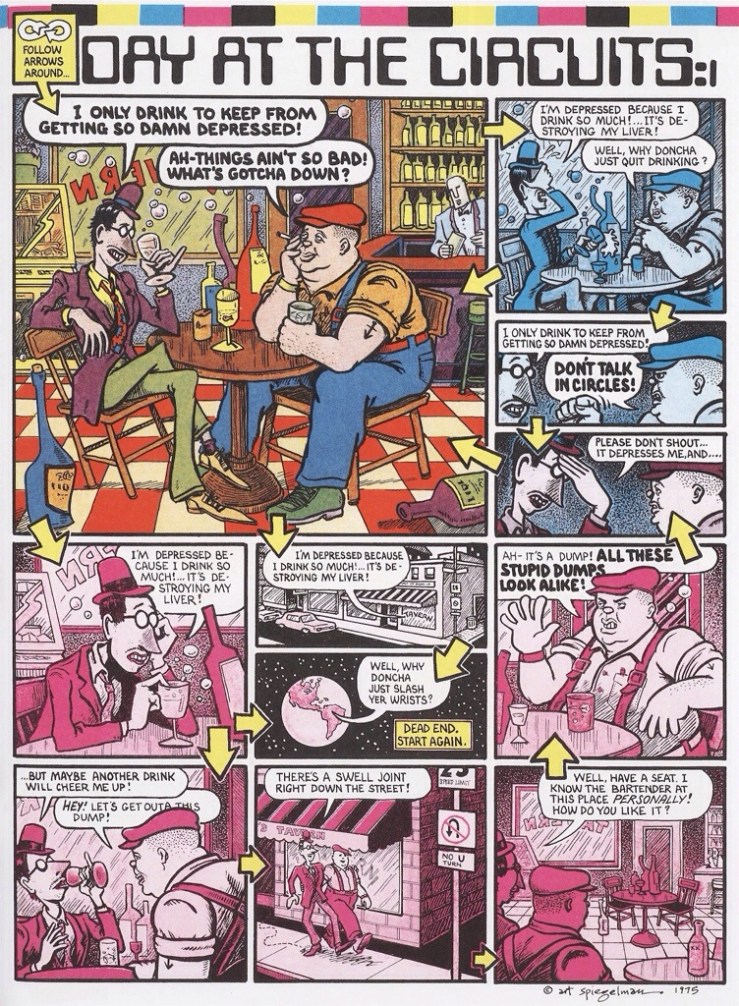
“Day at the Circuits” — Art Spiegelman

20140706-212037-76837918.jpg

Criticise with taste for a criterion, and not tongue (Faulkner)

Live and let live; criticise with taste for a criterion, and not tongue. The English review criticises the book, the American the author. The American critic foists upon the reading public a distorted buffoon within whose shadow the titles of sundry uncut volumes vaguely lurk. Surely, if there are two professions in which there should be no professional jealousy, they are prostitution and literature.

As it is, competition becomes cutthroat. The writer cannot begin to compete with the critic, he is too busy writing and also he is organically unfitted for the contest. And if he had time and were properly armed, it would be unfair. The critic, once he becomes a habit with his readers, is considered infallible by them; and his contact with them is direct enough to allow him always the last word. And with the American the last word carries weight, is culminative. Probably because it gives him a chance to talk some himself.

From “On Criticism,” a 1925 essay by William Faulkner. Republished in Essays, Speeches & Public Letters.

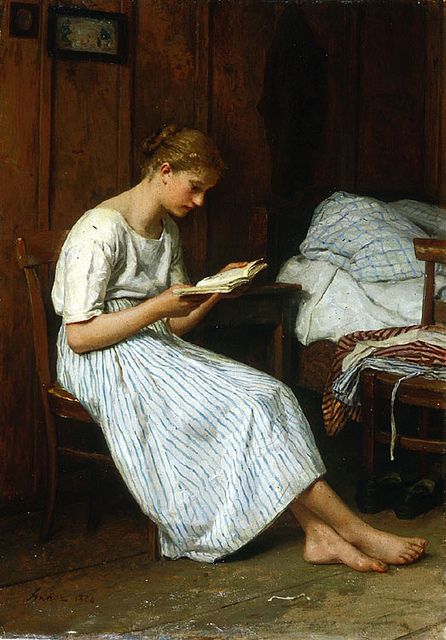
A Gotthelf Reader — Albert Anker

readergot

The BFG — Quentin Blake

20140706-210704-76024020.jpg

Desert Island (Cowboy Henk)

cowboy_henk_comics_34

Bromelia (Guadeloupe) — Franz Gertsch

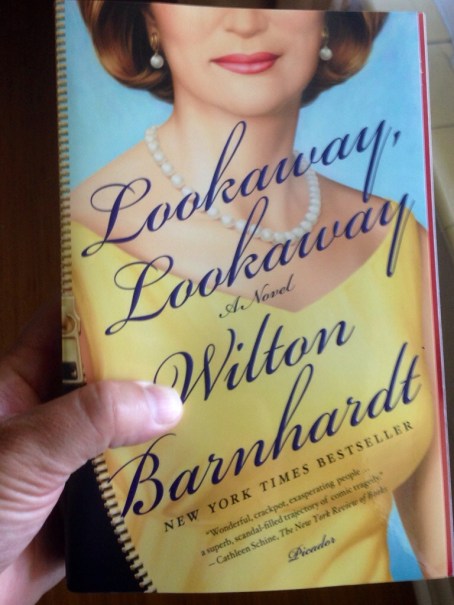
Lookaway, Lookaway (Book Acquired, 6.25.2014)

20140628-161810-58690223.jpg

Wilton Barnhardt’s Lookaway, Lookaway is now available in trade paperback from Picador. Their blurb:

Steely and formidable, Jerene Jarvis Johnston sits near the apex of society in contemporary Charlotte, North Carolina, where old Southern money and older family skeletons meet the new wealth of bankers, land speculators, and social climbers. Jerene and her Civil War reenactor husband, Duke, have four adult children—sexually reckless real estate broker Annie; earnest minister Bo; gay-but-don’t-tell-anyone Joshua; and naive, impressionable college freshman Jerilyn. Jerene’s brother, Gaston, is an infamously dissolute novelist and gossip who knows her secrets and Duke’s; while her sister, Dillard, is a reclusive prisoner of her own unfortunate choices. When a scandal threatens the Johnston family’s status and dwindling finances, Jerene swings into action…and she will stop at nothing to keep what she has and preserve her legacy. Wilton Barnhardt’sLookaway, Lookaway is a headlong, hilarious narrative of a family coming apart on the edge of the old South and the new, and an unforgettable woman striving to hold it together.


My Birth — Frida Kahlo

“The Toll-Gatherer’s Day” — Nathaniel Hawthorne

“The Toll-Gatherer’s Day”

by

Nathaniel Hawthorne

Methinks, for a person whose instinct bids him rather to pore over the current of life than to plunge into its tumultuous waves, no undesirable retreat were a toll-house beside some thronged thoroughfare of the land. In youth, perhaps, it is good for the observer to run about the earth, to leave the track of his footsteps far and wide, to mingle himself with the action of numberless vicissitudes, and, finally, in some calm solitude to feed a musing spirit on all that he has seen and felt. But there are natures too indolent or too sensitive to endure the dust, the sunshine or the rain, the turmoil of moral and physical elements, to which all the wayfarers of the world expose themselves. For such a man how pleasant a miracle could life be made to roll its variegated length by the threshold of his own hermitage, and the great globe, as it were, perform its revolutions and shift its thousand scenes before his eyes without whirling him onward in its course! If any mortal be favored with a lot analogous to this, it is the toll-gatherer. So, at least, have I often fancied while lounging on a bench at the door of a small square edifice which stands between shore and shore in the midst of a long bridge. Beneath the timbers ebbs and flows an arm of the sea, while above, like the life-blood through a great artery, the travel of the north and east is continually throbbing. Sitting on the aforesaid bench, I amuse myself with a conception, illustrated by numerous pencil-sketches in the air, of the toll-gatherer’s day. Continue reading ““The Toll-Gatherer’s Day” — Nathaniel Hawthorne”

On the Beach — Edouard Manet

Stroszek — Werner Herzog (Full Film)

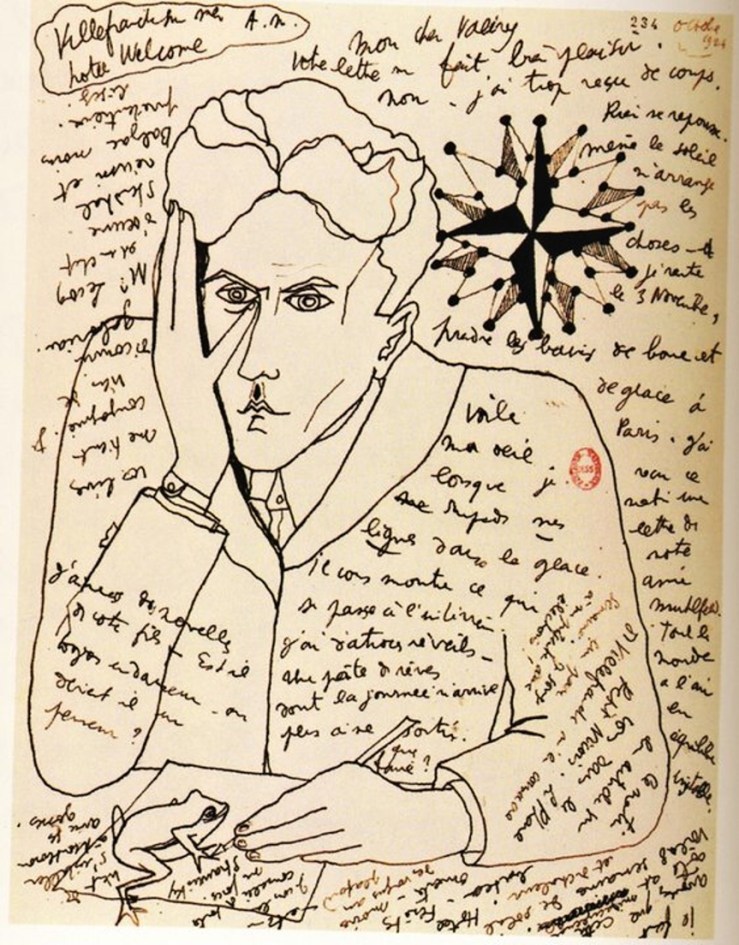
Self-Portrait (In a letter to Paul Valéry) — Jean Cocteau

jc

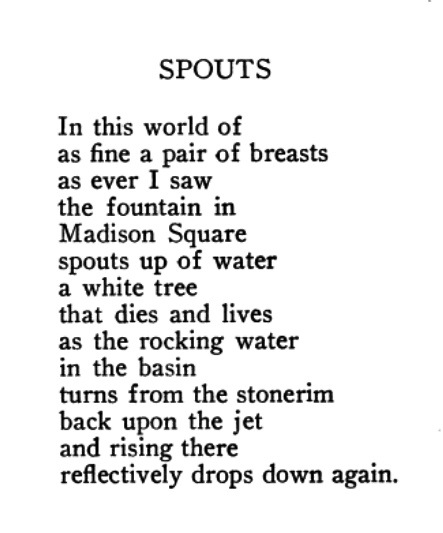
“Spouts” — William Carlos Williams

20140627-095521-35721000.jpg