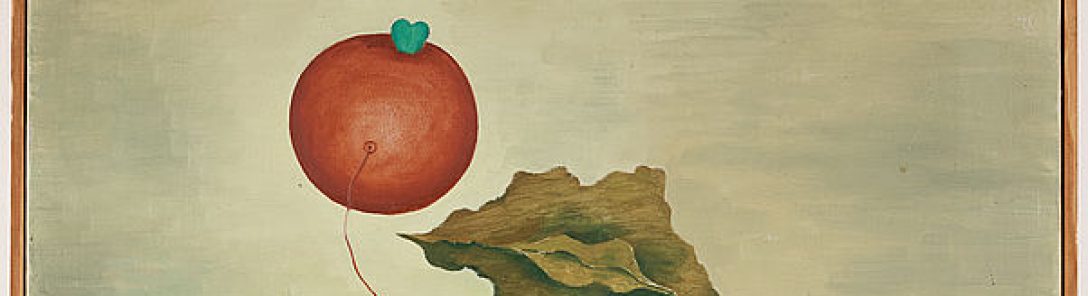
Eudora Welty — Barry Moser

moser-welty

Hell. / I’m going.

hell

A Study of ‘Katia Reading’ — Hisaji Hara

Mares and Foals — George Stubbs

Thing — Jack Kirby

thing

“Five common methods by which sex gains an entrance into literature” (William H. Gass)

So I shall, keeping one in each of my four pockets while one is in my mouth, describe five common methods by which sex gains an entrance into literature . . . as through French doors and jimmied windows thieves break in upon our dreams to rape our women, steal our power tools, and vandalize our dreams. The commonest, of course, is the most brazen: the direct depiction of sexual material— thoughts, acts, wishes; the second involves the use of sexual words of various sorts, and I shall pour one of each vile kind into the appropriate porches of your ears , for pronounc-ing and praising print to the ear is what the decently encouraged eye does happily. The third can be considered, in a sense, the very heart of indirection, and thus the essence of the artist’s art— displacement: the passage of the mind with all its blue elastic ditty bags and airline luggage f r o m steamy sexual scenes and sweaty bodies to bedrooms with their bedsteads, nightstands, water-glasses, manuals of instruction, thence to sheets and pillowcases, hence to dents in these, and creases, stains and other cries of passion which have left their prints , and finally to the painted chalk-white oriental face of amorously handled air and mountains,, lewdly entered lakes. The fourth I shall simply refer to now as the skyblue eye (somewhere, it seems to me, there should be a brief pinch of suspense), and the fifth, well, it’s really what I’m running into all my inks about, so I had better mention it: the use of language like a lover . . . not the language of love, but the love of language, not matter, but meaning, not what the tongue touches, but what it forms, not lips and nipples, but nouns and verbs.

From William H. Gass’s essay-novel On Being Blue: A Philosophical Inquiry.

Dreadful privation. / Merely smile.

dreadful

Morning Sun — Edward Hopper

The Painter in his Workshop — Gerrit Dou

The Seventh Continent — Michael Haneke (Full Film)


Foolishness of the Fools — Francisco Goya

David Lynch Interview from 1979

“I Love This White and Slender Body” — Heinrich Heine

Capture

A Study of ‘The Room’ — Hisaji Hara

“Lily Daw and the Three Ladies” — Eudora Welty

“Lily Daw and the Three Ladies”

by Eudora Welty

Mrs Watts and Mrs Carson were both in the post office in Victory when the letter came from the Ellisville Institute for the Feeble Minded of Mississippi. Aimee Slocum, with her hand still full of mail, ran out in front and handed it straight to Mrs Watts, and they all three read it together. Mrs Watts held it taut between her pink hands, and Mrs Carson underscored each line slowly with her thimbled finger. Everybody else in the post office wondered what was up now.

“What will Lily say,” beamed Mrs Carson at last, “when we tell her we’re sending her to Ellisville!”

“She’ll be tickled to death,” said Mrs Watts, and added in a guttural voice to a deaf lady, “Lily Daw’s getting in at Ellisville!”

“Don’t you all dare go off and tell Lily without me!” called Aimee Slocum, trotting back to finish putting up the mail.

“Do you suppose they’ll look after her down there?” Mrs Carson began to carry on a conversation with a group of Baptist ladies waiting in the post office. She was the Baptist preacher’s wife.

“I’ve always heard it was lovely down there, but crowded,” said one.

“Lily lets people walk over her so,” said another.

“Last night at the tent show—-” said another, and then popped her hand over her mouth.

“Don’t mind me, I know there are such things in the world,” said Mrs Carson, looking down and fingering the tape measure which hung over her bosom.

“Oh, Mrs Carson. Well, anyway, last night at the tent show, why, the man was just before making Lily buy a ticket to get in.”

“A ticket!”

“Till my husband went up and explained she wasn’t bright, and so did everybody else.”

The ladies all clucked their tongues.

“Oh, it was a very nice show,” said the lady who had gone. “And Lily acted so nice. She was a perfect lady–just set in her seat and stared.”

“Oh, she can be a lady–she can be,” said Mrs Carson, shaking her head and turning her eyes up. “That’s just what breaks your heart.”

“Yes’m, she kept her eyes on–what’s that thing makes all the commotion?–the xylophone,” said the lady. “Didn’t turn her head to the right or to the left the whole time. Set in front of me.”

“The point is, what did she do after the show?” asked Mrs Watts practically. “Lily has gotten so she is very mature for her age.”

“Oh, Etta!” protested Mrs Carson, looking at her wildly for a moment.

“And that’s how come we are sending her to Ellisville,” finished Mrs Watts.

“I’m ready, you all,” said Aimee Slocum, running out with white powder all over her face. “Mail’s up. I don’t know how good it’s up.”

“Well, of course, I do hope it’s for the best,” said several of the other ladies. They did not go at once to take their mail out of their boxes; they felt a little left out.

The three women stood at the foot of the water tank.

“To find Lily is a different thing,” said Aimee Slocum.

“Where in the wide world do you suppose she’d be?” It was Mrs Watts who was carrying the letter.

“I don’t see a sign of her either on this side of the street or on the other side,” Mrs Carson declared as they walked along.

Ed Newton was stringing Redbird school tablets on the wire across the store. Continue reading ““Lily Daw and the Three Ladies” — Eudora Welty”

Mrs. Carl Meyer and Her Children — John Singer Sargent