Mystic Allegory or Tea — Maurice Denis

The Thin Blue Line — Errol Morris (Full Documentary)

The Pop Art of Goya — Van Arno

GoyaSM

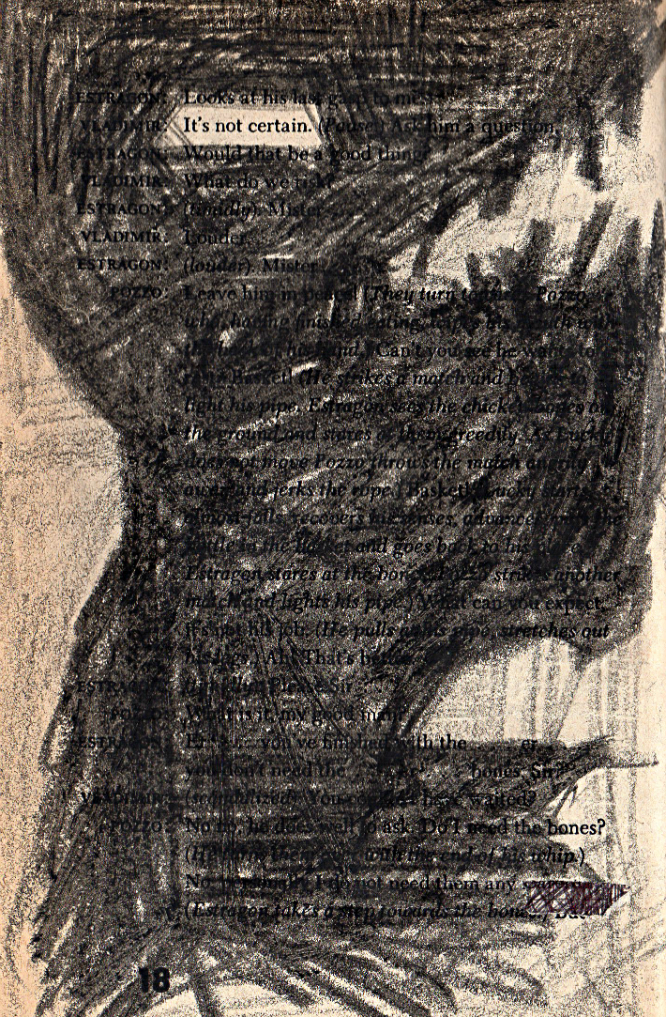
Men are beasts!

beasts

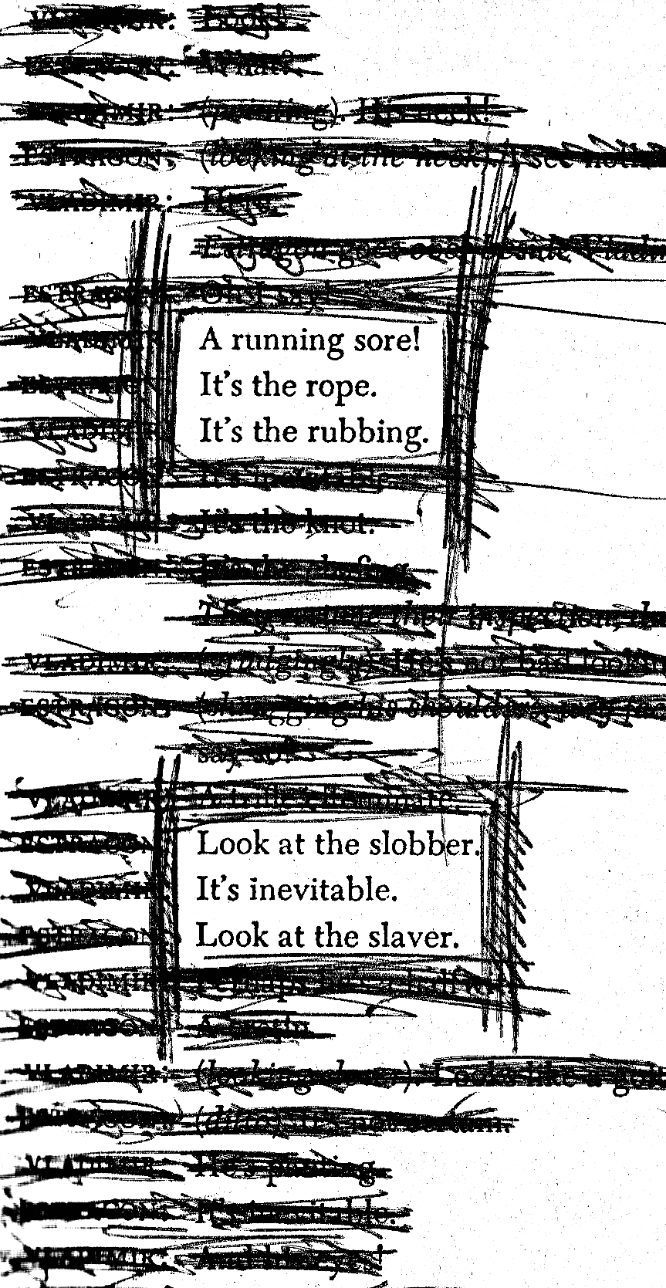
Charming spot. / Inspiring prospects.

charm

A Comet’s Journey — J.J. Grandville

a-comets-journey-by-j-j-grandville-793x1024

“Endicott and the Red Cross” — Nathaniel Hawthorne

“Endicott and the Red Cross”

by

Nathaniel Hawthorne

At noon of an autumnal day, more than two centuries ago, the English colors were displayed by the standard-bearer of the Salem trainband, which had mustered for martial exercise under the orders of John Endicott. It was a period, when the religious exiles were accustomed often to buckle on their armour, and practice the handling of their weapons of war. Since the first settlement of New England, its prospects had never been so dismal. The dissensions between Charles the First and his subjects were then, and for several years afterwards, confined to the floor of Parliament. The measures of the King and ministry were rendered more tyrannically violent by an opposition, which had not yet acquired sufficient confidence in its own strength, to resist royal injustice with the sword. The bigoted and haughty primate, Laud, Archbishop of Canterbury, controlled the religious affairs of the realm, and was consequently invested with powers which might have wrought the utter ruin of the two Puritan colonies, Plymouth and Massachusetts. There is evidence on record, that our forefathers perceived their danger, but were resolved that their infant country should not fall without a struggle, even beneath the giant strength of the King’s right arm.

Such was the aspect of the times, when the folds of the English banner, with the Red Cross in its field, were flung out over a company of Puritans. Their leader, the famous Endicott, was a man of stern and resolute countenance, the effect of which was heightened by a grizzled beard that swept the upper portion of his breastplate. This piece of armour was so highly polished, that the whole surrounding scene had its image in the glittering steel. The central object, in the mirrored picture, was an edifice of humble architecture, with neither steeple nor bell to proclaim it,–what nevertheless it was,–the house of prayer. A token of the perils of the wilderness was seen in the grim head of a wolf, which had just been slain within the precincts of the town, and, according to the regular mode of claiming the bounty, was nailed on the porch of the meetinghouse. The blood was still plashing on the door-step. There happened to be visible, at the same noontide hour, so many other characteristics of the times and manners of the Puritans, that we must endeavour to represent them in a sketch, though far less vividly than they were reflected in the polished breastplate of John Endicott.
Continue reading ““Endicott and the Red Cross” — Nathaniel Hawthorne”

Portrait of a Young Lady — Alfred Stevens

“Suzanne” (Live) — Nina Simone

“Finally, feverishly, I read this book that I would love to have written” (Vollmann’s Europe Central in Binet’s HHhH)

I, too, am transfixed—because I’m reading Europe Central by William T. Vollmann, which has just appeared in French. Finally, feverishly, I read this book that I would love to have written, and I wonder, reading the endless first chapter, how long he’ll keep it up, this style, this incredible tone. In fact, it lasts only eight pages, but those eight pages are magical, with phrases streaming past as in a dream, and I understand nothing, and understand everything. This is perhaps the first time that the voice of history has resounded so perfectly, and I am struck by this revelation: history is a prophet who says “We.” The first chapter is entitled “Steel in Motion,” and I read: “In a moment steel will begin to move, slowly at first, like troop trains pulling out of their stations, then more quickly and ubiquitously, the square crowds of steel-helmed men moving forward, flanked by rows of shiny planes; then tanks, planes and other projectiles will accelerate beyond recall.” And, further on: “Serving the sleepwalker’s rapture, Göring promises that five hundred more rocket-powered planes will be ready within a lightning-flash. Then he runs out for a tryst with the film star Lida Baarova.” The Czech. When I quote an author, I must be careful to cut my quotations every seven lines. No longer than seven lines. Like spies on the telephone: no more than thirty seconds, so they can’t track you down. “In Moscow, Marshal Tukhachevsky announces that operations in a future war will unfold as broad maneuver undertakings on a massive scale. He’ll be shot right away. And Europe Central’s ministers, who will also be shot, appear on balconies supported by nude marble girls, where they utter dreamy speeches, all the while listening for the ring of the telephone.” In the newspaper, somebody explains to me that this is an account of “slow-burning intensity,” a novel that is “more fantastical than historical,” the reading of which “requires a psychoanalytic listening.” I understand. I will remember. So … where was I?

From Laurent Binet’s novel HHhH.

I need to slam out a review of HHhH, which I loved.

People are bloody ignorant apes.

20140414-140032.jpg

Sad Teenagers Who Won’t Stay Dead (Charles Burns)

burnny

The Simpsons Parodies Mad Men’s Cryptic Teasers

St. Anthony with a Donor — Mabuse

Don Quixote — Gustave Doré

The Kindly Ones is simply “Houellebecq does Nazism” (From Laurent Binet’s HHhH)

A poster on an Internet forum expresses the opinion that Max Aue, Jonathan Littell’s protagonist in The Kindly Ones, “rings true because he is the mirror of his age.” What? No! He rings true (for certain, easily duped readers) because he is the mirror of our age: a postmodern nihilist, essentially. At no moment in the novel is it suggested that this character believes in Nazism. On the contrary, he displays an often critical detachment toward National Socialist doctrine—and in that sense, he can hardly be said to reflect the delirious fanaticism prevalent in his time. On the other hand, this detachment, this blasé attitude toward everything, this permanent malaise, this taste for philosophizing, this unspoken amorality, this morose sadism, and this terrible sexual frustration that constantly twists his guts … but of course! How did I not see it before? Suddenly, everything is clear. The Kindly Ones is simply “Houellebecq does Nazism.”

From Laurent Binet’s novel HHhH; English Translation by Sam Taylor.

Enjoyed the novel tremendously.

I’m not sure if Binet’s remarks (or, Binet’s narrator, who is Binet-performing-author-as-narrator) are exactly a literary dis or not (I’m pretty sure he’s dissing Littell, but unsure how Houellebecq fits in there, or what).

(My thoughts on The Kindly Ones; my thoughts on Houellebecq’s The Elementary Particles).

Black Tegu Lizard — Maria Sibylla Merian