“Soon-To-Be Innocent Fun” — Arthur Russell

“…to have a soul for stones, metals, water and plants” (Passage from Büchner’s Lenz)

The following morning he came down, he very calmly told Oberlin how his mother had appeared to him in the night; she had emerged from the dark churchyard wall in a white dress and had a white and a red rose pinned to her chest; she had then sunk into a corner and the roses had slowly grown over her, she had no doubt died; he had felt quite calm about this. Oberlin then remarked that when his father died he was alone in the fields and then heard a voice so that he knew his father was dead when he came back home this was indeed so. This led them further, Oberlin spoke of the mountain people, of girls who could detect water and metal under the ground, of men who had been possessed on certain peaks and wrestled with spirits; he also told of how he had once been transported into a state of somnambulism upon looking into the empty depths of a mountain pool. Lenz told him that the spirit of water had come over him, that he had then experienced something of its special essence. He continued on: the simplest, purest creatures were closest to elemental nature, the more refined a man’s mental life and feelings, the more blunted this elemental sense became; he did not consider it to be a higher plane, it lacked the requisite self-sufficiency, but he believed it must be an endless delight to feel moved by the unique life of each and every form; to have a soul for stones, metals, water and plants; to take in every being in nature into oneself as in a dream, as flowers do with air at every waxing of the moon.

From Georg Büchner’s Lenz, in translation by Richard Sieburth. Lenz (1836) is a novella or story or fragment based on the diary of J.F. Oberlin, who briefly took care of Jakob Lenz, a playwright suffering  from schizophrenia.

A Short Bright Flash (Book Acquired, 5.15.2013)

20130521-093914.jpg

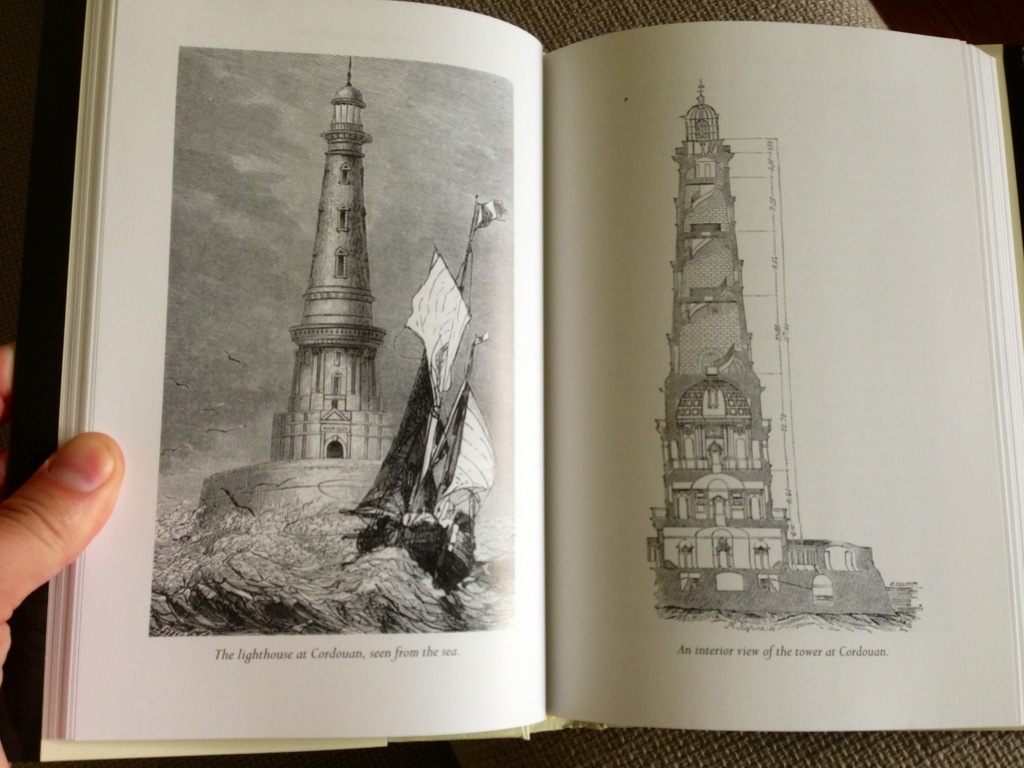
Theresa Levitt’s A Short Bright Flash, new in hardback from WW Norton, traces the story of scientist and engineer Augustin Fresnel, a major contributor to wave optics. Fresnel originated a lens that lighthouses adopted; the Fresnel lens is still used today.

Levitt’s book focuses on Fresnel’s mission to change some of the fundamental ways lighthouses operated and the legacy of the Fresnel lens. The book is handsome an illustrated in glorious black and white:

20130521-093919.jpg

Here’s the publisher’s blurb:

How a scientific outsider came up with a revolutionary theory of light and saved untold numbers of lives.

Augustin Fresnel (1788–1827) shocked the scientific elite with his unique understanding of the physics of light. The lens he invented was a brilliant feat of engineering that made lighthouses blaze many times brighter, farther, and more efficiently. Battling the establishment, his own poor health, and the limited technology of the time, Fresnel was able to achieve his goal of illuminating the entire French coast. At first, the British sought to outdo the new Fresnel-equipped lighthouses as a matter of national pride. Americans, too, resisted abandoning their primitive lamps, but the superiority of the Fresnel lens could not be denied for long. Soon, from Dunkirk to Saigon, shores were brightened with it.  The Fresnel legacy played an important role in geopolitical events, including the American Civil War. No sooner were Fresnel lenses finally installed along U.S. shores than they were drafted: the Union blockaded the Confederate coast; the Confederacy set about thwarting it by dismantling and hiding or destroying the powerful new lights.

Levitt’s scientific and historical account, rich in anecdote and personality, brings to life the fascinating untold story of Augustin Fresnel and his powerful invention.

20130521-093925.jpg


A Mortally Wounded Brigand Quenches His Thirst — Eugene Delacroix

“An Outpost of Progress” — Joseph Conrad

“An Outpost of Progress” by Joseph Conrad

I

There were two white men in charge of the trading station. Kayerts, the chief, was short and fat; Carlier, the assistant, was tall, with a large head and a very broad trunk perched upon a long pair of thin legs. The third man on the staff was a Sierra Leone nigger, who maintained that his name was Henry Price. However, for some reason or other, the natives down the river had given him the name of Makola, and it stuck to him through all his wanderings about the country. He spoke English and French with a warbling accent, wrote a beautiful hand, understood bookkeeping, and cherished in his innermost heart the worship of evil spirits. His wife was a negress from Loanda, very large and very noisy. Three children rolled about in sunshine before the door of his low, shed-like dwelling. Makola, taciturn and impenetrable, despised the two white men. He had charge of a small clay storehouse with a dried-grass roof, and pretended to keep a correct account of beads, cotton cloth, red kerchiefs, brass wire, and other trade goods it contained. Besides the storehouse and Makola’s hut, there was only one large building in the cleared ground of the station. It was built neatly of reeds, with a verandah on all the four sides. There were three rooms in it. The one in the middle was the living-room, and had two rough tables and a few stools in it. The other two were the bedrooms for the white men. Each had a bedstead and a mosquito net for all furniture. The plank floor was littered with the belongings of the white men; open half-empty boxes, torn wearing apparel, old boots; all the things dirty, and all the things broken, that accumulate mysteriously round untidy men. There was also another dwelling-place some distance away from the buildings. In it, under a tall cross much out of the perpendicular, slept the man who had seen the beginning of all this; who had planned and had watched the construction of this outpost of progress. He had been, at home, an unsuccessful painter who, weary of pursuing fame on an empty stomach, had gone out there through high protections. He had been the first chief of that station. Makola had watched the energetic artist die of fever in the just finished house with his usual kind of “I told you so” indifference. Then, for a time, he dwelt alone with his family, his account books, and the Evil Spirit that rules the lands under the equator. He got on very well with his god. Perhaps he had propitiated him by a promise of more white men to play with, by and by. At any rate the director of the Great Trading Company, coming up in a steamer that resembled an enormous sardine box with a flat-roofed shed erected on it, found the station in good order, and Makola as usual quietly diligent. The director had the cross put up over the first agent’s grave, and appointed Kayerts to the post. Carlier was told off as second in charge. The director was a man ruthless and efficient, who at times, but very imperceptibly, indulged in grim humour. He made a speech to Kayerts and Carlier, pointing out to them the promising aspect of their station. The nearest trading-post was about three hundred miles away. It was an exceptional opportunity for them to distinguish themselves and to earn percentages on the trade. This appointment was a favour done to beginners. Kayerts was moved almost to tears by his director’s kindness. He would, he said, by doing his best, try to justify the flattering confidence, &c., &c. Kayerts had been in the Administration of the Telegraphs, and knew how to express himself correctly. Carlier, an ex-non-commissioned officer of cavalry in an army guaranteed from harm by several European Powers, was less impressed. If there were commissions to get, so much the better; and, trailing a sulky glance over the river, the forests, the impenetrable bush that seemed to cut off the station from the rest of the world, he muttered between his teeth, “We shall see, very soon.”

Next day, some bales of cotton goods and a few cases of provisions having been thrown on shore, the sardine-box steamer went off, not to return for another six months. On the deck the director touched his cap to the two agents, who stood on the bank waving their hats, and turning to an old servant of the Company on his passage to headquarters, said, “Look at those two imbeciles. They must be mad at home to send me such specimens. I told those fellows to plant a vegetable garden, build new storehouses and fences, and construct a landing-stage. I bet nothing will be done! They won’t know how to begin. I always thought the station on this river useless, and they just fit the station!”

“They will form themselves there,” said the old stager with a quiet smile.

“At any rate, I am rid of them for six months,” retorted the director. Continue reading ““An Outpost of Progress” — Joseph Conrad”

Old Woman Praying — Gerrit Dou

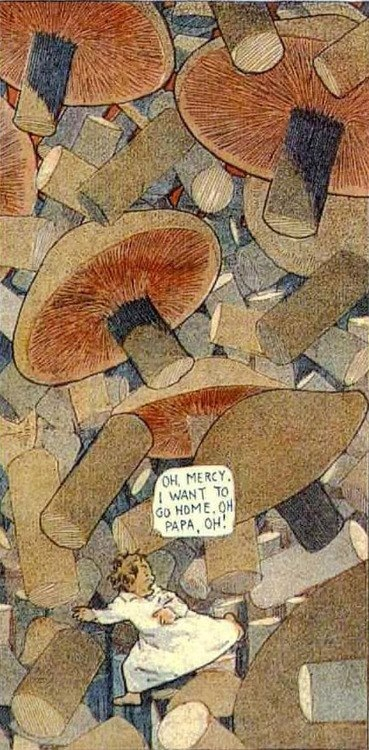
“Oh mercy I want to go home” (Winsor McCay)

mushrooms mccay

Knives — Andy Warhol

knives warhol

Plagiarism

All, all is theft, all is unceasing and rigorous competition in nature; the desire to make off with the substance of others is the foremost – the most legitimate – passion nature has bred into us and, without doubt, the most agreeable one.

Georges Simenon wrote more than 500 novels.

Property is theft.

Art is either plagiarism or revolution.

Isaac Asimov wrote 506 novels.

Ideas improve. The meaning of words participates in the improvement. Plagiarism is necessary. Progress implies it. It embraces an author’s phrase, makes use of his expressions, erases a false idea, and replaces it with the right idea.

Alexandre Dumas wrote 277 novels.

The robbed that smiles, steals something from the thief.

Opportunity makes a thief.

Rolf Kalmuczak: maybe 3,000 novels. More than 100 pseudonyms.

Hunger makes a thief.

Want of money and the distress of a thief can never be alleged as the cause of his thieving, for many honest people endure greater hardships with fortitude. We must therefore seek the cause elsewhere than in want of money, for that is the miser’s passion, not the thief’s.

Ursula Bloom—over 500 novels.

James Joyce wrote four novels.

James Joyce wrote three novels.

James Joyce wrote only three novels.

It’s nice to sometimes get things out of life, rather than stealing from other artists. I’m trying to steal from the real people.

The Mystery of Edwin Drood.

They’re stealing my ideas. They’re imitating my shots.

Only.

Jacques Derrida in Conversation with Raymond Williams (1986 Documentary)

William Burroughs Portrait — Charles Burns

burroughs burns

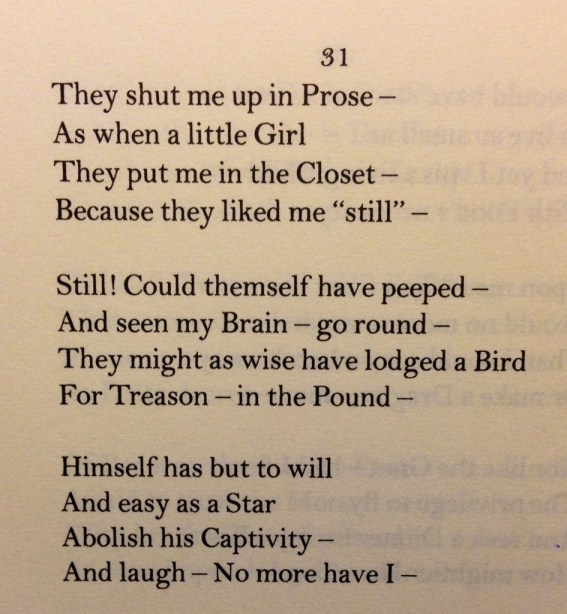
“They shut me up in Prose–” — Emily Dickinson

20130520-101023.jpg

“One Summer Night” — Ambrose Bierce

“One Summer Night” by Ambrose Bierce

The fact that Henry Armstrong was buried did not seem to him to prove that he was dead: he had always been a hard man to convince.  That he really was buried, the testimony of his senses compelled him to admit.  His posture – flat upon his back, with his hands crossed upon his stomach and tied with something that he easily broke without profitably altering the situation – the strict confinement of his entire person, the black darkness and profound silence, made a body of evidence impossible to controvert and he accepted it without cavil.

But dead – no; he was only very, very ill.  He had, withal, the invalid’s apathy and did not greatly concern himself about the uncommon fate that had been allotted to him.  No philosopher was he – just a plain, commonplace person gifted, for the time being, with a pathological indifference: the organ that he feared consequences with was torpid.  So, with no particular apprehension for his immediate future, he fell asleep and all was peace with Henry Armstrong.

But something was going on overhead.  It was a dark summer night, shot through with infrequent shimmers of lightning silently firing a cloud lying low in the west and portending a storm.  These brief, stammering illuminations brought out with ghastly distinctness the monuments and headstones of the cemetery and seemed to set them dancing.  It was not a night in which any credible witness was likely to be straying about a cemetery, so the three men who were there, digging into the grave of Henry Armstrong, felt reasonably secure.

Two of them were young students from a medical college a few miles away; the third was a gigantic negro known as Jess.  For many years Jess had been employed about the cemetery as a man-of-all-work and it was his favorite pleasantry that he knew “every soul in the place.”  From the nature of what he was now doing it was inferable that the place was not so populous as its register may have shown it to be.

Outside the wall, at the part of the grounds farthest from the public road, were a horse and a light wagon, waiting.

The work of excavation was not difficult: the earth with which the grave had been loosely filled a few hours before offered little resistance and was soon thrown out.  Removal of the casket from its box was less easy, but it was taken out, for it was a perquisite of Jess, who carefully unscrewed the cover and laid it aside, exposing the body in black trousers and white shirt.  At that instant the air sprang to flame, a cracking shock of thunder shook the stunned world and Henry Armstrong tranquilly sat up.  With inarticulate cries the men fled in terror, each in a different direction.  For nothing on earth could two of them have been persuaded to return.  But Jess was of another breed.

In the gray of the morning the two students, pallid and haggard from anxiety and with the terror of their adventure still beating tumultuously in their blood, met at the medical college.

“You saw it?” cried one.

“God! yes – what are we to do?”

They went around to the rear of the building, where they saw a horse, attached to a light wagon, hitched to a gatepost near the door of the dissecting-room.  Mechanically they entered the room.  On a bench in the obscurity sat the negro Jess.  He rose, grinning, all eyes and teeth.

“I’m waiting for my pay,” he said.

Stretched naked on a long table lay the body of Henry Armstrong, the head defiled with blood and clay from a blow with a spade.

Girl Reading — Helene Schjerfbeck

I feel like this Delacroix painting should be the background for a meme.

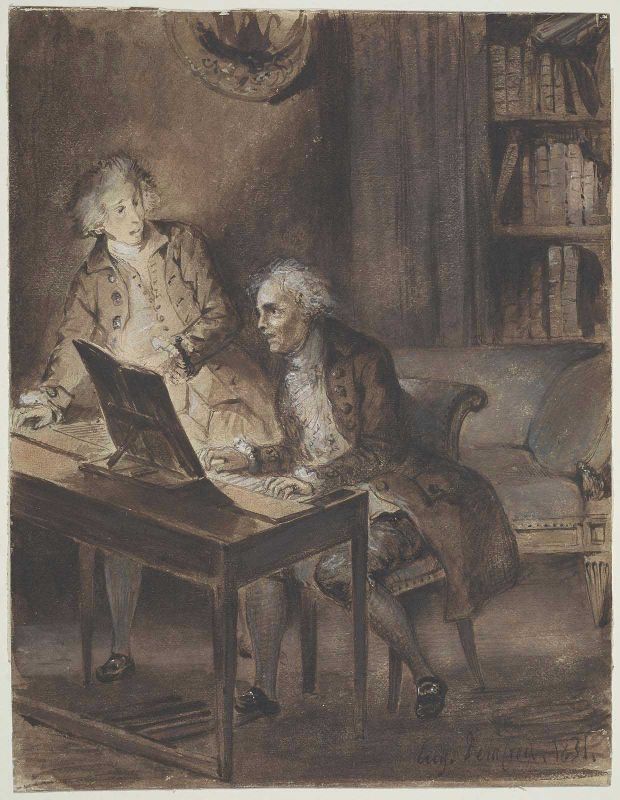
willibald-von-glueck-at-the-clavecin-composing-the-score-of-his-armide-1831(1)

Warlock — Bill Sienkiewicz

warlock sienkiewicz

“Age of Consent” (Live at BBC Radio 1 in 1984) — New Order