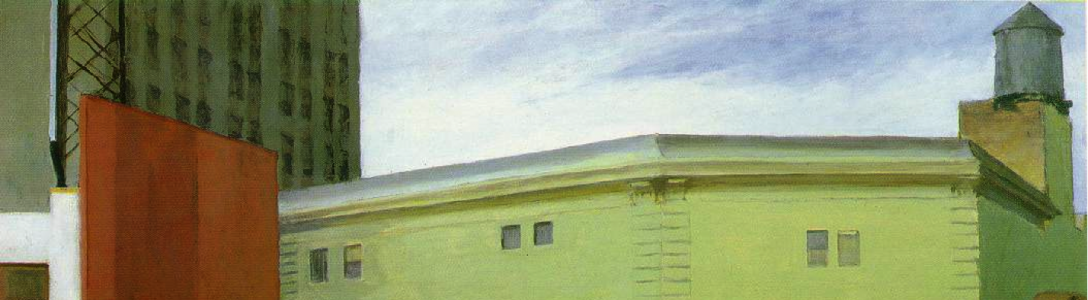
La Belle Rafaela — Tamara de Lempicka

Hemingway Critique, Silver Linings Playbook

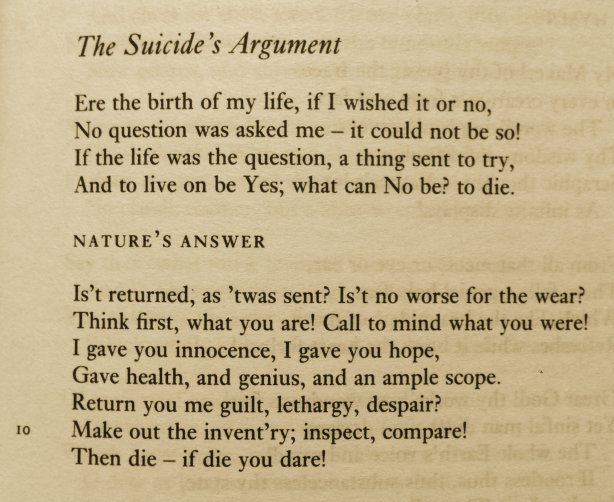
“The Suicide’s Argument” — Samuel Taylor Coleridge

IMG_5666

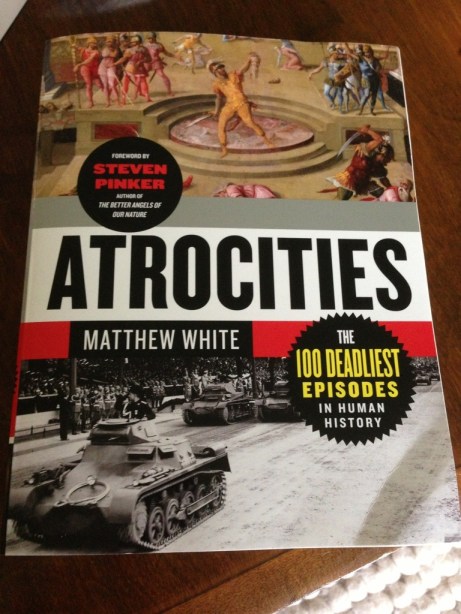
Atrocities! (Book Acquired, 5.02.2013)

20130502-141603.jpg

Okay, so there’s no exclamation point in Atrocities by Matthew White, as my title suggests—but it feels like there should be one. The book is huge and full of atrocities, so there you go. It made me laugh out loud a little bit, but flicking through it I realized it’s exactly the kind of book I used to check out from the library when I was like ten and eleven. I think this book was released a few years ago under a different name—The Great Big Book of Horrible Things. Here’s a New York Times review.

Pitahayas — Frida Kahlo

“Drowne’s Wooden Image” — Nathaniel Hawthorne

“Drowne’s Wooden Image” — Nathaniel Hawthorne

One sunshiny morning, in the good old times of the town of Boston, a young carver in wood, well known by the name of Drowne, stood contemplating a large oaken log, which it was his purpose to convert into the figure-head of a vessel. And while he discussed within his own mind what sort of shape or similitude it were well to bestow upon this excellent piece of timber, there came into Drowne’s workshop a certain Captain Hunnewell, owner and commander of the good brig called the Cynosure, which had just returned from her first voyage to Fayal.

“Ah! that will do, Drowne, that will do!” cried the jolly captain, tapping the log with his rattan. “I bespeak this very piece of oak for the figure-head of the Cynosure. She has shown herself the sweetest craft that ever floated, and I mean to decorate her prow with the handsomest image that the skill of man can cut out of timber. And, Drowne, you are the fellow to execute it.”

“You give me more credit than I deserve, Captain Hunnewell,” said the carver, modestly, yet as one conscious of eminence in his art. “But, for the sake of the good brig, I stand ready to do my best. And which of these designs do you prefer? Here,”—pointing to a staring, half-length figure, in a white wig and scarlet coat,—”here is an excellent model, the likeness of our gracious king. Here is the valiant Admiral Vernon. Or, if you prefer a female figure, what say you to Britannia with the trident?”

“All very fine, Drowne; all very fine,” answered the mariner. “But as nothing like the brig ever swam the ocean, so I am determined she shall have such a figure-head as old Neptune never saw in his life. And what is more, as there is a secret in the matter, you must pledge your credit not to betray it.”

“Certainly,” said Drowne, marvelling, however, what possible mystery there could be in reference to an affair so open, of necessity, to the inspection of all the world as the figure-head of a vessel. “You may depend, captain, on my being as secret as the nature of the case will permit.”

Captain Hunnewell then took Drowne by the button, and communicated his wishes in so low a tone that it would be unmannerly to repeat what was evidently intended for the carver’s private ear. We shall, therefore, take the opportunity to give the reader a few desirable particulars about Drowne himself.

He was the first American who is known to have attempted—in a very humble line, it is true—that art in which we can now reckon so many names already distinguished, or rising to distinction. From his earliest boyhood he had exhibited a knack—for it would be too proud a word to call it genius—a knack, therefore, for the imitation of the human figure in whatever material came most readily to hand. The snows of a New England winter had often supplied him with a species of marble as dazzingly white, at least, as the Parian or the Carrara, and if less durable, yet sufficiently so to correspond with any claims to permanent existence possessed by the boy’s frozen statues. Yet they won admiration from maturer judges than his school-fellows, and were indeed, remarkably clever, though destitute of the native warmth that might have made the snow melt beneath his hand. As he advanced in life, the young man adopted pine and oak as eligible materials for the display of his skill, which now began to bring him a return of solid silver as well as the empty praise that had been an apt reward enough for his productions of evanescent snow. He became noted for carving ornamental pump heads, and wooden urns for gate posts, and decorations, more grotesque than fanciful, for mantelpieces. No apothecary would have deemed himself in the way of obtaining custom without setting up a gilded mortar, if not a head of Galen or Hippocrates, from the skilful hand of Drowne. Continue reading ““Drowne’s Wooden Image” — Nathaniel Hawthorne”

Shota Rustaveli — Niko Pirosmani

Zazie in the Metro — Louis Malle (Full Film)

Untitled — Zdzisław Beksiński

Diagram from the Anatomy of the Horse — George Stubbs

“Charity” — Thomas Bernhard

20130504-100435.jpg

“The Jockey,” A Short Story by Carson McCullers

“The Jockey” by Carson McCullers

The jockey came to the doorway of the dining room, then after a moment stepped to one side and stood motionless, with his back to the wall. The room was crowded, as this was the third day of the season and all the hotels in the town were full. In the dining room bouquets of August roses scattered their petals on the white table linen and from the adjoining bar came a warm, drunken wash of voices. The jockey waited with his back to the wall and scrutinized the room with pinched, crêpy eyes. He examined the room until at last his eyes reached a table in a corner diagonally across from him, at which three men were sitting. As he watched, the jockey raised his chin and tilted his head back to one side, his dwarfed body grew rigid, and his hands stiffened so that the fingers curled inward like gray claws. Tense against the wall of the dining room, he watched and waited in this way.

He was wearing a suit of green Chinese silk that evening, tailored precisely and the size of a costume outfit for a child. The shirt was yellow, the tie striped with pastel colors. He had no hat with him and wore his hair brushed down in a stiff, wet bang on his forehead. His face was drawn, ageless, and gray. There were shadowed hollows at his temples and his mouth was set in a wiry smile. After a time he was aware that he had been seen by one of the three men he had been watching. But the jockey did not nod; he only raised his chin still higher and hooked the thumb of his tense hand in the pocket of his coat.

The three men at the corner table were a trainer, a bookie, and a rich man. The trainer was Sylvester — a large, loosely built fellow with a flushed nose and slow blue eyes. The bookie was Simmons. The rich man was the owner of a horse named Seltzer, which the jockey had ridden that afternoon. The three of them drank whiskey with soda, and a white-coated waiter had just brought on the main course of the dinner. Continue reading ““The Jockey,” A Short Story by Carson McCullers”

Mortal Lock (Book Acquired, 5.02.2013)

20130502-141624.jpg

Mortal Lock by Andrew Vachss seems like a good choice for anyone who digs short, punchy crime noir stories. There’s also a screenplay in here. Random House’s blurb:

A hit man stalks his mark at a race track. A sociopath crosses every moral boundary to become a published author. An ex-mercenary obsessively defends his “perimeter” from a dangerous interloper. A man for hire grudgingly accepts help from a teenage girl to track an online predator. In a dystopian future, young people struggle for survival underground, forming themselves into vicious gangs with only the graffiti of the “last journalists” accepted as truth. Andrew Vachss collects twenty tight, powerful stories—all from the past decade of his career, including some now published for the first time—along with an original screenplay. Together, they form Mortal Lock, a searing portrait of the criminal underworld, with both its depravity and humanity on display.


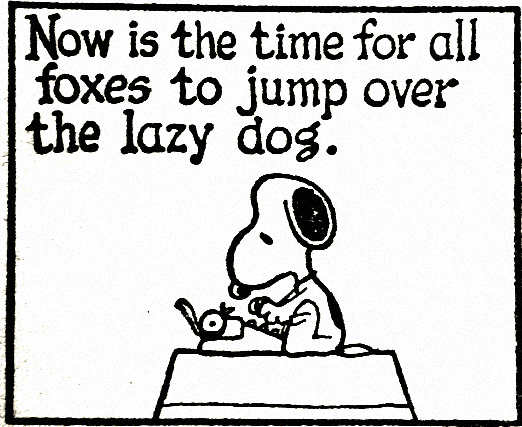
Snoopy, What Time Is It Now?

snoopy

Staffa, Fingal’s Cave — William Turner

“The Happy Prince” — Oscar Wilde

“The Happy Prince” by Oscar Wilde

High above the city, on a tall column, stood the statue of the Happy Prince.  He was gilded all over with thin leaves of fine gold, for eyes he had two bright sapphires, and a large red ruby glowed on his sword-hilt.

He was very much admired indeed.  “He is as beautiful as a weathercock,” remarked one of the Town Councillors who wished to gain a reputation for having artistic tastes; “only not quite so useful,” he added, fearing lest people should think him unpractical, which he really was not.

“Why can’t you be like the Happy Prince?” asked a sensible mother of her little boy who was crying for the moon.  “The Happy Prince never dreams of crying for anything.”

“I am glad there is some one in the world who is quite happy,” muttered a disappointed man as he gazed at the wonderful statue.

“He looks just like an angel,” said the Charity Children as they came out of the cathedral in their bright scarlet cloaks and their clean white pinafores.

“How do you know?” said the Mathematical Master, “you have never seen one.”

“Ah! but we have, in our dreams,” answered the children; and the Mathematical Master frowned and looked very severe, for he did not approve of children dreaming.

One night there flew over the city a little Swallow.  His friends had gone away to Egypt six weeks before, but he had stayed behind, for he was in love with the most beautiful Reed.  He had met her early in the spring as he was flying down the river after a big yellow moth, and had been so attracted by her slender waist that he had stopped to talk to her.

“Shall I love you?” said the Swallow, who liked to come to the point at once, and the Reed made him a low bow.  So he flew round and round her, touching the water with his wings, and making silver ripples.  This was his courtship, and it lasted all through the summer.

“It is a ridiculous attachment,” twittered the other Swallows; “she has no money, and far too many relations”; and indeed the river was quite full of Reeds.  Then, when the autumn came they all flew away.

After they had gone he felt lonely, and began to tire of his lady-love.  “She has no conversation,” he said, “and I am afraid that she is a coquette, for she is always flirting with the wind.”  And certainly, whenever the wind blew, the Reed made the most graceful curtseys.  “I admit that she is domestic,” he continued, “but I love travelling, and my wife, consequently, should love travelling also.”

“Will you come away with me?” he said finally to her; but the Reed shook her head, she was so attached to her home.

“You have been trifling with me,” he cried.  “I am off to the Pyramids.  Good-bye!” and he flew away.

All day long he flew, and at night-time he arrived at the city.  “Where shall I put up?” he said; “I hope the town has made preparations.”

Then he saw the statue on the tall column. Continue reading ““The Happy Prince” — Oscar Wilde”

Julie Manet, Reading in a Chaise Lounge — Berthe Morisot