New Trailer for Baz Luhrmann’s Adaptation of The Great Gatsby

I reviewed the first full trailer for Baz Luhrmann’s adaptation of F. Scott Fitzgerald’s The Great Gatsby back in early summer of last year. The film, originally slated for a Christmas 2012 release, was delayed supposedly to finish effects, add new music (featured in this trailer), and give the film a higher-profile summer release.


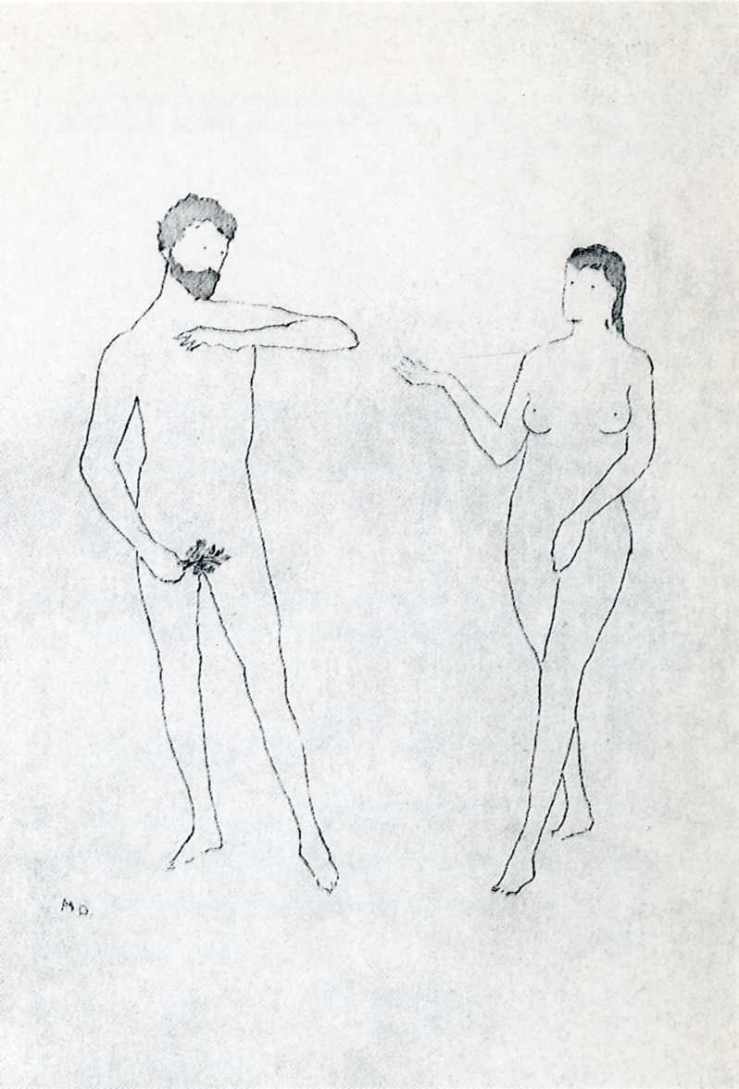
Selected Details after Cranach — Marcel Duchamp

selected-details-after-cranach-1968

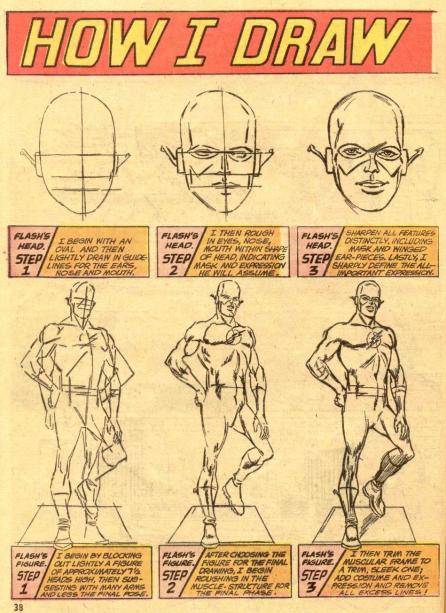
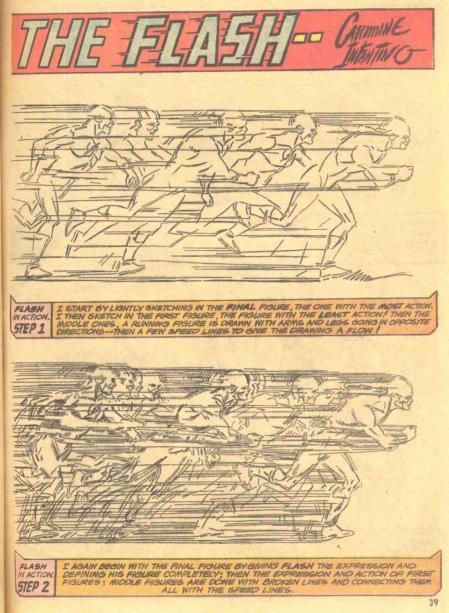
RIP Carmine Infantino

carmine infantino. how i draw the flash. 001carmine infantino. how i draw the flash. 002

RIP comic book artist and editor Carmine Infantino, 1925-2013.

Obituary / images via.

“The Prophetic Pictures” — Nathaniel Hawthorne

“The Prophetic Pictures” by Nathaniel Hawthorne

“But this painter!” cried Walter Ludlow, with animation. “He not only excels in his peculiar art, but possesses vast acquirements in all other learning and science. He talks Hebrew with Dr. Mather and gives lectures in anatomy to Dr. Boylston. In a word, he will meet the best-instructed man among us on his own ground. Moreover, he is a polished gentleman, a citizen of the world—yes, a true cosmopolite; for he will speak like a native of each clime and country on the globe, except our own forests, whither he is now going. Nor is all this what I most admire in him.”

“Indeed!” said Elinor, who had listened with a women’s interest to the description of such a man. “Yet this is admirable enough.”

“Surely it is,” replied her lover, “but far less so than his natural gift of adapting himself to every variety of character, insomuch that all men—and all women too, Elinor—shall find a mirror of themselves in this wonderful painter. But the greatest wonder is yet to be told.”

“Nay, if he have more wonderful attributes than these,” said Elinor, laughing, “Boston is a perilous abode for the poor gentleman. Are you telling me of a painter, or a wizard?” Continue reading ““The Prophetic Pictures” — Nathaniel Hawthorne”

Girl Reading — Harold Knight

knight-girl-reading

Disintegration Loop 1.1 — William Basinski


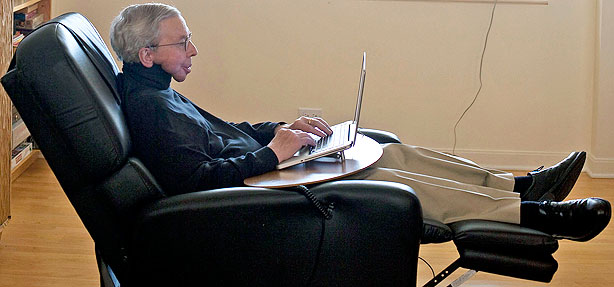
RIP Roger Ebert

roger-ebert-twitter-photo-051210-xlg

RIP Roger Ebert, 1942-2013

Roger Ebert had a tremendous impact on how I thought about criticism and how a review should be written, voiced, pitched. I didn’t always agree with the guy, but I loved watching his show (usually more than the films he and Siskel reviewed) and reading his reviews, and I loved following him on Twitter, where I’ll miss him most I guess.

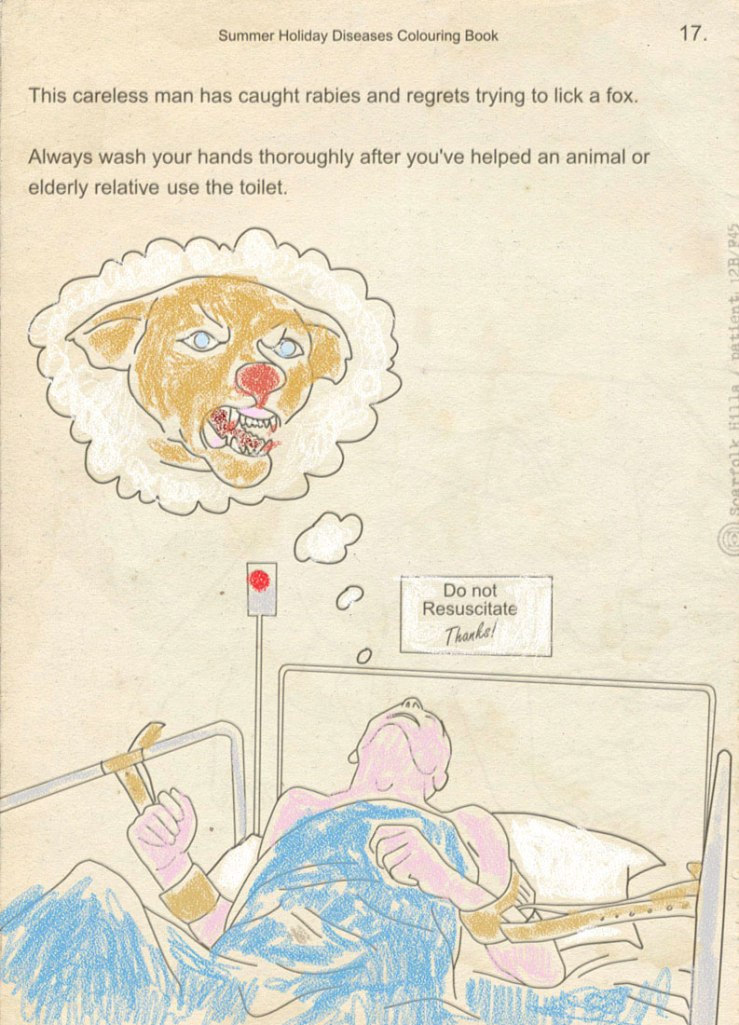
Summer Holiday Diseases Colouring Book

colouringwww-scarfolk-blogspot-com

(Scarfolk Council is so good/weird/spooky that it’s basically unfair…)

“If a nation’s literature declines, the nation atrophies and decays” (Ezra Pound)

ep

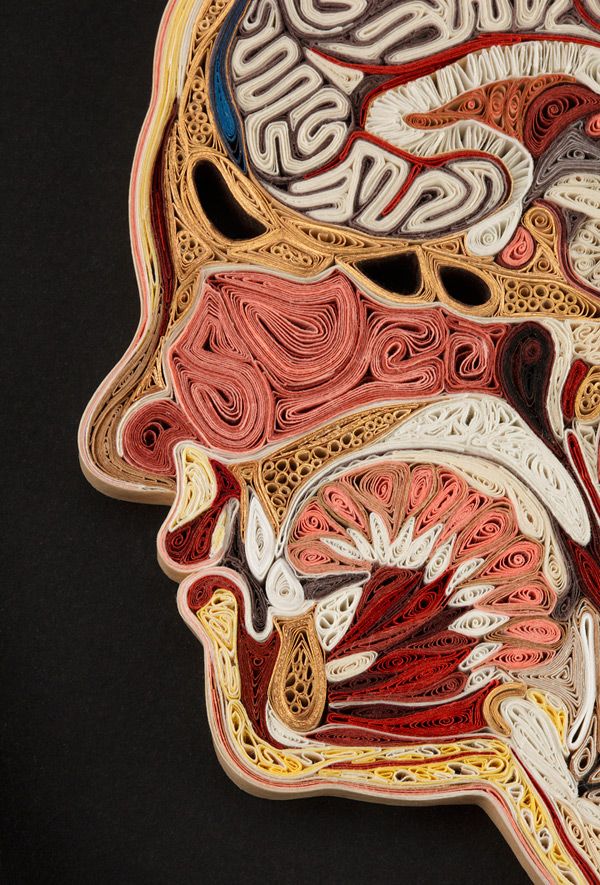
Profile (Detail) — Lisa Nilsson

Lisa-Nilsson1

(More).

“Beyond the Bayou” — Kate Chopin

“Beyond the Bayou” by Kate Chopin

The bayou curved like a crescent around the point of land on which La Folle’s cabin stood. Between the stream and the hut lay a big abandoned field, where cattle were pastured when the bayou supplied them with water enough. Through the woods that spread back into unknown regions the woman had drawn an imaginary line, and past this circle she never stepped. This was the form of her only mania.

She was now a large, gaunt black woman, past thirty-five. Her real name was Jacqueline, but every one on the plantation called her La Folle, because in childhood she had been frightened literally “out of her senses,” and had never wholly regained them.

It was when there had been skirmishing and sharpshooting all day in the woods. Evening was near when P’tit Maitre, black with powder and crimson with blood, had staggered into the cabin of Jacqueline’s mother, his pursuers close at his heels. The sight had stunned her childish reason.

She dwelt alone in her solitary cabin, for the rest of the quarters had long since been removed beyond her sight and knowledge. She had more physical strength than most men, and made her patch of cotton and corn and tobacco like the best of them. But of the world beyond the bayou she had long known nothing, save what her morbid fancy conceived.

People at Bellissime had grown used to her and her way, and they thought nothing of it. Even when “Old Mis'” died, they did not wonder that La Folle had not crossed the bayou, but had stood upon her side of it, wailing and lamenting.

P’tit Maitre was now the owner of Bellissime. He was a middle-aged man, with a family of beautiful daughters about him, and a little son whom La Folle loved as if he had been her own. She called him Cheri, and so did every one else because she did.

None of the girls had ever been to her what Cheri was. They had each and all loved to be with her, and to listen to her wondrous stories of things that always happened “yonda, beyon’ de bayou.”

But none of them had stroked her black hand quite as Cheri did, nor rested their heads against her knee so confidingly, nor fallen asleep in her arms as he used to do. For Cheri hardly did such things now, since he had become the proud possessor of a gun, and had had his black curls cut off.

That summer—the summer Cheri gave La Folle two black curls tied with a knot of red ribbon—the water ran so low in the bayou that even the little children at Bellissime were able to cross it on foot, and the cattle were sent to pasture down by the river. La Folle was sorry when they were gone, for she loved these dumb companions well, and liked to feel that they were there, and to hear them browsing by night up to her own enclosure. Continue reading ““Beyond the Bayou” — Kate Chopin”

Woman Reading at a Dressing Table — Henri Matisse

Image of James Joyce — Louis Le Brocquy

Image of James Joyce 1977 by Louis Le Brocquy born 1916

(Via).

Selections from One-Star Amazon Reviews of Orwell’s 1984

[Ed. note: The following citations come from one-star Amazon reviews of George Orwell’s novel 1984. I think 1984 is an important dystopian work (although I think Huxley gave us a better book and a more accurate vision in his novel Brave New World). Anyway, I find myself fascinated by one-star Amazon reviews for some reason (see also: See also: Melville’s Moby-Dick, Joyce’s Ulysses and Markson’s Wittgenstein’s Mistress) and to be clear, I think some of the one-star reviews of 1984–including ones I cite here—make some pretty valid points (others are atrocious, of course). I’ve preserved the reviewers’ unique styles of punctuation and spelling].

1984 is a fictional novel by George Orwell.

I don’t really like futuristic based books…

1984 might have been scary 100 years ago, but not now.

…the plot is fairly simplistic but with redundant lines. “Oceania has always been war with Eastasia.” “Freedom is slavery.” “Big Brother is watching you.” In other words, it was nothing but a lot of nonsensical fillers.

I truly believe that Orwell’s sole purpose for writing this novel was to encourage anarchy, and to convince his readers to be subordinate to authority.

The text was so long and unelaborate.

George Orwell is no wordsmith and his style of writing stinks and flows like verbal diarrhea.

i give this book one star i had to read it for class and i know it’s suposed to be a “classic” but god itis awful. first of all its NOTHING like the future is probly going to turn out. second of all every one says the aurthor george orwell is so trippy and wierd but i think he’s just trying to cover up for the fact that HE CAN’T WRITE. please george do us all a faver and stop writing books.

I am not at all intrested in the goverment. This may be part of the reason that I didnt like it.

I personally think big brother is the man.

It is crude, heavy-handed, superficial propaganda.

…a boring, unoriginal one-hit wonder who wanted to make a buck rehashing much-talked-of, much-written-of themes.

It is dark, depressing, and I finished reading it feeling like less of a human than when I started.

Quote from “1984”: “Humanity is nothing more than one man shoving another man’s face in the mud.” So, “1984” tells us that humans are completely useless and we have no reason to exist.

It was just thoughts of a sad man with perverse and suspicouis thoughts. The main character constantly dwelled on how horrible everything was and eventually how he was going to fight against it. But never did, unless you count having an affair and writing in a journal or buying an old paperweight.

Keep your dictionary handy.

I was greatly dissapointed with the redundent and unecessary words.

For me the book took a downword turn during the time where Winston started having a love affair with some girl.

…it doesn’t make any sense to think that a novel like this one is really any better than say, Michael Crichton or Stephen King.

The main character, Winston, daydreams about raping Julia, who later becomes his dirty mistress. Then about a hundred pages later, they get caught by the Thought Police, thrown into “prison,” and are brain washed. That’s pretty much what happens.

…and must we really keep reading in full detail the horror and disgust of Winston’s vericose veins?!

Today, his book is the modern bible of the paranoid disgruntled white male and other conspiracy nutcases.

Human beings are BETTER than this…

In addiction, the contradictions throughout the novel were frustrating.

On the surface it seems to be an interesting glance at the “future” that our grandparents envisioned. This however could not be farther from the truth. 1984 is in fact a lame, boring, and novel that attempts to be philosophical.

…a monumental ode to nothingness, an ideologically streamlined state of unbelievable being.

And please for the love of God don’t read that “Brave New World” book by Hoxley. It is twice as worse as 1984.

Last time I ever read a history book by this Orwell scrub. He doesn’t know a thing about the 80s. Not ONCE did he mention Def Leppard or Karma Chameleon.
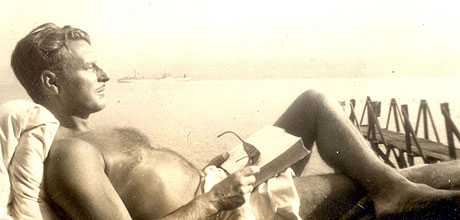
Topless Malcolm Lowry (Again)

lowry

(Via/props).

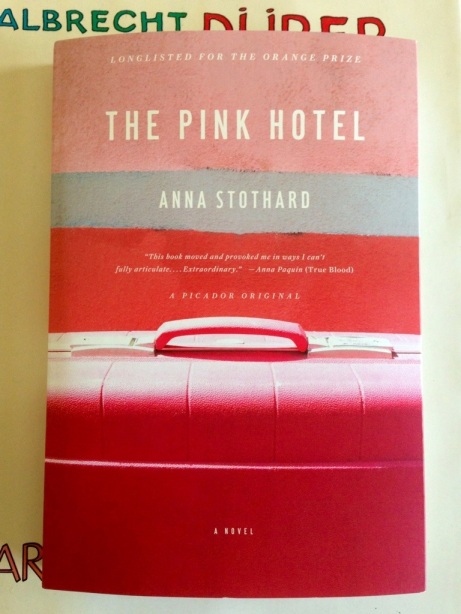
The Pink Hotel (Book Acquired, 4.02.2013)

20130402-161554.jpg

The Pink Hotel by Anna Stothard is new from Picador. Their blurb:

A raucous, drug-fueled party has taken over a boutique hotel on Venice Beach—it’s a memorial for Lily, the now-deceased, free-spirited proprietress of the place. Little do the attendees know that Lily’s estranged daughter—and the nameless narrator of this striking novel—is among them, and she has just walked off with a suitcase of Lily’s belongings.

Abandoned by Lily many years ago, she has come a long way to learn about her mother, and the stolen suitcase—stuffed with clothes, letters, and photographs—contains not only a history of her mother’s love life, but perhaps also the key to her own identity. As the tough, resourceful narrator tracks down her mother’s former husbands, boyfriends, and acquaintances, a risky reenactment of her life begins to unfold. Lily had a knack for falling in love with the wrong people, and one man, a fashion photographer turned paparazzo, has begun to work his sinuous charms on the young woman.

Told with high style and noirish flare, Anna Stothard’s The Pink Hotel is a powerfully evocative debut novel about wish fulfillment, reckless impulse, and how we discover ourselves.

Excerpt:

Her bedroom reeked of cigarette ash and stale perfume. Two ashtrays were packed with lipstick-stained filters as if she’d just popped out for another pack. A suspender belt hung from a chest of drawers, a mink scarf was curled like roadkill at the floor next to her bed. A mirror opposite the bed reflected an image of me lying fully clothed and out of place on the crinkled sheets. My haircut and body could have been that of a boy, but my oversized eyes made me look like a Gothic Virgin Mary from a museum postcard. I wore a sweat-stained T-shirt and a pair of navy-blue tracksuit bottoms. My skin still smelt faintly of grease and coffee from Dad’s café in London, but now the smell was mingled with dehydrated aeroplane air and smog from Los Angeles traffic.

Read the rest of the excerpt.


Crashed Aeroplane — John Singer Sargent