Tom McCarthy & D.T. Max Discuss David Foster Wallace

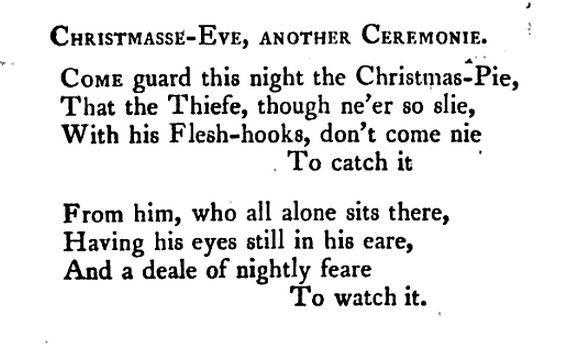
“Christmasse-Eve, Another Ceremonie” — Robert Herrick

herrick

The Nativity — William Blake

https://i0.wp.com/uploads1.wikipaintings.org/images/william-blake/the-nativity-1800.jpg

“The Mouse” — Saki

“The Mouse” — Saki

Theodoric Voler had been brought up, from infancy to the confines of middle age, by a fond mother whose chief solicitude had been to keep him screened from what she called the coarser realities of life. When she died she left Theodoric alone in a world that was as real as ever, and a good deal coarser than he considered it had any need to be. To a man of his temperament and upbringing even a simple railway journey was crammed with petty annoyances and minor discords, and as he settled himself down in a second-class compartment one September morning he was conscious of ruffled feelings and general mental discomposure.

He had been staying at a country vicarage, the inmates of which had been certainly neither brutal nor bacchanalian, but their supervision of the domestic establishment had been of that lax order which invites disaster. The pony carriage that was to take him to the station had never been properly ordered, and when the moment for his departure drew near, the handyman who should have produced the required article was nowhere to be found. In this emergency Theodoric, to his mute but very intense disgust, found himself obliged to collaborate with the vicar’s daughter in the task of harnessing the pony, which necessitated groping about in an ill-lighted outbuilding called a stable, and smelling very like one – except in patches where it smelled of mice. Without being actually afraid of mice, Theodoric classed them among the coarser incidents of life, and considered that Providence, with a little exercise of moral courage, might long ago have recognised that they were not indispensable, and have withdrawn them from circulation.

As the train glided out of the station Theodoric’s nervous imagination accused himself of exhaling a weak odour of stable yard, and possibly of displaying a mouldy straw or two on his unusually well-brushed garments. Fortunately the only other occupation of the compartment, a lady of about the same age as himself, seemed inclined for slumber rather than scrutiny; the train was not due to stop till the terminus was reached, in about an hour’s time, and the carriage was of the old-fashioned sort that held no communication with a corridor, therefore no further travelling companions were likely to intrude on Theodoric’s semiprivacy. And yet the train had scarcely attained its normal speed before he became reluctantly but vividly aware that he was not alone with the slumbering lady; he was not even alone in his own clothes. Continue reading ““The Mouse” — Saki”

Young Man Reading by Candlelight — Matthias Stom

Allegory of Winter — Remedios Varo

Watch Samuel Beckett’s Endgame (Full Filmed Production)

The Junky’s Christmas — William S. Burroughs

Apocalypse Is Postponed — Florin Ciulache

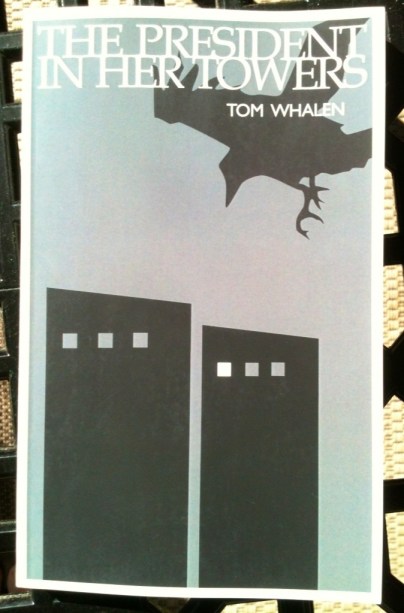
The President in Her Towers (Book Acquired, 12.20.2012)

20121221-122159.jpg

I just read the first few chapters of The President in Her Towers, Tom Whalen’s satire of academia—good stuff: short, punchy chapters that illustrate the reality of academia in all its paranoid surreality. Here’s publisher Ellipsis Press’s blurb:

Through the corridors of the university’s Humanities and Sciences Towers, rumors are swirling about the President: her bizarre decrees, her midnight meetings, her strange projects (the Head-in-Progress, the Activated Eye, the Gestation Chamber). The President’s dedicated personal assistant, Thomas (a.k.a. Herr Abjectus), is charged with investigating and reporting on these and other matters, but it won’t be easy—especially since the President has disappeared. And now there is a new rumor: that she has been marked for assassination


The Four Horsemen of the Apocalypse — Arturo Souto

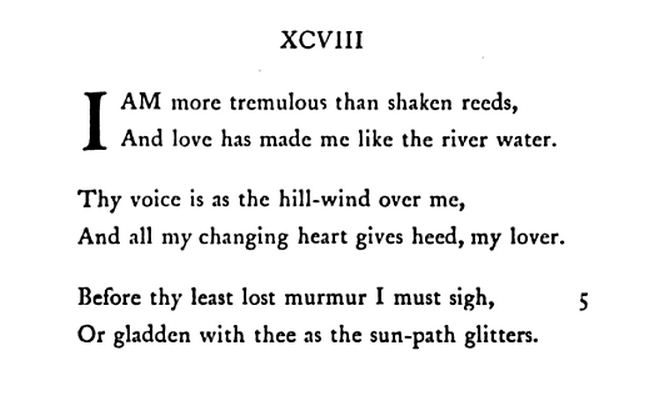
“I am more tremulous than shaken reeds” — Sappho

saph

The Reading — Pierre-Auguste Renoir

Granddad’s Eggnog

Hopefully everyone is happy and with loved ones and friends during these holidays–and what better way to show love and fellowship than sharing a draught of delicious eggnog (alternately, the sad and solitary can drown their lonely sorrows in this high-alcohol, high-calorie treat). This is an old recipe; I remember my cousin and I stealing sips of this nog during my grandparents’ Christmas parties.

You will need:

A bottle of fine bourbon

A bottle of fine rum

A liqueur of your choice (this is optional; coffee, cream, or amaretto all add a nice touch)

A gallon of vanilla ice cream (substitute frozen yoghurt if you’re concerned about calories)

A carton of store-bought eggnog (alternately, you can make your own eggnog from eggs, milk, and sugar, although it’s a genuine pain in the ass and no one will ever know the difference, unless you go around pointing it out to them, which will make you look like an asshole, and you don’t want to look like an asshole, do you?)

Nutmeg, cinnamon, mace, clove (Use whole spices! Any of your favorite holiday spices will do, but I consider these four essential)

To make a one gallon pitcher of eggnog:

Put about 6 cups of ice cream in the pitcher.

Add some cinnamon sticks and cloves; grate some nutmeg and mace into the pitcher.

Add 4 cups of the store-bought eggnog; stir mixture.

Add about 3 and 1/2 cups of bourbon, 1 1/2 cups of rum, and liqueur (about 1/2 a cup will do) to taste; add more spices.

Stir vigorously; cover and allow to set in the freezer for at least 12 hours before serving. Stir vigorously before serving.

To make your guests happy, I suggest serving the nog with both liquor and ice cream at hand; this way those inclined may add either as their taste dictates. (Note for heavy drinkers: if your intention is to get smashed, stop drinking the eggnog after two cups and begin drinking the bourbon straight! The high levels of cream and sugar in this nog will guarantee a hangover–don’t overdo it!).

Death of Sappho — Gustave Moreau

Future Now, a 1986 Filmed Interview with JG Ballard

The One Consolation — Giorgio de Chirico