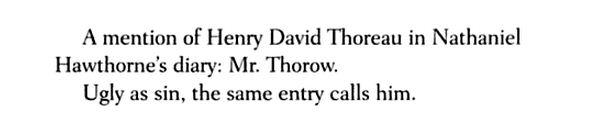
Nathaniel Hawthorne Insults Henry David Thoreau, as Related by David Markson

dmvp

Yet Another Brian Eno Documentary (Hits, Classics and Tracks/BBC)

Reading Lesson — Auguste Toulmouche


“Poor Black Mattie” — R.L. Burnside

Light-Space Modulator — Laszlo Moholy-Nagy

From The Getty:

Also called Light Prop for an Electric Stage, this kinetic sculpture that László Moholy-Nagy designed and photographed was intended to create light displays for theater, dance, or other performance spaces. With its gleaming glass and metal surfaces of mobile perforated disks, a rotating glass spiral, and a sliding ball, the Light-Space Modulator created the effect of photograms in motion. As photographed here, the geometric complexity of the design and the shapes created by shadows and light convey the dynamic possibilities of both machine and camera.


Directed by Andrei Tarkovsky (1988 Documentary)

A Christmas Card from Günter Grass

(Via/more)

Read “Second Variety,” a Story by Philip K. Dick

The Russian soldier made his way nervously up the ragged side of the hill, holding his gun ready. He glanced around him, licking his dry lips, his face set. From time to time he reached up a gloved hand and wiped perspiration from his neck, pushing down his coat collar.

Eric turned to Corporal Leone. “Want him? Or can I have him?” He adjusted the view sight so the Russian’s features squarely filled the glass, the lines cutting across his hard, somber features.

Leone considered. The Russian was close, moving rapidly, almost running. “Don’t fire. Wait.” Leone tensed. “I don’t think we’re needed.”

The Russian increased his pace, kicking ash and piles of debris out of his way. He reached the top of the hill and stopped, panting, staring around him. The sky was overcast, drifting clouds of gray particles. Bare trunks of trees jutted up occasionally; the ground was level and bare, rubble-strewn, with the ruins of buildings standing out here and there like yellowing skulls.

The Russian was uneasy. He knew something was wrong. He started down the hill. Now he was only a few paces from the bunker. Eric was getting fidgety. He played with his pistol, glancing at Leone.

“Don’t worry,” Leone said. “He won’t get here. They’ll take care of him.”

“Are you sure? He’s got damn far.”

“They hang around close to the bunker. He’s getting into the bad part. Get set!”

The Russian began to hurry, sliding down the hill, his boots sinking into the heaps of gray ash, trying to keep his gun up. He stopped for a moment, lifting his fieldglasses to his face.

“He’s looking right at us,” Eric said.

The Russian came on. They could see his eyes, like two blue stones. His mouth was open a little. He needed a shave; his chin was stubbled. On one bony cheek was a square of tape, showing blue at the edge. A fungoid spot. His coat was muddy and torn. One glove was missing. As he ran his belt counter bounced up and down against him.

Leone touched Eric’s arm. “Here one comes.”

Across the ground something small and metallic came, flashing in the dull sunlight of mid-day. A metal sphere. It raced up the hill after the Russian, its treads flying. It was small, one of the baby ones. Its claws were out, two razor projections spinning in a blur of white steel. The Russian heard it. He turned instantly,  firing. The sphere dissolved into particles. But already a second had emerged and was following the first. The Russian fired again.

A third sphere leaped up the Russian’s leg, clicking and whirring. It jumped to the shoulder. The spinning blades disappeared into the Russian’s throat.

Eric relaxed. “Well, that’s that. God, those damn things give me the creeps. Sometimes I think we were better off before.”

“If we hadn’t invented them, they would have.” Leone lit a cigarette shakily. “I wonder why a Russian would come all this way alone. I didn’t see anyone covering him.”

Lt. Scott came slipping up the tunnel, into the bunker. “What happened? Something entered the screen.”

“An Ivan.”

“Just one?”

Eric brought the view screen around. Scott peered into it. Now there were numerous metal spheres crawling over the prostrate body, dull metal globes clicking and whirring, sawing up the Russian into small parts to be carried away.

“What a lot of claws,” Scott murmured.

“They come like flies. Not much game for them any more.”

Scott pushed the sight away, disgusted. “Like flies. I wonder why he was out there. They know we have claws all around.”

A larger robot had joined the smaller spheres. It was directing operations, a long blunt tube with projecting eyepieces. There was not much left of the soldier. What remained was being brought down the hillside by the host of claws.

“Sir,” Leone said. “If it’s all right, I’d like to go out there and take a look at him.”

“Why?”

“Maybe he came with something.”

Scott considered. He shrugged. “All right. But be careful.”

“I have my tab.” Leone patted the metal band at his wrist. “I’ll be out of bounds.”

(Read the rest of “Second Variety” at Project Gutenberg).
 

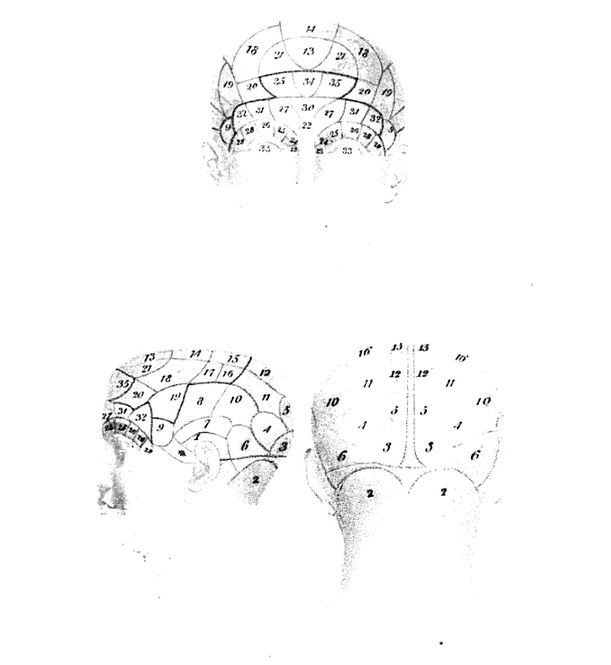
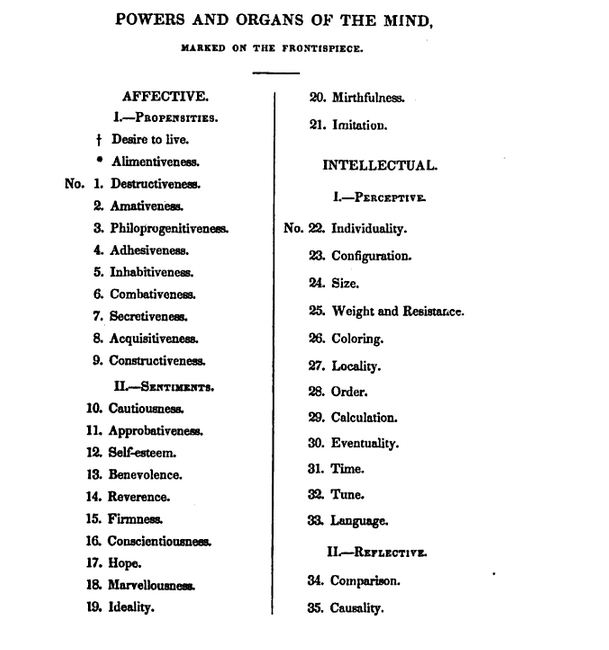
Powers and Organs of the Mind

phren1 phren2

(From Spurzheim’s Phrenology)

Illustration for Ben Marcus’s “G-D” (Catrin Morgan)

3_g-d-

Catrin Morgan‘s illustration for “G-D”  is part of the upcoming illustrated reissue of Ben Marcus’s cult jam The Age of Wire and String that the good people at Granta will put out.

Young Girl Reading — Federico Zandomeneghi

Entry for “Bheudh,” from Shipley’s Origins of English Words

bheudh

The Picture of Dorian Gray — Ivan Albright

https://i0.wp.com/uploads6.wikipaintings.org/images/ivan-albright/the-picture-of-dorian-gray-1944.jpg

William Burroughs and Andy Warhol Eat Rabbit, Discuss Chicken Fried Steak

The Wounded Dear — Frida Kahlo

Book Shelves #50, 12.09.2012

20121208-170158.jpg

Book shelves series #50, fiftieth Sunday of 2012

There are fifty-three Sundays in 2012. I ran out of book shelves last week.

Here are some shelves/books from my office (work).

One wall is floor-to ceiling shelves—the whole wall—but most of the space is filled with files, folders, and professional books.

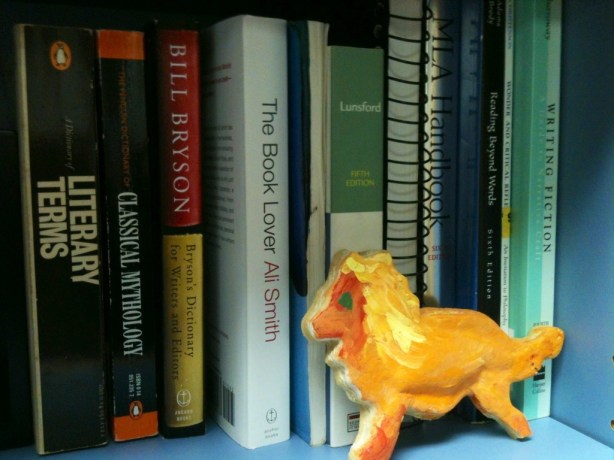
I tried to picture some of my favorite stuff—dictionaries, guides, and anthologies that remain inspiring.

20121208-170205.jpg

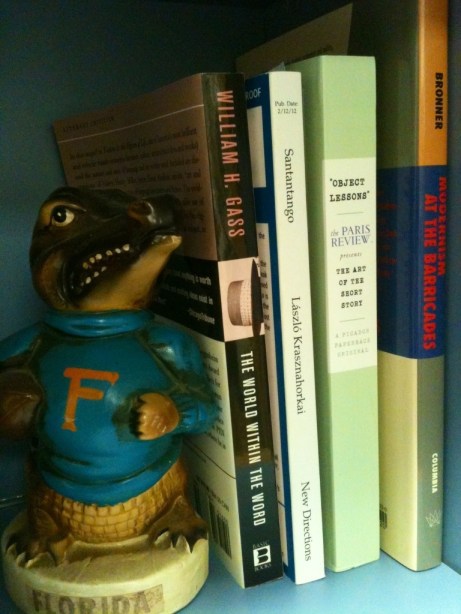
There is also a little corner where I keep stuff I read in my office—review copies or other books that I work with when I have a spare hour.

20121208-170216.jpg

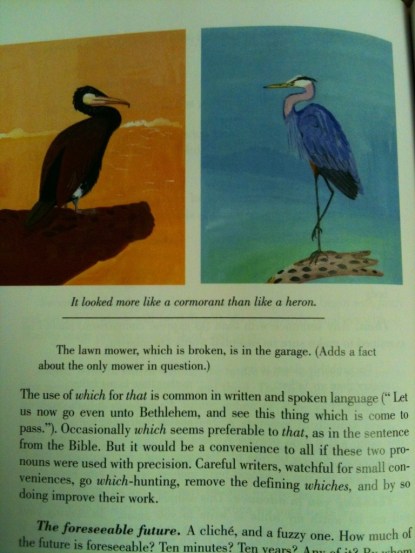
Here’s a shelf (double stacked, as you might be able to see) that gets constantly shifted around. There are a couple of books about usage here that I like to bring into the classroom.

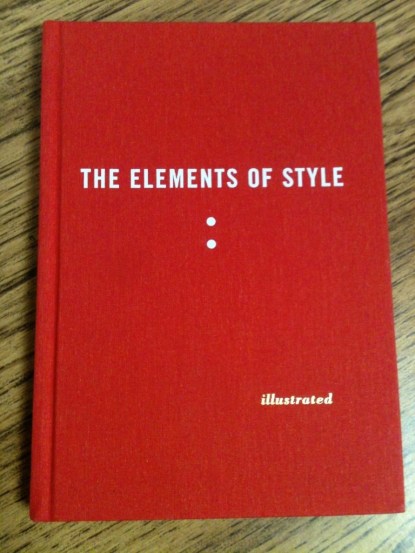
Of course, the best usage guide is Strunk & White’s classic:

20121208-170226.jpg

This illustrated copy was a gift from some dear friends.

20121208-170234.jpg

20121208-170241.jpg

20121208-170255.jpg

Joseph T. Shipley’s The Origins of English Words: A Discursive Dictionary of Indo-European Roots is a favorite.

Interior sample:

20121208-170302.jpg

“The Secretary” — Robert Walser

“The Secretary” by Robert Walser

I had the audacity to write a book that caused quite a stir. As a consequence I was permitted to interact in a casual manner with people of substance. The doors of serious, elegant households were flung wide open to admit me, which was most certainly to my advantage. All I had to do was stroll right in and take care to behave in an agreeable manner as consistently as possible. Once I set foot in a gathering of at least forty full-blooded celebrities. Just imagine how glorious that was!

The commercial head of an association for practitioners of the fine arts one day invited me, after appropriate deliberation, to become his secretary. “I hope,” he said, “that you will prove just as capable of selling pictures as you are of publishing books!”  The offer was too kind to be dismissed out of hand. Accepting this proposal, I resolved that from this moment on I would consider myself fairly remarkable. I felt obliged to remind myself that a person who, upon receiving support, neither feels gratified nor shows his pleasure and gives voice to his satisfaction insults the world at large.

Its plain to see: a keen mind, superior intelligence, a high or the highest level of education and culture should, if this is somehow conceivable, be expected of all secretaries. Even their external appearance must, it goes without saying, be proper and distinguished. One assumes them to be pliant and at the same time clever, suave, gallant and at the same time in every way resolved to achieve commercial success. Elegant manners and glossy social savoir faire number decisively among their inborn qualities.

I don’t know whether I did in fact display all the above-mentioned traits, but I do know that half the city came traipsing through my office. Persons of all dispositions, of every rank and station came barging more or less vigorously into the ministry, I mean headquarters: the cream of society, elegant agents, poor journeymen, sly Gypsies, unruly poets, alarmingly refined ladies, dour princes, strikingly handsome young officers, authors, actresses, sculptors, diplomats, politicians, critics, journalists, theater directors, virtuosos, celebrated scholars, publishers, and wizards in the field of finance. In and out went some who had long since arrived at the top, some who were still groping about the bottom, and others hoping to ascend–both radiantly luminous and somber, gloomy individuals. As in an odd masquerade there entered: young and old, poor and wealthy, healthy and frail, lofty and lowly, merry and morose, happy and unhappy, saucy and shy, cheerful and sad, attractive and hideous, polite and impolite, glorious and shabby, respected and despondent, the proud and the imploring, the famous and the unknown, along with faces, gestures, and figures of all genres.

Art exhibitions are known to have as their goal the advantageous display of works of art and the attracting of buyers. The secretary plays the role of intermediary or go-between, facilitating communication between artists and their extensive, art-infatuated public. It is his task to ensure that a goodly number of bargains are definitively struck, that pictures are industriously sent out the door to buyers. Persons expressing interest in these works might appear on the scene only to swiftly vanish from sight again, unfortunately for good. The secretary must be attentive, as the most unimposing man can unexpectedly prove to be a connoisseur and buyer.

For a time I imagined myself to be exceedingly skillful at the art trade. Unquestionably I was splendidly suited to taking leisurely hackney-cab rides upon pleasantly lively, bright, glittering streets and to spending half and whole hours merrily chatting with jolly artists’ wives. Spirited evenings at the club regularly showed me in top form. I was a master at passing about platters heaped with delicacies, and was a frequent and enthusiastic visitor to and encourager of female painters. In such and similar respects, I acquitted myself gloriously. After the fact, however, I reached the conclusion that I cannot have been a particularly valuable, clever, prudent, and successful secretary for paintings. Specialists in the field were on several occasions seen to shrug their shoulders at the extent of my accomplishments. The head of the firm seemed to find it appealing to speak with his functionary above all on the subject of poetry and the like.

A stately successor soon reduced me to a predecessor and provided me with an occasion to lay down my post, resign my position, delicately make way, and charmingly busy myself elsewhere. Thinking poorly of me or feeling resentful because he had made so bold as to presume talents in me that I did not in fact possess was something that would never have occurred to my benefactor. To demonstrate that he was still of a mind to remain well-disposed toward me, he invited me, with a turn of phrase both courteous and jovial, to join him for supper.