The Wounded Dear — Frida Kahlo

Book Shelves #50, 12.09.2012

20121208-170158.jpg

Book shelves series #50, fiftieth Sunday of 2012

There are fifty-three Sundays in 2012. I ran out of book shelves last week.

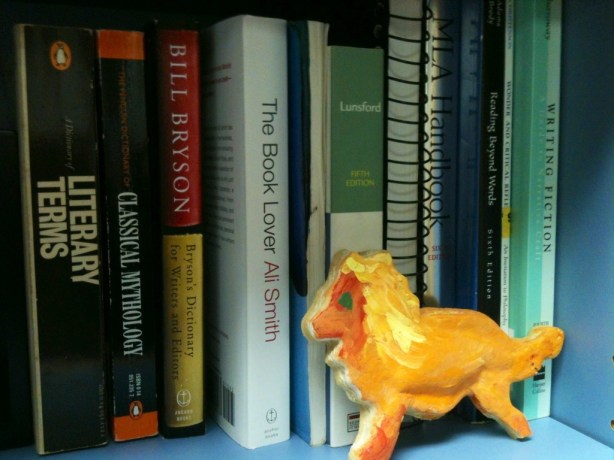
Here are some shelves/books from my office (work).

One wall is floor-to ceiling shelves—the whole wall—but most of the space is filled with files, folders, and professional books.

I tried to picture some of my favorite stuff—dictionaries, guides, and anthologies that remain inspiring.

20121208-170205.jpg

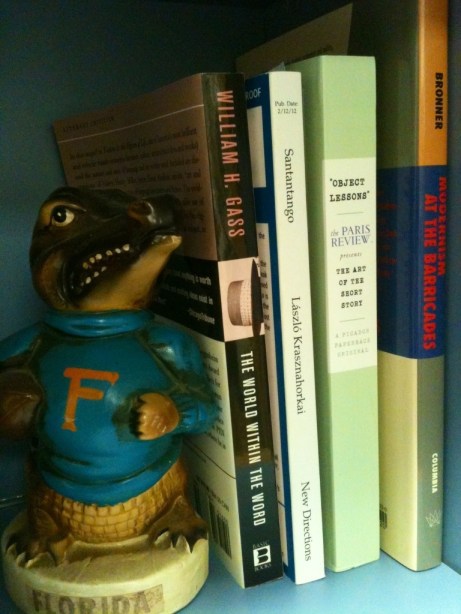
There is also a little corner where I keep stuff I read in my office—review copies or other books that I work with when I have a spare hour.

20121208-170216.jpg

Here’s a shelf (double stacked, as you might be able to see) that gets constantly shifted around. There are a couple of books about usage here that I like to bring into the classroom.

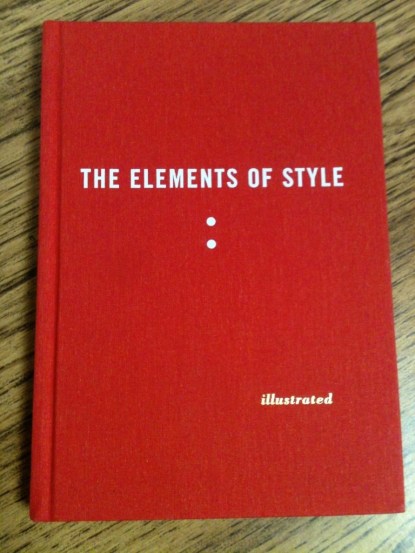
Of course, the best usage guide is Strunk & White’s classic:

20121208-170226.jpg

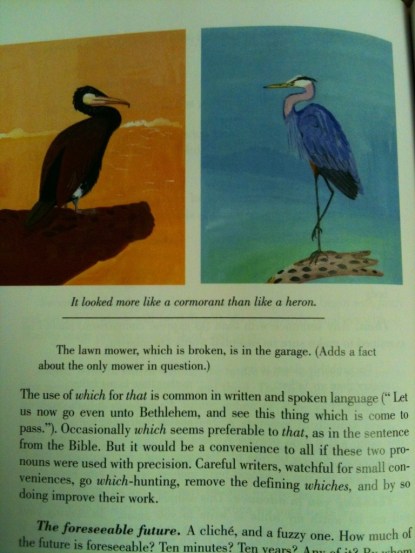
This illustrated copy was a gift from some dear friends.

20121208-170234.jpg

20121208-170241.jpg

20121208-170255.jpg

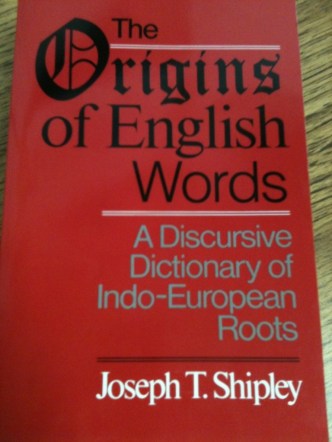
Joseph T. Shipley’s The Origins of English Words: A Discursive Dictionary of Indo-European Roots is a favorite.

Interior sample:

20121208-170302.jpg

“The Secretary” — Robert Walser

“The Secretary” by Robert Walser

I had the audacity to write a book that caused quite a stir. As a consequence I was permitted to interact in a casual manner with people of substance. The doors of serious, elegant households were flung wide open to admit me, which was most certainly to my advantage. All I had to do was stroll right in and take care to behave in an agreeable manner as consistently as possible. Once I set foot in a gathering of at least forty full-blooded celebrities. Just imagine how glorious that was!

The commercial head of an association for practitioners of the fine arts one day invited me, after appropriate deliberation, to become his secretary. “I hope,” he said, “that you will prove just as capable of selling pictures as you are of publishing books!”  The offer was too kind to be dismissed out of hand. Accepting this proposal, I resolved that from this moment on I would consider myself fairly remarkable. I felt obliged to remind myself that a person who, upon receiving support, neither feels gratified nor shows his pleasure and gives voice to his satisfaction insults the world at large.

Its plain to see: a keen mind, superior intelligence, a high or the highest level of education and culture should, if this is somehow conceivable, be expected of all secretaries. Even their external appearance must, it goes without saying, be proper and distinguished. One assumes them to be pliant and at the same time clever, suave, gallant and at the same time in every way resolved to achieve commercial success. Elegant manners and glossy social savoir faire number decisively among their inborn qualities.

I don’t know whether I did in fact display all the above-mentioned traits, but I do know that half the city came traipsing through my office. Persons of all dispositions, of every rank and station came barging more or less vigorously into the ministry, I mean headquarters: the cream of society, elegant agents, poor journeymen, sly Gypsies, unruly poets, alarmingly refined ladies, dour princes, strikingly handsome young officers, authors, actresses, sculptors, diplomats, politicians, critics, journalists, theater directors, virtuosos, celebrated scholars, publishers, and wizards in the field of finance. In and out went some who had long since arrived at the top, some who were still groping about the bottom, and others hoping to ascend–both radiantly luminous and somber, gloomy individuals. As in an odd masquerade there entered: young and old, poor and wealthy, healthy and frail, lofty and lowly, merry and morose, happy and unhappy, saucy and shy, cheerful and sad, attractive and hideous, polite and impolite, glorious and shabby, respected and despondent, the proud and the imploring, the famous and the unknown, along with faces, gestures, and figures of all genres.

Art exhibitions are known to have as their goal the advantageous display of works of art and the attracting of buyers. The secretary plays the role of intermediary or go-between, facilitating communication between artists and their extensive, art-infatuated public. It is his task to ensure that a goodly number of bargains are definitively struck, that pictures are industriously sent out the door to buyers. Persons expressing interest in these works might appear on the scene only to swiftly vanish from sight again, unfortunately for good. The secretary must be attentive, as the most unimposing man can unexpectedly prove to be a connoisseur and buyer.

For a time I imagined myself to be exceedingly skillful at the art trade. Unquestionably I was splendidly suited to taking leisurely hackney-cab rides upon pleasantly lively, bright, glittering streets and to spending half and whole hours merrily chatting with jolly artists’ wives. Spirited evenings at the club regularly showed me in top form. I was a master at passing about platters heaped with delicacies, and was a frequent and enthusiastic visitor to and encourager of female painters. In such and similar respects, I acquitted myself gloriously. After the fact, however, I reached the conclusion that I cannot have been a particularly valuable, clever, prudent, and successful secretary for paintings. Specialists in the field were on several occasions seen to shrug their shoulders at the extent of my accomplishments. The head of the firm seemed to find it appealing to speak with his functionary above all on the subject of poetry and the like.

A stately successor soon reduced me to a predecessor and provided me with an occasion to lay down my post, resign my position, delicately make way, and charmingly busy myself elsewhere. Thinking poorly of me or feeling resentful because he had made so bold as to presume talents in me that I did not in fact possess was something that would never have occurred to my benefactor. To demonstrate that he was still of a mind to remain well-disposed toward me, he invited me, with a turn of phrase both courteous and jovial, to join him for supper.

Reading — Ilya Repin

Watch Alejandro Jodorowsky’s Surreal Western El Topo (Full Film)

Gnir Rednow — Joseph Cornell

“At Christmas a boy lame of a leg goes round the country summoning the devil’s followers, who are countless, to a general conclave . . . and the whole multitude become wolves.”

At Christmas a boy lame of a leg goes round the country summoning the devil’s followers, who are countless, to a general conclave. Whoever remains behind, or goes reluctantly, is scourged by another with an iron whip till the blood flows, and his traces are left in blood. The human form vanishes, and the whole multitude become wolves. Many thousands assemble. Foremost goes the leader armed with an iron whip, and the troop follow, “firmly convinced in their imaginations that they are transformed into wolves.” They fall upon herds of cattle and flocks of sheep, but they have no power to slay men. When they come to a river, the leader smites the water with his scourge, and it divides, leaving a dry path through the midst, by which the pack may go. The transformation lasts during twelve days, at the expiration of which period the wolf-skin vanishes, and the human form reappears. This superstition was expressly forbidden by the church. “Credidisti, quod quidam credere solent, ut illæ quæ a vulgo Parcæ vocantur, ipsæ, vel sint vel possint hoc facere quod creduntur, id est, dum aliquis homo nascitur, et tunc valeant illum designare ad hoc quod velint, ut quandocunque homo ille voluerit, in lupum transformari possit, quod vulgaris stultitia, werwolf vocat, aut in aliam aliquam figuram?”–Ap. Burchard. (d. 1024).

From Sabine Baring-Gould’s marvelous volume The Book of Were-Wolves (1865).

The Wonder Ring — Stan Brakhage

Brown and Gold — James McNeill Whistler

Robert Downey Sr. and PT Anderson Talk About Putney Swope

Fir Forest I — Gustav Klimt

https://i0.wp.com/uploads4.wikipaintings.org/images/gustav-klimt/fir-forest-i.jpg

“Stone Is Not Stone” — Carson McCullers

“Stone Is Not Stone” by Carson McCullers–

There was a time when stone was stone
And a face on the street was a finished face.
Between the Thing, myself and God alone
There was an instant symmetry.
Since you have altered all my world this trinity is twisted:

Stone is not stone
And faces like the fractioned characters in dreams are incomplete
Until in the child’s inchoate face
I recognize your exiled eyes.
The soldier climbs the glaring stair leaving your shadow.
Tonight, this torn room sleeps
Beneath the starlight bent by you.

Camille Monet Reading — Pierre-Auguste Renoir

Nemo — Moebius

Nemo

Marilyn Monroe Explains Relativity to Albert Einstein (A Scene from Nic Roeg’s Film Insignificance)

Reading Chris Ware’s Building Stories / Disconnect

20121206-181909.jpg

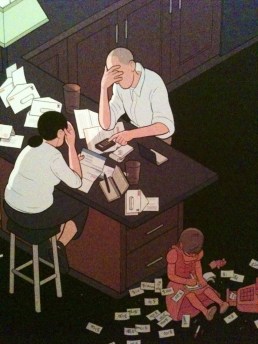
“Disconnect,” one of the longer episodes in Chris Ware’s novel Building Stories, serves as a reminder of Ware’s strength as a prose writer. Wordiness tends to kill illustrated storytelling, at least in my estimation. Sure, there are exceptions—Joe Sacco and Harvey Pekar come to mind—but in general, I think comics are at their best when thought and word bubbles are uncluttered (or nonexistent).  Ware clearly understands the economy of his medium, and some of Building Stories’ finest moments have been wordless ones where Ware constructs the story in pure imagery. We can see so much of the plot and themes of  “Disconnect” in this full page, for instance:

20121206-181944.jpg

But Ware also packs plenty of storytelling into his prose in “Disconnect,” where he continues the story of Lonely Girl, who it’s probably better to now call Married Mom—I still think of her as Lonely Girl though, after first really meeting her in “September 23rd, 2000,” an episode ostensibly narrated by her diary. “Disconnect” is a second diary of sorts, her internal narration guiding us subtly through episodes in her life over a series of years. “Disconnect” focuses on LG/MM raising her young daughter against the backdrop of a strained marriage.

Lonely Girl/Married Mom’s observations ring particularly true. She points out that “When your children aren’t around, you miss them with every fiber of your being—but when they are, you just want to get them to bed so you can go read the news or something,” an observation simultaneously profound, disturbing, and banal. When our heroine recalls how her relationship to her pet cat changed after her child was born, I also saw shades of myself:  “The day we brought Lucy home, almost to the minute, all applied personality to Miss Kitty evaporated, and we saw her for what she was—an animal—and an animal who we were beholden to feed and house, with, suddenly it seemed, little to offer in return.”

Through Lonely Girl/Married Mom, Ware paints a portrait of modern disconnection and alienation, and, even as we sympathize with the heroine, Ware also allows us to see through her—or rather, to see what she can’t see, or to see what she refuses to see. The effect is an irony that tips into small, banal tragedy.

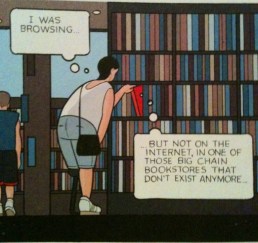
Ware’s prose is usually overshadowed by his gifts as a draftsman, an architect—he’s the builder of Building Stories, a fact that this chapter alludes to, both internally, intertextually, and metatextually. We learn, for example, that Branford the Bee is a story within a story:

20121206-181917.jpg

This nesting of stories emerges in the final part of “Disconnect,” wherein our aged narrator—addressing her grown daughter—relates a dream:

20121206-181924.jpg

The scene culminates so beautifully that it brought a little tear to my eye. Most postmodern novels contain (often more than once) their own descriptions, and Building Stories is no exception:

20121206-181934.jpg

And yet what we see here isn’t postmodern cleverness or empty gimmickry, but the evocation of dream and imagination and desire and creation—the spirit of the book, of what it means to build stories. Reading the final panels of “Disconnect,” I immediately recalled the epigraph to Building Stories (it’s on the interior of the box lid, by the colophon and dedication):

20121206-181951.jpg


And the Children Shall Inherit the Earth — Chris Buzzelli