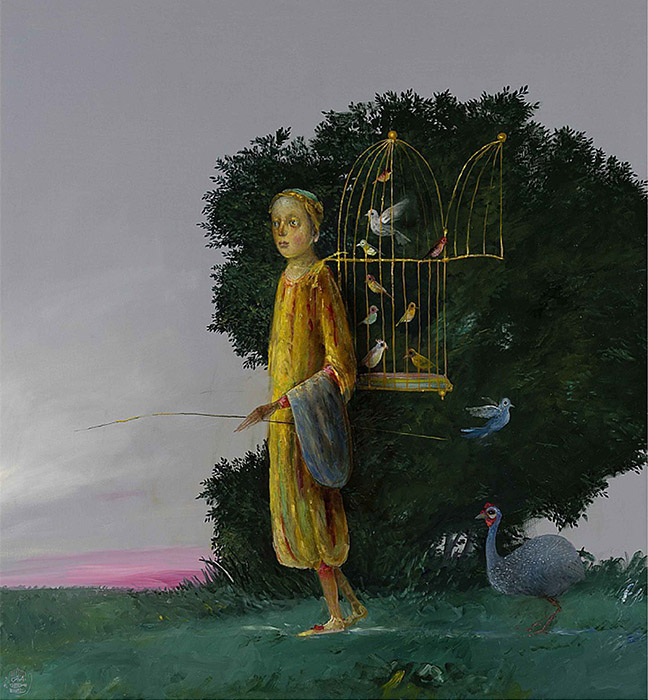
The Cage — Stefan Caltia

The Cage, 2006 by Stefan Caltia (b. 1942)

Hiroko Oyamado’s subtle novel The Hole captures the banal surreal loneliness of modern life

Hiroko Oyamada’s novel The Hole is a subtle, slim, slow-burn low-stakes horror story that tiptoes neatly between banality and surrealism. Our first-person narrator is Asahi, a young, recently-married woman. Asahi–or Asa, as she thinks of herself–is a part-time employee in a large city somewhere in Japan. She doesn’t really have any friends or hobbies, let alone any ambitions. When her husband Muneaki gets a job transfer to the countryside, Asa’s mother-in-law Tomiko offers the young couple the house next to hers, rent-free. The young couple’s economic situation means they can’t refuse, so they don’t. Asa’s only real acquaintance, a work buddy, remarks how lucky she is to be a housewife, but Asa is ambivalent.

That ambivalence radiates throughout The Hole. In David Boyd’s spare, direct translation, Oyamada pushes her hero into a stifling, stuffy, overheated summer. The skinny novel is an exercise in boredom-as-horror: Even before Asa arrives in her husband’s rural hometown, everything’s just a wee bit off. The cicadas vibrate at a different pitch; the locals seem to come from a different era; time seems to run backwards and forwards.

Without a car or job, Asa is essentially stranded, spending her days guilty over running the AC, and unable to communicate with her husband’s grandfather, who mutely gardens his hours away.

Her only cultural landmark is a 7-Eleven convenient store, where mother-in-law Tomiko sends her on an errand one day. The banal errand becomes a bizarre Carollonian quest—but a quest without a clear object. On her route to the convenience store (what could be more boring and inconvenient?) Asa spies a large, strange, dark-furred creature:

 It had wide shoulders, slender and muscular thighs, but from the knees down, its legs were as thin as sticks. The animal was covered in black fur and had a long tail and rounded ears. Its ribs were showing, but its back was bulky, maybe with muscle or with fat.

Frantically following it, she falls into a hole that fits her nearly perfectly (like a proscribed role, or a coffin, or like, whatever):

As I tried to move, I realized how narrow the hole really was. The hole felt as though it was exactly my size – a trap made just for me. The bottom of the hole was covered with something dry, maybe dead grass or straw. Looking toward the river through a break in the grass, all I could see was white light.

A mysterious white-clad neighbor named Sera (who calls Asa “the bride”) pulls her out from the hole, and she makes her way to the 7-Eleven, where a gang of strange children block her mission. She also meets an oddball who later claims to be the white rabbit to her lost Alice. He claims to be an unacknowledged mystery brother-in-law who lives in a shed, having relinquished adult responsibility. There are centipedes and bug bites and other strange goings on—and Asa  talks about absolutely none of it with her husband or mother-in-law.

The Hole captures the stifling omnipresence of loneliness. Asa is a sympathetic character, and while many of the details of her circumstance are particular to Japanese culture, the narrative resonates with the larger absurdities of contemporary life. Asahi’s loneliness burns all the more real for the novel’s surrealism. Her loneliness is the realest thing in The Hole, its presence never acknowledged because it cannot fully be named. The “loneliness” is more real than the quasi-mystical hole-digging creature that plagues the countryside, or the manic brother-in-law-who-lives-in-a-shed-in-the-backyard whom no one ever mentions. But unlike these surreal entities, Asa’s loneliness is never directly invoked.

The Hole will be somewhat familiar with anyone who’s climbed about in the Kafka tree. While Oyamada directly evokes Carroll’s Alice stories, her story is far less fanciful, its dire core obscured with a thin veneer of the banal. The Hole recalls the tone and mood of Kobo Abe’s The Woman in the Dunes, where the protagonist comes to be in an uncanny scenario that becomes uncannier by the moment. But Oyamada’s narrator doesn’t seem to demarcate the separation into unreality; rather, the novel absorbs its narrator into a new unreal-real reality.

The Hole is wonderfully dull at times, as it should be. It’s layered but brittle, with notes of a freshness just gone sour. It’s a quick, propulsive read—a thriller, even, perhaps—but its thrills culminate in sad ambiguity. Recommended.

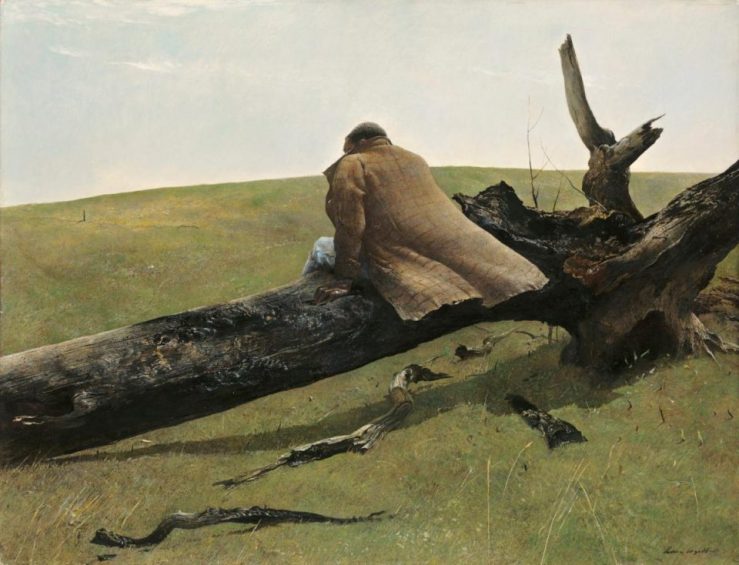
April Wind — Andrew Wyeth

April Wind, 1952 by Andrew Wyeth (1917-2009)

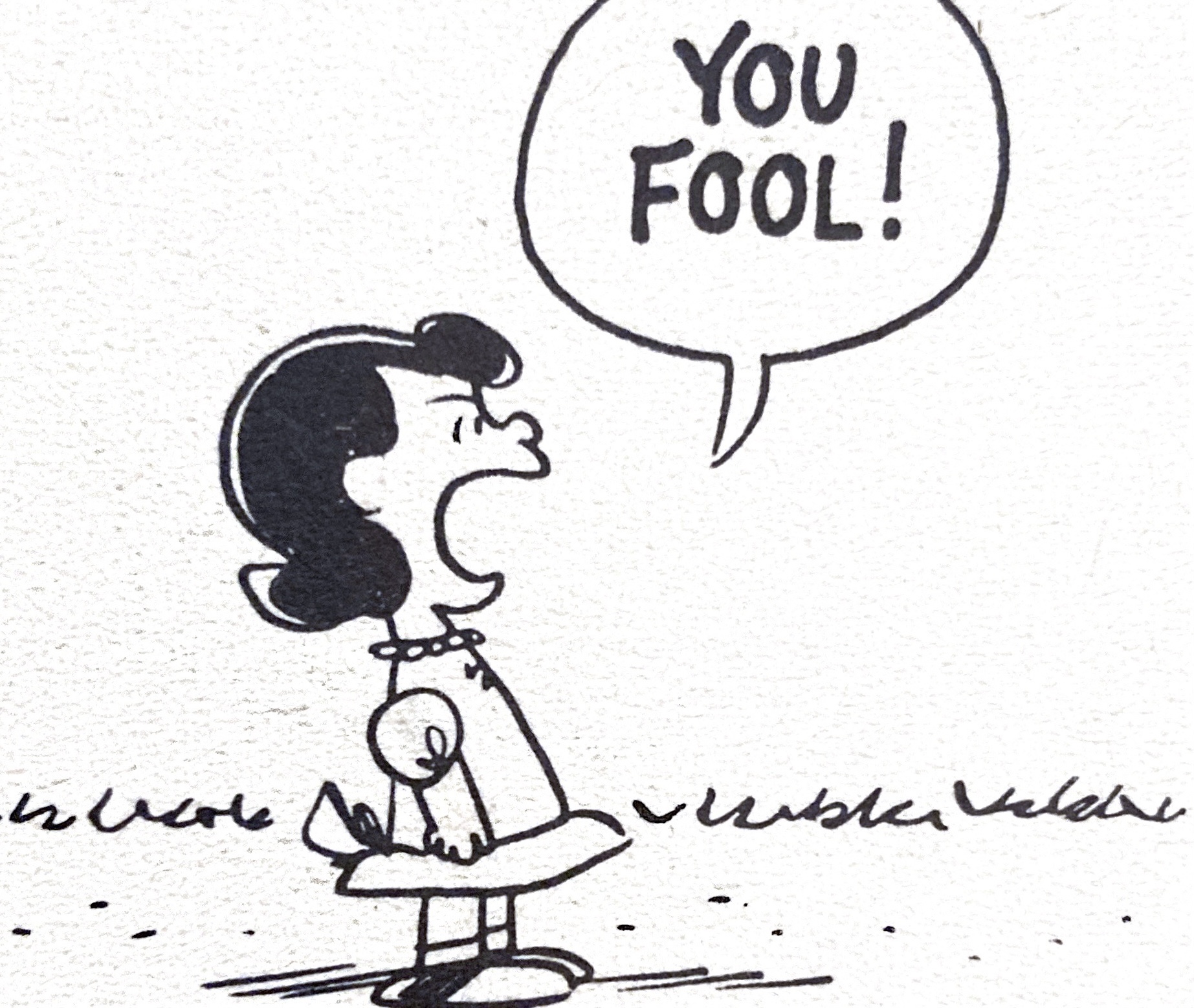
The Fools — Agostino Arrivabene

i-folli

The Fools, 2017 by Agostino Arrivabene (b. 1967)

Cruelest month

New books by Caren Beilin and Cristina Rivera Garza from the Dorothy Project (Books acquired, 28 March 2022)

Two new enticing titles from the Dorothy Project: Caren Beilin’s novel Revenge of the Scapegoat and Cristina Rivera Garza’s collection New and Selected Stories. 

The Beilin seems like a picaresque surrealist joint, which is right up my alley. Press copy:

One day Iris, an adjunct at a city arts college, receives a terrible package: recently unearthed letters that her father wrote to her in her teens, in which he blames her for their family’s crises. Driven by the raw fact of receiving these devastating letters not once but twice in a lifetime, and in a panic of chronic pain brought on by rheumatoid arthritis, Iris escapes to the countryside—or some absurdist version of it. Nazi cows, Picassos used as tampons, and a pair of arthritic feet that speak in the voices of Flaubert’s Bouvard and Pécuchet are standard fare in this beguiling novel of odd characters, surprising circumstances, and intuitive leaps, all brought together in profoundly serious ways.

I spent a half hour reading a few of the stories in the Rivera Garza collection, going from an older track to a few that haven’t yet been published in Spanish yet. The later stories seem more daring in form and content–exciting stuff.

New and Selected Stories brings together in English translation stories from across Rivera Garza’s career, drawing from three collections spanning over 30 years and including new writing not yet published in Spanish. It is a unique and remarkable body of work, and a window into the ever-evolving stylistic and thematic development of one of the boldest, most original, and affecting writers in the world today.

The collection seems like a great introduction to Rivera Garza’s three decades of work. The translations are by Sara Brooker, Lisa Dillman, Francisca González Arias, Alex Ross, and Rivera Garza herself.

The Rooster and the Devil — Susannah Martin 

The Rooster and the Devil, 2020 by Susannah Martin (b. 1964)

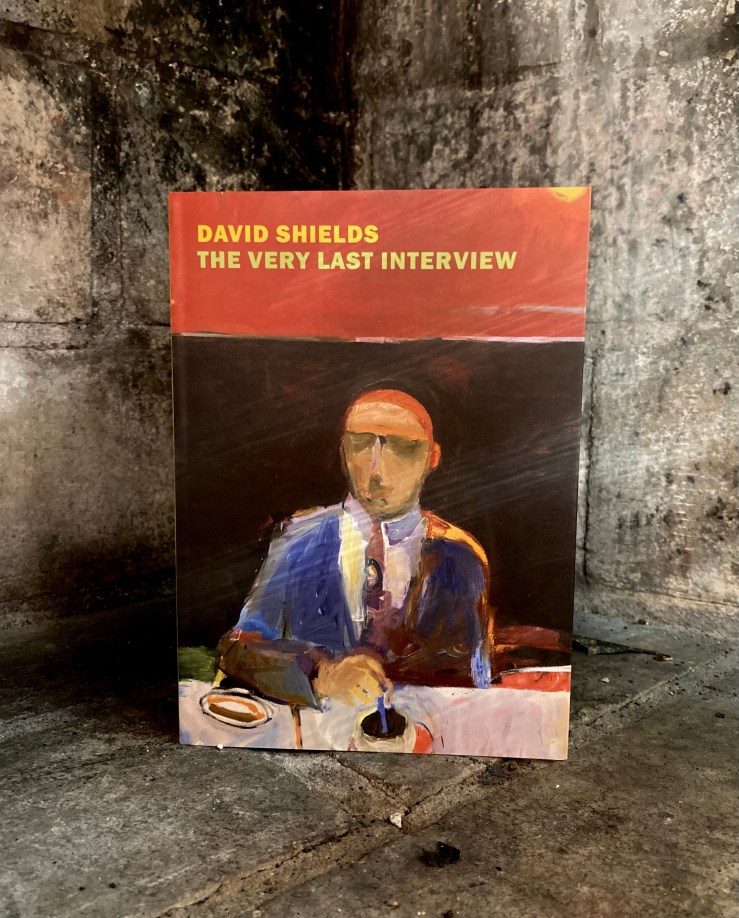
Is this a review of David Shields’ “autobiography” The Very Last Interview?

Is David Shields’ new book The Last Interview indeed an “autobiography in question form, with the reader working to supply answers based on the questions that follow,” as Bret Easton Ellis’ blurb attests?

Is it “Brilliant,” as Bret Easton Ellis’ blurb attests?

(Is this the same David Shields who authored Reality Hunger?)

Does, as Chris Kraus’ blurb states, Shields remix and reimagine “2,000 of the most annoying questions he’s been asked during his forty-year writing life”?

Is it really an “operatic tragic sojourn across American cultural life” (Kraus)?

Does The Very Last Interview confirm “Shields as the most dangerously important American writer since William S. Burroughs,” as Kenneth Goldsmith claims in his blurb?

(Is this the same Kenneth Goldsmith who was called out seven years ago for a publicly reading Michael Brown’s autopsy under the guise of “conceptual poetry”?)

Is it actually “very funny,” as Sheila Heti’s blurb contends?

Should I flip it over and actually dig in?

Is that a Richard Diebenkorn painting adorning the cover?

Are there actually five more blurbs once one opens the book?

Does Shields organize this “remix: of questions he’s (supposedly) been asked into chapters with titles like “Process,” “Truth,” “Art,” “Failure,” “Criticism,” and “Suicide”?

Does Shields open each chapter with epigraphs?

Does he attribute the authors of the epigraphs?

Is there an epigraph from Nietzsche?

Why doesn’t he attribute any of the interviewers at any point in The Very Last Interview?

Does David Shields believe he is a genius?

Does he believe that his audience will find delight or joy or even a momentary reprieve from reading The Very Last Interview?

When Jonathan Lethem (whose blurb makes the inside but not the back cover) claims he “blasted through it in one night,” is it possible that by “night” he means a thin hour or two?

Is the book skinnier than its 150 pages might suggest?

Are there any bits of the book that are, as Heti blurbed, “Very, very funny”?

How about this trio?

“When we are not sure, we are alive” — are you sure this is something that Graham Green said?

Can you prove it?

Do you know what “JSTOR” stands for?

Does this little blip skate closer to mildly amusing as opposed to very very funny?

But is there a general undertone of contempt that radiates in Shields’ curation of questions?

What about these?

Do you share my contempt for Greenpoint hipsters who look and act cool but whose work is about as challenging as a Toblerone bar?

Did you every study with Gordon Lish?

What did he like about your bracelet-cum-watch?

(What would we get if we removed the hyphens from the phrase bracelet-cum-watch?)

Is it possible that David Shields overestimates how interesting he is?

Does he really want us to empathize at points, to provide answers for questions, such as the ones below?

What’s the matter with you?

No, seriously. What is your underlying impasse?

Why can’t you feel?

What’s buried beneath that seeming numbness?

Anything?

Is The Last Interview pretentious, solipsistic, shallow, bathetic, and also very readable?

Is The Last Interview available in paperback from NYRB next month?

Are we done?

Are we?

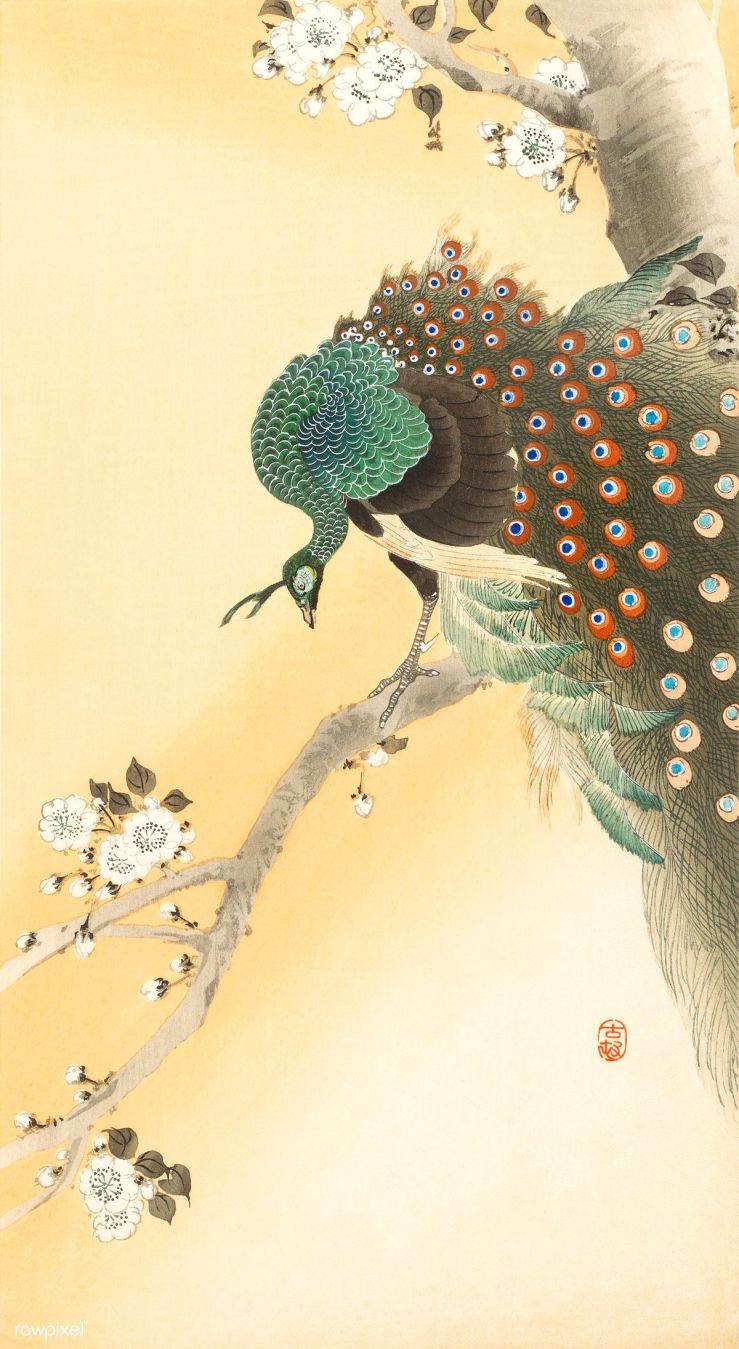
Peacock on a Cherry Blossom Tree — Ohara Koson

Peacock on a Cherry Blossom Tree, 1930 by Ohara Koson (1877-1945)

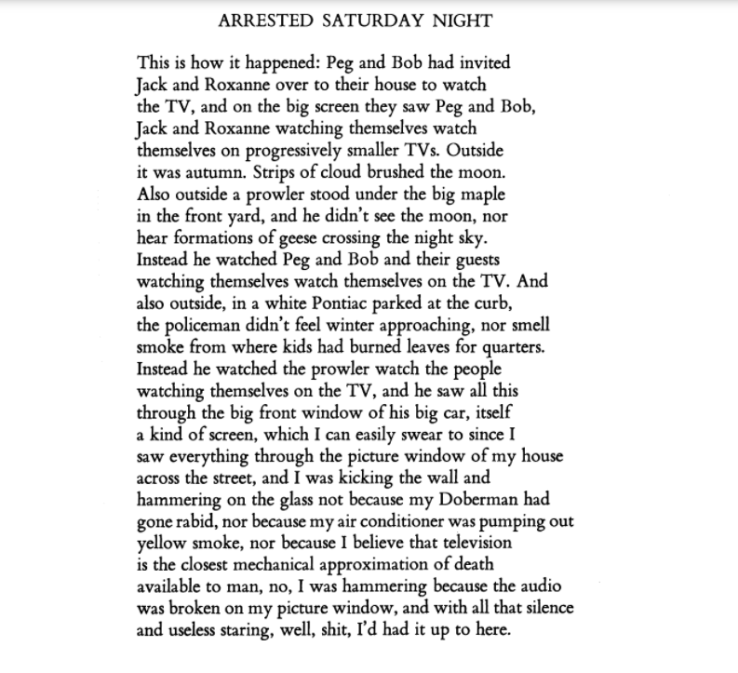
“Arrested Saturday Night” — Stephen Dobyns

“Primer” — Rita Dove

“Primer”
by
Rita Dove

In the sixth grade I was chased home by
the Gatlin kids, three skinny sisters
in rolled-down bobby socks. Hissing
Brainiac! and Mrs. Stringbean!, they trod my heel.
I knew my body was no big deal
but never thought to retort: who’s
calling who skinny? (Besides, I knew
they’d beat me up.) I survived
their shoves across the schoolyard
because my five-foot-zero mother drove up
in her Caddie to shake them down to size.
Nothing could get me into that car.
I took the long way home, swore
I’d show them all: I would grow up.

Friday — Verne Dawson

Friday, 2004 by Verne Dawson (b. 1961)

Selections from One-Star Amazon Reviews of Toni Morrison’s Beloved

[Editorial note: The following citations come from one-star Amazon reviews of Toni Morrison’s complex, abject, disturbing, wonderful novel Beloved.

I’ve preserved the reviewers’ own styles of punctuation and spelling. More one-star Amazon reviews.]


Sex

Too Strange

bodily fluids

rather depressing

unlikable characters

on my book club list

Another slavery book

grotesque & obscene gestures

repulsive scenes of voyeurism

Critics fall all over themselves

perverted-ghost-baby-women

literature is one of my passions,

Slavery, filicide and a poltergeist

Slavery was awful for blacks and whites

I can’t believe this crap is considered literature

must have won the Pullizter for political reasons

some litteray qualities, which the litteraty people dig

granted, no one can possibly fathom the horrors of slavery

relavent in today’s world only as a “politically correct” theme

graphic innuendo that I found offensive, although the language was clean

I got busted for buying as intially it was in the syllabus and later removed

As a graduate student of the School of Education in University of Connecticut,

The setting is some black guys who are slaves in the middle of the 19th. century

Black history is so important but I was looking for more of a mental health narrative

I completely understand the need to ‘remember’ the horrors that happened during the American slave trade

To Kill A Mockingbird was an excellent book about racism, and Amy Tan writes a lot of great books

reviewed as part of a book club that I attend and not one person liked it

People do things with farm animals that they shouldn’t

I was pleased that nobody liked the book

incomprehensible style

the book is super think

too much supernatural

extremely triggering

As a mother myself,

rape and bestiality

definitely R-rated

I must be stupid

jumped around

impenetrable

fright a minute

Very well written

food on the cover

jumped around

I’m troubled right now

finer feelings are diminished

If racism is going to end, it needs to go both ways

down right salacious in content & depressing as well

I am currently an undergraduate at Princeton University

a great story if it were only written in the normal manner

There is also the added element of a ghost, so what she’s up to, I don’t know

that stinky cheese you find after like a year, and its rock hard…. just like me ;)

I read books because I want to read a story with gripping characters, not so an author can try to be clever and symbolic

Every book she writes involves crude, explicit sexuality that is completely unnecessary, and is focused on black people.

We can never understand how horrible slavery is, I understand. Reading 324 pages about people getting tortured and subsequent consequences sincerely will not help you be any happier, gain any form of important insight on life, or become a better person

because it’s about slavery and nobody is allowed to knock books about slavery, it gets all these plaudits

I read many classics and modern classics as opposed to popular novels

quite possibly the worst book that I have ever read

I consider myself fairly intelligent

on my grandaughter’s reading list

Worst book I have ever read

violent and depressing

overboard & weird!

dark and rambled

gush and gaa-gaa

struts and preens

Grotesque content

literary snobbism

Uhhhh…. Huh??

shock value

Hated it

an slog

jibber jabber

an “okay” writer

I’m an avid reader

I’ve read a lot of books

eat dirt & watch the grass grow

I can deal with thick slang but

the hardships of colored people

I don’t care if she was black or white

Having seen part of the movie on TV,

I have to say not a lot of things shock me

overdone, overused, overwritten, overhyped

constant and excructiatingly graphic descriptions of brutality and suffering

I think this book was awful and did not deserve a prize of any kind. I wrote the author years ago and told her so.

We have read about the disgusting things slaves suffered at the hands of their ‘masters’ it was horrible but why do we need another book?

graphic sexual descriptions that are so overwhelmingly uncalled for?

There are so many other things to write about. why pain and anger?

You name it, this book does it wrong

confusing, disgusting, disturbing

cuss words every few sentences

horse (expletive deleted)

Why so much disgust

violence

insanity

race

mud

sex
Theseus Slays the Minotaur — Phoebe Anna Traquair

Theseus Slays the Minotaur, 1904 by Phoebe Anna Traquair (1852-1936)

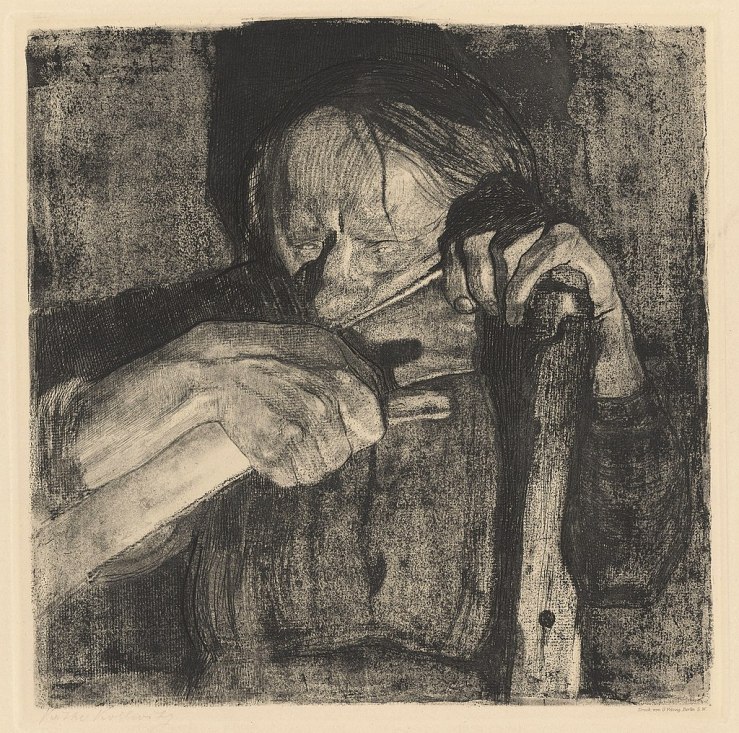
Whetting the Scythe — Kathe Kollwitz

Whetting the Scythe, 1908 by Kathe Kollwitz (1867-1945)