Jonathan Franzen Is the Worst, Monkey Sex, and Other Highlights from the 2011 Moby Awards

Book folks gathered last night in Brooklyn to celebrate the best in worst in book trailers, as indie publisher Melville House handed out their second annual round of Moby Awards.  Gary Shteyngart and Tao Lin were on hand to sanctify the ceremony, along with a who’s-who of internet literati, including Laura Miller (Salon), Blake Butler (HTML Giant), Jason Boog (GalleyCat), Patrick Brown (GoodReads), Andy Hunter (Electric Literature), C. Max Magee (The Millions), Troy Patterson (Slate), and Dennis Johnson, founder of Melville House. From the press release—

The full list of recipients for this year’s award—a golden whale—is as follows:


Lifetime Achievement Award:

Ron Charles – Acceptance Speech


Grand Jury/We’re Giving You This Award Because Otherwise You’d Win Too Many Other Awards:
Super Sad True Love Story – Gary Shteyngart


Book Trailer As Stand Alone Art Object:

How Did You Get This Number? – Sloane Crosley


Best Big House:

Packing for Mars – Mary Roach


Worst Big House:

Savages – Don Winslow


Best Small House:

Tree of Codes – Jonathan Safran Foer


Worst Small / No House:

Pirates: The Midnight Passage – James R. Hannibal


Worst Performance by an Author:

Jonathan Franzen – Freedom


Most Celebtastic Performance

James Franco – Super Sad True Love Story


What Are We Doing To Our Children?

It’s A Book – Lane Smith


General Technical Excellence and Courageous Pursuit of Gloriousness:

Electric Literature


Most Monkey Sex:
Bonobo Handshake – Vanessa Woods


Worst Soundtrack:

GhostGirl


Most Angelic Angel Falling to Earth:
Torment – Lauren Kate


Most Conflicted
TCooper – Beaufort Diaries


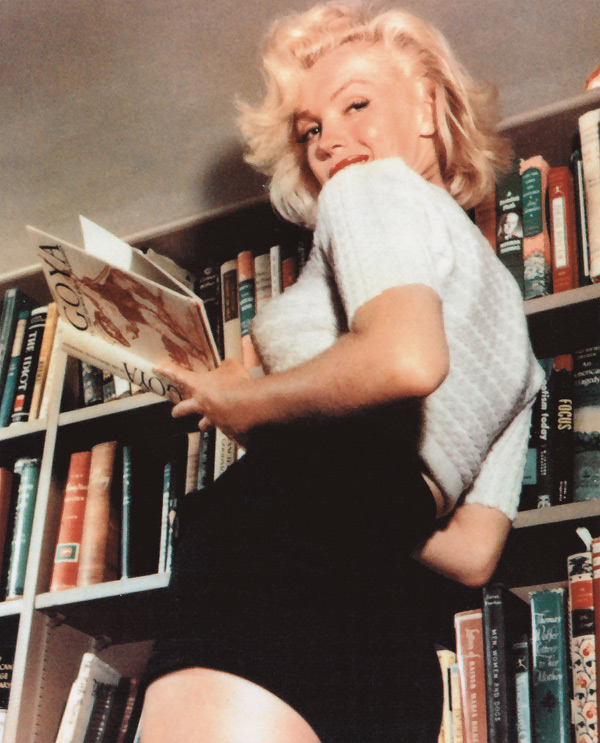
Marilyn Monroe’s Bookshelf


(Via Jacket Copy).

Lucian Freud: Portraits (2004 Documentary)

Lucian Freud: Portrait is an insightful 2004 documentary about the English painter, directed by Freud’s friend Jake Auerbach. Auerbach interviews Freud’s family, friends, and models to present an alternative narrative about the reclusive artist.

Continue reading “Lucian Freud: Portraits (2004 Documentary)”

“Poetry Is the Enchantment of Incest” — A Passage from Harold Bloom’s Manifesto for Antithetical Criticism

A passage from Harold Bloom’s “A Manifesto for Antithetical Criticism,” a chapter in his seminal study The Anxiety of Influence

 Every poem is a misinterpretation of a parent poem. A poem is not an overcoming of anxiety, but is that anxiety. Poets’ misinterpretations of poems are more drastic than critics’ misinterpretations or criticism, but this is only a difference in degree and not at all in kind. There are no interpretations but only misinterpretations, and so all criticism is prose poetry.

Critics are more or less valuable than other critics only (precisely) as poets are more or less valuable than other poets. For just as a poet must be found by the opening in a precursor poet, so must the critic. The difference is that a critic has more parents. His precursors are poets and critics. But – in truth – so are a poet’s precursors, often and more often as history lengthens.

Poetry is the anxiety of influence, is misprision, is a disciplined perverseness. Poetry is misunderstanding, misinterpretation, misalliance.

Poetry (Romance) is Family Romance. Poetry is the enchantment of incest, disciplined by resistance to that enchantment.

Influence is Influenza—an astral disease.

If influence were health, who could write a poem? Health is stasis.

Schizophrenia is bad poetry, for the schizophrenic has lost the strength of perverse, willful, misprision.

“Hemingway and Ourselves” — Italo Calvino

“Hemingway and Ourselves,” a 1954 essay by Italo Calvino, collected in Why Read the Classics?

Hemingway and Ourselves

There was a time when for me — and for many others, those who are more or less my contemporaries — Hemingway was a god. And they were good times, which I am happy to remember, without even a hint of that ironic indulgence with which we look back on youthful fashions and obsessions. They were serious times and we lived through them seriously and boldly and with purity of heart, and in Hemingway we could also have found pessimism, an individualistic detachment, a superficial involvement with extremely violent experiences: that was all there too in Hemingway, but either we could not see it in him or we had other things in our head, but the fact remains that the lesson we learnt from him was one of a capacity for openness and generosity, a practical commitment — as well as a technical and moral one – to the things that had to be done, a straightforward look, a rejection of self-contemplation or self-pity, a readiness to snatch a lesson for life, the worth of a person summed up in a brusque exchange, or a gesture. But soon we began to see his limitations, his flaws: his poetics, his style, to which I had been largely indebted in my first literary works, came to be seen as narrow, too prone to descending into mannerism. That life of his — and philosophy of life — of violent tourism began to fill me with distrust and even aversion and disgust. Today, however, ten years on, assessing the balance of my apprenticeship with Hemingway, I can close the account in the black. ‘You didn’t put one over on me, old man,’ I can say to him, indulging for the last time in his own style, ‘you did not make it, you never became a mauvais maitre.’ The aim of this discussion of Hemingway, in fact – now that he has won the Nobel Prize for Literature, a fact that means absolutely nothing, but which is as good an occasion as any other for putting down onpaper ideas that have been in my head for some time – is to try to define both what Hemingway meant for me, and what he is now, what moved me away from him and what I continue to find in his not others’ works.

Continue reading ““Hemingway and Ourselves” — Italo Calvino”

The Bookworm — Harman & Ising

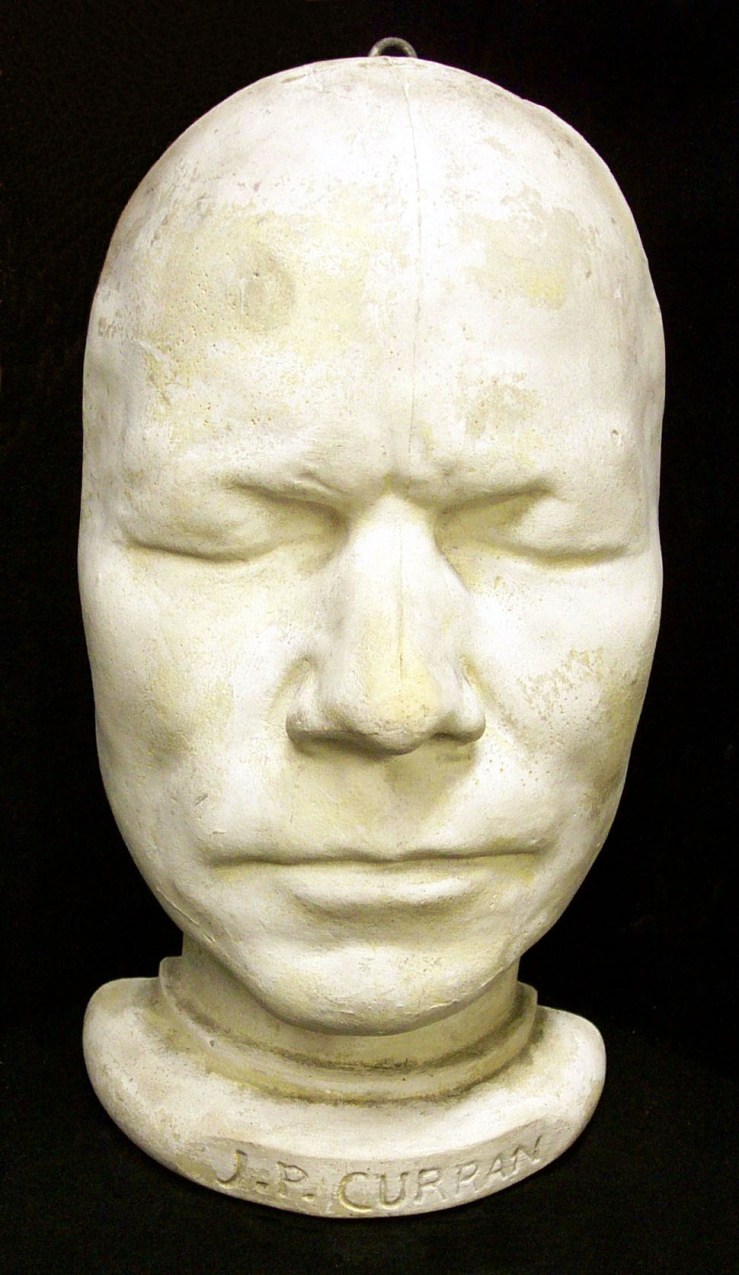
John Philpot Curran’s Death Mask

“She Was a Dynamite Girl and He Was an Aces Fellow” — A Passage from Renata Adler’s Speedboat

A passage from Renata Adler’s marvelous and strange novel Speedboat

She was a dynamite girl and he was an aces fellow. On the day he at last agreed by phone to marry her, the switchboard operators were overjoyed. For six months they had listened, in sympathy and indignation, to the tears, the threats, the partings and reconciliations. They were so unequivocally for the girl that only the purest professionalism kept them, at times, from breaking in. On the day Tim, after calls to his best friend, his firs wife, and his therapist, gave in at last, the oldest operator, who had been on the switchboard for twenty years, actually wept. The other two told the receptionist, at lunch. All four ladies had a drink, and then bought a card of slightly obscene felicitations. They had wavered toward the sentimental, but rejected it as basically unswinging. They did not sign the card. Tim and his girl, who had been breaking up once again on the day they received it (she was packing; they were in his apartment, were appalled. As a result of the card, and discussions of what to do about it—what it implied, who knew and who didn’t—they married.

Slavoj Žižek Defines True Love

“The History of My Life” — John Ashbery

“The History of My Life” by John Ashbery—

Once upon a time there were two brothers.
Then there was only one: myself.

I grew up fast, before learning to drive,
even, there was I: a stinking adult

I thought of developing interests
someone might take an interest in. No soap.

I became very weepy for what had seemed
like the pleasant early years. As I aged

increasingly, I also grew more charitable
with regard to my thoughts and ideas,

thinking them at least as good as the next man’s.
Then a great devouring cloud

came and loitered on the horizon, drinking
it up for what seemed like months or years.

“What’s the Matter, Don’t You Love Me Anymore?” — Raymond Carver’s Correspondence with Gordon Lish

Today is Raymond Carver’s birthday. Read excerpts of Carver’s letters to his editor Gordon Lish at The New Yorker. A few highlights (the letter from July 8, 1980 is fantastic and should be read in full, by the way)—

July 15, 1970

Hombre, thanks for the superb assist on the stories. No one has done that for me since I was 18, I mean it. High time I think, too. Feel the stories are first class now, but whatever the outcome there, I appreciate the fine eye you turned on them. Hang tough.

February 1, 1979

I’m going to Mardi Gras with Tess; and the Fords are coming down in March for spring break and we’re going into Mexico by train for a week. . . . I’m happy, and I’m sober. It’s aces right now, Gordon. I know better than anyone a fellow is never out of the woods, but right now it’s aces, and I’m enjoying it.

July 8, 1980, 8 a.m.

Dearest Gordon,

I’ve got to pull out of this one. Please hear me. I’ve been up all night thinking on this, and nothing but this, so help me. I’ve looked at it from every side, I’ve compared both versions of the edited mss—the first one is better, I truly believe, if some things are carried over from the second to the first—until my eyes are nearly to fall out of my head. You are a wonder, a genius, and there’s no doubt of that, better than any two of Max Perkins, etc., etc. And I’m not unmindful of the fact of my immense debt to you, a debt I can simply never, never repay. This whole new life I have, so many of the friends I now have, this job up here, everything, I owe to you for “Will You Please.” You’ve given me some degree of immortality already.

January 21, 1983

What’s the matter, don’t you love me anymore? I never hear from you. Have you forgotten me already? Well, I’m going back to the [Paris Review] interview and take out all the good things I said about you.

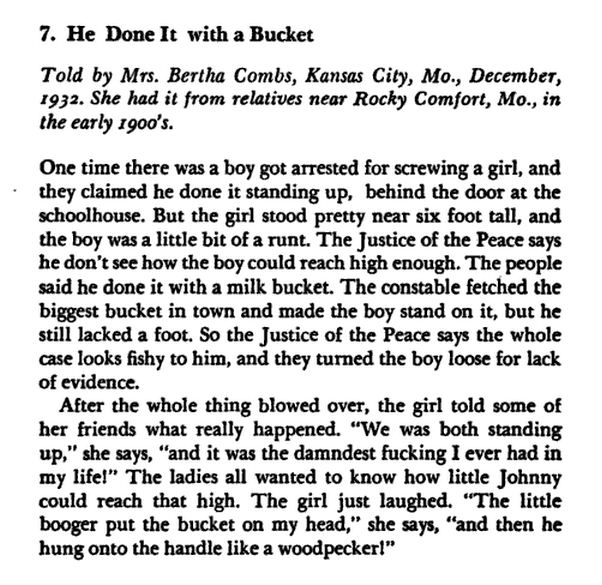
“He Done It with a Bucket” (An Ozark Folktale)

“He Done It with a Bucket,” an Ozark folktale from Vance Randolph’s indispensable collection, Pissing in the Snow & Other Ozark Folktales

The Old, Weird America — Greil Marcus on The World of Bob Dylan’s Basement Tapes

This month, to celebrate Bob Dylan’s 70th birthday (which is, um, today), Picador is reissuing Greil Marcus’s Invisible Republic under the name The Old, Weird America. Marcus uses Dylan and The Band’s recording sessions at Big Pink in 1967 as the ultimate synthesis of “the old, weird America.” From these legendary sessions Marcus unpacks Moby-Dick and William Burroughs, Ralph Waldo Emerson and Jerry Lee Lewis, Puritans and cowboys, utopias and ranches, Harry Smith and Dock Boggs, the Reverend J.M. Gates and Jonathan Edwards’s “Sinners in the Hands of Angry God,” murder ballads and the Beats, Clint Eastwood and Frank Hutchison, and more, more, more.

While Bob Dylan and the guys in the Band–Levon Helm, Robbie Robertson, Rick Danko, Richard Manuel, and Garth Hudson–are the protagonists of Marcus’s pop history, Harry Smith is perhaps its signal hero. Marcus finds in Smith’s seminal work Anthology of American Folk Music a history of democracy and America “made by willful, ornery, displaced, unsatisfied, ambitious individuals.” Marcus figures Anthology as the direct antecedent for The Basement Tapes. And yet as he moves backward in time he also moves forward, tracing the spirit of the old, weird America through to Bruce Springsteen and Nirvana.

Marcus’s mission isn’t so much a to tell Dylan’s history (yet again) as it is to contextualize Dylan and The Band’s project against the backdrop of the American folk past. As such, Dylanphiles won’t exactly find a new version here of the narrative that they’re undoubtedly so familiar with (cantankerous Dylan goes electric and “betrays” the folkies). Instead, what we find in The Old, Weird America is a verbal attempt to match the discursive, rambling, reference-hopping spirit of those sessions in ’67, and if Marcus at times rumbles and tumbles all over the place, we can forgive him—his weirdness is merely an attempt to match the verve, audacity, and strangeness of The Basement Tapes.

Herman Melville’s 1856 Passport Application

(More).

Orson Welles Does a Magic Trick

Audubon’s Death Mask

How to Enjoy the Apocalypse: A Post-Rapture Reading List

We published this list last year under the heading Ten Excellent Dystopian/Post-apocalyptic Novels That Aren’t Brave New World or 1984, but what with the Rapture going down and all, why not post it again, this time with links to pieces we’ve written on these novels—

1. Riddley Walker, Russell Hoban

2. Camp Concentration, Thomas Disch

3. A Clockwork Orange, Anthony Burgess

4. Oryx and Crake and The Year of the Flood, Margaret Atwood

5. The Hospital Ship, Martin Bax

6. Naked Lunch, William S. Burroughs

7. VALIS, Philip K. Dick

8. Ronin, Frank Miller

9. Ape and Essence, Aldous Huxley

10. The Road and Blood Meridian, Cormac McCarthy