More images from Luigi Serafini’s surreal cryptoencyclopedia, Codex Seraphinianus. Learn more by reading Justin Taylor’s essay from the May 2007 issue of The Believer.


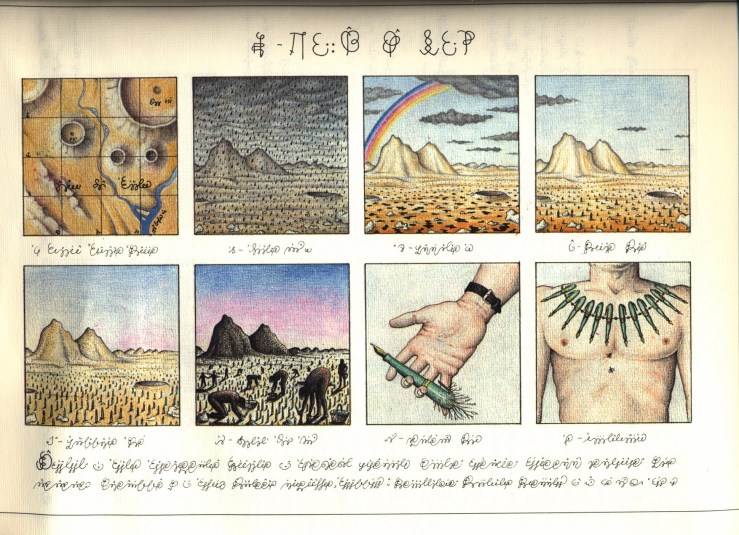
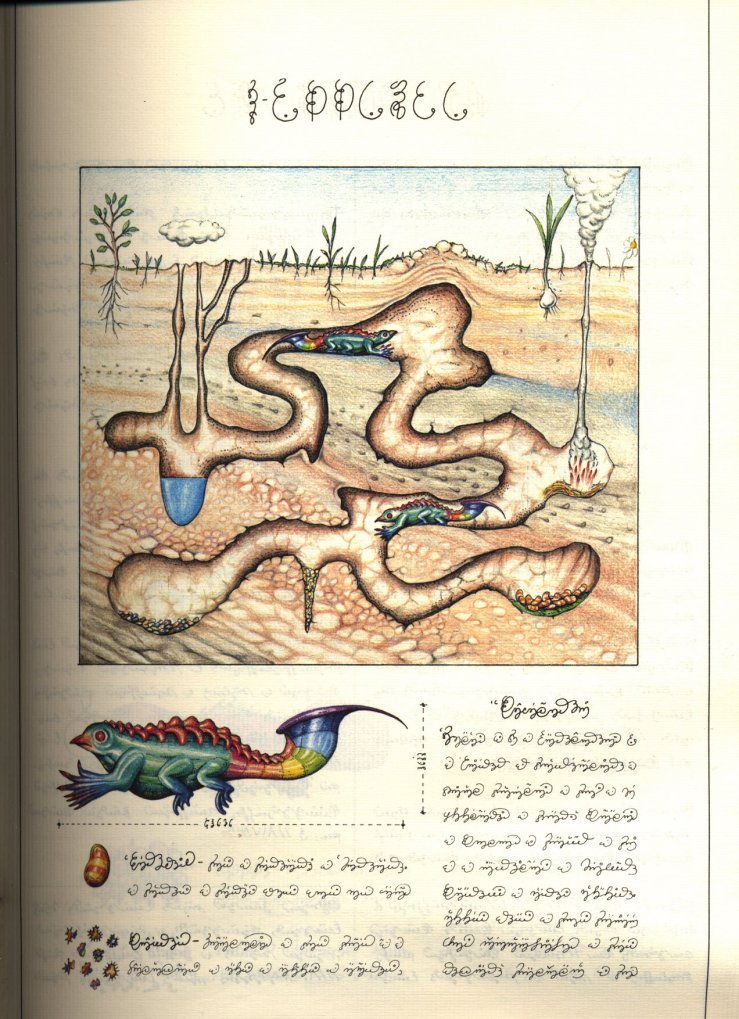
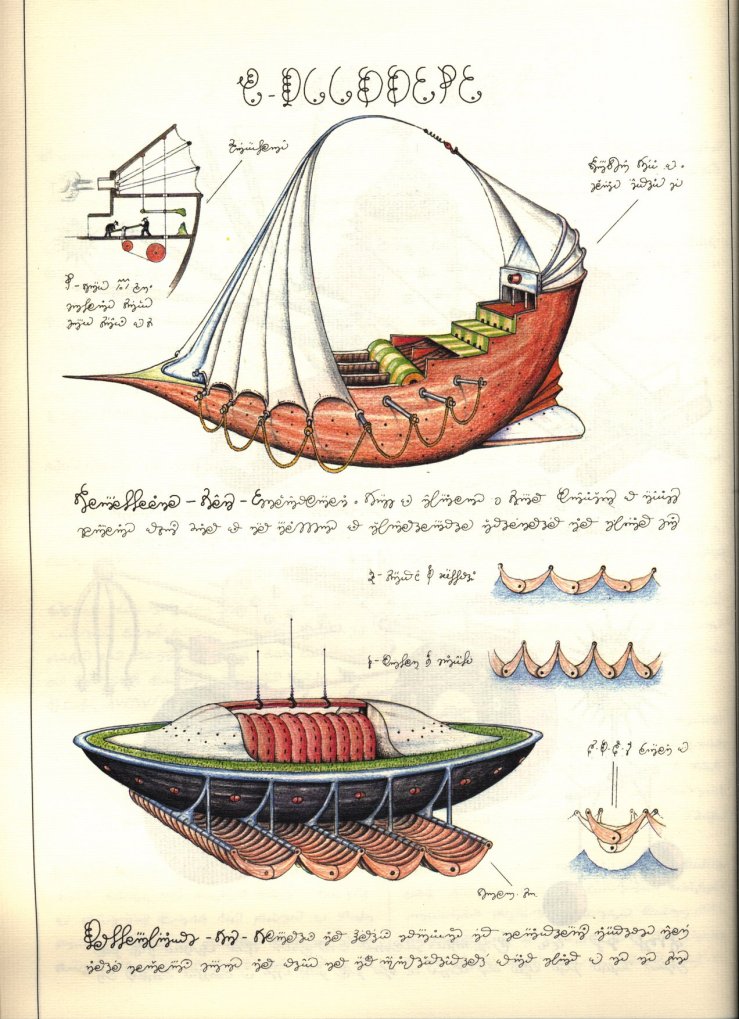

More images from Luigi Serafini’s surreal cryptoencyclopedia, Codex Seraphinianus. Learn more by reading Justin Taylor’s essay from the May 2007 issue of The Believer.
Vanity Fair interviews David Mitchell about his new book The Thousand Autumns of Jacob de Zoet. The interviewer mistakenly (I believe, anyway) thinks James Wood is joking in his New Yorker review when he wonders if the book is “post-postmodernist.” Mitchell’s answer sounds about right.
VF: James Wood in the New Yorker was describing your books and he jokingly came up with the phrase post-postmodernism. If there were such a thing as post-postmodern literature, what do you think that might be?
DM: Oddly enough, I’m not sure if novelists are the best people to ask whither-the-novel questions. For me, it’s a little like I’m a duckbilled platypus and I’m being asked a question about taxonomy. You won’t get much of an answer out of a platypus because they’re busy going about their business digging tunnels, catching fish, and having sex. You really have to ask a critic, or a taxonomist. I feel like I should have a pithy answer because I’m a novelist and you’re asking a question about the future of the novel, but the biggest question I ever get to is, “How can I make this damned book work?” I rarely ever put my head above the rampart and see where this big lumbering behemoth called global literature is going.
(Thanks to the Bored Bookseller for the tip).

Woody Allen talks to The New York Times about recording audiobook versions of his anthologies Getting Even, Without Feathers, Mere Anarchy, and Side Effects. Here’s Woody, from the interview, emitting his usual positive vibes:
I imagined it would be quite easy for me, and, in fact, it turned out to be monstrously hard. I hated every second of it, regretted that I had agreed to it, and after reading one or two stories each day, found myself exhausted. The discovery I made was that any number of stories are really meant to work, and only work, in the mind’s ear and hearing them out loud diminishes their effectiveness. Some of course hold up amusingly, but it’s no fun hearing a story that’s really meant to be read, which brings me to your next question, and that is that there is no substitute for reading, and there never will be. Hearing something aloud is its own experience, but it’s hard to beat sitting in bed or in a comfortable chair turning the pages of a book, putting it down, and eagerly awaiting the chance to get back to it.
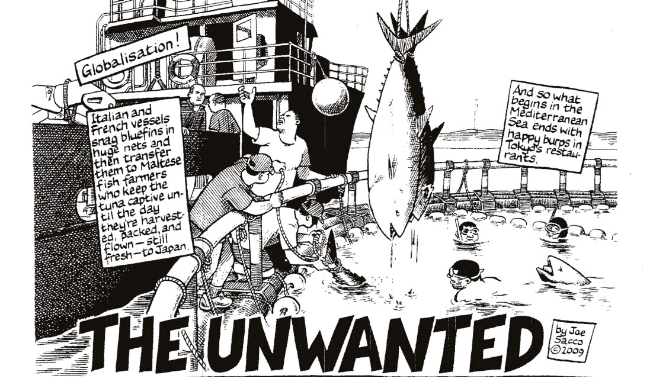
Read Joe Sacco’s comic “The Unwanted” at The Guardian. As usual, Sacco approaches a complex problem at the human level in his story about African immigration to Malta. Go here for more on Joe Sacco, his journalism, and his fantastic books, Safe Area Goražde and Palestine.
Hear the whole interview here.
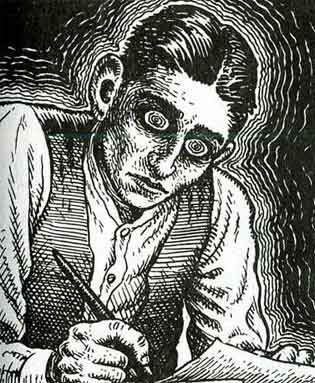
Yesterday, lawyers in Zurich opened four anonymous safety deposit boxes supposedly containing original manuscripts, letters, and drawings by Franz Kafka. The question of who owns the literary cache has turned into something of an international debacle, with lawyers and judges jostling for control.
In appreciation of Kafka (and this whole cosmically-ironic fiasco), we direct you to audio clips of the PEN fellowship’s March 26, 1998 tribute, which featured, among others, E.L. Doctorow, Susan Sontag, Cynthia Ozick, and Paul Auster, reading from their own essays on Kafka, or the Czech’s work. The highlight is David Foster Wallace’s essay “A Series of Remarks on Kafka’s Funniness from Which Not Enough Has Been Removed.”
You can stream the tracks here. True biblioklepts can download them directly from here.

At some point, almost every character in David Mitchell’s new novel, The Thousand Autumns of Jacob de Zoet tells a story. The book teems with storytellers and their stories, overflows with compact bildungsromans, wistful jeremiads, high adventures drawn in miniature, comic escapades, bizarre folk tales, and romantic myths, all pressed into the service of the book’s larger narrative, the story of Jacob de Zoet, a Dutchman in Shogunate era Japan. In 1799, the relative starting point for this massive novel, Japan limited economic trade with Europeans to the Dutch East India Company, who, with a few rare exceptions, were not permitted to touch Japanese soil. Instead, the Dutch were confined to the man-made isle of Dejima in the bay of Nagasaki. With its rich cultural mishmash, claustrophobic isolation, and strange hybrid nature, Dejima makes a fascinating platform for Mitchell’s tale.
Most reviews of Mitchell’s new book have squared it against his earlier novels, particularly his experimental opus Cloud Atlas (The Guardian‘s review even begins by asking “Does it matter what books a novelist has written before? Should readers need to know an author’s preceding works fully to grasp the new one?”). The reason for this is plain. By and large, Thousand Autumns is a conventional historical novel, a straightforward linear narrative that combines a forbidden love triangle story with elements of high adventure. There are good guys and bad guys, Enlightened thinkers and scheming crooks, warriors and spies, and even an evil monk who may or may not have supernatural powers. Thousand Autumns (like its main setting Dejima) is richly detailed but hermetically sealed; what leaks from that seal are its myriad stories, its capacity for storytelling. This effusion of stories also marks the novel, I believe, as something more than the conventional historical novel it is purported to be. Even more interesting though is the space the novel is occupying in a current literary debate–is The Thousand Autumns of Jacob de Zoet a postmodern novel or not? The rest of my review will discuss this issue, along with James Wood’s review at The New Yorker and Dave Eggers’s review at The New York Times. The simple answer, of course, is that it doesn’t matter whether the book is postmodern or something else–it’s a very good book, I enjoyed it very much, and you probably will too. I encourage you to read Wood’s precis, which I’ve excised here, and then pick up the book. Anyone else interested in the foolish minutiae of what may or may not make a book postmodern or post-postmodern or something else may wish to continue (or not).

Here’s James Wood, using Mitchell’s oeuvre to dither over the fact that “The serious literary novel is at an interesting moment of transition” —
If postmodernism came after modernism, what comes after postmodernism? For that is where we are. “Post-postmodernism” tends toward an infinite stutter. “After postmodernism” suggests a severance that has not occurred. We might settle for “late postmodernism,” a term that suggests the peculiar statelessness of contemporary fiction, which finds itself wandering—not unhappily—between tradition and novelty, realism and anti-realism, the mass audience and the élitist critic. Thus David Mitchell can follow a “postmodern” novel with a “traditional” comic bildungsroman, and then follow that with a conventional historical novel. It is hard to know whether this statelessness is difficult freedom or easy imprisonment, but the more ambitious contemporary fiction will often blend a bewildering variety of elements and historical techniques [. . .]
Dave Eggers, however, feels no need to look for machinations beyond straightforward storytelling. He claims that Thousand Autumns retains the
[. . .] narrative tendencies [of Mitchell’s earlier works] while abandoning the structural complexities often (and often wrongly) called postmodern. This new book is a straight-up, linear, third-person historical novel, an achingly romantic story of forbidden love and something of a rescue tale — all taking place off the coast of Japan, circa 1799. Postmodern it’s not.”
There’s a certain reticence in Eggers’s review to situate Thousand Autumns against anything but itself, including even the rest of Mitchell’s works. In contrast, Wood spends the first half of his review positioning Mitchell’s postmodernism, throughout both his novels (against each other), and as the oeuvre of one author (against other authors). For Wood, Thousand Autumns, because of “its self-enclosed quality [. . .] represents an assertion of pure fictionality.” He continues, arguing that “although the book contains no literary games, it is itself a kind of long game.” Wood would like to see in Thousand Autumns‘s discrete self-containedness a kind of literary gesture, perhaps a sort of conventional historical novel (in scare quotes) that is so conventional as to efface all signs of self-awareness (and thus erase the scare quotes around the gesture). At the same time, Wood recognizes the power of storytelling in the book, asserting that this feature is what makes it a “representative late-postmodern document.” Wood continues:
In place of the grave silence that was the great theme of early postmodernism (or late modernism, if you prefer), language announcing a postwar exhaustion, its own impossibility, as in the work of Beckett or Blanchot, there is a confident profusion of narratives, an often comic abundance of story-making. Never, when reading Mitchell, does the reader worry that language may not be adequate to the task, and this seems to me both a fabulous fortune and a metaphysical deficiency.
These last sentiments are where I strongly disagree with Wood (as perhaps my lede attests)–the greatest strength of Mitchell’s work here is the fabulous fortune of its abundant storytelling. Far from being a metaphysical deficiency, the characters in Thousand Autumns, major and minor, repeatedly transcend their social, spiritual, economic, psychological, and physical confinement via storytelling. Again and again language breaks characters away from their isolation or imprisonment, gives them access to adventure and romance–to spirit. Ultimately, Wood condemns the book for this “metaphysical deficiency,” arguing that “the reader wants a kind of moral or metaphysical pressure that is absent, and that has ceded all the ground to pure storytelling.” (In Wood’s critical body, it is always “the reader,” never “this reader”). I think that the pleasure and power of pure storytelling is its own end, and perhaps it is this recognition that leads Eggers to pronounce of the book simply that “Postmodern it’s not.” And while this declaration is ultimately a more reader-friendly take on Thousand Autumns, it’s also clear to see how the experimental nature of Mitchell’s previous work calls for Wood’s need to place the novel, to situate it against a developing canon (even if Wood chooses ultimately to deny its status).
Wood is perhaps right in his assertion that the term “post-postmodernism” leads to an “infinite stutter.” Still, post-postmodernism ultimately seems more fitting to describe Thousand Autumns than Wood’s “late postmodernism.” The Thousand Autumns of Jacob de Zoet cunningly sets the spiky traps of language and then gracefully leaps over them. Like David Foster Wallace and William Vollmann–two writers who I believe mark the beginnings of post-postmodernism–Mitchell wants to transcend postmodernism’s ironic vision, and storytelling–giving his characters voices–is a means to this end. Perhaps it is Mitchell’s earnestness in conveying the power of storytelling leads Wood to conclude Thousand Autumns “a kind of fantasy [. . .] Or, rather, it is a brilliant fairy tale; and even nightingales, as a Russian proverb has it, can’t live off fairy tales.” If, finally, Thousand Autumns is not a late postmodernist historical fiction but indeed a fairy tale, then it’s worth noting that it’s a particularly enjoyable and nourishing one. Highly recommended.
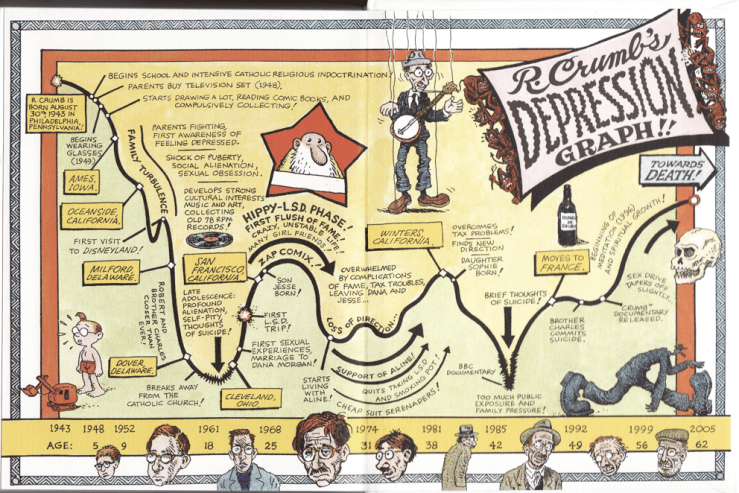
At a in a reading in Hackney, England, two days ago, Bret Easton Ellis dissed the late great David Foster Wallace:
Question: David Foster Wallace – as an American writer, what is your opinion now that he has died?Answer: Is it too soon? It’s too soon right? Well I don’t rate him. The journalism is pedestrian, the stories scattered and full of that Mid-Western faux-sentimentality and Infinite Jest is unreadable. His life story and his battle with depression however is really quite touching . . .
Via HTMLGIANT, via The Howling Fantods. The discussion at HTMLGIANT’s comment section is pretty great right now (see our own comment thread below for comments detailing HTMLGIANT readers who claim that BEE’s quote is misrepresented/mistranscribed), with a few commentators bringing up an interview in which DFW said the following about BEE:
I think it’s a kind of black cynicism about today’s world that Ellis and certain others depend on for their readership. Look, if the contemporary condition is hopelessly shitty, insipid, materialistic, emotionally retarded, sadomasochistic, and stupid, then I (or any writer) can get away with slapping together stories with characters who are stupid, vapid, emotionally retarded, which is easy, because these sorts of characters require no development. With descriptions that are simply lists of brand-name consumer products. Where stupid people say insipid stuff to each other. If what’s always distinguished bad writing—flat characters, a narrative world that’s cliched and not recognizably human, etc.—is also a description of today’s world, then bad writing becomes an ingenious mimesis of a bad world. If readers simply believe the world is stupid and shallow and mean, then Ellis can write a mean shallow stupid novel that becomes a mordant deadpan commentary on the badness of everything. Look man, we’d probably most of us agree that these are dark times, and stupid ones, but do we need fiction that does nothing but dramatize how dark and stupid everything is? In dark times, the definition of good art would seem to be art that locates and applies CPR to those elements of what’s human and magical that still live and glow despite the times’ darkness. Really good fiction could have as dark a worldview as it wished, but it’d find a way both to depict this world and to illuminate the possibilities for being alive and human in it. You can defend “Psycho” as being a sort of performative digest of late-eighties social problems, but it’s no more than that.
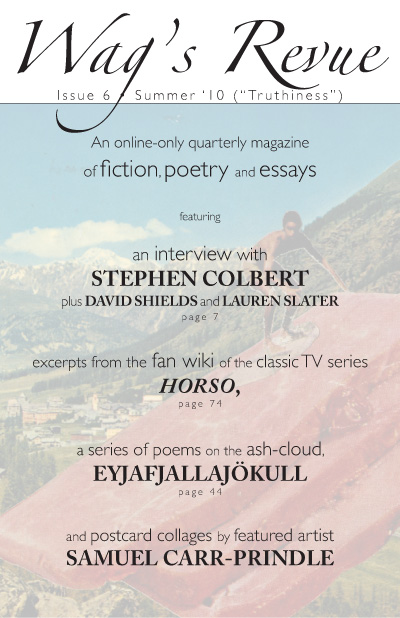
Issue 6 of the online literary journal Wag’s Revue is out now, and features interviews with Stephen Colbert and Reality Hunger author David Shields. They’re calling it the “Truthiness” issue, which I guess is appropriate. Here’s Colbert actually talking about Shields:
WG: Despite your professed aversion to books, you often have guests on the show from the world of literature. In fact, David Shields, who we recently interviewed, was on your show shortly after we spoke with him.
SC: Yeah, you guys should get a nice Colbert bump out of that.
WG: How do you reconcile that, though?
SC: Reconcile what? Having Shields on the show? I nailed Shields. You can go to the tape and see that. I mean, the guy’s book is the equivalent of you guys putting clips from my show on your website and calling it “The Wag-bert Report.” It’s—basically, it’s Wikipedia. A bunch of unattributed, slapped-together quotes. Mostly taken from Britannica.
“A bunch of unattributed, slapped-together quotes”–that’s about right, although it’s always a precarious position to agree with Colbert’s persona. As for the Shield’s interview, well, he manages to say a number of embarrassing things. Here he is explaining why he’s too busy to actually read the novels he’d love to see extinct:
What I find tedious are works that genuflect at the altar of narrative. What happens with so many books by supposedly intelligent writers is that the intelligence gets tamped down: ‘I’ll tell this story and the meaning will crawl through the cracks of the narrative at six crucial points.’ That’s not worth it. Part of my conversion, you could say, resulted of becoming aware of mortality. This is what I focused on in my previous book [The Thing About Life is One Day You’ll Be Dead]. This is it. This is my entire life. We are mortal beings watching the earth for a short time. I don’t have time for a 600-page novel that tells me that crime doesn’t pay.
Interviewer Sandra Allen has the intelligence to call Shields out on this. Observe:
SA: But doesn’t this dismissal also potentially dismiss art? Dismiss a reader experiencing the glorious immersion in the art that is Crime and Punishment, or for that matter Swann’s Way or Ulysses or 2666?
DS: First of all, most of the books that you mentioned were written a long time ago. I love Proust above all else pretty much. Of course if you want to read Crime and Punishment, Swann’s Way, these glacially-paced novels that have no place in a 21st century universe, you can. Even the Bolaño was written ten or so years ago. I’m trying to figure out how we’re going to write now.
Shields then blathers about how Reality Hunger, like Monet or Ulysses or Beethoven’s 5th (!) is really renewing art, claims that all of the critics who hated on Reality Hunger merely proved his point (Shields offers no support for this argument), and generally poses as a would-be revolutionary/college sophomore who just read half of Roland Barthes’s Mythologies. The interview is basically great ammunition for anyone who saw through Reality Hunger.
I’m a few hours from the end of the audiobook version of David Mitchell’s new novel The Thousand Autumns of Jacob de Zoet. It’s fantastic stuff so far–engaging, imaginative, complex, and satisfying in its richness. Here’s a summary of the book from James Wood’s review of the book in The New Yorker, July 5, 2010:
Jacob de Zoet is a pious, pedantic, upright young clerk for the Dutch East Indies Company, newly arrived on the man-made island of Dejima, in the bay of Nagasaki. It is 1799. The Japanese, enforcing their policy of isolation, confined the Dutch to their post at Dejima, a kind of floating village connected by a bridge to the mainland, and strictly monitored them. The Dutch were effectively prohibited from entering the landmass of Japan, except for the purpose of making an annual visitation to the shogun, in Edo; religious services were banned, and books of Christian devotion were seized upon arrival. Jacob is quickly involved in two difficult narratives: as an employee of the utmost probity, he is tasked with auditing the company, and purging its corruption (various employees have been fiddling the books and stealing goods); unfortunately, the man who has bestowed that task, Unico Vorstenbosch, the chief of the Dejima trading station, is himself on the take. When Jacob confronts Vorstenbosch about his dishonesty, he is suddenly isolated, without allies.
The second struggle also isolates Jacob: he falls in love with Orito Aibagawa, an unusual Japanese woman who works as a midwife, and who has been taking medical instruction from a Dutch physician and intellectual, Dr. Marinus, long resident on Dejima. It is almost impossible for Jacob to advance his love; he is not even sure that Orito returns it, and, even if she did, how could a red-haired Dutchman and a wellborn Japanese woman form any serious bond? But, before anything might occur, Orito disappears. Her father has died, leaving large debts, and it seems that Orito’s family, in order to settle those debts, has “sold” the daughter into a kind of slavery: against her will, she is taken to a remote rural nunnery, run by a powerful and malevolent warlord, the Abbot Enomoto. Just as Jacob fought to unravel the corruptions of his company, so he now strives to unravel the corrupt potency of the Abbot Enomoto and his cultlike temple. As an English reviewer has remarked, the Abbot’s temple, where the enslaved nuns are drugged and impregnated by willing monks, is reminiscent of the world of Japanese anime.
This summary is really the best part of Wood’s review, which works overtime to find fault in what is a very good book. He spends a good deal of his review dithering over the space Mitchell occupies in the contemporary literary world–is Mitchell a postmodernist? A post-postmodernist? A late postmodernist? It’s all quite silly, and I’ll probably write about it in a later post.
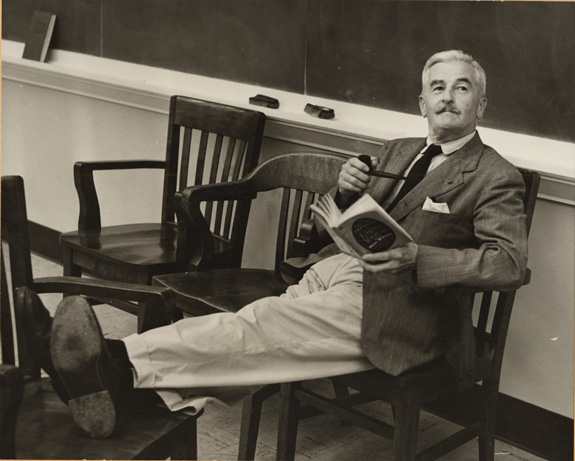
In 1957 and 1958, William Faulkner served as the first writer-in residence at the University of Virginia at Arlington. Under the direction of English Professor Stephen Railton, UVA has now put the audio archive online, making it available to the public for the first time. There are dozens of lectures here, as well as many readings from Faulkner’s essays and fiction, including a reading from The Sound and the Fury. Cool stuff. For more about Faulkner’s time at UVA, read the university’s Magazine article, “Faulkner among the ‘Snobs’.”
The AV Club interviews author China Miéville about his new book, Kraken. From the interview:
Kraken is a very undisciplined book. That’s a gamble. If it doesn’t come off, it’s disastrous. But there are pleasures, I think, to a meandering lack of discipline that you can’t get the other way, and vice versa. You gain something and you lose something. My second book, Perdido Street Station, was the one that a lot of people really, really liked, and it was tremendously sort of rumbustious and ill-disciplined. I feel like I’ve been getting increasingly disciplined since then, and some readers seem to miss that kind of amiable chaos. What I wanted to do with Kraken is tap into what you’ve kindly called an eruption. I wanted to indulge that. It does have a very different feel than The City & The City. It obviously won’t work for everyone, but I always think about books like—and I don’t mean this hubristically—Gravity’s Rainbow. If Gravity’s Rainbow is anything, it’s kind of this dreamlike meander. The idea of saying to Pynchon, “You know, you need to tighten this up,” it would destroy it. Kraken was an effort to tap into that same kind of pleasurable ramble. In some ways, Kraken is more like Perdido, whereas The City & The City was a departure. It’s the kind of thing I’d like to do a lot more of. In some ways, this was getting back to what I was better known for.
Anthony Bourdain’s moving remembrance of Harvey Pekar. From Bourdain’s blog:
He was famed as a “curmudgeon”, a “crank” and a “misanthrope” yet found beauty and heroism where few others even bothered to look. In a post-ironic and post-Seinfeldian universe he was the last romantic–his work sincere, heartfelt, alternately dead serious and wryly affectionate. The last man standing to wonder out loud, “what happened here?” [. . .] Harvey Pekar owned not just Cleveland but all those places in the American Heartland where people wake up every day, go to work, do the best they can–and in spite of the vast and overwhelming forces that conspire to disappoint them–go on, try as best as possible to do right by the people around them, to attain that most difficult of ideals: to be “good” people.

The literary hoax at the heart of Adam Langer’s new novel The Thieves of Manhattan explores the line between fiction and fact, asking readers to examine what kinds of truth they demand from their books. The novel’s outset finds protagonist/narrator Ian Minot working in a coffee shop, watching his too-good-for-him girlfriend Anya begin to succeed in a literary world that repeatedly rejects his own small, simple stories. Ian writes character-driven short stories that attempt to capture the banal truths that permeate ordinary, everyday existence. Publishers aren’t interested though, telling Ian that his characters don’t seem to live on after the last page. Aggravating matters, blatant phony Blade Markham sits atop the bestseller lists despite the fact that his memoir Blade by Blade seems too preposterously fantastical to hold up to even the flimsiest exercise in fact-checking. When Anya gets a book deal and leaves Ian for Blade, Ian hits bottom and agrees to work with a former editor named Roth on a literary con. After years of getting his crime-adventure novel A Thief of Manhattan rejected–it’s not realistic enough–Roth enlists Ian to rewrite the book as his own, real memoir. Working together, Ian and Roth revise Thief until it becomes Thieves, a book that weds Ian’s sense for character depth and dialogue with Roth’s crime noir adventure plot. As galleys arrive and it becomes clear that Thieves is poised to be a major hit, it also becomes clear that not all the details of Roth and Ian’s fake memoir are so fake after all. To reveal more of the plot would spoil the twists, turns, and snares of its brisk third act, so we’ll leave summary aside by simply noting that Thieves compels reading to its final page, a reading that you’ll likely complete in one sitting once that third act begins.
Thieves is a hybrid novel, a stylistic balancing act between Ian’s character-based, realist, psychological storytelling and Roth’s adventure-mystery tales. Langer draws his audience in to identify with Ian. It’s hard not to empathize with Ian, especially through his early embarrassments in Manhattan’s literary world, a world that Langer satirizes with equal parts vitriol and love. Ian mocks the successful literati who he feels have rejected him; to him, they’re poseurs, hacks, and shallow sycophants. One of the rewards of Thieves is watching Ian transform into one of the people he would once mock, and to do so through an act of fakery, one which he repeatedly defends (to himself) as a means to artistic expression. Langer’s groundwork in developing Ian’s character pays off tremendously in the novel’s aforementioned third act, which essentially finds Ian transforming into a character in a book that he (kinda sorta) wrote himself. Here, Thieves shifts gears into full-on noir adventure, yet retains its self-referential humor through its final spiky helix. It works because we still believe in the core veracity of Ian’s character. And while plenty of literary comparisons would be apt here, the last act of Thieves reminded me most of the final act of Spike Jonze and Charlie Kaufman’s marvelous film Adaptation, a film that at once enacts and comments on its own genre status without the pitfalls of academic dithering.
The signature literary device of Thieves is a strange kind of metonymy where the names of authors, characters, and other proper-noun literary references substitute for objects or actions with which they are closely associated–at least in Ian’s lit-soaked mind. An example: “I saw us agreeing to split the apartment down the middle, putting a divider between her proust and mine. I could hear her having wild chinaski in the next room with all of her new boyfriends, madly scrawling in her notebook, furiously typing on her laptop, while I sat alone with my hand on my portnoy.” Langer takes a risk here. His narrator’s ergot could have turned out too-precious (and thus eventually irritating); instead, Ian’s litspeak becomes the fitting jargon for a crime novel. In appropriating and recontextualizing other authors’ characters and names, Ian’s jargon underscores Thieves‘s themes of the tension between fact and fiction, the writer’s role in delivering truth, and the concept of the artist as a thief.
Literary hoaxes are hardly new, but in recent years there’s been a small explosion of memoirs revealed to be part or wholly false. Langer clearly has a love for literary hoaxes old and new, and it shows in his book, particularly through his narrator’s transformation from a writer of realist fiction to a fake memoirist to a character in a book of his own making. The Thieves of Manhattan is a tightly-plotted, character-driven adventure-crime noir-mystery-hoax-con game novel pretending to be a memoir (pretending to be a novel . . .) that, despite all its fun metafictional games, never falls into the trap of navel-gazing. Langer gives us a character we can care about and puts him in the middle of a plot we want to see through to its end, but the real testament to Thieves is how much we can still care about that character after the last page. Highly recommended.
The Thieves of Manhattan is available from Spiegel & Grau. For more, read Biblioklept’s interview with Adam Langer.

 Biblioklept