Seven Films That Do Shakespeare Right

1. Titus (1999; directed by Julie Taymor)

Titus Andronicus, one of Shakespeare’s most overlooked plays, comes to lurid, gory glory in this late nineties adaptation. Gang rape, incest, and mutilation mark Titus as one of the downright nastiest Shakespearean works. Throw in a Thyestean banquet, and you’ve got the makings of a nightmare. The villain Aaron is on par with Iago as one of the bard’s greatest baddies.

This trailer makes the movie seem way cheesier than it really is. Trust me.

2. Romeo + Juliet (1996; directed by Baz Luhrmann)

Baz Lurhmann’s take on the ultimate boy-meets-girl story dazzles viewers in a cacophony of glitter and fireworks that captures the sheer silliness of adolescence–the real theme of Romeo and Juliet. Despite a myriad of critical naysayers, I believe Lurhmann’s hypercolor vision far superior to Zeffirelli’s 1968 version (“the one with the boobies”) so often thrust on high school kids. I actually used this version when I used to teach 9th graders. They loved it. I love it too, particularly John Leguizamo’s standout turn as Tybalt.

The first 10 minutes are excellent, if you don’t recall.

3. Macbeth (1972; directed by Roman Polanski)

Another one I show to my students. Polanski’s Macbeth is one of my favorite films, Shakespeare aside. Filmed relatively shortly after Polanski’s wife Sharon Tate was horrifically stabbed to death by the Manson family, Macbeth captures a forbidding spirit of bloody doom, sexual violence, and inescapable guilt. Beautifully shot and superbly acted, every other attempt has paled in comparison.

4. Looking for Richard (1996; directed by Al Pacino)

Wow. What a film. Pacino leads a group of thespians who try to reclaim Shakespeare “from the academics,” as one actor puts it. There’s a problem though: they’re not really sure how Richard III should go. This film captures the pre-production process for a staging of one of Shakespeare’s greatest history plays, revealing a fascinating aspect of adaptation.

This clip sums it up much better than I could:

5. Ran (1985; directed by Akira Kurosawa)

Kurosawa’s take on King Lear proves that the work of one master can be translated into something new and marvelous when placed in the hands of another master. Ran transfers the Lear story to a feudal Japan rife with warring samurai. Ran is at once an epic action film as well as a philosophic meditation on aging, a commentary on gender roles as well as a study on familial duty and love. Again, a Biblioklept fave.

This is one of the best scenes in the film, or any film, really:

6. Henry V (1989; directed by Kenneth Branagh)

Branagh has given the world more filmed adaptations of Shakespeare than would seem possible for someone to do in one lifetime, and the man is still relatively young. That said, at times his work can be stodgy, if not downright plodding. Henry V is not for everyone. This is a very, very long film, and although the battle scenes are exciting, those unfamiliar with the play will no doubt have a hard time following it–particularly the scenes in French which lack subtitles. Still, if you’re studying the Henry tetralogy, or Shakespeare’s English histories in general, then there really isn’t a better supplement. In some ways Henry V is one of the most textually faithful adaptations of a Shakespeare play I can recall. Fans of Braveheart should also note that Mel “Sugartits” Gibson essentially ripped-off large sections of Henry V when crafting that turgid turd.

A famous speech:

7. Prospero’s Books (1991; directed by Peter Greenaway)

One of the Biblioklept’s favorite directors Peter Greenaway (8 1/2 Women; The Cook, the Thief, His Wife, and Her Lover) adapted one of the Biblioklept’s favorite plays, The Tempest, into a very weird, very surreal film called Prospero’s Books. As the title suggests, this is a movie very much about the act of writing itself (a theme Greenaway also explored in his unfortunate fiasco The Pillow Book); more poignant however are the themes of forgiveness and the letting go of the desire for revenge–aspects central to the original play.

Unfortunately, for some reason Prospero’s Books is still not available in DVD, and I have located no news of plans for that to happen any time soon. So, until that time, taste a little sample:

Harry Potter Sex Romp

OK. My post’s title is solely for the sake of titillation (I have also been drinking lots of sangria and watching the first HP movie on TV, and the idea of a Harry Potter sex romp is making me giggle. Twenty points from Gryffindor). Still. Just so you’re not too disappointed, check out Shags the Dustmop’s collection of erotic Harry Potter fan fiction. A half-hearted endorsement, at best. Weird and creepy.

Now, for something truly great…

Fans of if…. will no doubt be familiar with “Sanctus,” the beautiful piece of music that haunts the film. If this recording is not the same as the one in the film, it’s very close. Either way, a sublime rendition–

Sanctus” (from the Missa Luba)

All the sangria and erotica and Congolese choral interpretations of Catholic masses have for some reason brought to mind the paintings of Wilfredo Lam (longtime pal of one of our favorite writers, Lydia Cabrera).

black081.jpg

A decent enough collections of his vibrant paintings can be found here (and you can always google for more, you lazy bastard).

Finally, it is always something special when a new blog is born. Check out Falcon Hawksome. Despite the author claiming that he “can’t stand” Van Morrison’s (or Them’s, if you want to be overly technical, geek) “Gloria,” please take my word that he is something of an arbiter of taste.

OK. Back to my sangria.

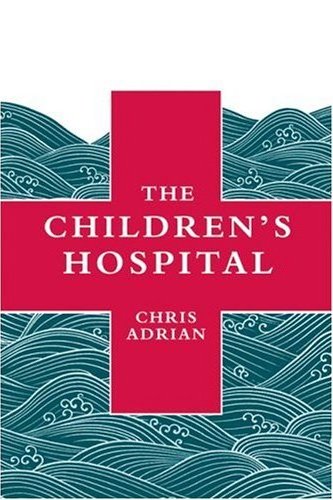
The Children’s Hospital — Chris Adrian

childrenshospital.jpg

“The book started out a lot more like a big happy Love Boat episode, then 9/11 (and all that followed) happened and blew it in a new direction.”–Chris Adrian (McSweeney’s interview)

Chris Adrian’s 2006 novel The Children’s Hospital begins with the end of the world. A flood of (excuse me) biblical proportions drowns every living thing on earth with the exception of a children’s hospital which has been specially engineered with the aid of an angel to withstand both the flood as well as life at sea. The residents of the newly nautical hospital–doctors, med students, specialists, nurses, some 699 sick children, portions of their families and sundry others–must navigate an uncertain future drenched in despair and loss. Their mission of helping the ill is the only thing that sustains them–initially.

Central to the story is Jemma Claflin, a mediocre third-year med student with a haunted past. Years before the deluge, each member of her family and her long-term boyfriend died in a horrific way, leaving Jemma unable to love, let alone believe in a positive future. However, as the book progresses, it becomes apparent that Jemma will have to best her fear and become the hero of this epic novel.

I really, really enjoyed The Children’s Hospital. Adrian’s writing communicates a stirring mix of immediacy and pathos, tempered in a cynical humor that sharply bites at any hint of sentimentality. Despite its 615 pages, epic scale, and use of multiple narrative viewpoints, The Children’s Hospital never sprawls into logorrhea–Adrian holds the plot reins tightly at all times, sparingly measuring details which accrue neatly to an affecting payoff. The middle 200 page section of this book is easily the best thing I’ve read in the past few years. I actually had to stand up to read it–the highest Biblioklept endorsement there is. Yes folks–if you have to stand up to read it, it’s truly excellent stuff.

You can read the entirety of Chris Adrian’s short story “A Better Angel” here.

We the People

We love America–who doesn’t? We also love the Preamble to the Constitution. Those three magic words “We the people” created a whole new country (there was also a violent revolution involved). O! the transformative power of words! How glorious that the very act of saying “we” creates a “we” (sure, at the time, the “we” really meant white landowning males, but still, let’s glory in the democratic magic folks). In appreciation of the best country in the world (yes, we’re being earnest dear reader), we present a few classic clips for your viewing pleasure.

No doubt you’ve already gloried in the glory of glorious Dennis Madalone’s glorious tune “America, We Stand as One,” but you can always glory out again.

After that, learn some history kids. Did you know that the Founding Fathers could sing? Better than Rent!

Finally, this is where Biblioklept learned the true meaning of Independence Day, and what it really means to be “Living in America”–

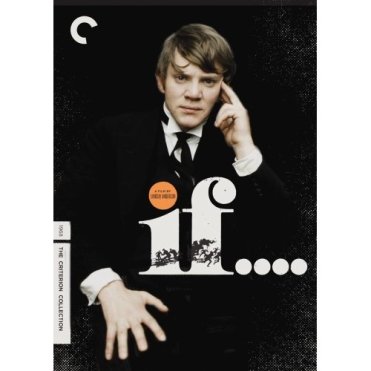
if…. — Lindsay Anderson

41ahznwegjl_ss500_.jpg

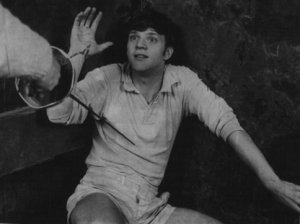
Criterion has finally given Lindsay Anderson‘s 1968 classic if…. a proper DVD release. if…. is one of my all time favorite films. Mick Travis (played with savage aplomb by a very young Malcolm McDowell) leads “The Crusaders,” a band of rebels who defy “The Whips,” the cruel upperclassmen who mete out harsh punishments at their stringent English boarding school. “What I want to know is when do we live?” asks restless Mick. However, the life of individual freedom that he wants to live is so suppressed by the cruel and dominating hierarchy of his school (a microcosm of British society) that he must take liberty by force. In one scene, the Crusaders playfully fence with each other, declaring “Death to all tyrants!” The playfulness quickly slips into violence, as the repressed urges of these would-be revolutionaries flare up. When Mick is cut, he shows his wounded hand and declares with pride “Blood! Real blood!”

if1.jpg

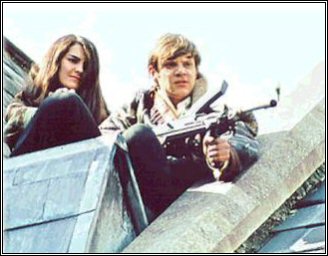
Anderson loads if…. with myriad revolutionary images that foreshadow the film’s shocking ending, at the same time tempering if…. with a surrealist sense of humor that satirizes the inherent dangers in institutionalized education and groupthink in general. if…. is bitingly funny, oddly sexy, and unlike any other film I’ve ever seen. The new edition looks great (much better than my VHS dub) and sounds great, and the commentary track provided by Malcolm McDowell and film critic David Robinson is insightful and surely a must for fans of the film. But who am I kidding, if you’re a fan of this film you’ve already seen the release and listened to the commentary–right?

if.jpg

Lessons in Virtual Photography

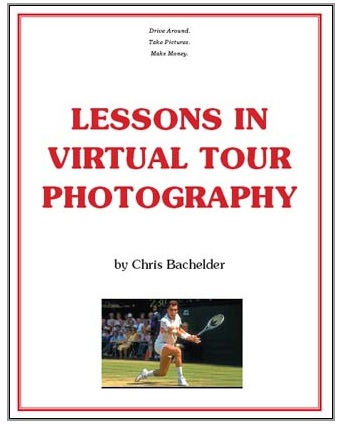
bachelder1.jpg

After devouring U.S.! a few weeks ago, I went seeking more Chris Bachelder. What d’y’know, the guy wrote an e-book, Lessons in Virtual Photography, available for free from McSweeney’s. Go figure. Check it out here. It’s pretty funny.

bachelder.jpg

Gaming Literacy

According to this NPR report, the MacArthur Foundation is providing a $1.1 million grant to create a new middle/high school in New York with a curriculum based on video game design. The idea here is that video game design promotes a new type of literacy vital for America’s success in the rapidly growing global economy. The report stresses a shift from older models of literacy, which focus on content memorization, to the pressing need to emphasize literacy models that engage the dynamic systems inherent in newer media.

I think that this is a fantastic idea. Some may find it a nonsensical or even radical shift in education, but we have to try something new. The educational system in this country is based on a model that hasn’t really changed since the industrial revolution. Although numerous sources rank America as having one of the highest literacy rates in the world, my own anecdotal evidence collected as a high school English teacher leads me to believe that this country is in the midst of a literacy crisis that is sure to have a major impact in the country’s ability to compete with countries like India and China.

The risks here are very, very real. Literacy is not just a matter of being able to read stop signs or popular novels or wikipedia pages–literacy is what informs the content of our cultural, social, and political discourse. And beyond the economic issues presented in our difficulty competing in fields like science and engineering–an issue that the MacArthur Foundation’s grant may help address–the everyday rhetoric in this country has become drastically dumbed-down, polarized, reduced to hackneyed platitudes and snappy sound-bites. Political and cultural discourse now consists of empty catch-phrases and meaningless psychobabble. I mean, it’s like totally gay, know what I’m sayin’?

This clip from Mike Judge’s satire Idiocracy neatly sums up the future of verbal discourse in America:

Sweet Summer Jams

The Audioklept knows how greedy your ears are –here are some dope tracks to help flesh out that awesome mix tape you’ve been making.

frog-eyes.jpg

First up, a sweet little ditty from Frog Eyes’ latest stellar rock opera, Tears of the Valedictorian (OK, it’s not really a rock opera, but so what). Post-punk prog for professional pessimists. Frog Eyes — “Evil Energy the Ill Twin of…”

ole-770.jpg

Frog Eyes are connected to The New Pornographers by way of a band called Swan Lake–Dan Bejar is in both bands. Dan Bejar’s solo stuff as Destroyer kicks ass all day long, and then kicks more ass at night. The New Pornographers have a new record coming out called Challengers, set to drop August 21 on Matador Records. Of course you can’t wait until then to hear Neko Case’s sweet voice. The New Pornographers — “Failsafe.”

200px-mathsandenglish.jpg

We love love love the new Dizzee Rascal album, Maths and English, a big surprise considering his first two albums made no impact on us. Hear Mr. Rascal’s guide to how to succeed in the music industry (play it loud so everyone will know how hardcore you are). Dizzee Rascal — “Hardback (Industry)”

paw16_big.jpg

While you wait for the new Black Dice album to drop on Paw Tracks sometime later this year, tide yourself over with the A-side from their latest limited edition 12″ record disc. Black Dice — “Roll Up”

nnjw.jpg

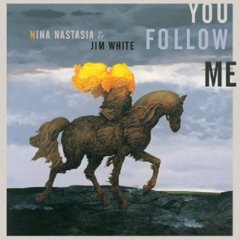
We really really really like You Follow Me, the recent collaboration between songwriter Nina Nastasia and Dirty Three’s Jim White–and so should you. Nina Nastasia and Jim White — “I’ve Been Out Walking”

alog.jpg

Alog have a new album out on Rune Grammafon called Amateur. It’s the perfect soundtrack for sharpening knives, feeding the azaleas, or just reading stupid magazines. Alog –“Write Your Thoughts in Water”

Word of the Week

Boojum (n)

from the OED:

“[Invented by ‘Lewis Carroll’ (C. L. Dodgson) in The Hunting of the Snark (1876).]

An imaginary animal, a particularly dangerous kind of ‘snark’.


1904 B. VON HUTTEN Pam III. vi. 146 We shall see a good deal of each other. I am a boojum, and I know. 1922 Edin. Rev. Oct. 241 Both these beautiful abstractions are in reality boojums. 1925 Blackw. Mag. Mar. 345/1 A solitary Boojum-like person. 1950 AUDEN Enchafèd Flood (1951) i. 42 The dreadful Boojum of Nothingness.”

Famous boojums include:


The Basilisk

Cerberus

The Manticore

Smaug

Gamera

manticore.jpg

The Biblioklept Salute to Eleven Great TV Shows, Not One of Them with Us Today–Part III

Make yourself proud by checking out Parts I and II.

6. Arrested Development (2003-2006, FOX)

Smart and self-referential without too much clever winking at the audience, Arrested Development was the ultimate meta-sitcom of the mid-oughties. The saga of the Bluth family was brought to life by possibly the best cast on TV ever. Jeffrey Tambor (The Larry Sanders Show) played George Bluth, the scoundrel pater familias to a family of oddballs; when George’s financial shenanigans led to the Bluth Company’s possible downfall, good son Michael (Jason Bateman, Teen Wolf Too) stepped in to take responsibility for the company. Of course, this was no easy task–Michael had to deal with his harridan of a mother Lucille (Jessica Walter, Play Misty for Me) and his selfish siblings: G.O.B. Bluth (performed with genius skill by Will Arnett), twin sister Lindsay (Portia de Rossi), and idiot baby Buster (Tony Hale)–not to mention his wacky brother-in-law, Tobias (David Cross–more on him on a second). At the same time as he must deal with both the besieged family business and his crazy kin, Michael is also trying to win World’s Best Dad with his son George Michael (played with brilliant understatement by Michael Cera, my wife’s big crush) who is secretly in love with his cousin Maebe (Alia Shawkat). Zaniness ensues. Don’t believe me? Check out the compilation of chicken dance scenes below:

Arrested Development was brilliant and hilarious, but ultimately it was for the better that it was canceled after three seasons–to be honest the premise had more than worn thin, and characters as one-dimensional as the Bluth’s couldn’t survive for too long. It was great while it lasted. We’ll always have the DVDs (until DVD is supplanted by some superior form of media archival material).

Before we go, I must make mention again of adorable Michael Cera, who will no doubt be the numba one stunna this summer in Judd Apatow’s Superbad. Check out the trailer:

7. Mr. Show (1995-1998, HBO)

So. Originally I was not going to put any HBO shows on this list. It just didn’t seem fair. But I had to make an exception for Mr. Show, Bob Odenkirk and David Cross’s acerbic and esoteric take on sketch comedy. How could I not include it? I love this show. Any clip will do–I just happen to particularly like this episode–(William Van Landingham III–jut the name cracks me up)–but if you like this and haven’t for some reason seen Mr. Show before, go ahead and just follow the whole Youtube thread, or better yet get the Mr. Show DVDs. Unlike other sketch comedy shows that rely heavily on topical situations and flash-in-the-pan pop culture references, Mr. Show‘s weirdness remains fresh and funny today (and presumably tomorrow).

From “Monk Camp”:

So. David Cross. I love the guy. He’s hilarious. But here’s something kind of weird: I find that a lot of message board trolls and internet weirdos absolutely hate this guy because–get this–he’s an asshole. Of course. Of course he’s an asshole. That’s kind of his gig. Shut Up You Fucking Baby! was hilarious. Tobias the analrapist was hilarious. He’s great in just about everything he’s on, from Biblioklept Salute alum Wondershowzen to future alum Home Movies (hold your breath for Part IV!). I’ll leave it at that. I don’t really need to defend the guy. Check out Mr. Cross’s “Open Letter to Larry the Cable Guy.”

And as not to undersell Bob Odenkirk (who is separately but equally funny) check out his new show Derek and Simon:

Cognitive Dissonance

twitter1.jpg

I couldn’t care less about Twitter–or any social networking site for that matter–but I just spent an hour watching Twittervision. I found myself entranced by the plenitude of avatars stochastically zipping across thousands of virtual miles (virtual miles that of course signify real miles); the oblique series of text boxes seemed to reply to each other in a bizarre conversation made wholly of non sequiturs.

twitter2.jpg

George Orwell was wrong and Alduous Huxley was right. We will gladly give up our privacy, and think it’s fun to do so. I’m not complaining. Maybe I’m complaining. No, I’m not complaining. I’m sure of that. But I’m not sure that I’m recommending that you check out Twittervision. It’s really, really addictive. It’s like the Videodrome signal, or the movie in Infinite Jest (the movie is named Infinite Jest). Or that new heroin with the fun name that the kids are into these days. I just don’t know. Clearly not good for mental health.

twitter3.jpg

More Alphabet Soup: Brought to You Today by the Letter H

lolita.jpg

H is for Humbert Humbert, the rascally narrator of Vladamir Nabokov’s Lolita. Throughout the novel HH, a sardonic European, provides a running critique of conformist 1950s America, his adopted home. Pining for the haunting, ineffable feeling associated with a brief, tragic childhood love, HH engineers a series of unfortunate events in order to abscond with (and eventually seduce) twelve-year old Lolita Haze. Yep. That’s right. A child-molester made this list. But if you’ve ever read Lolita, you know how charming and funny this son-of-bitch is. Lolita is in a special class of books in the Biblioklept library; it’s one of those books that I’ve read in full at least four times, and one that I pick up and read parts of every year. The first time I read Lolita, I didn’t even realize what a monster HH was–in fact, I tended to sympathize with him, even to the point of sharing his condemnation of Lolita’s bratty, manipulative nature toward the end of the novel. Like Catcher in the Rye, I first read Lolita when I was 16; like Catcher in the Rye, Lolita was an entirely different book when I read it at 21. Somehow the book managed to change again, four or five years later. I’m sure Lolita will be completely different in a year or two when I’m thirty. In fact, I vow here and now to re-read it in full right after my 30th birthday. Who knows what will have happened to it by then? How these books change on you…

Narratological shape-shifting aside Lolita deserves to be read, and read repeatedly. Nabokov’s highly alliterative prose reverberates with lyrical gymnastics, multi-lingual puns, and allusions that will make you feel oh-so clever (if you are indeed oh-so clever enough to get them, of course). Neither Kubrick’s toothless 1962 film adaption or Adrian Lyne’s gauzy 1997 attempt do any justice at all to Nabokov’s words–this is one you simply have to read. Great stuff.

velocity.jpg

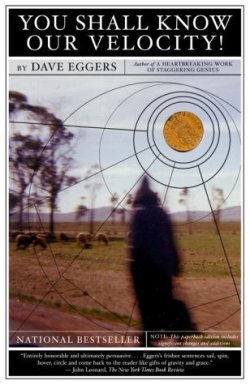
H is also for Hand, zany foil to Will, the tormented narrator of Dave Eggers’s You Shall Know Our Velocity!. In this book, the pair embarks on a futile attempt to travel the globe giving away an enormous amount of money Will has recently received as part of an injury settlement. This scheme turns out to be much more difficult and much more complicated than they had imagined. Hand is one of my favorite characters because he’s just really damn cool–a strange combination of someone’s hip older brother mixed with someone’s annoying younger brother. My favorite part of Velocity is the fifty page section where Hand takes over the narrative, casting doubt on everything that Will has previously told the reader. Will then resumes the narrative, but at that point, the book–and Will’s status as a reliable narrator–has taken an entirely different shape. Although the story ends at a wedding, Velocity is ultimately a tragedy; the very first page announces Will’s death. But again, the whole narrative is cast in ambiguity and doubt. I loved this book so much that I bought it for a friend.

(Incidentally, Hand also tuns up in “The Only Meaning of the Oil-Wet Water,” one of Eggers’s short stories collected in How We Are Hungry).

Night Moves

OK armchair psychologists, what make ye of this–

Early this morning as I was deep in sleep, I (according to my lovely wife) began mumbling loudly.

Said she–“What did you say?”

Said I–“Thick balls”

Said she-“What did you say?”

Said I–“Vortex”

Said she–“What did you say?”

Said I–“Transformers”

Am I OK?

Leaking Most Interesting Colors

aniive_pre_1.jpg

We here at Biblioklept, Inc. couldn’t be more stoked for Strawberry Jam. We all know that strawberry jam is delicious on crumpets (and if you don’t know the tasty delights of jam-on-crumpets, I suggest you indulge yourself posthaste) and Animal Collective’s new record Strawberry Jam, set to drop sometime in September on their new label Domino, will no doubt prove delicious to the ears–the perfect aural jelly for beach blanket parties and midsummer night campfires. Animal Collective’s Sung Tongs and Feels were instant classics of the oughties, and Panda Bear’s sumptuous solo album Person Pitch has provided the sing-along soundtrack for both spring and summer around the Biblioklept offices. Seriously, I’ve never heard an album as sing-allongable as Person Pitch. We love it love it love it &c.

Anyway, studio versions of Strawberry Jam‘s first three tracks (I’m basing the idea that these are the first three tracks on the album based on this track list) have been popping up here and there in the last week. These new tracks preserve the psycho-circus-carnival feel that defines the Animal Collective sound, with the creepy darkness and noise of previous albums like Here Comes the Indian seemingly absent (despite lyrics about Jack the Ripper in “Unsolved Mysteries”). We like “Chores” the best so far–but what do you think? Mp3s below–

“Peacebone”

“Unsolved Mysteries”

“Chores”

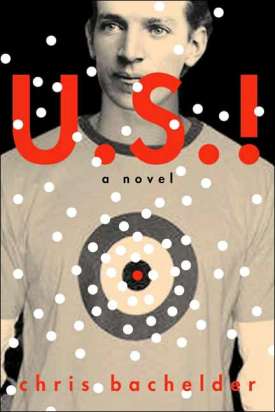
U.S.!–Chris Bachelder

us.jpg

Chris Bachelder‘s superb novel U.S.! portrays an alternate (and somewhat hyperbolic) United States where the Left (big-L) keeps bringing Upton Sinclair (that guy who wrote The Jungle (maybe you read it in high school (I didn’t))) back to life. These would-be revolutionaries try to keep Sinclair (and hope) alive in spite of the fact that right-wing reactionary populist heroes keep assassinating him. In fact, in U.S.!, Upton Sinclair assassination is its own cottage industry.

Bachelder uses a dazzling range of approaches in the first 200 pages of the novel, employing everything from folk song lyrics to Amazon reviews to talk show transcripts in order to flesh out his alternate universe. The first part of U.S.! essentially sets up the last third of the novel, a relatively straight-forward third-person omniscient account of a Fourth of July book-burning in a Southern state. I won’t reveal any more of the plot, because I’m lazy and you should read this book for yourself.

Bachelder’s writing crackles with wit and surprising warmth, especially in the character of Sinclair, who comes across as a (literally) dusty out-of-touch relic, an idealist as equally unable to effect any change in the modern world as he was able to in his own era. Sinclair and the would-be revolutionaries who resuscitate him serve as Bachelder’s critique on America’s stale, impotent left (or is it Left?). Bachelder also savagely criticizes Sinclair’s rhetoric; one of the funniest sections of the first part of the book involves an analysis of exclamation points (and their overuse) in Sinclair’s novels. Toward the end of the novel, Bachelder employs a meta-critical strategy of adding more and more exclamation points to his own writing; the exaggerated gestures comically highlight the cartoonishly grotesque world of U.S.!, at the same time counterbalancing the understated but profound sadness of the novel.

My only gripe with U.S.! would be Bachelder’s rare lapse into what I like to call “workshop fiction”–fiction that seems the contrived and overwritten product of MFA work-shopping (did I mention that Bachelder got his MFA at my alma mater, the University of Florida at Gainesville? (other great writers associated with this glorious institution include Padgett Powell and Harry Crews)). As I noted though, these instances are rare and mostly notable because the majority of the novel is so fresh, original, and readable. This book is funny, poignant, and you should read it.

Remember to Spay and Neuter Your Pets

bob_barker_retires-768476.jpg

The last episode of Bob Barker’s 35 year run as host of The Price is Right airs twice today on CBS–once at 11:00am (i.e. right now) and once more at 8:00pm. Like many of you, I’m sure, I spent many a “sick day” at home delighting in silly contestants in ridiculous homemade T-shirts spin wheels and flip numbers, all under Mr. Barker’s encouraging guidance.

The show will continue, but a new host has not yet been announced. Isn’t this a mistake? Shouldn’t they just cancel the show? I just don’t see the throwback sets and campy feel of Price working without Bob Barker. But who can say for sure.

Possible replacement hosts for The Price is Right:

Ryan Seacrest

Michael “Heckuva job, Brownie” Brown

Candace Bergen

Mel “Sugartits” Gibson

Any other candidates?

_______________________________________________

UPDATE (SPOILER WARNING!)

Okay. We just watched Bob Barker’s finale and here’s what happened (again–spoiler warning! Quit reading if you plan to watch this on your Tivo or whatever!).

It turned out that the whole thing was just a dream–and in a clever kind of po-mo twist, the whole series actually took place in a snow-globe. Also, Bob killed Laura Palmer. Sort of. The last shot is kind of ambiguous–it just blacks out on Bob while that kick-ass Journey song is blaring. Mysterious.

Support Indie Publishers

It’s no secret that we love McSweeney’s here at the Biblioklept–sure, some of the writing can be smartassed and some people might find their publishing concepts gimmicky at times (not me!)–but Dave Eggers’s collective puts out some of the best stuff around these days, and in some of the freshest packaging. Unfortunately, McSweeney’s distributor went bankrupt, leaving them in dire economic straits. The silver lining here (if you can call it that) is that they’re having a big sale, including half off on old stuff, and 30% off on new stuff. They’re also auctioning off a ton of original art. If you’re interested, check out the email below–

As you may know, it’s been tough going for many independent publishers, McSweeney’s included, since our distributor filed for bankruptcy last December 29. We lost about $130,000 — actual earnings that were simply erased. Due to the intricacies of the settlement, the real hurt didn’t hit right away, but it’s hitting now. Like most small publishers, our business is basically a break-even proposition in the best of times, so there’s really no way to absorb a loss that big.

We are committed to getting through and past this difficult time, and we’re hoping you, the readers who have from the start made McSweeney’s possible, will help us.

Over the next week or so, we’ll be holding an inventory sell-off and rare-item auction, which we hope will make a dent in the losses we sustained. A few years ago, the indispensible comics publisher Fantagraphics, in similarly dire straits, held a similar sale, and it helped them greatly. We’re hoping to do the same.

So if you’ve had your eye on anything we’ve produced, now would be a great time to take the plunge. For the next week or so, subscriptions are $5 off, new books are 30 percent off, and all backlist is 50 percent off. Please check out the store and enjoy the astounding savings, while knowing every purchase will help dig us out of a big hole.

Many of our contributors have stepped up and given us original artwork and limited editions to auction off. We’ve got original artwork from Chris Ware, Marcel Dzama, David Byrne, and Tony Millionaire; a limited-edition music mix from Nick Hornby; rare early issues of the quarterly, direct from Sean Wilsey’s closet; and more. We’re even auctioning off Dave Eggers’s painting of George Bush as a double-amputee, from the cover of Issue 14.

This is the bulk of our groundbreaking business-saving plan: to continue to sell the things we’ve made, albeit at a greatly accelerated pace for a brief period of time. We are not business masterminds, but we are optimistic that this will work. If you’ve liked what we’ve done up to now, this is the time to ensure we’ll be able to keep on doing more.

Plenty of excellent presses are in similar straits these days; two top-notch peers of ours, Soft Skull and Counterpoint, were just acquired by Winton, Shoemaker & Co. in the last few weeks. It’s an unsteady time for everybody, and we know we don’t have any special claim to your book-buying budget. We owe all of you a lot for everything you’ve allowed us to do over the last nine years, for all the time and freedom we’ve been given.

Once this calamity is averted, we’ll get back to our bread and butter — the now-legendary Believer music issue is already creeping into mailboxes everywhere; Issue 24 of our quarterly is in the midst of a really pretty silkscreening process; and in July the fourth issue of Wholphin, our DVD magazine, will slip over the border from Canada, bringing with it some very good footage of Maggie Gyllenhaal and a Moroccan drummer who messes up a wedding in an entertaining way. And then a couple of months after that, we’ll publish a debut novel from a writer named Millard Kaufman. This book is exactly the kind of thing McSweeney’s was created to do: The novel came through the mail, without an agent’s imprimatur, and it was written by a first-time novelist. This first-time novelist is ninety years old. It was pulled from the submissions pile and it knocked the socks off of everyone who read it. Millard may well be the best extant epic-comedic writer of his generation, and he stands at equal height with the best of several generations since.

Whatever you can do to help in the coming days, we thank you a thousand times. We’ll keep updating everybody on how this is going over the next few weeks; for now, pick up a few things for yourself, your friends, for Barack Obama. More news soon — thanks for reading.

Yours warmly,
The folks at McSweeney’s

———–

This email was sent by: McSweeney’s
826 Valencia Street San Francisco, CA, 94110, USA