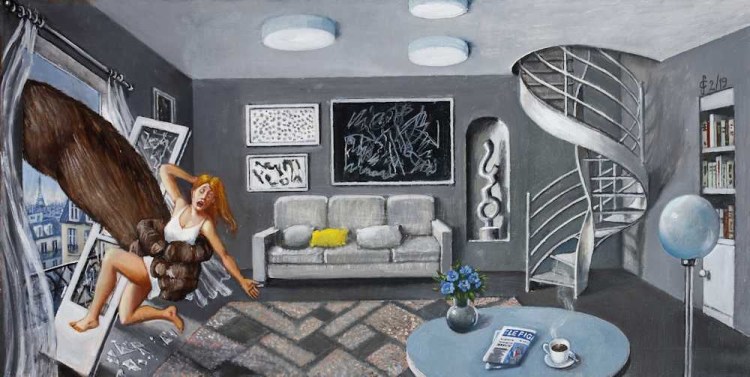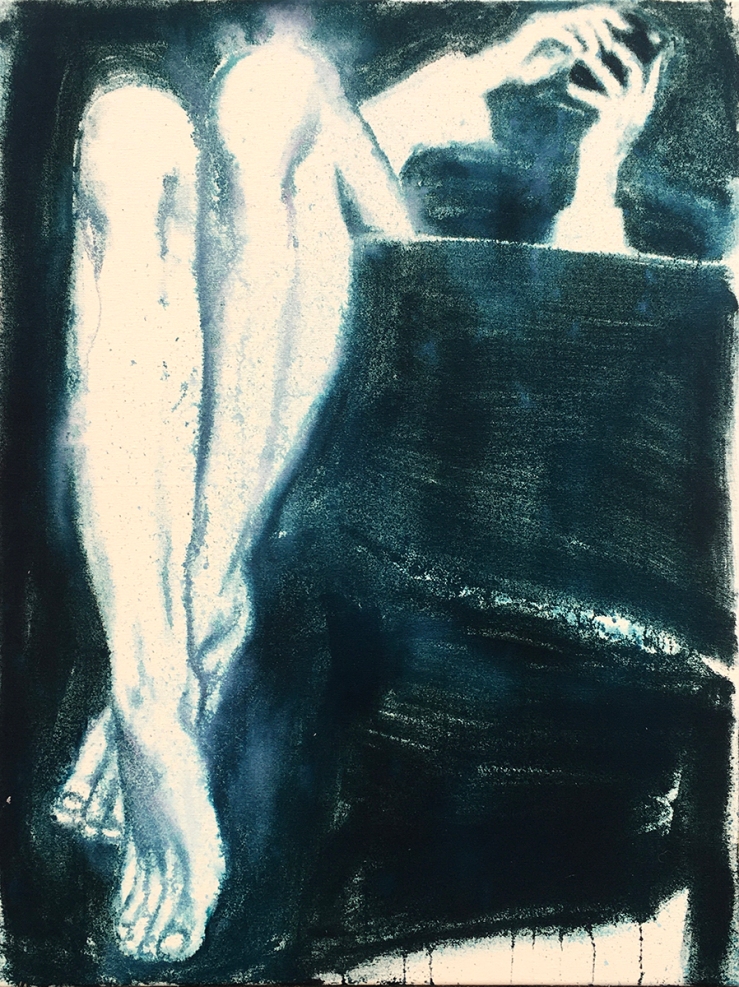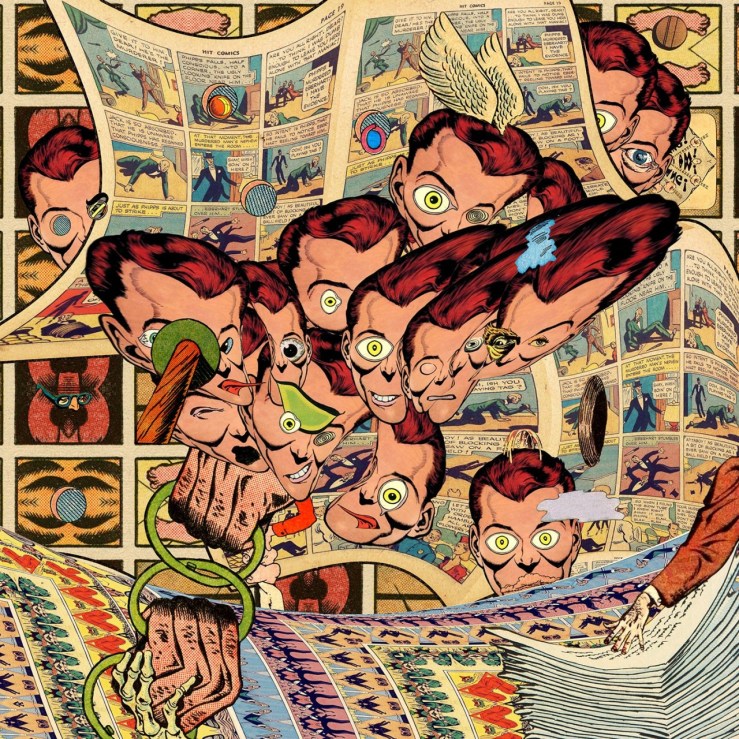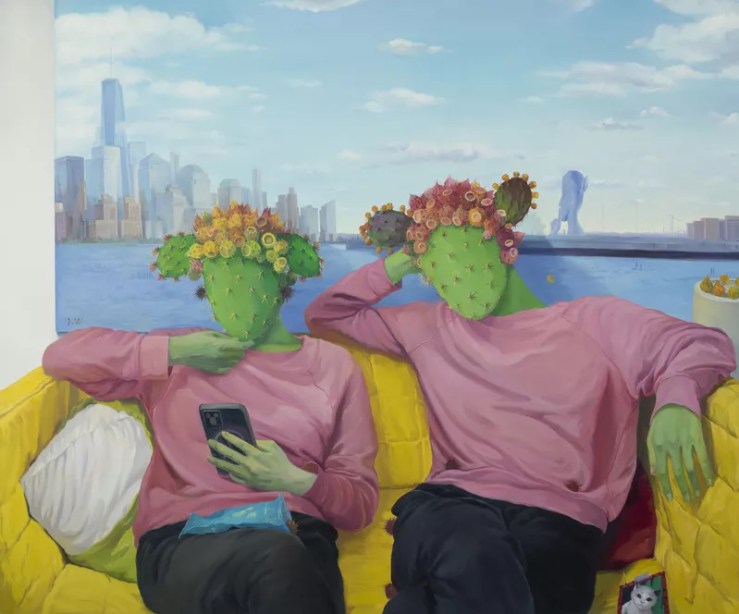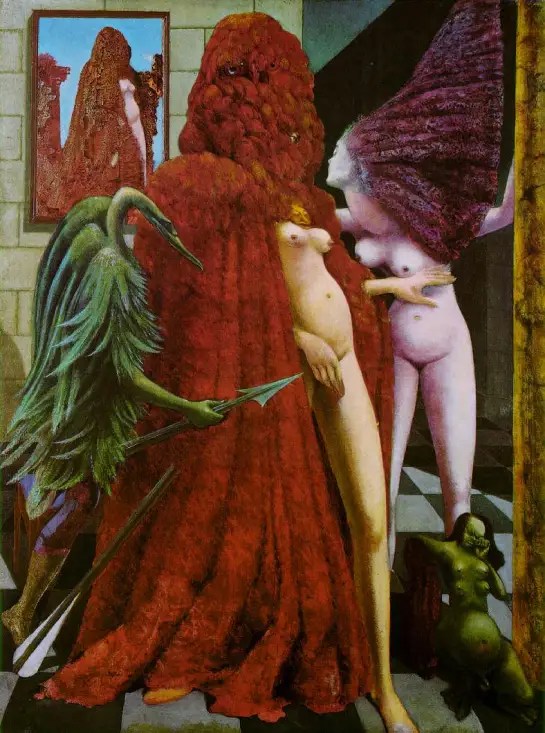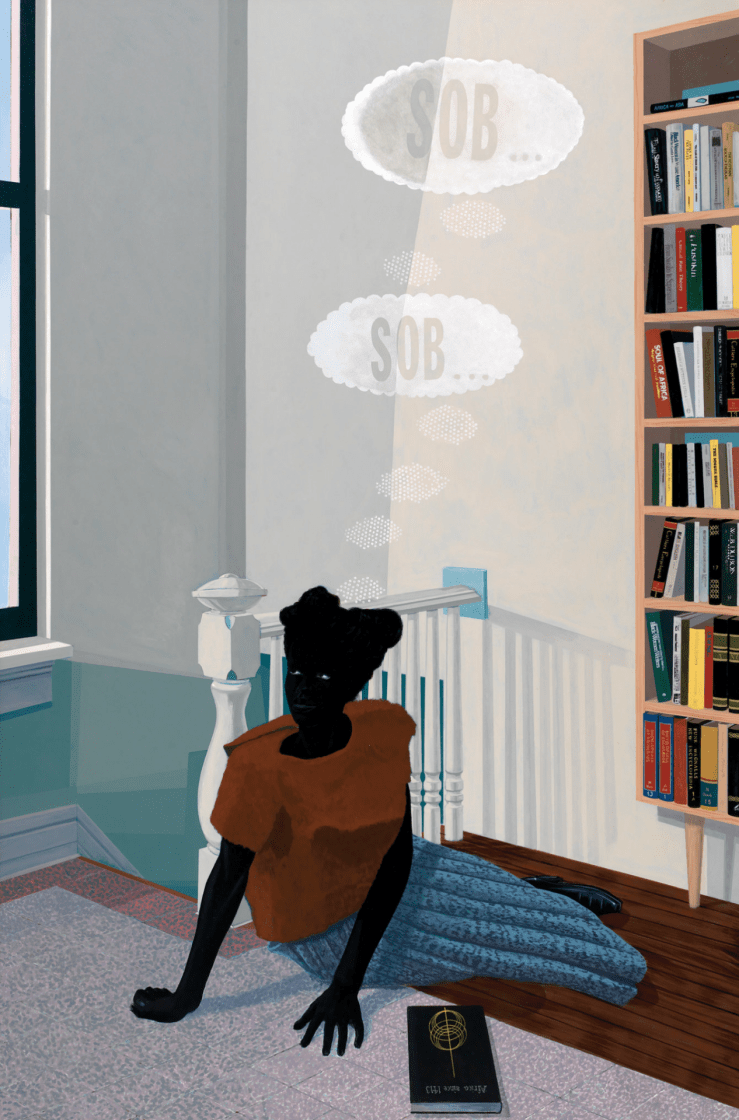
SOB, SOB — Kerry James Marshall

SOB, SOB, 2003 by Kerry James Marshall (b. 1955)

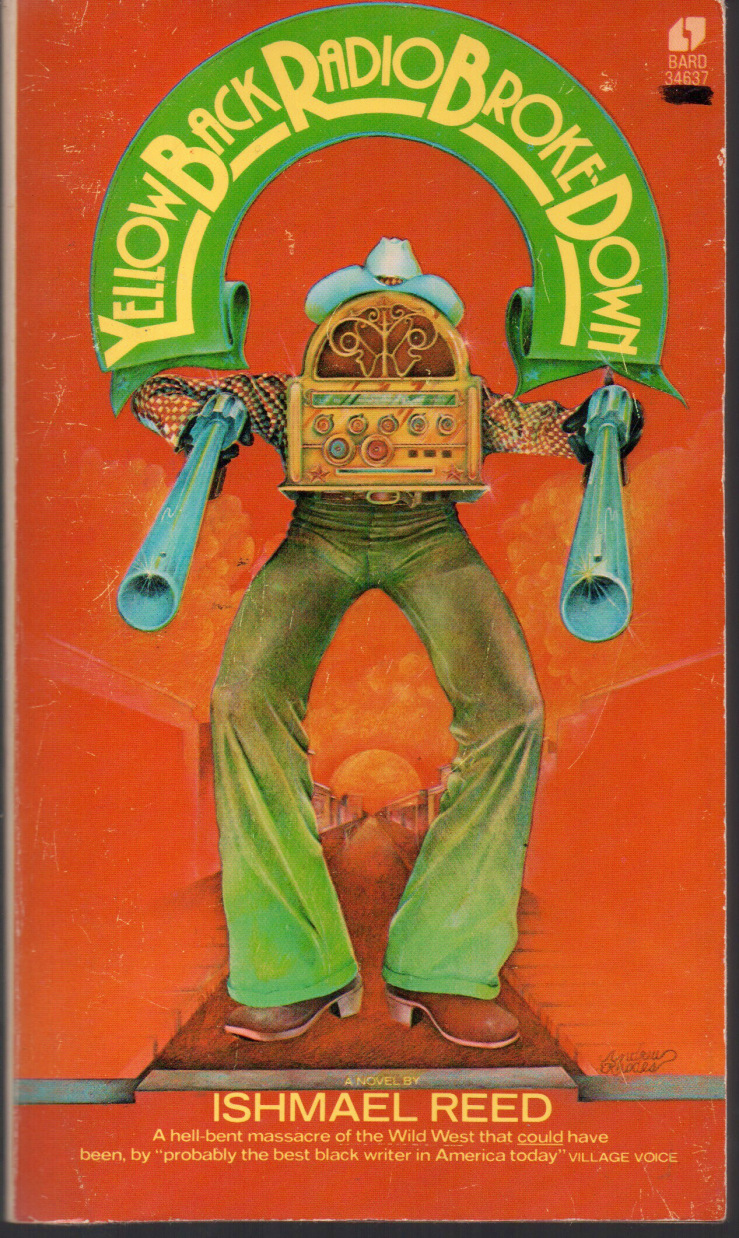
A review of Yellow Back Radio Broke-Down, Ishmael Reed’s syncretic Neo-HooDoo revenge Western

img_0548

Ishmael Reed’s second novel Yellow Back Radio Broke-Down tells the story of the Loop Garoo Kid, a “desperado so onery he made the Pope cry and the most powerful of cattlemen shed his head to the Executioner’s swine.”

The novel explodes in kaleidoscopic bursts as Reed dices up three centuries of American history to riff on race, religion, sex, and power. Unstuck in time and unhampered by geographic or technological restraint, historical figures like Lewis and Clark, Thomas Jefferson, John Wesley Harding, Groucho Marx, and Pope Innocent (never mind which one) wander in and out of the narrative, supplementing its ironic allegorical heft. These minor characters are part of Reed’s Neo-HooDoo spell, ingredients in a Western revenge story that is simultaneously comic and apocalyptic in its howl against the dominant historical American narrative. Yellow Back Radio Broke-Down is a strange and marvelous novel, at once slapstick and deadly serious, exuberant in its joy and harsh in its bitterness, close to 50 years after its publication, as timely as ever.

After the breathless introduction of its hero the Loop Garoo Kid, Yellow Back Radio Broke-Down initiates its plot. Loop’s circus troupe arrives to the titular city Yellow Back Radio (the “nearest town Video Junction is about fifty miles away”), only to find that the children of the town, “dressed in the attire of the Plains Indians,” have deposed the adults:

We chased them out of town. We were tired of them ordering us around. They worked us day and night in the mines, made us herd animals harvest the crops and for three hours a day we went to school to hear teachers praise the old. Made us learn facts by rote. Lies really bent upon making us behave. We decided to create our own fiction.

The children’s revolutionary, anarchic spirit drives Reed’s own fiction, which counters all those old lies the old people use to make us behave.

Of course the old—the adults—want “their” land back. Enter that most powerful of cattlemen, Drag Gibson, who plans to wrest the land away from everyone for himself. We first meet Drag “at his usual hobby, embracing his property.” Drag’s favorite property is a green mustang,

a symbol for all his streams of fish, his herds, his fruit so large they weighed down the mountains, black gold and diamonds which lay in untapped fields, and his barnyard overflowing with robust and erotic fowl.

Drag loves to French kiss the horse, we’re told. Oh, and lest you wonder if “green” here is a metaphor for, like, new, or inexperienced, or callow: No. The horse is literally green (“turned green from old nightmares”). That’s the wonderful surreal logic of Reed’s vibrant Western, and such details (the novel is crammed with them) make Yellow Back Radio Broke-Down a joy to read.

Where was I? Oh yes, Drag Gibson.

Drag—allegorical stand-in for Manifest Destiny, white privilege, capitalist expansion, you name it—Drag, in the process of trying to clear the kids out of Yellow Back Radio, orders all of Loop’s troupe slaughtered.

The massacre sets in motion Loop’s revenge on Drag (and white supremacy in general), which unfolds in a bitter blazing series of japes, riffs, rants, and gags. (“Unfolds” is the wrong verb—too neat. The action in Yellow Back Radio Broke-Down is more like the springing of a Jack-in-the-box).

Loop goes about obtaining his revenge via his NeoHooDoo practices. He calls out curses and hexes, summoning loas in a lengthy prayer. Loop’s spell culminates in a call that goes beyond an immediate revenge on Drag and his henchmen, a call that moves toward a retribution for black culture in general:

O Black Hawk American Indian houngan of Hoo-Doo please do open up some of these prissy orthodox minds so that they will no longer call Black People’s American experience “corrupt” “perverse” and “decadent.” Please show them that Booker T and MG’s, Etta James, Johnny Ace and Bojangle tapdancing is just as beautiful as anything that happened anywhere else in the world. Teach them that anywhere people go they have experience and that all experience is art.

So much of Yellow Back Radio Broke-Down is turning all experience into art. Reed spins multivalent cultural material into something new, something arguably American. The title of the novel suggests its program: a breaking-down of yellowed paperback narratives, a breaking-down of radio signals. Significantly, that analysis, that break-down, is also synthesized in this novel into something wholly original. Rhetorically, Yellow Back Radio Broke-Down evokes flipping through paperbacks at random, making a new narrative; or scrolling up and down a radio dial, making new music from random bursts of sound; or rifling through a stack of manic Sunday funnies to make a new, somehow more vibrant collage.

Perhaps the Pope puts it best when he arrives late in the novel. (Ostensibly, the Pope shows up to put an end to Loop’s hexing and vexing of the adult citizenry—but let’s just say the two Holy Men have a deeper, older relationship). After a lengthy disquisition on the history of hoodoo and its genesis in the Voudon religion of Africa (“that strange continent which serves as the subconscious of our planet…shaped so like the human skull”), the Pope declares that “Loop Garoo seems to be practicing a syncretistic American version” of the old Ju Ju. The Pope continues:

Loop seems to be scatting arbitrarily, using forms of this and that and adding his own. He’s blowing like that celebrated musician Charles Yardbird Parker—improvising as he goes along. He’s throwing clusters of demon chords at you and you don’t know the changes, do you Mr. Drag?

The Pope here describes Reed’s style too, of course (which is to say that Reed is describing his own style, via one of his characters. The purest postmodernism). The apparent effortlessness of Reed’s improvisations—the prose’s sheer manic energy—actually camouflages a tight and precise plot. I was struck by how much of Yellow Back Radio Broke-Down’s apparent anarchy resolves into a bigger picture upon a second reading.

That simultaneous effortlessness and precision makes Reed’s novel a joy to jaunt through. Here is a writer taking what he wants from any number of literary and artistic traditions while dispensing with the forms and tropes he doesn’t want and doesn’t need. If Reed wants to riff on the historical relations between Indians and African-Americans, he’ll do that. If Reed wants to assess the relative values of Thomas Jefferson as a progressive figure, he’ll do that. If Reed wants to attack his neo-social realist critics, he’ll do that. If Reed wants to critique the relationship between militarism and science, he’ll do that. If Reed wants to tell some really dirty jokes about a threesome, he’ll do that. And you can bet if he wants some ass-kicking Amazons to show up at some point, they’re gonna show.

And it’s a great show. Yellow Back Radio Broke-Down begins with the slaughter of a circus troupe before we get to see their act. The real circus act is the novel itself, filled with orators and showmen, carnival barkers and con-artists, pistoleers and magicians. There’s a manic glee to it all, a glee tempered in anger—think of George Herriman’s Krazy Kat, or Thomas Pynchon’s zany rage, or Robert Downey Sr.’s satirical film Putney Swope.

Through all its anger, Yellow Back Radio Broke-Down nevertheless repeatedly affirms the possibility of imagination and creation—both as cures and as hexes. We have here a tale of defensive and retaliatory magic. Yellow Back Radio Broke-Down is the third novel of Reed’s novels I’ve read (after Mumbo Jumbo and The Free-Lance Pallbearers), and my favorite thus far. Frankly, I needed the novel right now in a way that I didn’t know that I needed it until I read it; the contemporary novel I tried to read after it felt stale and boring. So I read Yellow Back Radio Broke-Down again. The great gift here is that Reed’s novel answers to the final line of Loop’s prayer to the Loa: “Teach them that anywhere people go they have experience and that all experience is art.” Like the children of Yellow Back Radio, Reed creates his own fiction, and invites us to do the same. Very highly recommended.

[Ed. note — Biblioklept first published this review in February of 2017.]

Reading by the Moon — Tsukioka Yoshitoshi

Reading by the Moon, 1888 by Tsukioka Yoshitoshi (1839 – 1892)

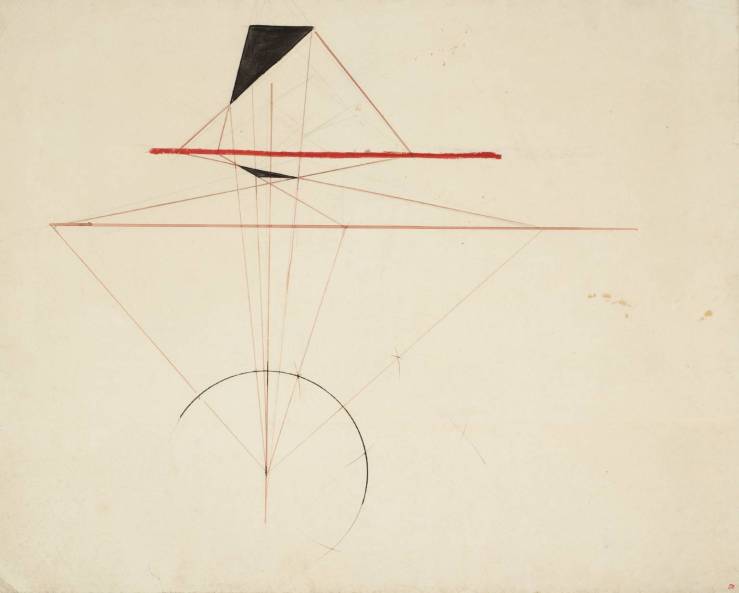
Lecture Diagram: Perspective Representation of a Triangle — J.M.W. Turner

Lecture Diagram: Perspective Representation of a Triangle, c. 1810-27 by Joseph Mallord William Turner (1775-1851)

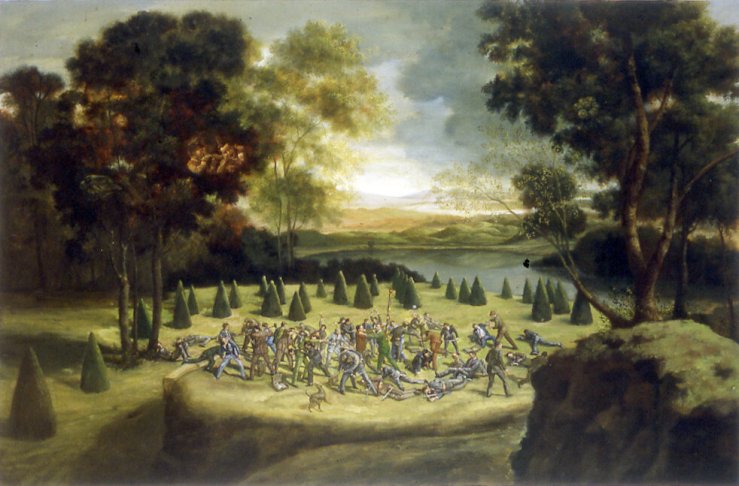
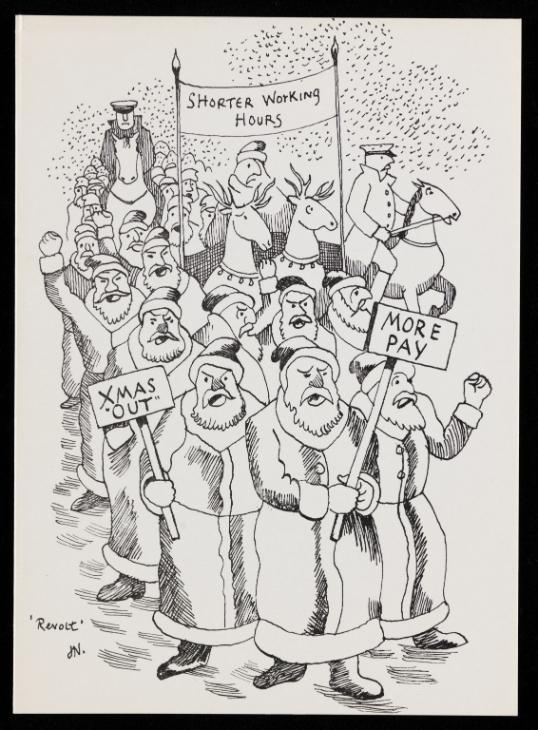
Revolt — John Nash

Revolt, 1969 by John Nash (1893-1977)

Illustration from The Holy Terrors — Jean Cocteau

Illustration from The Holy Terrors, c. 1929 by Jean Cocteau (1889–1963)

Study of a Boy — Thomas Sword Good

Study of a Boy by Thomas Sword Good (1789-1872)

Allegory of Desire from the Fourth Freedom — Marc Dennis

marc-dennis-allegory-of-desire-from-the-fourth-freedom_2014_oil-on-linen_44x52inches

Allegory of Desire from the Fourth Freedom, 2015 by Marc Dennis (b. 1971)

Richter’s Cat — Marc Denis

Richter’s Cat, 2021 by Marc Dennis (b. 1971)

Economimesis — Nigel Cooke

Economimesis, 2008 by Nigel Cooke (b. 1973)

November First — Andrew Wyeth


andrew-wyeth-november-first

November First, 1950 by Andrew Wyeth (1917-2009)

As Goethe said, theory is gray, but the golden tree of life is green | Donald Barthelme

I know a painter who feels the same way about being a painter. Every morning he gets up, brushes his teeth, and stands before the empty canvas. A terrible feeling of being de trop comes over him. So he goes to the corner and buys the Times, at the corner newsstand He comes back home and reads the Times. During the period in which he’s coupled with the Times he is all right. But soon the Times is exhausted. The empty canvas remains. So (usually) he makes a mark on it, some kind of mark that is not what he means. That is, any old mark, just to have something on the canvas. Then he is profoundly depressed because what is there is not what he meant. And it’s time for lunch. He goes out and buys a pastrami sandwich at the deli. He comes back and eats the sandwich meanwhile regarding the canvas with the wrong mark on it out of the corner of his eye. During the afternoon, he paints out the mark of the morning. This affords him a measure of satisfaction. The balance of the afternoon is spent in deciding whether or not to venture another mark. The new mark, if one is ventured, will also, inevitably, be misconceived. He ventures it. It is misconceived. It is, in fact, the worst kind of vulgarity. He paints out the second mark. Anxiety accumulates. However, the canvas is now, in and of itself, because of the wrong moves and the painting out, becoming rather interesting-looking. He goes to the A&P and buys a TV Mexican dinner and many bottles of Carta Blanca. He comes back to his loft and eats the Mexican dinner and drinks a couple of Carta Blancas, sitting in front of his canvas. The canvas is, for one thing, no longer empty. Friends drop in and congratulate him on having a not-empty canvas. He begins feeling better. A something has been wrested from the nothing. The quality of the something is still at issue-he is by no means home free. And of course all of painting-the whole art-has moved on somewhere else, it’s not where his head is, and he knows that, but nevertheless he-

-How does this apply to trombone playing? Hector asked.

-1 had the connection in my mind when I began, Charles said.

-As Goethe said, theory is gray, but the golden tree of life is green.

From “City Life” by Donald Barthelme.

Give My Body Back — Skyler Chen

Give My Body Back, 2021 by Skyler Chen (b. 1982)

Ben Shahn’s The Shape of Content (Book acquired, 23 July 2021)

I went by my favorite used bookstore the other week to pick up the copy of Tatyana Tolstoya’s novel The Slynx last week. (I’m halfway through it, and it’s fantastic stuff—dirty, cruel, funny, unexpectedly moving—like a filthy generative loam that isn’t exactly poisonous, but will certainly yield side effects.) After seeing this diagram earlier in the week, I looked for a copy of Thomas C. Oden’s 1969 multidisciplinary

text Structure of Awareness. I was unsuccessful there, but I did spy something called The Shape of Content by the artist Ben Shahn. I’ve long been a fan of his work, so I picked it up and thumbed through. I ended up reading most of it this weekend.

The Shape of Content (the title now is not exactly ironic, I guess) collects a series of lectures Shahn gave to Harvard students in the late 1950s. The first lecture is a somewhat boring apologia, a kind of What the hell am I doing here?, but the following material is good stuff, if not exactly fresh. There are plenty of illustrations too, mostly unrelated to the, uh, content of the words (although they are of course intimately related). Illustrations like the one above, and this one, below, make the 144 pager seem, well, kinda short.

Here’s Harvard UP’s blurb:

In his 1956–57 Charles Eliot Norton Lectures, the Russian-born American painter Ben Shahn sets down his personal views of the relationship of the artist―painter, writer, composer―to his material, his craft, and his society. He talks of the creation of the work of art, the importance of the community, the problem of communication, and the critical theories governing the artist and his audience.

Bar Boy — Salman Toor

Bar Boy, 2020 by Salman Toor (b. 1983)

Paul Kirchner’s Dope Rider: A Fistful of Delirium (Book acquired, 7 April 2021)

I am a huge fan of Paul Kirchner’s bold and witty comix. I fell in love with his cult strip The Bus some years back, and was thrilled when he revised the series with The Bus 2. Both volumes were published in handsome editions by the fine folks at Tanibis. The French publisher also released a retrospective collection of Kirchner’s work to date, the essential compendium Awaiting the Collapse. Tanibis also published the collected Hieronymus & Bosch, strip, another entry in the cartoonists explosive output in the twentyteens.

Now, Tanibis has published A Fistful of Delirium, the recent adventures of the resurrected hero Dope Rider. Kirchner’s Dope Rider is a mystical skeleton weedslinger, a philosophical wanderer prone to surreal transformation. Our cowboy rides again here via the full-page full-color strips Kirchner ran in High Times from 2015-2020. Here’s Tanibis’s blurb:

Dope Rider is back in town! After a 30-year hiatus, Paul Kirchner brought back to life the iconic bony stoner whose first adventures were a staple of the psychedelic counter-culture magazine High Times in the 1970s.

The stories collected in this book appeared in High Times between January 2015 and May 2020. Despite the years, Dope Rider has stayed essentially the same, still smoking his ever-present joint, getting high and chasing metaphysical dragons through whimsical realities in meticulously illustrated and colorful one-page adventures. Fans of the original Dope Rider comics will still find the bold graphical innovations, dubious puns and wild dreamscapes inspired by classical painting and western movies that were some of Dope Rider’s trademark.

This time though, Kirchner draws from a much larger panel of influences, including modern pop – and pot – culture (lines and characters from Star Wars as well as references to Denver as the US weed capital can be found here and there) and a wider range of artistic references, from Alice in Wonderland to 2001, A Space Odyssey to Ed Roth’s Kustom Kulture. Native American culture and mythology, only hinted at in the classic adventures, is also much more present in the form of Chief, one of Dope Rider’s new sidekicks. Kirchner’s playful, tongue-in-cheek humor binds together all these influences into stories that mock both the mundane and the nonsensical alike.

You can get a signed edition from Kirchner’s website. Full review down the line.

The Blue Bird I — Natalie Frank

The Blue Bird I, 2019 by Natalie Frank (b. 1980)


“The Blue Bird”

by

Madame d’Aulnoy

Translated from the French by

Andrew Lang


Once upon a time there lived a King who was immensely rich. He had broad lands, and sacks overflowing with gold and silver; but he did not care a bit for all his riches, because the Queen, his wife, was dead. He shut himself up in a little room and knocked his head against the walls for grief, until his courtiers were really afraid that he would hurt himself. So they hung feather-beds between the tapestry and the walls, and then he could go on knocking his head as long as it was any consolation to him without coming to much harm. All his subjects came to see him, and said whatever they thought would comfort him: some were grave, even gloomy with him; and some agreeable, even gay; but not one could make the least impression upon him. Indeed, he hardly seemed to hear what they said. At last came a lady who was wrapped in a black mantle, and seemed to be in the deepest grief. She wept and sobbed until even the King’s attention was attracted; and when she said that, far from coming to try and diminish his grief, she, who had just lost a good husband, was come to add her tears to his, since she knew what he must be feeling, the King redoubled his lamentations. Then he told the sorrowful lady long stories about the good qualities of his departed Queen, and she in her turn recounted all the virtues of her departed husband; and this passed the time so agreeably that the King quite forgot to thump his head against the feather-beds, and the lady did not need to wipe the tears from her great blue eyes as often as before. By degrees they came to talking about other things in which the King took an interest, and in a wonderfully short time the whole kingdom was astonished by the news that the King was married again to the sorrowful lady. Continue reading “The Blue Bird I — Natalie Frank”