I Took My Kids to the Book Store (Books Acquired on Veterans Day (Observed), 2012)

I took my kids to the book store today and let them run like heathen.

20121112-141013.jpg

They had fun. I usually take them separately (and usually they go to the library), but their mother is at work and we needed to get out of the house.

My daughter picked out a few books for her little brother (and then read them to him, sort of).

She also picked out a book of antique paper dolls (Dolly Dingle) and an Anne of Green Gables pop up cottage book to let the dolls live in.

Here’s what I picked out, maybe more for me than them:

20121112-141020.jpg

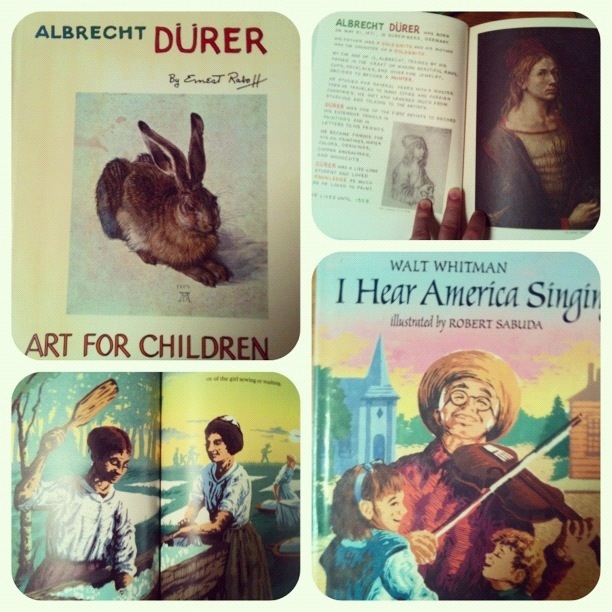
A beautiful illustrated Durer biography that’s written more or less like a comic book, and an illustrated edition of Whitman’s “I Hear America Singing.”


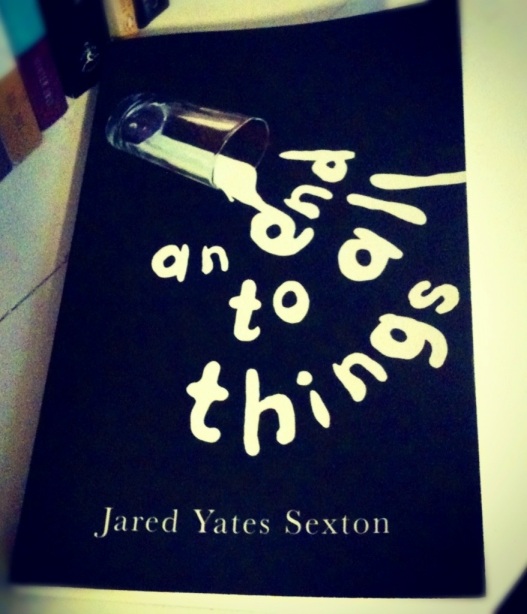
Jared Yates Sexton’s An End to All Things (Book Acquired Sometime Last Month)

20121018-174605.jpg

Jared Yates Sexton’s An End to All Things immediately appealed to me when it arrived last month. This collection is stocked with short, precise, unpretentious stories. Great sentences—shades of Hannah, Carver, Pancake. I’ve read about half a dozen so far, parceling them out over spare afternoon minutes and it’s good stuff—feels real without the strains of literary realism. You can read a story at publisher Atticus Books’ site, “You Never Ask Me About My Dreams” (great title). The first few paragraphs:

At that point things had been rough for a couple of months and I would’ve done anything to ease the tension. I set an alarm for half an hour earlier than usual. I thought if I had some breakfast going when Cathy got up she’d have to see that I cared.

After all, cooking wasn’t the easiest thing to do in our house. Both of us hated dishes so the kitchen was always a mess. There were pots and pans stacked on the counters and plates in the sink. Some still had clumps of food stuck to them. I even had to rinse out a bowl to use. Somehow there were a couple of clean forks and knives in the drawer. I got some eggs from the fridge and went to work scrambling the yolks.

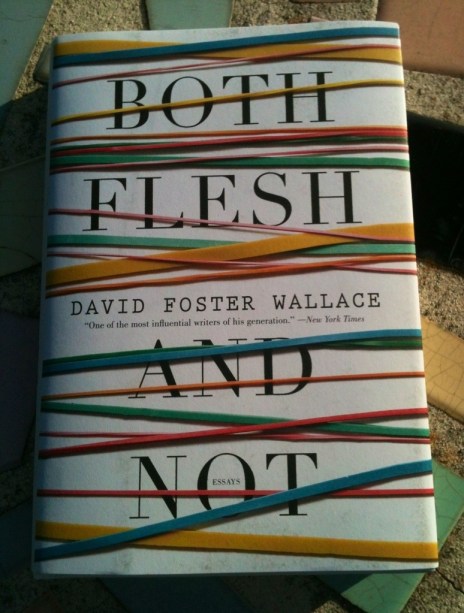
I Try to Riff on Both Flesh and Not, DFW’s New Essay Collection, Which I Haven’t Read, as I Drink Red Wine to Numb the Election Coverage (Book Acquired, 11.06.2012)

20121106-203121.jpg

1. Today, I picked up Both Flesh and Not, a collection of David Foster Wallace essays and short pieces. I specifically ordered this book from my local bookstore (I didn’t get a review copy), and I bought it in hardback (I generally dislike hardbacks).

2. I should be reading it now—I’d like to be reading it—but I’m flicking between the five or six channels I have, usually stopping on PBS, and then scanning Twitter and other online media, because, hey, it’s Election Day in America.

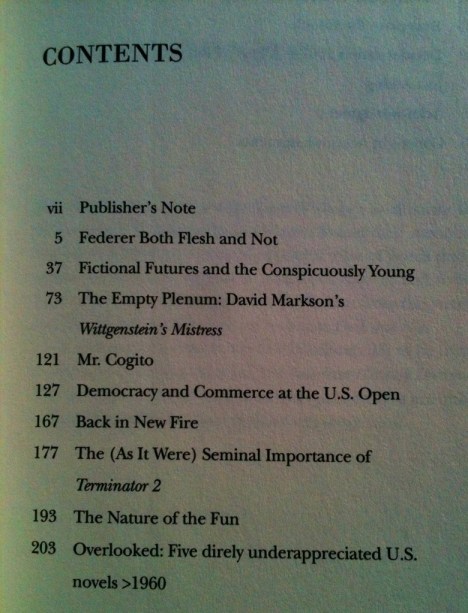
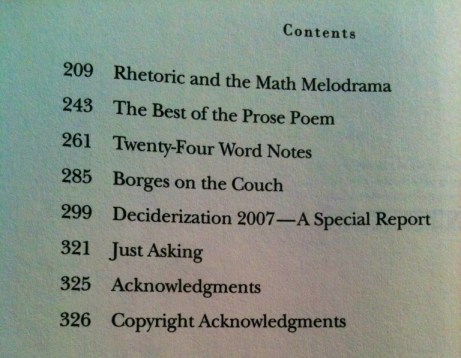
3. I’ve already read several of the pieces in Both Flesh. You might have too. Here’s the table of contents:
20121106-203459.jpg

20121106-203507.jpg

4. But a lot of it I haven’t read. I’m eager to dig into the piece on David Markson, and the piece on Brat Pack writers, “Fictional Futures,” which was later repurposed in “E Unibus Pluram.”

5. I spent most of the afternoon riffling through it, trying not to think about the election results that would be coming in the next few years. I played outside with my kids, building a strange hut out of giant elephant leaves and then a small nest out of pine straw. I photographed the planes that daily fly over our neighborhood, slow, heavy supply planes that drift in lazy routine arcs from the nearby naval base, not loud as jets, but bulky. Elephant mothers, pregnant.

20121106-211636.jpg

6. I remembered that Wallace killed himself in an election year, in September. I remember how I felt.

7. (Please don’t think this riff is really about anything. I’m distracted. I’ve imbibed some wine. Some Xanax might be involved).

8. Speaking of posts in 2008—

I went back just now, and riffled through the site’s archives from November of 2008. (Back when I’d post like three, maybe four times a week. Once a day at most).

A lot of vitriol there. A lot of vitriol for Palin, and a lot of vitriol for the emerging sentiment that would galvanize in what would become the Tea Party movement.

I wrote about the Election Night too. About Jesse Jackson’s tears. I even wrote about finding some respite from cynicism in Obama’s election. (Don’t worry, I’m as cynical as ever. Moreso—

9. —but

I remember watching the inauguration in 2009. I was still teaching high school. I had third period planning and I watched the whole shebang in an empty lab on the school’s third floor with my friend Derek, a black Muslim who taught history in the classroom next to mine. It was cold up there and empty. I remember he asked me if the election poem was good and I asked him what he thought (I thought it was good). I remember we cried a little in spite of ourselves and clutched at each other. The world seemed so much more possible. I’m clutching to this memory now, which is deep and rich and I hope to keep forever. It presents through pinot and Xanax).

10. Is this a bait and switch? I apologize. Look, I love you reader. Really, I do. I do.

11. So, another detail from the Wallace collection:

The selections are intercut with definitions from his vocabulary list for The American Heritage Dictionary. Like so:

20121106-203548.jpg

12. What was I doing here? I don’t know. Let me just wrap it up. I should be writing about DFW and the book but I can’t. Distracted. I’ll schedule the post. Let it stand. Let it roll at 11:11am tomorrow? (To clarify–it’s 9:55pm on 11/06/2012).

Okay, I’ll do that. Finish the rest in the comments? Sure. And some more, of course, about the book.

Charles Burns’s The Hive (Book Acquired 10.15.2012)

20121030-155650.jpg

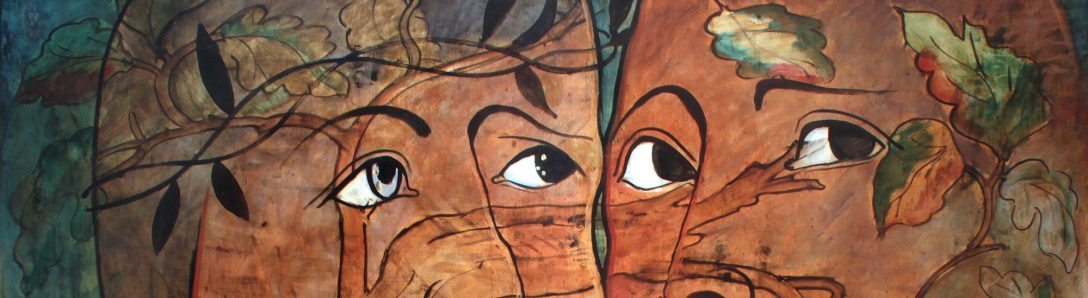
For some reason—some reason founded on no reason at all but rather superstitious suspicion—I didn’t believe Charles Burns would follow up X’ed Out, the first chapter of a proposed trilogy. I suppose X’ed Out had unresolved cult classic written all over it (written metaphorically, of course).

X’ed Out was one of my favorite books of 2010. From my review:

In Black Hole, Burns established himself as a master illustrator and a gifted storyteller, using severe black and white contrast to evoke that tale’s terrible pain and pathos. X’ed Out appropriately brings rich, complex color to Burns’s method, and the book’s oversized dimensions showcase the art beautifully. This is a gorgeous book, both attractive and repulsive (much like Freud’s concept of “the uncanny,” which is very much at work in Burns’s plot). Like I said at the top, fans of Burns’s comix likely already know they want to read X’ed Out; weirdos who love Burroughs and Ballard and other great ghastly fiction will also wish to take note. Highly recommended.

20121030-155702.jpg

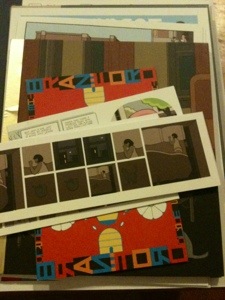
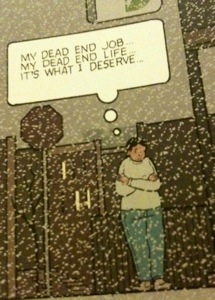
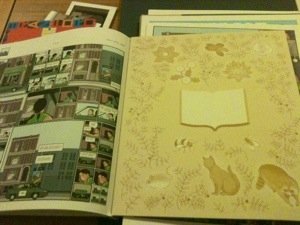
So, of course I was stoked when Burns’s sequel The Hive showed up a few weeks ago—in fact, the only thing that got in the way of me reading it immediately was that it showed up in a package along with Chris Ware’s Building Stories (this is, without question, the best package I’ve received in six years of doing the blog).

20121030-155714.jpg

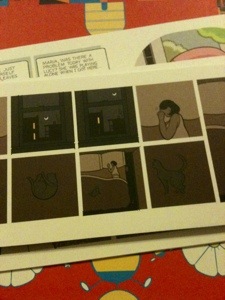
Anyway, I’ll be revisiting X’ed Out and then reviewing The Hive in the next week or so. For now, a few pics. Two from the interior above. And our hero Doug, in his alter-ego/costume Nitnit (inverse Tintin):

20121030-155722.jpg

I dig this panel in particular: A take on Roy Lichtenstein via Raymond Pettibon via the romance comics those pop artists were riffing on:

20121030-155729.jpg


Ghosting (Book Acquired, 10.18.2012)

20121018-174628.jpg

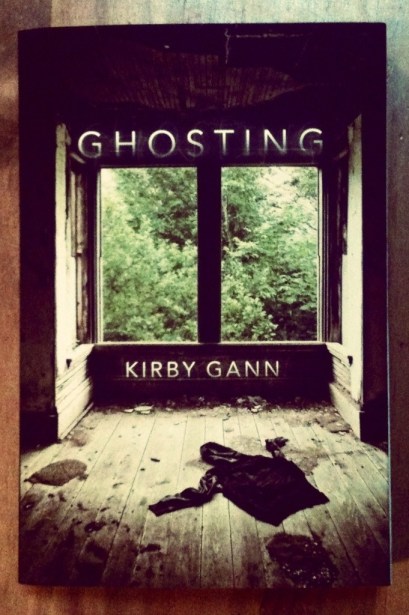
I got a copy of Kirby Gann’s novel Ghosting a few week or so ago, and finally have had time to dip into the first three chapters this morning. Gann’s prose—and perhaps the framing of his characters—reminds me a bit of Russell Banks or Thomas McGuane—that combination of the rough and the refined, that rawness that actually comes from meticulous reworking. Sample of that prose (context not important):

The first cop to show nods at Dwayne Hardesty and stands beside him at the feet of four kids who lie spread-eagled face-down on the muddy portico steps leading to the graffiti-strewn boards that shield the seminary entrance. The wash of the cruiser’s spot frescoes their captive forms in hard outline, three underfed and thin and the fourth a fat block squeezed into a Kentucky basketball sweatshirt that strains to withstand his heavy nervous breathing, the grommets in their jeans and an occasional earring flashing agleam in the white light; four pairs of white sneakers, expensive and rain-wet, shine stark and severe and unworldly.

Ghosting is a thriller, and Gann propels the narrative forward with these cinematic images (and realistic dialogue), engaging the reader to keep turning the pages.

Here’s the jacket copy:

A dying drug kingpin enslaved to the memory of his dead wife; a young woman torn between her promising future and the hardscrabble world she grew up in; a mother willing to do anything to fuel her addiction to pills; and her youngest son, searching for an answer behind his brother’s disappearance—these are just some of the unforgettable characters that populate Ghosting, Kirby Gann’s lush and lyrical novel of family, community, and the ties that can both bond and betray.

Fleece Skaggs has disappeared along with Lawrence Gruel’s reefer harvest. Convinced that the best way to discover the fate of his older brother is to take his place as a drug runner for Greuel, James Cole plunges into a dark underworld of drugs, violence, and long hidden family secrets, where discovering what happened to his brother could cost him his life.

A genre-subverting literary thriller explored through the alternating viewpoints of different characters, Ghosting is both a simple quest for the solution to a mystery, and a complex consideration of human frailty and equivocation.


Ngugi wa Thiong’o’s Memoir — In the House of the Interpreter (Book Acquired, 10.24.2012)

20121025-161753.jpg

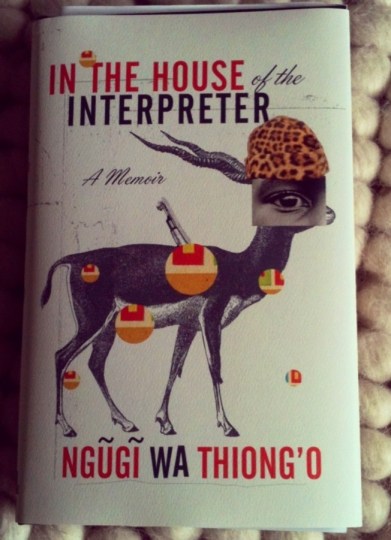
In the House of the Interpreter is a memoir from Ngugi wa Thiong’o. It’s new next month in hardback from Pantheon (lovely cover/design, on this one, Pantheon people. Seriously). Their blurb:

World-renowned Kenyan novelist, poet, playwright, and literary critic Ng˜ug˜ý wa Thiong’o gives us the second volume of his memoirs in the wake of his critically acclaimed Dreams in a Time of War.

In the House of the Interpreter richly and poignantly evokes the author’s life and times at boarding school—the first secondary educational institution in British-ruled Kenya—in the 1950s, against the backdrop of the tumultuous Mau Mau Uprising for independence and Kenyan sovereignty. While Ng˜ug˜ý has been enjoying scouting trips, chess tournaments, and reading about the fictional RAF pilot adventurer Biggles at the prestigious Alliance High School near Nairobi, things have been changing rapidly at home. Poised as he is between two worlds, Ng˜ug˜ý returns home for his first visit since starting school to find his house razed and the entire village moved up the road, closer to a guard checkpoint. Later, his brother Good Wallace, a member of the insurgency, is captured by the British and taken to a concentration camp. As for Ng˜ug˜ý himself, he falls victim to the forces of colonialism in the person of a police officer encountered on a bus journey, and he is thrown into jail for six days. In his second year at Alliance High School, the boarding school that was his haven in a heartless world is shattered by investigations, charges of disloyalty, and the politics of civil unrest.

In the House of the Interpreter hauntingly describes the formative experiences of a young man who would become a world-class writer and, as a political dissident, a moral compass to us all. It is a winning celebration of the implacable determination of youth and the power of hope.


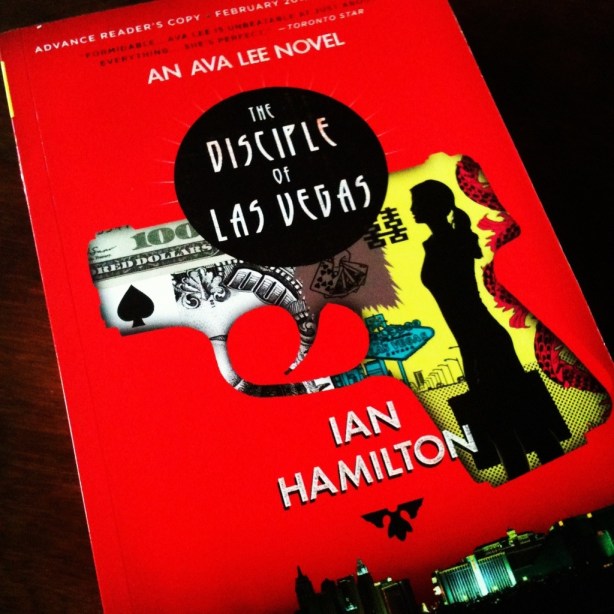
The Disciple of Las Vegas (Book Acquired, 9.27.2012)

20121009-161129.jpg

I guess these books are already big in the UK, or maybe they will be big, or something. This one’s an ARC and it doesn’t come out until early next year. Here’s the UK pub copy:

Hired by Tommy Ordonez, the richest man in the Philippines, to recover $50 million in a land swindle, Ava has her work cut out. Tommy’s brother has messed up and the Filipino billionaire’s reputation is on the line.

Tracking the money, Ava uncovers an illegal online gambling ring, and follows the trail to Las Vegas. Once there, she turns her gaze to David Douglas, one of the greatest poker players in the world – and someone who knows more about the missing money than he’s letting on.

Meanwhile, Jackie Leung, an old target of Ava’s, has made it rich. He wants revenge, and he’s going after Ava.

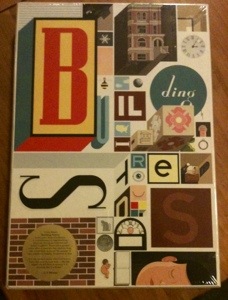
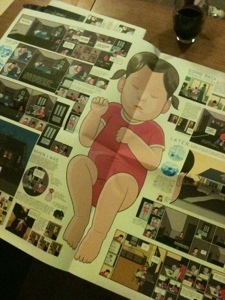
I Open Chris Ware’s Building Stories, Share Some Photos, and Riff a Little (Book Acquired, 10.15.2012)

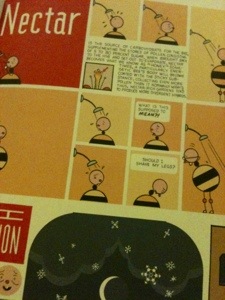
20121015-203618.jpg

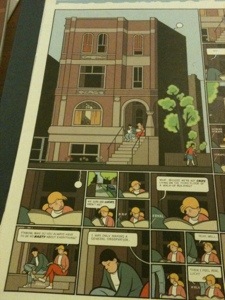
Thrilled today to get Building Stories, Chris Ware’s latest.

Thrilled here is no hyperbole—I can’t remember being so excited to open a book in quite some time.

But Building Stories isn’t really a book.
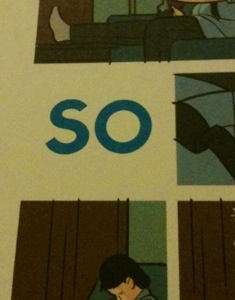
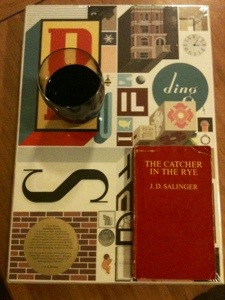
First, it comes in this big box—like a board game.

Here:

20121015-203630.jpg

I show it set against The Catcher in the Rye in mass market paperback and a glass of red.

(The Catcher in the Rye + glass of red is the international standard for items used to show relative dimensions of size).

(Also, don’t worry about the wine ring—still shrinkwrapped at this point).

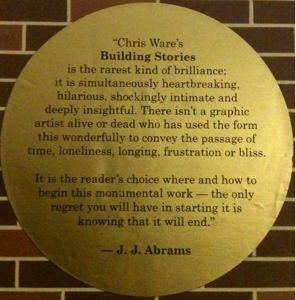
And on that shrinkwrap blazons a blurb by some guy named J.J. Abrams:

20121015-203639.jpg

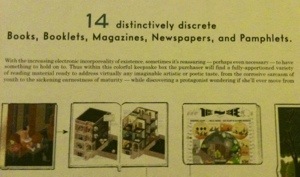
A description of the formal elements of Building Stories from the back of the box:

20121015-203649.jpg

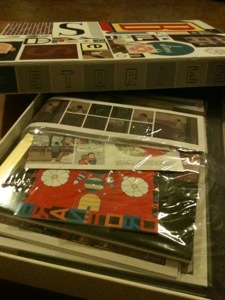
I open the box:

20121015-203659.jpg

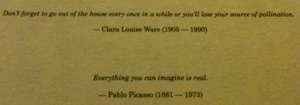
From the inside of the top of the box:

Not sure if that second quote shows here, but:

Pablo Picasso suggests that, Everything you can imagine is real.

20121015-203710.jpg

The package:

20121015-203722.jpg

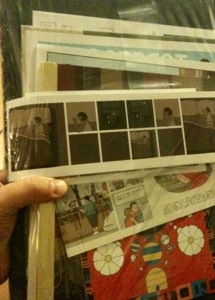
Strips and papers and books.

Shots as I go through it:

20121015-203734.jpg

Stack: The shorter/smaller stuff is on top—a suggestion to read it first? / Probably not.

Probably more a packing issue.

20121015-203744.jpg

I remember a professor in grad school musing about where a book begins.

The title page?

The cover?

20121015-203813.jpg

How and where does a book begin?

20121015-203824.jpg

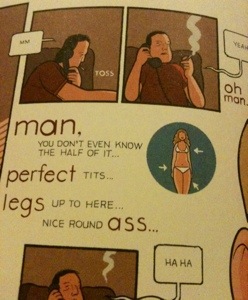
Chris Ware’s Building Stories: a kind of Möbius strip,

20121015-203834.jpg

crammed with ideas,

20121015-203843.jpg

illustrations,

20121015-203852.jpg

writing,

20121015-203900.jpg

stories . . .

20121015-203920.jpg

Little golden book

20121015-203929.jpg

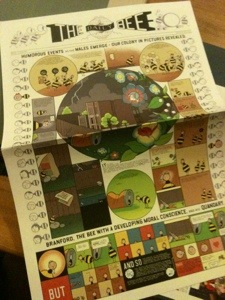
. . . and broadside.

20121015-203937.jpg

. . . so many faces . . .

20121015-203946.jpg

. . . layers . . .

20121015-203954.jpg

. . . and layers . . .

20121015-204003.jpg

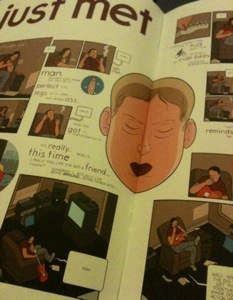
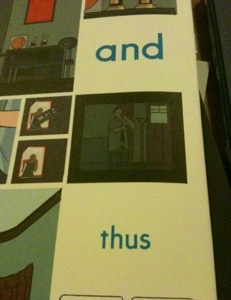
Ware’s transitions:

20121015-204011.jpg

(They always remind me of David Foster Wallace, who I know Ware read).

20121015-204017.jpg

And thus so well . . .

20121015-204023.jpg

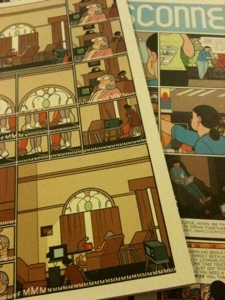
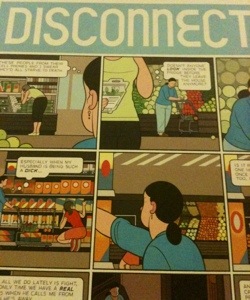
Disconnect?

20121015-204032.jpg

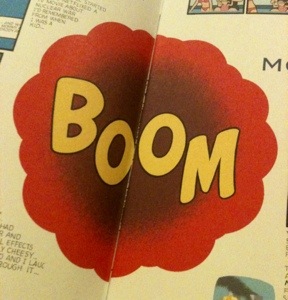
Boom!

20121015-204039.jpg

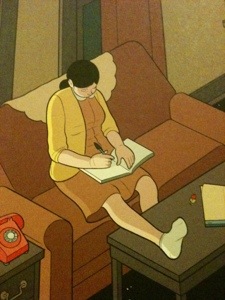
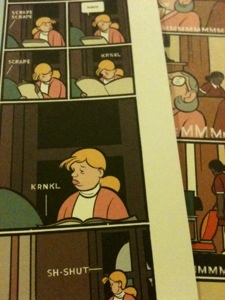
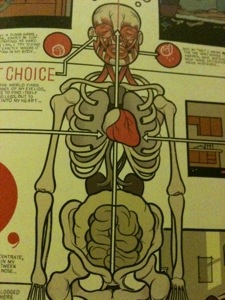
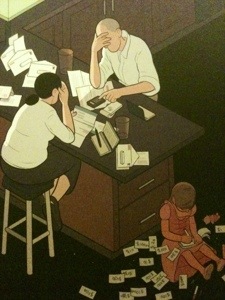
I should’ve busted out the wine glass or the Salinger here to show the scale of this marvelous painting, better than anything I’ve seen in contemporary art in ages. It tells all the story. (Wait, you (maybe) say, have you actually read the story yet?)

20121015-204045.jpg

No.

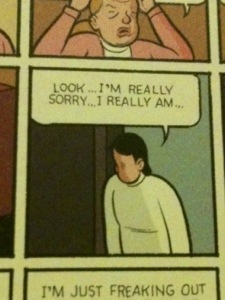
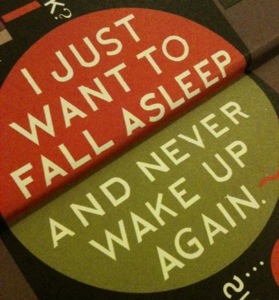
But who hasn’t felt:

20121015-204054.jpg

And

20121015-204100.jpg

Thus

20121015-204107.jpg

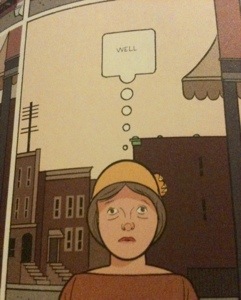
So

20121015-204114.jpg

Well . . .

20121015-204123.jpg

[Insert ideas about malleability of form, sequence, narrative, idea—riff on discursive-novel-as-future-novel, etc.]

End riff/now look, read, absorb.

World in the Balance (Book Acquired Some Time Last Week)

20121009-161150.jpg

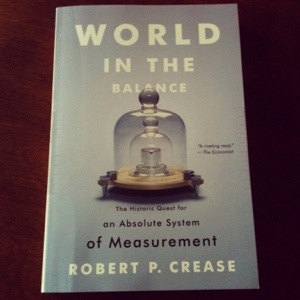
Robert P. Crease’s World in the Balance is now out in trade paperback. I wasn’t sure how interesting a book about the history of measurement could be, but when I flicked it open randomly to a chapter about Marcel Duchamp I found myself intrigued.
From Laura J. Snyder’s review at The Wall St. Journal:

‘The non-scientific mind has the most ridiculous ideas of the precision of laboratory work, and would be much surprised to learn that . . . the bulk of it does not exceed the precision of an upholsterer who comes to measure a window for a pair of curtains.” So wrote the American philosopher and scientist Charles S. Peirce (1839-1914).

Peirce may have been giving the general public more credit than he intended; most people don’t think much about the precision of scientific measurements, let alone question where the standards of measurement have come from in the past or where they are headed today. These topics are addressed by Robert P. Crease’s educational and often entertaining book, “World in the Balance.” While some readers might be put off by the episodic and occasionally repetitive structure of the book—belying its origin as the author’s columns for Physics World—those who are not will be amply rewarded with a sweeping survey of the history of measurement and the search for universal and absolute standards, from ancient China up to practically yesterday.


Camille Paglia’s Glittering Images (Book Acquired, 10.02.2012)

20121009-161046.jpg

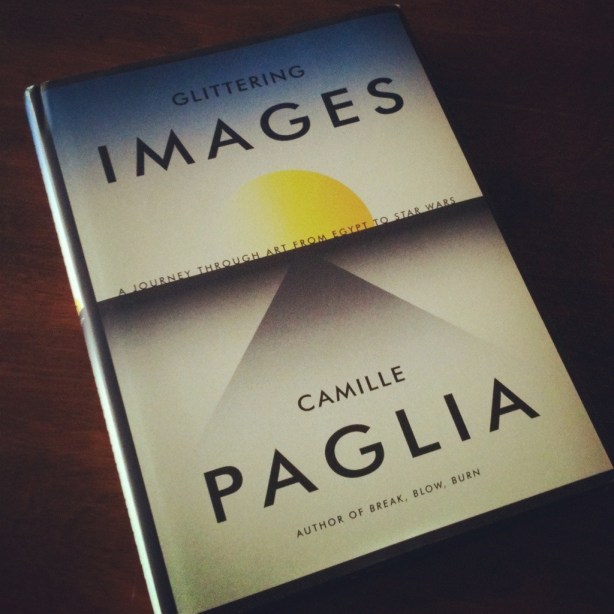
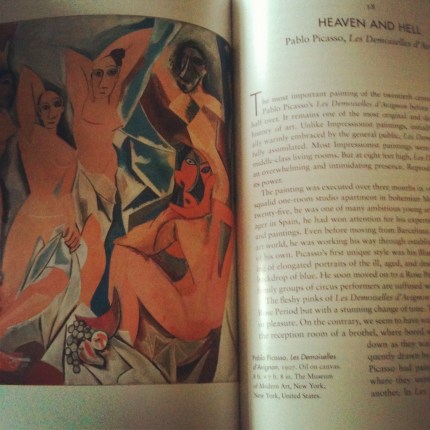
Camille Paglia’s latest is a gorgeous, glossy, oversized collection of essays on imagery and art. I haven’t read it in full yet, but Paglia considers an image or series of images (reproduced in full, of course), and then considers the image in a loose, riffing essay of a few short pages. She does this for almost thirty images, but I was immediately drawn to her final essay, a glowing adoration of George Lucas’s Revenge of the Sith. She had me at that moment—I’m a passionate defender of Sith, a film that navigates the tension between democracy and egotism. 

Anyway, full review to come. Here’s a lousy pic of the interior (glossy pages = glare).

20121009-161056.jpg

Publisher Pantheon’s blurb:

From the best-selling author of Sexual Personae and Break, Blow, Burn and one of our most acclaimed cultural critics, here is an enthralling journey through Western art’s defining moments, from the ancient Egyptian tomb of Queen Nefertari to George Lucas’s volcano planet duel in Revenge of the Sith.

America’s premier intellectual provocateur returns to the subject that brought her fame, the great themes of Western art. Passionately argued, brilliantly written, and filled with Paglia’s trademark audacity, Glittering Images takes us on a tour through more than two dozen seminal images, some famous and some obscure or unknown—paintings, sculptures, architectural styles, performance pieces, and digital art that have defined and transformed our visual world. She combines close analysis with background information that situates each artist and image within its historical context—from the stone idols of the Cyclades to an elegant French rococo interior to Jackson Pollock’s abstract Green Silver to Renée Cox’s daring performance piece Chillin’ with Liberty. And in a stunning conclusion, she declares that the avant-garde tradition is dead and that digital pioneer George Lucas is the world’s greatest living artist. Written with energy, erudition, and wit, Glittering Images is destined to change the way we think about our high-tech visual environment.

Cézanne: A Life (Book Acquired, 10.09.2012)


20121009-155918.jpg

I was pleasantly surprised yesterday to find a big ole biography of Paul Cézanne on my doorstep. I probably won’t get to Alex Danchev’s Cézanne: A Life anytime soon (at least not until I finish Robert Hughes’s Goya bio), but it looks like a pretty solid read—with lovely glossy pictures to boot:

20121009-155926.jpg

In the meantime, check out Evan McMurry’s full, in depth review at Bookslut.

Or, if you’re too busy, here’s the Kirkus write up in full:

A formidable biography of the Father of Modern Art bound for the annals of academia.

Danchev . . .  has researched every facet and nuance of Paul Cézanne’s life (1839–1906). His comfortable childhood in Provence, his years in Paris, where he was influenced by the Impressionists, and his dependence on the allowance from his father created the artist some suggested was “not all there.” There is a wealth of information in the correspondence between the artist and his childhood friend, Émile Zola, in which they parodied Virgil, joked in Latin and discussed Stendhal. Zola knew that Cézanne’s art was a corner of nature seen through his own curious temmpérammennte. The artist didn’t paint things; he painted the effect they had on him. He saw colors as he read a book or looked at a person, understood the inner life of an object and let his brain rework that object, sometimes illuminating it, sometimes distorting it. Danchev rightly subscribes to the theory that understanding the man is important to understanding his work, and he attempts to parse Cézanne’s psyche, digging into the background of nearly every author he discussed in his letters, quoting every writer who based a character on the man. Cézanne’s work will influence artists and confuse patrons for decades to come, especially those who have the patience to study Danchev’s comprehensive, occasionally ponderous tome.

A fairly impressive achievement of a Sisyphean task—definitely a book to keep in your library.


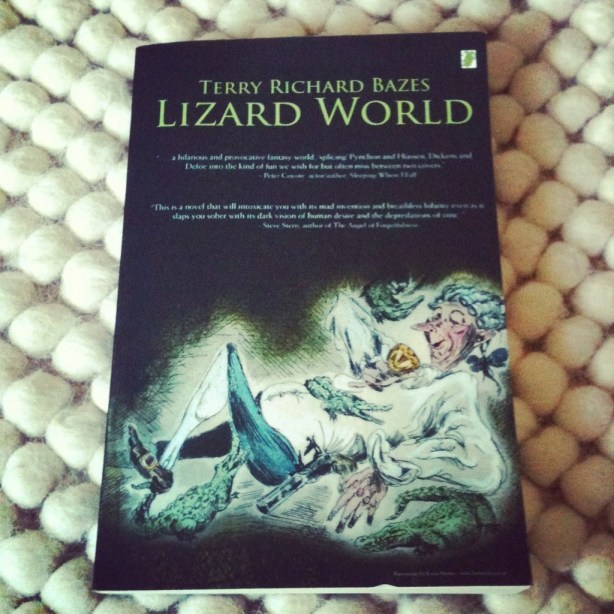
Lizard World (Book Acquired, 9.26.2012)


20121002-170037.jpg

This one is wonderfully weird stuff. Terry Richard Bazes’s Lizard World. Here’s a blurb from Grove Press founder Barney Rosset:

Lizard World opens with Josiah Fludd, a disenchanted character from the Early Modern World, exhuming a female corpse for a customer, whose interest in the carcass is presumed by the gravedigger to be a sexual one. Fludd’s blasé attitude vanishes when, on delivery of the corpse, he watches its feet sawed off, and he learns that they are meant to replace his patron’s nether claws. From this startling introduction Terry Richard Bazes pushes us into a bizarre world that vacillates between the past and present—and is told by a writer whose imagination seems to have no bounds.

Here’s an excerpt:

I being then in my nineteenth year and little more than a beggar — intent, by hook or by crook, to become a chirurgeon and yet utterly without means to feed and clothe my body (much less to learn the merest rudiments of my profession) — it came about that at  length I did find a way both to earn my bread and pursue my studies by  undertaking to perform a service — a wholly necessary and harmless service albeit one from which my more prosperous school-mates turned away with horror and revulsion.  So it was that I got my sustenance and was suffered to sit with all the paying scholars — provided it was in the very backermost row — and watch whilst our professor  probed the deepest mysteries of a fresh cadaver.
Now just exactly how and whence these cadavers were supplied were questions my finical  colleagues dared not closely entertain, although in gross they knew the truth and shunned me like a leper. But I cared not a fart for their esteem, so long as I could learn, and the short of it was that I advanced quickly in my studies and was oft besought by my professors for a specimen and consequently was upon ever the most constant look-out for the newly dead.
For this purpose it was my practice to put on the clothes and countenance of a mourner and, thus disguised, to frequent the very meanest of country churches in the hope that there I might chance upon some humble obsequies.  If fortune smiled, and some farmer or laundress had departed this life, then I would repair under the cloak of  starlight unto the churchyard,  still in mourning attire  and carrying a fistful of daisies and a Bible, lest I be questioned of my purpose and require a ready pretext.  The great secret of the art was to work with utmost haste and efface the smallest evidence of theft. Therefore, by the light of my lantern, I studied the disposition of each rock, each wreath of flowers — and, thus informed of the state to which the grave must later be restored, now proceeded to violate the soil, but only so much as to permit my shovel to break the very head-piece of the box.  This method, once perfected, allowed me — in a trice — to draw the carcass out, conceal it in a sack, restore the injured earth, and load my stiffened burden on a waiting dung-cart.

For more excerpts, check out Bazes’s site; more to come.


Book Acquired, 9.28.2012

20121002-170012.jpg

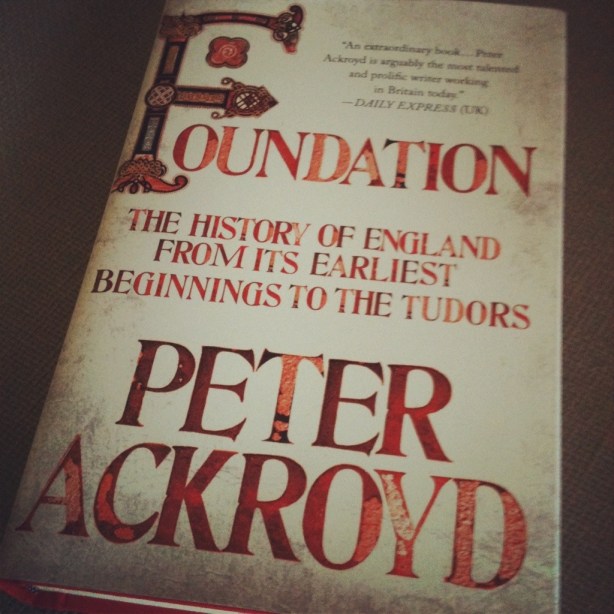
Foundation, a history of England from Peter Ackroyd. From a recent Guardian profile:

Ackroyd’s trademark insight and wit, and the glorious interconnectedness of all things, permeate each page. One thing that struck me was the realisation that history isn’t nearly as linear as we thought. Something is invented, or discovered, or philosophised, and we tend to think that that’s knowledge known from then on, but even in this single volume there are endless forgettings.

“Absolutely,” comes his fast answer, spoken, as ever, gently and with a strange mix of confidence and self-effacement. “One thing which most interested me was the fact that neglect, or our genius for forgetfulness, occurs at every level of social and political activity. The same mistakes, the same confusions, occur time and time again. It sometimes seems to me that the whole course of English history was one of accident, confusion, chance and unintended consequences – there’s no real pattern.”

What he discovered, or rediscovered, is that “what underlines that random happenstance are the deep continuities of national life that survive, uninfluenced by the surface events. In this book, I have little chapters on, say, medieval medicine, or punishment, or medieval humour, simply to convey the broad continuities that underlie this bewildering range of events. Continuities of the soil, the land, the earth.” And these help create human – English – sensibilities? “Yes. As I said in my London book, it’s a sort of territorial imperative, the landscape; the shape of the geology, almost, has a definite though not comprehended effect on human behaviour, human need. So that’s one of the things I was trying to explore I suppose.”

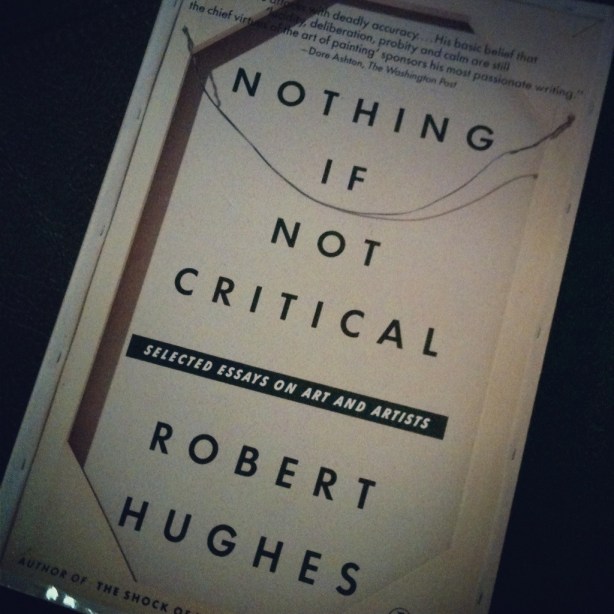
Robert Hughes’s Nothing If Not Critical (Book Acquired, 10.1.2012)

20121001-200452.jpg

Collection of Robert Hughes essays, Nothing If Not Critical.

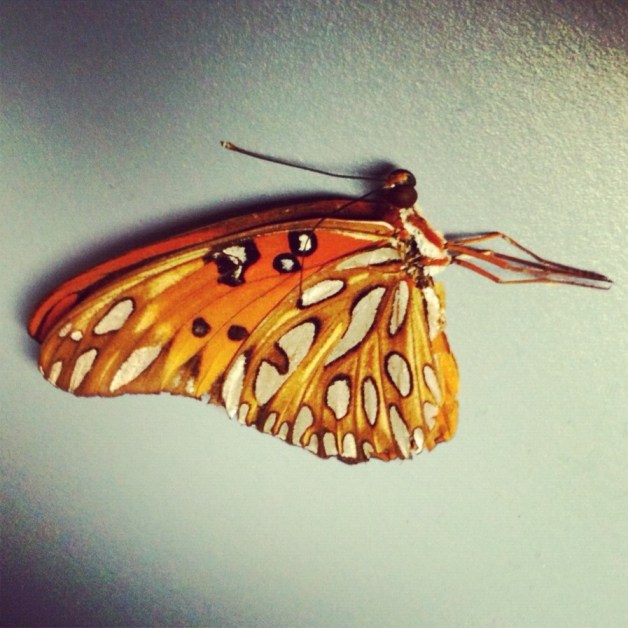
I also found this butterfly on the ground an hour before finding the book:

20121001-200501.jpg

Sebald’s After Nature (Book Acquired, 9.21.2012)

20120930-142202.jpg

W.G. Sebald’s poetry collection After Nature. Not really poetry. Or maybe it is poetry. I don’t know what poetry is.

Bartleby the Scrivener (Book Acquired, 9.25.2012)


20120925-164256.jpg

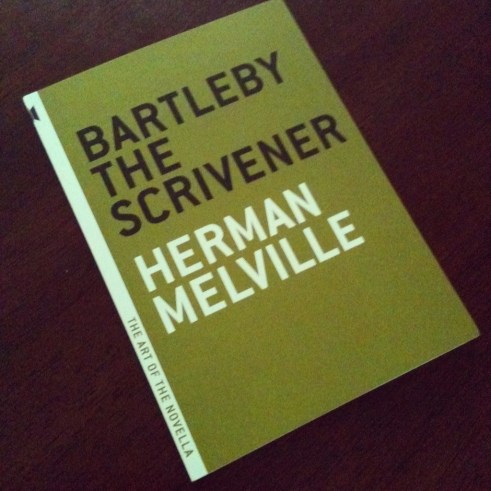
The good people at Melville House sent me their edition of Melville’s classic novella Bartleby the Scrivener. I’ve read it at least half a dozen times since the 10th grade, but the Melville House version is part of their Hybrid Books series, which features digital illuminations. I shall report in full in a week or two, focusing on what the illuminations add to the book, and what the reading experience is like.


Robert Hughes’s Goya Biography (Book Acquired, 9.21.2012)

20120925-164220.jpg

I’d been wanting to read a biography of Goya for some time now. For a few years now, his art has come occupy a strange space in the back of my subconscious mind—all the pain and violence and horror of it. Maybe it’s all the Roberto Bolaño I’ve been reading. I’m convinced that if you want to understand Bolaño it helps to have Goya as a visual referent. Also, I cut up an oversized Italian collection of color prints from Goya to hang in my office, so they’re always kinda in my visual field.

Anyway, last week I went  by my favorite local used bookstore to pick up a copy of W.G. Sebald’s After Nature that they’d kindly ordered for me and went through the biographies as well to find something on Goya. There were at least half a dozen, but the recently deceased Robert Hughes’s was the most beautiful and most recent, and its opening captivated me: In the first chapter, Hughes describes how a near-fatal car crash in 1999 unlocked the Goya study that he’d been wanting to write for years. The scene unfolds as a bizarre prolonged fever dream, a horrifying narrative informed by Goya’s asylums and bullfights, with the strange layer of modern airport slathered on top.

I’ve read the first 150 pages since then. Hughes’s writing is crisp and the text is rich; Hughes builds a slow case, arguing against Goya’s reputation as a radical but also highlighting the artist’s powers of pathos (not to mention his skill, both raw and refined). Hughes had me hooked with the following paragraph, which could also stand in as a simple description of a decsonstructionist theory of identity:

Goya was in some ways the greatest of all delineators of madness, because he was unrivaled in his ability to locate it among the common presences of human life, to see it as a natural par t of man’s (and woman’s) condition, not as an intrusion of the divine or the demonic from above or below. Madness does not come from outside into a stable and virtuous normality. That, Goya knew in his excruciating sanity, was nonsense. There is no perfect stability of the human condition, only approximations of it, sometimes fragile because created by culture. Part of his creed, indeed the very core of his nature as an artist, was Terence’s “Nihil humanum a me alienum puto,” “I think nothing human alien to me.” This was part of Goya’s immense humanity, a range of sympathy, almost literally, “co-suffering,” rivaling that of Dickens or Tolstoy.