Bartleby the Scrivener (Book Acquired, 9.25.2012)


20120925-164256.jpg

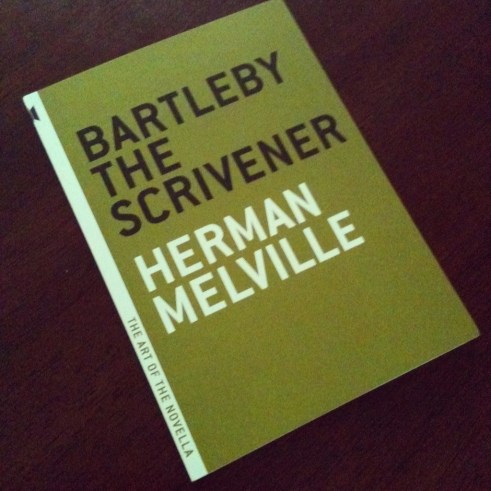
The good people at Melville House sent me their edition of Melville’s classic novella Bartleby the Scrivener. I’ve read it at least half a dozen times since the 10th grade, but the Melville House version is part of their Hybrid Books series, which features digital illuminations. I shall report in full in a week or two, focusing on what the illuminations add to the book, and what the reading experience is like.


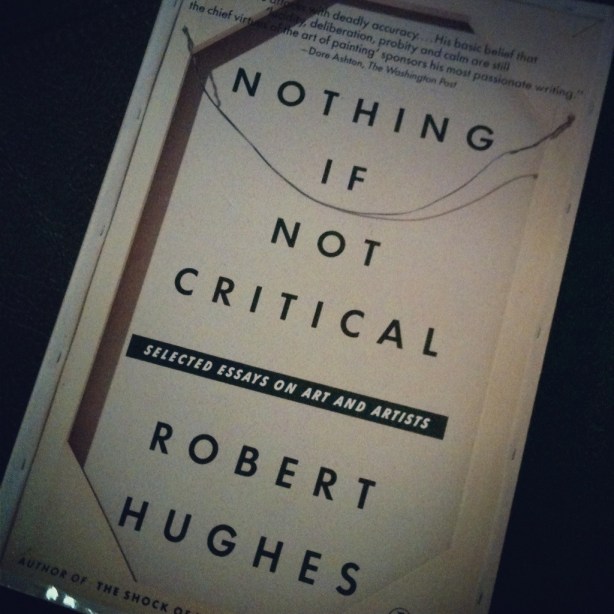
Robert Hughes’s Goya Biography (Book Acquired, 9.21.2012)

20120925-164220.jpg

I’d been wanting to read a biography of Goya for some time now. For a few years now, his art has come occupy a strange space in the back of my subconscious mind—all the pain and violence and horror of it. Maybe it’s all the Roberto Bolaño I’ve been reading. I’m convinced that if you want to understand Bolaño it helps to have Goya as a visual referent. Also, I cut up an oversized Italian collection of color prints from Goya to hang in my office, so they’re always kinda in my visual field.

Anyway, last week I went  by my favorite local used bookstore to pick up a copy of W.G. Sebald’s After Nature that they’d kindly ordered for me and went through the biographies as well to find something on Goya. There were at least half a dozen, but the recently deceased Robert Hughes’s was the most beautiful and most recent, and its opening captivated me: In the first chapter, Hughes describes how a near-fatal car crash in 1999 unlocked the Goya study that he’d been wanting to write for years. The scene unfolds as a bizarre prolonged fever dream, a horrifying narrative informed by Goya’s asylums and bullfights, with the strange layer of modern airport slathered on top.

I’ve read the first 150 pages since then. Hughes’s writing is crisp and the text is rich; Hughes builds a slow case, arguing against Goya’s reputation as a radical but also highlighting the artist’s powers of pathos (not to mention his skill, both raw and refined). Hughes had me hooked with the following paragraph, which could also stand in as a simple description of a decsonstructionist theory of identity:

Goya was in some ways the greatest of all delineators of madness, because he was unrivaled in his ability to locate it among the common presences of human life, to see it as a natural par t of man’s (and woman’s) condition, not as an intrusion of the divine or the demonic from above or below. Madness does not come from outside into a stable and virtuous normality. That, Goya knew in his excruciating sanity, was nonsense. There is no perfect stability of the human condition, only approximations of it, sometimes fragile because created by culture. Part of his creed, indeed the very core of his nature as an artist, was Terence’s “Nihil humanum a me alienum puto,” “I think nothing human alien to me.” This was part of Goya’s immense humanity, a range of sympathy, almost literally, “co-suffering,” rivaling that of Dickens or Tolstoy.

Maverick Jetpants in the City of Quality (Book Acquired, 9.21.2012)

20120923-131146.jpg

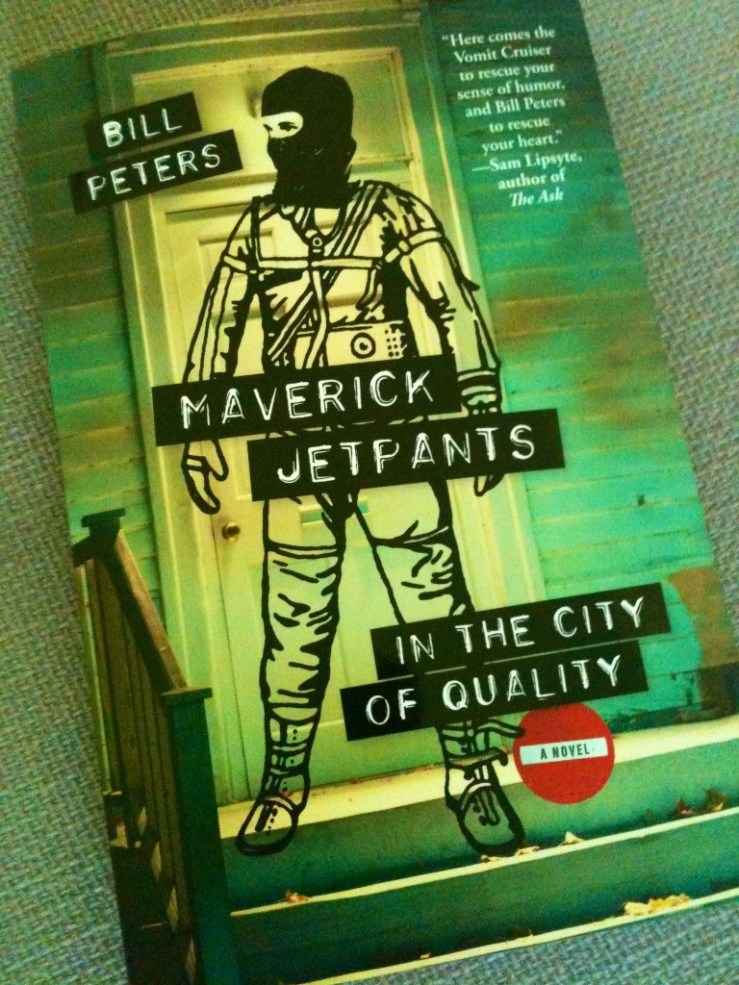
Bill Peters — Maverick Jetpants in the City of Quality. Not sure if that title is brilliant or awful. This one comes out from Black Balloon next month. Their blurb:

Rochester, New York, 1999: An arsonist is loose on the streets of a city in decline. Gone are the days of Rioting in the Vomit Cruiser, searching for a possible Tokyo Rocking Horse. In this hilarious, wildly original debut novel, Nathan Gray and best friend Necro live by the code of Joke Royalty, a system of in-jokes known only to a select few. But as the reality of full-time employment, possible spouses, and Neo-Nazis encroaches, their friendship unravels, threatening their dreams of becoming Kodak Park Winjas.
Among the gravest Hellstacheries: Necro’s strangely vicious drawings and his sudden interest in a group of weapons enthusiasts who may or may not be responsible for the fires erupting through downtown. With no Holy Grail Points left to his name, Nate ventures into Rochester’s strangest corners to find out if his best friend is a domestic terrorist Pinning Bow Ties on the Dead or simply Maverick Jetpantsing on with his life–perhaps even beyond The City of Quality.

Biblioklept fave Sam Lipsyte also provides a blurb:

Do you want laughter, suffering, and friendship, Rochester-style? Do you want to marinate in raucous sadness? I know you do. So be ready, everybody. Here comes the Vomit Cruiser to rescue your sense of humor, and Bill Peters to rescue your heart.

John Hawkes/Javier Marías/Beautiful Moth on Basil (Books Acquired, 9.14.2012)

20120914-170840.jpg

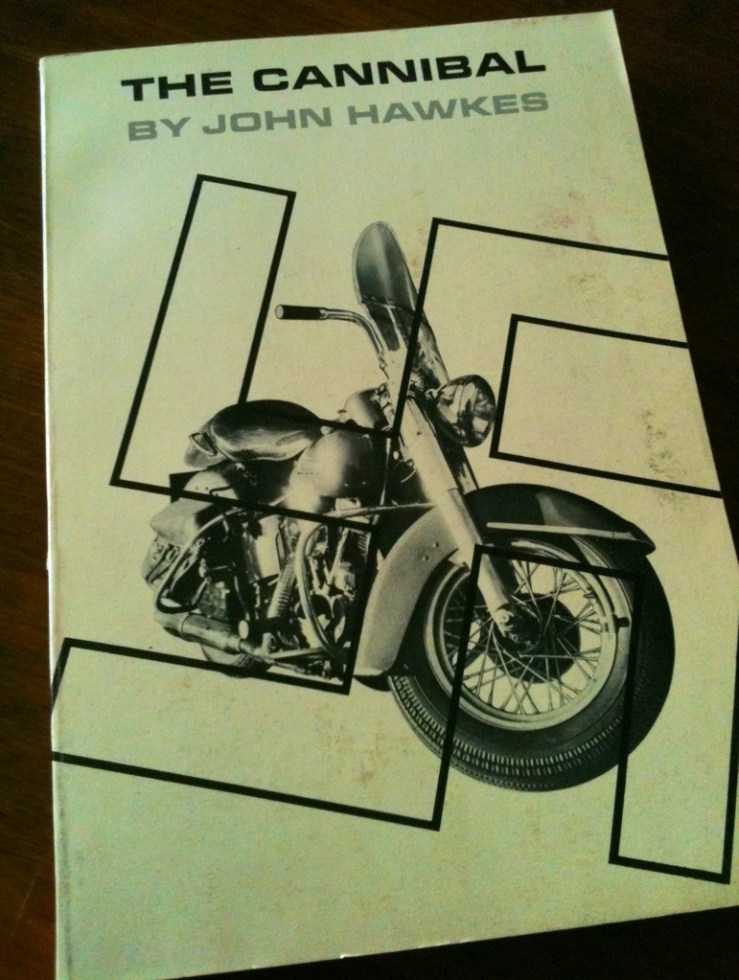
John Hawkes and Javier Marías. Was looking for something else, spotted the ND spine (Hawkes) and The Believer Books aesthetic (Marías).

From the back of the Hawkes:

No synopsis conveys the quality of this now famous novel about an hallucinated Germany in collapse after World War II. John Hawkes, in his search for a means to transcend outworn modes of fictional realism, has discovered a highly original technique for objectifying the perennial degradation of mankind within a context of fantasy… Nowhere has the nightmare of human terror and the deracinated sensibility been more concisely analyzed than in The Cannibal. Yet one is aware throughout that such analysis proceeds only in terms of a resolutely committed humanism.   (Hayden Carruth)

20120914-170848.jpg

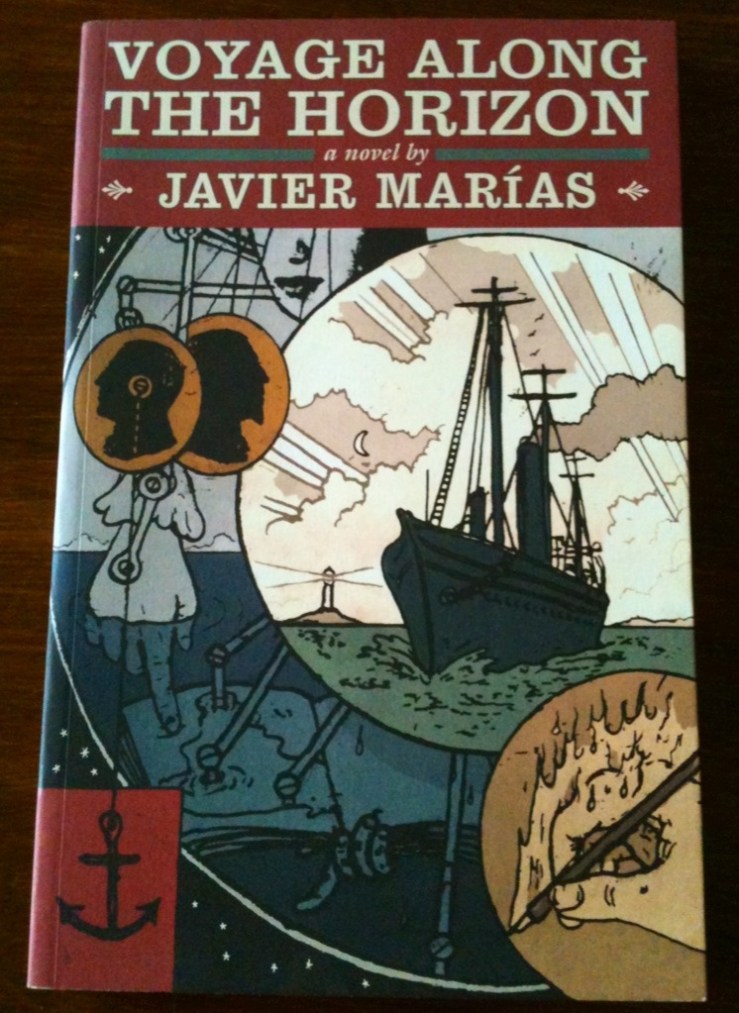
Here’s a description, sort of, of a 2006 review of Voyage Along the Horizon (from the NYT):

To judge the Spanish novelist and essayist Javier Marías solely on the basis of “Voyage Along the Horizon” would be akin to imagining Flaubert only from “Salammbô” or Nabokov from “Transparent Things.” Though these works aren’t insignificant in their own right, to read them without recourse to their authors’ larger bodies of work is to comprehend a complex organism only from its vestigial limbs.

Here is a picture of a colorful moth doing something to a basil plant in my back yard:

20120914-171200.jpg

Has Man a Future? — Bertrand Russell Penguin Edition (Book Acquired, 9.14.2012)

20120914-170814.jpg

Unable to resist this1961 first edition Penguin of Russell’s essay for peace, Has Man a Future?

In a strange coincidence, I showed this 1959 clip of Russell to a few of my classes this week—I know others have shared it before, but it seems more relevant than ever:

Žižek’s Lacan, Houellebecq’s Lovecraft (Books Acquired, 9.7.2012)

20120907-172419.jpg

The People of Forever Are Not Afraid (Book Acquired, 8.25.2012)

20120902-141516.jpg

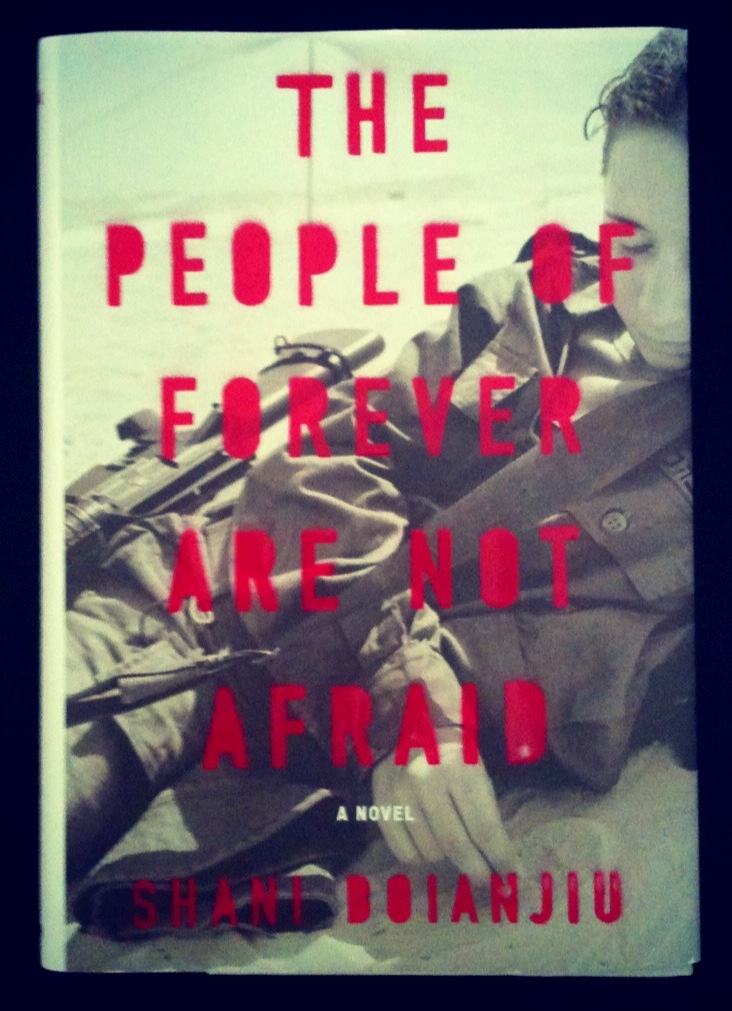
The People of Forever Are Not Afraid by Shani Boianjiu. New in hardback later this week from Random House. Their blurb:

Yael, Avishag, and Lea grow up together in a tiny, dusty Israeli village, attending a high school made up of caravan classrooms, passing notes to each other to alleviate the universal boredom of teenage life. When they are conscripted into the army, their lives change in unpredictable ways, influencing the women they become and the friendship that they struggle to sustain. Yael trains marksmen and flirts with boys. Avishag stands guard, watching refugees throw themselves at barbed-wire fences. Lea, posted at a checkpoint, imagines the stories behind the familiar faces that pass by her day after day. They gossip about boys and whisper of an ever more violent world just beyond view. They drill, constantly, for a moment that may never come. They live inside that single, intense second just before danger erupts.
In a relentlessly energetic and arresting voice marked by humor and fierce intelligence, Shani Boianjiu, winner of the National Book Foundation’s “5 Under 35,” creates an unforgettably intense world, capturing that unique time in a young woman’s life when a single moment can change everything.

Boianjiu is a young’an—she was born in ’87! Anyway, you can read an excerpt at Vice.

The Dao of the Military (Book Acquired, 8.27.2012)


20120902-141439.jpg

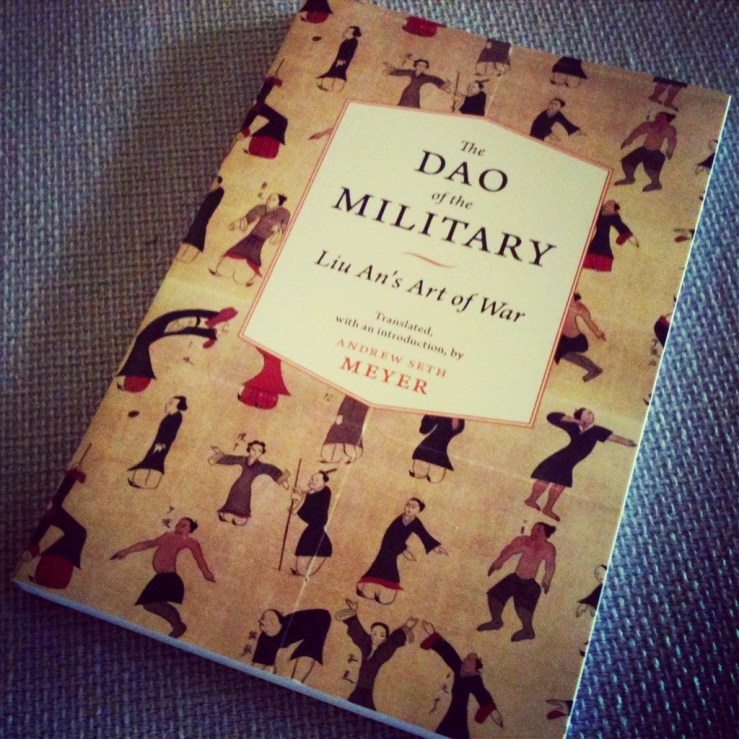
The Dao of the Military: Liu An’s Art of War is new in translation by Andrew Seth Meyer from Columbia University Press. Their blurbs:

The Dao of the Military makes a welcome addition to the growing literature on early Chinese strategy. The translation is exacting and felicitous. It should serve well for those interested in the history of Chinese thought and Chinese military thought.” — Victor H. Mair, University of Pennsylvania

The Dao of the Military summarizes and reflects on many aspects of the theory and practice of warfare developed in the Warring States period. It incorporates much of the theorizing of several traditions of military thought not well represented in the Seven Military Classics, and it is an important and valuable treatise that enriches our understanding of the history of Chinese military theory, the military tradition, Chinese intellectual history, and early China studies.” — Robin D. S. Yates, McGill University

The Dao of the Military is a valuable addition to the body of early China’s military texts available in English. Meyer’s learned introduction and admirably readable translation provide new and fascinating insights into the intellectual world and the military thinking of ancient Chinese philosophers. It is an essential read for everyone interested in how the Chinese tradition has understood warfare.” — Nicola Di Cosmo, Institute for Advanced Study, Princeton University


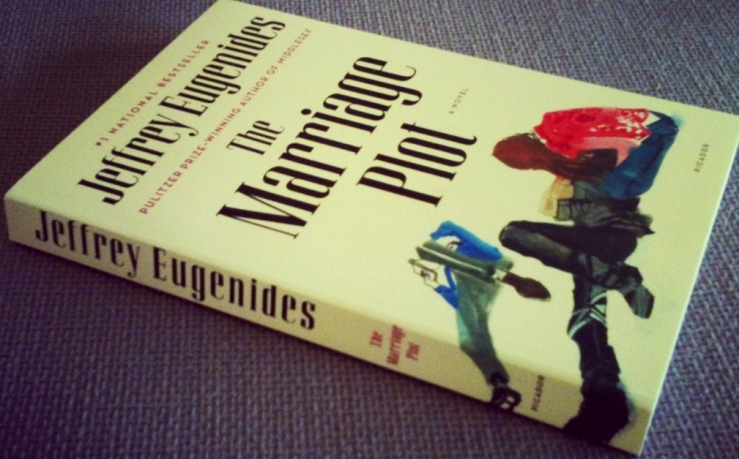
I Riff on Eugenides’s The Marriage Plot, Which I Haven’t Read (Book Acquired, 8.22.2012)


20120902-141345.jpg

1. Jeffrey Eugenides’s third novel The Marriage Plot is out in paperback from Picador this month. I haven’t read it.

2. I like the cover, a sort of watercolor job on thick textured paper.

3. I read Eugenides’s first novel The Virgin Suicides in 1997 or 1998. I was a freshman or sophomore in college. It was one of those books that everyone had on their shelves (I read my girlfriend’s roommate’s copy in maybe two sittings). I recall liking its style but the story had no emotional impact on me.

I was suspicious of the talent everyone ascribed to Eugenides.

4. I bought Eugenides’s second novel Middlesex in a train station in Rome. I bought it because I needed something to read. I read most of it on trains. This was the summer of 2005 or 2006, I think.

5. Middlesex is one of the first novels I can think of that I read and thought, “Here is a writer trying to fool me. Here is a writer trying to hide a fairly predictable plot under a mask of thematic importance. Here is a writer trying to hide mundane and often clunky prose beneath relevant issues. Here is an author trying to hide a lack of penetrating insight beneath the dazzle of historical sweep.”

6. Middlesex: The seams show. It’s literary-fiction-as-genre. And I have no problem with that. I wish it was weirder.

7. Here’s the back cover blurb for The Marriage Plot:

It’s the early 1980s. In American colleges, the wised-up kids are inhaling Derrida and listening to Talking Heads. But Madeleine Hanna, dutiful English major, is writing her senior thesis on Jane Austen and George Eliot, purveyors of the marriage plot that lies at the heart of the greatest English novels. As Madeleine studies the age-old motivations of the human heart, real life, in the form of two very different guys, intervenes—the charismatic and intense Leonard Bankhead, and her old friend the mystically inclined Mitchell Grammaticus. As all three of them face life in the real world they will have to reevaluate everything they have learned.

8. I sort of feel like I’ve already read the novel after reading this. Or maybe I feel like I could guess the trajectory of the novel.

9. Okay, so maybe I should read the first few pages . . .

10. I stopped on page 11, at this paragraph:

The cafe had just opened. The guy behind the counter, who was wearing Elvis Costello glasses, was rinsing out the espresso machine. At a table against the wall, a girl with stiff pink hair was smoking a clove cigarette and reading Invisible Cities. “Tainted Love” played from the stereo on top of the refrigerator.

Espresso! Cloves! Soft Cell! Calvino! Costello!

Okay. Maybe it’s Gloria Jones’s version of “Tainted Love.”

Anyway. There’s something insufferable about the paragraph.

I suppose I need to name or define the “something.”

11. Let me backtrack then, to the first paragraphs of the novel, to its first line even: “To start with, look at all the books.”

I like that as an opening line. I do. And I don’t mind an intertextual read. I’ll even accept this opening gambit as a form of characterization for our heroine Madeleine—this listing of authors—Wharton, Henry James, “a lot of Dickens, a smidgen of Trollope” (a smidgen!), “good helpings of Austen, George Eliot” etc. etc. We learn she reads Collette “on the sly” (who is stopping her?).

The references pile up: The surroundings of College Hill are compared to a “Charles Addams cartoon or a Lovecraft story”; those damn RISD kids are “blaring Patti Smith”; Madeleine has borrowed her roommate’s Betsey Johnson dress; you might recognize Madeleine by her “Katherine Hepburn-ish cheekbones and jawline”; etc.

For, fun, let me pick three pages at random:

On page 75, we find out that someone named Dinky is “a frosted blonde with late-de Kooning teeth.”

Page 187 is clean.

Page 87: Roland Barthes. Harpo Marx. Grolsch beer.

(I can’t help but skim over 86, a motherlode: Kafka, Borges, Musil, Vanity FairThe Sorrows of Young Werther, Derrida).

12. Erudition in a novel can be a fine thing, and works that explicitly reference and engage other works can be marvelous (Sebald’s The Rings of Saturn is an easy example to go to here). But references can also be used lazily as placeholders for real meaning, or even as a substitution for an entire milieu. (This is what I mean by the “something insufferable,” re: point 10).

13. There seems to be a trend in genre-bound “literary fiction” novels (again, I mean literary-fiction-as-genre) that lazily tie themselves to another, greater novel, without actually adding to the themes. I’m thinking explicitly of Franzen trying to borrow some of the weight of War and Peace in Freedom and Chad Harbach’s bid for Moby-Dick comparisons in The Art of Fielding. My intuition is that Eugenides is doing the same thing in The Marriage Plot.

14. Of course I’m probably (improbably enough) not the ideal audience for The Marriage Plot, not despite the fact but because of the fact that I happen to dig Talking Heads and Derrida and Barthes and literary theory &c. A romcom that involves a semiotics seminar as a setting is especially unappealing to me.

My wife, on the other hand, snapped up the copy of The Marriage Plot that the kind people at Picador sent me. I had to pull it from her night stand to write this riff. I’ll get her reaction down the line, which will certainly be more informed than my own.

 

The Great Partnership (Book Acquired, Some Time Last Week)


20120902-141543.jpg

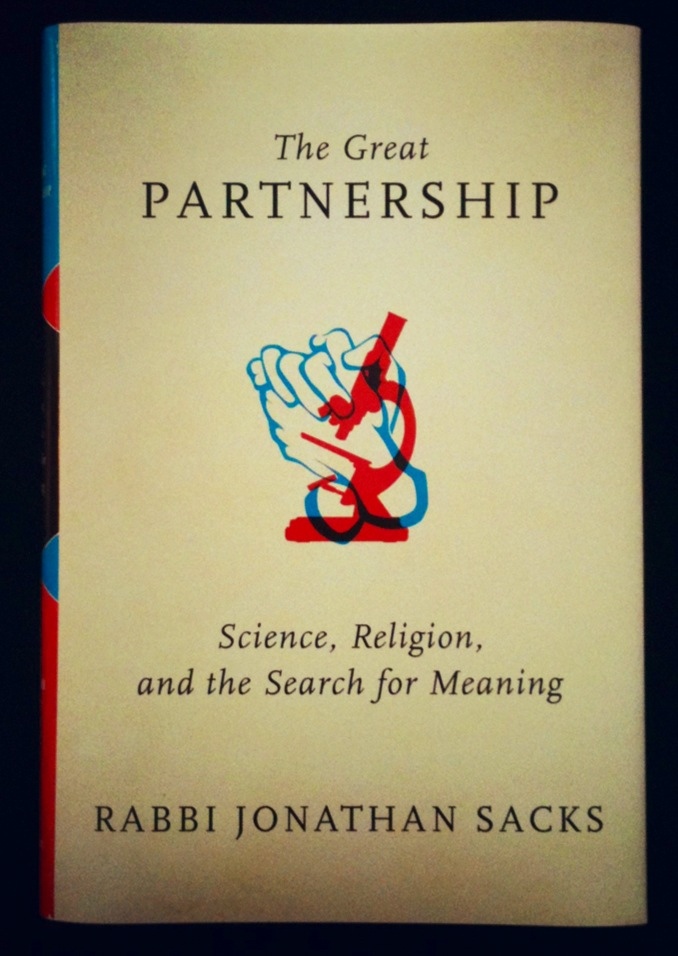
Jonathan Sacks’s The Great Partnership: Science, Religion, and the Search for Meaning is getting a hardback release in the US from Random House (it’s been out in the UK for a while now). RH’s blurb:

An impassioned, erudite, thoroughly researched, and beautifully reasoned book from one of the most admired religious thinkers of our time that argues not only that science and religion are compatible, but that they complement each other—and that the world needs both.

“Atheism deserves better than the new atheists,” states Rabbi Jonathan Sacks, “whose methodology consists of criticizing religion without understanding it, quoting texts without contexts, taking exceptions as the rule, confusing folk belief with reflective theology, abusing, mocking, ridiculing, caricaturing, and demonizing religious faith and holding it responsible for the great crimes against humanity. Religion has done harm; I acknowledge that. But the cure for bad religion is good religion, not no religion, just as the cure for bad science is good science, not the abandonment of science.”

Rabbi Sacks’s counterargument is that religion and science are the two essential perspectives that allow us to see the universe in its three-dimensional depth. Science teaches us where we come from. Religion explains to us why we are here. Science is the search for explanation. Religion is the search for meaning. We need scientific explanation to understand nature. We need meaning to understand human behavior. There have been times when religion tried to dominate science. And there have been times, including our own, when it is believed that we can learn all we need to know about meaning and relationships through biochemistry, neuroscience, and evolutionary psychology. In this fascinating look at the interdependence of religion and science, Rabbi Sacks explains why both views are tragically wrong.

Look, I’ll be frank—I’m hardly a fan of the so-called “new atheists,” but that’s not what this book is really about. It’s really about trying to restore an anchoring metaphysical center—a god, namely, Sacks’s god—despite the progress made by science and philosophy. What I find repellent about Sacks’s book is the idea that only religion can provide a logical, meaningful answer to “why we are here.” I have no problem with the coexistence of religion and science, but that’s not what Sacks wants. He wants religion to dominate. Anyway, clearly I’m not enthusiastic, but if you’re interested, here’s a proper review.


Books Acquired, 8.10.2012 — Or, Here’s What’s New from Picador


20120818-193215.jpg

New stuff from Picador this month.

This is the one my wife gravitated to:

20120818-193234.jpg

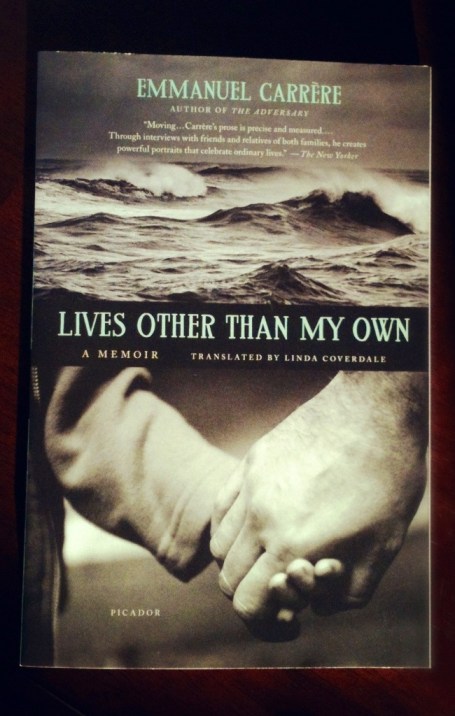
Lives Other Than My Own, by Emmanuel Carrere. Blurb:

In Sri Lanka, a tsunami sweeps a child out to sea, her grandfather helpless against the onrushing water. In France, a woman dies from cancer, leaving her husband and small children bereft. What links these two catastrophes is the presence of Emmanuel Carrère, who manages to find consolation and even joy as he immerses himself in lives other than his own. The result is a heartrending narrative of endless love, a meditation on courage in the face of adversity, and an intimate look at the beauty of ordinary lives.

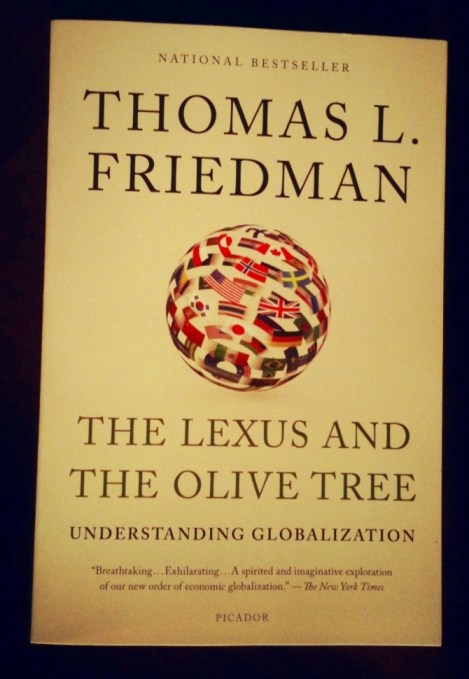
 I guess Picador have a new edition of Thomas Friedman’s The Lexus and the Olive Tree coming out. The book is 12 years old and seems kind of out of date:

20120818-193245.jpg

Do you know about Matt Taibbi’s agon with Thomas Friedman. He’s rough, I tell you, rough.


Pym (Book Acquired, 8.16.2012)


20120818-174043.jpg

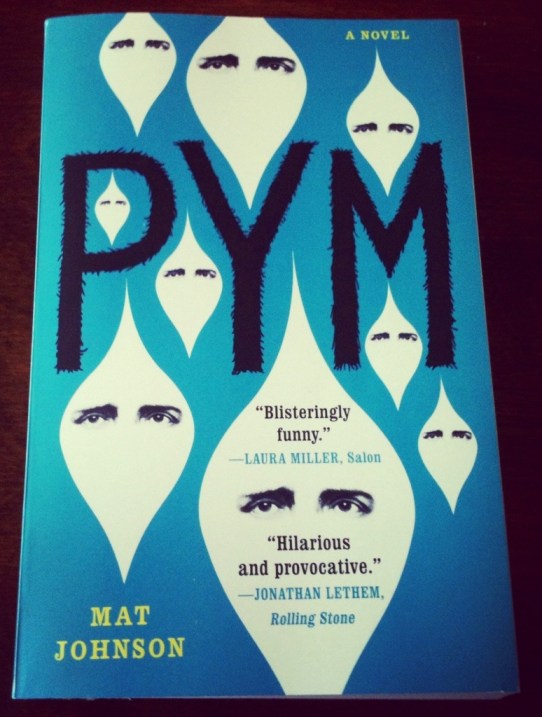
I wanted to read Mat Johnson’s novel Pym when it came out last year, so I was pleased when Random House sent me a copy of the forthcoming trade paperback. Random House’s blurb:

Recently canned professor of American literature Chris Jaynes has just made a startling discovery: the manuscript of a crude slave narrative that confirms the reality of Edgar Allan Poe’s strange and only novel,The Narrative of Arthur Gordon Pym of Nantucket. Determined to seek out Tsalal, the remote island of pure and utter blackness that Poe describes, Jaynes convenes an all-black crew of six to follow Pym’s trail to the South Pole, armed with little but the firsthand account from which Poe derived his seafaring tale, a bag of bones, and a stash of Little Debbie snack cakes. Thus begins an epic journey by an unlikely band of adventurers under the permafrost of Antarctica, beneath the surface of American history, and behind one of literature’s great mysteries.


A Skeleton Key to Finnegans Wake (Book Acquired, 8.18.2012)


20120818-174214.jpg

A few weeks ago, for some reason beyond my ken, I stumbled into Finnegans Wake, read on the gentle glow of my Kindle Fire. I’ve been poking into the book for years now, but that particular night I read it with an ease—not an ease of understanding, but an ease of spirit, or of mind. Or ear, really. I had fun with it. I went back each night since then, sometimes only going through a page or two before slipping into slumbers.

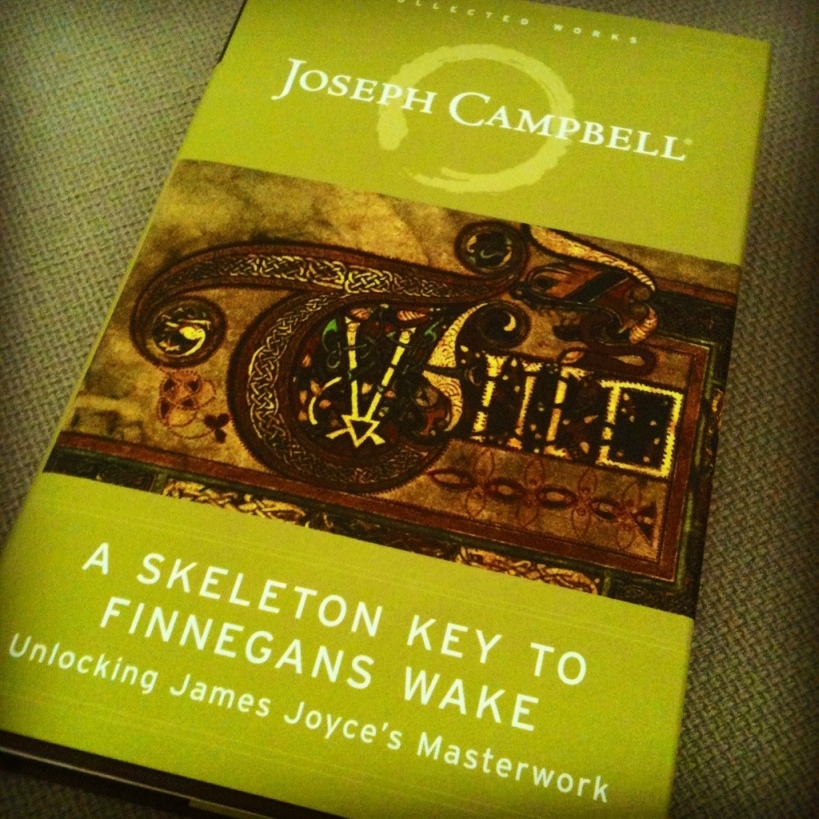
Anyway, I’ve been searched for a used copy of Joseph Campbell’s Skeleton Key to the Wake for years, but I finally just broke down and ordered a new copy through my bookstore.  My plan is to read Finnegans Wake next year. It’s not a plan, so much as something I’ve just typed.


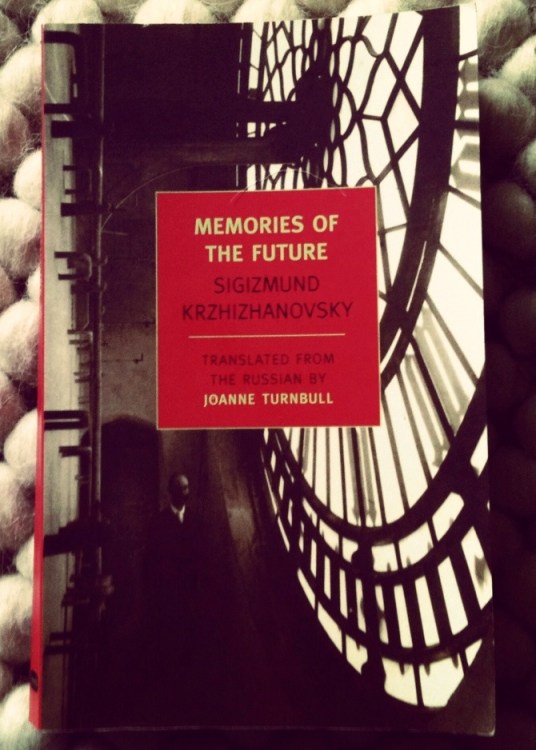
Memories of the Future (Book Acquired, 8.11.2012)


20120818-174253.jpg

I saw Sigizmund Krzhizhanovsky’s at the bookstore last week, read the first few pages of the first story, and had to have it. (Although the NYRB logo is always enticement enough). From Liesl Schillinger’s review in the NYT:

Krzhizhanovsky’s stories are more like dream diaries than fiction. Quite intentionally, he blurs the line between sleep and waking, real and unreal, life and death. While his translators admirably convey the whirligigging quality of his narratives, Krzhizhanovsky’s peregrinations demand unstinting focus and frequent compass checks. His characters often seem half, or wholly, asleep. Sometimes, as in “The Thirteenth Category of Reason,” they are dead — which doesn’t stop them from boarding city trams and chatting with commuters. “Alive or dead, they didn’t care.” Their only concern is whether such conduct is “decrimiligaturitized” — that is, legal. “In “Quadraturin,” the man with the proliferspansion ointment never exits a state of benumbed grogginess. Lying on his bed, “unable to part eyelids stitched together with exhaustion,” he tries to sleep through the night, “mechanically, meekly, lifelessly.” When inspectors from the Remeasuring Commission drop by to make sure he hasn’t exceeded his allotted 86 square feet of space, he hovers, terror-stricken, at the door, hoping they won’t spot his infraction. It’s an archetypal nightmare, reminiscent of Kafka.


Phi (Very Beautiful Book Acquired, 8.08.2012)

20120818-173817.jpg


Giulio Tononi’s Phi—remarkable, beautiful, strange. Sort of a novel, sort of philosophical text, sort of a history, sort of a science book . . . I don’t know. Here’s the blurb:

From one of the most original and influential neuroscientists at work today, here is an exploration of consciousness unlike any other—as told by Galileo, who opened the way for the objectivity of science and is now intent on making subjective experience a part of science as well.

Galileo’s journey has three parts, each with a different guide. In the first, accompanied by a scientist who resembles Francis Crick, he learns why certain parts of the brain are important and not others, and why consciousness fades with sleep. In the second part, when his companion seems to be named Alturi (Galileo is hard of hearing; his companion’s name is actually Alan Turing), he sees how the facts assembled in the first part can be unified and understood through a scientific theory—a theory that links consciousness to the notion of integrated information (also known as phi). In the third part, accompanied by a bearded man who can only be Charles Darwin, he meditates on how consciousness is an evolving, developing, ever-deepening awareness of ourselves in history and culture—that it is everything we have and everything we are.

Not since Gödel, Escher, Bach has there been a book that interweaves science, art, and the imagination with such originality. This beautiful and arresting narrative will transform the way we think of ourselves and the world.

The comparison to Hofstadter’s Gödel, Escher, Bach might be apt. The book also recalls The Rings of Saturn to me. I’ve put it in a “read this” pile.

More to come, but here are some shots at random from its interior:

20120818-173834.jpg

20120818-173840.jpg

20120818-173847.jpg


Vanishing Is the Last Art (Book Acquired, Some Time in the Past Two Weeks)

20120818-174148.jpg

Josh Davis’s novel Vanishing Is the Last Art. Blurb:

Charlie Fell sells baseball cards with seemingly hallucinogenic properties out of his bedroom, takes road trips to places he loves (New York City) and loathes (Southern California), and trips over a series of romantic entanglements. When the young writer releases his first novel, his life begins to unravel as the fallout from his published inner-monologues drive him back inside his already frail mind

Treacherous Beauty (Book Acquired, 7.30.2012)


20120809-104800.jpg

Treacherous Beauty by Mark Jacob and Stephen H. Case. Blurb—

Histories of the Revolutionary War have long honored heroines such as Betsy Ross, Abigail Adams, and Molly Pitcher. Now, more than two centuries later, comes the first biography of one of the war’s most remarkable women, a beautiful Philadelphia society girl named Peggy Shippen. While war was raging between Britain and its rebellious colonists, Peggy befriended a suave British officer and later married a crippled revolutionary general twice her age. At age 19, she brought these two men together in a treasonous plot that, had it succeeded, might have turned George Washington into a prisoner and changed the course of the war.

Peggy Shippen was Mrs. Benedict Arnold.